Vierge, Daniel; [Edgar Allan Poe]Biblio.com
5 556 résultats
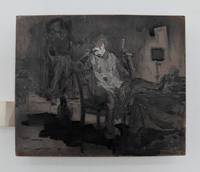
71065Very Good. A block for engraver for a work by Daniel Urrabieta y Vierge illustrating Edgar Allan Poe's short story "The Murders in the Rue Morgue." 4 3/4 inches wide by 3 7/8 inches tall. Several notations in pen on the reverse. "The Murders in the Rue Morgue" is considered one of the first detective stories.<br /> <br /> Daniel Urrabieta y Vierge 1851-1904 was a Spanish-born French illustrator known for revolutionizing the reproduction of illustrations. Vierge went to Paris in 1867 where he became involved with "Le Monde Illustré" in 1870. He is well-known as the illustrator of Michelet's 26-volume "History of France" containing 1000 drawings. In 1882 the publication of his edition of Francisco de Quevedo's "Historia de la vida del Buscón llamado don Pablos" The Life Story of a Swindler Called Don Pablos greatly advanced the technique of photo reproduction. In 1898 Vierge contributed to "L'Image" a magazine devoted to promoting the art of wood-engraving. Two years later at the International Exhibition at Paris he was awarded a grand prix. Vierge was never prolific. At the age of 30 he suffered a stroke which forced him to learn to draw with his left hand. He died in Boulogne-sur-Seine at the age of 53. unknown
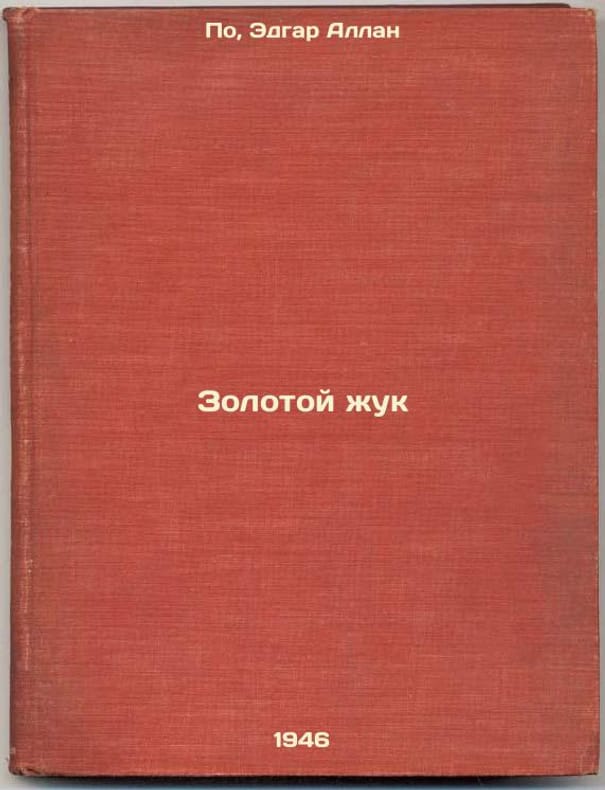
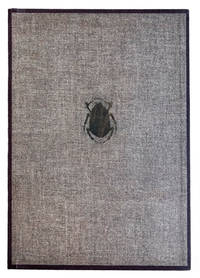
6003461"Short description: In Russian. Poe, Edgar Allan. The Golden Beetle. Moscow; Leningrad: The Children's Book of Detgiz in Moscow, 1946. You are welcome to reach out to us for a detailed description of the copies currently available. Delivery of this book may take longer than usual including extended processing and pre-shipping time, no expedited shipping is available. Please advise us if you have a set date or a deadline to receive your order.SKU6003461"
6003461Short description: In Russian. Poe Edgar Allan. The Golden Beetle. Moscow; Leningrad: The Children's Book of Detgiz in Moscow 1946. The image is provided for reference only. It may reflect condition of one of the available copies or only help in identifying the edition. Please feel free to contact us for a detailed description of the copies available. SKU6003461 unknown
192944988Paris Martin Kaelin 1929 In-8, bradel vlin orn sur le premier plat du titre de l'ouvrage peint en bistre et or, nom de l'auteur peint de mme en longueur sur le dos; doublures et gardes de papier mordor, tte dore, non rogn, couverture imprime (Ad. Lavaux).39 magistrales compositions de Bernard Naudin, dont 34 hors-texte. Tirage limit 321 exemplaires numrots. Exemplaire de collaborateur sur vlin d'Arches, rserv aux imprimeurs Ducros et Colas auxquels il a t ddicac la plume par l'diteur Martin Kaelin. Exemplaire enrichi d'une suite des illustrations sur vlin d'Arches.
194930672Paris Textes Prtextes 1949 In-4, reliure jansniste maroquin noir, nom de l'auteur et titre de l'ouvrage pousss or sur le dos sans nerfs; doublures bord bord de box rouge, gardes de soie moire noire, tte dore, non rogn, couverture illustre. Etui (Manuel Grard).Ce livre, mis en pages, illustr et imprim par J.G. Daragns, comporte 11 manires noires originales, dont une pour la couverture et 10 hors-texte. Tirage limit 260 exemplaires numrots. Exemplaire nominatif sur vlin de Rives, enrichi d'une grande aquarelle originale en couleurs signe par l'artiste et de 2 suites des gravures tires sur papier de Chine.
192739481Paris Ren Kieffer 1927 In-8, veau anthracite entirement recouvert d'un dcor la plaque estamp froid, compos d'une fine et lgre trame de motifs gomtriques et de grands motifs pousss en creux au centre et aux angles des plats; dos sans nerfs orn de deux petits fleurons; doublures et gardes de papier vieil or orn d'un dcor floral et gomtrique imprim en bleu, tte dore, non rogn, couverture imprime (Ren Kieffer).Ce charmant livre illustr par Emilien Dufour, comporte une composition gomtrique imprime en couleurs sur la couverture, 15 eaux-fortes originales hors texte en deux couleurs et de nombreux bandeaux et culs-de-lampe qui ornent chaque page de l'ouvrage. Tirage limit 550 exemplaires numrots. Un des 450 exemplaires sur vlin de Cuve.
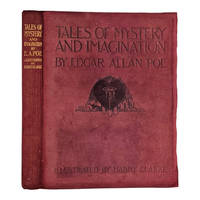
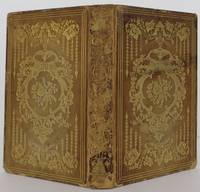
1919270 - 179 - 999<p>First edition of Harry Clarke's surreal illustrations in the publisher's scarce suede binding</p><p><strong>Publisher and Year: </strong>London: George G. Harrap & Co. Ltd. 1919<br />-<br /><strong>Edition: </strong>First trade edition first printing MCMXIX on the title page of Harry Clarke's illustrated collection of Edgar Allan Poe's stories. The publisher offered the book in several binding styles with cloth being the cheapest and a signed limited edition in full vellum being the most expensive. The present copy is bound in the publisher's burgundy suede which they advertised as a "velvet Persian yapp" binding. Copies in suede which were priced twice as much as cloth 30s vs. 15s appear much less frequently on the market. No dust jacket as issued.<br />-<br /><strong>Condition and Description: </strong>Quarto 10.75" x 8.75" flexible suede boards stamped in black and gilt top edge gilt with all 24 plates and additional in-text vignettes by Harry Clarke present. The edges of the suede covers extend past the text block a method called "yapp" which was meant to provide protection for the page edges. Gilt bright with a touch of rubbing. Tightly bound with all pages attached. A little separation at the top and bottom of the title page refer to the final two pictures. A Christmas 1919 inscription in ink is present on the front free endpaper. No other prior owner's markings. Occasional minor imperfections to the pages. An uncommonly well-preserved example of a fragile binding which is normally found in much worse condition.<br />-<br /><em>"Words have no power to impress the mind without the exquisite horror of their reality." </em>– Edgar Allan Poe The Premature Burial.</p><p>Clarke's illustrations give form to the world of horror that Poe conjured amplifying their impact through a visual language as ornate and unsettling as the tales themselves. Born in Dublin in 1889 Clarke trained as both an illustrator and stained-glass artist and became one of the central figures of the Irish Arts and Crafts Movement. By the time Tales of Mystery and Imagination appeared in 1919 he was already celebrated for his intricate jewel-like stained glass. In this first major book commission he brought that same precision and Symbolist intensity to twenty-four monochrome plates. Drawing on Art Nouveau line work and Gothic sensibility Clarke created images that seem to inhabit Poe's world rather than merely depict it producing nightmarish visions that have secured his place as one of the defining illustrators of the early twentieth century.<br />-<br />Inventory ID: 270 - 179 - 999</p> George G. Harrap & Co. Ltd.
184039605London: Richard Bentley. Very Good with no dust jacket. 1840. First Edition. Hardcover. Blind-stamped blue cloth/gilt. Contains pirated uncredited reprints of four Poe pieces: "The Irish Gentleman and the Little Frenchman" "The Fall of the House of Usher" "The Duc de l'Omelette" and "The Visionary." iv 643 pp. Thirteen plates plus in-text illustratins. Spine toned corners bumped rubbing. Occasional staining/foxing and offsetting from plates. Few pencilled check marks. ; Large 8vo 9" - 10" tall . Richard Bentley hardcover
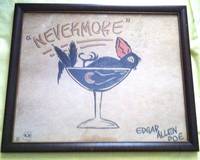
177New Jersey or New York: Al Capp 1930. UNIQUE. Framed. Very Good. Al Capp. Oil painting framed 15 1/2" H by 18 5/8" W; image: 13 7/16" x 16 7/16" signed by Al Capp with facial caricature of a man with bulbous eyes & two teeth plus initials; with the Edgar Allen Poe-based caption "Nevermore" in gold with black highlighting and double underlining above a cartoon of a drunken black raven with orange beak passed out upside down in a martini glass while still holding an olive with pimento. On the tattered brown paper backing there is the ink inscription: "PRESENT from MR. ACE" / The One and Only 1981" and an old browned newspaper cut-out of an Edgar Allen Poe caricature see below. Panel beneath the brown paper reads: Visit our Grecian Art Pavilion Ltd. Home of the "Hellenic Art Festival" Exquisite Oil Paintings Watercolors and select Handicrafts by Greek Artists 95-42 Queens Blvd. Rego Park N.Y. 11374 212 275-1745 Opposite Alexanders with auction tag Stamp faded on brown paper reads: Hellenic Art Center Ltd. 2804 Stenway Street Astoria N.Y. 1805 210-545-5093 Original Oil Paintings Framing & Frames in Stock. "Nevermore" is Al Capp's amusing painted parody of Edgar Allen Poe's famous croaking Raven adapted to point the negative moral of drunkenness for alcoholics. This remarkable and unique framed oil is in a somewhat worn wooden frame; executed on board ; and signed with Capp's unusual early caricature face & initials. Al Capp 1909-79 has been called--correctly I believe--the "Mark Twain of cartoonists." Other comparisons have likenened his work to that of Charles Dickens who also used social satire lampoons reformist topicality and memorable names for his unforgettable characters. Thus Capp observed that Dickens might have written comics if he had been alive today. As Capp also liked to emphasize: "No artist who can write should avoid words; no author who can draw should avoid drawing." From his boyhood on Al Capp was an enthusiastic reader of "literary classics" to name a few: adventure novels Dickens Thackeray Conrad Trollope G.B. Shaw and Edgar Allen Poe. During the late '40's and '50's when public fears mounted about violence and horror in comics having negative effects on children Capp used the example of Poe to illustrate that great authors and their works were not deemed to have such negatives. In this remarkable use of a major Poe image--that of the Raven who croaked "Nevermore"--Al only slightly twists it humorously to point a moral against alcoholism. Of course Poe himself suffered from alcoholism . . . and more while Capp was always a teetotaller though he too suffered in later life from a "cocktail" of drugs he took to cope with manic-depressive tendencies and chronic pain caused by the early amputation of most of his right leg. No doubt in part because of the mysterious alchemy created by the interaction of his comedic genius with his physical and emotional problems Capp's comic-based social satire was brilliant inventive frequently controversial enormously influential and topical--having persisted for 40 or more years through the middle of the 20th century with numerous repercussions to this day. Capp's characters and related creations have become part of American folklore; among them Dogpatch and its folksy denizens: Mammy and Pappy Yokum; Li'l Abner and a bevy of busty-and-leggy femmes fatals: Daisy Mae Stupifying Jones Wolf Gal Lena the Hyena and Available Jones. For many the depressed region of "Slobbovia" still resonates. Capp's inventive genius led to other memorable creations such as "Sadie Hawkins' Day" from 1937 and the mass merchandising of "Shmoos" 1948ff. "Kigme's" and "Kickapoo Joy Juice." Several of Capp's memorable phrases have also entered everyday use such as "amoozin and confoozin" or during the Cold War the name "Nogoodnik." Likewise musicals and movies have been made of "Li'l Abner" while an Arkansas' theme park named "Dogpatch" opened in 1968. A high school dropout Al Caplin took a succession of art courses from several distinguished art schools before he invariably dropped out. Accordingly his brilliant gifts as a cartoonist were honed on the job after constant practice. Highly relevant to the dating of our oil "Nevermore" during Al Capp's school-and-early apprentice years he sometimes worked in oils. Because this rare--but undated--cartoon has been executed in oils we can delimit its creation to Capp's early creative years. For a brief time Capp was active as a boardwalk caricaturist around Asbery Park New Jersey. At that time--about 1931-32--he hung out with an alcoholic portrait sketcher named Anderson. That Capp strongly rejected having a similarly depressed tawdry and boozy life as a starving artist suggests the milieu in which this memorable piece may have been created. Instead as a lifelong teetotaller Al soon took his portfolio of drawings to New York City where he began his strenuous climb toward recognition and prominence. Also about this time though he was still signing his work as "A. G. Caplin" in the early 1930s he formally changed his name to "Al Capp" after he turned 22 in early 1931. We can thus place the creation of this piece to around this period. Comparison of Al Capp's signatures over his career--especially this caricature & initial--indicates that this example is from earlier in his career. Most famous for "Li'l Abner" he began his famous strip on August 8 1934 while his first full color Sunday strip came out on February 24 1934. The beloved strip achieved an enormous circulation of 25-million by 1946. And between 1937 and 1947 it is estimated that each day about 70 million people read his "Li'l Abner" comic strip. Artist-writer Capp often remarked: "I think of myself as a novelist and of 'Abner' as a novel a page of which is pulled every day. At the end of the year I've written 365 pages fully illustrated." The remarkable period of the Thirties also saw the birth of Chester Gould's "Dick Tracy" 1931 and "Terry and the Pirates" 1934; while "Superman" Action Comics came into being in 1938. Capp created the comic strip of "Abbie an' Slats" in 1937. During World War II because he had lost most of his right leg in a trolley-car accident Capp was 4-F. He actively participated in creating promotions for war bonds and regularly visited wounded vets for whom he regularly drew pictures. The tone of our piece doesn't seem appropriate though for a possible hospital visit. During the war and through most of the later 1940's however Capp also created devastating pre-Mad magazine parodies. Among them he lampooned Milt Caniff's "Steve Canyon" with his own "Milton Goniff's 'Steve Cantor'"; John Steinbeck's Grapes of Wrath the Ford film of 1940; and his friend Chett Gould's "Dick Tracy" in contrast to Capp's ridiculous detective "Fearless Fosdick" 1942ff. Al overstepped contemporary legal boundaries with a strip parody of "Gone wif the Wind" starring "Wreck Butler" and "Scallop O'Hara" in late 1942. As a result Margaret Mitchell threatened to sue his publisher for $76-million thereby causing Capp to drop the spoof and formally apologize in another cartoon. Stylistically our "Nevermore" is a take-off or parody of Poe's very well-known ominous raven. During the early 1940s several cartoonists created similar crows and ravens. Capp's raven resembles Chuck Jones' "Mynah bird" that he created for Warner Brothers from 1939-41. Likewise Cliff Edwards' "Jim Crow" appeared in Disney's "Dumbo" in 1941. One also notes nose art that WWII pilots used to decorate their warbirds "Old Crow Express" being one such; as well as Paul Terry's very popular "Heckle & Jeckle"--actually two Magpies not ravens--that he created in 1946 for Terrytoons. Because of this ravenesque flocking I would put a terminus a quem date on Capp's fine piece of the mid-1940s. The above date spread circa 1929-1946 is reinforced by a survey of Al Capp's other bird sketches--not just ravens or crows. This too suggests that the simplicity and humor of his raven in "Nevermore" dates from an earlier phase of his long career. Examination of other birds--particularly parrots--indicates that his "bird-style" became more elaborate and decorative over time e.g. "The Parrots of Wimpole Street" Oct. 1959 drawn by Capp &/or Frazee lot 582 in Nate D. Sanders' 2013 catalog; a flamboyant and wildly colored parrot drawn by Capp in 1974 lot 710 in Sanders. We thus provisionally date our Edgar Allen Poe parody to between the late 1920's through the mid-1940's; and cartoon styles he used--in keeping with other cartoonists--during the 1940's as reflected by the cartoon of Capp's raven. Accordingly "Nevermore" fits within the period late 1920's through the immediate post-WWII period say 1946. The possible reverberation of Capp's antagonism to alcoholism pronounced in 1931-32; his use of paint as medium as during his student and impoverished apprentice days; coupled with the slight wear to the finish of the paint however suggest a date closer to the 1930's than the 1940's. We conjecture that this piece was possibly executed in New Jersey and taken with the cartoonist to New York as part of his portfolio in the early 1930's. One notes that Al Capp once again used oils near the end of his life when he had an exhibition of large paintings of notable "Li'l Abner" characters at the New York Cultural Center April 15-May 11 1975. At this time neither the finish subject backing nor size of our parody fit his late spurt of productivity in oils. The matter of dating is somewhat complicated by the brown paper backing writing stamp and framer's ad beneath it. The brown paper backing of the painting has become tattered but one can still read "For MR. ACE / "The One and Only" as well as next to it the clear date "1981." Given the early suggested dates for the creation of Capp's artwork we assume that this painting was given after Capp's death in 1979 to "Mr. ACE / The One and Only" whomever that was in "1981." Also on the paper backing there was previously a taped & now removed for safe-keeping small ~ 3" newspaper clippling depicting a caricature of Edgar Allen Poe with his famous raven not by Capp with a date of "1967" appearing on its verso. We cannot be certain who cut out this clipping but the "1967" date provides a terminus after which the clipping was cut. One can also identify the Greek framer see above. Given the convergence of likely dates around the late 1920's/early 1930s-early 1940s however these later indications of framing suggest that the painting was gifted--perhaps more than once--sometime between 1967 and 1981. For additional references see especially a recent catalog of Al Capp cartoons issued by Nate D. Silver Inc. in September 2013; as well as Michael Schumacher & Denis Kitchen Al Capp: A Life to the Contrary Bloomsbury 2013--especially pages 20 on Al's early reading; 34 on the alcoholic caricaturist Anderson; 81 112-13 136 on Poe; 162 on Stenbeck's plaudits; & pages 251-52: where Capp observed that when he took up oils in the 1970's he hadn't used that medium since art school. Al Capp unknown
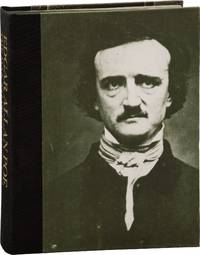
169400Lakewood CO: Centipede Press 2009. Limited Edition one of 200 unnumbered copies. <br /> <br /> A lavish volume devoted entirely to the life of Edgar Allan Poe. Includes over 100 pages of artwork a long essay on Poe by S.T. Joshi reproductions and transcriptions of Poe's correspondence multiple critical essays discussing Poe's influence on film and modern horror writing and more. <br /> <br /> Very Good plus slightly cocked with no dust jacket as issued. Scarce. Centipede Press unknown
177New Jersey or New York: Al Capp 1930. UNIQUE. Framed. Very Good. Al Capp. Oil painting framed 15 1/2" H by 18 5/8" W; image: 13 7/16" x 16 7/16" signed by Al Capp with facial caricature of a man with bulbous eyes & two teeth plus initials; with the Edgar Allen Poe-based caption "Nevermore" in gold with black highlighting and double underlining above a cartoon of a drunken black raven with orange beak passed out upside down in a martini glass while still holding an olive with pimento. On the tattered brown paper backing there is the ink inscription: "PRESENT from MR. ACE" / The One and Only 1981" and an old browned newspaper cut-out of an Edgar Allen Poe caricature see below. Panel beneath the brown paper reads: Visit our Grecian Art Pavilion Ltd. Home of the "Hellenic Art Festival" Exquisite Oil Paintings Watercolors and select Handicrafts by Greek Artists 95-42 Queens Blvd. Rego Park N.Y. 11374 212 275-1745 Opposite Alexanders with auction tag Stamp faded on brown paper reads: Hellenic Art Center Ltd. 2804 Stenway Street Astoria N.Y. 1805 210-545-5093 Original Oil Paintings Framing & Frames in Stock. "Nevermore" is Al Capp's amusing painted parody of Edgar Allen Poe's famous croaking Raven adapted to point the negative moral of drunkenness for alcoholics. This remarkable and unique framed oil is in a somewhat worn wooden frame; executed on board ; and signed with Capp's unusual early caricature face & initials. Al Capp 1909-79 has been called--correctly I believe--the "Mark Twain of cartoonists." Other comparisons have likenened his work to that of Charles Dickens who also used social satire lampoons reformist topicality and memorable names for his unforgettable characters. Thus Capp observed that Dickens might have written comics if he had been alive today. As Capp also liked to emphasize: "No artist who can write should avoid words; no author who can draw should avoid drawing." From his boyhood on Al Capp was an enthusiastic reader of "literary classics" to name a few: adventure novels Dickens Thackeray Conrad Trollope G.B. Shaw and Edgar Allen Poe. During the late '40's and '50's when public fears mounted about violence and horror in comics having negative effects on children Capp used the example of Poe to illustrate that great authors and their works were not deemed to have such negatives. In this remarkable use of a major Poe image--that of the Raven who croaked "Nevermore"--Al only slightly twists it humorously to point a moral against alcoholism. Of course Poe himself suffered from alcoholism . . . and more while Capp was always a teetotaller though he too suffered in later life from a "cocktail" of drugs he took to cope with manic-depressive tendencies and chronic pain caused by the early amputation of most of his right leg. No doubt in part because of the mysterious alchemy created by the interaction of his comedic genius with his physical and emotional problems Capp's comic-based social satire was brilliant inventive frequently controversial enormously influential and topical--having persisted for 40 or more years through the middle of the 20th century with numerous repercussions to this day. Capp's characters and related creations have become part of American folklore; among them Dogpatch and its folksy denizens: Mammy and Pappy Yokum; Li'l Abner and a bevy of busty-and-leggy femmes fatals: Daisy Mae Stupifying Jones Wolf Gal Lena the Hyena and Available Jones. For many the depressed region of "Slobbovia" still resonates. Capp's inventive genius led to other memorable creations such as "Sadie Hawkins' Day" from 1937 and the mass merchandising of "Shmoos" 1948ff. "Kigme's" and "Kickapoo Joy Juice." Several of Capp's memorable phrases have also entered everyday use such as "amoozin and confoozin" or during the Cold War the name "Nogoodnik." Likewise musicals and movies have been made of "Li'l Abner" while an Arkansas' theme park named "Dogpatch" opened in 1968. A high school dropout Al Caplin took a succession of art courses from several distinguished art schools before he invariably dropped out. Accordingly his brilliant gifts as a cartoonist were honed on the job after constant practice. Highly relevant to the dating of our oil "Nevermore" during Al Capp's school-and-early apprentice years he sometimes worked in oils. Because this rare--but undated--cartoon has been executed in oils we can delimit its creation to Capp's early creative years. For a brief time Capp was active as a boardwalk caricaturist around Asbery Park New Jersey. At that time--about 1931-32--he hung out with an alcoholic portrait sketcher named Anderson. That Capp strongly rejected having a similarly depressed tawdry and boozy life as a starving artist suggests the milieu in which this memorable piece may have been created. Instead as a lifelong teetotaller Al soon took his portfolio of drawings to New York City where he began his strenuous climb toward recognition and prominence. Also about this time though he was still signing his work as "A. G. Caplin" in the early 1930s he formally changed his name to "Al Capp" after he turned 22 in early 1931. We can thus place the creation of this piece to around this period. Comparison of Al Capp's signatures over his career--especially this caricature & initial--indicates that this example is from earlier in his career. Most famous for "Li'l Abner" he began his famous strip on August 8 1934 while his first full color Sunday strip came out on February 24 1934. The beloved strip achieved an enormous circulation of 25-million by 1946. And between 1937 and 1947 it is estimated that each day about 70 million people read his "Li'l Abner" comic strip. Artist-writer Capp often remarked: "I think of myself as a novelist and of 'Abner' as a novel a page of which is pulled every day. At the end of the year I've written 365 pages fully illustrated." The remarkable period of the Thirties also saw the birth of Chester Gould's "Dick Tracy" 1931 and "Terry and the Pirates" 1934; while "Superman" Action Comics came into being in 1938. Capp created the comic strip of "Abbie an' Slats" in 1937. During World War II because he had lost most of his right leg in a trolley-car accident Capp was 4-F. He actively participated in creating promotions for war bonds and regularly visited wounded vets for whom he regularly drew pictures. The tone of our piece doesn't seem appropriate though for a possible hospital visit. During the war and through most of the later 1940's however Capp also created devastating pre-Mad magazine parodies. Among them he lampooned Milt Caniff's "Steve Canyon" with his own "Milton Goniff's 'Steve Cantor'"; John Steinbeck's Grapes of Wrath the Ford film of 1940; and his friend Chett Gould's "Dick Tracy" in contrast to Capp's ridiculous detective "Fearless Fosdick" 1942ff. Al overstepped contemporary legal boundaries with a strip parody of "Gone wif the Wind" starring "Wreck Butler" and "Scallop O'Hara" in late 1942. As a result Margaret Mitchell threatened to sue his publisher for $76-million thereby causing Capp to drop the spoof and formally apologize in another cartoon. Stylistically our "Nevermore" is a take-off or parody of Poe's very well-known ominous raven. During the early 1940s several cartoonists created similar crows and ravens. Capp's raven resembles Chuck Jones' "Mynah bird" that he created for Warner Brothers from 1939-41. Likewise Cliff Edwards' "Jim Crow" appeared in Disney's "Dumbo" in 1941. One also notes nose art that WWII pilots used to decorate their warbirds "Old Crow Express" being one such; as well as Paul Terry's very popular "Heckle & Jeckle"--actually two Magpies not ravens--that he created in 1946 for Terrytoons. Because of this ravenesque flocking I would put a terminus a quem date on Capp's fine piece of the mid-1940s. The above date spread circa 1929-1946 is reinforced by a survey of Al Capp's other bird sketches--not just ravens or crows. This too suggests that the simplicity and humor of his raven in "Nevermore" dates from an earlier phase of his long career. Examination of other birds--particularly parrots--indicates that his "bird-style" became more elaborate and decorative over time e.g. "The Parrots of Wimpole Street" Oct. 1959 drawn by Capp &/or Frazee lot 582 in Nate D. Sanders' 2013 catalog; a flamboyant and wildly colored parrot drawn by Capp in 1974 lot 710 in Sanders. We thus provisionally date our Edgar Allen Poe parody to between the late 1920's through the mid-1940's; and cartoon styles he used--in keeping with other cartoonists--during the 1940's as reflected by the cartoon of Capp's raven. Accordingly "Nevermore" fits within the period late 1920's through the immediate post-WWII period say 1946. The possible reverberation of Capp's antagonism to alcoholism pronounced in 1931-32; his use of paint as medium as during his student and impoverished apprentice days; coupled with the slight wear to the finish of the paint however suggest a date closer to the 1930's than the 1940's. We conjecture that this piece was possibly executed in New Jersey and taken with the cartoonist to New York as part of his portfolio in the early 1930's. One notes that Al Capp once again used oils near the end of his life when he had an exhibition of large paintings of notable "Li'l Abner" characters at the New York Cultural Center April 15-May 11 1975. At this time neither the finish subject backing nor size of our parody fit his late spurt of productivity in oils. The matter of dating is somewhat complicated by the brown paper backing writing stamp and framer's ad beneath it. The brown paper backing of the painting has become tattered but one can still read "For MR. ACE / "The One and Only" as well as next to it the clear date "1981." Given the early suggested dates for the creation of Capp's artwork we assume that this painting was given after Capp's death in 1979 to "Mr. ACE / The One and Only" whomever that was in "1981." Also on the paper backing there was previously a taped & now removed for safe-keeping small ~ 3" newspaper clippling depicting a caricature of Edgar Allen Poe with his famous raven not by Capp with a date of "1967" appearing on its verso. We cannot be certain who cut out this clipping but the "1967" date provides a terminus after which the clipping was cut. One can also identify the Greek framer see above. Given the convergence of likely dates around the late 1920's/early 1930s-early 1940s however these later indications of framing suggest that the painting was gifted--perhaps more than once--sometime between 1967 and 1981. For additional references see especially a recent catalog of Al Capp cartoons issued by Nate D. Silver Inc. in September 2013; as well as Michael Schumacher & Denis Kitchen Al Capp: A Life to the Contrary Bloomsbury 2013--especially pages 20 on Al's early reading; 34 on the alcoholic caricaturist Anderson; 81 112-13 136 on Poe; 162 on Stenbeck's plaudits; & pages 251-52: where Capp observed that when he took up oils in the 1970's he hadn't used that medium since art school. Al Capp unknown books
184237513New York: William W. Snowden 1842. 2 volumes in one large 8vo; 35 steel engraved plates and fashion lithographs; contemporary three-quarter calf over marble boards gilt lettering on spine begining to detach shelf wear; ex-Hill Library with usual markings; foxing otherwise good interior. Contains the first printings of Edgar Allan Poe's "The Landscape Garden" and his famous short story "The Mystery of Marie Roget" in three parts. "The Mystery of Marie Roget" is arguably one of the first murder mysteries to be based on a true crime that of the murder of Mary Cecilia Rogers the "Beautiful Cigar Girl" who was found drowned in the Hudson River in 1841. Poe chose to situate the narrative in Paris as a sequal to his "The Murders in the Rue Morgue". BAL 16149A Sova p. 164. <br/><br/> William W. Snowden hardcover books
184237513New York: William W. Snowden 1842. 2 volumes in one large 8vo; 35 steel engraved plates and fashion lithographs; contemporary three-quarter calf over marble boards gilt lettering on spine; shelf wear rear hinge strengthened with Japanese tissue; ex-James J. Hill Library with usual markings; some foxing otherwise good or better. Contains the first printings of Edgar Allan Poe's "The Landscape Garden" and his famous short story "The Mystery of Marie Roget" in three parts. "The Mystery of Marie Roget" is arguably one of the first murder mysteries to be based on a true crime that of the murder of Mary Cecilia Rogers the "Beautiful Cigar Girl" who was found drowned in the Hudson River in 1841. Poe chose to situate the narrative in Paris as a sequal to his "The Murders in the Rue Morgue". BAL 16149A Sova p. 164. William W. Snowden unknown
18274078Boston: Frederick T. Gray 1827. First Edition. Poor. Large 8vo. 6 491 1 "Proposals for publishing by Subscription the Works of George Washington" by Jared Sparks. Waterstains throughout some of which are ugly SEE IMAGES but the paper is strong. Contemporary American sheep dry and worn upper joint cracked and just barely holding SEE IMAGES. A complete copy albeit with significant faults and priced accordingly. THIS MUNDANE VOLUME IS OF SIGNAL IMPORTANCE IN AMERICAN LITERATURE AS IT CONTAINS ONE OF ONLY TWO STRICTLY CONTEMPORARY ANNOUNCEMENTS OF THE PUBLICATION OF "TAMERLANE BY A BOSTONIAN" BOTH OF WHICH WERE IGNORED. NO REVIEWS OF "TAMERLANE" WERE EVER WRITTEN AND AS IS WELL KNOWN THE BOOK FELL INTO UTTER OBSCURITY. NONETHELESS THESE WERE THE FIRST NOTICES OF EDGAR ALLAN POE AS A WRITER. <br /> <br /> The announcement in the present publication Oct. 1827 was preceded by two months in the "United States Reviewe and Literary Gazette" Aug. 1827. "Tammerlane . made practically no impression upon the critical or popular reader. It was noticed by two magazines but without critical comment" Arthur Hobson Quinn Edgar Allan Poe 1941 pp. 118-128. See also Thomas & Jackson The Poe Log: A Documentary Life of Edgar Allan Poe 1809-1849 pp. 82-83. <br /> <br /> Provenance: John Godfrey early ink inscription inside front cover. Frederick T. Gray unknown
185886886Michel Lévy frères | Paris 1858 | 11.50 x 18.50 cm | relié
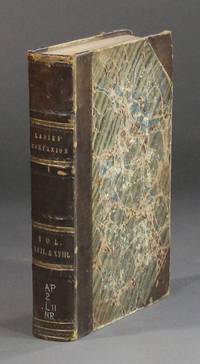
18429031446Philadelphia: George R. Graham 1842. 1st. Hardcover. Good. Twelve issues Volume XIX Nos. 1-6 and Volume XX Nos. 1-6 published between July 1841 and June 1842 bound in one volume. Contains the first appearance of numerous works of Poe:<br /> <br /> Stories: <br /> - The Mask of the Red Death<br /> - The Oval Portrait Life in Death<br /> - The Colloquy of Monos and Una<br /> - Never Bet the Devil Your Head Never Bet Your Head<br /> <br /> Poems: <br /> - To Helen<br /> - Israfel<br /> - To One Departed<br /> <br /> Essays: <br /> - A Few Words About Secret Writing<br /> - A Chapter on Autography Poe analyzes the handwriting of famous individual's signatures<br /> - An Appendix of Autographs a second installment of the same<br /> - A Few Words About Brainard<br /> <br /> Reviews:<br /> - A Grammar of English Language by Hugh A. Pue<br /> - Powhatan by Seba Smith<br /> - The Works of Lord Bolingbroke<br /> - The Quacks of Helicon by L.A. Wilmer<br /> - Biography and Poetical Remains of the late Margaret Miller Davidson by Washington Irving<br /> - Incidents of Travel in Central America by John L. Stephens<br /> - Life and Literary Remains of L.E. L. Landon by Laman Blanchard<br /> - Joseph Rushbrook or the Poacher by Captain Marryatt<br /> - Life of Petrarch by Thomas Campbell<br /> - Guy Fawkes; or The Gunpowder Treason by William Harrison Ainsworth<br /> - The Gift: A Christmas and New-Year's Present for 1842<br /> - The Critical and Miscellaneous Writings of Sir Edward Lytton Bulwer<br /> - The Pic Nic Papers edited by Charles Dickens<br /> - History of the War in the Peninsula and in the South of France by W.F. Napier<br /> - Ten Thousand a Year by Samuel Warren<br /> - Poetical Remains of the late Lucretia Maria Davidson<br /> - Confession; Or the Blind Heart by William Gilmore Simms<br /> - Stanley Thorn by Henry Cockton<br /> - The Vicar of Wakefield by Oliver Goldsmith<br /> - Critical and Miscellaneous Essays by Christopher North<br /> - Pocohontas and Other Poems by Mrs. L.H. Sigourney<br /> - Essay proceeding "Review of New Books" section January 1842<br /> - Barnaby Rudge by Charles Dickens<br /> - Wakondah by Corneilus Mathews<br /> - Charles O'Malley The Irish Dragoon by Harry Lorrequer<br /> - Critical and Miscellaneous Writings of Henry Lord Brougham<br /> - Ballads and Other Poems by Henry Wadsworth Longfellow<br /> - Ideals and Other Poems by Algernon<br /> - Twice-Told Tales by Nathaniel Hawthorne - two reviews<br /> - The Poets and Poetry of America by Rufus Willmot Griswold<br /> <br /> All pieces authored by Poe are listed with page numbers on typed sheet tipped in to front free endpaper. Beautifully illustrated throughout. Bound in brown leather with spine and covers stamped in gilt. Previous owner's name stamped in gilt on cover. Wear to edges through leather at corners. Wear to spine chipping at head and heel. Back cover is partially split at hinge but joint is fully functional. Front cover is detached. Text block is bright tight with sharp edges with occasional minor foxing. 6 1/4 x 9 inches. 663 total pages. <br/><br/> George R. Graham hardcover
LL 546<p>One of 25 copies. With 2 etchings by Moscoso signed and numbered. Loose as issued in blue wrappers. Housed in custom-made light brown cloth over boards clamshell box.</p><p><u>About the illustrator</u>: Cristina Gomez Moscoso Argentinean engraver and designer. Graduated as professor of the National School of Fine Arts. She takes part in national international and collective exhibitions.</p><p># WorldCat US Libraries: no copies.</p> Ediciones Dos Amigos
18422207113Carey and Hart 1842. first. hardcover. very good. First appearance of "The Pit and the Pendulum" in The Gift. Book very good some soiling and rubbing foxing throughout cracking along front gutter small cracking just at top of rear gutter. Carey and Hart unknown
1999SKU1000448Value Proprietary 1999-02-10. Hardcover. New. Bounded Leather book is in mint brand new condition. Customer service is our #1 priority. We sell great books at great prices with super fast shipping and free tracking. Value Proprietary hardcover
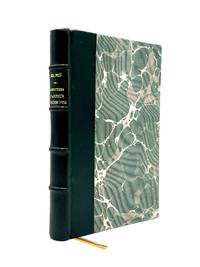
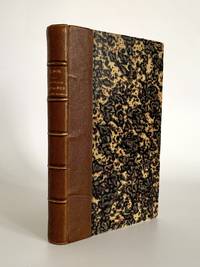
185884480Paris: Michel Lévy frères 1858. Fine. Michel Lévy frères Paris 1858 11.50 x 18.50 cm relié First edition of the French translation established by Charles Baudelaire of which there were no deluxe copies. Modern brown half-shagreen binding established identically to a contemporary binding same for the papers on the boards. Paper of immaculate whiteness. The last leaf of text has been backed in the lower margin we can also distinguish a perforation removing 2 letters of the text the last leaf of the table has been entirely backed and an internal margin has been added to bind it to the whole. Handsome copy well established. Michel Lévy frères hardcover
185685483Paris: Michel Lévy frères 1856. Fine. Michel Lévy frères Paris 1856 11 x 17.70 cm relié First edition of the French translation by Charles Baudelaire of which there were no deluxe copies. Contemporary half brown sheep binding. Smooth spine decorated with fillets. Spine uniformly sunned. Scattered foxing. Armorial bookplate Comte Coustant d'Yanville Daniel de Grangues. The first work by Poe translated by Baudelaire with his preface Sa vie son oeuvre first link in Baudelaire's conquest of his literary prose double destined to definitively establish the name of Charles Baudelaire alongside Poe. Michel Lévy frères unknown
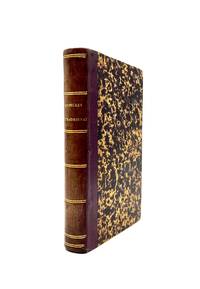
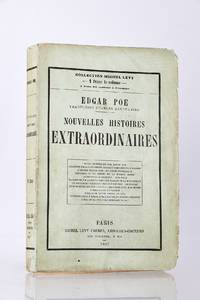
185773805Paris: Michel Lévy frères 1857. Fine. Michel Lévy frères Paris 1857 11.20 x 18 cm relié First edition. Bound contemporary brown half-shagreen. Spine decorated with gilt fillets. Gilt title. Traces of rubbing to edges. Scattered foxing. A good copy. This translation of Poe was published a few months before Baudelaire's first collection of poems Les Fleurs du mal. While we know how much E.A. Poe owes to Baudelaire whose superb translation is known to even surpass the original work we often overlook Baudelaire's own literary debt to his American model. More than an exercise in translation Baudelaire found in reading Poe's extraordinary stories the very soul of his poems which we still being written at the time. Following the success of his first translation of Les Histoires Extraordinaires in 1856 Baudelaire added a unique preface to his Nouvelles histoires extraordinaires which goes far beyond a simple presentation of Edgar Allan Poe's ""dark and strange genius"" and proves to be a true tribute to Poe by his humble translator who was about to become one of the greatest poets in history. ""From the bosom of a greedy world starved of materialities Poe darted into dreams. Smothered as he was by the American atmosphere he wrote at the head of Eureka: ""I offer this book to those who have put their faith in dreams as in the only realities!"" . Poe an Aristocrat by nature even more than by birth a Virginian a Southern man a true Byron lost in a bad world always retained his philosophical impassivity and whether he was defining the nose of the rabble mocking the fabricators of religion or mocking libraries he remains what the true poet was and always will be - a truth dressed in a bizarre way an apparent paradox who doesn't want to be elbowed by the crowd and who runs to the far east when the fireworks go off at sunset."" Baudelaire in his foreword to his Nouvelles histoires extraordinaires Henry de la Madelène a writer and friend of Baudelaire's made no mistake when he urged his contemporaries to discover the poet through his translations of Poe: ""Read them carefully and you will at once have the secret of Baudelaire's soul and the secret of his works"". Michel Lévy frères unknown
185783205Paris: Michel Lévy frères 1857. Fine. Michel Lévy frères Paris 1857 11.50 x 18.50 cm broché First edition of the French translation by Charles Baudelaire. No limited issue on luxury paper printed. Three small chips filled at head and foot of spine covers marginally and slightly soiled slight chips and tears to corners of the covers. A rare copy still in its original wrappers. Michel Lévy frères unknown
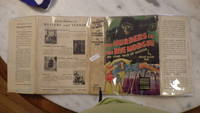
193229279HBDJ 1932 1ST EDITION UNDATED; No information or date on copyright page VG/VG RED CLOTH BLACK TITLES TINY EXTRMITIES DJ CHIPS RUB WEASR BACK OF DJ IN B/W ADVERTISES GROSSET FRANKENSTEIN THIS TITLE DR JEKYLL & DRACULA interior fox RED CLOTH TITLED IN BLACK Book and dust jacket in solid overall condition with no markings. Jacket reinforced on underside with a heavier paper stock; exterior is mildly edge worn with light amount of soiling/darkening to spine and rear panel. Jacket cover features vibrant color. Jacket in protective mylar sleeve. Octavo 8 x 5 3/8 inches; Frontispiece Mysterious Dr. Mirakle in His Secret Lab Illustrated with scenes from Universal Photoplay BLOOD CURDLING SHRIEKS ISSUE FROM OLD HOUSE at # in Morning. Horrofied neighbors rushing up the stairs hear the sound of strange Unintelligible voices behind closed Doors<br /><br /><br /> GROSSET & DUNLAP NY universal pictures hardcover
19353741London: George G. Harrap and Co 1935. First trade edition. First Trade Edition. Quarto 9 3/4 x 7 1/2 in; 248 x 190 mm. Complete. Publisher's russet morocco front cover decoratively tooled and lettered in gilt spine lettered in gilt. Top edge gilt pictorial endpapers. Twelve color plates with captioned tissue guards seventeen full page line drawings. A very Fine copy in the publisher's glassine and cardboard box.<br/><br/>According to Rackham the illustrations he provided for Poe's Tales of Mystery and Imagination in 1935 frightened even him and "whilst this might only be expected when a fine illustrator meets a fine and frightening text.The best plates are.indicative of a grandeur and vision one might not so far have perceived in Rackham.Perhaps not a book or set of illustrations for a night's reading in bed alone" Gettings 163-164.<br/><br/>Latimore and Haskell 72-73. Riall 189. George G. Harrap and Co unknown books