5 571 résultats
47306P., Nouvelle Revue Française, NRF, Gallimard, 1928, in 8° carré broché, 353 pages.
12855Strasbourg, Aux dépens de lartiste, (Paris, Les Ateliers dArt de lImprimerie La Ruche), 1958 ; in-4 en feuilles sous chemise et étui déditeur, contenant également une chemise avec 2 suites de gravures, vignettes de titre vertes. 313 pp.-(1)-4 ff. - 47 illustrations dont frontispice et vignette de titre. Étui un peu frotté sinon exemplaire très frais.
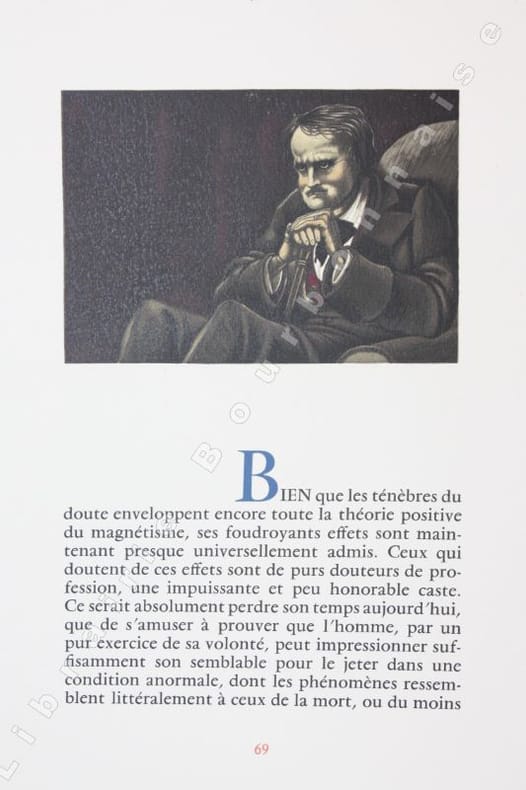
1941LIQ-6178P. Librairie Grund 1941. 2 volumes in-8° demi chagrin noir, dos à larges faux nerfs, couvertures conservées.
37858Paris, Gründ (coll. "Mazarine"), 1941. Gr. in-8°, 299p. Broché, couverture rempliée.
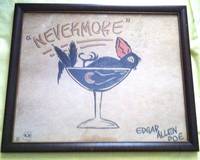
177New Jersey or New York: Al Capp 1930. UNIQUE. Framed. Very Good. Al Capp. Oil painting framed 15 1/2" H by 18 5/8" W; image: 13 7/16" x 16 7/16" signed by Al Capp with facial caricature of a man with bulbous eyes & two teeth plus initials; with the Edgar Allen Poe-based caption "Nevermore" in gold with black highlighting and double underlining above a cartoon of a drunken black raven with orange beak passed out upside down in a martini glass while still holding an olive with pimento. On the tattered brown paper backing there is the ink inscription: "PRESENT from MR. ACE" / The One and Only 1981" and an old browned newspaper cut-out of an Edgar Allen Poe caricature see below. Panel beneath the brown paper reads: Visit our Grecian Art Pavilion Ltd. Home of the "Hellenic Art Festival" Exquisite Oil Paintings Watercolors and select Handicrafts by Greek Artists 95-42 Queens Blvd. Rego Park N.Y. 11374 212 275-1745 Opposite Alexanders with auction tag Stamp faded on brown paper reads: Hellenic Art Center Ltd. 2804 Stenway Street Astoria N.Y. 1805 210-545-5093 Original Oil Paintings Framing & Frames in Stock. "Nevermore" is Al Capp's amusing painted parody of Edgar Allen Poe's famous croaking Raven adapted to point the negative moral of drunkenness for alcoholics. This remarkable and unique framed oil is in a somewhat worn wooden frame; executed on board ; and signed with Capp's unusual early caricature face & initials. Al Capp 1909-79 has been called--correctly I believe--the "Mark Twain of cartoonists." Other comparisons have likenened his work to that of Charles Dickens who also used social satire lampoons reformist topicality and memorable names for his unforgettable characters. Thus Capp observed that Dickens might have written comics if he had been alive today. As Capp also liked to emphasize: "No artist who can write should avoid words; no author who can draw should avoid drawing." From his boyhood on Al Capp was an enthusiastic reader of "literary classics" to name a few: adventure novels Dickens Thackeray Conrad Trollope G.B. Shaw and Edgar Allen Poe. During the late '40's and '50's when public fears mounted about violence and horror in comics having negative effects on children Capp used the example of Poe to illustrate that great authors and their works were not deemed to have such negatives. In this remarkable use of a major Poe image--that of the Raven who croaked "Nevermore"--Al only slightly twists it humorously to point a moral against alcoholism. Of course Poe himself suffered from alcoholism . . . and more while Capp was always a teetotaller though he too suffered in later life from a "cocktail" of drugs he took to cope with manic-depressive tendencies and chronic pain caused by the early amputation of most of his right leg. No doubt in part because of the mysterious alchemy created by the interaction of his comedic genius with his physical and emotional problems Capp's comic-based social satire was brilliant inventive frequently controversial enormously influential and topical--having persisted for 40 or more years through the middle of the 20th century with numerous repercussions to this day. Capp's characters and related creations have become part of American folklore; among them Dogpatch and its folksy denizens: Mammy and Pappy Yokum; Li'l Abner and a bevy of busty-and-leggy femmes fatals: Daisy Mae Stupifying Jones Wolf Gal Lena the Hyena and Available Jones. For many the depressed region of "Slobbovia" still resonates. Capp's inventive genius led to other memorable creations such as "Sadie Hawkins' Day" from 1937 and the mass merchandising of "Shmoos" 1948ff. "Kigme's" and "Kickapoo Joy Juice." Several of Capp's memorable phrases have also entered everyday use such as "amoozin and confoozin" or during the Cold War the name "Nogoodnik." Likewise musicals and movies have been made of "Li'l Abner" while an Arkansas' theme park named "Dogpatch" opened in 1968. A high school dropout Al Caplin took a succession of art courses from several distinguished art schools before he invariably dropped out. Accordingly his brilliant gifts as a cartoonist were honed on the job after constant practice. Highly relevant to the dating of our oil "Nevermore" during Al Capp's school-and-early apprentice years he sometimes worked in oils. Because this rare--but undated--cartoon has been executed in oils we can delimit its creation to Capp's early creative years. For a brief time Capp was active as a boardwalk caricaturist around Asbery Park New Jersey. At that time--about 1931-32--he hung out with an alcoholic portrait sketcher named Anderson. That Capp strongly rejected having a similarly depressed tawdry and boozy life as a starving artist suggests the milieu in which this memorable piece may have been created. Instead as a lifelong teetotaller Al soon took his portfolio of drawings to New York City where he began his strenuous climb toward recognition and prominence. Also about this time though he was still signing his work as "A. G. Caplin" in the early 1930s he formally changed his name to "Al Capp" after he turned 22 in early 1931. We can thus place the creation of this piece to around this period. Comparison of Al Capp's signatures over his career--especially this caricature & initial--indicates that this example is from earlier in his career. Most famous for "Li'l Abner" he began his famous strip on August 8 1934 while his first full color Sunday strip came out on February 24 1934. The beloved strip achieved an enormous circulation of 25-million by 1946. And between 1937 and 1947 it is estimated that each day about 70 million people read his "Li'l Abner" comic strip. Artist-writer Capp often remarked: "I think of myself as a novelist and of 'Abner' as a novel a page of which is pulled every day. At the end of the year I've written 365 pages fully illustrated." The remarkable period of the Thirties also saw the birth of Chester Gould's "Dick Tracy" 1931 and "Terry and the Pirates" 1934; while "Superman" Action Comics came into being in 1938. Capp created the comic strip of "Abbie an' Slats" in 1937. During World War II because he had lost most of his right leg in a trolley-car accident Capp was 4-F. He actively participated in creating promotions for war bonds and regularly visited wounded vets for whom he regularly drew pictures. The tone of our piece doesn't seem appropriate though for a possible hospital visit. During the war and through most of the later 1940's however Capp also created devastating pre-Mad magazine parodies. Among them he lampooned Milt Caniff's "Steve Canyon" with his own "Milton Goniff's 'Steve Cantor'"; John Steinbeck's Grapes of Wrath the Ford film of 1940; and his friend Chett Gould's "Dick Tracy" in contrast to Capp's ridiculous detective "Fearless Fosdick" 1942ff. Al overstepped contemporary legal boundaries with a strip parody of "Gone wif the Wind" starring "Wreck Butler" and "Scallop O'Hara" in late 1942. As a result Margaret Mitchell threatened to sue his publisher for $76-million thereby causing Capp to drop the spoof and formally apologize in another cartoon. Stylistically our "Nevermore" is a take-off or parody of Poe's very well-known ominous raven. During the early 1940s several cartoonists created similar crows and ravens. Capp's raven resembles Chuck Jones' "Mynah bird" that he created for Warner Brothers from 1939-41. Likewise Cliff Edwards' "Jim Crow" appeared in Disney's "Dumbo" in 1941. One also notes nose art that WWII pilots used to decorate their warbirds "Old Crow Express" being one such; as well as Paul Terry's very popular "Heckle & Jeckle"--actually two Magpies not ravens--that he created in 1946 for Terrytoons. Because of this ravenesque flocking I would put a terminus a quem date on Capp's fine piece of the mid-1940s. The above date spread circa 1929-1946 is reinforced by a survey of Al Capp's other bird sketches--not just ravens or crows. This too suggests that the simplicity and humor of his raven in "Nevermore" dates from an earlier phase of his long career. Examination of other birds--particularly parrots--indicates that his "bird-style" became more elaborate and decorative over time e.g. "The Parrots of Wimpole Street" Oct. 1959 drawn by Capp &/or Frazee lot 582 in Nate D. Sanders' 2013 catalog; a flamboyant and wildly colored parrot drawn by Capp in 1974 lot 710 in Sanders. We thus provisionally date our Edgar Allen Poe parody to between the late 1920's through the mid-1940's; and cartoon styles he used--in keeping with other cartoonists--during the 1940's as reflected by the cartoon of Capp's raven. Accordingly "Nevermore" fits within the period late 1920's through the immediate post-WWII period say 1946. The possible reverberation of Capp's antagonism to alcoholism pronounced in 1931-32; his use of paint as medium as during his student and impoverished apprentice days; coupled with the slight wear to the finish of the paint however suggest a date closer to the 1930's than the 1940's. We conjecture that this piece was possibly executed in New Jersey and taken with the cartoonist to New York as part of his portfolio in the early 1930's. One notes that Al Capp once again used oils near the end of his life when he had an exhibition of large paintings of notable "Li'l Abner" characters at the New York Cultural Center April 15-May 11 1975. At this time neither the finish subject backing nor size of our parody fit his late spurt of productivity in oils. The matter of dating is somewhat complicated by the brown paper backing writing stamp and framer's ad beneath it. The brown paper backing of the painting has become tattered but one can still read "For MR. ACE / "The One and Only" as well as next to it the clear date "1981." Given the early suggested dates for the creation of Capp's artwork we assume that this painting was given after Capp's death in 1979 to "Mr. ACE / The One and Only" whomever that was in "1981." Also on the paper backing there was previously a taped & now removed for safe-keeping small ~ 3" newspaper clippling depicting a caricature of Edgar Allen Poe with his famous raven not by Capp with a date of "1967" appearing on its verso. We cannot be certain who cut out this clipping but the "1967" date provides a terminus after which the clipping was cut. One can also identify the Greek framer see above. Given the convergence of likely dates around the late 1920's/early 1930s-early 1940s however these later indications of framing suggest that the painting was gifted--perhaps more than once--sometime between 1967 and 1981. For additional references see especially a recent catalog of Al Capp cartoons issued by Nate D. Silver Inc. in September 2013; as well as Michael Schumacher & Denis Kitchen Al Capp: A Life to the Contrary Bloomsbury 2013--especially pages 20 on Al's early reading; 34 on the alcoholic caricaturist Anderson; 81 112-13 136 on Poe; 162 on Stenbeck's plaudits; & pages 251-52: where Capp observed that when he took up oils in the 1970's he hadn't used that medium since art school. Al Capp unknown
1980868141980 Paris, Les Humanoïdes Associés, 1980, grand in 8°, cartonnage noir illustré de l'éditeur, 396 pages.
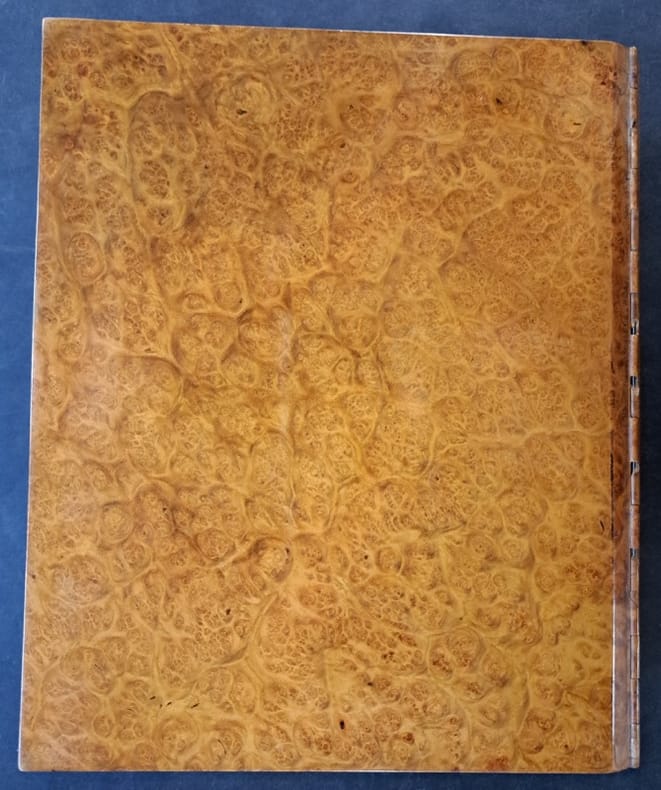
193043212Librairie de la Revue française, Alexis Redier 1930 In-4, reliure bakélite brune marbrée montée sur gonds, tête dorée, couverture et dos conservés. 25 eaux-fortes originales en couleurs hors-texte. Etui bordé. Infimes rousseurs, petits accrocs en charnières. Très bon exemplaire.
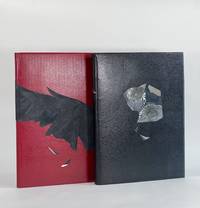
9284San Francisco: Arion Press 2022. Full Leather. Fine binding. Large quartos. 171 1; 27 pp. illus. Limited edition number 52 of 250 "Fine Press" copies 50 Deluxe copies were also issued. Both volumes finely bound by American design binder Robin Brandes. Phantasia in black straight-grained goatskin with crimson doublures and gray suede flyleaves; onlays of distressed mirror mylar composed with image transfers and exotic leathers. The Raven is inversely bound in crimson straight-grained goatskin with black doublures and gray suede flyleaves. Striking raven wing spans from fore-edge of the front board around the spine to midway on the rear board—"feathers" composed of textured fabric with a suede finish and distressed mirror mylar. Fine copies each in crimson cloth clamshell. Prospectus laid in. <br /> <br /> A remarkable production from the Arion Press presenting some of Poe's most recognizable tales and poems here illustrated by American artist Natalie Frank—color as well as black and white; both full page and in-text illustrations printed in offset lithography and overprinted by letterpress. Brandes's restrained bindings are perfectly suited to these books rendering visually the same experience one feels when reading Poe and navigating the uncertain terrain he creates—clear enough that one recognizes the landscape but subtly disquieting. The binder writes in her artist's statement: "In his short lifetime Edgar Allan Poe became the pre-eminent chronicler of the unquiet mind. A mixture of unusual materials and striking color palette were used to emanate an enigmatic yet dramatic presentation. The haunting cover portrait I created for Poe's Phantasia is a mosaic suggesting shapes of 2 ravens. Image transfers of Poe's eyes on distressed mirror mylar and onlays of exotic leathers evoke Poe's unquiet disturbed mind filled with illusions and wishing for the return of lost love. For the covers of The Raven I designed the raven wing feathers to be a bold presentation for one of the most translated poems in history." <br /> <br /> Brandes has been binding for nearly a decade and already has a notable resume having been exhibited at Arion Press The American Bookbinders Museum The Book Club of California Guild of Book Workers San Francisco Center for the Book and more. Brandes's binding of 2020 Vision was the First Place Winner of the Rocky Mountain Guild of Book Workers 2023 Traveling Exhibition. Arion Press unknown
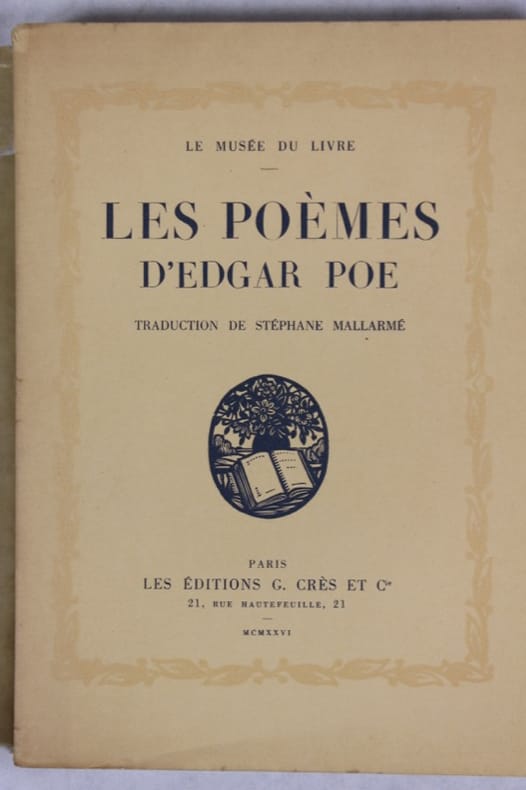
192621043G. Crès 1926 “Le Musée Du Livre” Petit In-8 broché, couvertures rempliées, XIC-186 pp. 10 compositions hors-texte et 2 bandeaux. Bon exemplaire.
1948LIQ-3928Monte-Carlo, Editions du Livre 1948. In-8°, broché, non coupé, couverture rempliée, sous chemise et étui
40433Lausanne, Editions du Grand-Chêne, 1948. Gr. in-8°, 203p. Broché, couverture rempliée.
43777Monte-Carlo, Aux Editions du Livre, 1948. Gr. in-8°, 203p. Broché, couverture rempliée, sous chemise et étui.
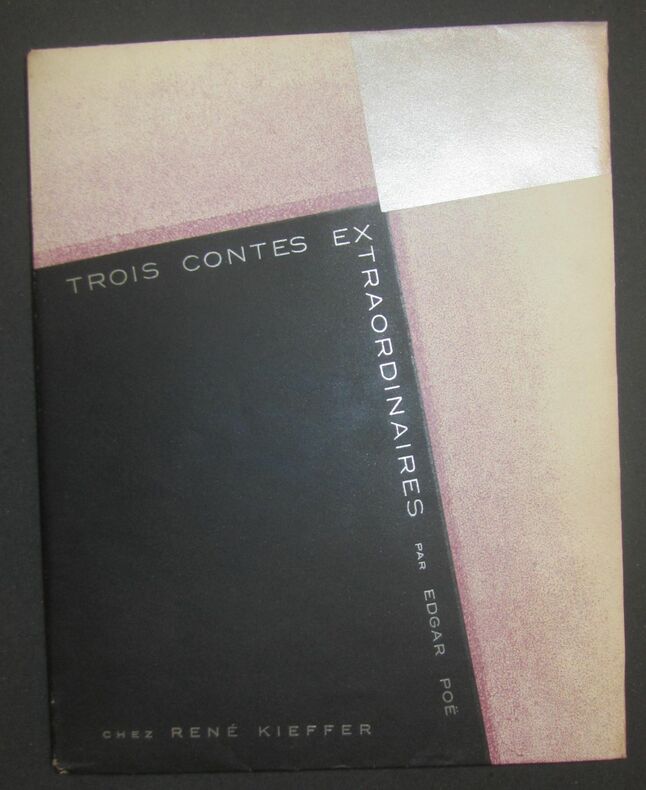
1927818591927 Paris, René Kieffer, 1927, petit in 4° broché, 93 pages ; couverture rempliée en couleurs.
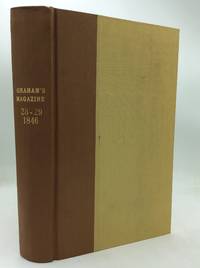
1846325143Philadelphia: George R. Graham 1846. 1st edition 1st printing. Leather. Good. 284p; 320p. Ex-library; REBOUND. A hardcover book that has been rebound in 1/4 brown cloth with tan cloth boards. Exterior faintly soiled. Stamps on edges and endpapers. No plates at beginning of October issue. Main pages foxed but text otherwise unmarked and binding tight. A good sturdy reading copy. Bound volume of GRAHAM'S AMERICAN MONTHLY MAGAZINE a mid-19th century literary digest for which Edgar Allan Poe served as editor for a time. Volumes 28 and 29 in a single book with issues spanning January through December 1846. Illustrated with numerous black and white engravings including color fashion plates. This issue contains three installments of the column "Marginalia" by Edgar Allan Poe dealing with the use of rhyme in poetry "The Mysteries of Paris" translated by C.H. Town and Fouque's "Thiodolf the Icelander"; a review of TYPEE by Herman Melville; installments of JACK TIER by James Fenimore Cooper under the title THE ISLETS OF THE GULF: OR ROSE BUDD; and a review of PICTURES FROM ITALY by Charles Dickens. George R. Graham unknown
1853624595Ticknor and Fields 1853. First Edition. Hardcover. Very Good. From the library of noted poet William Matchett with his signature and date on the ffep. vii 206pp. with 8 pages of ads at the front endpapers. Presentation binding in the original green cloth with blind stamping to the boards and a gilt decorated spine. Cloth faded to brown with some fraying to the tips of the spine else a Very Good copy. // A collection of American and British verse inspired by the sea; noted for the early appearance of Edgar Allan Poe’s “Annabel Lee†and Henry David Thoreau’s “My Life Is Like a Stroll Upon the Beach†BAL 1380. Ticknor and Fields hardcover
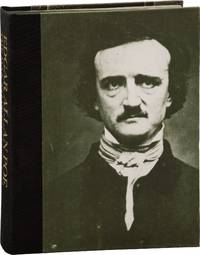
169400Lakewood CO: Centipede Press 2009. Limited Edition one of 200 unnumbered copies. <br /> <br /> A lavish volume devoted entirely to the life of Edgar Allan Poe. Includes over 100 pages of artwork a long essay on Poe by S.T. Joshi reproductions and transcriptions of Poe's correspondence multiple critical essays discussing Poe's influence on film and modern horror writing and more. <br /> <br /> Very Good plus slightly cocked with no dust jacket as issued. Scarce. Centipede Press unknown
18505161Boston: William C. Brown 1850. First Edition. Hardcover. Good. 8vo. Pp. 142 142. Illustrated with engravings tissue guards. Table of contents. Bound in embossed black cloth gilt stamped device front and back in blind stamped rules and decoration. Blind stamped rules and gilt stamped title on the spine. Edges trimmed. Endpaper ink manuscript "Josephine Judson from Sarah K. Cushing." Annotations partially erased. Spine ends chipped corners rubbed. Moral education in prose verse music and engravings. Includes an eleven-stanza poem by Sarah T. Bolton "On the Death of Edgar A. Poe" reprinted from the N. Y. Home Journal in the January 1950 issue. Cover preserved in a removable clear archival jacket. William C. Brown hardcover
1988LFA-126720303Un ouvrage de 973 pages, format 160 x 220 mm, illustré, relié cartonnage sous jaquette couleurs, publié en 1988, Chancellor Press, bon état
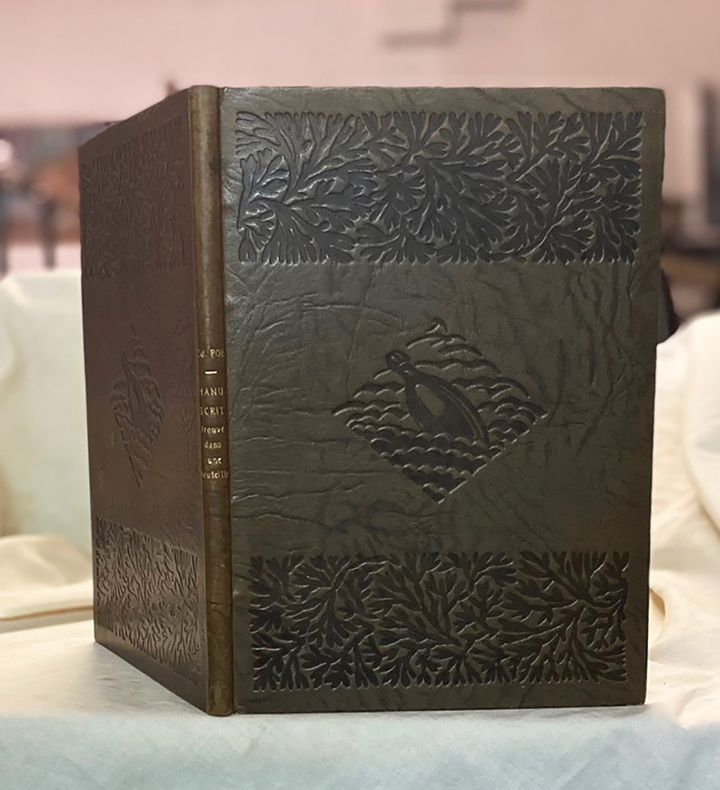
1920LIQ-7112P. René Kieffer 1920.Grand in-8° pleine basane havane gauffrée ornée d’un motif central représentant “une bouteille à la mer”, dos lisse, titre et tête dorée, couverture et dos conservés (KIEFFER).
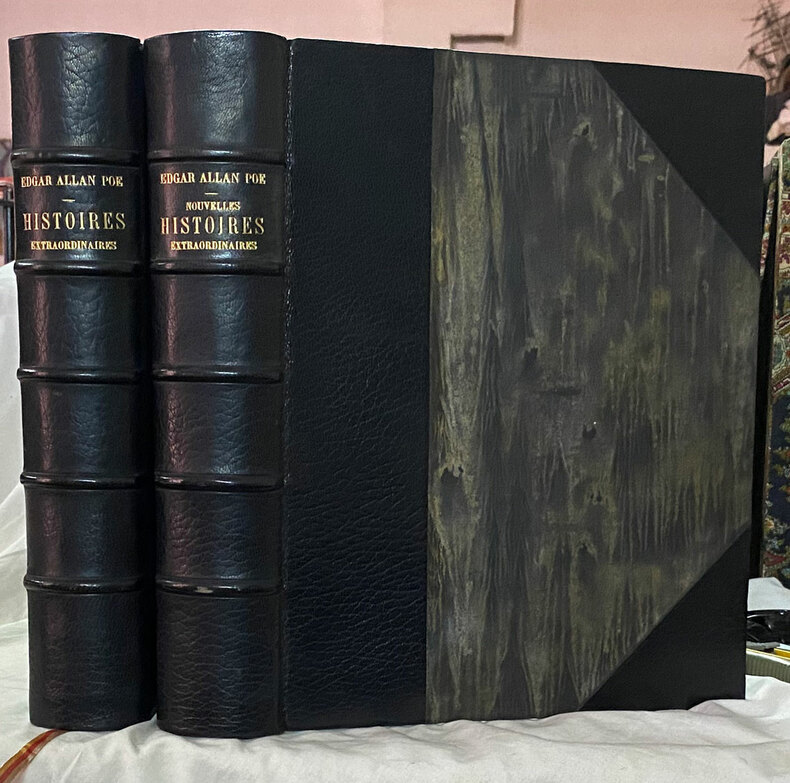
1927LIQ-6315P. Kra 1927. 2 forts volumes grand in-4° demi maroquin noir à coins,dos à nerfs,titres dorés, tête dorée, couvertures conservées
202437391Toronto: George Walker 2024. Hardcover. Fine. Hardcover. One of 25 copies signed by the printer George Walker and Eva Seidner the author of the foreword and afterword. This is handsome and exciting production of Poe's classic story. The Cask of Amontillado is a chilling story that follows the narrator Montresor as he seeks revenge on his acquaintance Fortunato by luring him into the catacombs. The masterful storytelling by Poe explores themes of betrayal revenge and darkness that lie within the human psyche. The story first appeared in the November 1846 issue of Godey's Lady's Book. The text in this edition follow exactly that of the original printing. Hand bound with brown wood covers sewn with wine colored linen thread. it is a unique non-adhesive stitch that incorporates a wood spine into the structure. The text and the engravings are printed on 100% archival paper. Six of the engravings are printed on unpaginated sheets of Moriki Kozo paper. The endpapers are done with hand marbled paper donated by the Porcupine's Quill. The book is housed in a wooden box reminiscent of those used to present fine wines with the wood evoking the casks where the wine is aged. All the wood for this project was hand stained and sealed. In fine condition. Size 6 x 9 inches. 39 pages. ARTB/061724. George Walker hardcover
1947LIQ-4738P. Marcel Sautier 1947. In-4° en feuilles sous chemise et étui de l'éditeur.
200412941, NUCLÉA, 2001 ; in-8 OBLON , 48 pp., cartonnage de l'éditeur.
185047580New York: J.S. Redfield 1850. Very Good. New York: J.S. Redfield 1850. First Edition first printing binding variant "E" per BAL 16159; third volume only of a four volume set. Octavo; publisher's blind-stamped purple cloth with gilt lettering to spine; xxxix 607pp. Spine sunned; edges lightly worn and bumped; brief exposure to extremities and loss along bottom edge of front fore-edge. Slight lean to boards but binding sound; tidemarks along top portion edge of text block with text only briefly affected; pages else unmarked; a Very Good copy. <br /> <br /> Third of four volumes of Poe's works published after his death; this volume is notable as it includes the "Memoir of the Author" by his rival Rufus Griswold. The memoir is notorious for its inaccuracies portraying Poe as a madman habitual drug user and an alcoholic. Griswold's falsehoods were perpetuated in subsequent editions of Poe's work. This edition also includes Poe's essays on Margaret Fuller Ossoli Nathaniel Hawthorne and Henry Wadsworth Longfellow and concludes with his pithy "Fifty Suggestions." <br /> <br /> BAL 16159. J.S. Redfield unknown
201604829Paris, Editions de la nouvelle revue francaise , 1929 ; in-8, 401 pp., br. Edition critique par f.f gautier continuée par Y.g le dantec denieres histoires extraordianaires traduites d'edgard a.poe.