Fichte, Johann GottliebBiblio.com

1 742 résultats
2011SONG3843064903Contumax 2011-01-11. paperback. Used: Good. 7.44x0.20x9.69. Buy with confidence. Excellent Customer Service & Return policy. Contumax paperback
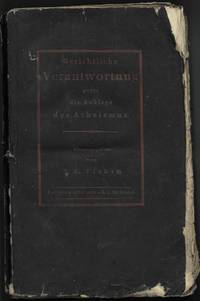
179964835Jena 1799. 8vo. Originalt svart omslag trykt i rødt. Ubeskåret. 6 192 4 24 4 s. 8vo. Original black wrapper with printing in red. Uncut. 6 192 4 24 4 pp. Gedruckt aus Kosten des Herausgebers und in Commission bei Christian Ernst Gabler Tysk. <br/><br/><em>Omslagene med rifter og bruksspor. Wrappers with some small tears one small piece missing 1 x 1 cm. Some very minor foxing otherwise a good copy.A publication in connection with the so-called ""Atheismusstreit"" which finally forced Ficthe to leave his professorship in Jena in 1799. Fichte's religious views were equally disturbing to traditional orthodoxy. Encyclopedia of Philosophy vol 3 pp. 192-196. </em> unknown
2012798403.Gpaperback. Good. Access codes and supplements are not guaranteed with used items. May be an ex-library book. paperback
1145730620.Gpaperback. Good. Access codes and supplements are not guaranteed with used items. May be an ex-library book. paperback
124902515X.Gpaperback. Good. Access codes and supplements are not guaranteed with used items. May be an ex-library book. paperback
42172424-nnew. unknown
42172424like new. unknown
17788416like new. unknown
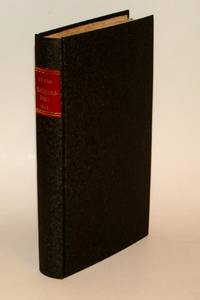
1828953248Berlin: bei G. Reimer 1828. hardcover. Gut. XIV 242 Seiten. Moderner Pappeinband mit rotem Rückenschild im Stil der Zeit. Oktav 20 cm Einband frisch neue Vorsätze unbeschnitten und breitrandig innen etwas braunfleckig im Ganzen: ordentliches Exemplar. "Johann Gottlieb Fichte geboren 19. Mai 1762 in Rammenau Kurfürstentum Sachsen; gestorben 29. Januar 1814 in Berlin Königreich Preußen war ein deutscher Erzieher und Philosoph. Er gilt neben Friedrich Wilhelm Joseph Schelling und Georg Wilhelm Friedrich Hegel als wichtigster Vertreter des Deutschen Idealismus. . Er wuchs ärmlich in einem von Frondiensten geprägten dörflichen Milieu auf. Seine Auffassungsgabe und sein gutes Gedächtnis fielen einem Verwandten der örtlichen Gutsherrschaft dem Gutsherrn Ernst Haubold von Miltitz 1739 - 1774 bei einem Besuch in Rammenau auf: Er hatte eines Sonntags die kirchliche Predigt verpasst woraufhin der zehnjährige Fichte gerufen wurde von dem man versicherte er könne die Predigt wiederholen. Daraufhin imitierte dieser den Pfarrer so perfekt dass der Freiherr in seiner Entzückung dem Kind nach einer Vorbereitungszeit im Pfarrhaus zu Niederau den Besuch der Stadtschule in Meißen ermöglichte. Danach finanzierte ihm sein Förderer 1774 eine Ausbildung an der Landesschule Pforta bei Naumburg verstarb jedoch im selben Jahr. . Hatte sich Fichte zuvor als Anhänger der Französischen Revolution bezeichnet so profilierte er sich nun insbesondere durch die flammend patriotischen Reden an die deutsche Nation als Text veröffentlicht bis 1808 als Gegner Napoleons. Fichte wurde damit zum Vordenker der Urburschenschaft. . Fichte hinterließ keine systematisch ausgearbeitete Religionsphilosophie. Im Atheismusstreit den Friedrich Karl Forberg mit einem Artikel im Philosophischen Journal mit einem zustimmenden Nachwort von Fichte 1798 ausgelöst hatte postulierte Fichte mit Forberg die Existenz Gottes sei nicht notwendig für die Errichtung einer moralischen Wertordnung allerdings sei der Glaube an Gott verbunden mit einer göttlichen Moral unumgänglich. Während Kant von der Existenz Gottes ausging und seine These untermauerte die Existenz Gottes sei notwendig im Hinblick auf die Bedingungen der Möglichkeit sittlichen Handelns sah Fichte nur die Notwendigkeit zu einer 'moralischen Weltordnung'. Diese müsse nicht zwingend auf eine höhere Instanz - also Gott - zurückgeführt werden. Die aktive Weltordnung selbst ordo ordinans könne man als Gott bezeichnen. Wer dies aber tut der 'verkennt die unmittelbare Beziehung des Gottesbegriffs zum moralischen Bewusstsein' und ist so Fichte 'der wahre Götzendiener und Atheist'." Wikipedia. - Weitere Bilder auf Anfrage oder auf unserer Homepage. Wegen Urlaub kann Ihre Bestellung / Anfrage erst nach dem 21.06.2026 bearbeitet werden. - Because of holidays your order / question can be handled only after 06/21/2026. bei G. Reimer hardcover
1017241686.Ghardcover. Good. Access codes and supplements are not guaranteed with used items. May be an ex-library book. hardcover
3843042535.Ghardcover. Good. Access codes and supplements are not guaranteed with used items. May be an ex-library book. hardcover
3843064911.Gpaperback. Good. Access codes and supplements are not guaranteed with used items. May be an ex-library book. paperback
182856926Berlin G. Reimer 1828. 8vo. Bound in a contemp. hcalf. with gilt spine. Gilt title to spine. Cracks to outer hinges. Corners bumped. Previous owner's signature to front free endpaper. Minor brownspotting. XIV242. <br/><br/><em>Second printing. </em> unknown
0364560991.Ghardcover. Good. Access codes and supplements are not guaranteed with used items. May be an ex-library book. hardcover
0364606436.Gpaperback. Good. Access codes and supplements are not guaranteed with used items. May be an ex-library book. paperback
9a1020Vossische Buchhandlung Bln. 1800. VI/338 S. goldgeprägter Halbledereinband mit grünem Rückenschildchen marmorierten Vorsätzen und Bezugspapier. Klein Oktav. - Goedeke V 81316/Baumgartner-Jacos 48. Erste Ausgabe/Schöne bibliophile Ausgabe - unknown
180017569Berlin 1800. Beigebunden: Kann eine übersinnliche Weltordung die Prädicate habe die Fichte Gott beylegt und kann sie also Gott seynDen Aeusserungen des Herrn Prof. Fichte selbst gemäss verneinend beantwortet on -s. Für und wider Fichte. Jena 1799 N. u.W. a. V. EA Borst 859 Ziegenfuss 342 Doedecke V 8 13 Voss 8°. Pbd. Philosophie unknown
3843041458.Ghardcover. Good. Access codes and supplements are not guaranteed with used items. May be an ex-library book. hardcover
3847248367.Ghardcover. Good. Access codes and supplements are not guaranteed with used items. May be an ex-library book. hardcover
3847844008.Ghardcover. Good. Access codes and supplements are not guaranteed with used items. May be an ex-library book. hardcover
1800011341Berlin: Vossische Buchhandlung 1800. 1st Edition. Hardcover. Very Good. Quarter vellum over decorated paper-backed boards. 338p. 19thC ownership nameHeidleberg in black ink on title page. 338pp. Covers soiled internals better than very good solidly bound. Vossische Buchhandlung hardcover
180034917Berlin in der Vossischen Buchhandlung 1800. 8vo. Cont. hcalf w. signs of wear. Upper capital worn crack to lower front hinge. Corners bumped. Old stamps to title-page and verso of t-p. Some brownspotting. VI 338 pp. <br/><br/><em>First edition of Fichte's important "The Vocation of Man" the first and best work he wrote after having been dismissed from Jena.In the beginning of the 1790'ies Fichte wrote the work "Versuch einer Kritik aller Offenbahrung" which Kant approved of and found a publisher for. The work appeared without mention of author on the title-page and the work was immediately ascribed to Kant -a better mistake could not have happened for Fichte and when Kant corrected it Fichte's reputation was secured. Already at the end of 1793 he was offered a chair teaching philosophy at the University of Jena. In Jena he published several important works and in 1798 he published an essay "On the Basis of Our Belief in a Divine Governance of the World". In this short essay he wished to indicate how a philosophy of religion should be developed in accordance with the principles developed in his "Wissenschaftslehre". Because of this Fichte was accused of atheism and as a consequence he was forced t leave his position and Jena. The matter had greatly escalated and involved a great number of German writers who wrote articles both for and against Fichte. The whole thing culminated when Jacobi wrote his "open letter" in which he directly accused Fichte's transcendental philosophy of being nihilistic and Fichte afterwards had to flee to Berlin in the summer of 1799.Fichte was forced to live from giving private lectures and tutorials and also by writing more easily understandable works. The first of these more popular writings is his "Vocation of Man" in which he presents the main ideas and notions of his system especially the moral and religious character of it. The work is considered a brilliant performance and "perhaps Fichte's greatest achievement" Encycl. Britt. It was a direct response to Jacobi's misunderstood attack which had just lost him his position. Johann Gottlieb Fichte 1762-1814 was of one of the founding thinkers of German idealism. He is considered a very important philosopher in at least two respects: 1 as the uniter of the ideas of the two great - Kant and Hegel - and as an important philosopher in himself who has contributed originally to the philosophy of the self. By some he is considered the father of German nationalism. </em> unknown
__3112443098De Gruyter Art & Architecture 1807. Hardcover. New. reprint edition. 563 pages. German language. 5.00x1.38x8.00 inches. De Gruyter Art & Architecture hardcover
3112443098.Ghardcover. Good. Access codes and supplements are not guaranteed with used items. May be an ex-library book. hardcover
17788418like new. unknown