M AristotleBiblio.com
The Saint Bookstore · Royaume-Uni43,19 £GB≈ 49,31 €
6 501 résultats
1970101511The MIT Press Malicorne sur Sarthe, 72, Pays de la Loire, France 1970 Book condition, Etat : Bon hardcover, editor's binding, under editor's pink printed dust-jacket grand In-8 1 vol. - 292 pages
1992LFA-126746084Un ouvrage de 528 pages, format 140 x 225 mm, illustré, broché, publié en 1992, Hachette, bon état
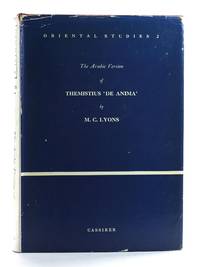
1973506046Bruno Cassirer 1973. Hardcover with Dust Jacket. NEAR FINE/Very Good. xviii 390pp. Smyth sewn binding in red hard covers gilt stamped spine. Light foxing to top edge exceedingly clean and sharp; DJ extremities a bit rubbed now wrapped in mylar. From the DJ: 'Aristotle's treatise on the Soul De anima was one of the most significant factors in the development of Islamic philosophy. In interpreting Aristotle's sometimes obscure thought however the Islamic philosophers were greatly influenced by the views of his most important commentators in anti-quity Alexander of Aphrodisias and Themistius. The latter's paraphrase of De anima was translated into Arabic and eagerly studied especially by Averroes who often refers to it in his own commentary on the book which in turn played an important role among the Latin Schoolmen. A Manuscript of this commentary by Themistius has recently been discovered in the Jarawiyyin mosque in Fez; it is edited here for the first time by Dr. M. C. Lyons. Its publication will make an important contribution to our interpretation of the psychological doctrines of the Islamic philosophers since it makes available Continued on back flap Continued from front flap one of the basic texts with which they worked. The elaborate Arabic-Greek and Greek-Arabic index facilitates the use of the text for studies on the history of these doctrines and of their Arabic terminology.'. Bruno Cassirer hardcover
xviii + 56pp., 23cm., softcover, in the series "The Catholic University of Aemrica Philosophical Studies" vol.184 (abstract no.35), An abstract of a dissertation, good condition, F105506
A bold and captivating new novel of ancient Greece, from the celebrated, award-winning author of The Golden Mean. Pythias is her father's daughter, with eyes his exact shade of unlovely, intelligent grey. A slave to his own curiosity and intellect, Aristotle has never been able to resist wit in another--even in a girl child who should be content with the kitchen, the loom and a life dictated by the womb. And oh his little Pytho is smart, able to best his own students in debate and match wits with a roomful of Athenian philosophers. Is she a freak or a harbinger of what women can really be? Pythias must suffer that argument, but she is also (mostly) secure in her father's regard. But then Alexander dies a thousand miles from Athens, and sentiment turns against anyone associated with him, most especially his famous Macedonian-born teacher. Aristotle and his family are forced to flee to Chalcis, a garrison town. Ailing, mourning and broken in spirit, Aristotle soon dies. And his orphaned daughter, only 16, finds out that the world is a place of superstition, not logic, and that a girl can be played upon by gods and goddesses, as much as by grown men and women. To safely journey to a place in which she can be everything she truly is, Aristotle's daughter will need every ounce of wit she possesses, but also grace and the capacity to love. Book
A bold and captivating new novel of ancient Greece, from the celebrated, award-winning author of The Golden Mean. Pythias is her father's daughter, with eyes his exact shade of unlovely, intelligent grey. A slave to his own curiosity and intellect, Aristotle has never been able to resist wit in another--even in a girl child who should be content with the kitchen, the loom and a life dictated by the womb. And oh his little Pytho is smart, able to best his own students in debate and match wits with a roomful of Athenian philosophers. Is she a freak or a harbinger of what women can really be? Pythias must suffer that argument, but she is also (mostly) secure in her father's regard. But then Alexander dies a thousand miles from Athens, and sentiment turns against anyone associated with him, most especially his famous Macedonian-born teacher. Aristotle and his family are forced to flee to Chalcis, a garrison town. Ailing, mourning and broken in spirit, Aristotle soon dies. And his orphaned daughter, only 16, finds out that the world is a place of superstition, not logic, and that a girl can be played upon by gods and goddesses, as much as by grown men and women. To safely journey to a place in which she can be everything she truly is, Aristotle's daughter will need every ounce of wit she possesses, but also grace and the capacity to love.Signned book prize stickers on front cover. Book
In this new novel that follows Aristotle's strong-willed daughter Pythias as she shapes her own destiny, the author offers an unexpected love story, a tender portrait of a girl and her father, and an astonishing journey through the underbelly of a supposedly enlightened society Book
On the orders of his boyhood friend, now King Philip of Macedon, Aristotle postpones his dreams of succeeding Plato as leader of the Academy in Athens and reluctantly arrives in the Macedonian capital of Pella to tutor the kings adolescent sons. An early illness has left one son with the intellect of a child; the other is destined for greatness but struggles between a keen mind that craves instruction and the pressures of a society that demands his prowess as a soldier. Initially Aristotle hopes for a short stay in what he considers the brutal backwater of his childhood. But, as a man of relentless curiosity and reason, Aristotle warms to the challenge of instructing his young charges, particularly Alexander, in whom he recognizes a kindred spirit, an engaged, questioning mind coupled with a unique sense of position and destiny. Aristotle struggles to match his ideas against the warrior culture that is Alexanders birthright. He feels that teaching this startling, charming, sometimes horrifying boy is a desperate necessity. And that what the boy thrown before his time onto his fathers battlefields needs most is to learn the golden mean, that elusive balance between extremes that Aristotle hopes will mitigate the boys will to conquer. Aristotle struggles to inspire balance in Alexander, and he finds he must also play a cat-and-mouse game of power and influence with Philip in order to manage his own ambitions. As Alexanders position as Philips heir strengthens and his victories on the battlefield mount, Aristotles attempts to instruct him are honoured, but increasingly unheeded. And despite several troubling incidents on the field of battle, Alexander remains steadfast in his desire to further the reach of his empire to all known and unknown corners of the world, rendering the intellectual pursuits Aristotle offers increasingly irrelevant. Exploring this fabled time and place, Annabel Lyon tells her story in the earthy, frank, and perceptive voice of Aristotle himself. With sensual and muscular prose, she explores how Aristotle's genius touched the boy who would conquer the known world. And she reveals how we still live with the ghosts of both men" 284p, DJ ha3 red Giller Nominaton sticker. Book
On the orders of his boyhood friend, now King Philip of Macedon, Aristotle postpones his dreams of succeeding Plato as leader of the Academy in Athens and reluctantly arrives in the Macedonian capital of Pella to tutor the kings adolescent sons. An early illness has left one son with the intellect of a child; the other is destined for greatness but struggles between a keen mind that craves instruction and the pressures of a society that demands his prowess as a soldier. Initially Aristotle hopes for a short stay in what he considers the brutal backwater of his childhood. But, as a man of relentless curiosity and reason, Aristotle warms to the challenge of instructing his young charges, particularly Alexander, in whom he recognizes a kindred spirit, an engaged, questioning mind coupled with a unique sense of position and destiny. Aristotle struggles to match his ideas against the warrior culture that is Alexanders birthright. He feels that teaching this startling, charming, sometimes horrifying boy is a desperate necessity. And that what the boy thrown before his time onto his fathers battlefields needs most is to learn the golden mean, that elusive balance between extremes that Aristotle hopes will mitigate the boys will to conquer. Aristotle struggles to inspire balance in Alexander, and he finds he must also play a cat-and-mouse game of power and influence with Philip in order to manage his own ambitions. As Alexanders position as Philips heir strengthens and his victories on the battlefield mount, Aristotles attempts to instruct him are honoured, but increasingly unheeded. And despite several troubling incidents on the field of battle, Alexander remains steadfast in his desire to further the reach of his empire to all known and unknown corners of the world, rendering the intellectual pursuits Aristotle offers increasingly irrelevant. Exploring this fabled time and place, Annabel Lyon tells her story in the earthy, frank, and perceptive voice of Aristotle himself. With sensual and muscular prose, she explores how Aristotle's genius touched the boy who would conquer the known world. And she reveals how we still live with the ghosts of both men" 284. Signature on title page Book
1958F105506Washington D.C., The Catholic University of America Press 1958 xviii + 56pp., 23cm., softcover, in the series "The Catholic University of Aemrica Philosophical Studies" vol.184 (abstract no.35), An abstract of a dissertation, good condition, F105506
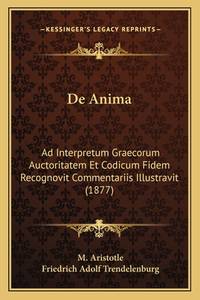
16180454RfGColoniae (Köln), Lazari Zetzneri, 1618. zwei Titelvignetten, 7 Bl., 1035 S., 2 Bl., 7 Bl., 72 S., 2 Bl., [5 Warenabbildungen] gesprenkelter Halblederband der Zeit mit goldgeprägtem Rückentitel, dreiseitiger Rotschnitt. Zustand 3, Ecken u. Kanten berieben u. bestoßen, Rückenleder Schürfstellen, Vorsatz Zahlen in Farbstift, Titel 4 kleine Fleckchen, 2 Besitzeinträge, 1 durchgestrichen, 11 Blatt durchziehender 2 mm-Insektenfraßgang u. 1 mm-Gang durch halben Buchblock, Papi
19911042592Hildesheim ; Zürich ; New York : Olms, 1991. XVIII, 443 S. ; 23 cm; kart.
xv + 251pp., in the series "Zur modernen Deutung der Aristotelischen Logik" volume 5, 22cm., publisher's hardcover in red cloth with gilt lettering, very good condition, F105605
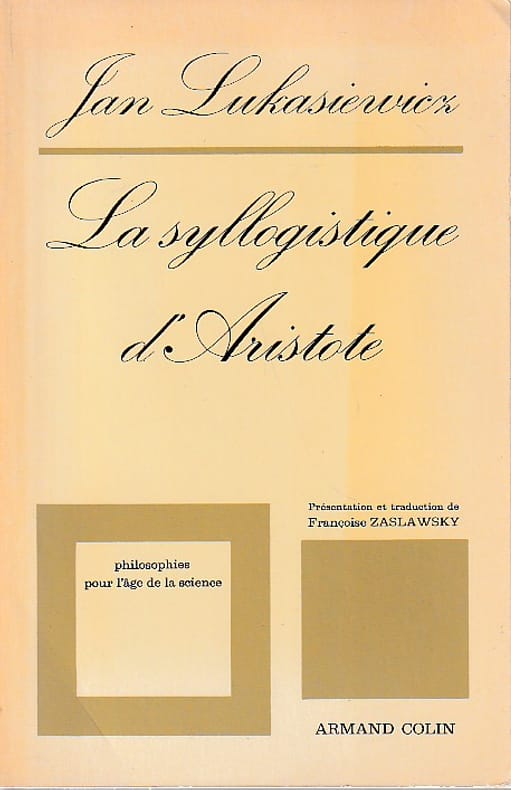
66425Armand Colin, 1972, 226 pp., broché, couverture un peu défraîchie, état correct.
ix + 278pp., 1st edition, in the series "Pubblicazioni dell'Istituto di Storia della Filosofia dell'Universita degli Studi di Milano" volume 5, 25cm., softcover, text and interior are clean and bright, good condition, F105563
1961F105563Firenze, La Nuova Italia 1961 ix + 278pp., 1st edition, in the series "Pubblicazioni dell'Istituto di Storia della Filosofia dell'Universita degli Studi di Milano" volume 5, 25cm., softcover, text and interior are clean and bright, good condition, F105563
2022x-1647283191Willford Pr 2022. Hardcover. New. 235 pages. 10.88x8.00x0.75 inches. Willford Pr hardcover
2022x-1639893938States Academic Pr 2022. Hardcover. New. 254 pages. 10.88x8.00x0.75 inches. States Academic Pr hardcover
210pp., dans la collection Savoir, 21cm., brochure originale, bon état, F105413
197547619Hermann et Cie , Savoir Malicorne sur Sarthe, 72, Pays de la Loire, France 1975 Book condition, Etat : Bon broché In-8 1 vol. - 210 pages
1975F105413Paris, Hermann 1975 210pp., dans la collection Savoir, 21cm., brochure originale, bon état, F105413
[viii] + 80pp., 24cm., originele omslag, grotendeels nog onopengesneden, goede staat, F94324
F94324Utrecht, Typ. van Kemink & zoon s.d. [viii] + 80pp., 24cm., originele omslag, grotendeels nog onopengesneden, goede staat, F94324