4 536 résultats
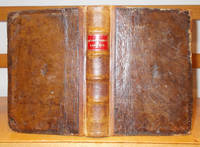
1532V75865Cologne: Joannes Gymnicus Gymnich 1532 1533 1532. Hardcover. Good. Woodcut pictorial titlepages with borders of female deities etc to each of 3 works fine illustrated colophon to 2nd work. . Sammelband of 3 Works in one Volume. Small octavo pigskin on wooden boards front cover with floral marginal rolls central holy figures SS Peter & John and ownership stamp SVM IACOBI BVECSEN MDXXXIII. Back cover with border of dancing figures one dated 1528. Spine on 3 raised bands brass clasps missing but catches present. Some damage to head & foot of spine edges worn but stamped pigskin covers in excellent condition. Front & back endpapers present but pastedowns removed showing at gutters vellum strips with black & red MS lettering used to attach wooden boards to spine. Work I 16pp woodcut emblematic bordered titlepage Erasmus dedication to Beraldo dated Basel 8 June 1522 Index 385pp 1p blank collated complete except Lacks one leaf of text at Fii pp83-4. Titlepage has early ink ownership name Zielenski repeated at Aii verso of Work II in centre and partly erased MS library notes at foot. Some neat red ink underlining & marginal notes throughout light brown marks of former damp at top margins from start affecting up to 5 lines by end but all clearly readable. Small tears neatly repaired at top of last 2 sections without loss of text except on last leaf. Work II 2nd woodcut titlepage with Adam & Eve on either side nudity partly inked out 80 leaves unpaginated but collated complete with signatures A-K8 last page has full-page colophon of seahorse Gymnich's printer's mark Latin motto and Greek text round all 4 sides. Work III has 3rd woodcut titlepage with same Adam & Eve surround but no ink nudity defacement 127pp 1p blank collated complete but with tears at top margin some with minor paper loss neatly repaired. At end 12 marginally damaged blank leaves are bound in. Nice woodcut titlepages and very interesting early binding. Rare K lner Gymnich imprint Sammelband of 3 Works referenced I. Adams E558 VD 16 E 2514 Bezzel 609; II. VD 16 & van der Haeghen not in Adams; III. VD 16 not in Adams. Joannes Gymnicus (Gymnich) hardcover
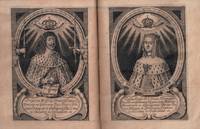
107057København 1650. 4to. Samt. rødt helfløyelsbd. 42 bl. Tittelbl. trykt i rødt og sort. Kobberstukne portretter av Fredrik III og dronning Sophia Amalia. Eksemplar på stort papir. Bindet litt slitt. Tittelbl. og noen bl. med svak fuktskjold i øvre høyre hjørne. . unknown
1988C94084Luca Verlag. As New. 1988. Hardcover. 3923641141 . FREE UPGRADE to Courier/Priority Shipping Upon Request - IN STOCK AND IMMEDIATELY AVAILABLE FOR SHIPMENT - Flawless copy brand new pristine never opened -- Text in Dutch; summaries in English and in German. Catalogue Raisonne Catalog Raisonné Complete Works Catalogus Het Complete Oeuvre Raisonnee -- with a bonus offer-- - May be EITHER: out of print OOP and extremely rare in this pristine condition; signed by author or contributor; or a first or special edition; inquire for details . Luca Verlag hardcover
In 16, pp (LXI) 310, tutta pergamena molle (brunita), bella impresa xilografica al frontespizio di Melchiorre Sessa(gatto con topo in bocca in cornice figurata) e in fine (gatto che cattura topo in cornice figurata e motto che tradotto e' 'La compagnia dei dissimili e' infida'), qualche capolettera inciso. RARISSIMO ESEMPLARE: 2 copie conosciute in Italia secondo il catalogo Cinquecentine dell'OPAC ICCU. 5689 Gora di umidita' che prende la parte inferiore del volume. Contraffazione veneziana della prima edizione di Lione. Cancellature ad inchiostro relative ai nomi di Erasmo, Latomi e Corradi. /CICERO - CICERONE - DE OFFICIS - DE SENECTUTE - SOMNIO SCIPIONIS - ERASMO DA ROTTERDAM)
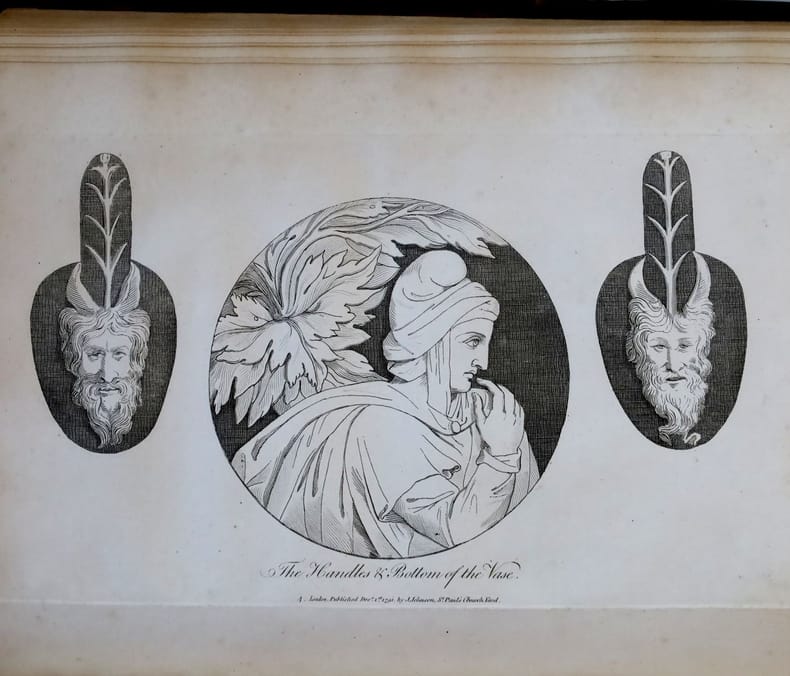
179193718London, printed for J. Johnson, 1791, in-4, Front, XII-214-126-[2] pp, 9 pl. dont 1 depl.; front, [2]-IX-197 pp, 9 pl, Reliure ancienne, dos lisse, plats de veau brun rapportés, Célèbre poème scientifique du grand père de Charles Darwin, Erasmus Darwin (1731-1802). Cet exemplaire comprend la première édition de la première partie (The Economy of Vegetation) et la troisième édition de la deuxième partie (The Loves of the Plants), enrichie de deux planches supplémentaires par rapport à la première édition de 1789. Le Jardin botanique fut publié de manière inversée, selon le souhait de l'auteur, qui fit d'abord paraître la seconde partie de l'ouvrage (1789 et 1790), la jugeant plus apte à divertir et charmer. Comme dans les autres oeuvres d'Erasmus Darwin, ce poème contient un grand nombre d'informations scientifiques souvent avancées. La première partie, plus scientifique, couvre la philosophie naturelle et fait état de nombreuses recherches et inventions contemporaines, telle que l'histoire du cosmos. En seconde partie, l'auteur explique le système de la reproduction sexuée de Linné avec les propriétés remarquables de certaines plantes en particulier. L'aïeul de Charles postule que la reproduction sexuelle est au coeur des changements et des progrès de l'évolution, tant chez les humains que chez les plantes. Cette conception d'une transformation progressive des espèces appartient aux sciences de la reproduction et rejoint les théories pré-évolutionnistes qui sont apparues à l'aube du XIXe siècle (Laniel-Musitelli). Néanmoins, son petit-fils, Charles, déclara que la théorie d'Erasmus n'avait pas eu d'effet sur L'origine des espèces. Le Jardin botanique est également précieux pour son illustration, qui comporte deux frontispices, 18 planches et une vignette dans le texte : 5 des planches du volume I ont été gravées par William Blake, soit 4 gravures du vase de Portland et la planche de la Fertilisation de l'Égypte, d'après un dessin de Johann Heinrich Füssli (Henry Fuseli), célèbre peintre du Cauchemar. Ex-libris gravé de Marcus Jacobson. Coins et dos anciennement refaits. Épidemures sur les plats. Légères rousseurs et salissures sur les premiers feuillets. Garrison & Morton n° 8921. Sophie Laniel-Musitelli, "Erasmus Darwin : naissance du transformisme dans le texte poétique". In Bulletin d'histoire et d'épistémologie des sciences de la vie, 2011/1 (Volume 18), p. 25-40. Couverture rigide
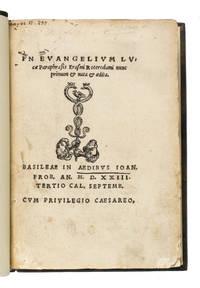
1523ABC_49899Basel 1523. Small 8vo 10.7 x 15.2 cm. Johann Froben Modern blind-tooled marbled calf bound by Period Bookbinders from Bath England with the author and title lettered in gold at the head of the spine the year at the foot of the spine. With 2 small woodcut illustrations incorporating Frobens device on the title page and the verso of the final leaf a woodcut headpiece above the dedication and two woodcut decorated initials. 275 ll. First edition of Erasmus Paraphrase on the gospel of Luke. Unlike his paraphrases on the gospels of Matthew Mark and John each dedicated to rulers of France or the Holy Roman Empire this work was addressed to King Henry VIII of England. The lengthy dedicatory preface which spans the first twelve leaves takes the form of a personal letter from Erasmus to the king. The Paraphrase on Luke was also unique in its format: it was the only one of the gospel paraphrases to be first published in octavo. The Paraphrases themselves were a novel form of literature at the time: more than mere translations or commentaries they were interpretative retellings of the gospels aiming to clarify the theological and moral meaning of Scripture for a wider audience. Despite Erasmus towering knowledge of the Church Fathers and his editorial work on patristic texts his method in the Paraphrase on Luke was not one of direct quotation from memory. Instead as Jan Bloemendal states Erasmus likely worked with various compilatory sources on his desk texts such as Bedes commentary on Luke the Glossa Ordinaria a medieval annotated Bible and Aquinas Catena Aurea which gathered together centuries of Christian interpretation. Through these sources Erasmus was able to channel the voice of the early Church while crafting something new and distinctly his own.Modern scholarship has also examined the layered narrative voices in the paraphrase on Luke. According to Bloemendal Erasmus plays with the roles of paraphrast narrator and evangelist creating a subtle interplay between himself and the biblical Luke. This device allowed Erasmus to offer veiled critiques on the abuses and moral failings of his own time under the guise of Lukes voice while also inviting his readers into a deeper more personal engagement with Scripture.With some contemporary underlining and annotations primarily consisting of corrections textual additions and markings of notable passages; a later bibliographical annotation in brown ink at the head of the title page "Panzer VI 237" and a small bookbinders label mounted in the bottom inner corner of the recto of the final blank flyleaf Period Bookbinders Bath England Tel 0225 20698. Some small wormholes in the first 5 leaves slightly affecting the text the title page is slightly dust soiled. Otherwise in good condition.l Adams E 755; Bezzel 1164; Bloemendal Collected Works of Erasmus vol. 47: Paraphrase on Luke 1-10 edited by Jane E. Phillips Erasmus Studies 37 2 2017 pp. 217-222 see p. 218; Bloemendal Exegesis and Hermeneutics in Erasmus Paraphrase on Luke Erasmus studies 36 2 2016 pp. 148-162; BM STC German p. 119; USTC 665710; Vander Haeghen I 148; VD16 E 3061; not in De Reuck. unknown
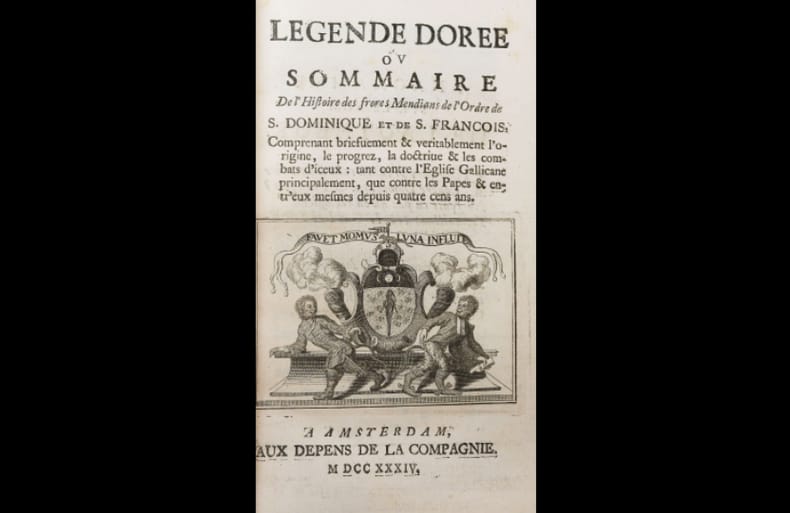
173423640Amstardam, Aux Dépens de la Compagnie, 1734. 2 volumes in-12 (10 x 18 cm) maroquin citron à long grain, dos à nerfs ornés de petits fers dorés, roulette dorée encadrant les plats et à l'intérieur des plats, gardes et doublures de papier rose, tranches dorées. (22)-396 et 419 pages. (Reliure signée Bozérain jeune).
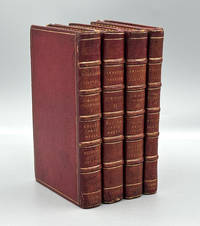
nov8<p> ANNOTATED COPY OF THE IMPORTANT COLLECTION OF GREEK TRAGEDIES PUBLISHED BY HENRI ESTIENNE IN 1567 </p><p> TRANSLATIONS BY ERASMUS - ELEGANT EARLY 19TH-CENTURY LONG-GRAIN MOROCCO BINDING </p><p><strong> GREEK TRAGEDIES ERASMUS </strong></p><p><strong>AESCHYLUS SOPHOCLES EURIPIDES</strong></p><p><strong><em>Tragoediæ selectæ Æschyli Sophoclis Euripidis cum duplici interpretatione Latina.</em></strong></p><p><strong>Geneva Estienne 1567.</strong></p><p>2 parts bound in 4 volumes 16mo: I 2 ff. 379 p. 2 blank leaves; II p. 1–383 p. 384 blank; III p. 385–735 p. 736 blank; IV p. 737–955. Bound in early 19th-century red long-grain morocco gilt fillet borders on the boards spines with raised bands and gilt decorations gilt dentelles all edges gilt blue endpapers and doublures spines sunned light rubbing to spines hinges corners and boards; minor stains on boards scattered light foxing slightly trimmed margins.Dimensions: 12.6 x 7.1 cm.</p><p><strong>Provenance</strong></p><p>Annotated by a contemporary reader shortly after the publication of the book.</p><p><strong>References: </strong>Renouard Estienne 130 no. 5. Schreiber The Estiennes 1982 no. 169.</p><p><strong>Languages of annotations:</strong> Latin; Greek a few words.</p><p><em>"A pocket edition for the 'common reader' of eight Greek tragedies"</em> Schreiber</p><p>This edition prepared by Henri Estienne and beautifully printed in small Greek Roman and Italic types includes: Prometheus by Aeschylus Three tragedies by Sophocles Ajax Electra Antigone Four tragedies by Euripides Hecuba Iphigenia at Aulis Medea Alcestis.</p><p><strong>Each tragedy is presented with the Greek text alongside two Latin translations: a prose "word-for-word" version opposite the Greek text and a versified translation following it.</strong> The versified translations are by Erasmus Melanchthon Joachim Camerarius Buchanan and Georg Rattaler. However no versified translation is included for Prometheus.</p><p><strong>The Euripides volume is particularly notable as it constitutes the only edition of Euripides published by Henri Estienne</strong> who never produced a standalone edition of this author. This gap was only filled by his son Paul in 1602.</p><p><strong>Annotations Focused on Euripides Especially Erasmus' Translation of Iphigenia</strong></p><p>The reader's annotations are concentrated in the Euripides volume particularly in Erasmus' Latin translation of Iphigenia which he has densely annotated. Additional notes follow in the general discussion of tragedy and comedy appended to the text. There are also a few notes on Medea in Buchanan's translation. The other volumes are unannotated or sparsely marked.</p><p><strong>The annotator extracts and reformulates striking or gnomic expressions from the text such as: </strong>"The condition of mortals is that nothing is happy on all sides" Mortalium conditio nihil ab omni parte beatum Vol. I p. 50. "The terrifying visions of the night" visa nocturna terrifica Vol. I p. 9. He notes realia such as the Greek custom of greeting by clasping hands salutandi mos apud Graecos Vol. I Iphigenia p. 71. The reader also comments on key mechanisms of tragedy such as:"The beauty of Helen was detrimental to her and her kin…" Forma Helet sibi et suis esse detrimentum… Vol. I p. 53. The annotator elucidates Greek terms for example: "Suffocating heat" gorgicôn toasthôn vehementes aestus p. 66. He also provides references to classical works such as: A note on the winged Fama alis fama p. 64 referring to Book IV of the Aeneid Forma alata/ Vide Aeneidos 4°.</p><p><strong>A Remarkable Annotated Copy Bound in Elegant Long-Grain Morocco</strong></p>
1547014688Basileae: Hieronymus Froben & Nikolaus Episcopius 1547. Book measures 16.5x11.5.cm. 415pp.1pp printer's device. Rebacked retaining period or early boards raised bands leather lebel. Some wear to edges of boards. Binding in very good clean firm condition. Internally previous owners bookplate very light staining of browning to margins. Pages in very good clean condition. A very nice copy. F. Leather. Very Good. 8vo. [Hieronymus Froben & Nikolaus Episcopius]
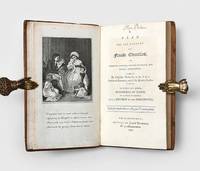
17971978Derby: J. Drewry 1797. First edition. Contemporary quarter calf over marbled boards; spine ruled in gilt with red morocco label; all edges dyed yellow. Boards and spine rubbed; some chipping along edges. Original stab holes visible in gutter margins. Previous owner's bookplate on front pastedown; ink signature of Mary Wolley to front free endpaper; light foxing. Quarto collates complete with half title and engraved frontispiece: viii 9-128. Bound with: Fosbrooke T.D. The Economy of Monastic Life. Glocester: Printed by R. Raikes 1792. First edition dedicated to Edward Jenner who is also listed as a subscriber. Internally a copy in excellent condition.<br /> <br /> The grandfather of the illustrious Charles Darwin Erasmus Darwin wrote this treatise on the education of young women to support his own daughters' school at Ashbourne. Darwin's treatise takes a comprehensive view of women's education suggesting that it should reach beyond social skills such as the "perpetual appearance of attention" polite dancing and flattering dress and into formal intellectual pursuits including literature history mathematics and the natural sciences. While he promoted women's education in part to improve the likelihood of companionate marriages Darwin's text tentatively acknowledges that a marital partnership can only function happily when both parties have an intelligent understanding of the world and the ability to participate in it. "A radical campaigner for equality he condemned slavery supported female education and opposed conventional Christian ideas on creation" Farra. With a bookplate from the library of the Wolley family this particular copy has the ownership signature of female reader Mary Wolley. J. Drewry unknown
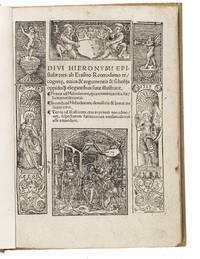
1518ABC_49875Cologne: Johann Gymnic 1518. Modern faux-leather-patterned paper with a grey paper label on the spine with the authors name lettered in silver Erasmus v. Rotterdam. 4to. With the title set with in a frame built up from 4 or possibly 6 woodcut illustrations including printer's initials and the date 1518 and 10 woodcut decorated initials. Selection of three letters by the Church Father Jerome of Stridon Saint Jerome ca. 342/47-420 CE edited and annotated by Erasmus. Erasmus felt a profound connection to Jerome. He saw in the ancient Church Father not only a kindred spirit but also a mirror for his own intellectual and spiritual journey. Included in this volume are three letters: first the epistle to Heliodorus on the praise of the solitary life de vita solitaria a stirring defence of ascetic withdrawal from the world; second the epistle to Heliodorus on the misery of human life de miseria vitae humanae a sombre reflection on the fleeting nature of earthly existence; and third the epistle to the monk Rusticus on avoiding familiarity with women de mulieribus evitandis a warning shaped by both monastic ideals and Jeromes personal convictions. Additionally a short fourth letter addressed to Onasus is included at the end of the volume though it does not appear on the title page. In this letter he satirically addresses the priest Onasus who had a deformed nose and his feeling of being unjustly attacked and being made a fool of in other letters and writings by Jerome.With early manuscript annotations corrections etc. of the printed text in the margins and occasional underlining of the text mainly concerning the third letter written in three different hands in both brown and black ink. With a 0.5 cm worm hole in the gutter margin not affecting the text. Occasional foxing and browning and some water staining in the fore-edge margin of several leaves. Overall a good copy.l BM STC German p. 440; USTC 640603 3 copies; Vander Haeghen II 29; VD 16 ZV 7938; not in Adams; De Reuck. Johann Gymnic, hardcover
15672733Basileae : Apud haeredes Nicolai Brylingeri M. D. LXVII. 1567 1567. Hardcover. Good. 26 643 1 p. the last page blank ; 17 cm. 8vo ; References: Adams; T-361; VD16; T-466 ; OCLC: 35196231 ; preface by Desiderius Erasmus dated 1532 ; includes commentary on each play by Giovanni Calfurnio ; Title vignette; initials ; Signa tures: a-z8 A-T8 Nota Bene: incomplete volume : A-B are missing pages 339-375 comprising Actus II Scena I - Actus III Scena II of Adelphi ; Contemporary panel-stamped cream/butter-colored pig-skin binding ; raised bands ; green speckled fore-edg e ; two-tone silk headband ; bookplate "E Bibliotheca Collegii Cremsensis" dated 1818 with ownership written in ink across title page ; large crayon pencil mark in red "LVIII29" on lower portion of title page ; text in Latin italic type font f or the text of the plays ; only one other known institution copy held by the Newberry Library ; slight worm damage to top of spine ; soiling ; marginalia on some pages in a contemporary humanist hand on pages 2-5 17-19 439-40 445 478-79 491-92 529-30 615 640-42; name and text on back ep in a German hand writing Frakturschrift consisting of a paraphrased quote from the Psalms ; Contents : Terentii Vita -- Andria -- Evnvchvs. Eunuchus -- Heavtontim. Heautontimorumenos -- Adelph. A delphi -- Hecyra. -- Phormio. ; also contains a poem in Latin iambs by Erasmus printed on the reverse of title page ; G <br/> <br/> Basileae : Apud haeredes Nicolai Brylingeri, M. D. LXVII. (1567) hardcover
15597737Bâle 1559 1 Basilea: Per Hier. Frobenium et Nicol. Episcopium, 1559. In-4: 23 x 33,5 cm, 6 ff. n. chiff. [titre, tables], 886 pp. [Antiquitatum Judaicarum Liber I-XX; Flavii Josephi vita; De bello Judaico Liber I-VII; Contra Apionem Liber I-II; De Machabaeis]+ 17 ff. n. chiff. [index, colophon]. Nouvelle édition, augmentée et révisée, de ce Flavius Joseph des Froben de Bâle paru pour la première fois en 1534. Traduction latine par lhumaniste tchèque par Sigmund Gelen (1497-1554) du corpus josephien comprenant Les antiquités judaïques, La guerre des Juifs, lAutobiographie de Flavius Josèphe, Contre Apion. À cela sajoute le De Imperio rations, ou De Machabaeis, édité quand à lui par Erasme (1467-1536). Marque des Froben à la page de titre et au colophon. (Heinz Schreckenberg, Bibliographie zu Flavius Josephus, I, Leiden, 1968, p. 14)Reliure de la première moitié du XVIIIe en veau blond. Dos à cinq nerfs avec pièce de titre en maroquin rouge et caissons ornés aux petits fers. Toutes tranches rouges. Ex-libris manuscrit à la page de titre: «Renatus Guillaume Presbiter 1729». Ex-libris: «André Gutzwiller». Coupe du plat supérieure abîmée. Larges mouillures aux premiers et derniers ff., sans altération du contenu. Quelques marginalia. Désirable pour la somptueuse typographie des Froben!
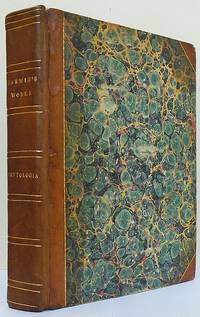
1800142097London: Printed for J. Johnson 1800. viii 612pp. Quarto 220 x 270mm. Contemporary calf with gold gilt decorations to the spine and gilt lettering stamped to a black moroccoo spine label. Illustrated with 12 engraved plates 2 folding 9 with an accompanying non-paginated text leaf. Some rubbing and wear to the boards with the top corners a bit bumped. Previous owner's inscription: "REVD. WILLIAM. RUSH. CHURCHILL 1775-1847 of Colliton Dorchester". Ex-libris of Darwin bibliographer Richard Freeman. Some offsetting and light foxing to the plates otherwise a tight and clean copy. A very good copy of this work by the grandfather of Charles Darwin with an interesting provenance. Erasmus Darwin was a well known English physician having turned down the opportunity to be a physician to the King at one point as well as a natural philosopher physiologist slave-trade abolitionist inventor and poet. 1800 Printed for J. Johnson hardcover
ff. [60], 320 numbered leaves. Woodcut Aldine anchor and dolphin printer's device on the title page and last leaf. Latin Italic type. Some age stain, especially on first and last leaves. In several places the name of Erasmus is obliterated in ink by a censor. An early ownership on the title has been washed out, and a small marginal chip has resulted. Small 8vo. 160 mm. Edges decorated red. Early nineteenth century full vellum binding. Lacks front fly leaf. This second and improved Aldine edition is essentially a reprint of the edition of 1516, edited by Giovanni Battista Cipelli, called Egnazio (1478-1553), with the addition of annotations by Erasmus, which were first published in the Froben edition of 1518. Both Aldine editions contain the relevant texts of Aurelius Victor and Eutropius with the continuation by Paulus Diaconus. The full work was once the common manual of almost everyone who wished to study Roman history, and because of this long and hard use, it is extremely difficult to obtain a clean and perfect example - Renouard. This second edition is considered the more valuable, as containing an 'Index Memorabilium' and the notes of Erasmus and the Venetian philologist Joannes Baptista Egnatius (ca. 1473-1553). Gaius Suetonius Tranquillus, commonly known as Suetonius (ca. 69/75-after 130). Suetonius was a close friend to Senator and letter-writer Pliny the Younger. Pliny describes him as 'quiet and studious, a man dedicated to writing'. Through Pliny, Suetonius came into favor with Trajan and Hadrian. Under Trajan he served as secretary of studies (precise functions are uncertain) and director of Imperial archives. Under Hadrian, he became the Emperor's secretary. In 122, Hadrian dismissed him for disrespectful behavior towards Empress Vibia Sabina. Suetonius may have later regained imperial favor under Hadrian and returned to his position. It was probably in Hadrian's time that he wrote his most important surviving work - this set of biographies on the Lives of the Twelve Caesars. Entitled 'De Vita Caesarum' it deals with successive Roman rulers, from Julius Caesar to Domitian. It also includes other texts on Roman history, notably Eutropius. This collection of ancient Roman historians is dedicated to the great book collector - Jean Grolier, and is followed by a letter from Erasmus commending the edition as well as Egnatius' scholarship. Renouard 91:7; Schweiger 974-975; Adams S-2035; UCLA A4S93; Graesse VI, 521; Ahmanson-Murphy 201 (incomplete); Bibliotheca Erasmiana Bruxellensis 499 (incomplete); Dibdin II, p. 439; STC Italian p. 651. Very good. Scarce. **PRICE JUST REDUCED! ALDINE BOX SAFE
18104956A Gand, chez P. F. de Goesin-Verhaeghe; rue Haute-porte, n°229, 1810-1811. 1810 4 vol. in-8° (212 x 138 mm.) de: I. [3] ff. (faux-titre, titre, épigraphe); 20 pp. (préface du traducteur); [1] f. (titre de la première partie); 23 pp. (reprise de la pagination à 19, préface de l'auteur); [1] p. (table); 614 pp.; [1] p. (errata); 3 planches aquarellées ; II. [2] ff. (titre, table); 659 pp.; [2] pp. (errata, avis au relieur); 4 planches (3 aquarellées, 1 gravée); III. XIV pp. (titre, titre de la deuxième partie, préface de l'auteur); 586 pp.; 3 planches gravées; IV. [1] f. (titre); 570 pp. (dont table); 1 planche dépliante gravée. Un total de 11 planches (dont 1 dépliante et 6 à l'aquarelle). (Corps douvrage très frais). Demi-basane d'époque, plats recouverts de papier marbré, dos lisses ornés, titre et tomaison de maroquin noir, tranches jaspées. (Quelques petites rousseurs).
ORD-3621Nouvelle édition revûe et corrigée sur le texte de l'Edition de Basle. Ornée de nouvelles figures. Avec des Notes. Sans nom. 1751. In-4 (180 x 242mm) plein veau porphyre, dos à 5 nerfs orné or, pièce de titre maroquin rouge, triple filet d'encadrement des plats, roulette sur les coupes, gardes mouchetées de rose, tranches dorées (reliure de l'époque), 4ff.n.ch., XXIV, 222, (2) pages. Exemplaire réimposé au format in-4. Frontispice à pleine page, gravé par Martinasie, vignette sur le titre, 1 vignette en bandeau, 1 cul-de-lampe et 13 planches hors texte, dessinés par Eisen et gravés par Aliamet, De La Fosse, Flipart, Legrand, Le Mire, Martinasie, Pinssio et Tardieu. La planche 7 n'est pas signée, la 1re est sans numéro. Petits défauts à la reliure, petites taches brun clair à la page 48, qq. rares rousseurs, auréoles brunes sur le titre et les 2 pages suivantes. Ex-libris armorié de Joseph Ashby Partridge. Assez bon exemplaire.
152920903bâle Johann Froben 1529 -in-folio plein-veau 2 Parties en 1 Volume, reliure plein veau brun raciné in-folio (binding full calfskin in-folio) (37,6 x 26 cm), RELIURE D'EPOQUE avec le dos entièrement restauré au 19ème, dos à nerfs (spine with raised band) décoré "or" et à froid (gilt and blind stamping decoration), auteur et titre frappés "or" avec filet "or" de part et d'autre, filet "or" en place des nerfs avec un filet or et un filet à froid de part et d'autre des nerfs, filet or en tête et en pied, plats avec les armoiries "or" (au centre) de Claude PELLOT, 1er Président au Parlement de Normandie (Ex-Libris aux mêmes Armes gravées sur cuivre en noir à l'envers du titre), roulette "or" sur les coupes avec manque de dorure (blurred gilding) et manque de cuir, toutes tranches lisses jaspées rouges, Ex-Libris gravé en noir sur sur papier velin crème au dos de la couverture : aux armes de LE FILLEUL des GUERROTS, Chateau des Guerrots [ Heugleville sur Scie (Seine-Maritime, Normandie, France)] + Ex-Libris : "Ex libris Monasterii Sanctae Mariae de Petra Gyrante"Abbaye Sainte-Marie de la Pierre-qui-Vire (Congrégation des Bénédictins de Subiaco) illustré en rouge sur etiquette crème , Texte en Latin, sans illustrations (no illustration) excepté une marque de l'Editeur FROBEN en bas du titre gravée sur bois en noir et la même en fin de volume (même chose pour la 2ème partie) + orné de Lettrines historiées (and illuminated of dropped initials) gravées sur bois en noir, (24 + 596 [i.e. 610] + [2]) + (190 p. d' INDEX) pages, 1529 Basileae : [Johann Froben], (Basileae : in officina Io. Frobenij, 1528) Editeur,
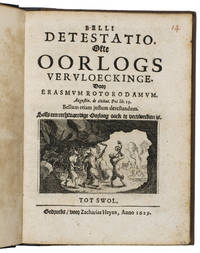
16292941Zwolle 1629. 4to. for Zacharias Heyns colophon: printed by Frans Jorrijaensz 19th century half brown morocco with the author title and imprint lettered in gold on the spine brown cloth sides. With a large engraved emblem on the title page 5 decorated woodcut initials a woodcut headpiece 2 headpieces built up from typographical ornaments a woodcut tailpiece and a tailpiece built up from typographical ornaments. 28 ll. First edition of Zacharias Heyns' new Dutch translation of Erasmus' famous anti-war essay Dulce bellum inexpertis. This essay was originally part of the 1515 edition of the Adagia but was first published as an independent work by Johann Froben in 1517 with the title Bellum. The present Dutch edition is quite rare as we have not been able to find any other copies in sales records of the past hundred years.The Adagia was first published in 1500 but Erasmus continued to edit the work until his death. The 1515 edition published by Froben was greatly expanded but the essay for the proverb Dulce bellum inexpertis war is sweet to the inexperienced was the longest and most remarkable addition. In the essay Erasmus argues that war is senseless unchristian and contrary to human nature. He also critiques the militaristic culture of his time which glorified violence and aggression and advocates instead for diplomacy and negotiation. The essay became so popular that Froben published it separately. Within ten years it had been reissued at Louvain twice at Strasbourg twice at Mainz at Leipzig twice at Paris twice at Cologne at Antwerp and at Venice. German translations of it were published at Basel and at Strasbourg in 1519 and 1520 and an English translation followed in 1533. The first Dutch translation was made in 1622. The present second Dutch translation made during the Eighty Years' War shows how the work continued to inspire more than a hundred years after it was first written.The spine has been slightly rubbed. The end paper are browned the work is lightly browned throughout. Otherwise in good condition.l Knuttel 3921; Bibl. Belgica E 247; Erasmus Bibl. Rotterdam p. 29; Erasmus Online 465; STCN 831153881; USTC 1026760; Vander Haeghen I p. 22. hardcover
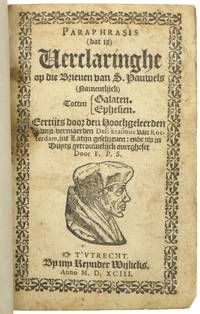
159312512Amsterdam Pieter la Burgh / T'Utrecht Reynder Wijlicks 1658/1593. 2 werken in 1 band 124 142 p. Origineel Perkament 8°. Twee werken van Erasmus in het Nederlands vertaald waarvan het tweede in deze uitgave uiterst zeldzaam is. Amsterdam, Pieter la Burgh / T'Utrecht Reynder Wijlicks unknown
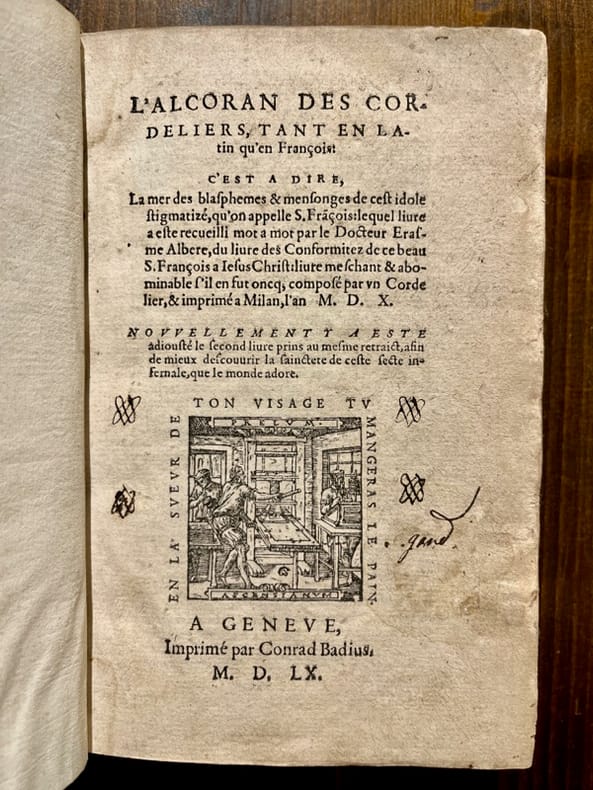
156019664A Genève, imprimé par Conrad Badius, 1560. 2 parties en un volume in-8 de 8-278-[2] et [16]-303-[1] pages [A4; a-r8; s4; *8; A-T8]. Reliure 19ème en plein veau brun, dos à nerfs orné de petits fleurons dorés. Les plats sont constitués du cuir de la reliure originale, ornés au centre d'une large pastille dorée, décorée d'arabesque; encadrés de double filets dorés et à froid, Tranches dorées.
1798167893Philadelphia: Printed by John Ormrod 1798. A "determined stand against the nearly universal belief that women ought to be feather-brained and feeble-bodied" First US edition of Darwin's treatise on the education of women presented here in a well-preserved contemporary binding. This copy's title page is signed in a contemporary hand by one "Eliza Phelan". Although Darwin ultimately sought to educate women so as to make them useful companions for men his was a more equal "different but complementary" conception of the male-female relationship than was commonly held ODNB. The Plan advocated the creation of dedicated schools for girls where such subjects as botany and experimental philosophy would be taught. "In retrospect the most important feature of the book is his determined stand against the nearly universal belief that women ought to be feather-brained and feeble-bodied. He was taking the first crucial step along the path that has led to sexual equality and feminism" King-Hele p. 284. Darwin wrote from the start with practical applications in mind: the work originated as advice to his two illegitimate daughters for whom he had bought a converted inn to run as a school for girls. It is perhaps for this reason that the work has been described as "the most appealing of Darwin's prose publications" ibid. p. 282. The Plan was originally published in Derby in 1797: the US edition was published a year later with Darwin's slender tract bound with the unrelated Rudiments of Taste a work which had been published several times before in Philadelphia and London over the previous decade. Duodecimo 168 x 99 mm. Engraved frontispiece numerous engraved head and tailpieces in the text. Contemporary speckled sheep smooth spine ruled in gilt forming 5 compartments red morocco label to second. Late 19th-century book label of one "Jean Rouche" to front pastedown. Small hole to foot of spine very light bumping and wear to extremities small ink stain to p. 38 over text without affecting legibility slight separation within gatherings I-N: a very good copy. ESTC W27662. Desmond King-Hele Erasmus Darwin: a Life of Unequalled Achievement 1999. unknown
581981st. Ed. Printed for J. Johnson by T. Bensley Bolt Court Fleet Street. 1800. pp.viii 612 xii with 12 engraved plates two being fold-out. 4to. Hardback. Neat signature dated 1818 to title page. A very minor amount of spotting o/w. contents exceptional and in fine condition. Marbled end-papers. Original half leather over marbled boards showing minor shelf-rubbing with a more recent period style spine in fine condition. A very pleasing copy. King-Hele said that ‘Phytologia’ is the best of Darwin’s prose works.has many new ideas and some major discoveries notably the specification of photosynthesis and of plant nutrients’. hardcover
1535009530Basileae : In officina Frob. 1535: Basileae : In officina Frob. 1535 1535. Collation 194pp2 blank 126pp 2 422pp. This being volume 2 parts 456. First 2 parts dated 1535 final part 1532. Volume 2. pt. 4: D. Erasmi Roterodami paraphrasis in Euangelium secundum Ioannem ad illustrissimum principem Ferdinandum per autorem recognita. 194pp.1535. pt. 5:1. In Acta Apostolorum paraphrasis Erasmi Roterodami ab autore recognita. 126 2pp. 1535. pt5:2. Secundus continens paraphrasim D. Erasmi Roterodami in omneis epistolas apostolicas summa cura denuo ab ipso autore recognitam emendatamque tum ex archetypis tum eruditorum animaduersione ita ut accuratius fieri uix potuerit. Caetera cognosces lector inuersa pagin. 442pp.1532. Bound in full early calf. Rebacked at some time not recently retaining original boards raised bands elaborate gilt tooling within compartments leather title labels. Calf lightly rubbed and scuffed. Binding in very good clean firm condition. Internally first title dust or dirt marked some light staining to first 25 pages early neat previous owners name inscription on bottom section of title. Pages in very good clean condition throughout. A very nice clean copy in a very attractive early binding. A6. Full-Leather. Very Good Plus. Folio - over 12" - 15" tall. Basileae : In officina Frob., 1535 Hardcover
1791D18576London: J. Johnson 1791. First Edition. Hardcover. Very Good. 4to. Two parts bound as one. Early leather rebacked with modern spine. Complete with 18 plates five of which are attributed to William Blake. This copy with the early ownership signature of Louisa Ponsonby. The hope for the book a scientific poem in two parts Darwin wrote was to enlist Imagination under the banner of Science . . . to induce the ingenious to cultivate the knowledge of botany . . . and recommending to their attention the immortal works of the celebrated Swedish naturalist Linnaeus. Dictionary of Scientific Biography. <br/><br/> J. Johnson hardcover