4 535 résultats
22750Lyon, s.n. [Sébastien Gryphe], 1555. 1 vol. in-16, veau fauve glacé, dos à nerfs orné de petits fleurons dorés, double encadrement de triples filets à froid sur les plats, petits fleurons dorés aux angles de l'encadrement intérieur, médaillon central formé de deux fleurons dorés. Reliure de l'époque, mors et coiffes restaurées. Bon exemplaire. Ex-libris ms. de Richard Bertrand (XVIe siècle) sur le titre. Impression en caractères italiques, 923 pp., (15) pp., (3) ff. blancs. Signatures : [a-z]8 [A-Z]8 [aa-nn]8. Nombreuses annotations marginales de l'époque.
In-16 p. (mm. 152x104), p. pelle bazana settecentesca (picc. spacchi ale cerniere), decoraz. e titolo oro su tassello al dorso, tagli rossi, 8 cc.nn., 864 pp.num., 28 cc.nn.; al frontespizio marca tipografica xilografata (e, a fianco, in parte riprodotta a penna), ornato da grandi e bei capilettera figur. su fondo nero, pure inc. su legno. Traduzione e raccolta di brevi significativi insegnamenti e aneddoti di autori antichi, greci e romani (Plutarco, Diogene Laerzio, Senofonte, Plinio, Tito Livio, Svetonio, Macrobio, Erodoto, Seneca, Filostrato, Valerio Massimo, Eutropio, etc.). "Prima edizione frobeniana" in 8 libri (la prima, in 6 libri, è del 1531). L’opera ebbe grande successo, fu tradotta in varie lingue ed ebbe numerosiss. edizioni. Cfr. Adams,I, 493 (p. 395). Corto del margine super. altrimenti esemplare ben conservato.
152245648Straßburg, Johann Knobloch d. Ä., 1522. 8°. Mit Holzschn.-Titelbordüre, einer Holzschn.-Anfangsinitiale u. einer großen Holzschn.-Druckermarke am Ende. 95 num., 1 nn. Bll., Mod. Ppbd.
21853Lugduni, Seb. Gryphium [Lyon, Sébastien Gryphe], 1553. Petit in-8, 536-[70] pp. signatures : a-z8 A-P8, basane marbrée brune, dos à nerfs orné de caissons dorés, pièce de tire rouge, tranches rouges mouchetées (épidermures et manques, petit manque angulaire au titre, minuscule déchirure marginale sans atteinte au f. C2, restauration d'un coin du f. M1 et au f. N1, quelques petites taches).
172058442à Leyde Leiden: Chez Pierre VanderBoudoin Janisson Vander 1720. Fine. Chez Pierre Vander Boudoin Janisson Vander à Leyde Leiden 1720 9.50 x 17 cm 6 volumes reliés First edition of Nicolas Gueudeville's translation particularly sought after for its illustration with the first printing of 55 half-page figures unsigned in the style of Romain de Hooge or Harrewyn Cohen 347. A frontispiece by Schinove and a large vignette with the arms of Frederick of Gloucester Prince of Hanover. Title pages in red and black. Contemporary full speckled brown calf bindings. Decorated smooth spines. Red morocco title labels and tan morocco volume labels. Triple fillet frame on boards. Head caps partially missing on volumes III and IV the others worn. Tail caps on volumes II III and VI worn. In volume VI from p. 95 to 115 a folded corner. Despite the noted flaws a handsome set well bound. Just like The Praise of Folly translated by Guedeville a little earlier which met with such success that this was the title retained in France for Erasmus's work although it was the translator's The Colloquies is a mixed work not merely an adaptation like most 18th-century translations but a recreation according to Guedeville's aims. The Colloquia Familiares or familiar conversations are a series of dialogues with very varied characters intended to represent the human comedy with a real didactic intention on the author's part: didacticism of language and morals. It is the entire society of the 16th century that parades through these dialogues with a watchword for the whole: the folly of men. Aubrey Rosenberg and most recently Paul Smith have examined Gueudeville's style as a translator and its main characteristics: amplification modernization oralization. As a general rule the translation is twice as long as the original the additions consisting essentially of humorous touches and jokes that accentuate the banter intended for a popular readership that does not necessarily read Latin. Allusions to current events are scattered here and there: the translator does not forget that he is also a journalist and there would undoubtedly remain discoveries to be made if one wanted to scrutinize more precisely the political scope of certain choices. The modernization furthermore consists in the use of fashionable vocabulary as well as the invention of pleasant neologisms. The insertion of oral turns of phrase such as interrogatives engaging the reader finally proceeds from Gueudeville's particular attention to the genre of texts he translates. He is thus sensitive to the theatricality implied by declamations. Similarly from the preface of his Colloquies he addresses his readers: ""Voulez vous bien que nous approfondissions un peu la Matière "" ""Would you like us to delve a little deeper into the Matter"". It nonetheless remains that the translator intends to be very respectful and faithful to Erasmus's work as evidenced by the numerous preliminary pieces on the author but he was above all concerned with amusing while instructing in keeping with the spirit of his century and the result seems to measure up as the philosophical and moralist matter of these dialogues is enhanced by a freshness of tone and banter for which Gueudeville is responsible. Chez Pierre VanderBoudoin Janisson Vander hardcover
172845761728 Amsterdam, François l'Honoré, 1728, 11.5x17. Reliure sobre en pleine basane d'époque. Dos à 4 nerfs. Page de titre en rouge et noir. Illustré d'un frontispice, d'un portrait et de 79 gravures dont 6 dépliantes. Privilège en flamand, avertissement, préface, texte et tables en français. Les gravures sont suberbes. Reliure simple mais solide. Envoi de photographies sur demande.
98313Paris, Editions J. Terquem 1927, Reliure plein maroquin. Titre doré au dos et auteur doré sur le plat inférieur. Mosaïque sur le plat supérieur, et quatre filets de mosaïques continus entre les plats et le dos. Trois filets de mosaïques sur le bord latéral du plat supérieur. Bordures avec triple filets dorés. Garde papier marbré doré. Couvertures et dos conservés. Très belle reliure. Edition originale sur papier vélin du Marais, numérotée n.° 696 / 1000, avec les initiales de l’éditeur, tirée à 1100 exemplaires, tous paraphés par l’éditeur. Magnifique reliure signée Lucy Weith et dédicace de l’illustrateur avec un dessin aux crayon à papier pour la relieuse: “ A Madame Lucy Weith, Hommage respectueux, Chas-Laborde ”, sur la page de faux-titre. Très bel exemplaire.
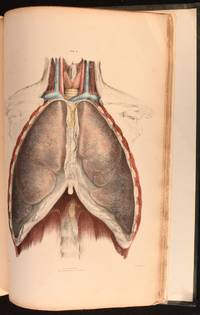
18421012F13London: Taylor and Walton 1842. First edition. Cloth. Very Good. 20.5" by 13.5". J. Walsh and William Bagg. Impressively illustrated throughout with hand-coloured anatomical lithographs this is the very scarce first edition of the first volume of Quain and Wilson's study of human anatomy. Volume I only of the very scarce two volume first edition of this work. The first volume of an impressive two volume study of human anatomy edited by Jones Quain and Erasmus Wilson in which detailed anatomical description accompanied impressive plates. Volume I is divided into three parts covering the bones ligaments muscles and viscera of the body with individual title pages. 'The Bones and Ligaments' 1842 illustrated with nine hand-coloured lithographs and twenty-one monochrome lithographs totalling 30 plates. Collated complete. 'The Muscles of the Human Body' 1836 illustrated with fifty-three hand-coloured lithographs and one monochrome lithograph. Collated complete. 'The Viscera of the Human Body' 1840 illustrated with twenty-six hand-coloured lithographs. Collated lacking three plates. These impressive plates were drawn by J. Walsh and William Bagg transferred to stone by William Fairland and printed by some of the most celebrated lithographers of the period. Rebound in library cloth with endpapers renewed. Pencil library notations to title page head. Published in fascicles and with the plates often removed and used for educational purposes complete volumes are exceptionally scarce. Rebound in full cloth with endpapers renewed. Bumping to back strip tail with light rubbing to boards. Hinges strained but firmly held. Internally generally firmly bound. Pages bright with handling marks throughout. Pencil inscriptions to title page head. Small losses to fore edges of leaves growing more significant to the rear of the work. Tide marks to perimeters of leaves to 'Bones and Ligaments'. Lacking three 'Viscera' plates. Very Good Taylor and Walton hardcover
180036911London 1800. First Edition. 4to pp. Illustrated with 12 engraved plates including one folding and one double page. Bound in contemporary 3/4 calf piece nicked from the bottom of the spine some foxing couple of plates with water stain plates foxed. Generally a very clean copy. Author Kenneth Robert's copy with his bookplate. Henrey 615; Nissen 452; King-Hele Erasmus Darwin 58-62; Wheeler Gift 621; McDonald page 224. Erasmus Darwin 1731-1802 was an English physiologist and poet the grandfather of Charles Darwin. A physician in Litchfield UK Darwin kept an 8 acre botanical garden. Darwin's reputation rests on his long poem The Botanic Garden 1789 which anticipates the Linnaean system. It was crude poetry seemingly written in a carriage while Darwin was traveling between patients. He decribed the plants through a misplaced amusing personification . In the present work he described the plants as having sensation and volition. Roberts is best rememebred for his American historical romances ie Trending into Maine Northwest Passage Arundel etc. unknown books
1643ST20492Lugduni Batavorum Leyden: Bonaventura Elzevier and Abraham Elzevier 1643. Second Elzevier Edition. 137 x 78 mm. 5 1/2 x 3". 12 p.l. 672 44 pp. 2 leaves. <br/> ELEGANT EARLY 19TH CENTURY RED STRAIGHT-GRAIN MOROCCO VERY ELABORATELY GILT BY BOZERIAN unsigned but see below covers framed by bead-and-star roll enclosed with double gilt fillets leaf tools at corners. smooth spine in compartments with large central fleuron of floral lancets emanating from central circlet in a richly stippled ground small circles at corners one compartment with gilt lettering cresting tulip and violet roll at foot of spine turn-ins with bead-and-star roll marbled endpapers vellum flyleaves all edges gilt. Woodcut initials headpieces and tailpieces numismatic portrait tondo fine engraved title page by C. C. Dusend showing Erasmus gazing through a telescope at the Godly orb seen through parted clouds. Willems 552; Rahir 546; USTC 1027918. For the binding: Culot "Jean Claude Bozerian" Roulette 9 Plate I and Palette 12 Plate X. Just barely perceptible rubbing to joints and extremities one leaf with tiny burn hole affecting a couple of words intermittent minor foxing negligible ink spots here and there other trivial imperfections but an extremely attractive copy the text fresh and clean and the very well-preserved binding with lustrous leather and bright gilt.<br/> <br/> This is a remarkably pretty copy of an extremely influential but generically elusive work printed by a legendary press and bound by the founder of a celebrated French binding dynasty. First published in 1524 the "Colloquia" comprise 63 conversations originally written for Erasmus' students on varied and overlapping topics but these urbane meditations soon became widely read as they covered subjects that intrigued the important thinkers of the day. Their influence was so profound that it is not saying too much to claim that they helped to speed the Reformation. Although they are difficult to classify precisely one could categorize them as including in general terms exposure of ritualistic fallacies invective against corruption within the church examination of popular imposture deploring of contemporary personal sins practical advice for laymen and miscellaneous discussion of amusing topics. In specific terms the text takes on such controversial topics as the value of pilgrimage celibacy and abstinence from meat on Fridays and other prescribed days. Erasmus' "Colloquia" was frequently published by the Elzeviers once in French and a total of nine times in Latin. The text was universally adopted for school use up through the 18th century. Although our lovely little binding is unsigned Culot firmly identifies its tools as those used by Jean-Claude Bozerian 1762-1840. He was the elder of the Bozerian brothers François is referred to as "le jeune" and was active in Paris from 1795 to about 1810. He began his career in Lyon as an apprentice bookseller printer and bookbinder eventually deciding to focus on the latter craft. Marriage to the widow of binder Pierre Boulier allowed him to establish a binding workshop in Paris where he was joined by his brother. His bindings were soon much in demand by French bibliophiles who appreciated their superior materials tasteful design and flawless execution--all characteristics that are plainly evident in the present case. Bonaventura Elzevier and Abraham Elzevier unknown
1992QQ0157Oxonii E Typo. Clarendoniano Oxford / Clarendon 1992. ~Pagination: xxiv 615 xx 608 xxxi 640 xxxii 639 xxiii 631 xxxi 518 xxiii 560 xliv 15 516 xxiv 497 xxiv 440 xxxii 400 iv 189pp. frontis to some vols. Latin text English footnotes. Reprint of the original 1906-1958 edition. Navy blue cloth gilt bright & fresh corners sharp. With the original clear polythene dustwrappers. No ownership marks. ~Robust packaging. Tracking can be added to overseas orders on request. Used books are exempt from USA tariffs. Fine/Fine. Lge 8vo 24 x 16 cm. Oxonii E Typo. Clarendoniano ( Oxford / Clarendon ) Hardcover
1795019670London: Printed for J. Johnson St. Paul's Church-Yard 1795. Book. Very good condition. Hardcover. 3rd Edition. Quarto 4to. Part I: 3rd edition printed 1795; xx 200 pages of text. Part II: 4th edition printed 1794; viii 218 pages followed by Additional Notes with 124 pages. Leather spine and corners with marbled paper-covered boards; hinges professionally mended. The spine has two large raised sections and is gilt lettered and decorated. Part I and Part II each contains a frontispiece. The text contains 19 plates including one fold-out and an additional in-text engraving. Previous owner's bookplate and notation on the inside front cover. Two plates are by William Blake Fertilization of Egypt and Tornado with 4 plates of the Portland Vase attributed to Blake but are unsigned. Two plates by Fuseli. Except for a few spots of soiling in the margins the text is clean and unmarked. Height = 285mm 11 1/4. . Printed for J. Johnson, St. Paul's Church-Yard Hardcover books
179817365<p>Philadelphia: Printed by John Omrod 1798 First American edition of this educational classic that shows the influence of Rousseau on the work of Erasmus Darwin 1731 – 1802. First published in London the previous year. Included in this edition is an American printing of Mrs. M. Peddle's Rudiments of Taste a popular conduct book was first published in London in 1789 and in the United States in 1790. Contemporary tree sheep with red morocco spine label. Gilt-ruled spine. Twelvemo. Separate title-page for Mrs. M. Peddle's The Rudiments of Taste. Some wear to binding and a couple cracks to sheep on upper board. Quite a fresh copy despite some foxing to first few leaves and some slight toning throughout. A very good tight copy of a fragile book. Darwin wrote the present work after helping his daughters Susan and Mary Parker establish a boarding school for young women in 1794. Here he draws on the theories of Rousseau Locke and Genlis to advocate for the education of women in schools in topics like philosophy the natural sciences history art manufacturing and language. Darwin believed that women should be educated for the purpose of becoming better wives and companions to men but promoted progressive notions that women's education would take place in well-resourced schools rather than in the home and that women should be educated in the concepts of finance industry and manufacturing. In Peddle's The Rudiments of Taste "Classical influence blends with Christian…Peddle recommends reading ancient and modern history travels biography science and good poetry not novels which leave their readers incapable of 'relishing anything superior'" Blain Grundy and Clements eds. The Feminist Companion to Literature in English p. 841.</p> Printed by John Omrod,
1800D18575London: J. Johnson 1800. First Edition. Hardcover. Near Fine. 4to. 19th century diced gilt-ruled calf. With 12 finely engraved plates. This copy has a nice provenance with early ownership signature of James Law a Lichfield resident as was Erasmus Darwin. Later bookplate of Marshall Laird to front pastedown. The content of this marvelous book ranges from a poem on broccoli to a detailing of the struggle for existence xix.7; a struggle that his grandson Charles would elaborate on sixty years later. <br/><br/> J. Johnson hardcover
1795019670London: Printed for J. Johnson St. Paul's Church-Yard 1795. Book. Very good condition. Hardcover. 3rd Edition. Quarto 4to. Part I: 3rd edition printed 1795; xx 200 pages of text. Part II: 4th edition printed 1794; viii 218 pages followed by Additional Notes with 124 pages. Leather spine and corners with marbled paper-covered boards; hinges professionally mended. The spine has two large raised sections and is gilt lettered and decorated. Part I and Part II each contains a frontispiece. The text contains 19 plates including one fold-out and an additional in-text engraving. Previous owner's bookplate and notation on the inside front cover. Two plates are by William Blake Fertilization of Egypt and Tornado with 4 plates of the Portland Vase attributed to Blake but are unsigned. Two plates by Fuseli. Except for a few spots of soiling in the margins the text is clean and unmarked. Height = 285mm 11.25 inches. . Printed for J. Johnson, St. Paul's Church-Yard Hardcover
15708875Cologne: Apud Gualtherum Fabricum & JoannemGymnicum sub Monoccrote 1570. Pigskin. Very good . Sm. 8vo. 1675345pp. Woodcut device on title page. 2 woodcut historiated initials. Original roll tooled pigskin binding spine soiled. Covers with a large central stamp depicting a royal personage holding a sword and the scales of justice back cover image rather worn. Ownership signature of Andreas Drischel on verso of front free endpaper dated 1578. VD 16 E 2050. Apud Gualtherum Fabricum, & JoannemGymnicum sub Monoccrote unknown books
173417931Amsterdam: Aux dépens de la Compagnie 1734. Fine. Aux dépens de la Compagnie Amsterdam 1734 10.50 x 17 cm deux tomes reliés en deux volumes First illustrated edition of a work that was initially published in 1542 in Wittenberg. 2 frontispieces and 21 engravings by Bernard Picard representing hagiographical episodes from the life of Saint Francis. Cohen 5. Red and black title pages. The half-title in an engraved border by Picard bears the date 1733. Contemporary full navy morocco bindings. Smooth Jansenist spine. Series of hatchings on the leading edges. Edges gilt. Spines slightly faded. Handsome binding quite rare. Famous pamphlet particularly violent against the book by Barthelemy de Pise which highlighted the similarities between the life of Jesus Christ and the life of Saint Francis. The book begins with a preface by Conrad Badius and Martin Luther very insulting towards the Papists and Cordeliers. The work is in Latin and French it reprises the hagiographical account of Saint Francis while adding footnotes and extremely severe and virulent criticisms. More generally the book is a direct attack against Catholics by Protestants accusing them of heresies abominations satanism. « Car il ce livre est tel que quand hommes et diables dégorgeraient leurs poisons exécrables tous contre Dieu ils n'en sauraient plus dire qu'un moine seul en a osé écrire » For it this book is such that when men and devils would pour out all their execrable poisons against God they could not say more than what one monk alone has dared to write Conrad Badius. Aux dépens de la Compagnie unknown
1796023399New-York: T. and J. Swords. Volume 1 only of 2 volumes. First American Edition. Full leather expertly rebacked with new spine label and volume number. Very early bookplate of Pardon Bowen of Providence possibly the Dr. Pardon Bowen who was born in 1757. Also a hospital library bookplate from Providence. 434 pp. All 6 color plates called for on the final page are present. 1796 on title page and advertisement on final page dated October 1 1796.Occasional slight foxing Very Good. . Very Good. Hardcover. 1st Edition. 1796. T. and J. Swords hardcover
196378653Oxonii: In Typographeo Clarendoniano 1963. 23.5 x 15 cm. original cloth with gilt lettering with dust jackets. 12 volumes. Over 6000 pages illustrated with plates. Text in Latin. Some edges with few stains; paper browned due to aging; dust jackets slightly damaged price clipped dust-jackets. Previous owner's names in first volume; some notes and underlinings in pencil and some notes in ink in the margins not very disturbing. Still good set see pictures. ¶ P.S. Allen began to work on his edition of Erasmus' correspondence in 1893 and the first volume was published in 1906. He died in 1933 with the edition more than half complete. His wife the late Mrs. H.M. Allen and his friend Professor Garrod continued the work; and the last volume of the text Volume XI appeared in 1947. - Reprinted lithographically in Great Britain at the University Press Oxford. In Typographeo Clarendoniano hardcover
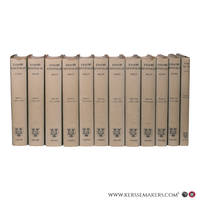
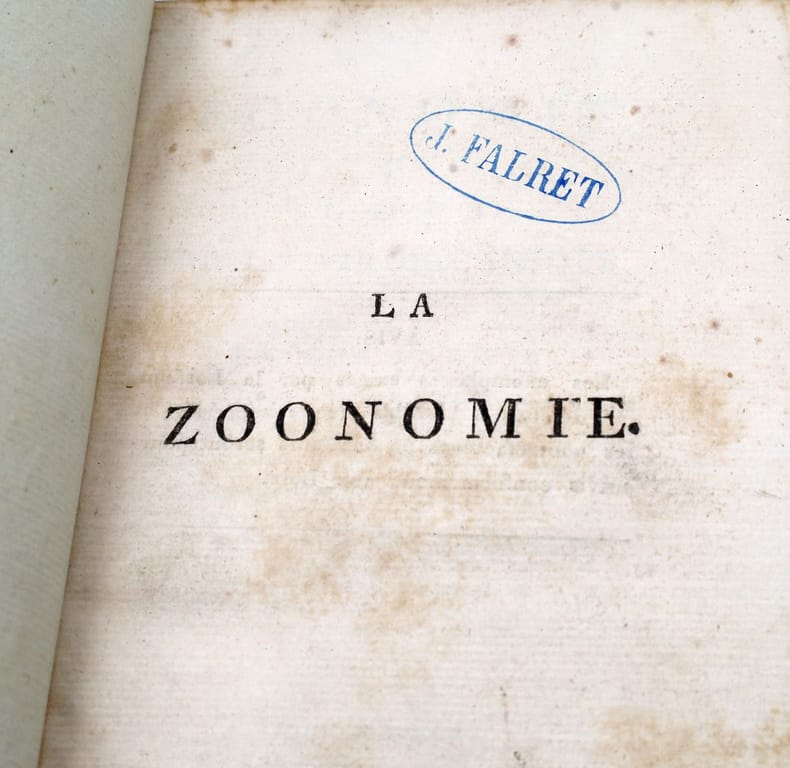
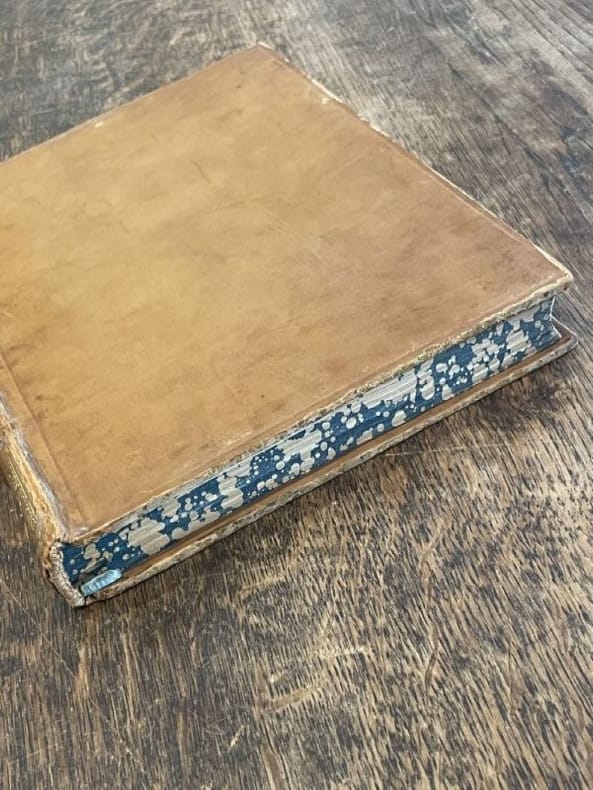
1810101765Gand, P. F. de Goesin-Verhaeghe, 1810-1811, in-8, 4 vol. : [6]-20 pp, [1] ff, pp. 19 à 23-[1], 614 pp, 3 pl. ? [4]-659-[1] pp, 4 pl. ? XIV-586 pp, 3 pl. ? [2]-570 pp, 1 pl. dépl, Demi-veau glacé postérieur, dos lisses et fleuronnés, pièces de titre et de tomaison havane, tranches marbrées, Première édition française de cet ouvrage majeur par le grand père de Charles Darwin, Erasmus Darwin (1731-1802). Cette somme, où se mêlent médecine, biologie et philosophie naturelle, avec certaines intuitions évolutionnistes, a été publiée à l'origine en 1794-1796 (Zoonomia; or the laws of organic life. 2 vols. London, J. Johnson). Le texte est illustré de onze planches, dont cinq en couleurs, qui représentent des expériences de persistence rétinienne et des inventions - ou appareil améliorés - de l'auteur : une machine thérapeutique à décharge électrostatique, consistant en une planchette et deux tubes de verre; un fauteuil orthopédique; une boîte à brosse circulaire pour pulvérisation de quinquina et de céruse dans le traitement de la phtisie; et un "lit de repos mobile à roues", envisagé pour faire tourner les malades afin de les endormir. Erasmus Darwin, inventeur, poète et pionnier en médecine, s'est préoccupé de philosophie naturelle et s'est intéressé aux recherches et inventions contemporaines. Il conçut un moulin à vent horizontal, une charrue améliorée, une pompe rotative ou encore une machine parlante. Il travailla aussi sur la turbine à vapeur, les toilettes, les élévateurs de canal et les télescopes. Il explora encore la formation des nuages, décrivit la photosynthèse et défendit un traitement humain des maladies mentales (Heirs of Hippocrates n° 998). On le considère comme un théoricien précoce de l'évolution : il postulait que la reproduction sexuelle est au coeur des changements et des progrès de l'évolution, tant chez les humains que chez les plantes. Son célèbre descendant déclara toutefois que la théorie d'Erasmus n'avait pas eu d'effet sur L'Origine des espèces (Laniel-Musitelli) : toutefois, Charles Darwin reconnaissait l'intérêt des travaux de son aïeul, en admettant notamment qu'il était "curieux de voir combien le docteur Erasme Darwin, [son] grand-père, dans sa Zoonomia (...), a devancé Lamarck dans ses idées et ses erreurs"*. Garrison & Morton n° 105 pour l'édition originale; Heirs of Hippocrates n° 999 pour la 2e édition anglaise. Sophie Laniel-Musitelli, "Erasmus Darwin : naissance du transformisme dans le texte poétique". In Bulletin d'histoire et d'épistémologie des sciences de la vie, 2011/1 (Volume 18), p. 25-40. Cachet ex-libris du psychiatre J[ules] Falret. Charnières fendillées et fragiles, manque en tête d'un dos. Bon état intérieur. * Charles Darwin, L'origine des espèces au moyen de la sélection naturelle (...) traduit sur la 6e édition anglaise, par Ed. Barbier. Paris, Reinwald, 1876, p. X. Couverture rigide
1751115491S.l. [Paris] s.n. 1751 1 vol. relié in-4, veau miel, dos à nerfs, pièce de titre de cuir rouge, caissons ornés avec fleuron central doré, filet à froid en encadrement des plats, roulette dorée sur les coupes, coiffes guillochées, tranches marbrées, XXIV + 222 pp. + 1 f. (table). Première édition établie par Meusnier de Querlon, avec ses notes, reprenant la traduction française de Gueudeville (parue en 1713). Il s'agit de la première oeuvre illustrée d'importance entreprise par Charles Eisen (1720-1778), composée d'un frontispice, 13 figures et 2 vignettes in texte gravés par Aliamet, La Fosse, Flipart, Legrand, etc. (Cohen, 348). Excellent exemplaire sur grand papier réimposé au format in-4, bien complet des deux feuillets d'explication des figures et du feuillet de table, dans une agréable reliure de l'époque (coiffes légèrement frottées avec infime manque en pied).
172058442Chez Pierre Vander Boudoin Janisson Vander | à Leyde 1720 | 9.50 x 17 cm | 6 volumes reliés
Volume in folio, legatura posteriore in mezza pelle, piatti marmorizzati, sguardie recenti, frontespizio stampato in rosso e nero, grande vignetta incisa con scena allegorica molto animata, grandi capilettera finemente ornati in xilografia e magnifici finalini, 6 cc., 776 pp., 79 cc.. Eccezionale insieme, il cui titolo continua con: "In qua continentur ...: Des. Erasmi Roterodami Chiliades. Hadriani Iunii medici Adagia. Ioan. Alexandri Brassicani IC. Symmicta. Ioannis Vulpii IC. Epitome. Petri Godofredi Carcassonensis IC. Prouerbia. Gulielmi Canteri IC. Adagia iuridica. Victoris Giselini medici Specimen adagiorum. Henrici Stephani Animaduersiones in Erasmum. Gilberti Cognati Nozareni Sylloge. M. Grunnii Corocottae Porcelli Testamentum. Polydori Vergilii Adagia. Caroli Bouilli Prouerbia. Hadriani Turnebi & M. Antonii Mureti Excerpta adagia. Guglielmi Gentii IC. Adagia iuridica. Melchioris Neipei Bredenani Adagia. ...". Importante e rara opera questa "summa" del sapere simbolico della cultura greca, latina, ebraica ed araba; un mastodontico lavoro di cospicuo rilievo per lo stampo umanistico della trattazione oltre che un prezioso tesoro di antichi adagi. Eccellente e di rarissima reperibilità. Una soffusa, non grave brunitura, più accentuata in poche carte. Unica menda, un antico segnalibro violaceo ha trasferito un poco di colore alla prima ed alle ultime due carte, successivamente sbiancate in prossimità della striscia (ormai appena visibile). Malgrado ciò, l'opera è in bello stato di conservazione ed ottimamente fruibile. Di indubbio valore e rarità.