3 283 résultats
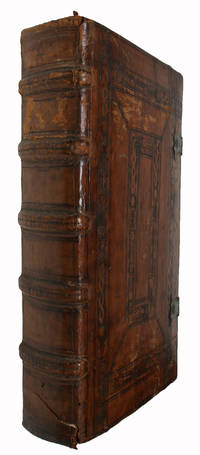
153147178Basel Froben 1531 Coloniae Petrus Quentell 1536. Folio. Bound together in a beautiful contemporary full calf binding over wooden boards. Blindstamped ornamental frames to boards. Five raised bands to spine. Remains of brass clasps to boards. Brass at corners of boards and brass strips to bottom edges of boards. A tear through the letter at the lower capital no loss. Some scrathing of leather mostly to back board and upper part of spine. The titles of the two works written in contemporary hand to the outer edge. The strong vellum cords which go through the the wooden boards can be seen on the inside of the wooden boards which also have some initials in red and blue paint possibly from a painted leaf that has rubbed off First title-page a bit dusty otherwise very nice clean and crisp throughout. Eucherius: Froben printer's device to title-page to final leaf of the first part to the half-title of the second part Episcopi Commentariorum in libros Regum ad Veranium & Salonium and to the last leaf of that part. Beautiful large woodcut initial at beginning of each new work. 8 194 2; 310 2 pp.Radulphus: Woodcut device to title-page. Numerous beautiful woodcut allegorical initials both large and smaller throughout. 4 - title dedications 14 - index 6 314 pp. <br/><br/><em>First editions of both works being the first edition of the works "Several Studies" of St. Eucharius most of them printed for the first time here as well as the first edition of Rodulfus Tortarius' or Radulphus Flaviacensis commentaries of Leviticus the third of the Books of Moses written in Latin in 20 books. Saint Eucherius bishop of Lyon ca. 380 - ca. 449 was a high-born and high-ranking ecclesiastic in the Christian Church of Gaul. He is remembered for his letters advocating extreme self-abnegation. Henry Wace ranked him "except perhaps St. Irenaeus the most distinguished occupant of that see"."St. Eucherius Bishop of Lyons theologian born in the latter half of the fourth century; died about 449. On the death of his wife he withdrew to the monastery of Lérins where his sons Veranius and Salonius lived and soon afterward to the neighbouring island of Lerona now Sainte-Marguerite where he devoted his time to study and mortification. Desirous of joining the anchorites in the deserts of the East he consulted John Cassian who in reply sent him some of his "Collationes" describing the daily lives of the hermits of the Thebaid. It was at this time that Eucherius wrote his beautiful letter "De laude Eremi" to St. Hilary of Arles c. 428. Though imitating the virtues of the Egyptian solitaries he kept in touch with men renowned for learning and piety e.g. Cassian St. Hilary of Arles St. Honoratus later Bishop of Marseilles and Valerian to whom he wrote his "Epistola parænetica de contemptu mundi". The fame of Eucherius was soon so widespread in southeastern Gaul that he was chosen Bishop of Lyons. This was probably in 434; it is certain at least that he attended the First Council of Orange 441 as Metropolitan of Lyons and that he retained this dignity until his death. In addition to the above-mentioned letters Eucherius wrote "Formularium spiritualis intelligentiæ ad Veranium" and "Institutiones ad Salonium" besides many homilies. His works have been published both separately and among the writings of the Fathers." Catholic Encyclopedia. His "Epistola paraenetica ad Valerianum cognatum de contemptu mundi "Epistle of exhortation to his kinsman Valerian On the contempt of the world" is an expression of the despair for the present and future of the world in its last throes shared by many educated men of Late Antiquity with hope for a world to come. Erasmus thought so highly of its Latin style that he edited and published it at Basel in 1520. His commentaries on the work are also included here. His "Liber formularum spiritalis intelligentiae" which is addressed to his son Veranius is a defence of the lawfulness of reading an allegorical sense in Scripture bringing to bear the metaphors in Psalms and such phrases as "the hand of God" The term anagoge in Greek is employed for the application of Scripture to the heavenly Jerusalem to come and there are other examples of what would become classic Medieval hermeneutics.Rodulfus Tortarius also known as Raoul of Tourtier Raoul de La Tourte Radulphus Flaviacensis c.1063 - c.1122 was a French Benedictine monk of the Abbey of Fleury-sur-Loire and a poet writing in Latin. He is known both for his style of writing his biblical commentaries and religious works and his literary and comic tales. His commentary on "Leviticus" is considered important and influential. The first edition of the work is rare. </em> hardcover
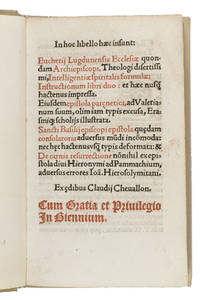
1523ABC_49898Colophon: Paris 1523. 8vo. Claude Chevallon Modern half vellum and beige paper sides blue sprinkled head- and fore-edge manuscript author and title on the spine in brown ink. With Cevallons woodcut device on the verso of the final leaf the title is printed in red and black and 10 woodcut decorated initials. 6 CVII 1 ll. Collection of patristic writings many of which appear here in print for the first time. The book opens with the spiritual writings of Eucherius ca. 380-ca. 449 CE Archbishop of Lyon including his Intelligentiae spiritalis formulae and two instructional treatises both of which are printed here for the first time.At the heart of the volume is Eucherius paraenetic letter to Valerianus a moral exhortation encouraging the rejection of worldly distractions and the pursuit of true Christian wisdom. Although this letter had been printed previously it is presented here together with annotations by Erasmus.Also included is a consolatory letter by Basil the Great Bishop of Caesarea 330-379 CE intended to support believers facing the hardships of earthly life. Like the instructional works of Eucherius this letter also appears here in print for the first time. The final text is a fragment from a letter by Saint Jerome ca. 342/7-420 CE to Pammachius d. 410 CE defending the doctrine of the resurrection of the flesh and refuting the teachings of John of Jerusalem.The exact date of publication remains uncertain but it is unlikely that the book appeared before 1520 the year when Chevallon first began using his soleil dor printers device.The pages show some browning and water staining throughout. Overall in good condition.l BM STC French p. 157; Erasmus Online 4203; Vander Haeghen II 25; Moreau & Renouard III 498; Renouard P. Marques 176; USTC 184320; not in Adams; De Reuck; Kossmann; Meyers. hardcover
198894084Luca Verlag. New. 1988. Hardcover. 3923641141 . FREE UPGRADE to Courier/Priority Shipping Upon Request - IN STOCK AND IMMEDIATELY AVAILABLE FOR SHIPMENT - Flawless copy brand new pristine never opened -- Text in Dutch; summaries in English and in German. Catalogue Raisonne Catalog Raisonné Complete Works Catalogus Het Complete Oeuvre Raisonnee Luca Verlag hardcover
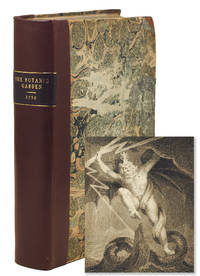
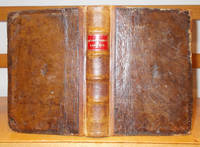
17911277661791. First Edition. BLAKE William engraver DARWIN Erasmus. The Botanic Garden; A Poem in Two Parts. London: J. Johnson 1791 1791. Two volumes in one. Quarto contemporary full brown mottled calf rebacked burgundy morocco spine label. $3300.First edition of Part I third edition of Part II of Erasmus Darwin's chief poetical work illustrated with two engraved frontispieces and 18 plates one from a painting by Henry Fuseli five engraved by William Blake.""The chief source of Erasmus Darwin's literary fame during his lifetime The Botanic Garden contains a great deal of important and frequently advanced scientific information in the nearly 300 footnotes and the 115 pages of appendices to its verses. Part I 'The Economy of Vegetation' involves a far-reaching survey of science and technology with significant sections on evolutionary theories and numerous footnotes on electrical phenomena. Part II 'The Love of the Plants' is a 'single-minded catalogue of vegetable sex-life"" Norman. Darwin describes plant reproduction according to the Linnaean system ""by means of a most ingenious and amusing personification of each plant and often even of the parts of the plant. It is significant that botanical notes are added to the poem and that its eulogies of scientific men are frequent"" Britannica. Darwin's Garden is also important for the five plates in Part I engraved by William Blake: ""The Fertilization of Egypt"" engraved after the painting by Henry Fuseli and four engravings of the Portland Vase. Darwin the grandfather of Charles is notable for his ""exposition of the form of evolutionism afterwards expounded by Lamarck"" DNB. Inexplicably Part II was published first in 1789 here present in the 1791 third edition; Part I followed in 1791 present in the first edition. Wilson 343. Hunt II lxvii. Nissen 451. Bentley 450A. Keynes 103. Bookplate; early ink shelf markings to front flyleaf.Occasional spotting or offsetting from plates to text. Some wear to corners and board edges. A very good copy. unknown
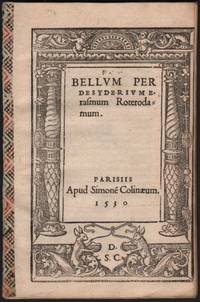
1530329Parisiis Paris: Apud Simonem Colinaeum Simon de Colines 1530. Reprint of the printer's edition of 1525. First printed by Johann Froben in 1517. Papered spine. In fine condition. Title within elaborate woodcut border with initials S.D.C. and Geoffroy Tory’s Lorraine cross. Title within elaborate woodcut border with initials S.D.C. and Geoffroy Tory’s Lorraine cross. Reprint of the printer's edition of 1525. First printed by Johann Froben in 1517. Papered spine. 8º a–c8 c8 blank; 23 1 blank leaves. <p><br /> Erasmus’ famous pacifist text on the adage “dulce bellum inexpertis" war is sweet to those who have not tried it. It was first published in the revised and enlarged edition of “Adages†called “Proverbiorum chiliades" 1515 Basel; Froben and published separately in 1517 also by Froben. <br /> <p><p><br /> “Bellum" is the first essay where Erasmus speaks of Jews contemporary to him praises them along with the Turks and the pagans as well as various peoples of Europe Asia and Africa for their virtuous living. He writes: “When has the sword murder arson plundering turned conquered people into good Christians! Openly to be a Turk or a Jew is lesser evil than to pretend to be a Christian. I prefer a real Turk to a false Christian.†<br /> <p><p><br /> The printer Simon de Colines 1480–1546 is most notable for his 1525 “Grandes Heures de Simon de Colines†the illustrator was the same Geoffroy Tory 1480–1533 who made the design of the woodcut border of this book.<br /> <p><p><br /> Bibl.: Markish Shimon: Erasmus and the Jews. Chicago. University of Chicago Press 1986.; Johnson Carina L.: Cultural hierarchy in sixteenth-century Europe. The Ottomans and Mexicans. Cambridge; New York. Cambridge University Press 2011.; Olin John C.: Six essays on Erasmus and a Translation of Erasmus' Letter to Carondelet 1523. New York. Fordham University Press 1979.<br /> <p><p><br /> Moreau III 2074. <br /> <p>. Apud Simonem Colinaeum (Simon de Colines) unknown
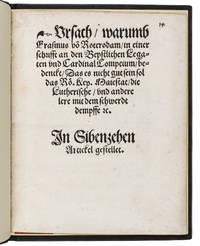
1531ABC_49886Strasbourg or Nuremberg 1531. 4to. Georg Ulricher or Wolfgang Heußler Modern blind-tooled mottled calf with a double fillet border on both boards. 3 1 blank ll. Rare German edition of a letter Erasmus sent to the papal legate Lorenzo Campeggi 1474-1539 on August 18 1530. In this letter Erasmus expresses his fear that the Holy Roman Emperor would declare war to the Protestant German princes and explains in 17 articles why violence is not the answer. He never printed the letter himself and it probably never reached Campeggi. According to Allen Erasmus wrote that "it was intercepted by the treachery of some unnamed 'evangelical' and printed without authority in Strasburg". The letter was translated into German and indeed published several times in Strasbourg Wittenberg Magdenburg and Nuremberg in 1531. The present edition does not have an imprint but was either printed in 1531 in Strasbourg by Georg Ulricher or in 1546 in Nuremberg by Wolfgang Heußler. It is quite rare as we not been able to find any other copies of the present edition in sales records of the past hundred years.With a red bookbinder's label "Period Bookbinders Bath England" mounted on the recto of the last free flyleaf. The work is lightly browned and foxed the inner margins have been reinforced. Otherwise in good condition.l Bezzel 26; Erasmus Online 1874; USTC 704493 and 704494; VD16 E 1881 and VD16 E 1882; Vander Haeghen I 88; not in Adams; BM STC German; De Reuck; cf. Allen Opus Epistolarum Erasmi vol. IX intro. to Ep. 2366. hardcover
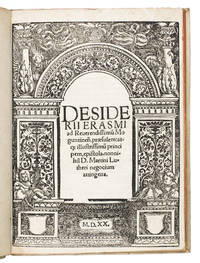
1520ABC_49889Augsburg 1520. 4to. Sigmund Grimm and Marcus Wirsung 19th-century gold-tooled vellum with a black morocco title label and a black morocco label with the year of publication on the spine lettered in gold a double fillet border on both boards red edges marbled endpapers. With an elaborate woodcut title border by Hans Weiditz. 4 ll. Early print of the letter Erasmus wrote to Cardinal Albrecht of Brandenburg Archbishop of Mainz in October 1519 with statements about Luther. In it Erasmus recommends to hear Luther whom he defends in several instances and suggests to help him where he errs. The letter was delivered by Ulrich von Hutten 1488-1523 and likely published without Erasmus's consent. The present edition is one of seven unauthorised editions published in the same year. It was printed by Marcus Wirsung ca. 1460-ca.1520 and Sigmund Grimm ca. 1480-1530 whose printing office was the most important publication centre for humanist literature in pre-Reformation Augsburg. Their edition includes a beautiful title border by Hans Weiditz 1495-ca.1537 and is among the rarest of the seven with only five copies recorded by the Universal Short Title Catalogue USTC. The present copy was auctioned at Sotheby's in 1955 and 1980 and is one of only two copies that we have been able to trace in sales records.The boards are somewhat warped. The work has been bound with 25 blank leaves. Otherwise in good condition.l Adams E 871; Allen Opus epistolarum Erasmi IV 1033; Bezzel 28; BM STC German p. 276; Erasmus Online 1957; Proctor 10920; USTC 635546 5 copies; Vander Haeghen I 93; VD16 E 1887; not in De Reuck. hardcover
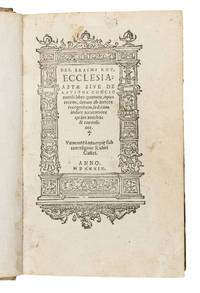
1523ABC_50186Antwerp: Michiel Hillen van Hoochstraten 1523. Modern boards covered with a leaf from a Latin incunable probably part of a commentary on the Song of Solomon red sprinkled edges. 8vo. With a full-page woodcut illustration incorporating Hillen van Hoochstratens device on the last page and 3 woodcut decorated initials. First Antwerp edition published in the same year as the first Froben edition in Basel of Erasmus De sarcienda ecclesiae concordia. Dedicated to Julius Pflug of Eytra 1499-1564 later the last Catholic Bishop of Naumburg the work sets out Erasmus most urgent appeal for unity at a moment when the fractures of the Reformation were widening by the month. Pflug who valued peace and moderation shared Erasmus unease about the increasingly bitter debates dividing Western Christendom.De sarcienda ecclesiae concordia opens as a commentary on psalm 83 in which Erasmus underscores the spiritual necessity of harmony within the Church. From this biblical foundation he advances his lifelong conviction: that a polarised Christendom is fundamentally at odds with the teaching and example of Christ. In passages marked by clarity moral urgency and classical poise Erasmus argues that contentious theology has little to do with genuine faith and everything to do with human pride.Appended to the treatise is the brief Precatio pro pace ecclesiae addressed to the Cologne jurist Johann Rinck further underlining Erasmus conviction that peace moderation and the diligent search for concord must prevail over doctrinal intransigence.With very minor underlining on three pages and one tiny marginal annotation a small ink stain in the upper margin of the title page a small wormhole running from leaves A6 to B6 and some occasional water staining confined to the margins. Otherwise in good condition.l Adams E 387; De Reuck 248; Erasmus online 2340; Nijhoff & Kronenberg 798; STCV 12920380; USTC 403885; Vanderhaeghen I 117. Michiel Hillen van Hoochstraten, hardcover
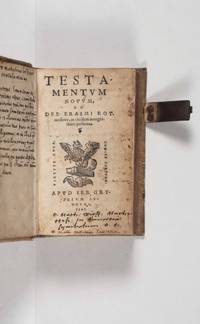
154749141Lyon: Sebastian Gryphius 1547. Hardcover. Very Good-. 16mo in 8s: a-z8 A-Z8 aa8 bb8 =384 leaves; blank bb7-8. 763 5 blankpp. Printer’s device at title woodcut lettrines. Text in italic headlines and chapter headings in roman; printed marginalia. Later pigskin over bevelled boards tooled in blind brass clasps one of two and catches manuscript title at spine. Extensive old manuscript notes at front endleaf and four blank leaves at the end including the two integral blanks; occasional marginalia and underlining. Title soiled with some slight erosion at margin from oxidation of the clasps else a very good copy with clean fresh text throughout. Complete with the two final blank leaves.<br /> <br /> Second Gryphius edition and a rather uncommon early sixteenth-century printing of Erasmus’ Latin translation of the New Testament first published at Basel in 1516. According to Baudrier Ly. V. 804101/Cat. de Lignerolles Paris Porquet 1894 no. 48 Gryphius first published this translation in 1542 and 1543 as a 16mo of 847 pages; neither of these issues appear in Deleveau & Hillard. Like the present edition these early Gryphius printings of the Erasmus New Testament survive in only a handful of copies. The text opens with Erasmus' dedication to pope Leo X followed by his preface to the reader a general index of the New Testament corpus a listing of the chapters of the four Gospels and a brief passage from Jerome's catalogue of ecclesiastical writings. The editor's introductions precede each book. The text concludes with Erasmus' translation of a brief discussion of apocryphal literature partly from Athanasius though Erasmus questions the attribution: "De libris utriusque testamenti partim reiectus aut non sine contradictione admissis partim apocryphis ex Athanasio tametsi mihi suspectus est titulus." <br /> <br /> Provenance and annotations: Extensive early annotations in more than one hand appear throughout the book; many marginal notes have been added throughout the Gospel of Matthew. At the front of the book beginning with the free endleaf: "Poeta de Pythogora" several stanzas in Latin and Greek; facing the title: A morning prayer "Oro matutina lecturis oracula divina" 11 lines; an accounting of biblical eras 10 lines since Abraham David and the Babylonian Exile appears at the verso of the title leaf. The final blank page the two intergral blank leaves and two additional blanks added by the binder are filled with notes in several different hands including: a passage from Augustine's De doctrina christianae 14 lines; noted as book 2 chapters 11 and 12 along with four lines about Tertullian; four pages of notes on the twelve disciples numbered; a Greek text discussing the divine names in which the tetragrammaton is written in Hebrew letters; a passage from a letter of Basilius Magnus in Greek with Latin translation.<br /> <br /> Printed label of Edward Davis Hoblyn 1809-1881 and his manuscript entry dated 1831 at the free endleaf. Edward was likely related to the renowned book collector Robert Hoblyn 1710-1756 of Cornwall. A catalogue of Robert’s collection was printed in 1768 as Bibliotheca Hobliniana and reissued by Murray in 1769 with a new titlepage. The library remained with Robert’s widow and was sold in 1778. The present work is not listed in the Bibliotheca though no fewer than nineteen 16th-century Latin Bibles and Testaments appear in the catalogue. Gift inscription of D. N. Goodman of San Francisco California to Father J. L. Damas at front pastedown dated 1935. References: Baudrier 8 217. Baumgarten Nach. v. merkw. Büchern 8 1755 206 noting that this and the later Gryphius edition which Le Long assigns to the master printer’s workshop are in fact identical and notable examples of elegant typography. Deleveau & Hillard 4407 BNF. Le Long Leipzig 1709 1:751 & 2:478 Bibl. Colbertina - the earlier Gryphius edition of 1542/43 is not cited in either part. Le Long-Masch 2.3 p. 599 noted as the first New Testament ex. Erasmi to appear at Lyon. Sebastian Gryphius hardcover
1532748951Basileae per Iohannem Hervagium Johannes Herwagen 1532. Full leather. Sexto 22 532 207 5 Variae Lectiones 47 Annotationes 1 pagesBinding repair by J. Taylor Seton “successor to the late James Taylor 3 Mound Place Edinburgh†Recently rebacked. Margin notes and underlining throughout. Photos upon request. Basileae per Iohannem Hervagium [Johannes Herwagen] hardcover
1539ABC_49727Antwerp: sub intersignio Rubri Castri = Guilielmus Montanus 1539. 18th-century half vellum with a brown paper title label on the spine lettered in black the manuscript year of publication at the foot of the spine decorated paper sides with a hand drawn floral design in red and blue ink red edges. Small 8vo. With an architectural woodcut border on the title page 7 decorated metalcut initials 5 woodcut headpieces 7 woodcut tailpieces and a woodcut printer's device at the end of the work. Scarce early edition of an influential manual on preaching. It was one of the last major works which Erasmus produced and is considered one of his most significant treatises on theology. The work was incredibly popular in his own time as Erasmus had been pressured for many years to write it. The present edition which is the first by Montanus and the third authorised edition is relatively scarce however with only two other copies recorded in sales records of the 21st century."The Ecclesiastes is really a collection of three works: a theological treatise on the importance of preaching and the role of the preacher in the church Book I a textbook on homiletics and hermeneutics which provides the preacher with the basic tools necessary for both the interpretation of scripture and the construction and delivery of sermons based on biblical terms Books II and III and a list of sermon topics with an explanation of how some of them should be developed. From this organization it is clear that Erasmus attempted to provide his contemporaries with both a theology of preaching and clear and precise advice on the art of preaching" Kleinhans.With 18th-century annotations on the front pastedown and in the margins of some of the leaves several portions of text are underlined. The edges and corners of the boards are somewhat scuffed the vellum is somewhat soiled and stained. The work is somewhat browned throughout with brown ink stains on a few leaves affecting a few words minor loss of material in the lower margin of a7 and a8 without affecting the text. Otherwise in good condition.l Adams E-631; De Reuck 179; Erasmus Online 1682; Nijhoff & Kronenberg 2923; STCV 12926615; USTC 440876; Vander Haeghen I 78; not in Bezzel; cf. Kleinhans R.G. "Erasmus Ecclesiastes and the Church of England" in Historical Magazine of the Protestant Episcopal Church 39 3 1970 pp. 307-14; Rouzet Dictionnaire des imprimeurs belges p. 153. sub intersignio Rubri Castri (= Guilielmus Montanus), hardcover
17951262351795. London: Johnson 1795-94. <br /> <br /> 2 vols. in one 4to xx 218 124 2 directions to binder and advertisement; 2 viii 200 2 directions to the binder lacking the errata and ads pp. With a frontispiece to each volume ten plates in vol. I and 8 in vol. II. Early half calf marbled boards newly rebacked in calf with gilt-lettered label. A very good copy if a little aged -- early manuscript note loosely inserted about the Portland Vase copied from the Morning Chronicle c. 1796.<br /> <br /> § Best edition. 6 plates are engraved by Blake the best known being Fertilization of Egypt and Tornado both after Fuseli. The third edition of part one is the only edition to include the striking Tornado plate. At page 87 appears the enigmatic circular image of an African man in chains titled "Am I not a man and a brother." Bentley 450B and C. Essick William Blake's Commercial Book Illustrations XXI.<br /> The Morning Chronicle was a newspaper founded in 1769 in London. It was notable for having been the first steady employer of essayist William Hazlitt as a political reporter and the first steady employer of Charles Dickens as a journalist. unknown
18291511300026Roma Tip. della Societa editrice 1829 - 1838. First Edition. Hardcover. Good. 8 volume set. 848 pl. of 850. Folios 46 cm. Bound in contemporary 3/4 green leather. Marbled boards. Top edge gilt. Wear and rubbing to extremities. Library bookplates. Markings to spine and verso of title page. Front board detached to Vols. IVIVII. Front boards starting to Vol. I-III. Chipping and loss to head and tail of Vol. I III and VII. Lacking two plates. Pages clean and unmarked. Brunet IV p. 677. <br>Collated: Vol. I: 304p. 86 pl. complete; Vol. II: 294p. 68 pl. plate LXVII as plate LXVI matching plate list then to pl LXVIII resulting from pl. XI printed as X and number continuously as such complete; Vol. III: 280p. 113 pl. complete; Vol. IV: 279p. 115 pl complete; Vol. V: 230p. 118 pl. complete; Vol. VI: 188p. 106 pl. complete pl 90-100 misbound; Vol. VII: 128p. 98 pl lacking pl 19; Vol. VIII: 170p. 152 pl. lacking pl 92. This is an oversized or heavy book that requires additional postage for international delivery outside the US. Roma, Tip. della Societa editrice hardcover
1797D19679DERBY: J. Drewry for J. Johnson 1797. First Edition. Paperback. Near Fine. 4to. 128 pp. including half-title. With engraved frontispiece of the grounds of Ashbourne School. ORIGINAL WRAPPERS. Housed in attractive custom box. Written for his two illegitimate daughters who were known as the Misses Parker Darwin covers a number of topics in this treatise on female education. "Education should draw the outline and teach the use of the pencil; but the exertions of the individual must afterwards introduce the various gradations of shade and colour must illuminate the landscape and fill it with the beautiful figures of the Graces and Virtues" preface. He recommends science subjects for girls as well as visits to factories and foundries. Also included is a fifteen-page list of recommended books for studying further one of the many subjects touched upon here. Darwin 1731-1802 grandfather of Charles Darwin was a poet naturalist as well as a prominent physician. He assisted in setting up the Ashbourne School and in furtherance of his belief in the importance of intellectual pursuit for all. He had this work published by Johnson an important radical bookseller of the period who was responsible for among many other works Wollstonecraft's Vindication of the Rights of Women. <br/><br/> J. Drewry for J. Johnson paperback
1532V75865Cologne: Joannes Gymnicus Gymnich 1532 1533 1532. Hardcover. Good. Woodcut pictorial titlepages with borders of female deities etc to each of 3 works fine illustrated colophon to 2nd work. . Sammelband of 3 Works in one Volume. Small octavo pigskin on wooden boards front cover with floral marginal rolls central holy figures SS Peter & John and ownership stamp SVM IACOBI BVECSEN MDXXXIII. Back cover with border of dancing figures one dated 1528. Spine on 3 raised bands brass clasps missing but catches present. Some damage to head & foot of spine edges worn but stamped pigskin covers in excellent condition. Front & back endpapers present but pastedowns removed showing at gutters vellum strips with black & red MS lettering used to attach wooden boards to spine. Work I 16pp woodcut emblematic bordered titlepage Erasmus dedication to Beraldo dated Basel 8 June 1522 Index 385pp 1p blank collated complete except Lacks one leaf of text at Fii pp83-4. Titlepage has early ink ownership name Zielenski repeated at Aii verso of Work II in centre and partly erased MS library notes at foot. Some neat red ink underlining & marginal notes throughout light brown marks of former damp at top margins from start affecting up to 5 lines by end but all clearly readable. Small tears neatly repaired at top of last 2 sections without loss of text except on last leaf. Work II 2nd woodcut titlepage with Adam & Eve on either side nudity partly inked out 80 leaves unpaginated but collated complete with signatures A-K8 last page has full-page colophon of seahorse Gymnich's printer's mark Latin motto and Greek text round all 4 sides. Work III has 3rd woodcut titlepage with same Adam & Eve surround but no ink nudity defacement 127pp 1p blank collated complete but with tears at top margin some with minor paper loss neatly repaired. At end 12 marginally damaged blank leaves are bound in. Nice woodcut titlepages and very interesting early binding. Rare K lner Gymnich imprint Sammelband of 3 Works referenced I. Adams E558 VD 16 E 2514 Bezzel 609; II. VD 16 & van der Haeghen not in Adams; III. VD 16 not in Adams. Joannes Gymnicus (Gymnich) hardcover
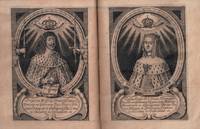
107057København 1650. 4to. Samt. rødt helfløyelsbd. 42 bl. Tittelbl. trykt i rødt og sort. Kobberstukne portretter av Fredrik III og dronning Sophia Amalia. Eksemplar på stort papir. Bindet litt slitt. Tittelbl. og noen bl. med svak fuktskjold i øvre høyre hjørne. . unknown
1988C94084Luca Verlag. As New. 1988. Hardcover. 3923641141 . FREE UPGRADE to Courier/Priority Shipping Upon Request - IN STOCK AND IMMEDIATELY AVAILABLE FOR SHIPMENT - Flawless copy brand new pristine never opened -- Text in Dutch; summaries in English and in German. Catalogue Raisonne Catalog Raisonné Complete Works Catalogus Het Complete Oeuvre Raisonnee -- with a bonus offer-- - May be EITHER: out of print OOP and extremely rare in this pristine condition; signed by author or contributor; or a first or special edition; inquire for details . Luca Verlag hardcover
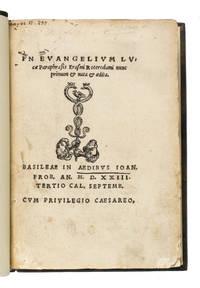
1523ABC_49899Basel 1523. Small 8vo 10.7 x 15.2 cm. Johann Froben Modern blind-tooled marbled calf bound by Period Bookbinders from Bath England with the author and title lettered in gold at the head of the spine the year at the foot of the spine. With 2 small woodcut illustrations incorporating Frobens device on the title page and the verso of the final leaf a woodcut headpiece above the dedication and two woodcut decorated initials. 275 ll. First edition of Erasmus Paraphrase on the gospel of Luke. Unlike his paraphrases on the gospels of Matthew Mark and John each dedicated to rulers of France or the Holy Roman Empire this work was addressed to King Henry VIII of England. The lengthy dedicatory preface which spans the first twelve leaves takes the form of a personal letter from Erasmus to the king. The Paraphrase on Luke was also unique in its format: it was the only one of the gospel paraphrases to be first published in octavo. The Paraphrases themselves were a novel form of literature at the time: more than mere translations or commentaries they were interpretative retellings of the gospels aiming to clarify the theological and moral meaning of Scripture for a wider audience. Despite Erasmus towering knowledge of the Church Fathers and his editorial work on patristic texts his method in the Paraphrase on Luke was not one of direct quotation from memory. Instead as Jan Bloemendal states Erasmus likely worked with various compilatory sources on his desk texts such as Bedes commentary on Luke the Glossa Ordinaria a medieval annotated Bible and Aquinas Catena Aurea which gathered together centuries of Christian interpretation. Through these sources Erasmus was able to channel the voice of the early Church while crafting something new and distinctly his own.Modern scholarship has also examined the layered narrative voices in the paraphrase on Luke. According to Bloemendal Erasmus plays with the roles of paraphrast narrator and evangelist creating a subtle interplay between himself and the biblical Luke. This device allowed Erasmus to offer veiled critiques on the abuses and moral failings of his own time under the guise of Lukes voice while also inviting his readers into a deeper more personal engagement with Scripture.With some contemporary underlining and annotations primarily consisting of corrections textual additions and markings of notable passages; a later bibliographical annotation in brown ink at the head of the title page "Panzer VI 237" and a small bookbinders label mounted in the bottom inner corner of the recto of the final blank flyleaf Period Bookbinders Bath England Tel 0225 20698. Some small wormholes in the first 5 leaves slightly affecting the text the title page is slightly dust soiled. Otherwise in good condition.l Adams E 755; Bezzel 1164; Bloemendal Collected Works of Erasmus vol. 47: Paraphrase on Luke 1-10 edited by Jane E. Phillips Erasmus Studies 37 2 2017 pp. 217-222 see p. 218; Bloemendal Exegesis and Hermeneutics in Erasmus Paraphrase on Luke Erasmus studies 36 2 2016 pp. 148-162; BM STC German p. 119; USTC 665710; Vander Haeghen I 148; VD16 E 3061; not in De Reuck. unknown
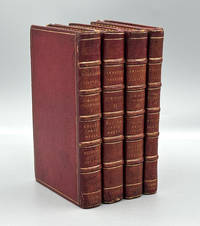
nov8<p> ANNOTATED COPY OF THE IMPORTANT COLLECTION OF GREEK TRAGEDIES PUBLISHED BY HENRI ESTIENNE IN 1567 </p><p> TRANSLATIONS BY ERASMUS - ELEGANT EARLY 19TH-CENTURY LONG-GRAIN MOROCCO BINDING </p><p><strong> GREEK TRAGEDIES ERASMUS </strong></p><p><strong>AESCHYLUS SOPHOCLES EURIPIDES</strong></p><p><strong><em>Tragoediæ selectæ Æschyli Sophoclis Euripidis cum duplici interpretatione Latina.</em></strong></p><p><strong>Geneva Estienne 1567.</strong></p><p>2 parts bound in 4 volumes 16mo: I 2 ff. 379 p. 2 blank leaves; II p. 1–383 p. 384 blank; III p. 385–735 p. 736 blank; IV p. 737–955. Bound in early 19th-century red long-grain morocco gilt fillet borders on the boards spines with raised bands and gilt decorations gilt dentelles all edges gilt blue endpapers and doublures spines sunned light rubbing to spines hinges corners and boards; minor stains on boards scattered light foxing slightly trimmed margins.Dimensions: 12.6 x 7.1 cm.</p><p><strong>Provenance</strong></p><p>Annotated by a contemporary reader shortly after the publication of the book.</p><p><strong>References: </strong>Renouard Estienne 130 no. 5. Schreiber The Estiennes 1982 no. 169.</p><p><strong>Languages of annotations:</strong> Latin; Greek a few words.</p><p><em>"A pocket edition for the 'common reader' of eight Greek tragedies"</em> Schreiber</p><p>This edition prepared by Henri Estienne and beautifully printed in small Greek Roman and Italic types includes: Prometheus by Aeschylus Three tragedies by Sophocles Ajax Electra Antigone Four tragedies by Euripides Hecuba Iphigenia at Aulis Medea Alcestis.</p><p><strong>Each tragedy is presented with the Greek text alongside two Latin translations: a prose "word-for-word" version opposite the Greek text and a versified translation following it.</strong> The versified translations are by Erasmus Melanchthon Joachim Camerarius Buchanan and Georg Rattaler. However no versified translation is included for Prometheus.</p><p><strong>The Euripides volume is particularly notable as it constitutes the only edition of Euripides published by Henri Estienne</strong> who never produced a standalone edition of this author. This gap was only filled by his son Paul in 1602.</p><p><strong>Annotations Focused on Euripides Especially Erasmus' Translation of Iphigenia</strong></p><p>The reader's annotations are concentrated in the Euripides volume particularly in Erasmus' Latin translation of Iphigenia which he has densely annotated. Additional notes follow in the general discussion of tragedy and comedy appended to the text. There are also a few notes on Medea in Buchanan's translation. The other volumes are unannotated or sparsely marked.</p><p><strong>The annotator extracts and reformulates striking or gnomic expressions from the text such as: </strong>"The condition of mortals is that nothing is happy on all sides" Mortalium conditio nihil ab omni parte beatum Vol. I p. 50. "The terrifying visions of the night" visa nocturna terrifica Vol. I p. 9. He notes realia such as the Greek custom of greeting by clasping hands salutandi mos apud Graecos Vol. I Iphigenia p. 71. The reader also comments on key mechanisms of tragedy such as:"The beauty of Helen was detrimental to her and her kin…" Forma Helet sibi et suis esse detrimentum… Vol. I p. 53. The annotator elucidates Greek terms for example: "Suffocating heat" gorgicôn toasthôn vehementes aestus p. 66. He also provides references to classical works such as: A note on the winged Fama alis fama p. 64 referring to Book IV of the Aeneid Forma alata/ Vide Aeneidos 4°.</p><p><strong>A Remarkable Annotated Copy Bound in Elegant Long-Grain Morocco</strong></p>
1547014688Basileae: Hieronymus Froben & Nikolaus Episcopius 1547. Book measures 16.5x11.5.cm. 415pp.1pp printer's device. Rebacked retaining period or early boards raised bands leather lebel. Some wear to edges of boards. Binding in very good clean firm condition. Internally previous owners bookplate very light staining of browning to margins. Pages in very good clean condition. A very nice copy. F. Leather. Very Good. 8vo. [Hieronymus Froben & Nikolaus Episcopius]
17971978Derby: J. Drewry 1797. First edition. Contemporary quarter calf over marbled boards; spine ruled in gilt with red morocco label; all edges dyed yellow. Boards and spine rubbed; some chipping along edges. Original stab holes visible in gutter margins. Previous owner's bookplate on front pastedown; ink signature of Mary Wolley to front free endpaper; light foxing. Quarto collates complete with half title and engraved frontispiece: viii 9-128. Bound with: Fosbrooke T.D. The Economy of Monastic Life. Glocester: Printed by R. Raikes 1792. First edition dedicated to Edward Jenner who is also listed as a subscriber. Internally a copy in excellent condition.<br /> <br /> The grandfather of the illustrious Charles Darwin Erasmus Darwin wrote this treatise on the education of young women to support his own daughters' school at Ashbourne. Darwin's treatise takes a comprehensive view of women's education suggesting that it should reach beyond social skills such as the "perpetual appearance of attention" polite dancing and flattering dress and into formal intellectual pursuits including literature history mathematics and the natural sciences. While he promoted women's education in part to improve the likelihood of companionate marriages Darwin's text tentatively acknowledges that a marital partnership can only function happily when both parties have an intelligent understanding of the world and the ability to participate in it. "A radical campaigner for equality he condemned slavery supported female education and opposed conventional Christian ideas on creation" Farra. With a bookplate from the library of the Wolley family this particular copy has the ownership signature of female reader Mary Wolley. J. Drewry unknown
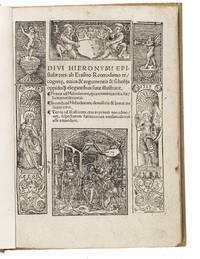
1518ABC_49875Cologne: Johann Gymnic 1518. Modern faux-leather-patterned paper with a grey paper label on the spine with the authors name lettered in silver Erasmus v. Rotterdam. 4to. With the title set with in a frame built up from 4 or possibly 6 woodcut illustrations including printer's initials and the date 1518 and 10 woodcut decorated initials. Selection of three letters by the Church Father Jerome of Stridon Saint Jerome ca. 342/47-420 CE edited and annotated by Erasmus. Erasmus felt a profound connection to Jerome. He saw in the ancient Church Father not only a kindred spirit but also a mirror for his own intellectual and spiritual journey. Included in this volume are three letters: first the epistle to Heliodorus on the praise of the solitary life de vita solitaria a stirring defence of ascetic withdrawal from the world; second the epistle to Heliodorus on the misery of human life de miseria vitae humanae a sombre reflection on the fleeting nature of earthly existence; and third the epistle to the monk Rusticus on avoiding familiarity with women de mulieribus evitandis a warning shaped by both monastic ideals and Jeromes personal convictions. Additionally a short fourth letter addressed to Onasus is included at the end of the volume though it does not appear on the title page. In this letter he satirically addresses the priest Onasus who had a deformed nose and his feeling of being unjustly attacked and being made a fool of in other letters and writings by Jerome.With early manuscript annotations corrections etc. of the printed text in the margins and occasional underlining of the text mainly concerning the third letter written in three different hands in both brown and black ink. With a 0.5 cm worm hole in the gutter margin not affecting the text. Occasional foxing and browning and some water staining in the fore-edge margin of several leaves. Overall a good copy.l BM STC German p. 440; USTC 640603 3 copies; Vander Haeghen II 29; VD 16 ZV 7938; not in Adams; De Reuck. Johann Gymnic, hardcover
15672733Basileae : Apud haeredes Nicolai Brylingeri M. D. LXVII. 1567 1567. Hardcover. Good. 26 643 1 p. the last page blank ; 17 cm. 8vo ; References: Adams; T-361; VD16; T-466 ; OCLC: 35196231 ; preface by Desiderius Erasmus dated 1532 ; includes commentary on each play by Giovanni Calfurnio ; Title vignette; initials ; Signa tures: a-z8 A-T8 Nota Bene: incomplete volume : A-B are missing pages 339-375 comprising Actus II Scena I - Actus III Scena II of Adelphi ; Contemporary panel-stamped cream/butter-colored pig-skin binding ; raised bands ; green speckled fore-edg e ; two-tone silk headband ; bookplate "E Bibliotheca Collegii Cremsensis" dated 1818 with ownership written in ink across title page ; large crayon pencil mark in red "LVIII29" on lower portion of title page ; text in Latin italic type font f or the text of the plays ; only one other known institution copy held by the Newberry Library ; slight worm damage to top of spine ; soiling ; marginalia on some pages in a contemporary humanist hand on pages 2-5 17-19 439-40 445 478-79 491-92 529-30 615 640-42; name and text on back ep in a German hand writing Frakturschrift consisting of a paraphrased quote from the Psalms ; Contents : Terentii Vita -- Andria -- Evnvchvs. Eunuchus -- Heavtontim. Heautontimorumenos -- Adelph. A delphi -- Hecyra. -- Phormio. ; also contains a poem in Latin iambs by Erasmus printed on the reverse of title page ; G <br/> <br/> Basileae : Apud haeredes Nicolai Brylingeri, M. D. LXVII. (1567) hardcover
1800142097London: Printed for J. Johnson 1800. viii 612pp. Quarto 220 x 270mm. Contemporary calf with gold gilt decorations to the spine and gilt lettering stamped to a black moroccoo spine label. Illustrated with 12 engraved plates 2 folding 9 with an accompanying non-paginated text leaf. Some rubbing and wear to the boards with the top corners a bit bumped. Previous owner's inscription: "REVD. WILLIAM. RUSH. CHURCHILL 1775-1847 of Colliton Dorchester". Ex-libris of Darwin bibliographer Richard Freeman. Some offsetting and light foxing to the plates otherwise a tight and clean copy. A very good copy of this work by the grandfather of Charles Darwin with an interesting provenance. Erasmus Darwin was a well known English physician having turned down the opportunity to be a physician to the King at one point as well as a natural philosopher physiologist slave-trade abolitionist inventor and poet. 1800 Printed for J. Johnson hardcover
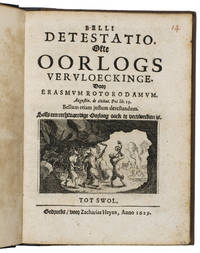
16292941Zwolle 1629. 4to. for Zacharias Heyns colophon: printed by Frans Jorrijaensz 19th century half brown morocco with the author title and imprint lettered in gold on the spine brown cloth sides. With a large engraved emblem on the title page 5 decorated woodcut initials a woodcut headpiece 2 headpieces built up from typographical ornaments a woodcut tailpiece and a tailpiece built up from typographical ornaments. 28 ll. First edition of Zacharias Heyns' new Dutch translation of Erasmus' famous anti-war essay Dulce bellum inexpertis. This essay was originally part of the 1515 edition of the Adagia but was first published as an independent work by Johann Froben in 1517 with the title Bellum. The present Dutch edition is quite rare as we have not been able to find any other copies in sales records of the past hundred years.The Adagia was first published in 1500 but Erasmus continued to edit the work until his death. The 1515 edition published by Froben was greatly expanded but the essay for the proverb Dulce bellum inexpertis war is sweet to the inexperienced was the longest and most remarkable addition. In the essay Erasmus argues that war is senseless unchristian and contrary to human nature. He also critiques the militaristic culture of his time which glorified violence and aggression and advocates instead for diplomacy and negotiation. The essay became so popular that Froben published it separately. Within ten years it had been reissued at Louvain twice at Strasbourg twice at Mainz at Leipzig twice at Paris twice at Cologne at Antwerp and at Venice. German translations of it were published at Basel and at Strasbourg in 1519 and 1520 and an English translation followed in 1533. The first Dutch translation was made in 1622. The present second Dutch translation made during the Eighty Years' War shows how the work continued to inspire more than a hundred years after it was first written.The spine has been slightly rubbed. The end paper are browned the work is lightly browned throughout. Otherwise in good condition.l Knuttel 3921; Bibl. Belgica E 247; Erasmus Bibl. Rotterdam p. 29; Erasmus Online 465; STCN 831153881; USTC 1026760; Vander Haeghen I p. 22. hardcover