Locke JohnABAA

4 918 résultats
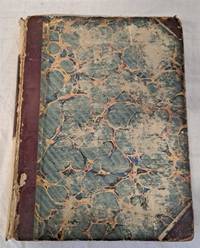
180365067Boston: Printed by David Carlisle for Thomas & Andrews Joseph Nancrede William P. & Lemuel Blake West & Greenleaf James White & Co. John West and Caleb Bingham 1803. First American from the twentieth London edition. This is the first complete American edition an abridged version having been published in 1794. Folding table. 3 vols. 12mo. Contemporary half sheep over marbled boards. Worn volume 2 rebacked some browning and staining of text tear on title of first volume signatures of Frederick Hobbs Jr. and Frederick H. Allen on endpapers but interior sound. In a cloth and marbled paper open-end box. First American from the twentieth London edition. This is the first complete American edition an abridged version having been published in 1794. Folding table. 3 vols. 12mo. In 18th century America as it was the age of reason and Enlightenment the colonists needed the justification or rationalization of their disagreement and resultant actions with England citing their immutable rights as Englishmen and quoting the basic English institutions. As the "philosopher of the Enlightenment" Locke's theories and writings were seized upon by the colonists especially with Locke's "doctrine of natural rights" his theories on "life liberty and property" religious toleration and proper representation in government. His writings gave the colonist a firm foundation upon which to base many of their statements. To Locke goes much of the credit for many of the ideas forming the Virginia Declaration of Rights drafted by George Mason. Many of the other states used that constitution as a basis for their own. Locke's advocacy of a "laissez faire" economic policy was shared by Jefferson who agreed with the idea that the "government is best which governs least." Cohen "American Thought" p. 132. The conclusion reached in the "Essay" "that though knowledge must necessarily fall short of complete comprehension it can at least be 'sufficient'; enough to convince us that we are not at the mercy of pure chance and can of some extent control our own destiny" summarizes American intent and beliefs. Attig " John Locke" pp. 40-41; Boring "History of Experimental Psychology." pp. 170 ff; PMM 164 for first edition; Roback "A History of Psychology and Psychiatry" pp. 33 ff; Shaw and Shoemaker 4533; Library Company of Philadelphia "First American Editions" 6 which quotes Franklin as describing is as "the best Book of Logick in the World Printed by David Carlisle for Thomas & Andrews, Joseph Nancrede, William P. & Lemuel Blake, West & Greenleaf, James White & Co., unknown books
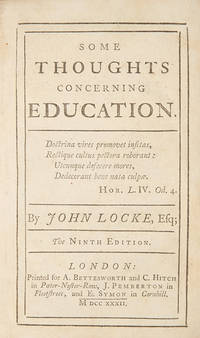
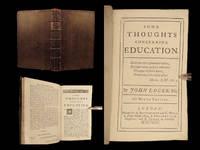
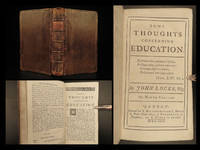
115337London Printed for A. Bettesworth and C. Hitch in Pater-Noster-Row J. Pemberton in Fleetstreet and E. Symon in Cornhill 1732. . Ninth edition; 12mo 16.5 x 10.5 cm; old pricing in pen to rear endpapers toned with occasional minor spotting; contemporary sprinkled calf covers ruled in gilt spine fragmented with loss to headcap joints carefully repaired hinges reinforced corners a little rubbed; 6 331 3pp.<br /> An early edition of Locke's 1632-1704 scholastic treatise written for his friends Edward and Mary Clarke and more especially for the instruction of their young son Edward. <br /><br />Locke's counsels were at first embodied in a series of letters dating from July 1684 to March 1691 and did not appear in print in this revised book format until 1693 when the first edition of Some Thoughts concerning Education was published anonymously. Clarke's son 'a sort of downe right honest Blockheaded boy' see Mary Clarke's letters to Locke apparently gained little from her friend's labours.<br /> Yolton 176. London, Printed for A. Bettesworth and C. Hitch in Pater-Noster-Row, J. Pemberton in Fleetstreet, and E. Symon in Cornhill, 1732 unknown
169944075Leipzig, Grosse & Gleditsch, 1699. 4to. In: ""Acta Eruditorum Anno MDCIC"". The entire volume offered in contemporary full vellum. Hand written title on spine. A yellow label pasted on to top of spine. Two small stamps to title-page and free front end-paper. Library label to pasted down front free end-paper. As usual with various browning to leaves and plates. Pp. 12-20. [Entire volume: (2), 582 pp. + ten engraved plates.].
169944075Leipzig Grosse & Gleditsch 1699. 4to. In: "Acta Eruditorum Anno MDCIC". The entire volume offered in contemporary full vellum. Hand written title on spine. A yellow label pasted on to top of spine. Two small stamps to title-page and free front end-paper. Library label to pasted down front free end-paper. As usual with various browning to leaves and plates. Pp. 12-20. Entire volume: 2 582 pp. ten engraved plates. <br/><br/><em>First Latin edition and second overall printing of a selection of Locke's responses to Edward Stillingfleet Bishop of Worcester. These are not only an important source in understanding Locke's late and mature view on religion but are probably the most famous and indebt discussions related to his seminal work "An Essay concerning Humane Understanding" Locke engaged in. The topic is of special interest since: "Religion and Christianity in particular is perhaps the most important influence on the shape of Locke's philosophy". SEP: John Locke. The debate was essentially about Locke's definition of substance in "An Essay.". Stillingfleet argued that Locke advocated against dualism mind - body and thereby opening a door to Unitarianism. Locke did not support this view he however did not clearly reject the notion of Unitarianism and Socinianism. The volume contains the following:1. Bernoulli Jakob. Circinus proportionum nauticus scala loxodromica instructus. Pp. 91-3.2. Bernoulli Johann. Cycloidis primariae segmenta innumera quadraturam recipienta. Pp. 316-20 one engraved plate. 3. Bernoulli Jakob. Quadratura zonarum cycloidalium demonstrata. Pp. 427-28.4. Bernoulli Johann. Excerpta ex literis. Groningae 7 Augusti 1699 datis. Pp. 513-16.And many other papers by influential contemporary mathematicians philosophers and historians. </em> hardcover
1729130261Pierre Mortier, Amsterdam 1729 In-4, plein veau blond, dos à nerfs, caissons orné, dentelles en coupes, xlvi- 595- 16 pages. Portrait de l'auteur en frontispice, vignette, bandeaux et lettrines. Seconde édition, en partie originale. Dos frotté, petit accroc de coiffe supérieure. Bon exemplaire.
1997B000213Routledge 1997. 1st Edition . Hardcover. As New. 8vo - over 7¾ - 9¾" tall. 9 vol set. Facsimile reprint of the 9th edition 1794. <br/> <br/> Routledge hardcover
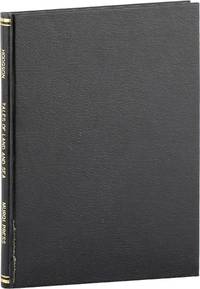
198487299London: Murqi Press 1984. First Limited Edition. Square Octavo. #8 of a Limitation of 10 copies only. 22cm. Publisher's black rexine titled in gilt to spine. 95pp. Some very light wear to the corners a small cosmetic not structural crack to the laminate at the base of the front spine hinge strong and tight; internally clean and fresh with original 4pp Murqi Press prospectus laid in at the front; signed and numbered to limitation page. A near fine copy.<br /> <br /> Well this is a weird one no pun intended; William Hope Hodgson basically the human background along with Algernon Blackwood and Robert W. Chambers to a foreground that has H.P. Lovecraft standing in a spotlight surrounded by mildly disfunctional fanboys simultaneously wrote a lot and not enough. <br /> He had a relatively brief career as a published and popular writer before being disintegrated by a shell on forward observations during Fourth Ypres in April 1918. <br /> He gave us The House on The Borderland The Night Land The Ghost Pirates and others and created the supernatural techie detective Thomas Carnacki out of whole cloth for our queasy and uncomfortable enjoyment. <br /> Hodgson ran away to sea in search of adventure as a teenager and although he eventually found his feet there are more than a few suggestions that he suffered assault and other indiginities as a raw 14 year old apprentice at sea. <br /> He became an advocate for apprentice's rights and worked actively to increase the safeguards and comforts of young men in unfamiliar and vulnerable positions. He took up body building advocated for self sufficiency taught unarmed combat to the Blackburn Police annoyed the hell out of Harry Houdini by embarrassing him during a music hall performance and most importantly wrote a number of short stories poems and novels mostly in an attempt to keep his head above water but also because William Hope Hodgson was clearly one of those men for whom 'giving up' is an abstract concept only entertained by other people who clearly just need the support of someone like him. <br /> <br /> He gave us some of the most important weird and supernatural tales in the canon that's certainly true but he also wrote a number of truly great sea tales. This book published in a vanishingly small limitation by the God Emperor of supernatural bookdealers the mighty George Locke of Ferret Fantasy contains a number of Hodgson's seagoing tales salvaged from the pages of the Red Magazine between 1912-1916. <br /> Signed and numbered by Mr. Locke to the limitation page using his Murqi Press imprint which I'm pretty sure he ran out of the shed in his back garden which was the bookdealing equivalent of Tutankhamun's Tomb only more suburban South London with the intent of preserving tales which otherwise would just be footnotes in a variety of forgotten Edwardian boy's magazines many of which lasted for only a short run or were so ephemeral you might as well have printed them on cobwebs. Before he died in the trenches Hodgson wrote to a friend looking forward hopefully to the stories that might be written after experiencing the horrors of war; he never got to write them himself but there is no doubt that the work he left behind encouraged many of the writers we now consider great to step in and try to carry on where he could not. Murqi Press unknown
1822WRCAM49826Philadelphia: M. Carey & Sons 1822. 251pp. plus six handcolored plates. 12mo. Modern calf leather label spine gilt by Sangorski and Sutcliffe. Modern bookplate on rear pastedown. Contemporary ownership signature and bookplate on front flyleaf. Light to moderate foxing and toning. Very good. Self-styled eighth edition. The plates have what appears to be contemporary color added. General Francis Marion "The Swamp Fox" was one of the leading American commanders in the Revolution in the South. His brilliant operations in the Carolinas kept thousands of British troops tied down and contributed immensely to ultimate American victory. Plain and unassuming he was widely beloved by his contemporaries and after his death this book began the process of his ascent to legend. Horry his second-in-command for part of the war supplied many of the facts although he was allegedly disgusted by Weems' flowery passages and disclaimed any connection with the book. What he disliked others embraced and the book went through many editions. This edition not in Howes. SHOEMAKER 11389. HOWES H650. M. Carey & Sons hardcover books
7254London: Printed for C. Hitch; J. Pemberton; J. Beecroft 1741. Later printing. Full Calf. Very Good. 2 vols. 2iv26372;1634028pp. Index. Copper engraved frontispiece portrait. Cont. calf a bit rubbed hinges starting but holding nicely. Gilt decorated spine minor chips at extremities red morocco labels. Old bookplates on front pastedowns. Printed for C. Hitch; J. Pemberton; J. Beecroft unknown books
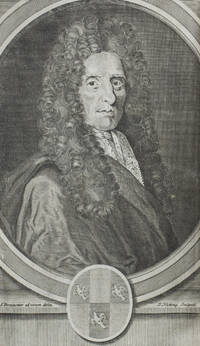
171642019London: J. Churchill Vol. 1; A. and J. Churchill Vol. 2 1716. Seventh Edition with large Additions. Hardcover. fair to vg. Octavo 8 x 5". 32 372 1; 16 340 25 index 1pp. Contemporary full calf with modern white lettering on spine. Raised bands. Previous owner's gift inscription on front free endpaper: "To the Edinburgh Academical Club This Book Is Presented By One of its Original Members John M. Balfour. 1829." Engraved frontispiece portrait of John Locke by J. Nutting after a painting by S. Brounower. Title page for each volume.<br /> <br /> Seventh and enlarged edition of John Locke’s Essay "Concerning Human Understanding" a philosophical landmark originally published in 1689 although dated 1690.5<br /> <br /> One of the principal sources of empiricism in modern philosophy this essay presents a detailed systematic philosophy of mind and thought and wrestles with fundamental questions about how we think and perceive and it even touches on how we express ourselves through language logic and religious practices. In the introduction entitled 'The Epistle to the Reader' Locke describes how he became involved in his current mode of philosophical thinking. He relates an anecdote about a conversation with friends that made him realize that men often suffer in their pursuit of knowledge because they fail to determine the limits of their understanding. <br /> <br /> The Essay is divided into four books two per volume:<br /> <br /> First volume:<br /> <br /> - Book I is devoted to an attack on nativism or the doctrine of innate ideas. Locke allowed that some ideas are in the mind from an early age but argued that such ideas are furnished by the senses starting in the womb: for instance differences between colors or tastes. If we have a universal understanding of a concept like sweetness it is not because this is an innate idea but because we are all exposed to sweet tastes at an early age. One of Locke's fundamental arguments against innate ideas is the very fact that there is no truth to which all people attest. He took the time to argue against a number of propositions that rationalists offer as universally accepted truth for instance the principle of identity pointing out that at the very least children and idiots are often unaware of these propositions. <br /> <br /> - Book II: Whereas Book I is intended to reject the doctrine of innate ideas proposed by Descartes and the rationalists Book II explains that every idea is derived from experience either by sensation - direct sensory information - or reflection - "the perception of the operations of our own mind within us as it is employed about the ideas it has got". Furthermore Book II is also a systematic argument for the existence of an intelligent being: "Thus from the consideration of ourselves and what we infallibly find in our own constitutions our reason leads us to the knowledge of this certain and evident truth that there is an eternal most powerful and most knowing being; which whether any one will please to call God it matters not!" <br /> <br /> Second volume:<br /> <br /> - Book III focuses on words. Locke connects words to the ideas they signify claiming that man is unique in being able to frame sounds into distinct words and to signify ideas by those words and then that these words are built into language. Chapter ten in this book focuses on "Abuse of Words." Here Locke calls out metaphysicians for making up new words that have no clear meaning. He also criticizes the use of words which are not linked to clear ideas and to those who change the criteria or meaning underlying a term. Thus he uses a discussion of language to demonstrate sloppy thinking. Locke followed the Port-Royal Logique 1662 in numbering among the abuses of language those that he calls "affected obscurity" in chapter 10. Locke complains that such obscurity is caused by for example philosophers who to confuse their readers invoke old terms and give them unexpected meanings or who construct new terms without clearly defining their intent. Writers may also invent such obfuscation to make themselves appear more learned or their ideas more complicated and nuanced or erudite than they actually are. <br /> <br /> - Book IV and last focuses on knowledge in general - that it can be thought of as the sum of ideas and perceptions. Locke discusses the limit of human knowledge and whether knowledge can be said to be accurate or truthful. Thus there is a distinction between what an individual might claim to "know" as part of a system of knowledge and whether or not that claimed knowledge is actual. For example Locke writes at the beginning of Chap. IV Of the Reality of Knowledge: "I doubt not my Reader by this Time may be apt to think that I have been all this while only building a Castle in the Air; and be ready to say to me To what purpose all of this stir Knowledge say you is only the Perception of the Agreement or Disagreement of our own Ideas: but who knows what those Ideas may be . But of what use is all this fine Knowledge of Man's own Imaginations to a Man that enquires after the reality of things It matters now that Mens Fancies are 'tis the Knowledge of Things that is only to be priz'd; 'tis this alone gives a Value to our Reasonings and Preference to one Man's Knowledge over another's that is of Things as they really are and of Dreams and Fancies." In the last chapter of the book Locke introduces the major classification of sciences into physics semiotics and ethics.<br /> <br /> Binding heavily rubbed along edges with closed tears along joints. Head and tail of spine slightly chipped. Hinges reinforced with binder's tape. Previous owner's bookplate on inside of front cover James A. Young. Stamp of the Edinburgh Academical Club at lower margin of front free endpaper and on both title pages. Moderate and sporadic age-toning throughout and minor and sporadic creasing along paper margin not affecting lettering. Binding in overall fair interior in good to very good condition. "John Balfour 1750-1842 was a Scottish politician and a civil servant in the East India Company with connections to the Orcadian island of Shapinsay." From Wikipedia. J. Churchill (Vol. 1); A. and J. Churchill (Vol. 2) hardcover
179818190Edinburgh: Mundell & Son; and J. Mundell. Near Fine with No dust jacket as issued. 1798. Reprint. First Printing. Leather. Contemporary calf rebacked gilt lettering on burgundy and gilt labels on spines. First appearing in 1689 although dated 1690 "An Essay Concerning Human Understanding" by John Locke concerns the foundation of human knowledge and understanding. He describes the mind at birth as a blank slate filled later through experience. The essay was one of the principal sources of empiricism in modern philosophy and influenced many enlightenment philosophers such as David Hume and George Berkeley. Expertly rebacked unmarked tight square and clean. A very attractive set. NEAR FINE. 12mo 7" - 7½" tall. liii 271; xvi 264; xiv 308 pp . Mundell & Son; and J. Mundell hardcover
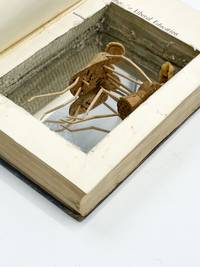
198745498New York: n.p. 1987. Very good. Original book sculpture created from the pedagogical reader TOWARD LIBERAL EDUCATION by Louis Glenn Locke featuring a vignette of a male and female figure dancing - or engaged in a more sexual activity. Bruno Pasquier-Desvignes defies classification. THE NEW YORK TIMES calls him "part tinkerer and part storyteller a cross between Alexander Calder and Jean Tinguely;" filmmaker James Ivory compares him to Picasso noting his ability to "pick up any old thing lying around see its possibilities for transformation and then turn it into a new and enchanting thing" RURAL INTELLIGENCE. Pasquier-Desvignes's book sculptures highlight his ingenuity creativity and humor as he toys with the idea of a codex as a container - in this case the instinctual side of human nature in contrast to LIBERAL EDUCATION's goals of civility. 9'' x 6''. Original blue cloth binding. Bookblock fused with glue with rectangular recess cut into center. Two figures made of toothpicks cork and noodles mounted to recess mirror mounted behind. Binding with some edgewear scuffing to boards. A couple tiny spots of foxing to paper surrounding recess. Shows nicely. n.p. unknown
18181710Philadephia: For the author 1818. Pamphlet octavo 63 pages. Sixth improved edition and the first illustrated edition. With an engraved frontispiece possibly by William Charles depicting a drunken rider felled by a low hanging branch. With thirteen woodcuts in the text by William Mason. The rare wrapper here with the front panel present only contains yet another woodcut likely also by Mason. A temperance tract by the famous Parson Weems inventor of the George Washington cherry tree incident. A series of well written cautionary tales often quite humorous. "As the wan countenance of the lust-worn harlot becomes still more dark and dismal at the sight of a young female fresh and blushing in all the charms of virgin innocence so does the soul of a filthy drunkard experience a quickened hell at the site of a gentleman well drest and breathing the cheerful air of cleanliness and sobriety." The pamphlet is worn with a small one-eighth inch hole in the engraved frontispiece and one page torn through the text due to a careless page separation. The illustrated wrapper panel is worn but the text and illustrations are unscathed. In all a decent survival. Shaw & Shoemaker 46749 MWA PPL; Hamilton 1019; Sabin 102467; American Imprints 46751. For the author unknown books
18181710Philadephia: For the author 1818. Octavo-sized pamphlet x cm. 63 pages. FIRST ILLUSTRATED EDITION overall the Sixth Improved Edition. With an engraved frontispiece possibly by William Charles depicting a drunken rider felled by a low hanging branch. Thirteen woodcuts in the text by William Mason. The rare wrapper here with the front panel present only contains yet another woodcut likely also by Mason. A temperance tract by the famous Parson Weems inventor of the George Washington cherry tree incident. A series of well written cautionary tales often quite humorous. "As the wan countenance of the lust-worn harlot becomes still more dark and dismal at the sight of a young female fresh and blushing in all the charms of virgin innocence so does the soul of a filthy drunkard experience a quickened hell at the site of a gentleman well drest and breathing the cheerful air of cleanliness and sobriety." The pamphlet is worn with a small one-eighth inch hole in the engraved frontispiece and one page torn through the text due to a careless page separation. The illustrated wrapper panel is worn but the text and illustrations are unscathed. In all a decent survival. Shaw & Shoemaker 46749 MWA PPL; Hamilton 1019; Sabin 102467; American Imprints 46751. For the author unknown
173224992<p><strong>1732 John LOCKE Essay Concerning Education English Philosophy Pedagogy Sydenham</strong></p><p><em>"I have always thought the actions of men the best interpreters of their thoughts." </em></p><p>– John Locke</p><p>After studying medicine under the teaching of Thomas Sydenham John Locke began his journey of philosophical thinking that would develop into some of his most famous works. In 1693 Locke published a treatise on education entitled '<em>Thoughts Concerning Education'</em>. Throughout the 18th-century it was <strong><u>the most important work on the philosophy of education in England</u></strong>. This work was an extension from 'Concerning Human Understanding' in which he describes how to educate the 'blank slate' mind described in<em> 'Human Understanding'.</em></p><p>A rare 1732 edition of Locke's famous education treatise.</p><p>Item number: #24992</p><p>Price: $599</p><p>LOCKE John</p><p><strong><em>Some thoughts concerning education</em></strong></p><p>London: Printed for A. Bettesworth and C. Hitch . 1732</p><p><u>Details</u>: </p><p><!-- if !supportLists-->· <!--endif-->Collation: Complete with all pages</p><p><!-- if !supportLists-->o <!--endif-->6 331 i.e. 325 3</p><p><!-- if !supportLists-->· <!--endif-->Provenance: Armorial bookplate – Edward Francis Witts</p><p><!-- if !supportLists-->o <!--endif-->Likely Edward Francis Witts 1813-1886 rector of Upper Slaughter in Gloucestershire. He was also the father of George Backhouse Witts 1846–1912 a British civil engineer and archaeologist who specialised in the prehistoric barrows of Gloucestershire. Motto: ANTE OBITUM NEMO FELIX</p><p><!-- if !supportLists-->· <!--endif-->Language: English</p><p><!-- if !supportLists-->· <!--endif-->Binding: Leather; tight and secure</p><p><!-- if !supportLists-->· <!--endif-->Size: ~6.5in X 4in 16.5cm x 10.5cm</p><p>Our Guarantee:</p><p>Very Fast. Very Safe. Free Shipping Worldwide.</p><p>Customer satisfaction is our priority! Notify us with 7 days of receiving and we will offer a full refund without reservation!</p><p>24992</p><p>Photos available upon request. </p> for A. Bettesworth and C. Hitch hardcover
1732218191732 John LOCKE Essay Concerning Education English Philosophy Pedagogy Sydenham"I have always thought the actions of men the best interpreters of their thoughts." – John LockeAfter studying medicine under the teaching of Thomas Sydenham John Locke began his journey of philosophical thinking that would develop into some of his most famous works. In 1693 Locke published a treatise on education entitled 'Thoughts Concerning Education'. Throughout the 18th-century it was the most important work on the philosophy of education in England. This work was an extension from 'Concerning Human Understanding' in which he describes how to educate the 'blank slate' mind described in 'Human Understanding'.A rare 1732 edition of Locke's famous education treatise.Item number: #21819Price: $599LOCKE JohnSome thoughts concerning educationLondon: Printed for A. Bettesworth and C. Hitch . 1732Details: • Collation: Complete with all pageso 6 331 i.e. 325 3• Provenance: Armorial bookplate/Handwritten – Wm. Strong o William Strong 1808–1895 was an American lawyer jurist and politician who served as an Associate Justice of the Supreme Court of the United States from 1870 to 1880. Strong previously served as a U.S. Representative from Pennsylvania from 1847 to 1851 and as a justice of the Supreme Court of Pennsylvania from 1857 to 1868. He also served on the Commission that adjudicated the disputed presidential election of 1876.• Language: English• Binding: Leather; tight and secure• Size: ~6.75in X 4in 17cm x 10.5cmOur Guarantee:Very Fast. Very Safe. Free Shipping Worldwide.Customer satisfaction is our priority! Notify us with 7 days of receiving and we will offer a full refund without reservation! 21819Photos available upon request. for A. Bettesworth and C. Hitch hardcover
181113118121059Various 1811. Hardcover. Good Condition/No Dust Jacket. Sheet Music Worn detached front cover no rear cover. First few pages are detached. Pages are varyingly darkened but are otherwise clean. Occasional marginal tears are repaired. Some pages have been trimmed but text and music is not affected. Several pieces have illustrated front pages all include piano forte accompaniment. Songs include: Ah Happy Day Ah Smiling Morn by Henry R Bishop London Goulding D'Almaine Potter & Co. added date of 1812. All's Well by John Braham London Goulding and D'Almaine signature of John Braham on first page mended tear. Alice Gray by Mrs Philip Millard. Away away to the mountain's brow Cavatina by Alexander Lee London H Wray. Bid Me Discourse by Henry R Bishop added date 1811. Blue Bonnet's Over the Boarder or March March Etterick and Teviot-Dale by Alexander Lee London J Willis and Co. signature of John Braham on front cover. Bonny Scotland I Adore Thee by G F Stansbury. Can I Forget When First We Met by I Kraus London. Day Is Departing by I Willis. Fervid On The Glitt'ring Flood accompanied by harp or piano by Sir J A Stevenson London W Sibley added date 1822. Fly Away Pretty Moth! by T H Bayly. Fly Not Yet or Planxty Kelly. Forget Me Not by Mr Braham. Green Hills of Tyrol! by G Rossini. Gredadier by Thomas H Bayly London J Power added date 1823. Hark To The Sound Of The Horn by Carl Maria von Waber. Here's a Heart by Henry R Bishop. Hey The Bonny Breast Knots by John Sinclair London Mori & Lavenu signature of John Sinclair and added date 1830. Hip Hip Hurra! Glee for three voices by Thomas Moore. Hurrah for the Bonnets of Blue by Alexander Lee. I Can't For My Granny by H Y Brace London. In The Rough Blast Heaves The Billow by Michael Kelly London Falkner's Opera Music Warehouse. Isle of Beauty Fair Thee Well Thomas H Bayley Charles Shapland Whitmore and T A Rawlings. I've Been Roaming by Charles E Horn London Royal Harmonic Institution Welsh and Hawes. Kelvin Grove by Henry Phillips with flute London J Lawson. Love For Thine Eyes Forever Plays by Jackson of Exeter The Musical Library. Hark! The Lark At Heav'n's Gate Sings by Dr. Cook. Little Bird Little Bird Take Care by John Barnett. Love Was Once A Little Boy by I A Wade London F T Latour. Love Among The Roses by John Colston Doyle London William Dale. Songs Aires and Choruses in Macbeth by Matthew Locke revised by Dr. Boyce London Paine & Hopkins added date 1823. The Mermaids Song by Haydn The Musical Library. Deh Calma O Ciel! by Rossini. Winde Gentle Evergreen by Dr. William Haze. Mad Tom by Purcell. Ni Jamis Ni Toujours by Madam Gale. As Fair As Morn And Fresh As May by John Wilbye. March To The Battle Field by John Davy London T Williams added date 1829. The Merry Mountain Boy or The Mountain Lay by I Moscheles. Morning Around Us Is Beaming by J A Wade. My Heart and Lute by Thomas Moore added date 1825. My Native Land Goodnight words Lord Byron by F J Klose added date 1815. My Gentle Blooming Cashmire Maid by M Lawrence London W G Bown added date 1817. My Village Jane by Charles Milsom Junr. Bath Milsoms initials CM on front page. Item Type: Sheet Music. No dust jacket as published. Undated by publisher. Estimated date only. Quantity Available: 1. Shipped Weight: 1-2kg. Pictures of this item not already displayed here available upon request. Inventory No: 13118121059. All our books music and maps are sent by a tracked mail service. This book is heavier than 1kg and may incur additional delivery charges on some delivery services to some locations. Various hardcover
1931mon0003796585Houghton Mifflin Company 1931. Hardcover. Good. . lacking dj. cover shows minimal wear slight rubbing to the gilt lettering. pages tanned and clean. 10 color plates 366 in-text illustrations. scarce. Houghton Mifflin Company hardcover
1714281400London : Printed for John Churchill 1714. First Edition. Hardcover. Poor copy wear and tear as with age. Boards damaged. Crudely repaired with adhesive tape. Some pages loose but present. Text remains in fine condition. Physical description; 12 xxviii 575 17 p. ; 33 cm. Subjects; Locke John 1632-1704. Knowledge Theory of ; Early works to 1800. Philosophy ; Early works to 1800. Economics ; Early works to 1800. Religion ; Early works to 1800. London : Printed for John Churchill hardcover
173590957Chez Pierre Mortier | Amsterdam 1735 | 20.5 x 26.5 cm | Relié
170146405757London, Aunshami & Johan. Churchil, 1701 ; in-folio, plein veau brun, dos à nerfs orné de caissons dorés. 13 ff. n. ch., 317 pp.Exemplaire sans le portrait. Derniers feuillets roussis. De la bibliothèque P. Guiraudi et de ses successeurs (Languedoc) ex-libris.
2004x-0415344743Routledge 2004. Hardcover. New. reprint edition. 229 pages. 8.50x5.50x0.75 inches. Routledge hardcover
1833191<p>Ricardo Taylor 1833. Hardcover in half brown leather. Spine with light wear and golden applications. Book with stamp from the library of Barão de Muritiba. Ex libris of """"Sebastião Salviano"""". Essay on the True Origin Extension and End of Civil Government. Written in English by John Locke and Translated into Portuguese by João Oliveira de Carvalho Third Year Student of Canons Offered to the Portuguese Constitutions as Fundamental Principles for the Consolidation of the Constitutional Charter Dated April 29 1826. London Printed by Ricardo Taylor 1833. xxiv 227 pp.</p> Ricardo Taylor hardcover
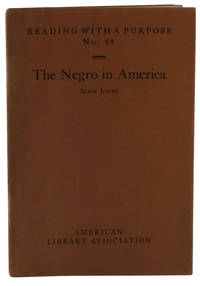
19332494Chicago: American Library Association 1933. Saddle-stapled in typographic wraps. 4-3/4" x 6-3/4". 64 pp. Good condition lightly worn along saddle-stapled binding with light toning and soiling to cover wraps lower wraps lightly soiled and worn very mild creasing to corners and edges a very sound copy. In 1933 Dr. Alain Locke was asked to write this booklet on African-American history and survey of sociology which was accompanied by a glossary of recommended books to assist in his course by Edwin R. Embree Robert R. Moton Carter G. Woodson James Weldon Johnson V.F. Calverton Monroe N. Work and Charles S. Johnson. There was a study outline with a twelve-point discussion plan accompanied by sourced pages from the recommended texts to guide students. <br /> <br /> The American Library Association began issuing it's "Reading with a Purpose" series in the mid-1920s to aid in Adult Education and further reading comprehension throughout the United States. By 1930 the circulation of these booklets had reached 500000 and could be found on the shelves of most libraries in the country. The original publications focused on intermediate english geography history of science home skills and child education. As interest and demand grew for these booklets at libraries the range of subjects swelled to reflect these widening fields of study. <br /> <br /> One of Locke's widest-reaching publications during his lifetime providing a formed philosophy to black lives in America. All illustrations by Aaron Douglas. Issued in both cloth and wraps though scarce in both formats. American Library Association unknown
1968170440N.p.: The Landau Company 1968. Collection of 25 vintage photographs from the 1968 film including nine studio still photographs and 16 reference photographs. Three with mimeo snipes on the versos and the balance with provenance stamps and labels to same. <br /> <br /> One of the great film adaptations of any American novel starring Sondra Locke in her screen debut opposite Alan Arkin. Although much of the political aspect of McCullers' novel was removed from the film the themes present in the author's work are readily apparent: race loneliness impoverishment and anger. Arkin and Locke were nominated for Best Actor and Best Supporting Actress Oscars. <br /> <br /> Shot on location in Selma Alabama.<br /> <br /> Photographs range in size from 8 x 9.25 inches to 10 x 8 inches. Generally Near Fine. The Landau Company unknown