Locke JohnABAA
4 918 résultats
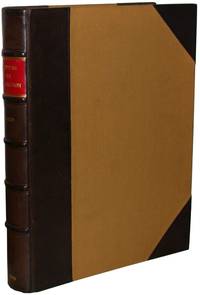
1765JL002bLondon: A. Millar 1765 Modern three-quarter dark brown calf over tan cloth boards with five raised bands and red morocco spine label lettered in gilt. A very good or better copy with some foxing and soiling to frontispiece and title page small chip to top corner of frontispiece text block otherwise clean and complete boards slightly bowed binding bright and unworn. Letters Concerning Toleration is a collection of four letters written by Locke on the subject of religious tolerance in which the English philosopher argues that the acceptance of multiple religious groups is necessary in society to prevent civil unrest. Although each letter had previously been published individually as well as together in Locke's Collected Works this 1765 edition is the first time in which the four letters have been published together as an independent volume. Hard Cover. Very Good. London: A. Millar hardcover books
1801117649London: Printed for J. Johnson 1801. Finely bound edition of the collected works of John Locke "the most worthy. of the indisputably great philosophers." Octavo nine volumes bound in full contemporary calf gilt titles to the spine morocco spine labels raised bands. Frontispiece of John Locke and fold-out table. In very good condition. Rare and desirable in contemporary calf. John Locke is regarded as one of the most influential of Enlightenment thinkers and the Father of Classical Liberalism. "Locke was the first to take up the challenge of Bacon and to attempt to estimate critically the certainty and the adequacy of human knowledge when confronted with God and the universe" PMM 164. This is the first edition of the first collected edition of his work and the earliest to put his name to "Two Treatises on Government" as well as the letters on "Toleration"and "The Reasonableness of Christianity". Contents include: Volume 1: An Essay concerning Human Understanding. In Four Books; A Letter to the Right Reverend Edward Lord Bishop of Worcester concerning some Passages relating to Mr. Locke's Essay of Human Understanding in a late Discourse of his Lordship's in Vindication of the Trinity; Mr. Locke's Reply to the Right Reverend the Bishop of Worcester's Answer to the Letter; Mr. Locke's Reply to the Bishop of Worcester's Answer to his Second Letter. Volume 2: Some Considerations of the Consequences of the lowering of Interest and raising the Value of Money. In a Letter send to a Member of Parliament. 1691; Short Observations on a printed Paper entitled For encouraging the coining SilverMoney in England and after for keeping it here; Further Observations concerning raising the Value of Money. Wherein Mr. Lowndes's Arguments for it in his late Report concerning An Essay for the Amendment of the Silver Coin are particularly examind'd; Two Treatises of Government. In the Former the false Principles and Foundation of Sir Robert Filmer and his Followers are detected and overthrown. The Latter is an Essay concerning the true Original Extent and End of Civil Government; A Letter concerning Toleration; A Second Letter concerning Toleration; A Third Letter for Toleration: To the Author of the Third Letter concerning Toleration; The Reasonableness of Christianity as deliver'd in the Scriptures; A Vindication of The Reasonableness of Christianity From Mr. Edwards's Reflections; A Second Vindication of the Reasonableness of Christianity. Volume 3: Some Thoughts concerning Education; A Paraphrase and Notes on the Epistles of St. Paul to the Galatians I and II. Corinthians Romans and Ephesians. To which is prefix'd An Essay for the Understanding of St. Paul's Epistles by consulting St. Paul himself; Posthumous Works viz. I. Of the Conduct of the Understanding. II. An Examination of P. Malebranche's Opinion of Seeing all things in God. III. A Discourse of Miracles. IV. Par of a Fourth Letter for Toleration. V. Memoirs relating to the Life of Anthony first Earl of Shaftesbury. VI. A new Method of the Common-Place-Book written originally in French and translated into English; Some familiar Letters between Mr. Locke and Several of his Friends.The work was published ten years after his death and is the first time his works were published as a collection. Printed for J. Johnson hardcover books
1714022572London: John Churchill. Volume 1 and Volume II only. Full leather. First Edition of the collected works. Previous owners names in ink Thomas Eyre and Js Paine and small bookplates with the name of another owner. One name crossed out. Locke was a highly influential British philosopher and empiricist. Loss from head and foot of spines separations along spine edges Good. . Good. Hardcover. 1st Edition. 1714. John Churchill hardcover
1417956F16London: John Churchill and Sam. Manship; Awnsham Chirchill 1714-1722 . First edition. Leather. Good. 13.5" by 9". Not Stated. The complete collected works of Enlightenment philosopher John Locke with the first and third volume present in the first edition and with volume II present in the second edition. The 1714 first edition of volumes I and III and the 1722 second edition of volume II.Complete in three volumes.Volume I illustrated with an engraved frontispiece and engraved funerary epitaph. Collated complete.The collected works of English philosopher physician and Enlightenment thinker John Locke frequently referred to as the 'Father of Liberalism' and recognised as one of the first of the British empiricists.Essays and writings on numerous subjects - including a discussion of interest letters concerning toleration and the reasonableness of Christianity - are included in these volumes alongside his posthumous works and a number of personal letters. With a lengthy index to the rear of each volume. Volumes I and III present in the 1714 first edition ESTC T128627.Volume I with the collation: A2 a2 A-H2 I2 A-F2 a-g2 B-4G4 4H2. Collated complete.Volume III with the collation: A2 1 B-R2 S-5A4 5B-5E2. Collated complete.Volume I includes 'An account of the life and writings of John Locke Esq; The third edition enlarged' London: printed for J. Clarke and E. Curll 1714 and 'The remains of John Locke Esq; . Publish'd from his original manuscripts' London: printed for E. Curll 1714 as called for.Volume II present in the 1722 second edition. ESTC T128551With the collation: A4 B-4P4 4Q-4S2. Collated complete.Former owner's inscriptions to volume II and III title pages.Present here are first edition volumes of the works of one of the most important and enduring figures of Western philosophy.Locke's philosophy of mind is viewed as the origin of modern conceptions of personal identity and the psychology of the self influencing the work of later philosophers such as Rousseau Hume and Kant. In full panelled calf bindings with gilt detailing to back strips. Volumes I and III lacking spine labels. Small losses of calf to back strip heads and tails with rubbing to back strips joints and board perimeters. Volume I joints starting with front board a touch tender and rear board firmly held. Front board of volume III starting with board firmly held. Joint heads of volume II starting with boards firmly held. Volume II lacking endpapers. Internally firmly bound but with title page and following leaf of volume II detached and loosely inserted. Former owner's inscriptions to volume II and III title pages. Pages bright with instances of light handling marks to each volume. Faint tide marks to heads of leaves of 'An account of the life and writings of John Locke' and 'The remains of John Locke' in volume I and light tide marks to heads of ten leaves to the rear. Very light tide marks to tail of each leaf of volume III and to fore edges and heads of pages 173 onwards. Marginal ink annotations and instances of underlining to pages 13-21 of volume III. Good John Churchill, and Sam. Manship; Awnsham Chirchill hardcover
1751126250Florence: Andrea Bonducci 1751. Rare first edition in Italian of Some Considerations of the Consequences of the Lowering of Interest and Raising the Value of Money 1692 and Further Considerations concerning Raising the Value of Money 1695. It is the only early translation of Locke's papers on money based on the folio Works of 1740 and is furnished with extensive footnotes by the translators Giovanni Pagnini and Angelo Tavanti. It is issued here with a treatise by Pagnini appended at the end of the second volume. Locke's writings had a major influence on the then-ongoing Italian monetary debate. Economic unrest in Italy in the middle of the 18th century led to several publications on monetary theory. In the aftermath of the Succession Wars the possibility of devaluing currency to boost economic growth was considered a proposal which raised questions about Italy's move towards a commercial society and out of feudal systems. Most of the Italian writers opposed devaluation of the currency who cited Locke's similar arguments in the English recoinage crisis of the 1690s; the only major detractor was Galiani. Pagnini and Tavanti published the work in translation in the belief that Locke's ideas of sound money were relevant to the situation. "By publishing Locke's works on money in Italian Pagnini and Tavanti made available to an Italian audience a structured version of what had originally been a few long letters written to give advice on a specific issue that belonged to late seventeenth-century English politics. Yet in the following decades Locke's letters had risen to fame abroad where a myth had been formed of Locke as the defender of an honest commercial order of humankind. If Locke's letters contained a general message about commercial politics the work by Pagnini and Tavanti was supposed to bring it out" Stapelbroek p. 13. The appended treatise by Pagnini describes commercial society as one based on trust and peace; by devaluing the currency a government is undermining this society. 2 vols bound in 1 quarto 245 x 179 mm. Titles printed in red and black engraved vignette to first title large folding table at end of vol. Modern half vellum and plain paper boards new spine labels. Boards lightly marked small ownership stamp to first title and one or two minor stains; a crisp clean copy. Attig 507; Kress Italian 275; Yolton 164. Koen Stapelbroek "The Devaluation Controversy in Eighteenth-Century Italy" in History of Economic Ideas vol. 13 no. 2 2005. hardcover
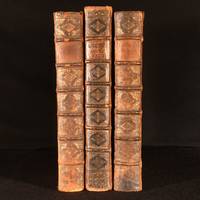
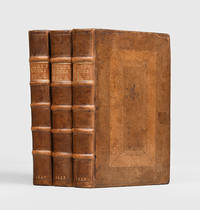
1727189612London: printed for Arthur Bettesworth; Edmund Parker; John Pemberton; and Edward Symon 1727. The most influential philosopher of modern times Third edition of Locke's collected works following those of 1714 and 1722. "John Locke is the most influential philosopher of modern times. His influence in the history of thought on the way we think about ourselves and our relations to the world we live in to God nature and society has been immense. His great message was to set us free from the burden of tradition and authority both in theology and knowledge by showing that the entire grounds of our right conduct in the world can be secured by the experience we may gain by the innate faculties and powers we are born with" Chappell p. 252. 3 vols folio 318 x 202 mm. Engraved portrait frontispiece by Vertue after Kneller and engraved memorial plate. Contemporary panelled calf rebacked and recornered to style orange morocco labels. Ownership inscription to front pastedown dated 1832 of James Ford curate of St Lawrence in Exeter 1779-1850. Slight rubbing minor marking to covers tear to front free endpaper contents clean crisp and fresh. A very good copy. ESTC T115711; Yolton 365A another issue only says Parker's name in the imprint. Vere Chappell The Cambridge companion to Locke 1994. unknown
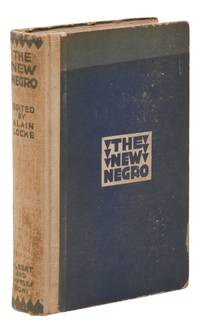
1925140947630New York: Albert and Charles Boni 1925. First Edition. Good. First edition first printing. xviii 446 pp. Bound in publisher's blue paper-covered boards over buckram spine cloth lettered in blue. Good with moderate rubbing and toning to covers mottling to front cover boards exposed at edges. Dust-soiling and light staining to upper edge of textblock dampstaining to endpapers pencil inscriptions to front endpapers and half-title. First two leaves clipped at the lower corner contents toned with occasional foxing binding exposed at multiple places. Lacking jacket. A serviceable copy. <p>A landmark African American anthology featuring stories essays and poetry by the leaders of the Harlem Renaissance movement: Langston Hughes Zora Neale Hurston James Weldon Johnson Countee Cullen Claude McKay Jean Toomer and more. Albert and Charles Boni unknown
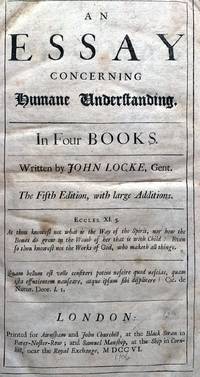
170617416London: Printed for Awnsham and John Churchill 1706. FIFTH EDITION. Index bound after Contents and before text. Contemporary full-paneled calf panels blind-stamped on front and rear boards edges partially rubbed with corners reinforced rebacked; interior excellent. Fifth edition containing expansions of all four books. This edition includes the final textual changes by Locke though it was published posthumously. It was also the last edition printed in folio format. Locke’s 1632-1704 famous work of empirical philosophy deals with the fundamental issues of how we think perceive and express ourselves through language logic and religion. All later editions were based upon this 1706 printing. Printed for Awnsham and John Churchill unknown
1700B5207London: Awnsham and John Churchil c. 1700. A fine example of this desirable work. Edition: 4th edition with large additions. Binding: Contemporary brown speckled calf boards with blind tooled decorative borders on top and bottom cover rebacked skillfully. Spine in six compartments with gilt text on 2 and 6. Tooled decorations on 1 3 4 5 and 6. <br> Notes: The essay is divided into 4 books within the one volume. John Locke FRS 1632 –v1704 was an English philosopher and physician regarded as one of the most influential of Enlightenment thinkers and known as the "Father of Classical Liberalism". Considered one of the first of the British empiricists following the tradition of Sir Francis Bacon he is equally important to social contract theory. His work greatly affected the development of epistemology and political philosophy. His writings influenced Voltaire and Rousseau many Scottish Enlightenment thinkers as well as the American revolutionaries. His contributions to classical republicanism and liberal theory are reflected in the United States Declaration of Independence. Locke was the first to take up the challenge of Bacon and to attempt to estimate critically the certainty and the adequacy of human knowledge when confronted with God and the universe. In the past similar enquiries had been vitiated by the human propensity to extend them beyond the range of human understanding and to invent causes for what it cannot explain. Therefore Locke’s first task was to ascertain ‘the original certainty and extent of human knowledge’ and excluding ‘the physical consideration of the mind to show how far it can comprehend the universe’. His conclusion is that though knowledge must necessarily fall short of complete comprehension it can at least be ‘sufficient’; enough to convince us that we are not at the mercy of pure chance and can to some extent control our own destiny" Printing and the Mind of Man Size: Small Folio 317x205mm. Illustration: Illustrated with a frontispiece engraving of John Locke. Volume: 4 books in 1 volume Provenance: of William Bell from Ulcombe Kent. References: Attig 228. Grolier 100 English 36. Grolier Wither to Prior 527. Pforzheimer 600. Printing and the Mind of Man 164. Wing L2739. HBS 64538. Pages: P. Blank. Frontis. Title. Dedication 1-4. Epistle to the Reader 1-10. Contents 1-23. 1-438. Index 1-11. Errata. Blank. 91-94 mispag as 93-96 226 jumps to 233 371 mispag as 317 380-381 mispag as 390-391. This is an augmented edition with two new chapters that were not in the previous editions. Category: Book Philosophy; Book Social Sciences; Book Europe United Kingdom; Awnsham and John Churchil hardcover
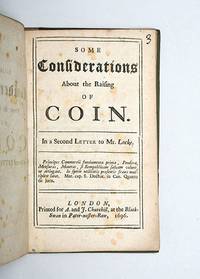
1696151077London: A. and J. Churchill 1696. Responding to Locke on coinage First edition of an anonymous reply to John Locke's Further Considerations Concerning Raising the Value of Money both part of the considerable output of publications surrounding the Great Recoinage of 1696 where the shortage and drawbacks of metal currency was engendering much debate. The terminal page is known in two settings this dated 3 October 1696 with advertisements the other dated 23 September 1696 and without advertisements. Octavo 173 x 106 mm. Nineteenth century white quarter cloth spine lettered in gilt green paper-covered sides. Early notation to title page stamp of Assay Office Library Birmingham to front free endpaper. Spine and extremities darkened contents foxed half-title lightly soiled. A very good copy. ESTC R16348; Pforzheimer 615; Wing S4481; Yolton C1696-5. hardcover
1773119924Amsterdam: no printer 1773. First edition in Italian of one of the most famous and influential works in the history of liberalism the second of Locke's Two Treatises on Government 1690. "'An anonymous translation from the French text of David Mazel probably the 1755 ed." Yolton. The work did not appear again in Italian until 1925. Octavo 183 x 119 mm. Contemporary quarter calf and marbled boards spine ruled and lettered gilt. Ownership stamp "G.G." to title ownership mark "Peyrot" to front pastedown. Spine ends neatly restored; occasional light spotting; a very good copy. Rare: Attig 188; Yolton 59; First Search locates 2 copies only York University Ontario and University of Texas at Austin to which we can add the copy at Yale. hardcover
1925035876NY: Albert and Charles Boni 1925. 1st Edition . Hardcover. Good/No Jacket. Bound in publisher's original blue paper-covered boards over buckram spine cloth lettered in blue. The boards are heavily rubbed with a2 2/3 inch split at the edge of the spine base. The binding is sound. Ex-library with the usual markings. <br/> <br/> Albert and Charles Boni hardcover
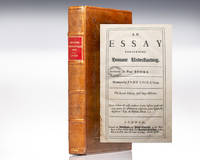
1694149739London: Printed for Awnsham and John Churchil at the Black-Swan in Pater-Noster Row and Samuel Manship at the Ship in Cornhill near the Royal-Exchange 1694. Rare second edition of this fundamental work in the history of Western thought the first to name Locke as the author and to include the frontispiece portrait of him. Folio bound full paneled calf morocco spine label lettered in gilt elaborated diced stamping to the spine in five compartments within raised bands engraved frontispiece portrait of Locke by P. Vanderbanck after Sylvester Brounower. In very good condition. From the library of the Isle of Wight Institution with stamps to the title page page 175 and verso of final leaf; ownership signature of British missionary Daniel Tyerman 1773-1828 of Newport Isle of Wight dated 1804 to the title page. The second edition of Locke's essay contains a number of important changes and additions to the text. It was the first to name Locke as the author and include the frontispiece portrait of him indicative of the celebrity Locke acquired with the publication of the first edition in 1690. "When Thomas Basset was running out of copies of the first edition in February 1693 he signed a contract with Locke to pay him ten shillings per sheet for additional materials for a new printing. These additions included an expansion of Book I Chap. IV; the chapter on power was almost entirely new; a new chapter 'Of Identity and Diversity' was inserted as 2.27 making chapters 27-31 to be renumbered as 2.28-32; and a discussion was added to 2.9.8. Other numerous additions were made throughout sectional summaries added in the margins and an analytical index supplied" Yolton. "It is Locke's second edition of the 'Essay on Human Understanding' that is the masterpiece we remember; the first 1690 edition did not bear Locke's name nor did it include a number of emendations that finished the work as Locke wanted it" Matthews Collecting Rare Books 97. "Locke was the first to take up the challenge of Bacon and to attempt to estimate critically the certainty and the adequacy of human knowledge when confronted with God and the universe" PMM 164. It is in this work that Locke 1632-1704 lays the foundations of British empiricism and the concept of the mind as a tabula rasa. "Locke summed up the Enlightenment in his belief in the middle class and its right to freedom of conscience and right to property in his faith in science and in his confidence in the goodness of humanity. His influence upon philosophy and political theory has been incalculable" Columbia Encyclopedia. Printed for Awnsham and John Churchil, at the Black-Swan in Pater-Noster Row, and Samuel Manship, at the Ship in Cornhill, near hardcover
1801884404London:: J. Johnson C.G. & J. Robinson Etc. 1801. Engraved frontis portrait folding table. Locke's influence on philosophy and government especially those principles espoused by America's founding fathers is immeasurable. This is a beautiful set of Locke's philosophical works in original boards and spine elaborately tooled in gold with red labels and gold lettering. Professionally rebacked. Contents very lightly toned. Ref. Printing and the Mind of Man 164. The Tenth Edition. Very Good. 8vo. 10 Volumes. J. Johnson, C.G. & J. Robinson Etc. hardcover
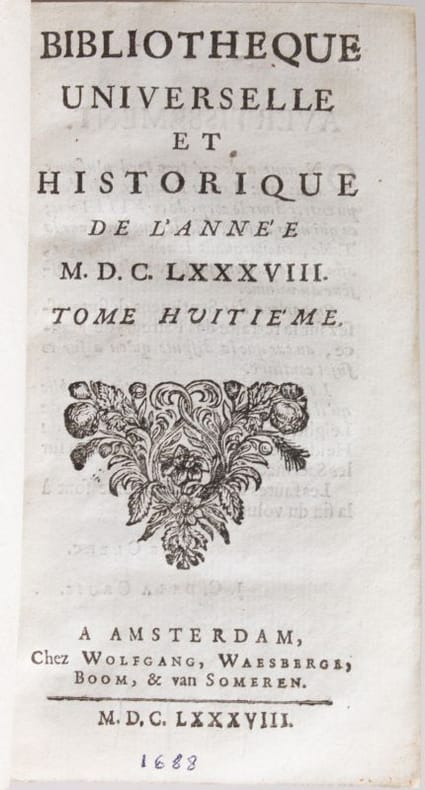
16885037Amsterdam Wolfgang, Waesberge, Boom & van Someren 1688 in-12 pleine reliure Amsterdam, Wolfgang, Waesberge, Boom & van Someren, 1688. 14 x 8 cm, in-12, (12) 538 (24) pp. - 1 planche dépliante hors texte, 1 figure dans le texte, reliure de l'époque de pleine basane cramoisie, dos à 5 nerfs orné de caissons, pièce de titre, traces de roulette sur les coupes, tranches mouchetées.
1936140944642Washington D.C.: Associates in Negro Folk Education 1936. First edition. First edition. Signed by Alain Locke on the foreword dated 1937. vi 122 pp. Bound in publisher's stapled wrappers. Very Good wraps a little stained and toned light foxing along edges wear at foot.<p>Called the "philosophical architect" and "ideological genius" of the Harlem Renaissance in this booklet Howard University professor Alain Locke traces the history of art by and about African Americans. Associates in Negro Folk Education unknown
1777261203London: Printed for W. Strahan J.F. and C. Rivington L. Davis W.Owen . 1777. Eighth edition & second quarto edition after the 1768 Hollis Edition. Engraved copperplate frontispiece portrait of Locke by Cipriani. Folding chart in vol. I. 4 vols. 4to. Full contemporary polished calf red and green title labels. Joints neatly repaired. Unobtrusive labels on pastedowns. Front joint of vol. I tender. Handsome copy. Eighth edition & second quarto edition after the 1768 Hollis Edition. Engraved copperplate frontispiece portrait of Locke by Cipriani. Folding chart in vol. I. 4 vols. 4to. "This edition of Locke's Works is generally considered the best" Christophersen. Yolton 370; Christophersen pp. 88-89 Printed for W. Strahan, J.F. and C. Rivington, L. Davis, W.Owen .. unknown books
1693LV2329London:: Awnsham & John Churchill 1693. 1693. Small octavo. Collation: A4 B-R8 S4. Pagination: viii 262 2 pp. Modern antique-style spotted paneled calf red morocco spine label edges speckled red old endpapers preserved; some marginal worming G3-N8 with occasional effect to printed text but confined to lower margin some abrasion to fore-edge. Otherwise a fine copy. First Edition "corrected" issue. There has been much discussion of the "states" of the first edition. This copy has the square ornament on the title-page the rules are 13mm below the type and ‘patronage’ on A3v line 19. In addition this copy has the catchword "I" found on A2v indicative of a first printing and not the reprint wherein one finds the catchword altered to "I my". "Locke was known to be concerned at the quality of the printing of his writings and to try to read the sheets before they were finally printed . . . I think the Churchills completed printing the first edition before Locke had made corrections; that he was so incensed by the errors that he insisted the whole first edition be suppressed and the barely distinguishable second edition be made." - Yolton. This copy has most of the corrections but lacks a few at the front of the volume and apparently is made up of some mixed sheets from the first printing. // It quickly became one of his most popular and influential works and is more or less a direct application of Locke’s empiricism as expressed in his Essay Concerning Human Understanding. // From the beginning Some Thoughts Concerning Education was initiated in 1684 with a correspondence with Locke’s friend Edward Clarke. The letters offered to Clarke advice for raising his son and heir. But it was not until William Molyneux encouraged Locke in 1693 to publish this book based on the advice given and even then issuing the first edition without his name on the title. // This work is a cornerstone in educational theory and is further considered a foundation of the principles of modern developmental psychology. "His thought was marked by a ready understanding of and warm sympathy with children. Three main thoughts dominate the work. First the individual aptitudes capacities and idiosyncrasies of the child should govern learning not arbitrary curricular or rote learning taught by the rod. Second Locke placed the health of the body and the development of a sound character ahead of intellectual learning. In the third place he saw that play high spirits and the ‘gamesome humor’ natural to children should govern the business of learning wherever possible. . . His influence on educational thought was enormous and is still very much with us in its fundamental outlook and method." - Encyclopedia of Philosophy. REFERENCES: Alston 10:111; Attig 523; ESTC r213714. T.C. II467; Pfortzheimer 612; Norman 1381; Wing L2762; Yolton 165-6. A[wnsham] & J[ohn] Churchill, 1693. unknown books
1801PCKeLOCK36London: Printed for J.Johnson G.G. & J.Robinson. 1801. 1801. 10 Volumes. 8vo. engraved frontis. portrait. folding table. contemporary mottled calf gilt backs several joints partly cracked or with neat repairs. armorial bookplate of the Earl of Charlemont & ownership entry dated Dublin 1802. Tenth Edition; a reprint of the ninth edition of 1794 9 volumes which added A History of Navigation and A Catalogue and Character of Books of Voyages and Travels. Christophersen p. 89. Rand I 341. NCBEL II 1836. cfPrinting and the Mind of Man 164. Palgrave p. 633. Hardcover. London: Printed for J.Johnson, G.G. & J.Robinson., 1801. Hardcover
1940140939200Washington D.C.: The Associates in Negro Folk Education Inc 1940. First Edition. Very Good. First edition cloth issue. 224 pp. with many b/w illustrations color frontis. Black cloth with gilt lettering. Very Good sans jacket with light wear to cloth and soiling to edges foxing and offsetting to endpapers later gift inscription on front free endpaper underneath Locke's inscription horizontal crease to frontispiece that may be a production error. Signed by editor Alain Locke on front free endpaper inscribed to professor of philosophy Max Otto and his wife "in remembrance of happy Madison Wisconsin days. signed with an underscore Alain Locke May 27 1946." A nice association between two prominent American intellectuals. As an outspoken critic of religious dogma and a friend of progressive Wisconsin politician Robert LaFollette Otto weathered decades of opprobrium while teaching in Wisconsin. A gay African American philosopher educator and writer Locke is most often remembered as the "Dean" of the Harlem Renaissance; his writing on the movement in 1925 including the seminal anthology The New Negro effectively launched it. He was also the first African American Rhodes scholar. This influential anthology introduced many Black modern artists and subjects at a time when few critics were aware of them. An uncommon signed major work of Locke's. The Associates in Negro Folk Education Inc unknown books
169726429London: Printed by H. Clark for A. and J. Churchill and Edw. Castle 1697 both titles 1697. First editions. Wing L-2749 & L-2753; Yolton 248 second issue state 2 & Yolton 249; NCBEL II 1837. Edges rubbed; front hinge starting but holding soundly; very good copy in the original state. 8vo 2 vols in 1 contemporary black panelled morocco brown morocco label gilt decorations and lettering a.e.g. Half-titles present. ¶ Locke's first published responses to criticism of his Essay Concerning Human Understanding; these two were written in reply first to Edward Stillingfleet's Discourse in Vindication of the Doctrine of the Trinity London 1696 which accused Locke of unorthodox religious beliefs and the second was to Stillingfleet's response to Locke's first letter. There was one further exchange between the two in 1699. <br/><br/> London: Printed by H. Clark, for A. and J. Churchill and Edw. Castle, 1697 [both titles] unknown books
1722302488London: printed for A. Churchill and A. Manship and sold by W. Taylor in Pater-noster-Row 1722. The second edition. Frontispiece portrait by George Vertur after. 3 vols. Folio. Contemporary paneled calf neatly and almost imperceptibly rebacked preserving the original backstrips and spine labels. Bookplate of John Pollexfen Bastard and the signature of Charles Wymondesold whose widow married Bastard on the front free endpapers. Fine attractive copy. The second edition. Frontispiece portrait by George Vertur after. 3 vols. Folio. ESTC T128551 printed for A. Churchill, and A. Manship, and sold by W. Taylor in Pater-noster-Row unknown books
17271508179Arthur Bettesworth London 1727. 3rd Edition. Hardcover. Very Good/No Jacket. Three volumes Folio. Very good condition clean inside. Third edition of Locke's collected works including the Essay Concerning Human Understanding Two Treatises of Government Some Thoughts Concerning Education and his Letters Concerning Toleration. Contemporary leather binding six raised bands. Arthur Bettesworth, London hardcover books
1706Embry 149827Printed for Awnsham and John Churchill at the Ship in Cornhill near the Royal Exchange London: 1706. "Fifth edition with large Additions." Inked name to front pastedown and with handsome engraved portrait of John Locke adhered to front pastedown inked notations to lower margin of title page overall a clean wide-margined and handsomely restored copy. Restoration by Glenn Fukunaga. Full dark brown speckled calf with with onlay panel of light calf decoratively edged with blind rolls. Pages 259-262 mis-paginated 260 261 255 263 but with catchwords correct and no text lacking. Pagination 285-344 lacking but once again catchwords indicate not text lacking. Printed for Awnsham and John Churchill, at the Ship in Cornhill, near the Royal Exchange, London: 1706. "Fifth edition w unknown books
1933140945023New York: Harmon Foundation Incorporated 1933. First edition. First edition. 56 pp. Bound in publisher's illustrated stapled self-wraps. Near Fine with light wear to wraps. A rare catalogue of African American art with a short essay "The Negro Takes His Place in American Art" by Alain Locke. Exhibiting artists include Malvin Gray Johnson Richmond Barthe Sargent Johnson Lois Mailou Jones Samuel Albert Countee William Arthur Cooper James A. Porter and Hale A. Woodruff. Harmon Foundation Incorporated unknown