6 363 résultats
17503115<p>1750. DBI s.v. Albani; G. Cucco ed. Papa Albani e le arti a Urbino e a Roma 1700-1721 2001. Highly finished preparatory design for a fresco or tapestry connected to the Albani family whose coat of arms appears under the left-hand arch crowned with a cardinal’s hat. Under the central arch of the drawing preceded by a palafreniero four servants in blue and white livery carry a red baldacchino that covers two figures processing on horseback. One is clearly a secular prince with his garland crown and red cape while the other figure is a cardinal wearing a black hat and a red robe. It is possible that the cardinal depicted is either Annibale 1682-1751 or Alessandro 1692-1779 Albani or their nephew Cardinal Giovan Francesco Albani II 1720-1803. Under the right arch of the fictive architecture two buildings appear. While three commedia dell’arte figures who are commonly associated with the Venetian carnevale appear the carriage in the background contradicts the possibility that the setting for this event is Venice. Below these three arches a series of nine crests appear. The personification of death reclines with his scythe behind the coat of arms of the Corsini family blue and yellow diagonal stripes with a white band through the center. The crown which signified the rank of the family has been wrenched off. The Corsini were made dukes by Urban VIII in the seventeenth century and princes by Clement XII in 1730 This act of vandalism fits well within the long history of enmity between the Corsini and Albani families in the papal court. We have been unable to connect the sheet to a specific project at any Albani residence but future research should consider the Villa Castelbarco Albani in Vaprio d’Adda northeast of Milan whose documentation has proved difficult to obtain.</p> unknown books
In Lausanna [i.e. Livorno] / In Siena, [tipografia Coltellini] / per Francesco Rossi stamp. del pubblico, 1765 / [1786], due titoli legati in un volume, in-8 piccolo, legatura coeva in piena pergamena, titolo manoscritto al dorso, tagli screziati. Beccaria: pp. [2], 141, [3], 135-229, [3], l'ultima carta bianca. Con antiporta incisa in rame, vignetta calcografica (bilancia in equilibrio su spada spezzata) sul frontespizio, e fregio xilografico al recto di carta A2, con i simboli delle arti. L'irregolarità della paginazione fu causata dalla volontà del tipografo di reintegrare, rispetto ad una prima composizione a stampa, le numerose pagine omesse nel Giudizio del De Soria. Terza edizione assoluta di questa "pietra miliare" del pensiero giuridico e prima in assoluto a recare l'antiporta allegorica incisa in rame immaginata dal Beccaria. Edizione pubblicata dalla tipografia Coltellini: cfr. L. Firpo, Le edizioni del "Dei delitti e delle pene", p. 544-547, n. 4 in Edizione nazionale delle opere di Cesare Beccaria, v. 1, Milano 1984. Var. C: vignetta calcografica sul front. (bilancia in equilibrio su spada spezzata) e fregio a p. 3. Atti del Convegno Internazionale su Cesare Beccaria, Torino, 4-6 ottobre 1964, pp. 399-403. Riforma della legislazione criminale toscana: pp. 80. Con stemma xilografico di Pietro Leopoldo granduca di Toscana sul frontespizio. Il 30 novembre del 1786 il Gran Ducato di Toscana sotto Pietro Leopoldo promulgò il nuovo codice criminale; per la prima volta nella storia degli stati moderni, con questo documento, furono abolite la pena di morte e la tortura. Timbretto di possesso privato sul frontespizio dell'opera del Beccaria. Volume unico che riunisce il testo teorico fondativo dell'abolizione della pena capitale e la sua prima applicazione pratica nella storia. Ottime condizioni di conservazione.
10850Wien / Baden bei Wien, Gesellschaft für vervielfältigende Kunst / Verlag Rudolf Rohrer, 1889 bis 1938. 39 volumes (36 in-folio et 3 in-4). Les 5 premiers pleine percaline brune, titre et décors dorés et noirs aux dos, premiers plats richement décorés (doré, noir et à froid), plats biseautés, tranches dorées pour le volume 5. Du 6e au 36e, pleine toile grège d'éditeur, titre et décors rouges jusqu'au 23e, vert pour les suivants, tranches marbrées ou teintées. Les 3 volumes in-4 sont reliés pleine percaline bordeaux, titre doré aux dos, têtes dorées (plats un peu tachés). La toile de certains volumes est un peu poussiéreuse. Intérieur très frais, quelques rousseurs extrêmement rares, 1 planche et 1 cahier déboîtés. Les années 1909, 1917 et 1918 non reliées mais sous cartonnage toilé normal, 1917 en 3 numéros / 2 cahiers (sur 4 / 3), 1918 en 3 numéros / 2 cahiers (sur 4 / 3).
17843603426London: Sold in Spur Street Leicester Square 1784. Small crease in lower corner in good condition. Oval engraving 350 x 265 mm. image size; mounted. <p><p>Rare variant of the famous engraving of Cook's death showing as the caption notes "Part of the Original Plate after Webber" and presumably quite literally printed from an oval cut from the fuller engraved copper. This is only very rarely seen: the single example noted by Joppien and Smith was in the British Museum. </p> <p>The full-size engraving was first issued early in 1784. Based on the oil painting executed by Webber soon after he returned to London in 1780 the figures were engraved by Francesco Bartolozzi and the landscape by William Byrne. Quickly becoming the most famous of all eighteenth-century depictions of the massacre the view appeared at about the same time as the official third voyage account was published. This was no coincidence: although lavishly illustrated by Webber the official account did not include any depiction of the most famous scene of the entire voyage the death of Captain Cook. As a result the iconic engraving is often seen bound into extra-illustrated editions of the third voyage account.</p> <p>Reflecting the general opinion prevailing in published accounts of the voyage the original image as Joppien and Smith argue appeared to show Cook as 'an innocent victim killed in the act of pleading for peace'. This is here heightened by the changed composition as the oval shape dictates a radically different impact to that of the original engraving omitting the dramatic conflict between the British sailors and the Hawaiians and thus implying a scene in which Cook his arm raised in supplication to his men offstage stands alone and is overwhelmed by a seething crowd.</p> <p>The only copy noted among Australian holdings appears to be the heavily clipped copy in the National Library of Australia part of the Nan Kivell collection.</p> </p> . Sold in Spur Street, Leicester Square unknown
In-4to piccolo, (36), 121, (1) pp., 10 tavole. Completo delle 56 silografie nel testo (molte delle quali a piena pagina) e delle 10 tavole incise in rame fuori testo, una delle quali (cuore) con volvelle. Vitello coevo, dorso ben restaurato.
059-Ao.J. Kupferstich, 1614, nach Barthel Beham, auf Bütten. 5,7:8,2 cm. Im rechten Rand gering flecking. Literatur: Hollstein 559. Ganz ausgezeichneter und klarer Abdruck mit leichtem Plattenton und mit Rand um die Plattenkante.
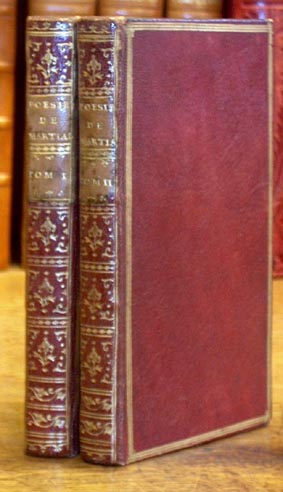
1783002461Paris, Bastien, 1783
[20], 644 pages. Index. Twenty-six black and white photographic plates. Leather binding. "Comprising a history of Egypt, with a comprehensive and authentic account of the antiquity of masonry resulting from many years of personal investigation and exhaustive research in India, Persia, Syria and the Valley of the Nile." - title page. After first receiving the Light in India, the author was moved to "investigate, to the fullest extent, the meaning and purport of the numerous hieroglyphic inscriptions, symbols and characters found upon the ancient tombs and temples, so that the Masonic Fraternity might understand, appreciate and apply the teachings of the hierophants and sages of bygone days." - Preface. Chapters: Alexandria - the Antiquity of Masonry; Ruined Temples - Masonry and Masonic Symbols; Ancient Cities - Soirian Myth - Karma; the Nile - Origin of the Name Free Mason - Scottish Rite Philosophy; Ancient Mysteries - Scottish Rite philosophy; Suez Canal - The Druses, Their Manners and Customs; Agriculture - Irrigation - Lotus - Papyrus; The Supreme Architect of the Universe; Mosques - Tombs - Massacre of Mamelukes - Heliopolis; Esoteric Teaching of the Scottish Rite - Brain and Thought; Pyramids - Sphinx - Tombs; Solomon - Death of Hiram - Cross - Swastica; Mummification - Transmigration - Re-incarnation; Sixteen Saviours - Lost Knowledge; The Golden Fleece - Roman Eagle - Masonic Apron - What it Teaches; Pyramids of Sakkarah - Lisht - Medum - The Fayum - Labyrinth; Sun Worship - Zodiac - Masonic Allegories; A Voyage up the Nile - Description of Tombs and Temples - Pro Doric Columns; Ineffable degrees - Thoughts on Ecclesiastes - I.N.R.I. - Voyaging up the Nile - examining Tombs and Temples - Paintings - Sculptures; Masonic teachings - Hindu beggar - Roman Catholicism; Thebes - Colossi - Der-El-Bahari - Luxor - Karnak; Ceremonies - Initiation - Blue Lodge - Transmigration - Mystery Language; The Gawazee - exploring Temples and tombs - Philae and its ruins - Nubia; Jewish Traditions and customs - Cable tow - Ceremonies of ancient Initiation - book of the Law; Circumsision - upon what the Ancient Craftsmen were obligated - the lost word. All edges gilt. Protected frontis portrait of author. Ornately embossed boards. Raised bands to spine. Partially rubbed gilt lettering and decoration upon back strip. Marbled endpapers. Hinges intact internally, open or opening externally. Front board partially detached. Somewhat above-average wear to boards. Unmarked. A worthy original copy of this monumental work. 12" x 9.5" x 2.5". 11 pounds. Book
006479Paris C. L. F. Panckoucke 0 6 volumes in-8 Demi-veau tabac Edition originale
127885aafBasel, (u.a.) Getruckt bey - Jacob Werenfels - J. Bertsche - J.-J. Decker - G. Decker - J.R Genath - J.H. Meyer / Auch (n° XVI:) Winterthur J. R, Meyers / (XXXIX) Frankfurt, Jonae Rosen 1617 / (n° XL, Tauffprädigt) Heidelberg, J. Lancellot, 1618, 28 S. + 2 Bl., um 1655-68, in-4to, Vorgebunden 3 Bl. mit hs. ‘Index Textum - Index Authorum - Nomina Defunctorum’ + 2 Bl. leer + 879 Bl. (= 1758 S.) + 2 Bl. mit handschr. Notizen, teils etwas gebräunt u. fleckig, hs. auf Spiegel ‘Tomus XX’ & ‘Ex Bibliotheca Johann Leonhardi Schopferi, V.D.M. collectus Sangalli Ao 1668’, Prgt. d. Zt. (Bestossen, gebräunt u. fleckig, Kanten tls. etw. beschabt).
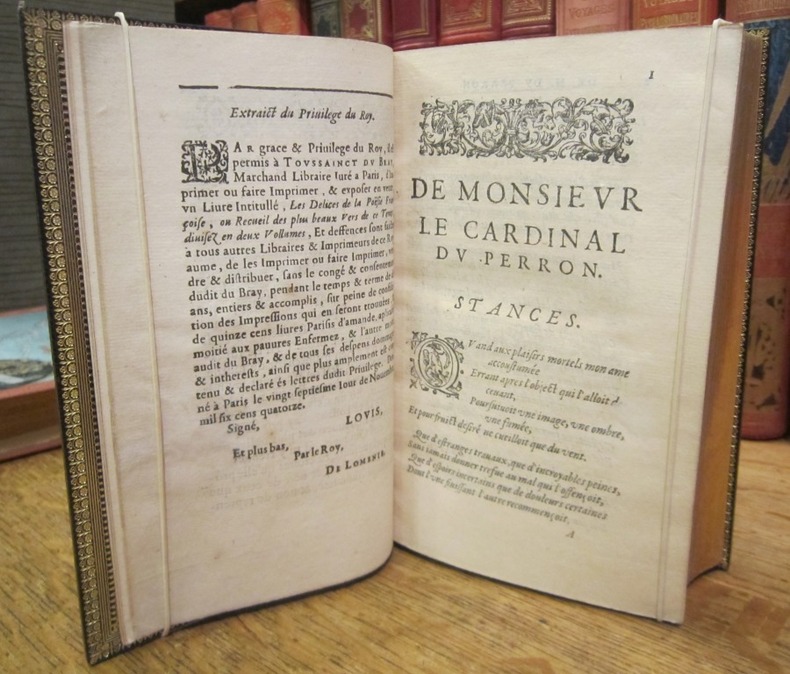
1615002850Paris, Chez Toussainct du Bray, 1615
190976832Death Valley: N.p. 1909. Twenty-seven noncommercial stereoviews 7 x 3 1/2 inches. The photographs are very sharp and mounted onto plain gray mounts. Overall excellent condition.We can find no other history of a stereoscopic documentation of a gold prospecting expedition in Death Valley nor anywhere else in California for that matter. Almost all of the cards are dated and they bear the same date of January 1909 which leads one to think that they packed it up after a month. The ostensible first view is the exception; it is dated Dec. 1908 and shows a couple of the party standing next to two of Smith's huge borax wagons in Ludlow California. Ludlow was the southern railhead for the Tonopah and Tidewater Railroad operated by the Pacific Coast Borax Company and bringing borax and other mining products from Death Valley and Beatty Nevada to long distance Santa Fe Railway lines. The mere fact that one of the exploring party carried a stereoscopic camera is in itself remarkable as a decent such camera is 1909 cost between $50 and $75 dollars or between $2000 and $2500 in today's dollars. Death Valley prospector's were not known for their wealth and a burro was their usual big ticket item.The majority of the cards have annotations on the verso. From those we learn some of the party's names "Emmit" "Dickie"etc. but no last names and the names of the places in the Valley where they prospected. Their main site seems to have been Gold Basin in the Funeral Mountains of the eastern part of Death Valley. There is no record of a Gold Basin in the literature of Death Valley. Place names in Death Valley were still fluid at this point and the name was likely made up at the time. Probably it become what is now called Golden Canyon. We do know that they were solely active in the Funeral Mountains and this was likely due to the fact that the most successful strikes in Death Valley were also in the Funeral Mountains. The famous Keane Wonder Mine was still very active in January of 1909 and some $600000 in gold and silver were mined before it began to fizzle in 1911. Some of the other places named and shown in the stereos are South Mountain. Gold Mountain Rhode's Wash Scott's Canyon and Scott's Cave Death Valley Narrows Saddle Horseshoe Ridge and others. Again none of the names given by this party survived. Member's of the prospecting party are shown in 16 of the views and it seems to have consisted of six members. One interesting view is captioned "Prospector's Camp and Forge Bill Keys of Death Valley." At age 15 Keys left home to work as a ranch hand smelter worker and miner honing skills that would define his later years. His early adventures took him to Arizona where he served as a deputy sheriff in Mohave County and to Death Valley where he befriended the colorful prospector Walter “Death Valley Scotty†Scott. The year after this photo was taken Keys took a job as custodian and assayer at the Desert Queen Mine in what is now Joshua Tree National Park. He soon took ownership of the land and it became the famous Desert Queen Ranch.Why these views were taken remains something of a mystery. It is more than likely especially when keeping in mind the outrageous cost of a stereoscopic camera in 1909 they they were to be used as an advertising ploy to lure investors into investing in mining Death Valley. The two most famous and best producing gold mines in the history of Death Valley Skidoo and the Keane Wonder Mine were both at their height in 1909 and western Nevada with its mining booms in places like Goldfield Tonopah Rhyolite Bullfrog etc. was also in full-swing. We can be thankful that the anonymous photographer was very skilled; the images are very sharp and he often conveyed the desolation and grandeur in a way not seen before. In recent times taking a trip to Death Valley is considered just another fun road trip but in 1909 is was a perilous endeavor not to be undertaken lightly. N.p. unknown
1936015728Paris EDITION ORIGINALE. Tirage à 1012 exemplaires numérotés. Un des 35 sur Hollande van Gelder mis dans le commerce, second papier après vingt-cinq Japon . Bel exemplaire relié à l'époque : demi-maroquin noir à coins et filets or, dos à nerfs et pièce de titre rouge et lettre or, tête dorée, couverture et dos conservés. 1936 fort in-8 Broché Edition originale
200986916Caja De Ahorros De La Inmaculada. New. 2009. Hardcover. 849686927X . FREE UPGRADE to Courier/Priority Shipping Upon Request - IN STOCK AND IMMEDIATELY AVAILABLE FOR SHIPMENT - Flawless copy brand new pristine never opened -- INCLUDES CD-ROM. Text in Spanish. 446 pages with many illustrations. Catalogue Raisonne Catalog Raisonné Complete Works Catalogo Razonado Obra Completa Raisonnee -- with a bonus offer . Caja De Ahorros De La Inmaculada hardcover
19301180Paris, Editions EOS, 1930 ; in-4 en feuillets, couverture rempliée rouge-brique, sous chemise cartonnée à larges rabats et lacets de soie de même couleur et illustrée d’un grand bois gravé bistre, dos en percaline bistre ; (4) feuillets, 88 pages, (4) feuillets ; 20 bois gravés en couleurs dont dix hors-texte, six vignettes et culs-de-lampe et un grand bois illustrant l’étui et la couverture.
1955009647Paris (Gretry Wols) 1955 En feuilles, sous chemise cartonnée bleue éditeur.
1724000220Paris Imprimerie d'Antoine Urbain Coustelier 1724
2009C86916Caja De Ahorros De La Inmaculada. As New. 2009. Hardcover. 849686927X . FREE UPGRADE to Courier/Priority Shipping Upon Request - IN STOCK AND IMMEDIATELY AVAILABLE FOR SHIPMENT - Flawless copy brand new pristine never opened -- INCLUDES CD-ROM. Text in Spanish. 446 pages with many illustrations. Catalogue Raisonne Catalog Raisonné Complete Works Catalogo Razonado Obra Completa Raisonnee -- with a bonus offer-- - May be EITHER: out of print OOP and extremely rare in this pristine condition; signed by author or contributor; or a first or special edition; inquire for details . Caja De Ahorros De La Inmaculada hardcover
In-8 p. (mm. 207x169), cartonato rustico coevo (dorso restaur.), pp. (12),LXII, fregio tipografico xilografato al frontespizio. "Prima edizione", dedicata dall’A. al Barone Giuseppe De Sperges e Palenz (Cavaliere dell’Insigne Reale Ordine di Santo Stefano d’Ungheria, etc.). Trattato suddiviso in 16 paragrafi che contengono: “Della necessità, del fine, e della misura delle Pene in generale - Di alcune Nazioni, le quali non hanno dato la Pena di Morte - Pretesa contradizione della Pena di Morte - Se la Religione diminuisca l’impressione della Pena di Morte - Incovenienti della troppo grande estensione della Pena di Morte - Delle leggi, le quali decretano la Pena di Morte contro il Furto, ecc.”. “Il milanese Paolo Vergani (1750-1821) approfondì gli studi in storia e diritto canonico divenendo prelato. Si formò nell’ambiente intellettuale e culturale milanese dei fratelli Pietro e Alessandro Verri, oltre che di Cesare Beccaria, dal quale successivamente in parte prese le distanze. D’impronta moderata e illuminista, nel 1777 pubblicò con l’editore Malatesta "Della pena di morte", in cui si poneva l’obiettivo di elaborare una sorta di difesa del sistema criminale allora vigente, nella convinzione dell’ineluttabilità della pena di morte. La sua posizione oscillava, tuttavia, tra la necessità che la pena di morte venisse inflitta esclusivamente nei casi di maggiore gravità, in presenza di prove certe, e l’effetto intimidatorio insito nella stessa per la repressione dei reati. Anche per Vergani le leggi penali dovevano avere come fine l’utilità sociale ma, diversamente da Beccaria, sosteneva quanto le disuguaglianze delle condizioni sociali potessero giustificarne l’inflizione.. Ricevette per quest’opera il plauso su riviste come il “Journal encyclopédique”. Così Diz. Biograf. Ital., vol. 98. Fresco esemplare ben conservato, con bell’ex-libris al risguardo.
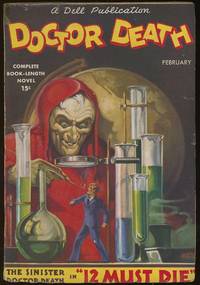
193532680New York: Dell Publishing Co. Inc. 1935. Mild tanning to text paper several tiny edge tears to front cover clear tape to upper right front corner/spine right edge likely trimmed a bright nearly fine copy. 32680. Octavo single issue cover by Rudolph Zirm pictorial wrappers. Pulp magazine. Series character first appeared in All-Detective Magazine. "12 Must Die" by Harold Ward writing as "Zorro." Reference: Tymn and Ashley eds Science Fiction Fantasy and Weird Fiction Magazines pp. 186-87. Dell Publishing Co., Inc. unknown
17864439France 1786. Hand-colored etched folding paper fan printed on the recto of two joined sheets backed in plain paper mounted on 15 later plain wooden sticks the open leaf measuring approx. 112 x 460 mm. total fan height 260 mm. The etching shows two couples and a small dog and table with wine carafe and glass flanking a female figure in white Grecian robes and a green wreath holding in one hand a heart at her breast and with the other hand ceremoniously setting alight a bundle of wood a fagot on a small pedestal or altar above which is the wreathed inscription Institution des fagotiers a auteuil le 2 avril 1786 / On prete serment sur un fagot de pratiquer toute sa vie cinq vertus : cordial franchise amitié générosité obeisance sic et tendresse; at top a star with the initials T L A and a banner lettered Vertus des fagotiers surmounted by the caption Ronde joyeuse des fagotiers/ Air: c’est la petite Theresse sic; on either side of this scene are four verses within two green-outlined oval cartouches within stenciled blue and yellow decorative border. Some wear and slight splitting along a few folds a couple of small tears at mounts.<br /> <br /> A mildly licentious pre-Revolutionary printed fan possibly commemorating a real event a “festival of the wood-gatherers†fagotiers held in Auteuil on April 2 1786 but of which there appears to be no historical record. Rather than a guild the fagotiers may have been a local association or club. <br /> <br /> The symbolism of the image and verses seems to be along the lines of Carpe diem carnally for death is around the corner — heavy sentiments for a feather-light fan. One of the men is gesturing toward his partner’s crotch and the verses on either side of the central scene are dotted with sexual innuendo. The first stanza “Let us sing of the burning fagot a bundle of small wood lit by friendship / he who backs away from it knows her i.e. friendship only half-way / without her life is nothing / with her one is deified†could be understood as innocuous but the second stanza celebrates the joys of Déduit an archaic term for the pleasures of love or coïtus. Stanza three brings in Death in the form of Charon: “amiable fellow let us sing his good humor his boat may lead to the devil but his spirit leads to happiness / with his worthy ardor the fire burns in our hearts.†The last stanza declares that the “august fagotine law†allows us to include women we need not hide everyone kiss your partner etc. <br /> <br /> I locate one other example of this fan held by the Musée Carnavelet in Paris. It is digitized on their website with the description “The Genie of Friendship lights the pyre on which the couples will take the oath of friendship.†The stenciled border of our copy differs from that of the Carnavelet example which is in pink; here it is in two colors and includes two birds perched on branches. unknown
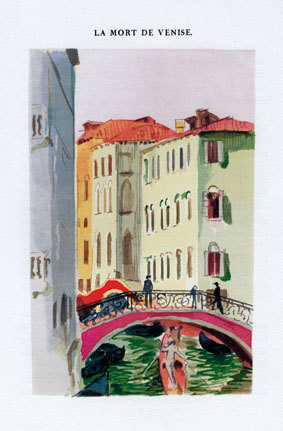
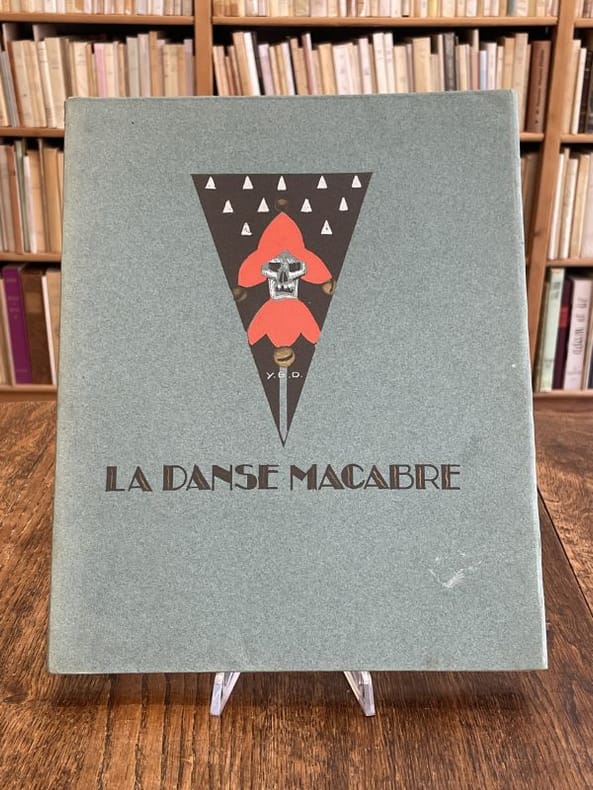
1927123017Paris Simon Kra 1927 1 vol. broché in-4, broché, couverture illustrée rempliée, non coupé, non paginé (44 ff.). Edition originale de cette danse macabre des années folles illustrée de 21 pochoirs par Yan B. Dyl. Tirage limité à 325 exemplaires, celui-ci numéroté sur vélin. Quelques rares et pales rousseurs, mais bel exemplaire de ce bel illustré "Art déco".
1927123017Paris Simon Kra 1927 1 vol. broché in-4, broché, couverture illustrée rempliée, non coupé, non paginé (44 ff.). Edition originale de cette danse macabre des années folles illustrée de 21 pochoirs par Yan B. Dyl. Tirage limité à 325 exemplaires, celui-ci numéroté sur vélin. Quelques rares et pales rousseurs, mais bel exemplaire de ce bel illustré "Art déco".
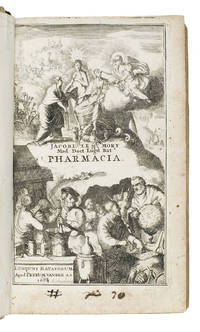
1684ABC_455011684. 14 256 34; 36 366 62 pp. Two of the most important pharmacological and chemical publications of the Leiden lecturer and future professor Jacobus Le Mort both in their second revised editions both first published in 1684.Jacob Le Mort 1650-1718 a Dutch chemist and physician was an apothecary in Amsterdam before he moved to Leiden to set up a private laboratory where he also lectured. After many difficulties and fierce opposition he was appointed professor of chemistry at Leiden University in 1702. He was the predecessor of the famous Boerhaave.Slightly browned back hinge and spine weak.l BMN I pp. 374 525; Hoogendoorn Mort03.2 Pharmacia; cf. Mort02.1: the 1684 Chymica; Lex. hervorr. Aerzte IV p. 289; NNBW I cols. 1345-1346. unknown
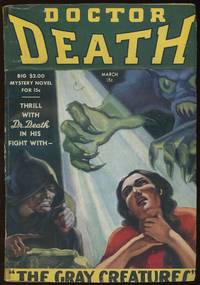
193532681New York: Dell Publishing Co. Inc. 1935. Mild tanning to text paper covers appear trimmed clear tape at upper and lower corners a bright nearly fine copy. 32681. Octavo single issue cover by Rudolph Zirm pictorial wrappers. Pulp magazine. Series character first appeared in All-Detective Magazine. "The Gray Creatures" by Harold Ward writing as "Zorro." Reference: Tymn and Ashley eds Science Fiction Fantasy and Weird Fiction Magazines pp. 186-87. Dell Publishing Co., Inc. unknown