6 422 résultats
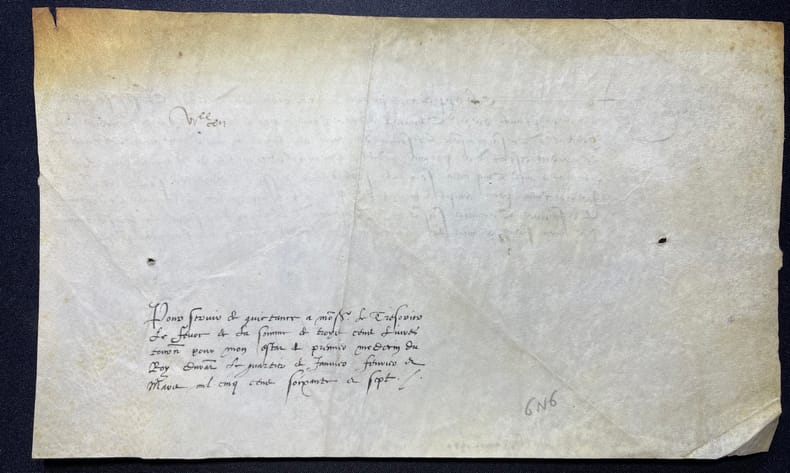
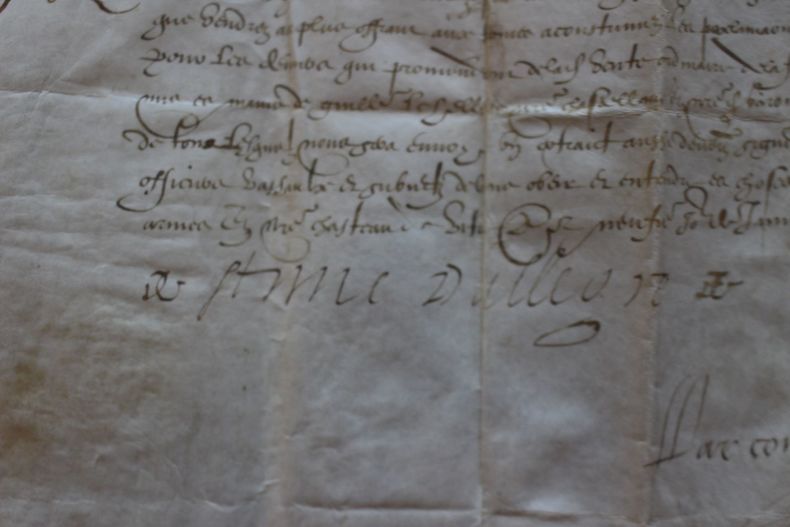
0022842 documents signés dont un sur peau de vélin, 30 janvier 1591 & 10 février 1591, 1p in-4 oblong (47*17cm) & 1p in-4. Lot de deux documents, anciennement attachés ensemble. Le premier est une lettre signée par Henri de Bourbon, et contresignée par une autre personne. Cette lettre est abîmée avec un gros manque en haut, et est datée du 10 février 1591. Elle est adressée à Gédéon Le Pennec de Boysjollan, vraisemblablement pour accompagner le second document. Le second document est donc une lettre signée par Anne d'Alègre (qui signait Anne D'Allegre), sur peau de vélin. Il s'agit d'une lettre adressée à M. de Boysjollan, commandant le chasteau de la Bretesche, qu'on qualifiait alors de commission, afin de nommer Boysjellan comme commandant de La Bretesche. On sait qu'avec une lettre du 18 décembre 1590, Henri de Montpensier envoyait sa commission (nomination comme commandant) datée du 16 décembre 1590 (que nous vendons séparément). Dans la lettre du 18 décembre, il demandait que Boysjellan d'obtenir la nomination et la provision de madame de Laval. Il est notamment question dans ce document d'une somme d'argent semble-t-il (texte difficile à déchiffrer). Très beau document avec le timbre à sec. Intéressants documents historiques, signatures rares. Sur Gédéon Le Pennec de Boysjollan : suite au départ de Carentoir, il fut nommé le 16 décembre 1590 commandant du camp de La Bretesche, citadelle huguenote près de Nantes. Fait prisonnier en 1591, il fut libéré grâce à l'intervention de sa tante auprès du duc de Mercoeur et moyennant une rançon payée par un cousin. Pour rembourser ce cousin, il vendit notamment la seigneurie de Bois-Jolland à un autre cousin qui la revendit ensuite à la veuve de Gédéon (mort en 1607 ou 1608) en 1612.
1956011155London Calder and Boyars 1956 plaquette in-12 Reliure de l'éditeur
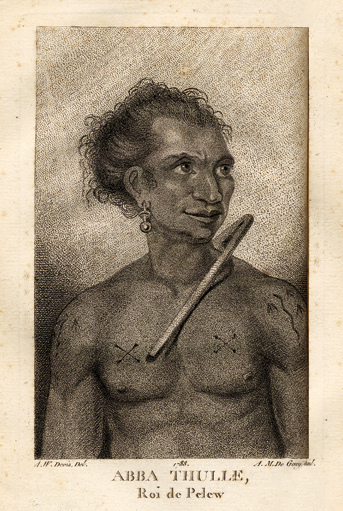
178814520Paris, Le Jay et Maradan, 1788 ; 2 tomes in-8 ; demi-chagrin noisette (reliure moderne) ; (4), 282 pp., portrait du capitaine Henri Wilson en frontispice, gravé par Mme Massard d'après I. Russell, grande carte géographique dépliante, 7 planches gravées dont 6 dépliantes ; (4), 274 pp., (3) ff. Errata et Approbation, 8 planches gravées dont 6 dépliantes, soit 17 planches au total ; vocabulaire de la langue Pelew pp. 251-267 du tome II.
063-Wo.J. Kohle, Bleistift und Farbstifte, mit Kohle umrandet, auf bräunlichem Velin, links oben monogrammiert ?MvL?. 18,5:21,3 cm. Auf Untersatz montiert, verso mit dem Stempel der ?Meggendorfer-Blätter?.
1927001978Paris Javal et Bourdeaux 1927
Xilografia: incisione h mm 181, l mm 130; intera pagina h mm 260, l mm 182, margini ampi. Tratta dall'opera dall'opera "Sermones de Arbore Humana" di Johannes Grüninger, Straßburg,1519. L'incisione rafffigura la Morte che colpisce con le sue armi una intera famiglia, sotto gli occhi di un nobile rimasto illeso. In secondo piano una fiera è colpita anch'essa a morte. Al centro dell'incisione un albero di cedro, rappresentazione dei dodici frutti dello Spirito Santo, che servono per agevolare la pratica delle virtù sia teologali, sia morali. La diffusione del tema del memento mori (ricorda che devi morire) è utilizzato a partire dal cristianesimo con la grande peste del 1348, che infuriò in tutta Europa e che rese la morte un fenomeno familiare nei vari paesi europei. Iconograficamente soltanto i cadaveri, simboli del conturbante richiamo dell'aldilà, laicizzano l'ideale della morte stessa. Johannes Geiler. von Kaisersberg, così chiamato dal luogo di residenza del nonno, nacque il 16 marzo 1445 a Sciaffusa. Opera in buono stato di conservazione; in basso a destra segni di brunitura dovuti alla luce. Al verso dell'opera indice in latino da cui è tratta la tavola. . .
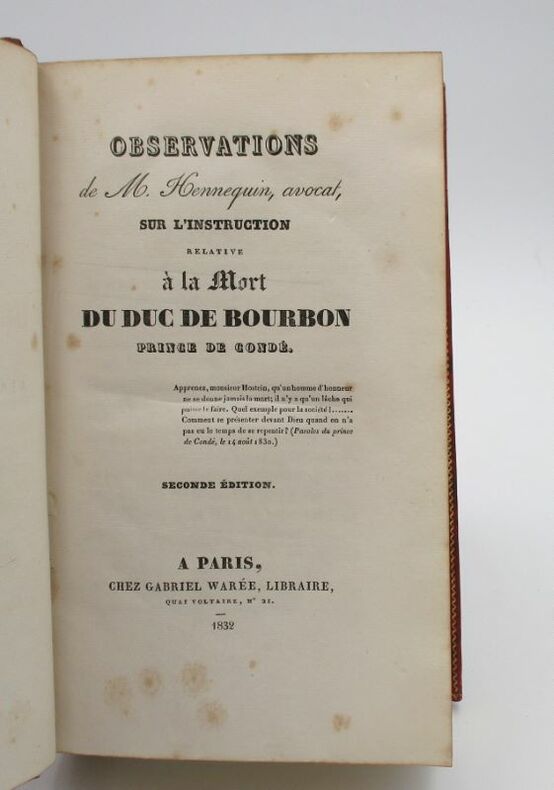
1832002646Paris, Publication de Charles Lemesle, Ve Charles Béchet, Bossange père, Delaunay, Treuttel et Wurtz, Rousseau, 1832
1946011433Paris Les Editions du Compas 1946 In-4 broché, couverture rempliée, étui éditeur
1954651Paris, Gallimard, 1954. in-8 broché. 375 pp."Collection Blanche". Édition originale. 1 DES 155 EXEMPLAIRES NUMÉROTÉS SUR PUR FIL, second papier.
114659Lyon, Jean de Tournes, Imprimeur du Roy, 1581, 1 volume in-8 de 240x155x45 mm environ, 1f.blanc, 4ff.( titre avec large encadrement gravé à l'ancienne, Epistre, Anagrammes, Extrait du Privilège), 546 pages, 11 ff. (table), 1f.blanc, pleine basane granitée brune, dos à nerfs portant titres dorés, orné de caissons à riches motifs dorés, tranches mouchetées de brun. Texte enrichi de belles lettrines à décor Renaissance (dont la lettrine dite "aux suqelettes"), et 34 in-texte gravées sur bois de pièces de monnaie, médailles, pierres tombales (dont celle signée par Pierre Vase), anciennes courses de chars et une scène de préparation rituelle d'un corps. Des notes anciennes à l'encre sur les pages de garde, sur la page de titre et dans les marges par endroits, mouillures claires en fin volume, des rousseurs et pages brunies, un mors interne fendu mais structure solide. Edition originale, dédiée à Charles Emmanuel de Savoie, datée De Lagnieu ce premier jour de juin l'an 1581.
013769Honoré ou Honorat de Castellan, en réalité Duchastel dit Castellanus dit Castellan (1511-1569), docteur en médecine en 1544 à Montpellier, conseiller et médecin ordinaire des rois Henri II, François II et Charles IX (peut-être aussi premier médecin de ces trois rois), premier médecin de la reine Catherine de Médicis, oncle des médecins André et Richard du Laurens et beau-frère du médecin Louis Laurens (1511-1574) qui avait épousé sa soeur, mort de maladie au siège de Saint Jean d'Angély comme son ami Jean Chapelain. Il était natif de Barbentane (Bouches-du-Rhône). P.S., 15 janvier 1557, 1p in-8 oblong. Sur parchemin. Quittance pour le paiement de sa rente. Celle-ci fut payée par François de Vigny, receveur des finances de la ville de Paris, l'ancêtre d'Alfred de Vigny qui fut anobli. On trouve aussi sa trace comme premier médecin des trois rois, notamment dans l'Histoire administrative de Beaucaire publiée par Alexandre Eyssette. Il semble que ce soit l'origine de cette information sur laquelle nous avons quelque doute. [279-2]
013770Jean Chapelain ou Chapellain (ca.1515-1569), médecin ordinaire du roi François 1er puis du roi Henri II, premier médecin d'Henri II et de Charles IX, docteur régent de la faculté de Paris à partir de 1542, mort de maladie au siège de Saint Jean d'Angély comme son ami Honoré Castellan. P.S. « Chapellain », 4 avril 1567, in-4 oblong. Sur parchemin. Reçu pour le paiement de ses gages. Au dos, note probablement autographe : « pour servir de Reçu. » (5 lignes). Notons que Chapelain met ici 2 l à son nom quand le secrétaire a mis lui 2 p. Le docteur Le Paulmier, dans son Ambroise Paré (Paris, Perrin, 1887), le donne mort en 1543 par erreur puisqu'il le signale en même temps comme actif à la mort de François 1er en 1547. [279-2]
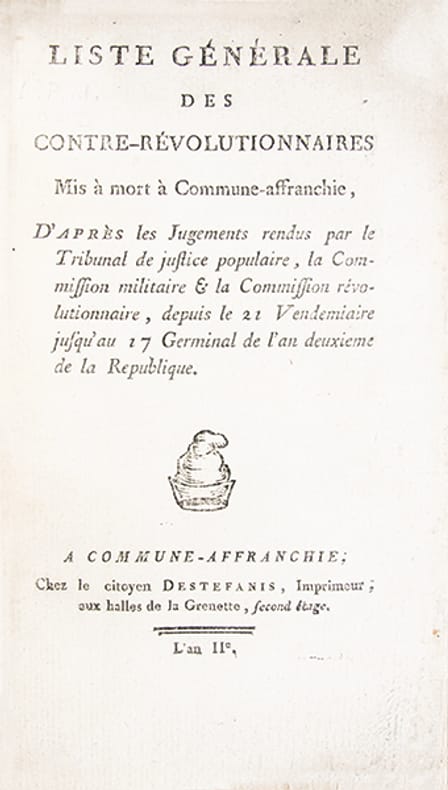
39362In-8 (183 x 108 mm), demi-toile rouge à la Bradel, pièce de titre de maroquin noir, 128 pages, vignette de titre gravée sur bois au bonnet phrygien, non rogné. A Commune-Affranchie, Chez le citoyen Destefanis, Imprimeur (...), L'an IIe [1794].
224 pages. Extensive bibliography. Index. Illustrated in black and white. "Traces the evolution of Western show business from its origins in the bizarre and spectacular performances of shamans." - from dust jacket. Clean, bright and unmarked with negligible wear. Dust jacket now preserved in glossy new archival-grade cover. An excellent copy of this profound work. Book
135-Eo.J. Feder in Braun, braun laviert, mit einzelner brauner Federlinie umrandet, oben rundbogig geschlossen, auf Velin, links unten signiert, bezeichnet und datiert ?F Nadorp inve. del. Romae 1842?. 23,5:15,9 cm. Verso: Heiliger Nikolaus von Myra, stehend und von zwei Engeln flankiert. Feder in Braun, braun laviert. Vertikale und horizontale Mittelfalte geglättet, kleine Fehlstelle ergänzt.
222 pages including index and glossary. Fold-out map at page 15. Black and white photographic plates. "This book is the outcome of forty years residence amongst the Haidas, and is an accurate description of what I have seen and heard in the villages and homes. Through my knowledge of their language I have been enabled to get all my information regarding their customs, traditions and social organization direct from the principal chiefs, men who at that time were from sixty to eighty years old." - from Preface. Chapters include: Queen Charlotte Islands; Early History; The Haidas; Haida Customs; Births, Marriages, Divorce, Death and Burial Ceremonies; Tools, Ornaments and Ceremonial Masks; Industries and Medicines; The Sa-ag-ga or Shaman; The Haida Pantheon; Haida Legends; The Haida Traditions of Creation; Chief Edenshaw; The Natural History of the Islands; Geology of the Islands and Natural Resources. Appendix lists cranial measurements. Average wear. Binding intact. Red cloth-covered boards. Black lettering and decoration legible upon spine. Prior owner's stamp to bottom edge, front fixed and free endpapers, and title page. Faint bookseller's stamp to back fixed endpaper. A sound copy. Edwards & Lort 1668, Thibault 2,231. Book
Includes fascinating six-page photo-illustrated feature by William P. Hitler, Adolph's nephew "who tells so candidly some things about his uncle that only a relative could know". Other features include: Student Nurses - their work and their uniforms; Stockings - short skirts bring new styles - Willy De Mond (Willy's of Hollywood); Why I Want Roosevelt to Run Again, by Harold L. Ickes; Gatti Pictures - an African Chief takes his 70 wives to the Beauty Parlor; Page of America's 10 most wanted, with photos, by J. Edgar Hoover; Movie Preview - Lady of the Tropics, starring Hedy Lamarr, and Robert Taylor; Roosevelt after 1940; Lowdown on Horse Racing, from 'Sunny Jim" Fitzsimmon; America's Best Jockeys; Hattie Carnegie vs. Elizabeth Hawes; Death Dines - photocrime; Sleep on Top of Your Car; and more. 52 pages. Complete and unmarked with moderate wear. Binding intact. A sound copy of this extraordinary issue. Book
128 pages. Stories include: Throne of Straw; Hard Money; Hurricane Tramp; Blue Bronze Destiny; Diana Daw; Letter of Death; One Man Riot; Storm Warning; Jungle Daughter. Slight pencil marking in upper left corner of front cover, otherwise clean and unmarked with moderate wear. Contents partially age-toned. Binding tight. A sound vintage copy. Magazine
21915Countersigned by Halifax as Grand Master and Alexander of Tunis as Chencellor. The document 16 1/2 x 13 inches with wafer seal. Fine. Still loosely held by the corners on the original shipping board and contained in the original envelope.Together with a letter from the Chancery of the Order requestin his attendance at Buckingham Palace for te investiture. Also the Statutes of the Order. 20-pages 4to original wrappers 1954 and the Annual Report of the Chapel 1958-1959 44-pages 8vo. unknown
161583 vol. in-8, maroquin rouge de l'époque, plats estampés à froid de motifs végétaux, double filet doré en encadrement sur les plats, dos à nerfs orné de frises dorés et de fleurons à froid, tranches dorées (frottements).
In-quarto , cc (68), pp. 416, marca tipografica incisa su legno al frontespizio, nel testo una vignetta, ritratti e capolettera incisi su legno. Legatura in piena pergamena con titolo manoscritto al dorso. Contiene una raccolta di trattati di giurisprudenza di vari autori: De accusationibus, De crimine laese maiestatis, de persecutionibus, de lamiis, de sortilegiis, de haereticis, de fuga, de carceribus, de indiciis et tortura, de quaestionibus et tortura ecc. Fori di tarlo.
19512110502150413576Bunkyo shuppan 1951. Soft Cover. Fine. Volume: 1 Bunkyo shuppan paperback
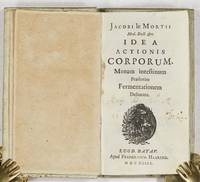
1693698811693. Leyden F. Haaring 1693 12° 8 172 alter Pergamenteinband. Rare - First and only edition of this work on the human digestion! Jacob Le Mort 1650-1718 after completing his studies he worked in Johann Rudolph Glauber's pharmacy in Amsterdam in 1667 and after Glauber's death in 1672 he set up a chemical laboratory in Leiden. Here he gave lectures on pharmacy and botany from 1675 and was admitted to the medical college in 1677. To this end he obtained his doctorate in medicine on 13 July 1678 with a thesis entitled 'De Medicamentis Galenicis' under Jacob Vallan at the University of Utrecht. In 1690 he became a lecturer in chemistry and head of the chemical laboratory in Leiden. After being granted a teaching licence at the medical faculty in 1692 he was appointed professor of chemistry and medicine on 6 May 1702 a position he took up with his inaugural lecture 'De concordantia operum naturae chymiae et medicinae'. With the appointment of this chair the chemical sciences were given a recognised place in Leiden's scientific world for the first time. As a member of the teaching staff he was also involved in the organisational tasks of the Leiden educational institution and was rector of the Alma Mater in 1706/07 a position he resigned with his speech 'De empirica doctrina medica'. After his death Herman Boerhaave took over his chair of chemistry. He was familiar with Boyle's writings imbued with the atomic theory and Descartes Followed in paying special attention to the shapes of the particles and opponent of the contemporary view of blood circulation which he defined as a 'Doctrina cadaverosa' without any real use. In his work as a chemist he investigated the fermentation theory of Franciscus Sylvius which he found unpersuasive. This work contains research of considerable interest primarily on the fermentation of organic substances and mixtures of food. A Dutch translation by Jacobus Romans appeared in 1696 as part of the edition of the Dutch translation of his Pharmacia . Amsterdam Jan ten Hoorn 1696 with the title: Idea actionis corporum dat is: d Afbeelding van de werkelykheid der lighamen. Partington II/737; Bierens de Haan n. 3374; Poggendorff II/col. 212; Hirsch IV/269; Hoogendoorn Mort 03D; Krivatsy 8122; NNBW I cols. 1345-46. unknown
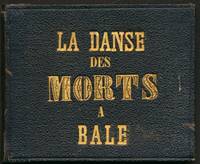
18603220383<p><em>Chromolithograph panorama 8.8 x 296 cm on five conjoined strips; folding down into the original black cloth covers 9.1 x 11.2 cm.</em></p><p>Rare and attractive if rather disconcerting tourist souvenir panorama of the Dance of Death.</p><p>The panorama contains 43 separate scenes and is a reproduction of the 63 metre-long fresco painted on the inner wall of the cemetery of the Augustinan Convent Basel c.1440. that was possibly created under the influence of the plague epidemic of 1439. The sequence emphasises the vanity of social distinctions each character dancing with death. The wall and fresco were demolished in 1805 however a number of fragments survive in the Historisches Museum Basel.</p><p>Identifications of the subjects is given in the bottom margin in French English and German. The English identifications read from left to right: Preacher Charnel House Pope Emperor Empress King Queen Cardinal Bishop Duke Duchess Earl Abbot Knight Lawyer Alderman Canon Doctor Nobleman Lady Merchant AbbessCripple Hermit Young Man Maiden Minstrel Herald Judge Headsman Jester Pedlar Blind Man Jew Pagan Paganess Cook Peasant Painter Painter's Wife Paradise and The Dance of Death. As a tailpiece a view of Todlenanz as it appeared in 1800.</p><p>The panorama is derived from a watercolour copy by the still life painter Johann Rudolf Feyerabend 1779-1814 that was completed in 1806 and is also housed in the Historisches Museum Basel.</p> [Basel?]
1963015746Alès Pab - Pierre André Benoit 1963 En feuilles, couverture à rabats <