6 422 résultats
11871On letterhead of The Deanery Norwich. 9 January 1873. 4pp. 12mo. 51 lines of text. Bifolium. On aged paper. The context is explained by the fact that until 1927 one canonry in the cathedral establishment of Norwich was attached to the Mastership of St. Catharine's College. The letter begins: 'I have requested the Master of Catherine sic Charles Kirkby Robinson to read you two letters from Canon Nisbet which will show you how very litle prospect there is of our getting permission from the Ecclesiastical Commissioners to spend any part of the money gained by our sale of the Barracks in the improvement of our Canonry Houses. This creates an embarrassment; for the question arises how we shall raise the money required for the purchase of the remainder of Mrs. Morse's lease unless we come upon the Barrack money.' Goulburn now describes how he and 'Heaviside' have pressed the Master to determine 'whether he will take Mrs. Morse's house; for if he declines to do so that will make the question still more embarrassing since in that case the £500 set apart for the removal of his present House and the making good the cloister will of course not be available. And I have further expressed the hope that he will be able to see his way to a move on the public grounds of freeing our beautiful Cloister from its present disfigurement. As soon as he has made up his mind I shall crave your kind permission to call a Chapter at your rooms.' He thanks him for his 'most interesting and if I may so say edifying Preface to the Catalogue - made doubly or trebly valuable by your kind inscription therein. I cannot say how highly I value the possession of such a document.' He will send 'the Bishop of Derry's Sermon': 'He could not have said any thing wh. wd. tell more in a place like this where you are so much revered and loved.' He complains of his duties 'as Editor to correct the press of these Sermons; and if another man's proofs always give one a little trouble much more do an Irishman's. And my good friend tho' very brilliant as an orator is very Hibernian.' On letterhead of The Deanery, Norwich. 9 January 1873. unknown
3 vols., 8vo., Third Edition; strongly bound in mind-nineteenth century half morocco, straight-grain red cloth boards, backs with five raised bands, second and fourth compartments lettered and numbered in gilt, red sprinkled edges, green floral endpapers, a very good, bright, firm set.
in -4 (mm 193 x 125), 4 pp. Carta vergellata. Foglio volante xilografato contenente la descrizione dei fatti compiuti ad opera di Fabiano Bartolomei detto Faina, nato ai Monti di Villa, di anni 40, mugnaio. [ghigliottinato]; Francesco Prosperi, padre del sotto nominato Demetrio, dei Monti di Villa, di anni 70. [assolto]; Natale Giusti di Lucca, di anni 43, imbianchino e doratore. [condannato alla pena di morte, commutata in lavori forzati per grazia di Carlo Ludovico, duca di Lucca]; Demetrio Prosperi, dei Monti di Villa, di anni 35, di ricca e buona famiglia. [ghigliottinato]; Giuseppe Alessandri detto Caromèo o Cabala [imbroglione], nato a Colognora di Valleriana, di anni 41. [ghigliottinato]; Pietro Giuliani detto Buèro, nato a Ponte S.Pietro, di anni 46, dimorante a Livorno. [ghigliottinato]; Giovanni Nardi detto l'Abataccio [cattivo abate, avendo fatto qualche anno di seminario], nato a Cocilia [Cocciglia ?], di anni 34, falegname. [ghigliottinato]. I suddetti malviventi erano i componenti della banda che aveva terrorizzato il territorio del Ducato di Lucca tra il 1837 e il 1842. Lo "spettacolo" fu seguito da migliaia di persone accorse in città, ma alla vista del sangue versato e delle teste mozzate molti di coloro rimasero disgustati. Il documento è interessante in quanto racconta dell'ultima esecuzione con la ghigliottina in Toscana. Esemplare in buono stato di conservazione, con piega consunta nell'ultima pagina. Firma manoscritta nella parte inferiore della prima pagina. . .
Un trionfo di magnifiche pesche con qualche ramoscello verde in un piatto di vimini intrecciati, smaglianti nei vividi colori cui la raffinata tecnica oleografica conferisce ulteriore brillantezza a imitazione della pittura a olio. Il Sauvage, "specialista" in nature morte con frutta e ritratti, si fece conoscere ed apprezzare nella Parigi dell'Ottocento sin dal suo debutto al "Salon des Artistes" nel 1868. Cfr. Bénézit, Dictionnaire des peintres et graveurs, XII/p. 327.
202403521Paris, Stardom, 1995 ; in-4, cartonnage de l'éditeur. Ce surprenant coffret, en hommage aux indiens, comprends 18 images offset de couleur (6 de chaque auteur) + 2 planches de justificatif de tirage (dont une numérotée sur 500 exemplaires et signée par les différents auteurs, ici numéro 190/500) Le tout emballé dans un beau tissu + 6 CD (Barney Bush, Tony Hymas…) emballés également dans un beau tissu aux mêmes motifs.
80 pages. Features:. Withdrawal from Europe "An Illustion" - we must have close co-operation with West Germany; Lest Us Reason Together - photo feature on LBJ; Mrs. Lyndon B. Johnson (Lady Bird) - article with photo about the public servant without pay; The Muddled Problem of Presidential Succession - which was brought home by the death of JFK; After Five Years, de Gaulle Still Towers; The average height of Americans is increasing; A Master Builder at 75 - photo feature on the works of New York's Robert Moses; When a Negro is on Trial in the South - is the picture painted by novels and films correct?; Crosswords - the most popular game; Christmas Wraps - fashion photos; Photos of tapestries in the apartment of Allen Porter; and more.. Ads: Selchow & Righter Company board games in color; Pepperidge Farm Devil's Food Cake; Ella Fitzgerald albums by Verve; Thomas Date Nut Loaf; and more. Four-inch opening to back cover, otherwise average wear. Unmarked. A sound vintage copy Book
32 pages. Features: Nice two-color illustrated Firestone ad inside front cover features mother and children; Why Half the People Do not Vote - An Explanation; Booth Tarkington Talks of Many Things; Farming Must Become a Chemical Industry - development of co-products will solve present agricultural problem; Abraham Lincoln's Lost Speech; The Use of Great Names in 'Blue Sky' Swindles; Ye Knife - Ye Forke - Ye Spoone - a brief history of those noble tools; Henry Ford's Page - money, a national commodity, has been made a private concession; Editorial - news from Russia that the only Jew remaining in a position of importance is Litvinov as the Communist Party threatens to become anti-Semitic after the death of M. Djerjinski; The Harvard of Our Forefathers; The Ebb and Flow of Winged Waves - bird article; The Voyage of the Victoria (part 12) - When Pirates Ruled; Chats with Office Callers - ; Can You Tell Me?; I Read in the Papers - M. Loewenstein Makes an Offer, That Monkey Opera in Budapest, Chess Comes from India; and more. Unmarked with average wear. A worthy vintage copy. Book
32 pages. Features: When Old Salem Hunted Witches - men and women were put to death on the accusation of little children; The Man Who Fights Alone - "The Cop is the World's Greatest Warrior" - article with statistics of policemen killed on the job; Why I Left New York (part 1) - a middle westerner moves there but is in conflict with its alien atmosphere; Who Pays for Our Radio Programs? - noted economics author explains how national advertisers foot the bill so we can listen-in without charge; Captain Kidd - Pirate-Catcher - the rover is commissioned to capture ships flying the black flag; Mr. (Henry) Ford's Page - no amount of pretense can improve upon the original; Editorials - the time of England's trouble, is the jury system a failure, police death roll, the family is the unit; Woodrow Wilson (part 9) - He refused to be rushed into hasty decisions; World War's Effect Upon the Negro - overseas the colored soldier acquired an entirely new estimate of his importance in the scheme of things; Dry-Farming - The Tragedy of the West - scores of deserted homes stand as mute monuments to the settler's struggle in a land where rain seldom comes; Moonlight Midnight on "Old Tim" - Climbing Mount Timpanogas; The Voyage of the Victoria - part 3 - further adventures of Magellan; Chats with Office Callers; A Dance a Week - Hull's Victory, Lady Walpole's Reel, and Speed the Plow (with piano music for each); amazing photos of strange worldwide professions - a daredevil juggling atop several chairs, rubber tappers in Ceylon demonstrating the herringbone system,Egyptian dervishes passing skewers through their cheeks, and a Korean peddler of earthen ware - carried upon his back! Average wear. Unmarked. A sound vintage copy. Book
90 pages. Fiction: The Balance of Nature; His Brother-In-Law's Keeper; Episode; Hold fast, My Love; Marriage '48 (part 3 of 5); Man-Eater from Snohomish. Articles: Death in the Classroom - schools are dangerous places (part 1 of 2); Billie Burke - Her Story (part 2 of 3); A Hunter's Map of the U.S.A. - Sportsman's Paradise; Godmother to Little Yanks - Mary Rizzoto and her World Children's Foundation; Hawkshaws in Skirts; The Campaign Trains Roll Again; Bedlam on Sunday; Smithson's House of Wonders - The Smithsonian Institution; Try Building Your Own Dream House - The Spelman family of Babylon, Long Island, Henry Wallace is the voice of Russia - opinion piece inside back cover. Ads include: The Frazer Manhattan automobile - inside front cover, B.V.D. sports shirts, Jeep Trucks - very nice, International Trucks, Schlitz Beer, Firestone Tires, Kodak film, MGM's The Three Musketeers, Harley Davidson - their 125 single cyllinder, Bicycle playing cards, Arrow ties, Jantzen sweaters, Smartair leisure wear, City Club shoes, Inco, Wilson Brothers men's wear, Botany brand shirts and slacks, Pendleton shirts, Gruen watches, and a lovely Coke ad on back cover which shows Coke dispenser inside a snowy window. Covers holding by one staple. Average wear. Unmarked. A worthy vintage copy. Book
32 pages. Features: Nice two-color illustrated Valspar ad inside front cover; Taxes, Taxes, Taxes! - they are always with us but often we do not know it; Cashing in on the 'Blue Sky' - a study of the methods used by Wily 'Aviation' and real estate promoters in separating the sucker from his dollar; The Principles that guided George W. Hays in Exercising the Pardoning Power; The Genesis of the Constitution - reflections on what Washington and 38 of his countrymen did one summer; Bringing the Human Boat to Port Under Its Own Steam - advice on healthy living; What Would Izaak Walton Have Said? - the author of 'The Compleat Angler' in his wildest dreams could naver have visualized a 1,500-pound mackerel; Henry Ford's Page - struggle between industry and finance for control of business; Editorials - shaming the U.S. into canceling war debts, anti-prohibition propaganda, The County Fair, Dictators and the dictated; The Gold Hunters - being the story of a party of young men from Michigan in their search for fortune in California in 1850-1851; Bathing, Begging and Buring in Benares - strange scenes on the banks of the Ganges, India's sacred stream - article with photos; The Voyage of the Victoria (part 11)- Death of Magellan; Chats with Office Callers - ; Can You Tell Me?; I Read in the Papers - Japan turns from rice as sole diet; The Village Blacksmith. Moderate moisture exposure. Center pages holding by one staple. Unmarked with average wear. A worthy vintage copy. Book
193720330Barcelona, Editorial Nuestro Pueblo (Talleres Gráficos Ramón Sopena), 1937 ; in-16 (164 mm), broché ; 79, [1] pp., couverture crème décorée imprimée en rouge ; 7 dessins de Juan Antonio y compris le frontispice.
1847465071847 RENNES, Vannier, Editeur - 1847 - complet en 2 tomes In-4, sur vergé - 1/2 Reliure basane racinée postérieure - Dos à nerfs, Titre doré - 492 pages & 658 pages + Notice 10 pages & Epitre dédicatoire & Table des matières XLIII pages - Ex-libris et cachets "Bibliothèque de la compagnie des chemins de l'Ouest" - Très bel exemplaire - Envoi rapide et soigné
72 pages. Features: We Should Encourage the Doves in the Kremlin; Epitaph for an Age - Does Modern Man Have a Death Wish?; The Nielsen Rating For a Box of Spaghetti - A.C. Nielsen is all about consumers; Jerusalem - Experiment in Coexistance - article with color photos; Baseball is the Waiting Game - ideas how to speed up the game; Awesome 8-page centerfold color-photo advertising section for the 1967 line of Pontiac cars, including Firebird centerfold; Little Groovy Annie - fashion comic; Photos of Montreal's Habitat designed for Expo '67 by Moshe Safdie; Nice Pendleton wool coat ad; and more. Above-average wear. Usual library markings. Spine taped. A worthy reference copy. Book
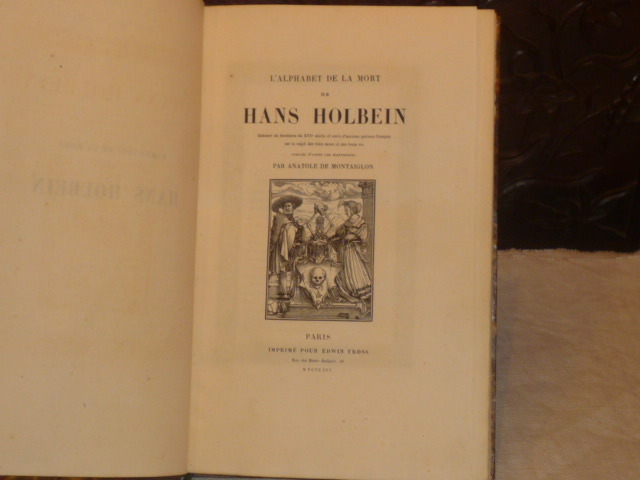
941495Edwin Tross Paris 1856 In-8 ( 220 X 145 mm ) de 48 feuillets non chiffrés, demi-maroquin tabac, dos à nerfs orné de filets et fleurons dorés, tête dorée. Très belle impression de Firmin Didot sur papier vergé. Texte encadré des gravures sur bois reproduisant les dessins d'HOLBEIN ayant pour thème la danse macabre. Très bel exemplaire agréablement relié.
82 pages. Articles: The Battle of the Bench - conflict in the U.S. Supreme Court; Guam, Sweet Guam - servicemen's wives love it; The Superhorses are Ours - How the U.S. Army acquired Germany's finest equine bloodstock - article with color photos; Hard-Luck Kid - Jack Kramer should be tops in US Amateur tennis for 1946; Rio Grande - River of Death - Murder and robbery often are the fate of Mexicans who cross her; Traveling Light - Vera Maxwell suggests compact wardrobes for all climates; China Doll - Rose Martin and her foster mother Mary Lo-Sam -Moi; Photo and write-up of test pilot Jack Woolams of Bell Aircraft who is aiming for 1,000 mph! Fiction: The Warning Bell; Bachelor Apartment; The Watchers; The Dory; Sleep, My Love; Alone. Ads include: Studebaker; U.S. Army; Vaseline Hair Tonic; Nash cars; Bell Telephone; GE Light Bulbs - featuring photo of Fred Allen; Trailways bus lines; Ford cars (with mountie in illustration); Oldsmobile cars; Texaco; Waterman's ink; Car Nu with Fibber McGee and Molly color cartoon; Pepsi cartoon ad; Caterpillar color photo ad showing new subdivision construction with dozers and scraper; Kaiser and Frazer cars; Pennzoil; Lee tires; Canada Dry; Blatz beer; Camel cigarettes ad on back cover features photo of smoking doctor. Above-average external wear. 2"x2" piece missing from bottom corner of front cover. A worthy vintage copy. Book
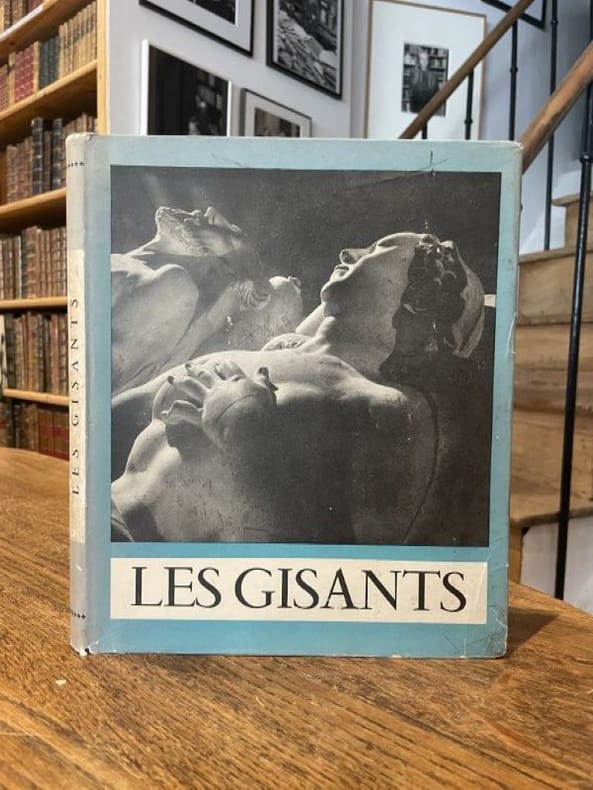
1949121756Paris Paul Morihien 1949 1 vol. relié in-4, cartonnage toilé, jaquette bleue illustrée, non paginé. Edition originale et premier tirage de cette série de photographies de la nécropole de Saint-Denis par Pierre Jahan qui avait déjà publié avec Cocteau en 1946 l'album "La mort et les statues". Préface de Roger Lannes, notices historiques par Philippe Erlanger, notices archéologiques par Claude Ducourtial. Un des 25 exemplaires numérotés sur vélin blanc d'Arches, seul tirage en grand papier. Album peu courant dont le second volume n'est jamais paru. Exemplaire bien complet de la jaquette portant un texte de Cocteau au verso : "[...] Les morts y semblent vaguer la main dans la main sur un fleuve inerte".
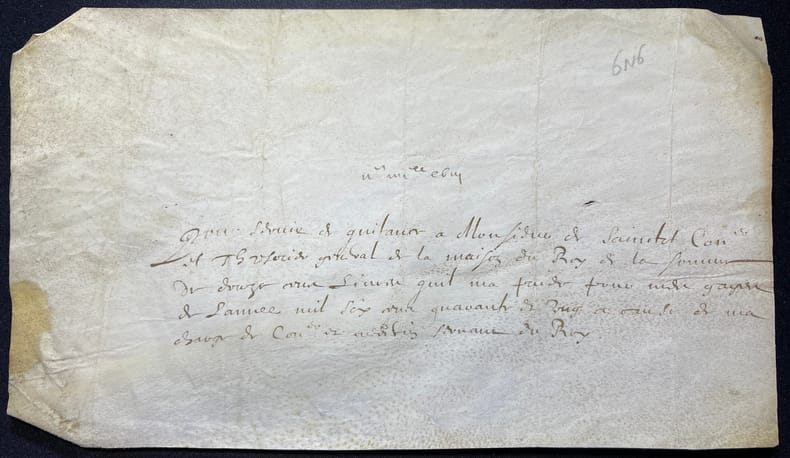
013776Jean Chicot (ca.1590-1680), médecin ordinaire du roi, anobli en 1645, actif jusqu'en 1669, mort à Senlis à 90 ans. P.S., 1er avril 1642, 1p in-4. Sur parchemin. Reçu pour le paiement de ses gages. [280-2]
1719Mâcon, Protat Frères, 1920-1923 ; quatre tomes in-8, broché . Tome 1 : Le peuple, le costume, l'habitation : (2) ff., 106 pp., VIII planches hors-texte, (1) f. de table, couverture gris foncé. Tome 2 : Pèlerinages et légendes sacrées : 104 pp., VII planches hors-texte, couverture gris clair. Tome 3 : Fêtes du terroir et coutumes du foyer : 104 pp., VI planches hors-texte et couverture gris-vert. Tome 4 : Naissances, mariages, sépultures : 100 pp., VI planches hors-texte, couverture crème.
1910JUDA2079Wien, Druck von H. Pollak o. J. [ca 1910]. gr.-8°. 24 S., durchg. illustriert, ill. OLn., sehr gut erhalten. Vord. Spiegel mit dem Firmenstempel des Herausgebers Illustriertes Traueralbum mit personalisiertem Jahrzeit-Kalender. Enthält neben Gebeten auch entsprechende Texte zu jüd. Trauerritualen. Einige Seiten (1, 2, 4) beinhalten ausfüllbare Felder zum Eintrag der Daten des/der Verstorbenen. In unserem Exemplar kalligraphisch in Schwarz und Gold ausgeführt: "der unvergesslichen Irma Spitzer, gest. 1. Sept. Nachts 1912, 20. Elul 5672", wohl von M. Kunstadt. Die Illustrationen Kunstadts sind stark an E.M. Lilien orientiert, der sich zu diesem Zeitpunkt auch in Wien - hier hatte er 1909 sein Werk erstmals in einer Personale zeigen können - großer Bekanntheit erfreute. / Illustrated mourning album with a personalized yahrzeit calendar. The volume has prayers, excerpts and short texts relevant to Jewish mourning customs. The volume includes blank passages that can be filled in with personalized text, including a page for a family history (24). The first page is filled in to read: Erinnerung an den Sterbetag der unvergesslichen Irma Spitzer gest. 1. Sept. 1912... [3 Warenabbildungen]
8601 En feuillets, sous couverture rempliée et chemise en papier imprimées d'édition. La chemise est passée, multiples déchirures et manques au dos, intérieur en très bon état. 23 x 16,5 cm, 38-[2] p., illustrations in-texte en noir. Paris, Société de la gravure sur bois originale, Série C., Contes et nouvelles n°1, 1922.
In Venetia, appresso Gio. Battista Bonfadino, 1588, in-12, leg. coeva in piena pergamena floscia, pp. 303, [7]. Con marca edit. e alcune xilografie di gusto popolare n.t. Non è stata legata l'ultima carta che era bianca. Due soli esemplari di questa edizione censiti fra ICCU e Edit16.
Matita misure: mm 296 x 417 Pittore e disegnatore italiano. Mario è il quinto dei fratelli Maserati (Carlo, Bindo, Ernesto, Alfieri, Mario, Ettore), e anche l’unico ad non occuparsi di meccanica. Contribuisce tuttavia al progetto dell'omonima casa automobilistica disegnando il famoso logo del tridente prendendo spunto dalla nota statua di Nettuno di Giambologna in piazza Maggiore a Bologna. Sin da giovanissimo inizia a disegnare frequentando gli ambienti artistici a lui vicini e studiando le pitture di Pellizza da Volpedo, Giovanni Segantini, Paul Cézanne e dei pittori francesi. Frequenta l’Accademia di Brera, allievo di Giuseppe Mentessi e Cesare Tallone, interrompe gli studi a causa della guerra dalla quale tornerà ferito, e si diploma nel 1919. Successivamente con la famiglia si trasferisce a Bologna dove ha uno studio nell'officina del fratello. A partire dagli anni '20 torna a dividersi fra Milano dove abita e la sua amata Voghera dove aprirà uno studio e dove insegna arti applicate. Molti sue opere sono andate distrutte nel bombardamento dello studio nel 1946, restano molti affreschi in chiese ed edifici pubblici. Le sue rappresentazioni spaziano dalla "rigidità" accademica alle nuove tendenze metafisiche e divisioniste, la sua ricerca si concentra soprattutto dal punto di vista cromatico. In questo foglio intenso e profondo il tratto marcato della grafite steso su una carta cerulea conferisce drammaticità alla composizione. In un paesaggio spoglio, appena accennati due alberi sterzati dal vento sulla sinistra, assistiamo ad una sorte di "parata della Morte". La Morte è uno scheletro, sopra un cavallo enorme ma magro e sfiancato, regge l'asta di una bandiera nera mossa dal vento. Ai suoi fianchi un fiume di persone, di derelitti, avanza dal fondo della scena. Sulla destra uomini stanchi, raffreddati, spaventati, indossano lo stesso abito che pare una tuta da lavoro, camminano inermi, c'è chi si copre il volto forse per il vento, forse per la disperazione, e chi stringe al petto le braccia. Sulla sinistra procedono le donne nei loro lunghi abiti, affrante, doloranti, la prima con un bambino in braccio. Il primo piano è occupato dal corpo esanime di un uomo a terra su cui è riversa una donna disperata. In basso a destra, a matita, firma e data. Il soggetto potrebbe rientrare nel genere che raffigura soggetti di ispirazione sociale, di denuncia della condizione operaia o della miseria di certe classi sociali. Mario potrebbe essersi ispirato a qualche sciopero o manifestazione visto frequentando il mondo dell'industria meccanica o forse propone una riflessione sugli orrori che avrebbe da lì a poco mostrato il primo conflitto mondiale. La composizione riporta alla mente il dipinto di Pellizza da Volpedo il Quarto Stato. Buono stato di conservazione, eccetto qualche piega verticale. Si notino fori ai quattro angoli del foglio per un precedente esposizione senza cornice. Al verso, a matita e sanguigna, viene realizzato uno studio per le gambe di un uomo disteso a terra.
18387(28,8 x 18,6 cm), dessin à la plume avec rehaut de crayon de couleur bleu, signé et daté de janvier 1940.