Hemingway, ErnestBiblio.com
3 992 résultats
19352210317Charles Scribner's Sons 1935. first. hardcover. near fine/fine. First edition first printing with date and "A" on copyright page. Book near fine fading to spine and to edges of covers former owner's name to top of front paste-down. Dust jacket fine. Housed in fold-out custom case. Charles Scribner's Sons unknown
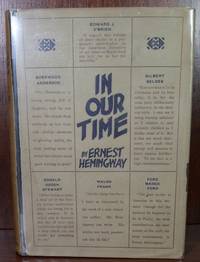
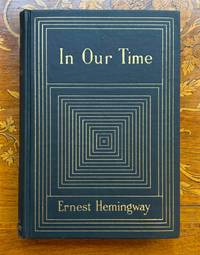
192569758New York:: Boni & Liveright 1925. First edition. publisher's cloth in dust jacket. Preserved in a custom quarter morocco folding box. Good to very good with some oxidation of the gold decoration and lettering to cloth. The jacket has some chipping to the extremities of the spine and the upper edge of the front panel not affecting any lettering. There are some creases to the backstrip and front panel. Still a decent example of a very scarce dust jacket. 8vo. Boni & Liveright, hardcover
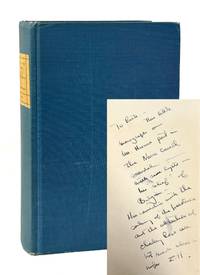
1931EH314New York: William Faro Inc. 1931 Illustrated with thirteen plates including a frontispiece. First edition first printing. Signed and inscribed by Ernest Hemingway to his cousin Ruth White Lowry on front free endpaper: "To Ruth. - This little monograph on Mr. Hoover's part in the Nurse Cavell scandal - with sidelights on his "relief" of Belgium - His connection with the sinking of the Lusitania and the abduction of Charley Ross are not made clear. - E. H." Publisher's blue cloth with paper label to spine lettered in black; lacking dust jacket. Very good or better with a few light scratches to front board very light toning to spine and label rubbing to spine label affecting "a" in "Strange" tiny chip to bottom of label text unaffected corners slightly bumped toning to endpapers and some smudging to Hemingway's inscription. Overall a unique inscription showing Hemingway's interest in politics. From the personal library of Hemingway's cousin Ruth White Lowry. The Strange Career of Mr. Hoover Under Two Flags is a survey of Herbert Hoover's pre-presidential career presented in a decidedly unflattering light and filled with accusations of corruption and other misdeeds. The book was one of a handful of smear books about Hoover published before the 1932 election geared toward undoing his reputation as "The Great Humanitarian" and "The Great Engineer." The project began when opportunistic ex-policeman James J. O'Brien approached John Hamill with the idea for the book. After Hamill completed it publisher Samuel Roth who had been jailed three times for dealing in obscene literature agreed to publish it under his William Faro imprint. In 1932 James J. O'Brien sued Hamill over profits from the book and Hamill subsequently repudiated the book and signed an affidavit stating that "while the material gathered for the book contained statements that were true in themselves they were used in such a way as to lead to false conclusions concerning the President" The New York Times January 5 1933. In Hemingway's inscription he mentions the "Nurse Cavell scandal." Edith Cavell was a British nurse who was executed by Germans in German-occupied Belgium for helping Allied soldiers escape. Her execution became a source of outrage for the Allies and was heavily propagandized. In The Strange Career of Mr. Hoover Hamill suggested that Hoover could have saved Nurse Cavell but failed to do so. This was one of the aspects of the book that Hamill later admitted was not true with the above-mentioned New York Times article stating "Hamill swore he learned nothing in Belgium to justify any inference that Miss Cavell's life might have been saved by Mr. Hoover and said he had caused similar false inferences to be drawn from other statements in the book ". The tenor of the inscription in this copy seems to indicate that Hemingway disliked Hoover. Further proof may lie in Hemingway's incendiary "Who Murdered the Vets" essay 1935 about the government's callousness toward the Bonus Army: while directed toward the Roosevelt administration the gross mistreatment of the Bonus Army began under Hoover's leadership. Signed. First Edition. Hard Cover. Very Good. New York: William Faro, Inc. hardcover
1933106729New York: Charles Scribner's Sons 1933. First edition of Hemingway's classic collection of short stories. Octavo original black cloth. Presentation copy inscribed by the author on the front free endpaper "To D. White best wishes always Ernest Hemingway." Near fine in an excellent dust jacket with light rubbing and wear. Housed in a custom clamshell box. One of the rarest Hemingway titles to find signed and inscribed. Written when Hemingway was at the height of his creative powers the stories in Winner Take Nothing glow with the mark of his unique talent. Hunters wives old men of wisdom waiters fighters women loved women lost: they are all here living on the raw edge making love facing the inevitable reality of death. The characters the dialogue the settings the remarkable insight could have come only from Hemingway's imagination. As an introduction to his work or as an overview of the themes he developed at greater length in his novels it is a stunningly successful collection. Charles Scribner's Sons hardcover
1950180323005New York: Charles Scribner's Sons 1950. First Edition. Hardcover. Like New. First edition first printing presentation issue. Error "Papadopohi" on p. 21 uncorrected as are two errors on pp. 24 and 80. One of only 25 "advance" copies printed from uncorrected sheets and specially bound for presentation as noted by David A. Randall head of Scribner's rare book department at the time on paste down before his signature. xii 308 pp. Publisher's dark blue buckram cloth stamped in gilt. Fine with bright gilt. Housed in a custom chemise slipcase. A rarity and perennial "stopper" for Hemingway collectors in excellent condition. Charles Scribner's Sons hardcover
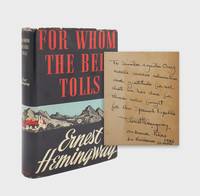
1944377793Philadelphia: The Blakiston Company 1944. Third American edition second printing. 410 pp. 8vo. Black paper covered boards with signature blindstamped on cover and printed title on spine. Some wear and loss to paper of spine and along edge in near fine jacket from the same edition with offsetting to endpapers from dust jacket pages evenly toned and Havana bookseller's ticket "La Bohemia Bookstore" and censor's stamp to endpapers. Third American edition second printing. 410 pp. 8vo. Hemingway's tale of love amidst the Spanish Civil War inscribed on the ffep: "To Senator Agustin Cruz with sincere admiration and gratitude for all that he has done for those who fought for the Spanish Republic / Enest Hemingway / On Board "Pilar" / La Habana 21 Julio 1946"<br /> <br /> Senator Agustin Cruz Fernandez was a Cuban Republican and Oppositionist political party leader from Santa Cruz who was Secretary of Labor in the cabinet of Miguel Mariano Gomez Cuba's first constitutional President since the downfall of the Machado régime in 1933. White Secretary<br /> during the period 1936-1939 Cruz worked to expel Falangist political figures from Cuba on the grounds that they were spreading anti-Democratic messages eventually leading the push to in 1941 to banish all consular officials from the totalitarian regimes of Spain Germany and Italy.<br /> <br /> The Bohemia Bookstore in Havana was where Hemingway bought his books. Other inscribed copies of For Whom the Bell Tolls also were purchased there. The Blakiston Company unknown
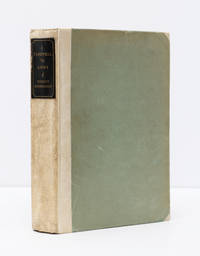
192950681New York: Charles Scribner's Sons 1929. Signed Limited Edition. Hardcover missing slipcase. Very Good- vellum spine. Octavo. Missing slipcase signed on the limitation page this being number 444 of 510 signed/limited copies. Previous owner's name in ink on the ffep. The vellum spine has soiling and discoloration. Pale green boards and ffeps sunning to the edges of the boards. Deckled edges. Black label with gilt letters. 355pp. Binding is tight pages remain bright. 6.5 X 9 1/4". Charles Scribner's Sons hardcover
1930HEMINGWA013877Edward W. Titus at the Sign of the Black Manikin Press Paris. 1930. First edition. Translated by Samuel Putnam. Royal octavo. 186 pages. Wrappers. 1000 copies printed by Daranti�re Dijon. Publisher's note. "A Note on Kiki St. Theresa and the Vulgate" by the translator. 20 full-page black and white reproductions of paintings by the author; 4 black-and-white photographs of the author by Man Ray; 1 black-and-white photograph of her grannie by the author; other black-and-white photographs; full-page black-and-white portraits of the author by Foujita Kisling Per Krohg Hermine David Mayo and Tono Salazar. Contains chapters on Man Ray Kisling and Foujita.The original publisher's card slipcase is signed boldly in red crayon by both Hemingway and Kiki; in addition Kiki has drawn crosses kisses above her name and on the backstrip. Presumably the signatures date from the launch of the book. A later hand but probably not much later as the ink is fading and probably belonging to someone who was unaware of the significance of the signatures has written the publication details of the book below Hemingway's name.Spine darkened. Very good. The original card slipcase is tanned dusty rubbed at the edges and a bit marked. Edward W. Titus, at the Sign of the Black Manikin Press, Paris. unknown
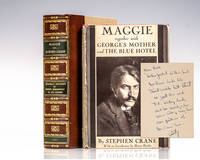
1931149856New York: Alfred A. Knopf 1931. First edition of this collection of classic psychological realism works. Octavo original publisher's cloth. Association copy lengthily inscribed by Ernest Hemingway to his cousin on the front free endpaper "Dear Ruth In the jacket on this book Mr. Crane looks like Ernest Wahl but that is just the old T. B. Watley look and Mr. Walsh who came later may have seen pictures of Mr. Crane too. Ernest." Hemingway admired Stephen Crane's work and considered him an important influence on his own writing. He specifically praised The Red Badge of Courage in the introduction to his 1942 anthology Men at War: The Best War Stories of All Time where he described it as "one of the finest books of our literature and I include it entire because it is all as much of a piece as a great poem is." The recipient Ruth White Lowry 1884–1974 and her husband William Malcolm Lowry 1884–1953 were longtime residents of Kansas City Missouri and integral members of Ernest Hemingway’s extended Midwestern family. Ruth the daughter of William White and Mary Hall White was a first cousin of Grace Hall Hemingway the author’s mother. This made her Ernest’s first cousin once removed though their families were close enough that Hemingway referred to her simply as “Cousin Ruth.†The White and Hall families had deep Midwestern roots—Ruth was educated in Kansas City and was part of the city’s civic and cultural life throughout the early twentieth century. When Hemingway and his second wife Pauline Pfeiffer returned from Paris to the United States in 1928 they came to Kansas City for the birth of their first child Patrick Hemingway who was delivered at St. Mary’s Hospital on June 28 of that year. The Hemingways stayed with Ruth and Malcolm Lowry at their Kansas City home both before and after the delivery. Pauline returned to the same house three years later in November 1931 for the birth of their second son Gregory Hancock Hemingway while Ernest shuttled between Kansas City and Key West during the final stages of Death in the Afternoon. The Lowrys’ hospitality offered Hemingway a familial refuge far from the expatriate world of Europe and the growing celebrity that attended his literary success. The relationship between the two families endured for decades. Letters and family recollections describe Ruth as a warm maternal presence in Hemingway’s life—a relative he could trust with his young family during periods of upheaval. The Lowry household thus occupies a unique place in Hemingway’s biography: it was the setting for the births of both of his sons with Pauline and the site of rare domestic calm amid his restless movements between continents. Copies inscribed to members of the Lowry family remain among the most significant Hemingway association copies linking the author’s private life in the American Midwest to his public identity as one of the central figures of twentieth-century literature. Near fine in a very good dust jacket. Housed in a custom folding chemise and half morocco clamshell box. Stephen Crane’s Maggie: A Girl of the Streets along with “George’s Mother†and “The Blue Hotel†gathers three key examples of his stark naturalistic storytelling. Maggie follows a young woman growing up amid poverty and violence in New York’s Bowery showing how harsh environment and limited choices drive her toward ruin. “George’s Mother†is a tightly focused domestic tragedy in which a mother’s hopes for her son collapse as he succumbs to drink and moral drift. “The Blue Hotel†set on the western frontier traces a chain of misunderstandings and rising tension among strangers that ends in senseless violence. Together the works present Crane’s bleak view of social forces human vulnerability and the fatal consequences of fear and illusion. Alfred A. Knopf hardcover
19255195New York: Boni & Liveright 1925. First American Edition First Printing. First American edition first printing - with matching 1925 years on the title and copyright pages and no further printings listed. In its rare original first issue dust jacket. Measures approximately 7.75" x 5.25" with 214 numbered pages. <br /> <br /> This book is in very good minus condition. Gilt lettering and geometric design on the front board and spine are still bright and well preserved. Old tape on the front and rear boards near the corners where they were taped to the jacket flaps. Tape offsetting to the endsheets. Textblock is bright and well preserved. The dust jacket is in fair condition. Separated at the flap folds and front gutter. Evenly age toned with more darkening to the spine. Minor edgewear and light chipping the spine ends and flap folds. Original $2.00 price on front flap. Old tape stains present on both flaps. <br /> <br /> Please view the many other rare titles available for purchase at our store. We are always interested in purchasing individual or collections of fine books.<br /> <br /> Inventory #L10-7. Boni & Liveright unknown
195079418New York:: Charles Scribner's Sons 1950. First edition in the earliest jacket with yellow not orange on the backstrip. publisher's black cloth in dust jacket; preserved in a custom quarter morocco clamshell folding box. A very good copy with a little water damage to the top of the spine not affecting the lettering. The dust jacket is very good with some spotting a few small chips and a 1" piece of clear tape on the verso at the top of the rear fold. . 8vo. Inscribed and signed by Ernest Hemingway on the front free endpaper "with much gratitude and admiration." Charles Scribner's Sons, hardcover
193269769New York:: Charles Scribner's Sons 1932. First edition. publisher's black cloth in dust jacket. . House of Books tiny ticket to rear pastedown; else a very near fine copy with some light shelf wear to the bottom edge. The dust jacket is very near fine with very little of the foxing that is endemic to this jacket. A superior copy. Large 8vo. Illustrated. Charles Scribner's Sons, hardcover
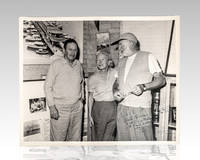
150055Rare original black and white photograph of legendary American writer Ernest Hemingway. Black and white matte photograph of Hemingway with his wife Mary and fishing guide Taylor Williams in the trophy room of a club or private home after a day on the water. Inscribed by Ernest Hemingway in black ballpoint at the bottom right corner "To Taylor Best always 2nd Prize Marlin 1st Prize Dolphin Papa E. Hemingway." Additionally inscribed by Mary Hemingway in black ballpoint above Ernest Hemingway's inscription "Love to Taylor Mary." This photograph was probably taken in Cuba in the spring of 1953 when Taylor Williams visited Ernest Hemingway to participate in fishing tournaments. A related letter included here documents Hemingway’s invitation to Williams to join him in Cuba and refers to his success in those competitions including a first-place finish for dolphin and second place for marlin. Hemingway’s friendship with Taylor “Beartracks†Williams the well-known Sun Valley hunting and fishing guide dated back to their meeting in Idaho in the late 1930s after which Hemingway frequently returned to Ketchum before eventually settling there. The spring of 1953 also marked a peak moment in Hemingway’s career and personal life: he had recently written The Old Man and the Sea and received the Pulitzer Prize and this period preceded the airplane accidents of 1954 and his later forced departure from Cuba during the Castro regime—events that would profoundly affect his final years and contribute to his death in 1961. In near fine condition. The piece measures 8 inches by 10 inches. Together with two additional glossy photographs of Taylor Williams. The first of Williams holding a fishing rod and fish. The second of Williams and Mary Hemingway standing on a boat proudly holding up a prize swordfish. In near fine to very good condition. The pieces measure 8 inches by 10 inches. Also with a page from a Cuban newspaper El Avance Criollo with an image of Hemingway Mary Williams and a prize fish. In near fine condition with toning and mail folds. Accompanied by a typed letter signed by Mary Hemingway regarding fishing and Papa. One page on Finca Vigia stationery from San Francisco de Paula Cuba dated 27 May 1957 addressed to Williams as "Colonel". The letter reads in full "Dearest Colonel: We finally picked up the photographs at the Floridita two prints of this same picture and I must say it does full justice to your distinguished nose. None of us looks as bad as we might have and that's about all we can expect from photographs these days I guess. You haven't missed anything super in the fishing here. Papa and I have been out four times I think since you left and one day when there was only very patchy current we spotted one in the morning put the bait over him two or three times he fooling around teasing us and Papa finally hooked him and brought him in. That afternoon a little one - 35-40 lbs. took a bait and I got him in with no suffering or nonsense such as I was displaying while you were here. I think the swimming helps ton up the muscles - have done my full half-mile in the pool every day now for a long time. Recently the weather has improved slightly - it waits until afternoon to rain. Otherwise no news - very quiet here and we miss you every single day and the Little House empty looks forlorn and missing you too. Not having your precise address on the Keys I'm sending this to S.V. where you'll have it when you arrive. Dearest Taylor - very much love and affections and good wishes from both of us - Mary. Papa reading in his chair says me too." In fine condition with mail folds. The piece measures 5.75 inches by 7.75 inches. Ernest Hemingway 1899–1961 was one of the most influential American writers of the 20th century whose concise prose style and exploration of universal themes reshaped modern literature. Known for his works such as The Old Man and the Sea A Farewell to Arms and For Whom the Bell Tolls Hemingway developed a narrative voice that captured the complexities of human struggle and resilience with stark simplicity. His experiences as a journalist and participant in both World Wars deeply informed his writing lending authenticity to his depictions of courage loss and alienation. While his personal life marked by adventure and tragedy often overshadowed his literary contributions his stylistic innovations and engagement with existential themes solidified his status as a transformative figure in American letters. By pushing the boundaries of narrative form and emphasizing the power of understatement Hemingway left an enduring legacy on both literature and the cultural understanding of the human condition. unknown
1925328523New York: Boni & Liveright 1925. First. hardcover. near fine/good. 214 1 pages. 8vo black cloth with geometric gilt design on the front cover d.w. New York: Boni & Liveright 1925. First edition. Near fine in very good- dust wrapper.<br/> <br/> Hemingway's first major collection of stories and his first book to be published in America. First printing and first thus with the inclusion of additional stories preceded by the much shorter Paris edition just 32 pages in length published the prior year. Near fine in a dust wrapper that is separated at one fold and has a sizable chip at the top of the spine but is otherwise bright and with the original $2.00 price intact. There is a small ownership name on the front panel of the dust wrapper & again on the rear end-paper of the book. Bookplate. Preserved in a 1/4 leather cloth slipcase.<br/> <br/> Boni & Liveright unknown
19302774np: np 1930. Very Good. THE RISE OF PHOTOJOURNALISM AND MASS-MEDIA HELP MAKE HEMINGWAY ONE OF THE TWENTIETH CENTURY'S FIRST AMERICAN INFLUENCERS. After graduating from high school in 1917 Ernest Hemingway worked as a cub reporter for the Kansas City Star. This job exposed him to the media's growing addiction to sensationalism and taught him the craft of writing clear and succinct prose. Hemingway's journalism experience his interest in boxing and big-game hunting and his military service during and after the First World War enabled him to explore fiction writing about everyday people and to hone his innovative writing style. His adventurous lifestyle and the success of The Sun Also Rises 1926 coincided with the public's growing interest in photojournalism and lifestyle magazines pushing Hemingway into the limelight. By the 1930s Americans craved international recognition of their culture as one that surpassed that of Europe. Hemingway's trajectory from literary celebrity to international icon in the 1940s and 1950s paralleled America's increasing global economic and cultural dominance. <br /> <br /> We have on offer a collection of over 100 original press photos from Wide World Photos acquired by the Associated Press in 1941 that span three decades and chronicle Hemingway's public and private life. Selected highlights include:<br /> -Images of Hemingway's overseas travel as a war correspondent during the Second World War <br /> -Photos of time spent with Gary Cooper Sinclair Lewis Lauren Bacall and Fidel Castro featured in The Atlantic in 1965<br /> -Shots of fishing excursions in Cuba and Peru bullfights in Spain and hunting trips in Africa<br /> -A photo of Hemingway and his fourth wife Mary that accompanied a New York Daily News story breaking the news of a 1954 plane crash in Uganda in which he and Mary were presumed dead <br /> -Pictures on the occasion of his winning the 1954 Nobel Prize in Literature<br /> -Portraits of Hemingway that were printed in The New York Times and other leading publications announcing his death in 1961<br /> <br /> Scribner his publishing house promoted Hemingway's daredevil side and attempted to build him up like a Hollywood star by disseminating photos to fan magazines newspapers and gossip columnists. In turn the media courted him and relished in his super-masculine adventures. Though Hemingway showed some ambivalence towards celebrity the paparazzi and the public were fascinated by this bon vivant who was a big game hunter bullfighting enthusiast playboy and avid traveler. Hemingway capitalized on his persona as both a man's man and a literary superstar taking risks in art and life and cheating death numerous times. <br /> <br /> His relationship with the press became more strained in the 1940s and 1950s as he dealt with mental health issues and failed marriages. The media focused on his loud and aggressive behavior in public especially when drunk. His opposition to being portrayed as a caricature of himself and his desire to be respected for his craft led to clashes with journalists. He sought professional accolades and acceptance and feared that the public's fascination with his larger-than-life personality prevented him from being among the literati. The General Editor of the Hemingway Letters Project observed "On the one hand you have a writer who cares very much about his public reception. He's always asking how the sales are going. He loves good reviews. He courts celebrity to some extent. On the other hand he does have this intense desire for privacy." Spanier and Mandel<br /> <br /> The photos in this collection expose a thrill-seeker with a serious side. Underneath the bravado he was a sensitive writer plagued by self-doubt who wrote crisp piercing sentences that told stories about soldiers lovers hunters bravery fear and death. In 1952 his publisher Charles Scribner said "The important element in Hemingway's writings derives from his constant concern to convey powerful psychological states: despair and hope fear and courage anger and resignation.the ultimate goal is the transformation of character." Hemingway's literary ascension was completed when he received the two biggest prizes in literature. The Old Man and the Sea was awarded the Pulitzer Prize for Fiction in 1953. In October of 1954 he won the Nobel Prize for Literature saying he was "proud and happy." <br /> <br /> During the early part of Hemingway's career the press often romanticized him but as his fame grew so did media scrutiny making him a prisoner of the image he created. Even his funeral which was limited to close family and friends became a media circus. <br /> <br /> While Hemingway's relationship with the press was often turbulent it was also a reflection of his complex personality and the era in which he lived. Hemingway's style forever changed the landscape of literature and this exceptional photo collection offers a glimpse into the life of this literary giant providing a collector with the historical context to better understand his work and his legacy.<br /> <br /> Over 100 silver gelatin prints 113 by our count although with some duplicates the images measuring approximately 8 1/2x6 1/2 inches 21.6x16.5 cm. and slightly smaller and the reverse most with a Wide World Pictures or Associated Press stamp and most with a press clipping or slug on verso. Photos from 1934-65. <br /> <br /> References:<br /> <br /> Hans-Peter Rodenberg. The Making of Ernest Hemingway. Zurich: LIT Verlag 2014.<br /> <br /> Lillian Ross. "How Do You Like It Now Gentlemen" The New Yorker May 6 1950.<br /> <br /> Charles Scribner Jr. In the Company of Writers. New York: Charles Scribner's Sons 1990.<br /> <br /> Sandra Spanier and Miriam B. Mandel Ed. The Letters of Ernest Hemingway: Volume 5 1932-1934. Cambridge: Cambridge University Press 2020. np unknown
195416066JNew York: Look Magazine 1954. First Edition and Only Printing. One of the rarest of all Ernest Hemingway A items which was unknown for many years until revealed in C. Edgar Grissom’s A Descriptive Bibliography of Ernest Hemingway published in 2011 and is listed as item A.26. This oversize booklet 10 1/2 wide by 13 inches tall separately prints the article and photography for the January 1954 issue of Look Magazine for which Hemingway wrote an original piece. The article is 3500 hundred words plus photographs for which Hemingway wrote the captions. This special printing was the brainchild of the magazine’s publisher Vernon C. Myers who presented it to a small select number of people calling it a literary first “you may want to add to your library.†A little light soiling and use to the printed wrappers. Enclosed in a custom cloth folding case. A Hemingway first edition lacking in almost all Hemingway collections. Look Magazine hardcover
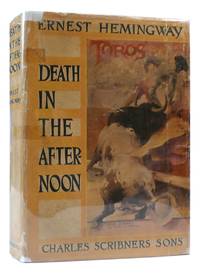
1948124152New York: Charles Scribner's Sons 1948. Early printing of Hemingway’s masterwork on bullfighting. Octavo original black cloth spine lettered in gilt frontispiece by Juan Gris illustrated. Association copy inscribed by Hemingway on the front free endpaper "For Nita with regards and affection Ernest Hemingway Mr. Papa. Finca Vigía - SF. de Paula 22/7/49." The recipient Juanita "Nita" Jensen was Hemingway's secretary at his home in the San Francisco de Paula Ward of Havana Finca Vigia from 1949 to 1952. While working as a secretary at the American embassy in Havana Nita received government clearance to moonlight as a part-time secretary for Hemingway typing the majority of his letters between 1949 and 1952. In 1952 she married diplomatic officer Walter Houk at Finca Vigía. In addition to hosting the wedding Hemingway gave away the bride and cosigned the necessary legal paperwork and the couple became frequent visitors of the finca often accompanying Hemingway on fishing trips aboard the Pilar and visits to his favorite local bar the Floridita. Very good in a very good dust jacket with chipping to the crown and foot of the spine. An exceptional association. Published in 1932 Death in the Afternoon is Hemingway's masterwork on the magnificence of the art of bull-fighting. John Dos Passos praised the book as "an absolute model for how that sort of thing ought to be done" and a contemporary review in The New York Herald Tribune described it as "full of the vigor and forthrightness of the author's personality his humor his strong opinions—and language… In short it is the essence of Hemingway" Mellow 415. Charles Scribner's Sons hardcover
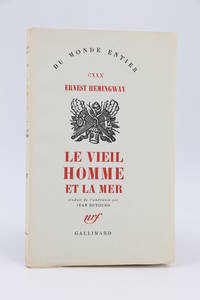
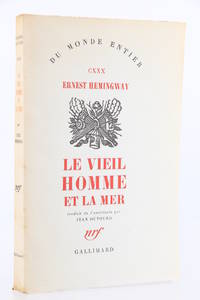
195284223Paris: Gallimard 1952. Fine. Gallimard Paris 1952 12 x 19 cm Relié Le vieil Homme et la Mer The Old Man and the Sea Gallimard Paris 1952 12x19cm original wrappers. First edition of the French translation by Jean Dutourd one of 86 numbered copies on pur fil only grand papier deluxe copies. Nice copy. A rare deluxe copy of one of the most influential texts in 20th-century literature. Gallimard unknown
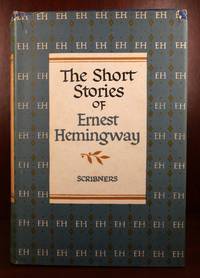
19557139New York: Charles Scribner's Sons 1955. 1955 printing of The Short Stories of Ernest Hemingway. Signed and inscribed by the author Ernest Hemingway on the front endpaper. The inscription reads: "Dr. Michel Delafon remembering our pleasant times together from his friend Ernest Hemingway - Ile de France 14/2/57." <br /> <br /> The book is in very good plus condition. Minor wear and staining to the original cloth boards. Minor spotting to the edges of the textblock. The dust jacket is in very good minus condition. Moderate chipping to the corners and spine ends. Spine is darkened with age. Original $4.75 price is present on the front flap.<br /> <br /> Please view the many other rare titles available for purchase at our store. We are always interested in purchasing individual or collections of fine books.<br /> <br /> Inventory # P6-30. Charles Scribner's Sons unknown
195279676Paris: Gallimard 1952. Fine. Gallimard Paris 1952 12 x 19 cm Relié First edition of the French translation by Jean Dutourd one of 86 numbered copies on pur fil only grand papier deluxe copies. Anthracite morocco binding gilt title lengthwise date at the foot black stingray boards framed in morocco gilt decorative paper endleaves original wrappers preserved gilt edges an elegant binding signed Boichot. Like most copies two sunned spots to head and foot of spine title-page and half-title slightly shaded due to the paper’s acidity. Rare deluxe-paper copy of one of the most influential texts of 20th-century literature housed in an uncommon stingray binding recalling the famous fish “bright in the sun” as Hemingway wrote. Gallimard hardcover
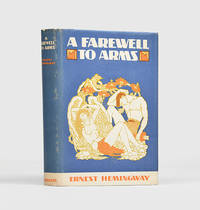
1929192871New York: Charles Scribner's Sons 1929. The world breaks every one and afterward many are strong at the broken places First edition in a well-preserved example of the dust jacket illustrated by Cleonike Damianakes 1895-1979 renowned for her classical-style designs favoured by the Lost Generation writers. The first printing as here does not have the legal disclaimer which appeared on page x in the second and third printings. The dust jacket is in the first issue misspelling the heroine's name as "Katharine Barclay" on the front flap and carrying reviews of The Sun Also Rises 1926 and Men Without Women 1927 on the rear panel. Octavo. Original black cloth printed gold paper labels on spine and front cover fore edge untrimmed. With dust jacket. Ticket of Charles K. Stotlemeyer Hancock Maryland on rear pastedown. Bump to spine foot light foxing to edges and endpapers; jacket unclipped spine lightly sunned and rubbed with nicks to head faint splash mark to verso bright overall: a near-fine copy in like jacket. Connolly 60; Grissom A.8.1.a; Hanneman 8a. hardcover
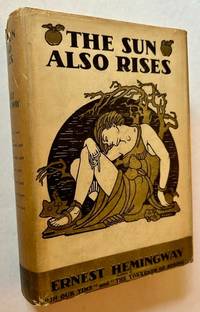
192625247New York: Charles Scribner's Sons 1926. Cloth. Very Good/Very Good. The October 1926 correct 1st edition 1st printing with all of the required issue points in place the misprint "stoppped" on pg. 181 line 26; "down-stairs" on pg. 169 last line; "Book Three" instead of the later-corrected "Book III". A presentable tight copy to boot. Solid and VG in its dark cloth with light rubbing at the panels including to the front panel's gilt title label and mild darkening along the spine's gilt title label. Internally very clean with no writing or markings to speak of save for a charming vintage bookseller's tag New York's "The Holliday Bookshop inconspicuously on the bottom of the rear pastedown. And in a crisp price-intact $2.00 VG example of the stated March 1927 7th printing so stated on the spine! of the famous Cleonike Damianakes-designed dustjacket with mild darkening along the spine and a degree of light chipping at the spine ends more along the spine crown with 1" of loss including to the word "Sun". Still though a sharp well-preserved copy of arguably Hemingway's greatest achievement. In its original printing and including a scarce example of this early-state 7th printing iconic dustjacket. Charles Scribner's Sons unknown
193095977Chicago: The Walden Book Shop 1930. Rare letter excerpt boldly signed by Ernest Hemingway. Published by the Walden Book Shop in 1930 the introduction begins "The following notes are excerpts from a Hemingway letter in answer to questions concerning editions and numbers of copies." It goes on to provide a long italicized quote from the letter in which Hemingway describes the printings of his early books from Three Stories and Ten Poems through the forthcoming Men Without Women 1927. The quote reads in part: ".The books have been Three Stories and Ten Poems Contact Press 1953-350 copies out of print In Our Times Three Mountains Press 1924 150 I think.They claim to be issuing a new edition. Then Scribners published The Torrents of Spring in the spring of 1926 in an unrestrained edition and The Sun Also Rises came out in the same year with I believe an attempt made to print and sell as many as possible.I own one copy of Three Stories and Ten Poems and would be very happy if it became valuable in order that I might have something to leave to my children." Signed by Hemingway in he lower right corner of the pamphlet. In fine condition. Double matted and framed with a portrait of Hemingway. The entire piece measures 26 inches by 17 inches. An exceptional example. American journalist and novelist Ernest Hemingway's legacy to American literature lies in his economical and understated writing style which he termed the "iceberg theory" and writers who came after him either attempted to emulate or avoid. After his reputation was established with the publication of The Sun Also Rises Hemingway essentially became the spokesperson for the post–World War I generation. His influence on 20th century fiction is unparalleled and his adventurous lifestyle and public image brought him admiration from later generations. Hemingway published seven novels throughout his career and was awarded the Pulitzer Prize for Fiction in 1953 and the Nobel Prize in literature in 1954. The Walden Book Shop unknown
1932175294New York: Charles Scribner's Sons 1932. First Edition; First Printing. Hardcover. Very Good in a Very Good dust jacket. Rubbing open tearing along panel edges. "A" on CP. Charles Scribner's Sons hardcover
1929141360New York: Charles Scribner's Sons 1929. Hardcover. very good. 1st limited edition. 355pp. Tall octavo. Half bound in vellum with light teal paper boards; black leather title label with gold gilt lettering mounted to spine. Teal endpapers. Text block edges uncut. Limited to a printing of 510 copies of which ten were reserved for presentation--signed by Hemingway on the limitation page. Corners bumped. Some soiling to vellum spine. Faint rubbing to boards. Lacking the slipcase. Internally clean and an overall presentable copy. A nice copy of this limited signed edition of one of Hemingway's most highly regarded novels--this copy is #382 out of 510 copies. Set during the first World War this semi-autobiographical story of love and violence between an expatriate American soldier Henry and the British nurse that takes care of him cemented Hemingway as one of the great Modernist writers. A fantastic piece of modern American literature. 1929 Charles Scribner's Sons hardcover