Heine, Thomas Theodor (1867-1948)Biblio.com
5 014 résultats
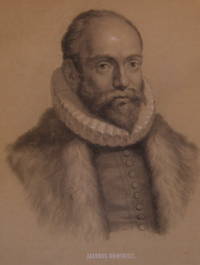
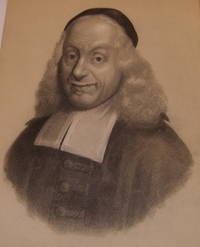
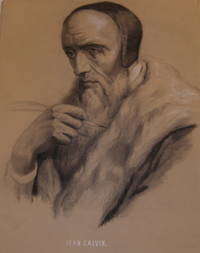
51-3672Berlin: circa 1890s. Charcoal drawing with gouache text. 59 x 45 cm. Part of a series of Portraits of Reformation figures in England Germany Netherlands Switzerland and France and anti-Reformation figures in Italy at least one of which was made into a lithograph published by H. J. Meidinger. From a German collection that included the original charcoal drawings for the series.John Calvin = French: Jean Calvin born Jehan Cauvin; 10 July 1509 – 27 May 1564 was a French theologian pastor and reformer in Geneva during the Protestant Reformation Berlin: circa 1890s. unknown
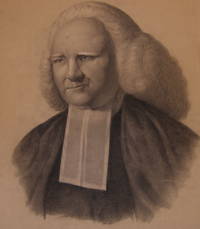
51-3668Berlin: circa 1890s. Charcoal drawing with gouache text. 59 x 45 cm. Part of a series of Portraits of Reformation figures in England Germany Netherlands Switzerland and France and anti-Reformation figures in Italy at least one of which was made into a lithograph published by H. J. Meidinger.From a German collection that included the original charcoal drawings for the series.George Whitefield 1714-1770 Methodist leader is much later than the others in the series. Berlin: circa 1890s. unknown
51-3667Berlin: circa 1890s. Charcoal drawing with gouache text. 59 x 45 cm. Part of a series of Portraits of Reformation figures in Germany Netherlands Switzerland and France and anti-Reformation figures in Italy at least one of which was made into a lithograph published by H. J. MeidingerFrom a German collection that included the original charcoal drawings for the series. Berlin: circa 1890s. unknown
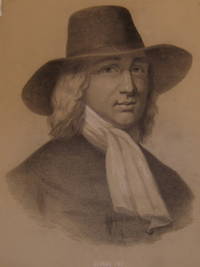
51-3671Berlin: circa 1890s. Charcoal drawing with gouache text. 59 x 45 cm. Part of a series of Portraits of Reformation figures in England Germany Netherlands Switzerland and France and anti-Reformation figures in Italy at least one of which was made into a lithograph published by H. J. Meidinger. From a German collection that included the original charcoal drawings for the series.George Fox 1624-1691 Founder of the Society of Friends is later than the other figures in this series. Berlin: circa 1890s. unknown
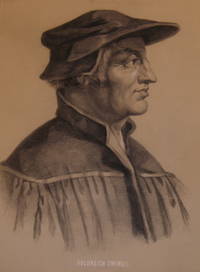
51-3673Berlin: circa 1890s. Charcoal drawing with gouache text. 59 x 45 cm. Part of a series of Portraits of Reformation figures in England Germany Netherlands Switzerland and France and anti-Reformation figures in Italy at least one of which was made into a lithograph published by H. J. Meidinger. From a German collection that included the original charcoal drawings for the series.Huldrych Zwinglia or Ulrich Zwingli 1 1484 – 1531 was a leader of the Reformation in Switzerland. Berlin: circa 1890s. unknown
51-3669Berlin: circa 1890s. Charcoal drawing with gouache text. 59 x 45 cm. Part of a series of Portraits of Reformation figures in England Germany Netherlands Switzerland and France and anti-Reformation figures in Italy at least one of which was made into a lithograph published by H. J. Meidinger. From a German collection that included the original charcoal drawings for the series.Philipp Jakob Spener 1635-1705Founding father of German pietism is later than the other figures in the series. Berlin: circa 1890s. unknown
18311BislAi0006Leipzig Germany/Deutschland: Tempel-Verlag 1831. Book. Very Good. Decorative Canvas Hardcover. Siebenter Band/Volume 7. 8vo or 8° Medium Octavo: 7¾" x 9¾" tall. 418 pp. 7. Band/Vol. 7 only! Text in German. Solidly bound copy with moderate external wear crisp pages and clean text. No dust jacket. Tempel-Verlag Hardcover
STLB0051Hamburg Hoffmann und Campe 1827. Kl.-8°. Schmutztit. Titel m. kl. Vignette Lyra 372 S. 1 Bl. Lit. Anzeigen. Restaur. Leinenbd. der Zeit m. goldgepr. Rückentitel u. -verzierungen sowie blindgepr. Deckelrahmen. Einband berieben u. fleckig Rücken restauriert Vorsätze erneuert Buchblock wasserrandig braunfl. u. z. Tl. stärker abgegriffen mit mehreren hs. Anmerk. auf Titelbl. u. im Text. Goed. VIII 555 26. Borst 1526. Erste Ausgabe von Heines Lyrikband mit romantischen Liebesgedichten der den Ruhm des Schriftstellers begründete. Mit den vier Widmungsblättern die in späteren Auflagen wegfielen an Friedrich Merckel 2 Salomon Heine und Friederike Varnhagen von Ense sowie dem nur bei Borst erwähnten oft fehlenden Vortitelblatt und dem Bl. >Literarische Anzeige<. - Das Buch der Lieder umfasst mit Gedichten zwischen 1817 und 1826 Heines Frühwerk. Hier noch in der unzensierten Form weil viele Formulierungen die für zu obszön angesehen wurden in den späteren Auflagen geändert werden mußten. Hamburg, Hoffmann und Campe 1827. unknown
18341BislAi0005Leipzig Germany/Deutschland: Tempel-Verlag 1834. Book. Very Good. Decorative Canvas Hardcover. 8vo or 8° Medium Octavo: 7¾" x 9¾" tall. 429 pp. 6. Band/Vol. 6 only! Text in German. An excellent copy! Over-sized and/or over weight book; extra postage required. Please note that large and/or heavy items may incur an additional shipping charge. Solidly bound copy with moderate external wear crisp pages and clean text. No dust jacket. Tempel-Verlag Hardcover
197670612Robert Hale and Company January 1976. Mass Market Paperback. Good. Robert Hale and Company paperback
19231344Heine Heinrich. 1799-1856. <b>Der Rabbi von Bacherach</b> mit Originallithographien von Max Liebermann. Berlin: Im Prophlaen Verlag 1923. #279 of 400 with signed frontispiece and limitation page by Liebermann and 17 full or partial page lithographs in black. The first 100 were printed on Japan Vellum. <br /><br />Folio. Publisher's half-morocco with title in gold with yellow board sides bearing a lithograph on the upper cover. Printed on laid paper. Original open slipcase with paper label joints split. 58p. Fine copy with a touch of wear to spine ends. <b>The Rabbi of Bacharach</b> set in the middle ages is Heine's unfinished novel that describes the ordeal of Rabbi Abraham and his wife in the small town of Bacharach Germany . <br /><br />Gentiles come to the Passover Seder in order to secretly plant a body of a Christian child. They will accuse the Rabbi of ritual murder. Then when he is taken away they will rob his home. The rabbi and his "schönne" beautiful Sarah manage to leave their home during an interval in the seder and run to the river docks. They are then transported for a fee down the Mainz to Frankfurt where they enter into the Jewish quarter without incident. In that quarter life is fully described with all its variety and color. <br /><br /> This unfinished story remains popular because it pictures life in the medieval Jewish community with detailed description of worship customs and pecking orders as well as dress manners and a variety of activities within the Jewish quarter. Liebermann's realistic sketchbook style depicts scenes with a charcoal drawing like simplicity. The stark flat depiction creates an atmosphere of dark foreboding. <br /><br />The 19th century poet Emma Lazarus wrote a biographical sketch of Heine that includes commentary on The Rabbi of Bacharach: "During the period of his earnest labors for Judaism Heine had buried himself with fervid zeal in the lore of his race and had conceived the idea of a prose-legend the Rabbi of Bacharach illustrating the persecutions of his people during the middle ages. Heine one of the most subjective of poets treats this theme in a purely objective manner. He does not allow himself a word of comment much less of condemnation concerning the outrages he depicts. He paints the scene as an artist not as the passionate fellow-sufferer and avenger that he is. But what subtle eloquence lurks in that restrained cry of horror and indignation which never breaks forth and yet which we feel through every line gathering itself up like thunder on the horizon for a terrific outbreak at the end!" <br /><br />Refer: Lazarus Emma 1849-1887 From the Biographical Sketch of the life of Heinrich Heine reprinted in The Rabbi of Bacharach by Heinrich Heine. Mondial 2008. Prophalen Verlag hardcover books
1827007940Hamburg: Hoffmann und Campe 1827. First Edition First Issue. Half Red Morocco. Marbled Boards. Cloth clamshell box. Near Fine. Heine's second published book his first collection of verse which was soon censored making the first issue a relative rarity. In later issues some of the poems were altered to suit the censors. 12mo. 17 by 10.5 cm. 372 1 pp. Original wraps bound in. With half title and the four dedication pages -- two to Friedrich Merkel one to Salomon Heine and one to Friederike Varnhagen von Ense. Also with the advertisement page at the end. There is no preface. This copy has the bookplate of Ludwig Rosenberger mounted onto the FEP. Rosenberger 1904-1987 built one of the most significant collections of Judaica which he donated to the University of Chicago. Overall a beautiful copy. With a clamshell box that has a rounded spine with solidity and thickness. Light scattered foxing but most leaves are clean. Foxing is mostly on the early and the final few leaves with it most conspicuous on the title page. Also a few light fox marks on the fore-edge. Moderate wear to the box. Hoffmann und Campe unknown
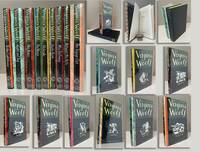
34202London: The Hogarth Press 1990. First Edition. Hardcover. Near Fine/Near Fine. First Edition. Hardcover. A complete nine-volume set of THE DEFINITIVE COLLECTED EDITION OF THE NOVELS OF VIRGINIA WOOLF published by The Hogarth Press in 1990. Each volume bound in the publisher's black cloth with gilt titling to the spine top edges tinted lime green housed in unclipped brilliantly colour-coded pictorial dust jackets featuring Jeff Fisher's distinctive white geometric designs-a striking visual homage to Woolf's modernist sensibility.<br /> <br /> <br /> Titles include: THE VOYAGE OUT NIGHT AND DAY JACOB'S ROOM MRS DALLOWAY TO THE LIGHTHOUSE ORLANDO: A BIOGRAPHY THE WAVES THE YEARS and BETWEEN THE ACTS.<br /> <br /> All volumes are near fine with clean boards and tight bindings. Dust jackets likewise near fine with only the lightest traces of shelf wear. A discreet previous owner's name appears on the front free endpapers and a date appears on the reverse of each volume as shown. All protected in mylar.<br /> <br /> A handsome and limited scholarly edition No. 429/1000 of Woolf's complete novels-spanning her literary evolution from THE VOYAGE OUT 1915 to BETWEEN THE ACTS 1941-and capturing the full range of her modernist writing. An erudite collection proving Woolf at her critical best.<br /> <br /> Note: Extra Shipping charges due to the weight of the full collection and depending on destination. The Hogarth Press hardcover
51895Bruxelles A. Lacroix, Verboeckhoven et Compagnie, éditeurs 1863 grand in 8 (24,5x17) Les 2 tomes reliés en 1 volume reliure demi basane prune de l'époque, dos à nerfs soulignés de filets à froid (dos légèrement et uniformément passé), 304 pages, (et pages 5 à) 315 pages, avec 11 illustrations hors-texte sur fond teinté, dont un frontispice, et une planche hors-texte en noir et blanc (page 228 du tome 1: La grande muraille de Chine), avec des figures dans le texte. Cachet ex-libris de la bibliothèque de M. le Comte de Fleurieu. Ouvrage traduit de l'allemand de Wilhelm Heine, par A. Rolland, illustré de onze vues dessinées d'après nature par l'auteur. L'expédition Perry réalisée en 2 voyages, était commandée par Commodore Matthew Calbraith Perry, sous les ordres de Président Millard Fillmorer, afin d'ouvrir les ports japonais japonais au commerce américain, grâce l'établissement de relations diplomatiques et la négociation d'accords commerciaux. Wilhelm Heine, 1827-1885. Deuxième édition. Rare. Bon exemplaire
1925122324Paris: J. Schiffrin et Cie 1925. Softcover. VG- Some wear to extremities including tears at top and bottom of spine; Binding loose. Grigory Gluckmann. Green illus. wraps; 158 pp.; 15 color and bw plates with tissue overlay; Watercolor painting on FFEP. Text in French; Original watercolor by Grigory Gluckmann on FFEP; Dedication on limitation page; Book limited and out of series; Heinrich Heine's unfinished novel richly illustrated by Grigory Gluckmann a Russian-born artist who worked in Paris and America; Also known in German as Florentinischen Nachte. J. Schiffrin et Cie paperback
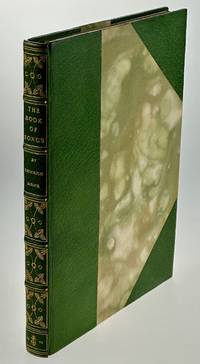
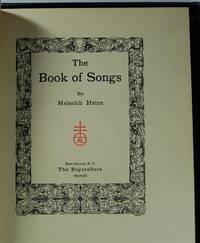
19036539East Aurora: Roycroft Press 1903. First Edition Thus. First Edition Thus. 8vo. Beautifully bound in three-quarter crushed green morocco with marbled boards elegant gilt decorated spine marbled endpapers. PRESENTATION COPY: “To Alice Keiles Reserve your best thoughts for the Elect Few. Elbert Hubbard.†Printed in red and black on Japan vellum. David Ogle reports: “All known copies of the limited edition 100 copies are hand-illuminated though this copy with rubricated initials does not appear to be hand-illuminated an interesting feature which may indicate that this is one of Hubbard’s own copies for presentation. Book is in very fine condition Box with original label very good. Roycroft Press unknown
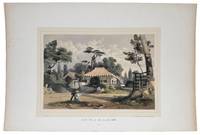
185642599New York: G.P. Putnam & Company 1856. Tinted lithograph on proof paper tipped onto a bristol board with glossy back as issued with additional hand colouring. A quietly revealing image from Heine's Graphic Scenes of the Japan Expedition: the American encounter with the Ryukyu Islands in Japan where diplomacy observation and coastal movement preceded the better-known landings in Japan.<br/> <br/> This plate is one of the more understated images in Graphic Scenes of the Japan Expedition and that restraint is part of its appeal. Lew Chew was the period Western name for the Ryukyu Islands and On-Na corresponds to Onna on Okinawa. The scene shows a kung-kwa or village rest house set back behind a low wall and gate its tiled roof partly screened by trees. Heine gives the building a strong sense of place: the whitewashed wall shaded yard garden growth and open path all suggest a local administrative or stopping-place outside the more formal diplomatic centres of Naha and Shuri. In the foreground one figure sits with a portfolio or sketchbook while another stands nearby. Ryukyuan figures appear closer to the building absorbed into the architecture and enclosure of the scene. The print therefore records more than a picturesque stop on the route to Japan turning a coastal village structure into evidence of landscape architecture custom and access. Within the Perry visual record Kung-Kwa at On-Na is valuable precisely because it shifts attention from treaty ceremony to the quieter geography of the voyage. It places Okinawa within the wider American itinerary through the China Seas the Ryukyus and Japan and preserves a carefully observed view of a Ryukyuan public building at the moment when the islands were being drawn into the diplomatic and commercial mapping of the Pacific. Wilhelm Heine was the official artist on Commodore Matthew C. Perry's expedition to Japan in 1853-54. On returning to the United States he produced several series of prints commemorating the trip. A group of six elephant-folio prints appeared in 1855 and the following year a second volume was issued in a smaller format with different images and with explanatory text. Both projects employed the New York lithographic firm of Sarony among the best lithographers in the United States at that time.<br/> <br/> Bennett p.53; McGrath American Color Plate Books 123. G.P. Putnam & Company unknown
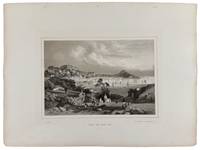
185642582New York: G.P. Putnam & Company 1856. Tinted lithograph mounted on support sheet with printed letters as issued with small stab holes where previously bound. A mid nineteenth century view of Macao China from Penha Hill published as the first topographical scene in Heine's Graphic Scenes of the Japan Expedition showing the city's harbour churches fortified heights and waterfront at a moment when Macao's older role in the China trade was being overtaken by Hong Kong.<br/> <br/> Heine's view looks down from Penha Hill across Macao's semi-circular harbour with the town rising in terraces from the waterfront toward its churches gardens and fortified heights. The composition places Macao's maritime and religious identity in a single prospect: small vessels fill the inner harbour larger ships lie farther out and the built town gathers around the shoreline beneath prominent ecclesiastical and defensive structures. In the foreground porters carrying shoulder poles and a seated group of robed women animate the hillside road giving the view a local and social immediacy beyond its topographical function. Macao had developed from the sixteenth century as the principal Portuguese settlement on the South China coast occupying a narrow peninsula near the entrance to the Pearl River system and serving as a crucial intermediary point in trade between China Japan India and Europe. Its urban form is clearly legible in Heine's image. The waterfront known as the Praia curves around the harbour below the elevated town while Penha Hill provides the high vantage from which Macao appears as an amphitheatre of houses churches gardens and forts descending toward the water. By the time Heine's view was published Macao's commercial standing had changed substantially. Hong Kong occupied by Britain in 1841 and rapidly developed as a free port drew away much of the foreign trade that had once passed through Macao. Heine's print records the older Portuguese city in this altered commercial landscape: still picturesque densely built and socially important as a resort and residence for foreign merchants connected with Canton but no longer the dominant European entrepôt on the China coast. Seen from Penha Hill Heine's Macao appears as a harbour city where Portuguese civic and religious landmarks Chinese geography and nineteenth-century treaty-port commerce meet in a single prospect. Wilhelm Heine was the official artist on Commodore Matthew C. Perry's expedition to Japan in 1853-54. On returning to the United States he produced several series of prints commemorating the trip. A group of six elephant-folio prints appeared in 1855 and the following year a second volume was issued in a smaller format with different images and with explanatory text. Both projects employed the New York lithographic firm of Sarony among the best lithographers in the United States at that time.<br/> <br/> Bennett p.53; McGrath American Color Plate Books 123. G.P. Putnam & Company unknown
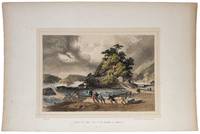
185642598New York: G.P. Putnam & Company 1856. Tinted lithograph on proof paper tipped onto a bristol board with glossy back as issued with additional hand colouring. A fine plate of Shimoda harbour in Japan showing the Benten temple on a rocky tree-covered rise above the water from Graphic Scenes of the Japan Expedition.<br/> <br/> Shimoda or "Simoda" in the period spelling used here had particular importance for Perry's expedition. Under the Treaty of Kanagawa signed on 31 March 1854 it was one of the two ports opened to American vessels for supplies and refuelling. Heine records the harbour as a coastal landscape of daily movement local religious architecture and practical maritime activity. In the foreground Japanese boatmen haul a long narrow boat through the surf while a second boat lies angled on the beach at right. Beyond them the temple rises from a small rocky promontory half hidden among trees and reached by a stepped landing and gate with low mountains and a heavy cloud filled sky in the distance. The titles "Ben-Teng" refers to Benten or Benzaiten a deity often associated with water and shoreline shrines. This gives the image a specificity beyond its topographical interest: Heine presents Shimoda through a recognisable local sacred site placed directly within the harbour that had become newly significant in American and Japanese relations. The composition balances picturesque scenery ethnographic observation and the physical geography of a newly opened treaty port giving equal weight to topography and local life. Wilhelm Heine was the official artist on Commodore Matthew C. Perry's expedition to Japan in 1853-54. On returning to the United States he produced several series of prints commemorating the trip. A group of six elephant-folio prints appeared in 1855 and the following year a second volume was issued in a smaller format with different images and with explanatory text. Both projects employed the New York lithographic firm of Sarony among the best lithographers in the United States at that time.<br/> <br/> Bennett p.53; McGrath American Color Plate Books 123. G.P. Putnam & Company unknown
1969146891Unknown: I.P.C. Pictures 1969. Draft script for the 1971 film here under the working title "The Catcher in the Raw." <br/><br/>At a California hot springs resort a shady therapist helps eight carefully selected applicants find themselves and "experience their bodies" a process which mostly involves consuming large amounts of LSD meditative screaming and slow-motion basketball games. Louis Garfinkle's sole directorial credit and an excellent example of the intersection of early 1970s wellness culture and sexploitation. <br/><br/>Set in California.<br/><br/>Brown titled wrappers. Title page present dated 1969 with credits for director Louis Garfinkle. 136 leaves with last page of text numbered 133. Xerographic duplication rectos only. Pages Very Good plus wrapper Very Good plus bound with three gold brads. I.P.C. Pictures unknown books
190061932Leipzig und Wien: Bibliograpisches Institut 1900. 29 vols. 8vo. Uniformly bound in contemporary half brown morocco with red leather title labels. Very fine. 29 vols. 8vo. Bibliograpisches Institut unknown
P4884Neapoli i.e. Bern: Presso Giacomo Palpiri i.e. V. I. Bakst 1863. Octavo 17.8 à 11 cm. Recent paper-covered card binding; part of front wrapper affixed to front board; 5 109 pp. Internally very good. First complete Russian translation of Heine's "Das Buch Le Grand" 1927. The work had been previously published in Russia but as the translator notes with significant cuts by the censor which greatly distorted Heine's humor and wit. Originally published in 1927 "Das Buch Le Grand" was the second of Heine's "Reisebilder". It is a work which embraces the spirit of Napoleon and the French Revolution and it served to cement his reputation as a witty leader among liberal German writers. It was This new edition was published in Bern Switzerland using a fictitious imprint at the printer's shop of V. I. Bakst founded in 1862 to satisfy a growing need for revolutionary and other illegal materials which could not be printed in Russia. Bakst was also instrumental in setting up a St. Petersburg illegal typography in 1862. A somewhat censored and shortened edition of Mainov's translation appeared in Moscow the same year. Ironically given Heine's own issues with censorship and his literary fate in nineteenth-century Russia this translation reproduces the fictitious censored passage in the original in which Heine composed a paragraph of dashes leaving only the words "The German censors. Idiots." KVK OCLC only show the copies at Humboldt Universität SLUB Dresden and Universitätsbibliothek J. C. Senckenberg. Not at the Russian State or National Libraries. unknown books
185853684Leipzig, Hermann Costenoble, 1858-59. Lex8vo. 3 uniform contemp. hcalf. Spines gilt with gilt lettering. Corners a bit bumped. 3 tinted frontispieces. XX,330VIII,392VIII,424 pp., 1 facsimile, 21 plates (some tinted) and 12 maps (10 large and folded, finely strenghtened on verso). Clean and fine.
185853684Leipzig Hermann Costenoble 1858-59. Lex8vo. 3 uniform contemp. hcalf. Spines gilt with gilt lettering. Corners a bit bumped. 3 tinted frontispieces. XX330;VIII392;VIII424 pp. 1 facsimile 21 plates some tinted and 12 maps 10 large and folded finely strenghtened on verso. Clean and fine. <br/><br/><em>First edition. - Sabin 31241. </em> unknown
19031018480<p>New York: The Roycrofters 1903. Limited. Leather Bound. Collectible - Very Good. Signed by Elbert Hubbard on Limited Edition page. This is #43 of 100 copies printed on Genuine Japan Vellum. Hardcover with 3/4 blue leather with marble board covers. Satin marker. Gilt decoration and lettering on spine. Front gutter is not loose but paper has split. Clamshell case is also in blue cloth with a soft felt interior. Some wear and chipping to exterior boards. Paper title label on bottom edge of case. 8.25x6.25. 111823</p> The Roycrofters hardcover