785 résultats
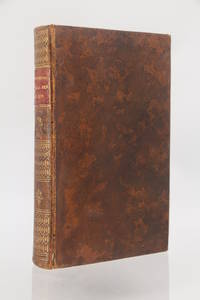
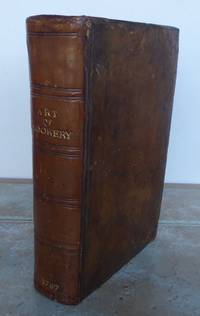
176752771<p>London printed for the translator. Sold by R. Davis 1767. TITLE CONTINUED: The Last and Most Complete Practice of Cookery Published in French. To Which are Added Explanatory Notes and References together with the Produce of the London Markets; by the TRANSLATOR Bernard Clermont a Foreigner who has been several Years a Clerk of the Kitchen in Noble Families in this Kingdom.In this Work the French Names are preserved and explained for mutual Ease and Instruction of Natives and Foreigners. The identity of the translator was revealed in the third edition when the title of the above was changed to The Professed Cook in 1769. FIRST EDITION IN ENGLISH 1767. 2 Volumes in one the second volume with shortened title page pagination continuous. Translated and edited by B. Clermont. 8vo approximately 210 x 120 mm 8 x 5 inches pages: xvi 48 1-286 4 289- 588 2 - last page blank the Contents pages of both volumes are bound at the front of this copy contemporary polished calf covers with a matching calf spine added at sometime. Binding rubbed shelf wear to edges and corners first inner paper hinge repaired first title page a little dusty and age toned with a pale spot pale spotting to verso of first blank endpaper pale spotting to pages 1-17 in first volume pale spotting and age-browning to several other pages throughout the book ink inscriptions on first blank endpaper verso of title page verso of blank page before title page of Volume 2 and a little scribble to recto ink name to head of title page of Volume 2 and ink note to lower margin of final page of text and head of following blank a good tight copy. See: Katherine Bitting Gastronomic Bibliography page 519; Arnold Whitaker Oxford English Cookery Books To The Year 1850 page 95; Virginia Maclean A Short-title Catalogue of Household and Cookery Books in the English Tongue 1701-1800 page 99; William Cagle A Matter of Taste pages 628-629 No. 871; G. Vicaire Bibliographie Gastronomique page 49; ESTC N14583. MORE IMAGES ATTACHED TO THIS LISTING ALL ZOOMABLE FURTHER IMAGES ON REQUEST. POSTAGE AT COST.</p> London, printed for the translator. Sold by R. Davis, 1767. hardcover
1749136504London: Henry Lintot 1749. hardcover. Three tables 32 372pp. 4to full contemporary calf raised bands gilt-lettered spine label; corners bumped top of hinge starting. London In the Savoy: Printed by Henry Lintot for Daniel Browne 1749. Scarce. Very Good .<br/> <br/> Not in Halkett & Laing.<br/> <br/> Henry Lintot unknown
17904138London: Published by Robert Sayer 1790. Hand-coloured mezzotint. State vi/viii. A remarkable portrait of Lord Grosvenor's Pangloss by the master equine painter George Stubbs.<br/> <br/> George Stubbs is considered to be one of the greatest English painters. His ingenious animal and sporting pictures remain unrivalled in their passionate depiction of emotion and their commitment to naturalistic observation. Stubbs was briefly apprenticed to the painter Hamlet Winstanley a relationship that quickly ended leaving the young artist to his own education. In contrast to contemporary academic theory Stubbs attached great importance to the belief that art should imitate nature not the work of other artists. He spent years carefully studying human and equine anatomy so that he could truthfully represent natural form and movement. A result of this study was his famous Anatomy of the Horse which details with beautiful engraving the various elements of a horse's anatomy from skeletal form to muscular definition. By the 1760's Stubbs had developed a considerable reputation as a sporting artist and had attracted a number of distinguished patrons. Continuing in search of innovation Stubbs began experimenting with a myriad of different mediums becoming accomplished in both enamels and printmaking. Through arduous application he became a talented mezzotint engraver and worked with ease in both soft ground and etching techniques. Stubbs' masterful paintings inspired some of the greatest engravers of the day to reproduce his work for publication including his own son George Townly Stubbs who reproduced with faithful accuracy the sublime emotion inherent in his father's exquisite works. Stubbs was elected Director of the Society of Artists and a Royal Academician and today his prized paintings are housed in some of the finest museums in the world. Stubbs was often commissioned to paint accurate portraits of specific racehorses for proud aristocratic patrons who wished to highlight their horses' racing success. This practice is expertly exemplified with this magnificent print of Pangloss Lord Grosvenor's beloved horse. Pangloss was foaled in 1755 and named after a character in Voltaire's Candide; little is known about Lord Grosvenor's horse apart from the fact that his racing career was ended by a broken leg. This print was the second of a series of engraved horse portraits begun by the publisher Ryland in 1771 and extended by Robert Sayer in 1777. Although the inscription on the print establishes Stubbs as the painter the painting has not been identified making this print extremely intriguing since it is the only record of Stubbs' lost work.<br/> <br/> Lennox-Boyd George Stubbs 20 vi/viii; Gilbey Life of George Stubbs no.39; Siltzer The Story of British Sporting Prints p.270. Published by Robert Sayer unknown
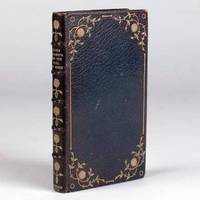
1725019172London: J. Darby 1725. Hardcover. Margins shaved not affecting text. Trivial wear. About Fine. Duodecimo 3-1/4" x 5-1/2" in a lovely unsigned binding of full dark green morocco leather with gilt floral decorative devices with small white morocco onlays the spine with five raised bands gilt lettering and decorations gilt dentelles scarlet silk endpapers and doublures all edges gilt; 119 1 pages. Wood-engraved frontispiece. A translation of the anonymous French text LE COMTE D'ESSEX HISTOIRE ANGLOISE printed in Paris in 1678 and first published in English in 1680. This edition of a sensational account of Elizabeth's love life seems to be just as scarce. <br/><br/> J. Darby hardcover
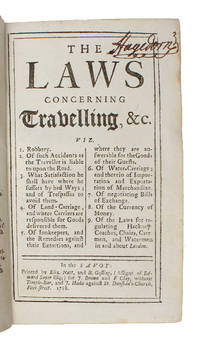
171861023Savoy London Nutt and R. Gosling 1718. 8vo. In a contemporary modest full calf binding. Small paper-label to upper part of spine. Wear and soiling to extremities. Leather to lower part of back board with tear and partly detached showing the wooden boards underneath. Previous owner's name to title-page but internally fine and clean. 13 237 3 pp. <br/><br/><em>Scarce first edition of this legal guidebook generally accepted to be the first work of its kind in English. It was later reprinted in Bristol. Goldsmiths 5424.2 Kress 3063. </em> hardcover
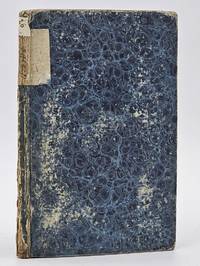
1788357196Leipzig.: Johann Gottlob Beygang. 1788. 1st Edition. Old blue marbled boards. Good covers worn spine splitting at rear joint title page and endpapers covered with previous owner’s ink notes scattered marginal notes. 16.5x10.50.7 cm. German text. An obscure book from the revival of German alchemy with the Rosicrucians. Purportedly contains secret formulas and processes for the transformation of metals. Rare. OCLC locates six copies. weight: 0.2 lb. Johann Gottlob Beygang. hardcover
1777114487Napoli presso del Porsile 1777. In 4° piena pergamena coeva con titolo oro su tassello pastello al dorso. Pp. VIII 148 4 n.n. piccolo fregio al frontespizio. Alone in testa diseguale nelle diverse pagine ma mai lesivo al testo. Salvo il detto ottimo esemplare con cornice a doppio filetto in testa continuata per tutto il testo. Il nome dell'A. compare in fine alla dedicatoria Napoli, presso del Porsile unknown
17315200London: Printed for J. Wilford. 1731 1726. 1731. First edition. 8vo. 194x115mm. pp. 2 vi 68 4 71-144 2. Four parts in one volume each with its title page although part four is lacking its title page. Contemporary sprinkled calf some rubbing and scuffing to boards and a small split to joints at the head of spine and boards a little bowed. Some foxing and browning but overall in very good condition. Contemporary shelf label at foot of spine and book label of J.O.Edwards on front pastedown and ink ownership inscription on front free endpaper. Rare in commerce only four copies appearing the auction records in the last century. ESTC records six copies in the UK and thirteen in the US. "An Ænigma or Riddle is a dark Description of Things clear and well known to be explain'd for the Exercise and Diversion of the Mind". This odd and rare little book contains 140 riddles in verse metaphorical enigmas which are curiously addictive. ESTC: T55149. London: Printed for J. Wilford. 1731 [1726]. hardcover
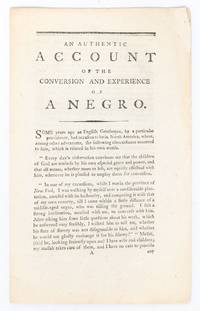
17957213London: T. Wilkins 1795. First British edition. First separate edition. Measuring 205 x 120mm and complete in 4 pages. A Fine example. Scarce in all formats it was first printed in Vermont in 1793 and also contained a"faithful narrative.towards Polly Davis" one copy survives at AAS; soon after an edition was released from Maine containing "a poem on Christian Experience" only two copies survive both at NYPL. The present first British edition is also the first separately printed edition recorded by ESTC at only 9 libraries. It has come to auction on only five occasions with the present being the only example currently in trade.<br /> <br /> An Authentic Account records a brief encounter between a white Englishman and an enslaved Black man on a plantation in New York. Focusing their dialogue on the word of God and on salvation the white narrator asserts that the two men could find common ground as "children of God.equally effectual with him" despite their diametrically opposed positions within the social power structure. "Neither the color of his body nor the condition of his present life could prevent him from being my dear brother in our dear saviour." Despite this argument for the spiritual equality of men of all races the white narrator in An Authentic Account never questions nor seeks to subvert a power structure that would empower him while violently debasing Black people. Rather he passively participates in the Evangelical attitude so common of the era which considered enslavement an opportunity for saving the souls of uncivilized peoples who otherwise could not access the word of God. It was a position which abolitionist Evangelicals including William Wilberforce and Hannah More would decry as the height of hypocrisy in their own work during the period calling upon Christians not only to see Black people as spiritual equals but also as humans deserving equal liberty and dignity. <br /> <br /> ESTC T224026. T. Wilkins unknown
1729r029F.023GB: J Roberts 1729. DISBOUND TEXT No covers. Text commences at title page and ends on last index page with FINIS at base. Last numbered page is 432. 2 and 32 and 432 and index. Library stamps on title page and last page. Title page deatched and slight damage at inner margin. Else a very good clean tight text most suitable to rebind. . 1st Edition. Hardback. Good/No DW. J Roberts Hardcover
179588710Paris: Everat 1795. Fine. Everat Paris s. d. 1795 12.3 x 20 cm Relié Very rare first edition cf Dunmore p. 16. Ferguson 225. Forbes Hawaiian National Bibliography 285. Gove The Imaginary Voyage in Prose Fiction pp. 397-8. Kroepelien 283. McLaren 269. Sabin 38958. Missing from Negley Utopian literature and the Dictionary of literary utopias.Binding in full marbled calf smooth spine adorned with compartments and floral gilt motifs red morocco title label gilt roulettes on the headbands partially faded and on the edges binding of the period.A tear with loss on the spine small crack at the foot of one joint rubbing on the joints some foxing a moisture stain on the first endpaper fading on the following pages light halos at the foot of some pages.The disappearance of La Pérouse caused great concern in France and many writers used this mystery as the basis for utopias and fantastic tales about a possible survival of the crew in the South Seas.A fictitious account. The greater portion is devoted to the description of a supposed island in the South Seas inhabited by a community of refugees who had escaped the horrors of the French Revolution and had established a republic there on socialist principles Ferguson.Davidson considers it a desirable addition either to a collection of La Pérouse items or to a library of fictitious voyages.The uncertainty regarding the publication date of this rare book Ferguson Sabin and Kroepelien give 1795 while Gove and the Library of Congress catalog give 1798 was eventually resolved by the discovery of a contemporary advertisement by David Forbes confirming the first date. Everat unknown
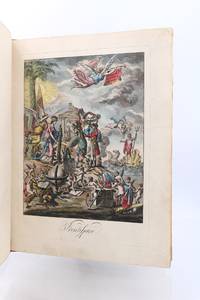
180090165n. l.: s. n. 1800. Fine. s. n. n. l. s. d. 1800 20.5 x 27 cm Relié Rare collection of 16 hand-coloured engravings comprising a frontispiece and 15 plates illustrating the virtues of soldiers and young men during the Consulate period.Contemporary half bronze calf binding smooth spine decorated with gilt fillets dotted tools and floral ornaments minor rubbing to the spine brown morocco title label boards endpapers and pastedowns of marbled paper ex-libris pasted on the front pastedown.An attractive copy. s. n. hardcover
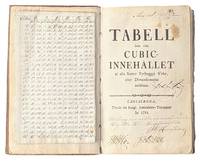
17832190Anonymous. Tabell som visar cubic-innehallet af alla sorter fyrhuggit virke ester dimensionerne utraknat. Carlscrona Amiralitets-Tryckeriet 1784. 181 1 2 blank pages mostly tables. bound with: Anonymous. Kongel. Svenska maetare och wraekare ordningen af ar 1776. Carlscrona Amiralitets-Tryckeriet 1783. 43 1 pages 3 1 folded leaf 4 tables 3 folded engraved plates. Cont. calf gilt label to spine. Label with minor loss. Covers browned. Spine rubbed. Front cover with manuscript inked signature by one Aug. d'Ailly. <br /><br /><br />Both works first edition. Title with manuscript initials J. H. D'A a working copy owned by the Swedish ship-building engineer Jakob Henrik d'Ailly 1789-1858 and a further manuscript inked ownership entry by his son Aug. D'Ailly Johan Christian August d'Ailly 1822-1877 who constructed steamships for the Swedish navy. In 1862 he was sent to North America to learn more about constructional features of ironclads with John Ericson. Back home he constructed monitors gunboats and others. Front fly-leaf with manuscript tables on recto and verso. A contemporary manuscript comprising 23 pages with further tables loosely laid in. The first work consists of exacting timber calculations specific to shipbuilding. The second work provides detailed instructions for shipbuilding with sections on the keel the prow masts crooked logs how to bend timber making beams and knees for a galleon straight timber and anchor logs. The plates depict how to cut and bend timber. OCLC and KVK each with only one copy for both titles: National Library Sweden and UB Greifswald. Second work with a few brown spots here and there. Amiralitets-Tryckeriet
1780753R32Not Stated: None c1780. Leather. Near Fine. 13" by 8.5". None. A stunning hand-written piece containing arithmetic written in calligraphy styled to the period. Painstakingly handwritten in calligraphy. This volume's contents include numeration addition subtraction multiplication division reduction measures decimals and fractions as well as exchange rates with France Spain Portugal Italy Holland Flanders Germany and Ireland.Contains a title page with the name Thomas Hale written decoratively.Undated dated by calligraphic style as well as by dating currency used.In a beautiful reverse calf binding with a gilt label to the front cover. In a full reverse calf binding. Externally lovely some minor chipping to the head and tail of the spine. Internally firmly bound pages generally bright and clean with just the odd spot. Near Fine None hardcover
1781291930London: MacGowan 1781. hardcover. very good. 2 Volumes. 33 engraved maps & plans 3 folding & 28 engraved plates. Thick 4to unpaginated text in double columns. Full contemporary calf. Heraldic bookplate in each volume. London: MacGowan 1781. Scarce. Well-worn and joints cracked but attractive and overall very good.<br/> <br/> The work contains numerous entries for North American battles of the Seven Years' War American Revolutionary War &c. including Annapolis Royal Beauséjour Brandy-Wine Lake Champlain Charlestown Fort Frontenac Louisbourg Fort Necessity Fort Niagara Penobscot Fort Pitt Quebec Saratoga Ticonderoga New York &c. Appended are an essay on fortification.<br/> <br/> MacGowan unknown
17803719n.d. n.p. n.d mid-late 18th century 1780. An album of hand-drawn maps with handwritten notes in an attractive italic. 230x180mm. Unpaginated 137 pages of maps 84 maps and text: pp. 89 24bl 48 including 4 blank pages 14bl. The maps are beautifully drawn in pen and ink with borders in coloured ink and watercolour. Tan half calf rebacked and corners repaired eighteenth-century marbled paper covered boards. Raised bands burgundy morocco label lettered in gilt "Maps J:R". Some scuffing and staining to the boards. A repaired tear to the first page of text but otherwise in very good condition throughout. The author is unidentified and possibly unidentifiable but the main section on England is based on Thomas Badeslade's Chorographia Britannia of 1741 originally intended as a pocket atlas for George I. The maps are: forty county maps of England one map of England showing all the counties and one showing the main coastal areas two maps showing North and South Wales seventeen European maps in which Scotland interestingly is included and three maps of places in Asia. The first eighty-nine pages are devoted to England. There is a map of each county and on the facing page information about the county in varying degrees of detail. In almost all cases the major towns and cities and the number of MPs sent to Parliament are listed but for some counties geographic architectural and historic features are included. Oxfordshire and Cambridgeshire have a list of the University colleges and their date of foundation. The section on Europe shows the regions of the major nations and lists the major rivers mountains and volcanoes. There is a map showing the whole of Asia much of which is described as Tartary while Asiatic Turkey and Indostan are given separate more detailed maps. This is a highly attractive book lovingly created. n.d. n.p. n.d [mid-late 18th century] hardcover
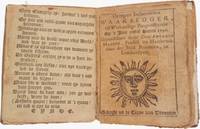
17492101<p>1 No name. Kort en Bondig Kronykje beginnende met de geboorte ons heeren Jesu Christi tot op deeze tijd.</p><p>Illustrated with a woodcut vignette on the title-page and a woodcut tailpiece after the first part.</p><p>2 No name. Ordre der rydende posten wegens 't post-comptoir binnen Zutphen: als mede 't reysen der boden 't varen der schepen wagens en karren. </p><p>3 No name. De vaarsen van Dionisius Cato. Om manierlyk te leven.</p><p>Illustrated with a woodcut vignette on the title-page.</p><p>4 Giovanni Antonio Magini. Opregten Italiaanschen waarsegger of wiskundige prognosticatie op 't jaar onses heeren 1750. Gepractiseert door Don Antonio Magino profess. en matthematicus der stad Bononien in Lombardyen.</p><p>Illustrated with a woodcut sun with a face on the title-page and a little woodcut moon at the beginning of each month.</p><p>5 No name. Koddige opschriften kakhuys opschrift.</p><p>2 pp.</p><p>6 No name. No title.</p><p>12 pp.</p><p>Unique almanac printed in Zutphen no other copy is recorded in a library auction results or dealer catalogues. Bound in full leather with the arms of Zutphen and Holland blind stamped on it. The work consists of 6 parts: 1 A historic chronology from the year 1 up to the year 1749 the date of publication divided in two parts: the first part ends at the year 1700 the second part deals with the years 1701-1749. 2 An overview of the post schedule for Zutphen to nearby places and international. 3 New edition of the first part of Salomon van Rusting's Dutch translation of Dionysius Cato's Disticha Catonis first published in 1658 and last recorded edition in 1712. 4 Astronomical forecast for the year 1750 after the edition from Bologna "Gedrukt na de copye van Bononien" based on the method of the famed astronomer Giovanni Antonio Magini 1555-1617. His method was widely used for Dutch almanacs in the 16th 17th and 18th centuries known as the "Italiaensche waersegger". 5 A short bawdy piece supposedly written on a public toilet. 6 An unidentified work of which the start is missing and the last few pages are damaged. A charming and unique almanac in similarly special binding.</p><p>Condition: Last page damaged with loss of text and the two pages before that slight frayed with minor loss of text. Book block detached and some quires loose. A few tiny holes in the spine of the binding new paste-downs. The leather binding smells. Otherwise in good condition.Literature: not in STCN NCC KVK WorldCat USTCN; for the publisher/printer see: CERL Thesaurus cni00017912.</p> Johannes Henricus Louw
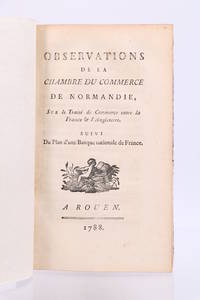
178889862Rouen: s. n. 1788. Fine. s. n. Rouen 1788 12.5 x 20 cm Broché Second enlarged edition of these rather protectionist ideas which prompted Dupont de Nemours to write a refutation Lettre à la Chambre de commerce de Normandie. Our copy is preserved in its original wrappers now covered with modern marbled paper red edges. The second part is entitled Plan d'une banque nationale de France ou d'une caisse générale de recettes & paiements des deniers publics & particuliers and bears the Jersey imprint 1787. Frère I 210 for the first edition of 1787. The first edition appeared in 1787 and consisted of only a 75-page pamphlet. The Commercial Treaty of September 1786 sometimes referred to as the EdenRayneval Treaty after its signatories was intended to settle all outstanding trade disputes between France and England following the American War of Independence. The treaty came into effect on March 10 1787 and comprised forty-seven articles. Its main provisions stipulated that for imports into England duties on wine brandy and oils would be reduced while luxury goods mirrors and articles de Paris would henceforth be subject to a duty of only 12%. In return import duties in France on woollen and cotton fabrics as well as on earthenware and pottery were likewise reduced to 12%; the same applied to iron and hardware. Conversely silk and mixed-silk fabrics remained prohibited in England while none of the major English manufactured goods were banned in France. The treaty proved highly advantageous to England: the lowering of protection on certain French industries soon worked in its favour. It disrupted Frances fragile but relatively balanced economy resulting in a flood of cheaperand often better-madeEnglish products on the French market and a general fall in prices. As early as 1787 and increasingly in 1788 and 1789 this influx led to the unemployment of thousands of workers and the impoverishment and bankruptcy of countless artisans reduced to a state of destitution prompting protests from the very moment of its signing. s. n. unknown
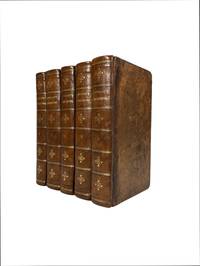
17902576London: Printed for G.G. J. and J. Robinson and J. Bew Paternoster-Row 1790. Second Edition. Tree calf. Very good. Five volumes : twelvemo : pp 4 318 2 blank; viii 442; 2 380 2 blank; 4 397 398 6 Key to the Abbreviations; 2 blank iv 418 6 Table 2 blank :uniformly bound in contemproary tree calf : recently rebacked with gilt lettering and roman numerals double lines separating the panels and decorative stamps : bookplate of Frederick William Cosens in each. Corners rounded; occasional foxmark. Rousseau's Confessions first appeared in English translation in 1783. Lowndes vol 3 p 2134 Bookplate: Frederick William Cosens 1819-89 was a book and art collector and port wine importer. His library was sold by Sotheby's in 1890 with several volumes bought by the British Library. Printed for G.G. J. and J. Robinson and J. Bew, Paternoster-Row unknown
171661091London Printed for J. Baker and T. Warner 1716. 8vo. In a contemporary Cambridge-style mirror binding with five raised bands. Small paper-label pasted on to top of spine. Light wear and miscolouring to extremities corner bumped. A few corrections and cross-outs in text. Small worm-tract to lower outer corner of last 20 ff. 16 206 pp. Pp. 50-63 misnumbered. <br/><br/><em>The rare first edition of this anonymously published political and religious treatise that addresses the dangers posed by the ongoing rebellion against the British monarchy during a period of political and religious turmoil following the Jacobite rising of 1715. “The following Discourse was occafion'd by a Sermon preach'd Nov. 15. 1715. It was some time before I refolved upon the Publication of it and then thought fit to add in proper Places the Substance of several other Sermons which related to the same Subject; which with other Thoughts occurring swell'd the Book to a much larger Bulk than I at first intended. The main Design is partly to demonstrate the Unreasonableness Impiety and Wickedness of those who rife up in Rebellion against our only Rightful Sovereign King George endeavour to dethrone him and set up a Popish Pretender to his Crown†From the preface to the present work. The Jacobite rising of 1715 was the attempt by James Edward Stuart or the Old Pretender to regain the thrones of England Ireland and Scotland for the exiled Stuarts. The English Jacobites allied with Scottish Jacobites under the command of William Gordon they marched into England where they encountered Government forces at the Battle of Preston on November 12–14. Initially the Jacobites gained the upper hand however the arrival of Government reinforcements the following day turned the luck which lead to the eventual surrender of the Jacobite forces.This main sermon/discourse of this present work was written on November 15th that is immediately after the fall of the Jacobites. Probably due to the instability and relatively insecure future the author has wished to remain anonymous. The document is structured to provide an analysis of the causes and consequences of the rebellion underlining the author's position that the monarchy and the Church of England must be upheld to maintain social order and stability. The book criticizes the growing influence of dissenting religious groups particularly those associated with Calvinistic beliefs arguing that their rebellion against the established order was both treasonous and destabilizing. Terry: A BIBLIOGRAPHY of Jacobite History 1689-1788 P. 288. </em> hardcover