[ANONYMOUS]Biblio.com
1 635 résultats
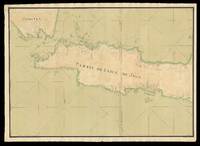
173317524Probably Paris: Dépôt des cartes et plans de la Marine c1733-1739. 530 by 1500mm. 20.75 by 59 inches overall. Manuscript chart pen and black ink and colour wash on two separate sheets of paper watermarked with Strasburg Lily within a shield initials "VDL" beneath and countermark "IV" closest to Churchill 405 dated to 1733 from the mill of Pieter van der Ley son of Gerrit Pieters van der Ley who worked De Wever - the Weaver - and De Bonsem - the Polecat - mills at Koog aan de Zaan Holland from 1674 onwards. The conquest of Jakarta by the Dutch who immediately renamed the port Batavia in 1619 gave the VOC its Asian headquarters from which it commanded a vast trading empire eventually extending from southern Africa to Japan that lasted for nearly two hundred years. By the end of the 1730s the British and French had begun to flex their seafaring muscles in the area and were publishing their own maps. This large-scale and detailed French chart of Java is clear evidence of a hostile interest that is directed at the very the heart of the Dutch empire. It is very similar to Francois Valentyn's large chart 'Nieuwe en zeer naaukeurige kaart van t Eyland Java Major of Groot Java' published in his 'Oud en Nieuw Oost-Indien vervattende een Naaukeurige en Uitvoerige Verhandelinge van Nederlands Mogentheyd in die Gewesten' 1724-1726 based on his own research correspondence and from previously unpublished material secured from the VOC officials. Some of this information must also have been available to the Chatelain family who published their 'Carte de l'Ile de Java: Partie Occidentale Partie Orientale.' 1719 which included details of inland topography not found on this manuscript chart nor on Valentyn's. The Chatelain map is avowedly based on Hadriaan Reland's work which was not published by the Dutch until Johannes van Keulen issued it as 'Insulae Iavae pars Occidentalis edente Hadriano Relando' in 1728. Interestingly this manuscript chart includes soundings that are not expressed on the Chatelains' chart implying some more recent knowledge of the coastline. However it does not reflect VOC knowledge of the southern coastline of Java dating from 1739 when Paulus Paulsz. in the sloop de Valk went on a surveying expedition there. His report and much more detailed chart which "remained the best sea chart of this area until the end of the VOC rule" Schilder page 173 survive. In 1513 Francisco Rodrigues sailed with the "Portuguese expedition from Malacca to find the unknown source of the rich trade in nutmeg mace and other spices. They sailed along the north coast of Java a trip from which Rodrigues prepared the first European map of Java's basic outline only of the north coast from direct observation. The Dutch who followed the Portuguese also ignored the interior in their mapping. In 1619 when the VOC established Batavia present-day Jakarta as a trading entrepot the south coast remained relatively unknown: it did not lie on the route to the valuable Molucca Spice Islands. The interior lands away from Batavia were ignored as long as the Javanese kingdoms remained quiescent; the VOC was intent only on ensuring a profitable return for its investors. Pursuit of these immediate economic goals restricted the exploration and associated topographic cartography of Java for nearly a century. A trivial cartographic misunderstanding reveals much about the stagnant state of mapping in Java at that time. The VOC sent Cornelius Coops by ship in 1698 to update the charts of the south coast; until this time charting was largely restricted to the northern coast where the Dutch ports and trading centres were located. Several schematic manuscript maps of the whole island appeared in Isaak de Graaf's 'Atlas Amsterdam' compiled by the VOC at the end of the seventeenth century but not published until the 1980s chiefly showing unnamed rivers and several VOC strongholds in the island's interior. At the beginning of the eighteenth century further mapping of the interior was conducted in a spasmodic and uncoordinated manner. The maps mostly by anonymous cartographers are in manuscript form and are held by the Netherlands National Archives The Hague. They were prepared internally by the VOC as administrative planning and strategic documents for circulation and use by VOC officials. VOC maps were closely guarded trade secrets; however commercial maps of the whole of Java and the neighbouring island of Madura were becoming readily available in Europe by the second decade of the eighteenth century" Simpson. This anonymous manuscript chart was probably prepared by the Dépôt de la Marine known more formally as the Dépôt des cartes et plans de la Marine the central charting institution of France. The centralization of hydrography in France began in earnest when Jean-Baptiste Colbert became First Minister of France in 1661. Under his watch the first Royal School of Hydrography began operating as did the first survey of France's coasts 1670-1689. The Dépôt itself began as the central deposit of charts for the French Navy. In 1720 the Navy consolidated its collection with those government materials covering the colonies creating a single large repository of navigation. By 1737 the Dépôt was creating its own original charts and from 1750 they participated in scientific expeditions to determine the accurate calculation of longitude. In 1773 the Dépôt received a monopoly over the composition production and distribution of navigational materials solidifying their place as the main producer of geographic knowledge in France. Dépôt-approved charts were distributed to official warehouses in port cities and sold by authorized merchants. The charts were of the highest quality as many of France's premier mapmakers worked at the Dépôt in the eighteenth century including Philippe Bauche Jacques-Nicolas Bellin Rigobert Bonne Jean Nicolas Buache and Charles-François Beautemps-Beaupré. The Dépôt continued to operate until 1886 when it became the Naval Hydrographic Service. In 1971 it changed names again this time to the Naval and Oceanographic Service SHOM. Although its name has changed its purpose is largely the same to provide high quality cartographic and scientific information to the France's Navy and merchant marine. Simpson 'Java Emerging Unfolding Cartographic Views' The National Library Magazine December 2010. Dépôt des cartes et plans de la Marine,
180018412c1800. 470mm in diameter. Instruments""Planispherum Lunare A unique manuscript lunar astrolabe Ink and polychromy on paper over pine. The instrument comprises a circular base plate and three rotatable cardboard volvelles and a brass radius pointer attached to each other in the centre. A brass ring is attached to the base plate for suspending. All four paper covered discs are finely inscribed in manuscript with various scales and symbols. Content 1. The smallest volvelle bears a scale covering 12 hours on its outer ring. It also shows the ecliptical motion of the Sun the Moon's orbit the line of nodes and the arguments of latitude in other words the distances from the nodes. 2. On the second volvelle a scale covers the years from 1801 to 1825. each year is subdivided in twelve months with the abbreviated name written for each month. 3. The following volvelle carries a series of scales showing a monthly calendar a zodiac calendar with skilfully drawn pictures and the symbols of the signs. Below the zodiac is a scale for the declination of the sun throughout the year set in four sequences of three. 4. On the outside rim of the volvelle is another calendar scale in which the months are unevenly distributed. This scale presumably was to be used in conjunction with the outer scale on the circular base plate. In addition the volvelle holds two brass studs that most probably helped the user turn the disc to the desired position. This latter scale gives the days subdivided in hours. The days are numbered I to XXXI with the number I coinciding with XXVII and 8 hours the sidereal period of the Moon which results in a double numbering from XXVIII to XXXI. Below this scale for days there is a series of dates all confined to the period 1801 to 1825 presumably for solar eclipses. The brass rule or pointer holds a horizontal scale from 5 to 0 LA-southern declination and from 0 to 5 LB-northern declination indicating the latitude of the moon with respect to the ecliptic. The closer to 0 at new moon or full moon the likelier an eclipse is to occur. The rule is engraved with """"Locus Lunae"""". The circular scales serve to set the moon's position and node relative to the sun from which the user can then infer the lunar phase and whether an eclipse will occur at new moon or full moon. Manuscript instruments of this type are rare especially in such good condition as no other exact copy is recorded to date. Similar instruments were produced at the end of the sixteenth century mostly in brass. Sir Robert Dudley 1573-1649 see item 17 had a lunar calculator made by Charles Whitwell c. 1568-1611 a brass disc of 72 cm diameter overall which was the most complex instrument made during the sixteenth century. Inscribed 'Sir Robert Dudley was the inventor of this instrument' its purpose was to calculate the place of the moon over a period of thirty years. It is now in the Museo di Storia della Scienza in Florence Italy. Another similar paper device was printed with detailed instructions in 1786 in Vlissingen Flushing in the Netherlands advertised as a """"Starkundige Maan-Wyzer en Almanach"""" Astronomical Moon Pointer and Almanac by Henricus Schortinghuis. Oxford Dictionary of National Biography; Webster Roderick and Marjorie 'Western Astrolabes' Adler Planetarium & Astronomy Museum 1998; Museo di Storia della Scienza Florence Italy unknown
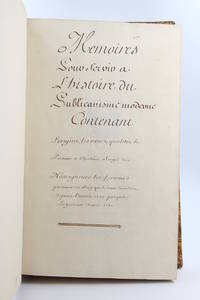
175078168s. l. 1750. Fine. s. l. 1750 23 x 38 cm 2 manuscrits reliés en un volume Manuscript entitled Mémoires pour servir à l'histoire du publicanisme moderne contenant l'origine les noms qualités le portrait et l'histoire abrégée de nosseigneurs les fermiers généraux du Roy qui se sont succédés depuis l'année 1720 jusqu'à la présente année 1750 with Mémoires pour servir à l'histoire du publicanisme ou l'Origine des receveurs généraux des finances du royaume 1750 folio 23 x 38 cm 330 pp 4 p. bl. 8 p. 4 p. bl. 83 pp. contemporary full calf Important and long manuscript composed of two parts written by two different hands retracing in total 160 biographies of the Fermiers Généraux active between 1720 and 1750 lavish and unpopular collectors of indirect taxes in the Ancien Régime. Each of the parts also contains a very useful index. The entries with the exception of 19 of them are all decorated with a coat of arms drawn in pencil painted by hand in colour and sometimes enhanced with gold or silver. Some modern notes some juicy in pencil in the margin of certain leaves. These memoirs have never been the object of a publication and we know of only a few handwritten copies with varying texts. The other examples that we have been able to find including the one digitised by the French National Library contain fewer biographies that ours and are not illustrated. Contemporary binding in full blond marbled calf title pieces in black and red morocco. Joints top of the first board and spine head repaired joints of the first board split but solid scratches on the boards corners damaged. A very beautiful manuscript richly painted retracing the history of the most despised institution of the Ancien Régime. Provenance: library of Count Chandon de Briailles descendent of the founders of the famous house of Champagne then of the Michel de Bry library with its motto Pro captu lectoris with their ex-libris glued to the first endpapers. hardcover
175078168s. l. 1750 | 23 x 38 cm | 2 manuscrits reliés en un volume
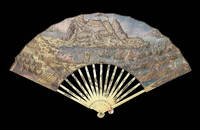
17802221Spain c1780. Folding paper fan with a fine large hand-coloured engraved view of the Siege of Gibraltar with Spanish ships and troops in the foreground the verso with engraved key in Spanish decorated with weapons of war on either side mounted on ivory sticks the ivory sticks decorated in silver and gilt with a fort ship and flag the gaurdsticks carved and pierced and with silver and gilt depicting a ship and drums. The unsuccessful siege of Gibraltar began in 1779 and lasted until February 1783 when the siege was lifted. This fan which it has been suggested belonged to the Earl of Minto is not in the Schreiber Collection. unknown
171086508Edinburgh: Various. Very Good; Compilation Bound Together of 12 Books/Pamphlets Etc From . Early 1700's About Religious Persecution in Eng. & Scotland. 1710-1717. Leather. PROFESSIONALLY REBOUND IN FINE LEATHER WITH RAISED BANDS GILT LETTERING AND NEW MARBLED BOARDS AND ENDPAPERS. GORGEOUS!! VERY VERY SCARCE!! The title continues: "More particularly her approving of and going into the legal establishment of the Prelatic constitutions of England. The generality of ministers swearing in the Oath of Abjuration to maintain Erastianism Prelacy and English Popish Ceremonies. Non-Jurants joining with Jurants judicially approving that practice to be free of scandal. The Church's establishing tyranny in government against all who will not join in communion with her and approve her practices without redress of grievances. Wherein these and several other causes of withdrawing are proven to be justly chargeable on the Church demonstrated to be contrary to the Word of God and Reformed principles of this Church and just grounds of withdrawing and setting up judicatures distinct from her; and the objections of Jurants and others fully answered."This is a classic detailed statement of the old covenanted principles and the biblical attainments of the second Reformation like the Solemn League and Covenantthe Westminster standards etc. It is also an excellent defense against the modern malignants who counsel Christ's children to remain in the backsliding and covenant breaking denominations that abound in our day. This constitutes 264 pages. The next largest ones bound in this book is: SHIELDS ALEXANDER. A true and faithful relation of the sufferings of the Reverend and learned Mr. Alexander Shields minister of the Gospel.; 772 pages . Various hardcover
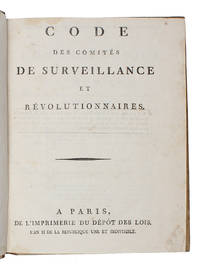
179360748Paris Impremerie du depot des lois An II 1793. 4to. In contemporary half calf with gilt lettering and ornamentation to spine. Wear to extremities. Upper part of back hinge split with minor loss of letters. Small dampstain to upper inner margin otherwise a nice copy. 2 VII 2-116 100 8 pp. <br/><br/><em>Exceedingly rare first edition of this highly interesting document being the Code of the Committees of Surveillance containing 106 regulations and guidelines for the functioning of these committees during the French Revolution. The Committees of Surveillance were established during the Reign of Terror September 5 1793 - July 27 1794 as part of the revolutionary government's efforts to identify and suppress counter-revolutionary activities. These committees were tasked with monitoring individuals' behavior enforcing revolutionary laws and ensuring loyalty to the revolutionary government. The document outlines the powers duties and procedures of these committees as well as the penalties for those found to be opposing the revolution providing a unique and fascinating insight into the legal and administrative framework of revolutionary France – arguable one of the most profound and radical moments in modern European history. The Committee of Surveillance in France during 1793 was established as a part of the radical phase of the French Revolution. Its function was to oversee and monitor the activities of suspected counter-revolutionaries and enemies of the Revolution as well as to enforce laws related to internal security and revolutionary principles. The committee was tasked with identifying individuals or groups deemed to be a threat to the revolutionary government often leading to arrests interrogations and in some cases executions by the Revolutionary Tribunal. It played a significant role in the Reign of Terror a period marked by extreme political violence and repression in France. The present work is of the utmost scarcity. We have not been able to trace a single copy at auction and OCLC only lists one copy in Paris. Nadaillac Catalogue d’une Collection Importante Sur la Revolution Francaise 724 </em> unknown
179360748Paris, Impremerie du depot des lois, An II (1793). 4to. In contemporary half calf with gilt lettering and ornamentation to spine. Wear to extremities. Upper part of back hinge split, with minor loss of letters. Small dampstain to upper inner margin, otherwise a nice copy. (2), VII, (2)-116, 100, 8 pp.
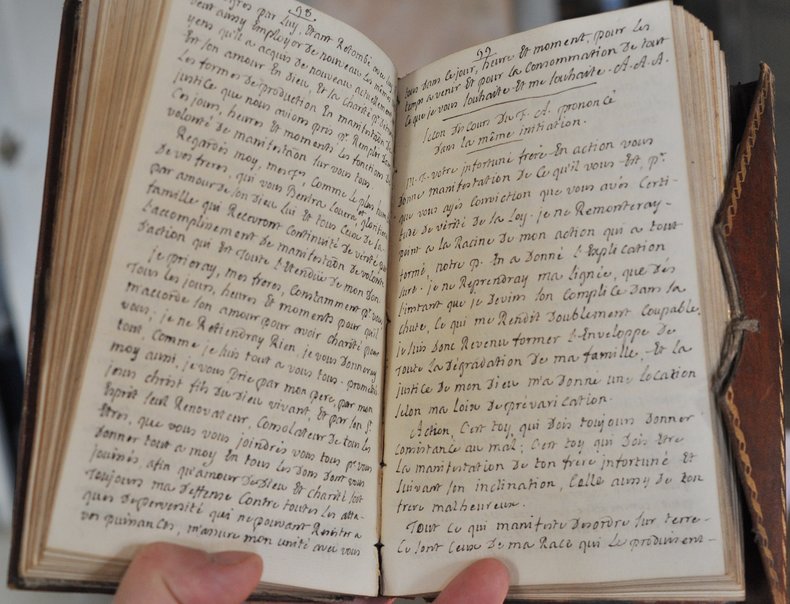
180046405264, vers 1800 ; in-12, relié dans un portefeuille en basane brune, plats et rabat encadrés d’un motif géométrique doré, dos orné du même motif, tranches dorées. 194 pp.Lettre écrite par Mr. A... à Grenoble, adressée à M. F. 2 pp. «... Heureux si le métal a assez de pureté pour en soutenir l'épreuve, mais quel est le métal qui peut souffrir une extension la plus soutenue, la plus égale et la plus facile. Distinguez dans les sept métaux celui qui a le plus de facultés (…) je puis vous assurer, M. F. que l'affinité que vous avez avec celui que je touche, ne me fasse désirer d'avoir le même avantage que vous mais quel qu'obstacle qu'il se trouve rien ne peut résister à nos désirs mutuels. Rappelez-vous toujours que trois désirs sont trois feux. Et que si ces trois feux ne forment une fois par leur contact qu'un seul faisceau ils ne peuvent que produire une grande clarté puisque le soleil est l'unité des trois et qu'il n'est trois que parce que celui qui l'a produit est trois (...)»p. 2 à p. 6: explications de citations des psaumes de David.p. 6 à 9: explication d'un passage du Talmud (avec un fragment du texte en grec)p. 9 à 17: Lettre écrite à Grenoble par M. F. au … «L'état dans lequel vous me faites connoitre où vous êtes est certainement bien critique, car en l'état de l'homme éclairé, d'avec celui qui ne voit point, la lumière est le guide de l'un et les ténèbres sont le partage de l'autre (…) si vous avez des obstacles levés, vous verrez la vérité et la vérité vous verrez. Alors toutes les misères n'existeront autour de vous que pour vous prouver qu'elles ne sont que poussière, et que vous n'avez que vous soyez vérité, et alors vous verrez le chemin qui vous conduit à la porte étroite et celui qu'il lui même fait de lui à vous. Entendez M. F. et comprenez, vous avez deux loix à suivre comme Dieu les a tracées en vous (…)»p. 17-21. Relation. C'est le récit d'un rituel auquel a assisté le narrateur, impliquant des bougies, des caractères tracés au sol, une grande croix en or, des lectures de S. Jean, etc. Au cours cette cérémonie une apparition est entrée dans la pièce avec qui l'officiant a pu discuter pendant plusieurs minutes.p. 21-25 . 2e histoire. Autre séance avec les mêmes. Le narrateur donne d'autres détails sur le rituel, la disposition des objets, etc. Avec cette fois l'apparition de deux esprits.p. 25-27. Texte non titré sur l'histoire des sociétés occultes et la franc-maçonnerie.p. 27-34. extrait du Schasta d'après la traduction littérale faite par Monsieur le ch. de St. Lubin. C'est la description des 6 livres qui composent ce texte sacré de l'Inde: récit de la Genèse, création des trois incarnations de Dieu et des anges, révolte d'une partie des anges, intervention des bons anges et création de la terre, expiation des anges, mission de Brama, doctrine des Brames, connaissance du sanskrit, la pierre salagrame, etc. Suivi de remarques sur les coutumes des Indiens, castes, culte de l'Indus et du Gange, religieux errants...Le chevalier de Saint Lubin était un aventurier et trafiquant qui a séjourné dans le Sud de l'Inde en 1778-79. Il s'était emparé du commandement du vaisseau de commerce français Le Sartine en se faisant passer pour un agent du roi, afin de se livrer au trafic d'armes. Il fut embastillé à son retour en 1780 après une vie d'aventurier en Inde dans un contexte de conflit franco-anglais. Ses traductions de textes sanskrits n'ont jamais paru.p. 35-55. Lettre écrite par Mr A. «M. T. C. F. & F. en Ch.» Il s'agit de recommandations d'un maître à ses disciples suivi d'une exégèse de l'évangile de Jean, en particulier sur la signification des nombres (les 3 femmes, 22000 boeufs, 153 poissons, 66 qui est le nombre de la bête dans l'Apocalypse, etc.), les 7 planètes, les 7 branches du chandelier, la trinité... Calcul pour prouver que nombre 9 n'est rien, le cercle d'expiation ou de purification. Considérations sur les évangélistes. Émanation de l'homme, prévarications. Rôle des sens, la nature de l'homme...p. 55-95. Lettre à un F. C'est la poursuite des considérations développées dans la lettre précédente. Sur la correspondance entre les organes du corps humain, les scènes de la vie du Christ, des passages de l'Ancien testament, les nombres, l'architecture des temples et des églises et les principes d'action, de pensée, de volonté, etc.p. 95-99. Discours du F. A. prononcé dans une assemblée d'inauguration. p. 99-105. Second discours du F. A. prononcé dans la même initiation.p. 105-119. Copie d'une lettre d'un chercheur avancé à un homme qui annonce quelques désirs. Considérations sur la nature de l'homme, de Dieu, selon Mercure Trismegiste. Sur les différences entre hommes et femmes, l'amour, le mariage, etc. « … la distinction que je vous présente éloigne toute espèce d'idée de convention humaine pour établir la supériorité de l'homme sur la femmes; ces deux êtres n'en font qu'un, ainsi ne cherchons point de différence dans leur nature... Regardons comme une méprise essentielle toute idée qui porteroit à croire la femme d'une nature différente de celle de l'homme...»p. 119-121. Principes de la morale des Juifs. La sagesse des Juifs est énoncée en 14 principes.p. 121-124. Copie d'une lettre de Mr. de St. M. [de Saint-Martin?] - p. 124-126. Fragment d'une autre lettre du même.La fin du volume est constituée de courtes observations, de notes de lecture de la bible, de travail sur les nombres, le calendrier, etc. La dernière porte une écriture d'une autre main qui a noté: «Couleur rouge et blanche – l'écriture regarde la première comme le symbole du péché et la seconde comme celui de la pureté – Sur les prières sacramentelles. Le concile de Rome tenu sous le pape Zacharie dans le VIIIe siècle, condamna les hérétiques Albert & Clément. On y lut une prière employée par eux, dans laquelle se trouvait ces paroles Supplico vos Angelos Uriel, Raguel, Tubuel, Michael, Adimis, Eubuas, Sabaoth, Simiel. Cette prière fut condamnée par le concile tamquam Magica, erroris & Superstitionis plena.»La pointe du rabat a été découpée, peut-être pour faire disparaître une marque de provenance.
1703652981 vol. in-4 (279 x 211 mm. en marges) reliure de l'époque plein veau blond, dos à 5 nerfs orné d'un semis de lys et de flammes, dentelle dorée d'encadrement en plats, fers fleuronnés à la Colombe du Saint Esprit en écoinçons, armes royales de Louis XIV au centre des plats, coupes et chasses ornées, toutes tranches dorées, De l'Imprimerie Royale, [Par les soins d'Anisson, directeur de l'Imprimerie Royale, à Paris ], 1703, 1 f. blanc, 2 ff., 212 pp., 3 ff. n. ch., 2 ff. blancs
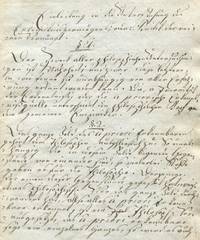
1790846<p>n/a: n/a 1790. First Edition. Cardboard covers. Very good. Early Manuscript Defense of the Critique of Pure Reason <br /><br />Original one-of-a-kind handwritten manuscript defense of Kants Epistemology. 196-page manuscript in clear German cursive with some deletions and corrections ink on clean paper. 1790 Quarto. <br /><br />An extensive presentation and defense of Kant's theory of knowledge probably written as the basis for a lecture or series of lectures. There are five main sections: <br /><br />Einleitung 34 paragraphs <br />Theorie des Vorstellungsvermögens überhaupt 30 paragraphs <br />Theorie der Sinnlichkeit 35 paragraphs <br />Theorie des Verstandes 64 paragraphs <br />Kritik der bisherigen Methaphisick 21 paragraphs <br /><br />Many of the paragraphs contain numbered Anmerkungen" further reflections. In these the author shows himself to be a stout defender of Kant's controversial new theories: "Vor Kant ist es keinem eingefallen die Gemüthsvermögen zu untersuchen die Erkenntniße aus dem Erkennbaren zu schöpfen und die Philosophie nicht von den so genannten Objeckten zu erbetteln. Man begehet keine tolle Freiheit wenn man behauptet daß es vor Kant wohl resonierende Köpfe und philosophische Versuche aber eigentlich keine Philosophie und Philosophen gegeben habe. <br /><br />The identity of the author remains unknown. Interestingly the final sentence announces a sequel: "Näher darüber in unseren zukünftigen moralischen Untersuchungen wo wir für das Ens Entium einen begreiflicheren Gott wieder finden werden. <br /><br />CONDITION: Very good or better in contemporary plain boards with minimal spotting edges untrimmed. <br /><br /><br />PHOTOS AVAILABLE UPON REQUEST</p> n/a
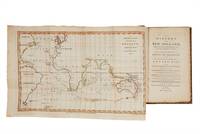
17875001050London: John Stockdale 1787. Octavo with two folding maps hand coloured in outline; a very good copy edges uncut in contemporary calf gilt spine neatly repaired. <p><p>An important book and a sometimes neglected precursor to the Australian First Fleet: this was one of the earliest descriptions of Australia published to coincide with the departure from England of the First Fleet. "It is an extremely interesting work and an essential inclusion in all comprehensive collections" Davidson. In discussing the fleet's imminent departure the anonymous compiler lists numbers and equipment as well as the principal officers and there is also material in both preface and text about transportation as well as an "Introductory Discourse" on the subject by William Eden which has often led to the misattribution of the whole book to him.</p> <p>This is an example of the important second edition published the same year as the first and after parliamentary approval of the Botany Bay plans and with a very significant new section: an additional ten prefatory pages appear for the first time in this edition discussing in detail the hopes for the new settlement. The anonymous writer reports that many of the convicts awaiting transportation have embraced the idea with excitement: "strange to tell! there have not been wanting voluntary candidates for banishment to that remote shore.".</p> <p>The "Eden" as it is often called was written "to present at one view a connected description of the whole country of New Holland". The book is clearly aimed at a public eager for information on the new colonial venture and for details of Botany Bay itself which is here described at length. This is the form in which many of the participants in the First Fleet must have absorbed what little information existed about conditions in Australia. The maps show the continent Botany Bay and most interestingly the "passage from England to Botany Bay in New Holland 1787" highlighting the route that the fleet must take.</p> <p>The book is of some importance too for its Cook material: as Cook's bibliographer Holmes points out "the greater part of the book is devoted to Cook's discoveries.". His charting of the east coast of Australia is here put into context in a form anticipating the actual settlement of the new coastline.</p> </p> . John Stockdale unknown
175090724n. l.: s. n. 1750. Fine. s. n. n. l. s. d. 1750 20.5 x 31 cm Relié Eighteenth-century manuscript second half comprising 258 foliated pages. Contemporary binding expertly restored in full tan calf with a smooth spine adorned with gilt compartments and decorative gilt tooling some now faded; signs of rubbing; title label missing; gilt rampant lion at the centre of both boards; handmade paper endpapers and pastedowns; gilt double fillets on board edges; corners slightly worn. Notable manuscript featuring extracts and summaries of orders and dispatches issued by the Ministry of the Navy during the Regency and the first year of Louis XVs reign. Collated from original documents carefully dated and with folio references these extracts are written in a highly legible hand. Topics covered include: general armament; the War of the Quadruple Alliance 1718 1719 1720; Barbary States; Guinea Coast; colonies; trade Spain Portugal Guinea Compagnie dAfrique Compagnie des Indes; justice police and discipline; munitions; goods and timber; fishing; ports and roadsteads; prizes and more. The manuscript is in excellent condition preserved in its original binding. Contemporary pencil note on the front endpaper: ""Aux armes du Maréchal Duc de Duras de lAcadémie française"" 17151789. s. n. hardcover
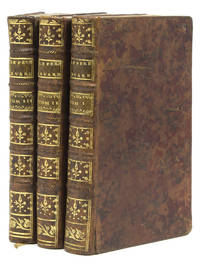
1770307572Paris: Desventes de Ladoué 1770. First edition. xvi 359 iii; 334; 360pp. 3 vols. 12mo. Bound in full contemporary mottled calf. With the bookplate of the Vicomte de Noailles engraved by Agry in each volume. Upper joint of vol. III with short start at foot otherwise a fine and fresh copy. First edition. xvi 359 iii; 334; 360pp. 3 vols. 12mo. A satirical response to Rousseau's Emile ou l'Education 1762. Where Émile is guided by a wise tutor the author of Le Père avare mocks from the outset Rousseau's dictum "le véritable précepteur est le père" for the narrator's father M. d'Erigny grew up poor and gained wealth through his friendship with a government minister; his child has been spoiled from infancy. <br /> While M. d'Erigny is drunk his mistress gets him to sign an order from her jeweler for 20000 francs of precious stones and skips out. The extravagance is discovered and the father becomes miserly in the extreme. The son now 15 years old is entrusted to a unscrupulous précepteur or tutor who involves the youth in a swindle and vanishes with the money. <br /> This is a confessional so we learn it all: the narrator soon discovers love and devotes himself to pleasure using the family name to run up accounts everywhere before being deceived and fleeced. M. d'Erigny is furious; Madame intercedes: his debts are paid and he is sent off to exile in a provincial town. He is befriended by a well-connected gentleman but repays this trust with deceit. Besotted with an actress he forges a criminal denunciation of a rival but his scheme is discovered and his in consigned to "une de ces maisons de force" a private prison for the reform of licentious youth. <br /> To escape this close confinement the narrator embarks with a flotilla of colonists bound for the island of C in the new world. His mother's continued good influence follows him across the ocean cushioning him from the worst excesses of a brutal colonial regime amply detailed. Florainville a mistress who has managed her money well comes to the colony to rescue him but falls afoul of the corrupt Intendant and her health fails her. She dies but not before she has made him her legatee. The narrator assists the colonial governor in prosecuting the Intendant and returns to France. He retires to a rural abbey and contemplates his experiences. Before long he becomes the benefactor of a village community and sees it thrive.<br /> Only edition of this little-known work of fiction set partly in the Americas. OCLC records two copies in N. America Princeton UCLA two in France and one at Trinity College Dublin Desventes de Ladoué unknown
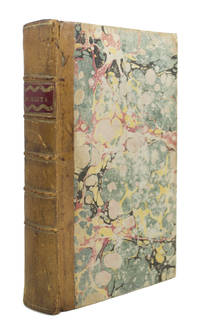
177868338A Collection of Five Eighteenth-Century British Revolutionary Pamphlets Anonymous. T.M. A letter to His Grace the Duke of Buccleugh of national defence to which is now added a postscript relative to the regiments of fencible men raising in Scotland. Edinburgh Sold by J. Dickson bookseller 1778. A reissue of the London edition of the same year with a cancel title-page and the addition of a postscript dated: LincolnÃs Inn July 20th 1778. 4 72 10 Postscript. With the letter signed "T.M." Previous owner's old ink signature on title-page. This also includes remarks on Adam Smith's Wealth of Nations. Adam Smith's Remarks were not in the London Edition. We could find no other copies at auction. ESTC T179898. Bound with DOUGLAS JOHN Anonymous. A Letter Addressed to Two Great Men on the Prospect of Peace; And on the Terms necessary to be insisted upon in the Negotiation. London: A. Millar 1760. First edition first issue with no errata below Finis on final leaf. 4 55 1 blank pp. With half-title and final leaf verso blank. " This tract relating to the Treaty of Utrecht and the French Canadian question has been attributed to Junius also to William Pulteney Earl of Bath but with more probability to John Douglas. The ìTwo Great Menî were Wm. Pitt and the Duke of Newcastle. The writer urges upon the government in making peace with France to require from her the relinquishment of all Canada Guadaloupe and Senegal." Sabin 40263. ESTC T37753. Bound with Macpherson James Anonymous. The rights of Great Britain asserted against the claims of America: Being an answer to the declaration of the general Congress. The third edition with additions. London Printed for T. Cadell 1776. The Third edition. 6 96 pp. With folding chart "Appendix." Half-title and advertisement leaf after the title-page. "Also attributed to Sir John Dalrymple Lord George Germaine and Henry Mackenzie." ESTC T45081. Half-title is soiled and some minor toning to a few pages." A reply to the July 1775 declaration of the Continental Congress commissioned and widely distributed by the British government. ìThis celebrated performance is said to have been written printed and liberally distributed both in Great Britain and America at the instance and expense of government; but whether this be true or not the work itself we are afraid will answer no other purpose than to exasperate the people of Great Britain against their brethren of America; and by inflaming misrepresentations and invective aggravate the evils of our present civil discord.î---Monthly Review." Sabin 18347. Howes D37. Evans 14727. Bound with LIND JOHN. Anonymous. An answer to the Declaration of the American Congress. The Fourth Edition. London Printed for T. Cadell 1776. Fourth Edition. 1-132 pp. Leaves D2 and D3 trimmed close at fore-edge just slightly affecting the printed marginal notes. " This anonymous work was ascribed to English barrister John Lind by Richard Price and others. In the work Lind a close associate of Jeremy Bentham treats each of the Declaration's grievances individually refuting them on philosophical and factual grounds. Pages 119-132 include a discussion of the Preamble to the Declaration which he describes as an "absurd and visionary" theory of government." National Book Auctions. " In these later editions the outline of a counter declaration is omitted. With regard to the theory of government set forth in the preamble to the ìDeclarationî the writer adds ìa theory as absurd and visionary as the system of conduct in defence of which it is established is nefarious;î indeed each article of the Declaration of Independence is carefully examined and every assertion disputed." Sabin 41281. Howes L349 ESTC N5626. Bound with Burke William Anonymous. Remarks on the letter addressed to two great men. In a letter to the author of that piece. London Printed in the year 1760. A pirated reprint According to Todd 263 item 98. 32 pp. Bound without the half-title. Previous owner's old ink signature on title-page." Occasionally attributed to Charles Townshend but more generally assigned to William Burke and Ãin partà to Edmund" Todd. A respond to the first pamphlet in this volume "The ÃLetter addressed to two great menà is by John Douglas Bishop of Salisbury." "Argues against giving Guadeloupe to the French. Attributed to Charles Townshend by Evans; however the Dictionary of national biography attributes the Remarks to William Burke secretary to Guadeloupe" Evans 8751. ESTC N26297. Octavo 8 1/4 x 5 inches; 210 x 128 mm. All pamphlets bound together in contemporary half calf over marbled boards. Red morocco spine label lettered in gilt. Some occasional foxing but otherwise very clean. Previous owners old ink notes on front endpapers. A very good copy. HBS 68338. $5000 Sold by J. Dickson, bookseller hardcover books
1770307572Paris: Desventes de Ladoué 1770. First edition. xvi 359 iii; 334; 360pp. 3 vols. 12mo. Bound in full contemporary mottled calf. With the bookplate of the Vicomte de Noailles engraved by Agry in each volume. Upper joint of vol. III with short start at foot otherwise a fine and fresh copy. First edition. xvi 359 iii; 334; 360pp. 3 vols. 12mo. Contemporary Satire of Rousseau's 'Émile'. A satirical response to Rousseau's Emile ou l'Education 1762. Where Émile is guided by a wise tutor the author of Le Père avare mocks from the outset Rousseau's dictum "le véritable précepteur est le père" for the narrator's father M. d'Erigny grew up poor and gained wealth through his friendship with a government minister; his child has been spoiled from infancy. <br/>While M. d'Erigny is drunk his mistress gets him to sign an order from her jeweler for 20000 francs of precious stones and skips out. The extravagance is discovered and the father becomes miserly in the extreme. The son now 15 years old is entrusted to a unscrupulous précepteur or tutor who involves the youth in a swindle and vanishes with the money. <br/>This is a confessional so we learn it all: the narrator soon discovers love and devotes himself to pleasure using the family name to run up accounts everywhere before being deceived and fleeced. M. d'Erigny is furious; Madame intercedes: his debts are paid and he is sent off to exile in a provincial town. He is befriended by a well-connected gentleman but repays this trust with deceit. Besotted with an actress he forges a criminal denunciation of a rival but his scheme is discovered and his in consigned to "une de ces maisons de force" a private prison for the reform of licentious youth. <br/>To escape this close confinement the narrator embarks with a flotilla of colonists bound for the island of C in the new world. His mother's continued good influence follows him across the ocean cushioning him from the worst excesses of a brutal colonial regime amply detailed. Florainville a mistress who has managed her money well comes to the colony to rescue him but falls afoul of the corrupt Intendant and her health fails her. She dies but not before she has made him her legatee. The narrator assists the colonial governor in prosecuting the Intendant and returns to France. He retires to a rural abbey and contemplates his experiences. Before long he becomes the benefactor of a village community and sees it thrive.<br/>Only edition of this little-known work of fiction set partly in the Americas. OCLC records two copies in N. America Princeton UCLA two in France and one at Trinity College Dublin Desventes de Ladoué unknown books
179268343A Collection of Five Political Tracts from the Years 1792-1793 Anonymous. Six essays on natural rights liberty and slavery consent of the people equality religious establishments the French Revolution which were greatly approved and have been in much request since their original appearance in the Public Advertiser. London Printed for S. Woodfall 1792. First edition. 8 48 pp. We could find no copies at auction and only four are listed at libraries according to ESTC N62745 Bound with ANDERSON George. A general view of the variations which have been made in the affairs of the East-India Company since the conclusion of the war in India in 1784. By George Anderson. London Printed in the Year 1792. First Edition. 8 102 2 blank 11 folding appendix tables pp. With half-title and 11 folding appendix tables. There have been no copies at auction since 1978. George Anderson was a colonial official and writer. In 1792 he published this present highly regarded study as to the condition of Indian trade and finance. ESTC T97303 Bound with Anonymous Callender James T. The political progress of Britain; or an impartial account of the principal abuses in the government of this country from the revolution in 1688. The Whole tending to prove the ruinous Consequences of the popular System of War and Conquest. Part first. Edinburgh Printed for Robertson & Berry 1792. First edition. 80 pp. We could find no copies at auction in over 50 years. Previous owner's old ink notes on blank verso of title-page. "In February 1792 Callender published in the Edinburgh Bee the first of eight parts of what was to become a very successful pamphlet The Political Progress of Britain. As an inflammatory critique of imperialism war and corruption with a strong Scottish nationalist flavour Callender's work rivalled Thomas Paine's in its radicalism. It sold well although not in the numbers of the Rights of Man." Oxford DNB. ESTC T43967. Bound with CARLYLE Alexander. A sermon on the death of Sir David Dalrymple Bart. Lord Hailles; from Eccles. VII.3. Preached In the Church of Inveresk on Sunday the 9th day of December 1792. By Alexr. Carlyle D. D. F. R. S. E. Chaplain to His Majesty & Minister of that Parish. With an address to the congregation suited to the circumstances of the times. Edinburgh Printed for John Balfour 1792. First edition. 33 1 blank pp. We could find no copies at auction in over 50 years. ESTC T53279. "Carlyle was a Church of Scotland minister and memorialist. During the French Revolution he was equally conservative in regard both to domestic issues.and to foreign issues such as the war with France which he exalted as a divinely sanctioned cause and a test of British virtue and resolve in three published sermons including: Sermon on the Death of Sir David Dalrymple Bart. Lord Hailes 1792." Oxford DNB. Bound with Mallet du Pan M. Jacques. ConsidÈrations sur la nature de la rÈvolution de France et sur les causes qui en prolongent la durÈe. A Bruxelles et se trouve a Londres chez Owen 1793. Early edition. viii 79 1 table pp. ESTC T75704. Mallet du Pan was a Swiss journalist who "Published with the approval of the foreign representatives a work which was to make a prodigious sensation and which is still the best know of his writings his Considerations on the Revolution." Mallet du Pan and the French revolution by Mallet Bernard. He is considered a pioneer of modern political journalism. Octavo 8 1/8 x 4 7/8 inches; 205 x 125 mm. All tracts bound together in contemporary half calf over marbled boards. Red morocco spine label lettered in gilt. Some occasional foxing but otherwise very clean. Previous owners old ink notes on front endpapers. Outer hinges cracked but holding. Top of spine chipped. Otherwise a very good copy. HBS 68343. $5000 Printed for S. Woodfall hardcover books
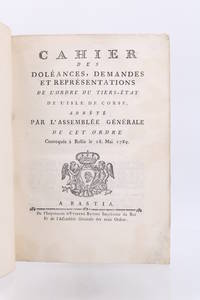
178989656Bastia: Batini 1789. Fine. Batini Bastia 2 juin 1789 16.3 x 22.4 cm Broché Very rare first edition bilingual quarto in format and printed on laid paper of the Corsican cahier de doléances.Cf. Starace 4747. Not in Roland Bonaparte. Conlon xxiv 89:1617 who notes only the 32-page octavo edition. No copy located in CCF or Worldcat.Our copy is preserved in a plain grey paper wrapper with minor internal flaws a few discreet paper restorations to the lower right margin of the opening leaves not affecting the text.""Les cahiers des Tiers en même temps que des mesures spécifiques exigent les mêmes réformes que le reste du royaume. Cette imbrication du régional et du national est jalonnée d'événements illustrant la dynamique révolutionnaire: agitation lors des assemblées primaires émeute de Bastia le 1er mai 1789 ""révolution municipale"" du mois d'août à l'annonce du 14 Juillet parisien et sous le signe de la cocarde tricolore."" Soboul Dict. hist. de la Révolution française.Among the specific measures requested are the following: authorisation for Corsican vessels to fly the Moors Head on the French white ensign as several towns and provinces of the kingdom already displayed their own arms; establishment of a university at Corte funded by the former revenues of the Carthusians Jacobins and Olivetans; establishment of a lazaretto to facilitate trade with the Levant; creation of a free port; preference in appointments to be given to Corsicans or to French inhabitants established on the island etc.Light foxing to the lower and upper right corners of the leaves not affecting the text.A well-preserved and appealing copy. Batini unknown
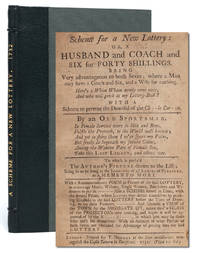
17326120London: Printed for T. Dormer 1732. First edition. Modern quarter morocco over cloth with gilt to spine. Measuring 180 x 111mm and collating complete including frontis folding game board and concluding woodcut: 2 62 2. From the collection of stage magician Ricky Jay with his bookplate to upper pastedown. Top margin trimmed close with consistent loss to running headers and occasional loss to page numbers with no other text effected. Pages somewhat toned with minor marginal chips but otherwise unmarked. A scarce satire playing both on the rising popularity of get-rich-quick schemes and on the economics of the marriage market the present is the only example to appear in the auction record. OCLC locates only twelve institutional copies. The present is the only example currently in trade.<br /> <br /> A Scheme for a New Lottery warns readers against the dangers posed by get-rich-quick schemes targeting large-scale scams like the recently burst South Sea Bubble sometimes called the world's first Ponzi scheme and the pawn-broking swindle of the so-called Charitable Corporation. These scams were appealing to ordinary people at a time when few were "successful in using wealth from trade to found a landed family" Rapp. Mocking both the conmen and the conned A Scheme satirically proposes "Another Lottery which may prove a general benefit to all concern'd; as there is no better Remedy for a Bite from a Mad Dog than the Liver of the Dog that bit." The proposed lottery filled with abstruse rules and convoluted promises ensures that the cycle continues.<br /> <br /> A Scheme also mocks marriage as a scam in which women could either make a wise match in a rich man or lose it all by marrying down. The lottery provides "Fifty Thousand tickets to be deliver'd to Maids or Widows or any that appear to be such" in the hopes of winning a financially stable husband represented by the tickets drawn. Such a match could be a good one: "A Ware-House Keeper with the Salary of a Hundred Pounds" or "the Governour." It could also by virtue of lottery be a loss: "2 Scotchmen both Pedlars 500 Broken Booksellers" and a range of other ruinous bounders are also listed as prizes. For those who desire an advance attempt the folding game bound in the book invites blindfolded women to stick a pin in the board to claim their prize. The present copy was played gently with pin marks revealing a Blacksmith and a Valet de Chambre among those husbands won<br /> <br /> The popularity of A Scheme resulted in a reissue the same year with a canceled title page as The Ladies Lottery and falsely attributed to Swift.<br /> <br /> ESTC N20921. Printed for T. Dormer unknown
17271405949London: W. Mears 1727. First Edition. Hardcover. Octavo 192 pages. In Very Good condition. Spine marbled paper with red textblock and gilt lettering. Fully bound in later marbled boards. Minor shelfwear and soiling. Textblock toning consistent with age. Minimal soiling. Bookplate pasted to inside of front board. GH consignment. Shelved in Case showcase. This work of early English viticulture printed for W. Mears is presumed to be authored by the 18th century botanical writer Richard Bradley 1688-1732 whose work Mears had published before. This text is exceptionally scarce especially in the original form. 1405949. Shelved Dupont Bookstore. W. Mears hardcover
1798FLO147<p>Six volumes only of this rare eight-volume set. Vol. VIII was discontinued after only 4 issues with 12 plates.<br /><br />With 352 hand-coloured engraved plates of 360.<br /><br />Incomplete set of this rare handy pocket-sized edition of 18th century natural history describing many newly discovered species.<br /><br />Text and plates copied from accounts published by Count Buffon George Edwards George Shaw James Bruce Thomas Pennant Maria Sybilla Merian and others. <br /><br />Includes the extinct dodo and sukotyro endangered animals and birds Siau Island tarsier white rhinoceros polar bear Indian bustard great green macaw wild water buffalo banded cotinga Russian mink African grey parrot. <br /><br />Also notable for the early images of plants and animals discovered in New South Wales Australia short-beaked echidna kangaroo black swan eastern quoll waratah Banksia etc.<br /><br />Half contemporary calf with red and black morocco gilt spine labels marbled boards scuffed front board off Vol. VI. Some plates loose or trimmed foxing and finger-marks to text and plates.</p> Harrison, Cluse and Co. hardcover
1780265361780. Pastel on laid watermarked paper. The sheet retains signs of having been stretched as these types of portraits typically were. Dampstain upper right corner tear lower right corner otherwise excellent condition. A strikingly well done portrait of a successful European gentleman with piercing eyes.<br/> <br/>Pastel portraits were popular in Europe Great Britain and America during most of the 18th century especially in the 1770s and 80s. They provided a more rapid way of rendering a likeness in bright colors that didn't yellow. This was a golden age for portrait painting which exemplified the optimistic views of the Enlightenment: a sitter was not ashamed to show his or her wealth contentment or character. Our self -assured subject looks directly at the viewer with piercing eyes calm practical not likely to be fooled. It is an astounding accomplishment; we feel that this was exactly how he was. The artist allowed himself or herself there were a number of excellent female pastel portraitists particularly in France to be subject entirely to what was seen and sensed about this strong indomitable personality.<br/> <br/>Baetjer & Shelly Pastel Portraits. Images of the 18th Century. Metropolitan Museum of Art 2011. unknown books
178989656Batini | Bastia 2 juin 1789 | 16.3 x 22.4 cm | Broché
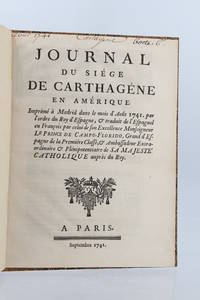
174182479Paris: S. n. 1741. Fine. S. n. Paris septembre 1741 19.50 x 25 cm relié Journal du siège de Carthagène en Amérique Diary of the Siege of Cartagena in America n.p. Paris September 1741 4° 195x25cm 16 pp. bound. First edition of the French translation. Originally published in Spanish a month before. Translated by Luis Reggio Branciforte and Colonna Prince of Campoflorido Spanish ambassador in France. Later half camel cloth binding boards in caillouté paper the first one with a gilt black morocco label. Spine-top a little rubbed white end-papers shaded. Contemporary handwritten notes on the upper part of the title page. Extremely rare copy of this diary about one of the greatest naval campaigns of the British Navy and its bitter defeat against the Spanish Treasure Fleet West Indias Fleet. S. n. hardcover