[KANT, Immanuel] AnonymousBiblio.com
237 569 résultats
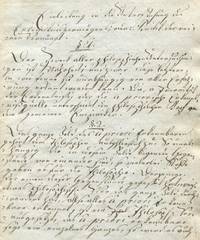
1790846<p>n/a: n/a 1790. First Edition. Cardboard covers. Very good. Early Manuscript Defense of the Critique of Pure Reason <br /><br />Original one-of-a-kind handwritten manuscript defense of Kants Epistemology. 196-page manuscript in clear German cursive with some deletions and corrections ink on clean paper. 1790 Quarto. <br /><br />An extensive presentation and defense of Kant's theory of knowledge probably written as the basis for a lecture or series of lectures. There are five main sections: <br /><br />Einleitung 34 paragraphs <br />Theorie des Vorstellungsvermögens überhaupt 30 paragraphs <br />Theorie der Sinnlichkeit 35 paragraphs <br />Theorie des Verstandes 64 paragraphs <br />Kritik der bisherigen Methaphisick 21 paragraphs <br /><br />Many of the paragraphs contain numbered Anmerkungen" further reflections. In these the author shows himself to be a stout defender of Kant's controversial new theories: "Vor Kant ist es keinem eingefallen die Gemüthsvermögen zu untersuchen die Erkenntniße aus dem Erkennbaren zu schöpfen und die Philosophie nicht von den so genannten Objeckten zu erbetteln. Man begehet keine tolle Freiheit wenn man behauptet daß es vor Kant wohl resonierende Köpfe und philosophische Versuche aber eigentlich keine Philosophie und Philosophen gegeben habe. <br /><br />The identity of the author remains unknown. Interestingly the final sentence announces a sequel: "Näher darüber in unseren zukünftigen moralischen Untersuchungen wo wir für das Ens Entium einen begreiflicheren Gott wieder finden werden. <br /><br />CONDITION: Very good or better in contemporary plain boards with minimal spotting edges untrimmed. <br /><br /><br />PHOTOS AVAILABLE UPON REQUEST</p> n/a
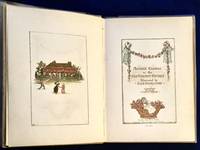
18816864London and New York: George Routledge and Sons 1881. First Lattice Edition Second Issue. Decorative boards. Very Good/None Mylar added. Kate Greenaway. 16mo 6 3/4" x 5" cream boards with pink spine and light olive cross-hatching--in a lattice pattern--and brown title on covers illustrated throughout with 42 pictures in color by Kate Greenaway with nursery rhymes beneath engraved by Edmund Evans olive endpapers 48 pages 2 Colophon. Catherine "Kate" Greenaway 1846 - 1901 was an esteemed English Victorian artist and writer known for her charming and much loved children's book illustrations. Her depictions of lovely children in imaginary 18th-century costumes in a Queen Anne style were extremely popular in England and internationally sparking the Kate Greenaway style.<br/><br/>SCARCE title made doubly so by its Very Good Condition. Early printing with "G" upside down on covers. Tight copy with light-to-moderate age-toning and moderate soil. Colors of covers have darkened with time. Greenaway pictures are quiet clean and bright. Schuster & Engen 140 1d; Thomson 138b. George Routledge and Sons hardcover
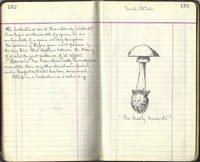
18958937Troy N.Y. 1895. Octavo 19.5 x 12 cm. 1-2 59-134 pages. Index. References. Manuscript on printed blank account book. Thirty two pages of handwritten text and illustrations in pencil. An interesting mycological manuscript in that it is focused on mushroom propagation and not identification. Descriptions of individual varieties are followed by growing specifications. Some of the descriptions are accompanied by pencil depiction of the mushrooms. Internally very good; some age-toning to endpapers. In textured brown calf lined and with a paper title label hand lettered. Some wear to edges and rubbing to boards. Still near very good. hardcover
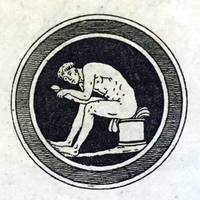
16356Italy: n.p. n.d. Ruled manuscript notebook with engraved frontispiece. Preface and discourse in two parts. Contemporary black roan and preserved in a black roan-backed box. The text is very clean. A handsome copy. With the bookplate of Roberto Gabbani engraved by Costante Costantini. A discourse in the form of a mock-address to an educated and learned public of women. The author is inspired to write this praise after he had accidentally stepped onto a pile of excrement. He addresses the ladies and in the first part theorizes the ancient and noble origins of defecation from the beginning of time with Adam and Eve. The object of his ode is universal and unites all peoples of the world. The second part is devoted to the usefulness and benefits of excrement: it’s healthy nourishes the trees and the soil and provides work to those that transport it from cities to villages. The author ends his tribute talking to ### directly inviting her/him not to blame humans that don’t appreciate her/him.<br /> <br /> Costantini Florence 1921-2006 was an Italian engraver illustrator and writer. His talent for drawing was sharpened by his studies and by trips abroad in his youth. In Vienna he became a friend of Kokoshka’s and in Paris he followed courses at the Grande Chaumière Academy. He is noted for his elegant woodcuts and his intaglio prints made from punched metal plates. He was awarded several prizes in both fields. n.p. unknown
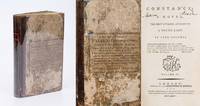
178529729AB1785. Volume IV of four only. London Printed at the Logographic Press 1785. Small Octavo 10.5 cm x 17 cm. 256 pages. Original Hardcover in Mylar. Professionally repaired and with new spine-label. Original Label / Sticker of "Hazard's Circulating-Library Cheap-Street in Bath" mounted on front board. Binding slightly rubbed. Last page with lesion and minor tear. From the library of Richard Meade Ballymartle with the name of one of his children in ink on titlepage. Charles Mathews 28 June 1776 London 28 June 1835 Devonport was an English theatre manager and comic actor well known during his time for his gift of impersonation and skill at table entertainment. His play At Home in which he played every character was the first monopolylogue and the defining work in the genre. Wikipedia hardcover
1893S13228Paris: 1893. 1893. Spine title: Arts & Metiers :: Mecanique I. Three books in one possible 2nd volume not known but implied by the spine title. 4to. 208; 324; 542 pp. Numerous mathematical diagrams. Facsimile of original handwritten manuscript. Early quarter maroon calf backed red & black marbled boards; extremities rubbed. Occasional minor tears some repaired foxing. Ownership signature of Garde. Very good. THE ENTIRE TEXT IS PRINTED IN MANUSCRIPT FACSIMILE. No person or organization shows their name as being responsible for this deeply scholarly and detailed work on all facets of analytical mechanics. Some possible clues for its origin might possibly be a part of the history of the Ecole Nationale de Cluny Descartes's system of mechanical force or possibly the work of Alfred Flamant engineer & professor at l'Ecole Nationale des Ponts et Chaussees & l'Ecole Centrale who wrote a treatise Mecanique Generale 1888. I could not find a match for the text to identify this item but it is for someone else to discover. See possibly: H. Carteron "L'idee de la force mecanique dans le systeme de Descartes." Revue Philosophique de la France et de l'Etranger T. 94 JUILLET A DECEMBRE 1922 pp. 483-511. 1893[?]. hardcover
189723989London. Gale & Polden Ltd. 1897 1897. Soft cover. 24mo. 11.4cm 102p. endpaper and ads on the printed wraps wraps chipped and detached and repaired with acid free tape covers detached & crudely taped internally very good n12 Revised and corrected up to date in accordance with the 1896 Infantry Drill. Title page. With several stamps regarding Canadian distribution: Supplied by T.C. Elliot Drill Hall Montreal. London. Gale & Polden, Ltd. 1897 unknown
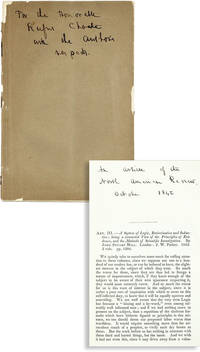
184549890Boston: North American Review 1845. Offprint. Octavo 21cm.; drab stitched wrappers; 349-384pp. Wrappers rather chipped along extremities spine partly perished faint vertical crease else Very Good overall. Offprint book review of the London 1843 edition of Mill's three volume work. Inscribed on upper cover to Congressman from Massachusetts Rufus Choate: "For the Honorable Rufus Choate with the Author's respects." The author of the review has additionally mounted a small manuscript cancel at head of p. 349 "An article of the North American Review October 1845" with his pencil and manuscript corrections throughout text. Though the review has not author attribution we find the text reproduced in a volume of works by James Flint inscribed by him to a John Brazer in the same hand. North American Review unknown
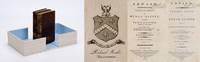
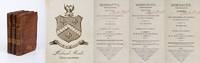
179729726AB1797. First Irish Edition. Two Volumes complete set. Dublin Printed for P.Wogan P.Byrne J.Moore J.Rice W.Watson and Son G. Folingsby etc. etc. 1797. Small-Octavo 11.5 cm x 17.5 cm. 331 376 pages. Hardcover / Original 18th-century leather with original spinelabels. Both Volumes in protective Mylar and now housed in a bespoke Solander Box. Bindings a little shaky but still intact; stronger rubbed with loss to labels. Bookplate / Exlibris of Richard Meade of Ballymartle attached to pastedown of Volume I. John Moore FRSE 1729 1802 was a Scottish physician and travel author. He also edited the works of Tobias Smollett. He was born on 10 October 1729 in Stirling the son of Rev Charles Moore of Rowallan d1735 and his wife Marion Anderson. The family moved to Glasgow in his youth and he was educated at Glasgow Grammar School. He was then apprenticed to Dr. John Gordon in Glasgow 1745 to 1747. After taking a medical degree at Glasgow he served as a Surgeon's Mate with the army in Flanders during the Seven Years' War then proceeded to London to continue his studies and eventually to Paris where became surgeon to the household of the British ambassador there. In 1751 he returned to Glasgow to rejoin Dr. John Gordon also then practising with Dr. Thomas Hamilton. From 1769 to 1778 he accompanied the Duke of Hamilton who was linked to Thomas on a Grand Tour of Europe. On his return he took up residence in London. In 1792 he accompanied Lord Lauderdale to Paris and witnessed some of the principal scenes of the Revolution. His Journal during a Residence in France 1793 is the careful record of an eye-witness and is frequently referred to by Thomas Carlyle. In 1784 he was elected a Fellow of the Royal Society of Edinburgh. His proposers were Andrew Dalzell James Gregory and John Robison. He died in Richmond in Surrey now part of London on 21 February 1802. He is buried in Stirling. His novel Zeluco 1789 a close analysis of the motives of a selfish profligate produced a great impression at the time and indirectly through the poetry of Byron has left an abiding mark on literature. Byron said that he intended Childe Harold to be a poetical Zeluco and the most striking features of the portrait were undoubtedly taken from that character. Moore's other works have a less marked individuality but his sketches of society and manners in France Germany Switzerland Italy and England A View of Society and Manners in France Switzerland and Germany London W. Strahan & T. Cadell in the Strand 1779 2 vol.; A View of Society and Manners in Italy with anecdotes related to some eminent characters London W. Strahan & T. Cadell 1781 2 vol. were also very popular during his lifetime and furnish valuable materials for the social historian. "Mordaunt. Character Sketches of Life Characters and Manners in Various Countries; including the Memoirs of A French Lady of Quality" was a powerfully written anti-French Revolution novel in three volumes in the form of 34 character sketches of famous politicians royalty generals the wealthy and the celebrity of the day. It also offers detailed eyewitness accounts of John Moore's observations as he travelled throughout Europe in the last years of the 18th century. There are gripping accounts of the heroic feats of a dashing British Officer included which were actually accounts of John Moore's son General Moore. Wikipedia hardcover
180029745AB1800. First Irish Edition. Three Volumes complete set. Dublin Printed for W. Watson and Son G. Burnet G. Folingsby etc. etc. 1800. Small-Octavo 10.5 cm x 17 cm. II 239 276 283 pages. Hardcover / Original 18th/19th-century leather with original spinelabels. All three Volumes in protective Mylar. The labels and spoine slightly damaged only. All Volumes firm and in overall very good condition. From the library of Richard Meade Ballymartle with his bookplate to the pastedown of Volume I. Bindings a little shaky but still intact; stronger rubbed with loss to labels. Bookplate / Exlibris of Richard Meade of Ballymartle attached to pastedown of Volume I. "Mordaunt. Character Sketches of Life Characters and Manners in Various Countries; including the Memoirs of A French Lady of Quality" was a powerfully written anti-French Revolution novel in three volumes in the form of 34 character sketches of famous politicians royalty generals the wealthy and the celebrity of the day. It also offers detailed eyewitness accounts of John Moore's observations as he travelled throughout Europe in the last years of the 18th century. There are gripping accounts of the heroic feats of a dashing British Officer included which were actually accounts of John Moore's son General Moore". John Moore FRSE 1729 1802 was a Scottish physician and travel author. He also edited the works of Tobias Smollett.He was born on 10 October 1729 in Stirling the son of Rev Charles Moore of Rowallan d1735 and his wife Marion Anderson. The family moved to Glasgow in his youth and he was educated at Glasgow Grammar School. He was then apprenticed to Dr. John Gordon in Glasgow 1745 to 1747. After taking a medical degree at Glasgow he served as a Surgeon's Mate with the army in Flanders during the Seven Years' War then proceeded to London to continue his studies and eventually to Paris where became surgeon to the household of the British ambassador there. In 1751 he returned to Glasgow to rejoin Dr. John Gordon also then practising with Dr. Thomas Hamilton. From 1769 to 1778 he accompanied the Duke of Hamilton who was linked to Thomas on a Grand Tour of Europe. On his return he took up residence in London. In 1792 he accompanied Lord Lauderdale to Paris and witnessed some of the principal scenes of the Revolution. His Journal during a Residence in France 1793 is the careful record of an eye-witness and is frequently referred to by Thomas Carlyle. In 1784 he was elected a Fellow of the Royal Society of Edinburgh. His proposers were Andrew Dalzell James Gregory and John Robison. He died in Richmond in Surrey now part of London on 21 February 1802. He is buried in Stirling. His novel Zeluco 1789 a close analysis of the motives of a selfish profligate produced a great impression at the time and indirectly through the poetry of Byron has left an abiding mark on literature. Byron said that he intended Childe Harold to be a poetical Zeluco and the most striking features of the portrait were undoubtedly taken from that character. Moore's other works have a less marked individuality but his sketches of society and manners in France Germany Switzerland Italy and England A View of Society and Manners in France Switzerland and Germany London W. Strahan & T. Cadell in the Strand 1779 2 vol.; A View of Society and Manners in Italy with anecdotes related to some eminent characters London W. Strahan & T. Cadell 1781 2 vol. were also very popular during his lifetime and furnish valuable materials for the social historian. "Mordaunt. Character Sketches of Life Characters and Manners in Various Countries; including the Memoirs of A French Lady of Quality" was a powerfully written anti-French Revolution novel in three volumes in the form of 34 character sketches of famous politicians royalty generals the wealthy and the celebrity of the day. It also offers detailed eyewitness accounts of John Moore's observations as he travelled throughout Europe in the last years of the 18th century. There are gripping accounts of the heroic feats of a dashing British Officer included which were actually accounts of John Moore's son General Moore. Wikipedia hardcover
2381Boston: Congregational Publishing Society 1875. . 12mo aubergine cloth some wear to head and tail of spine; title page detached Second Edition much enlarged the original 1855 edition having only 19 pp. There are three holdings of this in OCLCÑtwo at the University of Illinois and one at Pacific Union College. Written 85 years after the Bounty mutineers first landed on Pitcairn this volume offers a somewhat sanitized version of the history of this tiny IslandÑthe world's smallest democratic unit administeredby the British High Commissioner to New Zealand for the British Crown. The 2010 constitution gives authority for the islands to operate as a representative democracy with theUnited Kingdom retaining responsibility for matters such as defence and foreign affairs. The Governor and the Island Council may enact laws for the 'peace order and good government' of Pitcairn. The Island Council customarily appoints a Mayor of Pitcairn as a day-to-day head of the local administration. There is a Commissioner appointed by the Governor who liaises between the Council and the Governor's office. Boston: Congregational Publishing Society, 1875. hardcover
182255730London: Printed for the author and sold by F. C. and J. Rivington 1822. First Edition. Octavo in fours 20cm. Rebound in black cloth titled on spine in gilt; plain endpapers; ii 97 1pp; with folding advertisement for a Quarterly Muster Pay and Victualing Book sold by Burgess Hunt and Carter Ramsgate. Errata slip laid down on final page. Annotated throughout in pencil. A sturdy copy rebound with minor soiling to intial and final leaves tear in folding table neatly mended: Good or better. Naval impressment was standard pratice in Britain from the mid-seventeenth century until the end of the Napoleonic Wars after which the Navy developed other recruitment methods until the return of conscription in 1916. Printed for the author, and sold by F. C. and J. Rivington unknown
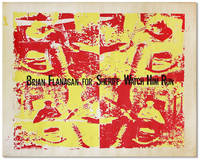
19730N.p. Chicago: 1969. Original silk-screened poster in three colors 23" x 29". Professionally backed on archival tissue; minor toning at margins still Near Fine. <br /> <br /> Brian Flanagan b. 1946 was a member of both SDS and the Weathermen and directly connected to the fatal Greenwich Village apartment explosion in which three Weathermen were killed while preparing for a bomb attack on Fort Dix Flanagan had reputedly left the apartment briefly for more supplies. This rare poster promotes Flanagan's parodic write-in campaign for Mayor of Chicago during the Days of Rage. Following a fateful run-in with City Attorney Richard Elrod on the streets of Chicago in which Elrod was left with a broken neck and partial paralysis Flanagan was tried for attempted murder and inciting mayhem. He was eventually acquitted on all charges but the case became a cause celebre for the Weathermen and other radical left groups. An extremely ephemeral piece likely produced in tiny quantities and posted even less. unknown
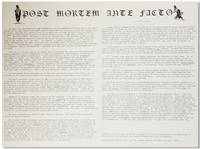
196946442New York: Situationist International 1969. First Edition. Broadside 44cm x 57cm. Printed offset in black on white uncoated lithograhic paper; text in two columns beneath headline in Gothic type. Minor wrinkling at margins else Fine. Issued January 10 1969 as a "supplement" to the first issue of the American journal Situationist International the imminent publication of which it announces. Possibly the first official pronouncement of the American Situationists following their admission to the SI in December 1968. The broadside actually pre-dates publication of the first journal issue by some six months; and though earlier materials by the same core group of authors primarily Robert Chasse were published in 1967-8 these were issued prior to the admission of the American Section all under the imprint of "The Council for the Liberation of Daily Life." Not in RASPAUD. Situationist International unknown
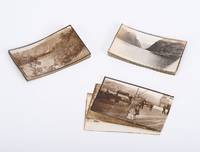
191032462AB1910. Norway c. 1910. 14 cm wide x 8.8 cm high. 56 Vintage Photographs. Modern Softcover Sleeve with all photographs inside. Very good condition with only minor signs of external wear. paperback
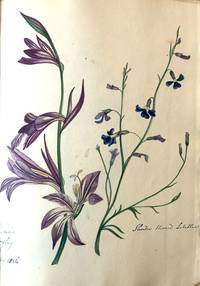
1812G7542<p><b>Original Watercolours of Plants Including American</b></p><p>Small folio; contemp. half calf with title on spine "drawings of plants". Small folio.On front pastedown: "M.H. Speirs 1820.</p><p>Beautiful album with 53 high-quality original watercolour drawings mostly with flower names in English or Latin and mainly dated from 1812 to April 1817. - 2 plates folded in the margins. Slightly foxed. Contemporary half leather spine rubbed.</p><p>Predominantly with flower names in English and Latin and Format ca. 14-24: 10-17 cm; on firm paper chamois format ca. 28 : 18 cm. Illustrations of lilies and aloe as well as <u>numerous American flowers </u>"Virginian Dragonhead" "American Atragen" "Virginian Platonica" and many more "Chinese Epidendrum". <b><br /></b></p>
190543844Ottawa Valley. Manuscript 1905. 24mo. 13.5cm circa 200 pages in manuscript black ink closely written fairly legible in full maroon limp fine grain calf typical diary type binding of the day french marbled endpapers and edges some slight edge wear rear inner paper over the hinge is broken this is common with diaries as they were opened flat and pressed down for writing in the text is clean and sound ~ all considered. A Very Good Copy. Middle-class women were not expected to write professionally in Victorian / Edwardian times. Diaries however gave these ladies an opportunity to express themselves in print. This fine example is probably part of a series of her output. Diaries of this era were more commonly done by the Upper classes describing vacation trips and scenery clippings chromo litho flora printing and cards poetry. Full length day to working day diaries are much less common even rare. Ottawa Valley. Manuscript unknown
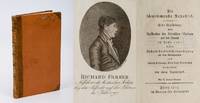
180329237AB1803. Erste Deutsche Ausgabe / First and only german Edition. Fürth Bureau für Litteratur 1803. Duodecimo 10 cm x 15.3 cm. Portrait-Frontispiz Portrait - Engraving of Richard Parker by J.F.Volkart 120 Seiten. Hardcover / Originaler wunderbarer Halblederband mit reicher Verzierung und Rueckenschildchen. Außergewöhnlich gut erhalten mit zwei ganz kleinen Wurmgängen am unteren Kapital. Ganz blasses Anzeichen eines alten Bibliotheksstempelchen auf dem Titelblatt. Portrait und Text in exzellenter Erhaltung. Eine Publikation von grosser Seltenheit ! Extremely scarce german publication discussing one of the most important mutinies of the Atlantic Revolutions a revolutionary wave in the late eighteenth and early nineteenth centuries which were all precursors to Independence movements in the New World and led to highlighting of poor living conditions of sailors for the Royal Navy. Richard Parker 16 April 1767 - 30 June 1797 was an English sailor executed for his role as president of the so-called "Floating Republic" a naval mutiny in the Royal Navy which took place at the Nore between 12 May and 16 June 1797. The Spithead and Nore mutinies were two major mutinies by sailors of the Royal Navy in 1797. They were the first in an increasing series of outbreaks of maritime radicalism in the Atlantic World. Despite their temporal proximity the mutinies differed in character. The Spithead mutiny was a simple peaceful successful strike action to address economic grievances while the Nore mutiny was a more radical action articulating political ideals as well which failed. The mutinies were extremely concerning for Britain because at the time the country was at war with Revolutionary France and the Navy was the main component of the war effort. There were also concerns among the government that the mutinies might be part of wider attempts at revolutionary sedition instigated by societies such as the London Corresponding Society and the United Irishmen. Inspired by the example of their comrades at Spithead the sailors at the Nore an anchorage in the Thames Estuary also mutinied on 12 May 1797 when the crew of Sandwich seized control of the ship. Several other ships in the same location followed this example though others slipped away and continued to slip away during the mutiny despite gunfire from the ships that remained which attempted to use force to hold the mutiny together. The mutineers had been unable to organise easily because the ships were scattered along the Nore and were not all part of a unified fleet as at Spithead but quickly elected delegates for each ship. Richard Parker was elected "President of the Delegates of the Fleet". According to him he was nominated and elected without his knowledge. Parker was a former master's mate who was dis-rated and court-martialed in December 1793 and re-enlisted in the Navy as a seaman in early 1797 where he came to serve aboard the brig-sloop Hound. Demands were formulated and on 20 May 1797 a list of eight demands was presented to Admiral Charles Buckner which mainly involved pardons increased pay and modification of the Articles of War eventually expanding to a demand that the King dissolve Parliament and make immediate peace with France. These demands infuriated the Admiralty which offered nothing except a pardon and the concessions already made at Spithead in return for an immediate return to duty. Captain Sir Erasmus Gower commissioned HMS Neptune 98 guns in the upper Thames and put together a flotilla of fifty loyal ships to prevent the mutineers moving on the city of London. It was largely fear of this blockade moving down river which made the mutineers reconsider their actions and begin to waver. The mutineers expanded their initial grievances and blockaded London preventing merchant vessels from entering the port and the principals made plans to sail their ships to France alienating the regular English sailors and losing more and more ships as the mutiny progressed. On 5 June Parker issued an order that merchant ships be allowed to pass the blockade and only Royal Navy victualling i.e. supply ships be detained; the ostensible reason provided in the order was that "the release of the merchant vessels would create a favourable impression on shore" although this decision may actually have been perhaps more due to the complexities involved in such a wide undertaking as interdicting all the merchant traffic on the busy Thames.After the successful resolution of the Spithead mutiny the government and the Admiralty were not inclined to make further concessions particularly as they felt some leaders of the Nore mutiny had political aims beyond improving pay and living conditions. Meanwhile Captain Charles Cunningham of HMS Clyde which was there for a refit persuaded his crew to return to duty and slipped off to Sheerness. This was seen as a signal to others to do likewise and eventually most ships slipped their anchors and deserted some under fire from the mutineers and the mutiny failed. Parker was quickly convicted of treason and piracy and hanged from the yardarm of Sandwich the vessel where the mutiny had started. In the reprisals which followed 29 were hanged 29 were imprisoned and nine were flogged while others were sentenced to transportation to Australia. One such was surgeon's mate William Redfern who became a respected surgeon and landowner in New South Wales. The majority of men involved in the mutiny were not punished at all which was lenient by the standards of the time. Wikipedia hardcover
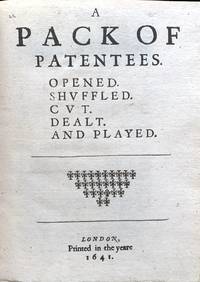
164117940London: n.p. 1641. FIRST EDITION. Type ornament device on title and woodcut headpiece. Polished calf signed “F. Bedford triple gilt fillet round sides spine gilt a.e.g. From the library of Lord Fairfax of Cameron with his armorial bookplate and the Huth bookplate lot 5630 Sotheby’s sale of July 17 1917. First edition of the very rare satire on the granting of monopolies. The anonymous author piles on the criticism of monopolies and patents granted on goods such as coal soap starch leather wine salt tobacco and butter. By the reign of James I patents had become so numerous and unfairly granted that they were considered oppressive and unjust to certain classes of people especially tradesmen and manufacturers. Except for “novel inventions†the King was finally forced to revoke all existing monopolies and declare that henceforth patents were only to be used for “projects of new invention.†This “Statute of monopolies†enacted in 1624 became the foundation for all later developments in patent law in England and elsewhere. It was a fundamental landmark in the transition of Britain’s economy from the feudal to the capitalist.<br /> <br /> Unfortunately James’s successor Charles I continued to abuse the patent system and it was only during the Restoration that the abuse was finally curtailed. The present work written during the reign of Charles I bitterly describes the injustices within certain trades and industries.<br /> <br /> Wing P156; ESTC locates 4 copies in North America Harvard Huntington NYPL McGill. n.p. unknown
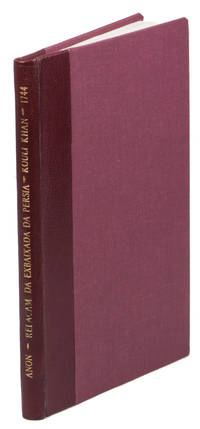
1744ABC_46570Lisbon: Pedro Ferreira 1744. Modern half red morocco red cloth sides gold lettering on spine. 4to 19.5 x 13.5 cm. With a printer's device on the title-page a headpiece with the IHS monogram and a decorated initial on p. 2 and a large tailpiece of an angel playing a horn holding a shield with the coat of arms of Portugal on p. 8. First and only Portuguese edition of an account of the embassy sent by the Prince of Bezancudos a tribe located between Persia and Tartary to the Shah of Persia. The Prince or Chief was afraid of Persia's emperor and the speed and brutality with which he conquered large parts of the Middle East the Caucasus and South Asia. Thus he sent specially selected ambassadors with gifts and other tokens of good-will accompanied by a large group of servants infantry and cavalry to help protect the ambassadors and try to appease the Shah. Nader Shah Afshar 1688-1747 also known as Thamas Kouli-Khan was one of the most powerful Iranian rulers in the country's history and ruled between 1736 and 1747 as Shah of Persia present-day Iran.According to the title page of the present copy the account has been translated from the French. It is probably based partly on a history of the reign of Nader Shah Histoire de Thamas Kouli-Kan Roi de Perse nouvelle edition Paris 1743 by André de Claustre. Whoever prepared the Portuguese text would of course have had to add the description of the 1744 proceedings.With a purple ownership stamp of the library of the Dukes of Palmela their monogram beneath the ducal coronet on the title-page. The upper outer corner of the title-page has been restored slightly affecting the text slight foxing mainly to the margins. Overall in good condition.l Ameal 1018; Porbase 3 copies; WorldCat 3 copies; not in Fonseca; Innocêncio; JFB. Pedro Ferreira, hardcover
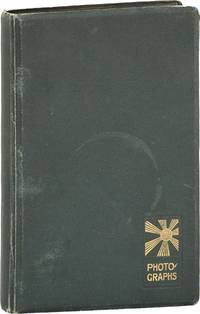
191487332London 1914. Tall Octavo. 24.5cm. Original green cloth over bevelled boards titled "Photographs" in gilt to the lower front cover. 24pp; 48 3" x 4" black and white images in total. Light bumping and scuffing to corners and spine ends cup ring to front board some light scuffing strong and tight. Internally clean with heavy grey card mounting leaves 2 captioned numbered and often dated images per page. Photographs are clear sharp and well composed with no apparent defects or signs of wear. A very good handsome album.<br /> <br /> Photographer unidentified. but clearly at least a gifted amateur this album judging from the numbers on the image captions is one surviving volume of at least two or three. The execution is excellent the composition and subject matter are far beyond the usual "Here's a picture of Big Ben!" genre of London photography; major landmarks are represented Hyde Park Kew The Embankment Cleopatra's Needle etc. but the manner of the photography is more artisitic than purely descriptive. The image of Cleopatra's Needle for example is captioned as such but the focus of the image is a small Edwardian boy in a Norfolk Jacket and knickerbockers lounging across one of the bronze sphinxes. The views of the River Thames in particular elevate this album to degree of historical usefulness; the shipping details including a number of photos taken from the water have effectively preserved vernacular images of the sheer weight and diversity of shipping at a time when the river ports of London were the arguably the most important in the world. Aside from the usual luggers and rowboats there are a number of photos of sail wherries and river barges which for a long period of time were the pre-eminent open water trading and delivery vessels in the UK with wherries and shallow water barges making their way from the enormous larder of East Anglia and the North East down to London. <br /> <br /> Wool potatoes ropetextiles from Manchester steel work from Sheffield and the North West coal from Sunderland and Newcastle all traveled mainly by water right up to the 1940's and in some places later. There were barge crews in the 1960's essentially doing the same jobs in the same vessels that their extended and often clannish families had been doing for 200 years or more. The watermen depicted navigating the Thames' vicious currents in these photos were essentially the same men who carried Pepys Newton and Marlowe backwards and forwards between the palaces of Westminster and the stews bear pits and rookeries of the Surreyside. Where there are clear avenues of industry there are the necessary shadow economies that accompany them; there are a number of images of small ragged children scouring the foreshore or "Mudlarking" as it was known around the breaking wharfs where barges and ships too old and dangerous for use were destroyed for re-usable lumber and fittings. A bag of copper nails or a few salvaged shackles even salvaged rope could be enough to get a few pennies at the back door of Pocock's bargebuilders down near Rotherhithe. <br /> <br /> In contrast to these off the beaten track images of industry and poverty there are also depictions of the more fortunate wandering around Hyde Park or Kew visiting the Palace or St. James Park. Also present in a slightly forboding fashion is an image of Graham White's biplane flight at Hendon on July 11th 1914 only 17 days before the opening of hostilities in WW1 an event which would quickly transform aviation from a public spectacle of wonder to the pre-eminent weapon of 20th century warfare. The fact that these images were all taken on the very brink of a conflict that would change every aspect of what they depict is sobering; the UK lost almost a million military casualties during the conflict meaning that a very significant number of the men and boys in these images would be dead within a handful of years of them being photographed. In the words of John Burns "Every drop of the Thames is liquid history. unknown
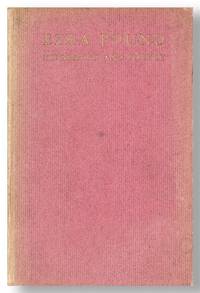
171921983New York: Alfred A. Knopf 1917 but 1918. First Edition. Octavo 19.25cm.; original rose paper-covered boards upper cover lettered in gilt unadorned spine; 31pp.; frontispiece. Spine faded to tan gilt lettering a bit dulled else Very Good and sound. One of 1000 copies published. Written anonymously by Eliot and edited by Pound. Eliot's second published work. GALLUP Eliot A2; GALLUP Pound B17. Alfred A. Knopf unknown
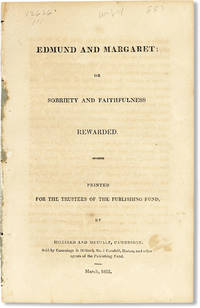
182245554Cambridge: Printed for the Trustees of the Publishing Fund by Hilliard and Metcalf 1822. First Edition. 12mo 17cm.; disbound; 60pp. Light soil else Very Good or better. Moralistic tale establishing the "basic situation often used in later temperance fiction--a marriage threatened by the husband's drinking habit" David S. Reynolds and Debra J. Rosenthal "The Serpent in the Cup" 1997 p. 24. We find this title published later for the London Christian Tract Society under the authorship of "A.H." SHOEMAKER 8597; WRIGHT I 893. Printed for the Trustees of the Publishing Fund, by Hilliard and Metcalf unknown
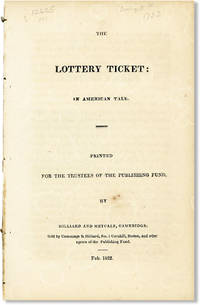
182245551Cambridge: Printed for the Trustees of the Publishing Fund by Hilliard and Metcalf 1822. First Edition. 12mo 17cm.; disbound; 51pp. Very faint spotting to title page serving as upper cover else Very Good and sound. The tale of Mr. Merriam an upstanding farmer in New Hampshire and his moral decline after winning $1000 in a lottery culminating in an extended stay in prison. The tale ends happily however thanks to the piety and patience of Mrs. Merriam. SABIN 42155; SHAW & SHOEMAKER 9294; WRIGHT 1733. Printed for the Trustees of the Publishing Fund, by Hilliard and Metcalf unknown
25919York: Lucius Books. 2015. First edition. First edition. Presentation issue one of 25. Original white card covers printed in red in the plain glassine dustwrapper. Illustrated in colour throughout. A fine copy. The entire print-run was made up of 75 numbered copies for sale of which 58 perished and 25 presentation copies for the publisher. Produced in the style of Ed Ruscha's Twentysix Gasoline Stations VARIOUS NEW YORK STOREFRONTS publishes 48 images in their original size and format in this limited edition print run of 75 hand-numbered copies. The unknown photographer using Kodachrome shot pharmacies cinemas drugstores liquor stores and restaurants in and around Manhattan. Kodachrome was Kodak's first commercially viable colour film. The photographs date from between 1947 and 1952 and were re-discovered over half a century later in a New York fleamarket. Further details and images for any of the items listed are available on request. Lucius Books welcomes direct contact with our customers. York: Lucius Books. 2015 unknown