Joyce, JamesBiblio.com
18 167 résultats
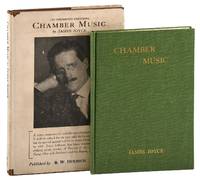
19188532Boston and New York: The Cornhill Company / B.W. Huebsch 1918. First Unauthorized and Authorized American Editions. 1. Chamber Music. Boston: The Cornhill Company 1918. First Unauthorized American Edition First Printing one of ca.1000 copies. 12mo. 15.75cm; sage green cloth with titles stamped in gilt on upper front cover; wove endpapers also issued with laid endpapers with no priority established; glassine dustjacket; 40pp. A fresh Fine copy in a Near Fine copy of the publisher's glassine overlay showing some trivial wear a tiny tear at crown with a few tiny nicks.<br /> <br /> 2. Chamber Music. New York: B.W. Huebsch 1918. First Authorized American Edition First Printing. Octavo 18.25cm; dark brown laid paper-covered boards with titles stamped in blind on spine and in gilt on front cover; top edge gilt; dustjacket; 48pp. Some offsetting and two small faint splash marks to lower endpapers gentle sunning to spine with mild crease to heel; Near Fine. In the original pictorial dustjacket priced $1.00 at base of spine; edgeworn gently spine-sunned and lightly dust-soiled with shallow losses and a few tiny tears to spine ends and extremities none affecting lettering and corresponding faint splash marks to lower flap edges; an unrestored Very Good example. Both volumes housed together in a custom crushed morocco and marbled paper clamshell case.<br /> <br /> Joyce's first collection of poems originally issued by Elkin Mathews in 1907. The Cornhill edition published June 1918 precedes the authorized American edition published by B.W. Huebsch September 30 1918 by three months. Slocum & Cahoon A5 & A6. 8532. The Cornhill Company / B.W. Huebsch unknown
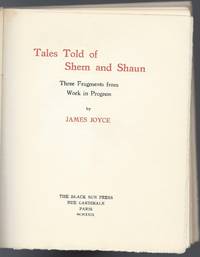
19291882Paris: The Black Sun Press 1929. First edition. Limited one of 500 numbered copies printed in red and black on Holland Van Gelder Zonen 650 copies altogether. Provenance: the author’s grandson’s Stephen James Joyce’s bookplate. Illustrated with the famous abstract portrait by Constantin Brâncuși. In publisher’s wrappers. In the original gilt leafed cardboard slipcase. Slipcase slightly worn. Spine somewhat worn and stained. Otherwise in fine condition. First edition. Limited one of 500 numbered copies printed in red and black on Holland Van Gelder Zonen 650 copies altogether. Provenance: the author’s grandson’s Stephen James Joyce’s bookplate. Illustrated with the famous abstract portrait by Constantin Brâncuși. In publisher’s wrappers. In the original gilt leafed cardboard slipcase. 10 XV 1 55 7 p. and one loose plate protected with tracing paper. <p><br /> Limited first edition of Joyce’s Tales Told of Shem and Shaun the author’s grandson’s copy.<br /> <p><p><br /> This book includes three fragments from Work in Progress later published as Finnegans Wake.<br /> <p><p><br /> Stephen James Joyce 1932-2020 was the grandson of James Joyce and the executor of Joyce's literary estate.<br /> <p>. The Black Sun Press unknown
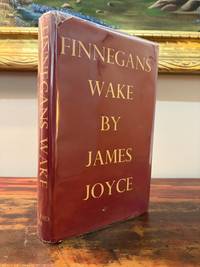
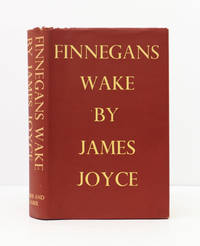
19396185London: Faber and Faber Limited 1939. First Edition. Very Good/Very Good. First trade edition. In original unclipped jacket in a protective sheet. The jacket has some edge wear chipping and light toning to the spine. Bound in red cloth over boards with gilded lettering and lines on the spine. Square corners no lean slight push at the head of the spine. Long and lower edges roughly trimmed. Many pages uncut though also loose from being handled. Some toning to edges. Toning to pastedowns a few preliminary pages and final page of text; infrequent elsewhere. Joyce's follow-up to his Ulysses Finnegans Wake was written between 1922 and 1939. It was initially published in installments and its title was only revealed with the final publication. Its use of language lack of normal structure and use of characters baffled and baffle many readers though some consensus has formed around themes etc. Preceded by a 425-print run of signed limited editions. <br /> <br /> Pages: 8 628 Dimensions: 913/16 x 69/16 x 19/16. Faber and Faber Limited unknown
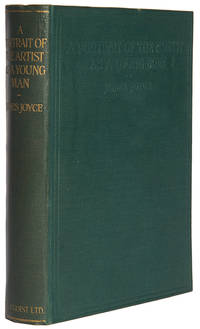
116695London The Egoist 1917. . First English edition from American sheets; 8vo; bookplate to front pastedown some offsetting to endpapers else unmarked internally; publisher's dark green cloth upper cover titled in blind titles to spine gilt very slightly bumped at spine ends else an unusually nice copy; housed in custom green cloth folding box.<br /> A very sharp copy of this core work by Joyce here in the earliest London edition using American sheets from the Huebsch printing as English publishers refused to print the text. With the bookplate of George Heron Milne 1887-1948 who was a librarian at the Library of Congress or 39 years and was chief of the Congressional Reading Room from 1937 to 1948.<br /> Slocum & Cahoon A12. London, The Egoist, [1917]. hardcover
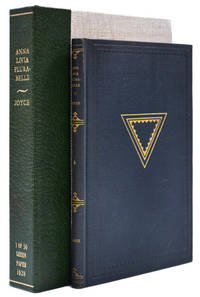
123928New York Crosby Gaige 1928. . First edition first printing number 349 of 800 copies signed by the author; device to title bookseller's ticket to rear pastedown; publisher's brown cloth blind-tooled borders gilt device to upper cover gilt spine minor rubbing to spine ends fore-corners slightly bumped top edge gilt others uncut.<br /> The text of Anna Livia Plurabelle later became chapter eight in Finnegans Wake and introduced Joyce readers to the character that fellow Irish author Edna O'Brien was to describe as 'the most accessible and indeed beloved character conceived by Joyce'.<br /> Slocum & Cahoon A32. New York, Crosby Gaige, 1928. hardcover
19211403270London: The Egoist Press 1921. Third Edition Thus. Hardcover. Octavo 299 pages. In Fair condition. Bound in green cloth boards. Cloth on spine missing; part of a page has been adhered to spine in its place. Rubbing to edges and corners of boards. Heavy soiling to rear board lighter soiling to front board. Writer and founder of publishing house Contact Editions Robert McAlmon's bookplate adhered to front pastedown. Pencil markings to "By the Same Writer" page. Soiling from rear board affecting textblock from page 288 to rear pastedown. Tearing to rear pastedown. Age toning throughout. SH consignment. Shelved case 2. Printed in the United States of America using sheets imported from B.W. Huebsch. Presumed given to William Bird either to read or for a project regarding Three Mountains Press. Robert McAlmon ran Contact Editions and typed and edited the handwritten manuscript of Ulysses by James Joyce. This copy was possibly used by McAlmon regarding The Egoist Press' 1922 publication of Ulysses. <br /> <br> <br /> <br> <br /> Bill Bird was an American publisher best known for running the Three Mountains Press a small press that published many prominent modernists in the 1920s including Ezra Pound Ernest Hemingway James Joyce William Carlos Williams and Robert McAlmon with Ezra Pound serving as editor. Over a period of two and a half years he published 9 works. Concurrently he founded Consolidated Press Service and worked there as a journalist from 1920-1933 when he joined the New York Sun as chief foreign correspondent. Forced to flee France after the Nazi invasion he wrote articles warning of war. After WWII he moved to Tangier and was the editor of the Tangier Gazette.<br /> <br> <br /> <br> <br /> This title was among Bird's private collection having been carted by him from Paris where he stayed until 1940 to Spain Tangiers and finally back to Paris and by descent to the US. 1403270. Shelved Dupont Bookstore. The Egoist Press hardcover
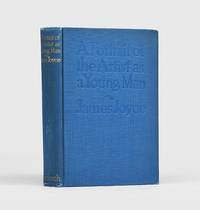
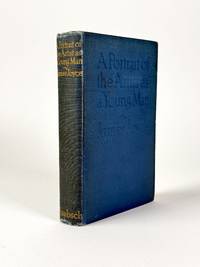
1916345922New York: B.W. Huebsch 1916. First edition. iv 299 1 pp. 1 vols. 8vo. Publisher's blue cloth stamped in gilt on spine and in blind on front cover. Some rubbing spine ends and slightly on corners one scratch to front cover near spine not affecting blind stamp; very clean internally. First edition. iv 299 1 pp. 1 vols. 8vo. First edition of Joyce's autobiographical novel recounting the schooldays and emerging artistic consciousness of his alter-ego Stephen Dedalus. The novel was refused by Grant Richards publisher of Dubliners Secker and Edward Garnett for Duckworth. Finally B.W. Huebsch agreed to take on the book if Harriet Weaver who had serialized the novel in The Egoist in 1914 would arrange for 750 copies to be published in London. It was published first in New York by Huebsch on 29 December 1916 and then in London on 22 January with the American sheets and a cancel Egoist title-page. Slocum & Cahoon A11 B.W. Huebsch unknown
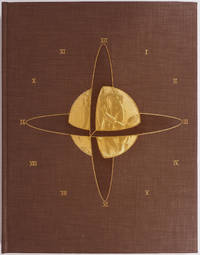
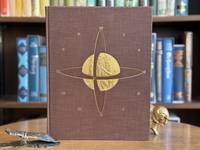
19358741<p>Number 58 of 1500 copies signed in pencil by Henri Matisse a further 250 copies of the edition were additionally signed by Joyce. This is the first illustrated edition of Ulysses though Matisse chose to supply illustrations of the Calypso episodes of Homer's Odyssey corresponding to the six episodes of the novel as his artist's response to Joyce's text which it is often said he never finished reading. He thus confounded both the publisher George Macy and most of the public on its first publication. The Limited Edition Club edition owes its existence to the lifting of the American ban on the novel in December 1933.</p><p>Large 4to 295 × 225 mm pp. 363 1 6 soft ground etchings on thick paper with a total of 20 reproductions of Matisse's preliminary drawings on yellow and blue paper of different sizes 26 illustrations in all. Original brown buckram gilt with gold orb design to the upper cover original slipcase. The slipcase slightly chipped towards the head. A fine copy with the cloth binding exceptionally sharp and free of rubbing.</p> Limited Editions Club.
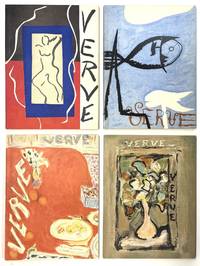
1937510540Verve 1937. First Edition. Paperback. FINE. Complete run of the first four issues of Teriade's legendary art magazine. Beginning with a stunning cover produced by Matisse for the first issue Verve would incorporate fresh artwork into its cover designed newly commissioned by artists such as Miro Picasso Chagall and other leading lights of the French art world. Each issue offered spectacular color lithographs printed by the Paris lithographers Mourlot. Early issues came in litho-printed card wrappers in boxes later volumes would be in paper-over board with litho covers. This choce allowed Teriade to feature the fresh lithographic artwork in the cover design but left the books themselves extremely fragile and succeptible to wear. Additionally the full-page lithographs have been continuous targets for art dealers looking to excise the plates. So condition seen here is quite rare with each volume preserved COMPLETE FINE with no signs of the wear and toning so commonly seen. 'The cover of Verve No. 1 is by Henri Matisse; it consists of three unmodulated colors--red blue and black--that the master cut directly from printers' ink specimen books. . Mattisse's cover for the first issue lithographed by Fernand Mourlot printers was an original work of art created expressly for the magazine--as would be practically all of the Verve's covers. . The painter took great pains to make sure that the cover would turn out exactly as he wished. . THe care Matisse lavished on what others might consider a minor undertaking was one of the hallmarks of Teriade's publications. How did he induce the greatest artists of this century to give the very best of themelves . Matisse and Teriade shared a common ideal. For both of them painting was life itself.' Michel Antonioz VERVE: The Ultimate Review of Art and Literature 35-36. Verve paperback
19350101407New York: The Limited Editions Club 1935. Limited edition. Hardcover. pp. xv 363. 4to. Brown cloth with gilt embossed lettering and decoration to spine and front board. Speckled top edge others untrimmed. 6 etched plates by Matisse 20 reproductions of Matisse's sketches printed on blue and yellow paper. Minor wear to edges scuff to gilt decoration on front board 1 cm split to front endpaper at hinge; contents clean binding sound. Lacks slipcase. Limited edition this copy numbered 1044 of 1500; SIGNED by Matisse. The Limited Editions Club hardcover
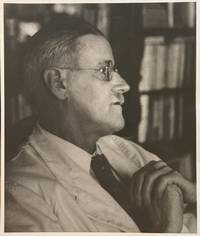
19372884<p>Paris: np 1937. Very Good. POWERFUL IMAGE OF JAMES JOYCE BY SURREALISTIC PHOTOGRAPHER JOSEF BREITENBACH. A remarkable set of circumstances had to come together to this photograph of James Joyce by German born photographer Josef Breitenbach to first exist and then to survive. <br /><br />Throughout the summer of 1937 as he experienced increasingly painful flashes in his right eye Joyce pored over early proofs of Finnegan's Wake then known only as "Work in Progress". Perhaps he was preoccupied with correcting the inevitable and myriad errors in his pun-flecked stream of consciousness prose or perhaps he was overcome with pain but we know from Breitenbach's pocket diary that Joyce canceled four times before the two exiled artists finally met.<br /><br />James Joyce's relationship with Ireland was famously complex and included self imposed exile. He and Nora Barnacle his future wife left Dublin in 1904 for mainland Europe never returning to his homeland after 1912. On the other hand photographer Josef Breitenbach was a Jewish German refugee who fled the rising Nazi's. Both his Jewish background and prior involvement with the short-lived revolution of 1918 made him an early target of the Brownshirts who knocked on his Munich studio door one day in 1932. Thinking on his feet Breitenbach was able to use his portrait of then Vice-Chancellor Papen whom he had photographed the year before together with a letter of thanks from Papen for his work in order to claim that he was under Papen's protection. Seizing the brief vacuum created by his subterfuge Breitenbach immediately packed his bags and within days departed for Paris.<br /><br />Once in Paris Breitenbach mingled with the Surrealists showing in gallery exhibitions alongside Man Ray Henri Cartier-Bresson and Brassai. Over time he developed a reputation for landscapes nudes and photo-journalism. By the time Breitenbach photographed James Joyce in July 1937 he had built a portfolio of portraits of artists such as Max Ernst Emile Bernard and Bertold Brecht. Studio portraits like this print of Joyce were often bathed in a soft seductive glow both flattering and intriguing. Here Joyce sits in profile with clasped hands behind him are blurred rows upon rows of bookshelves. The message is clear: despite failing vision Joyce remained a bright and vibrant writer.<br /><br />Meanwhile history marched on. Two years later in September 1939 Breitenbach was placed with other German and Jewish exiles in a French internment camp. His survival skills still intact he volunteered for a rural labor force that saved him from deportation to a concentration camp. With the help of friends in England and the United States Breitenbach once again fled the Nazi's arriving in New York in June 1941. To his enormous relief his entire oeuvre of photographic prints and negatives including the Joyce pictures had been smuggled out of Paris by another friend and sent to the States by way of Havana.<br /><br />As Breitenbach once again built a life for himself in a new country he turned to his pre-war work. <br />Among the first negatives he developed were those of Joyce - an homage to the writer who had died months before at age 59 in Zurich.<br /><br />Silver gelatin photograph. Taken in 1937; printed later. With "Estate of Josef Breitenbach" stamp on verso. Very faint corner crease only noticeable on verso. Image approx 9x7 1/2 in / 23 x 19.2 cm; with margins 9 3/8 x 7 7/8 in / 23.8 x 19.9 cm. A beautiful evocative image. Rare.<br /><br />References:<br />Michael Shnayerson Josef Breitenbach: James Joyce 9 Portraits. Dublin The Towers 2004.</p> np
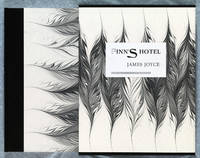
2013FH.1.A<p>One of only 10 copies printed on Zerkall Litho for presentation in Artist's Bindings. Designed by the Spanish artist Antonio Veléz Celemín exclusively for the first edition these copies are beautifully handbound in quarter cloth with exquisite hand marbling on both the book and the slipcase joining two complementary patterns. To achieve this unique and specially commissioned design the artist has combined Suminagashi a Japanese technique dating back to 1055 using only black ink and the classic western pattern of 'wavy thorns'. These are our 'top copies': they marry the finest in printing art with a rare fine-binding. <br /><br /><br />The First Edition of FINN'S HOTEL by James Joyce. Edited arranged and with a preface by Danis Rose introduced by Seamus Deane with eleven illustrations by Casey Sorrow. Designed and printed letterpress by Michael Caine for Ithys Press Dublin. The Preface and Joyce's text have been handset by Caine in Van Dijk Kis-Janson and various early 20th Century typefaces and the Introduction has been set by Phil Abel in Monotype Univers. The edition is limited to 180 copies : of 40 head copies on Zerkall mouldmade 10 signed deluxe copies I-X are housed in bespoke bindings featuring the handmarbling of Antonio Vélez Celemín of Madrid and 26 copies lettered A-Z and 4 copies Hors Commerce are issued in paper wrappers within clamshell boxes ; 140 numbered copies on Fedrigoni Vellum are presented in Elisabeth Hyder's printed paper over boards. The edition has been handbound by Tom Duffy in Dublin's 5 Lamps.</p> Ithys Press hardcover
0296-25Basel Rhein-Vlg. 1927. Privatdruck. 3 Bll. 458; 2 Bll. 465; 2 Bll. 662 S. Blauer OLn.-Bd./Orig. blue cloth binding. m. Rückensch. Kanten sehr leicht berieb. Alter Namenszug am flieg.Vorsatz. Slocum-C. D.45.2 - Erste deutsche Ausgabe. Nummer LXXV von nur 100 numerierten Exemplaren als Sonderausgabe in einem Band für die Presse: "Privatdruck für die Presse". Weitere erschienen in einer Auflage von 1000 num. Exemplaren. - First edition in german. The first translation of Ulysses published by Joyce. Limited to 100 numbered copies for the press. (Basel, Rhein-Vlg.) 1927. hardcover
1916172378New York: B. W. Huebsch 1916. To forge in the smithy of my soul the uncreated conscience of my race First edition in book form first printing of the author's landmark first novel. The work was serialized in The Egoist between 2 February 1914 and 1 September 1915. British printers were apprehensive to produce a book edition due to the hostile public reaction to the serial and for fear of prosecution under obscenity laws. It was therefore Huebsch of New York who undertook the true first publication in book form issued on 29 December 1916. No more than 750 sets of the American sheets were reserved for British issue by Harriet Shaw Weaver of the Egoist Press in London appearing there the following 22 January 1917. The Egoist Press later produced their own edition the first printed in Britain in 1918. Octavo. Original blue cloth spine lettered in gilt front cover lettered in blind. Brentano's ticket and ink date of 3 December 1917 on rear pastedown. Spine lightly toned bright overall rubbing to edges browning and spot of skinning to endpapers from previous book protector contents clean. A very good copy. Slocum & Cahoon A11. hardcover
1916JOYCEJAM000887B.W. Huebsch New York. 1916. First edition. Octavo. pp iv 299.Spine slightly dull and a bit rubbed at the ends. Corners also slightly rubbed. Very good. No dustwrapper. B.W. Huebsch, New York. unknown
98347New York Crosby Gaige 1928. . FIRST EDITION no. 3 of six numbered copies of 50 COPIES ON PALE GREEN-TINTED PAPER from an overall limitation of 850; 8vo; title previously detached cleanly at gutter now with neat reversible tissue paper repair to verso chip from fore-edge of a preliminary blank leaf slight separation at upper hinge bookplate to front pastedown; publisher's black cloth lettered in gilt on the spine and with triangular gilt design on upper cover top edge gilt presented in morocco-backed cloth drop-back box.<br /> The first edition of Anna Livia Plurabelle by James Joyce the text that was to become chapter eight in Finnegans Wake and introduce Joyce readers to the character that fellow Irish author Edna O'Brien was to describe as 'the most accessible and indeed beloved character conceived by Joyce'. <br /><br />Slocum and Cahoon note that: 'Of these 50 copies on light green paper probably 6 were offered for sale by the publisher. These were numbered 1 to 6 with the following notice on p.iv in the handwriting of Crosby Gaige: This is one of 6 copies on green paper. Crosby Gaige.'; however this copy is simply numbered '3' and does not bear the publisher's statement on the limitation page. The remaining 44 copies were presumably disseminated by Crosby Gaige with the exception of a few which were passed on to the Chaucer Head Book Shop New York by Random House in 1938.<br /> Slocum & Cahoon A32. New York, Crosby Gaige, 1928. hardcover
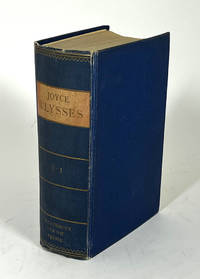
ST15816-12Dublin: Lilliput Press 1997. No. 3 OF 100 SPECIAL COPIES of the "Illegal" First Dublin Edition bound in quarter leather and signed by Rose and Banville from a total edition of 1000 numbered and 26 lettered copies. 240 x 158 mm. 9 1/2 x 6 1/4". 4 p.l. v-lxxxiii 1 739 3 pp.Edited by Danis Rose. With a foreword by John Banville. <br/> Publisher's quarter blue morocco over navy cloth boards smooth spine with silver lettering. In a blue buckram slipcase. In mint condition.<br/> <br/> This is the first printing of Joyce's masterpiece actually to be done in Ireland--75 years after its initial publication. Generally recognized as the most important 20th-century novel in English Joyce's chronicle of Leopold Bloom's odyssey through Dublin excited much controversy upon publication in 1922 and was for years a target of censorship especially in the U.S. and U.K. The present edition also met with some animosity when it was discovered that the editor prominent Joyce scholar Danis Rose used some language from the original manuscripts without permission from Joyce's estate. A lawsuit for copyright infringement was issued and this work subsequently became known as the "Illegal Edition." Despite the unpleasant dispute Rose's "Ulysses" was lauded for its readability and was described by the Irish Times as "a landmark edition for first-time readers and life-time fans." Founded in 1984 and still in operation today the Lilliput Press has published more than 600 titles of Irish interest and is regarded as one of Ireland's most esteemed small publishers. This strictly limited edition of 100 rarely appears for sale: we could trace just one auction appearance at PBA Galleries in 2005 where a copy was sold for $1495 all in. Lilliput Press unknown
1989586FISCHER 02-07/1989. 1. softcover. Tredana Deutsche Erstausgabe! 274827492753 FISCHER paperback
1916410927New York: B. W. Huebsch 1916. First edition. Corners rubbed minor edgewear head and foot of spine pushed and worn somewhat rubbed minor soiling. Cream endpapers; pencil notations some effaced to the front endpapers. Internally generally clean and tight; minor scattered thumbsoiling text block edges toned with minor soiling and wear. 8vo. iv 299 1 pages. Publisher's blue cloth lettered in blind to the upper board spine stamped in gilt; lacking dust jacket. A landmark Modernist novel and the author's first. First serialized in The Egoist in 1914 it was first published in book form in New York by Huebsch on 29 December 1916 and then in London on 22 January with the American sheets and a cancel title-page. Slocum & Cahoon A11. B. W. Huebsch unknown
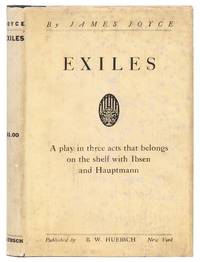
19187836New York: B.W. Huebsch 1918. First edition. Fine/Near Fine. Published simultaneously with the English edition on May 25 1918 see Slocum & Cahoon 14 and 15. A Fine copy of the book in Near Fine dust jacket. vi 154 pp. Publisher's green cloth over tan blindstamped boards. A touch of foxing to edges and top edge dusty otherwise clean throughout. Dust jacket rubbed and a bit foxed with just a few short tears to the rear panel. Overall a very appealing copy of Joyce's only play.<br /> <br /> Exiles captures the romantic dramas of Richard and Bertha a common-law couple recently returned to their home country of Ireland and the complex dynamics that play out between them Richard's cousin Robert and Robert's wife Beatrice. "The play was not especially popular at the time and is commonly regarded as one of Joyce's weaker works. However much of the initial criticism may have had to do with the play's provocative themes: unconventional relationships jealousy weakened national ties to Ireland and exile. All of these topics resonate with Joyce's personal life making Exiles a partly autobiographical work" James Joyce Foundation. <br /> <br /> After W.B. Yeats refused to stage the play Joyce unsuccessfully attempted to interest theatrical companies throughout England Ireland and the United States. Exiles eventually debuted in German translation in Munich in 1919. Of the premiere Joyce wrote: "Complete fiasco. Row in theatre. Play withdrawn. Author invited but not present.Thank God" Morgan Library. The play was not performed in English until a staging at New York's Neighborhood Playhouse in 1925. <br /> <br /> Slocum & Cahoon 15. Fine in Near Fine dust jacket. B.W. Huebsch unknown
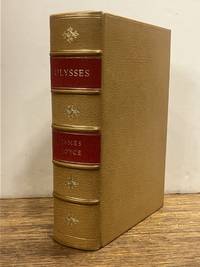
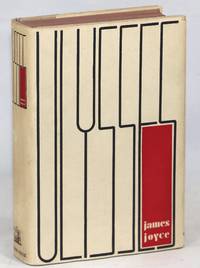
1934334890New York: Random House 1934. hardcover. fine. Thick 8vo handsomely rebound in full beige morocco red leather spine labels. New York: Random House 1934. First Authorized American Edition. Fine.<br/> <br/> Slocum & Cahoon 21.<br/> <br/> Random House unknown
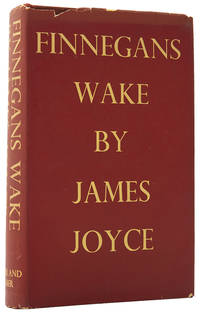
1939145126London: Faber and Faber Limited 1939 First UK edition. iv 628 pp. Tall octavo. Original burgundy cloth. Top edge trimmed. Gilt title and decoration on spine. Fore edge and bottom edges untrimmed. Original endpapers. Text block clean and crisp. Original printed dustwrapper. Touch of wear on the top edge. Price trimmed and a rubber stamp with a US dollar amount added. Really no fading to speak of. A fine copy of a scarce item in this condition. 3400 sets of sheets for the trade edition were printed for Faber. Of these 2255 were bound and sold at 25 shillings 950 were destroyed by the publisher and the remaining were complimentary copies. Joyce thought that the 950 discarded sets of sheets remained unsold because of the price which Joyce believed was too high. Slocum & Cahoon A47.</p><p></p><p>Also included is a small group of ephemera that relates to the first sale of the book in 1939 by Philip C. Duschnes in New York 1939 Faber and Faber Limited hardcover
1934000016927New York: Random House 1934. First authorized American edition. Hardcover. Near Fine/Very Good or better. 8vo. 6 vii-xvii 5 5-767 7 pp. Pale buckram cloth over beveled-edge boards black and red lettering on the front board and spine; dark purple topstain. Price of 3.50 on the front flap of the dust jacket. The jacket does not state the jacket designer's name on the front panel. Slocum and Cahoon do not address the question of the designer's name credit though many consider the credit's presence on the jacket to be the preferred variant we have seen this point referred to as a state and as an issue. Slocum and Cahoon 21. A sharp copy of Joyce's modern epic an impressionistic comic tour de force using the epic narrative as a framework. A cultural blend of Irish wit and Greek literary devices and themes dense but beloved and extraordinarily influential. The spine's cloth very gently toned the free front endpaper with two faint wrinkles to its corner; jacket with about three tiny chips on its folds. Random House hardcover
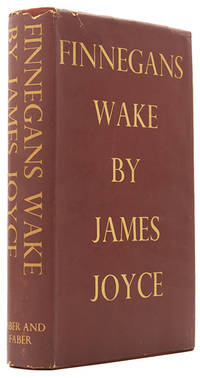
112465London Faber & Faber 1939. . First edition first impression trade issue; large 8vo; toning to the first and last leaves from the endpapers as always; publisher's burgundy cloth titles to spine gilt with the unclipped dust-jacket dust-jacket with some slight loss at head of spine slight rubbing to extremities spine a little toned else very good; housed in green morocco gilt solander box.<br /> One of 3400 sets of sheets for the trade edition of Finnegans Wake which were printed for Faber. Of these 2255 were bound and sold at 25 shillings 950 were destroyed by the publisher and the remaining were gratis copies. It is possible that the 950 discarded sets of sheets remained unsold because of the price which Joyce believed was too high.<br /><br />'A way alone aloved alost along the ' If Finnegans Wake is a key book it is a key which needs a key' Connolly. 'His work is enriched by such large resources of invention and allusion that its total effect is infinite variety' Harry Levin.<br /> Slocum & Cahoon A47; Connolly The Modern Movement 87; Harry Levin James Joyce: A Critical Interpretation. London, Faber & Faber, 1939. hardcover
107461London Faber & Faber 1939. . First edition first impression trade issue; large 8vo; publisher's burgundy cloth titles to spine gilt spotting to the first and last leaves from the endpapers as always dust jacket with some very minor loss at the top edge otherwise a very good copy. <br /> One of 3400 sets of sheets for the trade edition of Finnegans Wake which were printed for Faber. Of these 2255 were bound and sold at 25 shillings 950 were destroyed by the publisher and the remaining were gratis copies. It is possible that the 950 discarded sets of sheets remained unsold because of the price which Joyce believed was too high.<br /><br />'A way alone aloved alost along the ' If Finnegans Wake is a key book it is a key which needs a key' Connolly. 'His work is enriched by such large resources of invention and allusion that its total effect is infinite variety' Harry Levin.<br /> Slocum & Cahoon A47; Connolly The Modern Movement 87; Harry Levin James Joyce: A Critical Interpretation. London, Faber & Faber, 1939. hardcover