Joyce, JamesBiblio.com
21 585 résultats
1922140944847London: The Egoist Press 1922. First British edition. First British edition. Published by John Rodker in London October of 1922 following the Paris printing in February the same year. Technically printed in France but for British private distribution. vi 732 pp. Bound in publisher's printed wraps on handmade paper. Copy #275 in a limitation of 2000. Near Fine with the fragile wraps in truly excellent shape; very rarely found unsophisticated with such little wear especially on the spine which typically has much much more chipping and wear; no restoration done to it. Typical toning to contents bump to bottom right corner with a hint of creasing. A literary milestone in wonderful shape. The Egoist Press unknown
1939140937791London: Faber and Faber 1939. First Edition. Near Fine. First edition. Signed limited edition. Copy number 48 of 425 numbered copies signed by James Joyce. Bound in publisher's red cloth binding with spine lettered in gilt in publisher's yellow cloth-covered slipcase. Near Fine. Red cloth faintly rubbed faintly faded at the spine gently bruised at the spine ends. Offsetting to front endsheet from a formerly laid in clipping. In a Very Good lightly worn and lightly soiled slipcase with one corner bumped. Faber and Faber unknown books
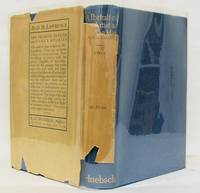
1916WRCLIT69985New York: B. W. Huebsch 1916. Medium blue cloth lettered in gilt and blind. Top edge slightly dust darkened trivial rubbing at crown and toe of spine but a very near fine copy in a fragment of the very scarce printed dust jacket. First edition. Although serialized in 25 installments in THE EGOIST from Feb. 1914 to Sept. 1915 British printers and publishers then still reeling from the suppression of Lawrence's THE RAINBOW were unreceptive in their responses to Joyce's efforts toward publication in book form. Based in part on Harriet Weaver's guarantee of 750 sets of sheets for the slightly later Egoist Press issue Huebsch took on the novel for December publication. The size of the first printing may have been reasonably conservative and a second printing was called for in April 1917. The printed dust jacket for this book is rather scarce; the present fragment consists of the rear flap blank the rear panel an advert for the Huebsch edition of THE PRUSSIAN OFFICER - wanting two significant chips in the blank area and a portion of the spine with "AR / AS / YOUNG MAN / JOYCE / $1.50 net" intact. " . the Portrait can be read as either an autobiography or a novel. A landmark in sensibility the prose moves forward in complexity from the child's sensations at the beginning to the adolescent subtleties at the end" - Connolly. SLOCUM & CAHOON A11. CONNOLLY MODERN MOVEMENT 26. B. W. Huebsch hardcover books
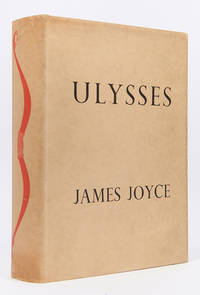
119639London John Lane The Bodley Head 1936. . First UK edition number 726 of 900 copies on Japon vellum from an overall limitation of 1000; 4to; original green buckram with gilt Homeric bow designed by Eric Gill to upper cover titles to spine gilt top edge gilt others untrimmed with the unclipped dust-jacket a little tanning to the foot of the spine panel but a handsome copy of a stunning piece of book production.<br /> The first truly complete edition of Joyce's literary masterpiece incorporating the author's corrected text and complemented by a prefatory list of previous editions and three appendices including a legal history of the novel and a bibliography of the author's works.<br /> Slocum & Cahoon A23. London, John Lane The Bodley Head, 1936. hardcover
1939317261London and New York: Faber and Faber & The Viking Press 1939. First Edition one of 425 Large Paper copies signed by Joyce. 1 vols. Tall 8vo. Red buckram. Near fine. Spine faded and with some spotting. Provenance: Charles R. Rudolo signature in pencil dated "1939" on front free endpaper. First Edition one of 425 Large Paper copies signed by Joyce. 1 vols. Tall 8vo. Slocum & Cahoon A47 Faber and Faber, & The Viking Press unknown books
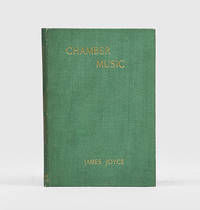
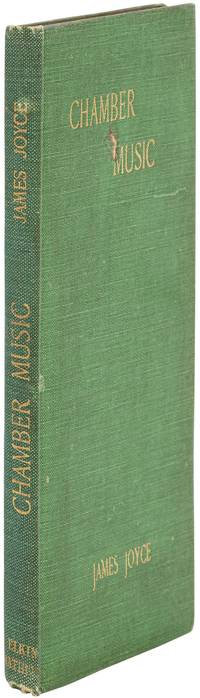
1907177849London: Elkin Mathews 1907. Love and laughter song-confessed / When the heart is heaviest First edition first issue of the author's first book prompting his resignation from his employment at a bank two months before publication. "These delicate lyrical verses were the work of the young poet of the college years and later" contrasting with the fiction which proved "a reversal of the earlier mood and view of the world" Costello p. 273. Publication took place on 10 May 1907 in a run of 509 copies which were not all bound at once. This first issue is slightly larger in size bound in a light green cloth with thick laid endpapers showing horizontal chain lines and it has the poems in signature C well-centred. The second and third variants were bound up in dark green cloth a few years later. They are both trimmed slightly smaller leaving the poems in signature C poorly centred. This copy is from the library of Geoffrey Arundel Whitworth CBE 1883-1951 the founder of the British Drama League who began working for the publisher Chatto & Windus in the same year Chamber Music was published. "Whitworth knew many writers established and new; through him the firm attracted works by such authors as G. K. Chesterton Lytton Strachey and Clive Bell". In 1934 George Bernard Shaw described Whitworth as "one of the most important people in the theatre today" ODNB. His ownership inscription is on the front free endpaper. Small octavo. Illustrated title page. Original light green cloth spine and front cover lettered in gilt. Housed in a dark green cloth chemise and gilt-decorated green morocco slipcase by Rene Patron of Hollywood. Cloth notably sharp notwithstanding mild rubbing and darkening of spine spots of soiling to a couple of leaves. A near-fine copy. Slocum & Cahoon A3 first variant. Peter Costello James Joyce: The Years of Growth 1992. hardcover
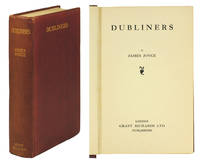
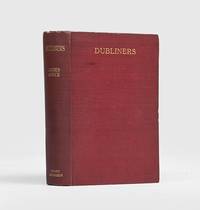
19141232268vo. London: Grant Richards Ltd 1914. 8vo 278 pp. Original maroon cloth backstrip and upper cover titled in gilt. A very good copy backstrip slightly sunned a few light bumps ands scuffs to the lower board front hinge tender. § First edition of Joyce's first prose work a collection of short stories about his "dear dirty Dublin" published on June 15th 1914 after considerable travails. Richards had first agreed to publish the book in 1906 but the project was dropped when Joyce refused to amend "objectionable" passages. Joyce's retort is famous: "It is not my fault that the odour of ashpits and old weeds and offal hangs around my stories. I seriously believe that you will retard the course of civilisation in Ireland by preventing the Irish people from having one good look at themselves in my nicely polished looking-glass." Arrangements with Elkin Mathews and Maunsel likewise fell through until eventually Richards agreed to take up the book again. 1250 copies were printed 504 of which were sold to B.W. Huebsch for the American edition making this one of only 746 copies of the English first edition. Grant Richards Ltd hardcover books
1935241728New York: Limited Editions Club 1935. Signed Limited Edition. Publisher's brown cloth decorated in gilt top edge speckled in glassine jacket housed in publisher's plain pale yellow slipcase spine titled in brown. Fine in toned and lightly chipped original glassine jacket in near fine publisher's slipcase. Illustrated by Henri Matisse in six etchings with accompanying preliminary sketches on blue and yellow transparent overlays. i-iii-xv 3 363 3pp. 12" x 9.5" NOT EVERY PICTURE TELLS THE STORY <br /> <br /> In October 1929 the stock market crashed and the twenty-nine year old George Macy 1900-1956 introduced the first book in his publishing venture The Limited Editions Club. Subscribers paid an affordable monthly price for editions de luxe of literary classics illustrated and signed by notable artists often designed by Macy in a limitation of 1500 copies.<br /> <br /> At the time the idea was groundbreaking and surprisingly well-received and Macy displayed an unflagging all-American spirit of purpose driven by risk-taking that would keep his publishing passion afloat through the Depression and onward. As its centenary approaches it appears that LECs have also survived the quirks and whims of book collectors thanks to Macy's unbridled instinct for matching artists with texts. Take for example the strangest marriage of them all Henri Matisse meets James Joyce's Ulysses the most valuable blunder in LEC history. An indignant Joyce finding out that Matisse had never read the book dropped out of the project at the eleventh hour signing only 250 copies sparking endless gossip and criticism and making it the most desirable of any of the LECs. Our copy may not have Joyce's imprimatur but it is otherwise complete and in spectacular condition making it a special offering from our Spring acquisitions.<br /> <br /> Limited to the standard 1500 signed and numbered copies of which this is number 364 signed by Matisse in pencil on the limitation page--preserved here in incredibly scarce original glassine. <br /> <br /> Slocum 22. Limited Editions Club unknown
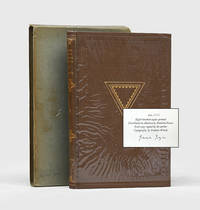
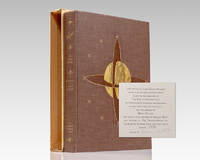
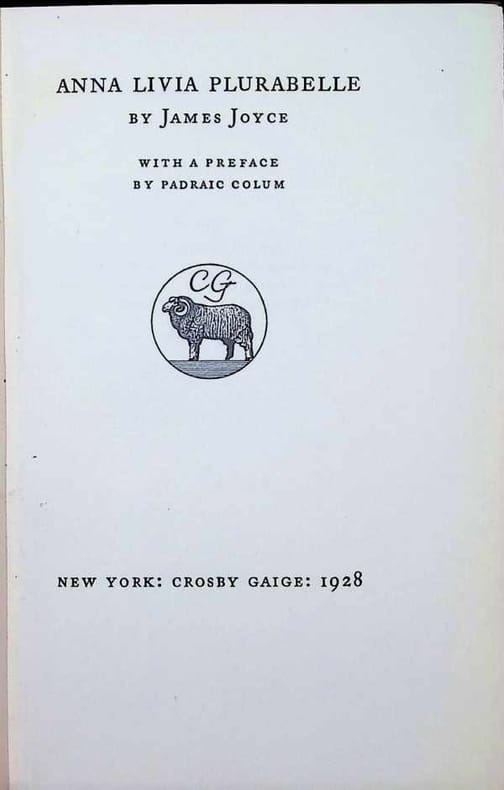
1928172029New York: Crosby Gaige 1928. A choice example of this predecessor to the Wake First edition signed limited issue number 666 of 800 copies signed by the author. Copies are rare in the publisher's glassine and slipcase which are unrecorded by the bibliographers Slocum & Cahoon. This edition which included a further 50 unsigned copies printed on green paper and bound in black cloth precedes the British edition by two years. Anna Livia Plurabelle is an early published chapter from Joyce's famous "Work in Progress" that eventually became Finnegans Wake 1939. T. S. Eliot thought it an excellent chapter to select for early publication writing that "this fantasy of the course of the river Liffey is the best-known part of Finnegans Wake and is the best introduction to it" p. 7. Duodecimo. Original brown cloth spine lettered and decorated in gilt blind rules and dog-tooth roll on covers front cover with gilt triangular centrepiece top edge gilt fore and bottom edges untrimmed. In publisher's glassine and original green card slipcase. Two later postcards with Joyce's portrait one by Man Ray loosely inserted. Spine head knocked bump to upper corners cloth bright and contents clean; glassine with tear to upper spine and fold ends with singular chip: a near-fine copy. Slocum & Cahoon A32. T. S. Eliot Introducing James Joyce: A Selection of Joyce's Prose 1942. hardcover
1914187149London: Grant Richards Ltd 1914. A landmark of modernism and the short story First edition first issue of the author's short story debut his first major work and second book overall. The final story "The Dead" is roundly considered among the finest ever written. "In its lyrical melancholy acceptance of all that life and death offer 'The Dead' is a linchpin in Joyce's work" Ellmann p. 252. Joyce spent years battling the publishers to release the book in uncensored form stating that no artist should dare "to alter in the presentment still more to deform what he has seen or heard" letter of 5 May 1906 and defending the stories as a "first step towards the spiritual liberation of my country" 20 May 1906. The edition comprised 1250 copies of which 746 were published in London for first issue and the remaining 504 shipped to Huebsch in New York where they were not issued until the end of 1916. Octavo. Original red cloth spine and front cover lettered in gilt. Spine mildly darkened shallow loss to spine ends bump to fore edge small mark to top edge pages 15-22 reinserted with repairs affecting some marginal letters couple of smaller tears and repairs: very good. Slocum & Cahoon A8. Richard Ellmann James Joyce 1983. hardcover
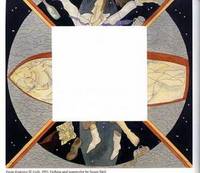
19914451New York: Vincent FitzGerald & Company 1991. One of 25 copies text on Apta Royale Laid Richard de Bas paper made in 1938 images on Musee paper backed on custom-made papers by Paul Wong on Dieu Donne' Papermill. Page size: 16 inches x 16 inches. Bound by Zahra Partovi in Coptic-style mauve-grey silk over boards box by David Bourbeau Thistle Bindery fine. Six original line etchings by Susan Weil are hand-painted in watercolor and gouache with gold-leafing throughout each mounted on museum board. These images surround the 40-page text when sitting in the box and when lifted out become three-dimensional paintings. There are also two original collages in the text and on the boards of the cover which is printed in three colors. The calligraphy is by Jerry Kelly and the letterpress is by Dan Keleher at Wild Carrot Letterpress. Susan Weil's third Joyce book takes an excerpt from FINNEGAN'S WAKE and it is as much as tour de force as her previous two. The box itself is a piece of sculpture and Susan's paintings are fully realized free-standing works of art; yet all combine to form a harmonious whole book. Vincent FitzGerald & Company unknown books
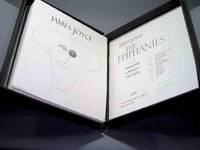
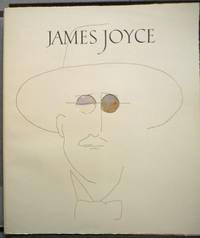
198711397New York: Vincent FitzGerald & Company 1987. Artist's book one of 65 copies only 50 in the edition for sale and 15 Artist's Proofs all on Moulin du Gue paper and Japanese papers with 62 etchings employing over 150 plates original watercolors collage and hand cutting signed by the artists Susan Weil and Marjorie Van Dyke on the stunning colophon page. Collage by Vincent FitzGerald and Zahra Partovi etchings printed by Marjorie Van Dyke assisted by Maria Luisa Rojo at the Printmaking Workshop; lithographs editioned by Marjorie Van Dyke with Rhae Burden calligraphy by Jerry Kelly letterpress by Dan Keleher and Bruce Chandler at Wild Carrot Letterpress in 40 colors with type set by Dan Carr and Julia Ferrari at the Golgonooza Letter Foundry. Page size: 12 x 14 inches; 94 leaves 3 of which are double folds one printed page loose as insert Dreams section two fold-out images Death section. Bound: loose as issued in original wrappers in hand-made box by David Bourbeau at The Thistle Bindery in Japanese hand-made silk woven for this box with incised line of Japanese tea paper showing profile of Joyce this is in fine condition with absolutely no sunning of box spine no offsetting from silver lining of box to titlepage and no weakening of sewn threads in "Death" sequence problem which often occur <br/>Joyce's EPIPHANIES the writings in his early notebooks that are the basis for his great works had not been previously published. The EPIPHANIES are astonishing fragments of dreams overheard conversations and particles of experiences. In making the book the artists and publisher divided THE EPIPHANIES into four sections: "Dreams" "Games" "Planes" and "Death." Each Epiphany is printed on a separate page with the page number printed in a different color. The four printed Introductions to the image sections each have printed on them in the same color as the actual page number all the page numbers that relate to that image section. Marjorie Van Dyke developed the images for the dreams and the games sections; Susan Weil developed the planes and death sections. These paragraphs and accompanying images take the reader / viewer through a series of Joyce's experiences as a boy seeing and overhearing the world around him. Selected by the Independent Curators for the Franklin Furnace exhibition "Contemporary Illustrated Books" as one of the 50 best illustrated books from 1966-1988 it was also featured in the Boston Athenaeum exhibition "Artists of the Book 1988: A Facet of Modernism." This important book was sold out within six months of publication and is now infrequently available on the secondary market. It is hard to overstate the importance of this book in contemporary book arts. It is one of the first if not the first to entice the reader / viewer with texts and images that they must manipulate to fully see - something now a relatively common occurrence in book arts. Vincent FitzGerald & Company unknown books
198711390New York: Vincent FitzGerald & Company 1987. Artist's book one of 65 copies only 50 in the edition for sale and 15 Artist's Proofs all on Moulin du Gue paper and Japanese papers with 62 etchings employing over 150 plates original watercolors collage and hand cutting signed by the artists Susan Weil and Marjorie Van Dyke on the stunning colophon page. Collage by Vincent FitzGerald and Zahra Partovi etchings printed by Marjorie Van Dyke assisted by Maria Luisa Rojo at the Printmaking Workshop; lithographs editioned by Marjorie Van Dyke with Rhae Burden calligraphy by Jerry Kelly letterpress by Dan Keleher and Bruce Chandler at Wild Carrot Letterpress in 40 colors with type set by Dan Carr and Julia Ferrari at the Golgonooza Letter Foundry. Page size: 12 x 14 inches; 94 leaves 3 of which are double folds one printed page loose as insert Dreams section two fold-out images Death section. Bound: loose as issued in original wrappers in hand-made box by David Bourbeau at The Thistle Bindery in Japanese hand-made silk woven for this box with incised line of Japanese tea paper showing profile of Joyce this is in fine condition with absolutely no sunning of box spine no offsetting from silver lining of box to titlepage and no weakening of sewn threads in "Death" sequence problem which often occur <br/>Joyce's EPIPHANIES the writings in his early notebooks that are the basis for his great works had not been previously published. The EPIPHANIES are astonishing fragments of dreams overheard conversations and particles of experiences. In making the book the artists and publisher divided THE EPIPHANIES into four sections: "Dreams" "Games" "Planes" and "Death." Each Epiphany is printed on a separate page with the page number printed in a different color. The four printed Introductions to the image sections each have printed on them in the same color as the actual page number all the page numbers that relate to that image section. Marjorie Van Dyke developed the images for the dreams and the games sections; Susan Weil developed the planes and death sections. These paragraphs and accompanying images take the reader / viewer through a series of Joyce's experiences as a boy seeing and overhearing the world around him. Selected by the Independent Curators for the Franklin Furnace exhibition "Contemporary Illustrated Books" as one of the 50 best illustrated books from 1966-1988 it was also featured in the Boston Athenaeum exhibition "Artists of the Book 1988: A Facet of Modernism." This important book was sold out within six months of publication and is now infrequently available on the secondary market. It is hard to overstate the importance of this book in contemporary book arts. It is one of the first if not the first to entice the reader / viewer with texts and images that they must manipulate to fully see - something now a relatively common occurrence in book arts. Vincent FitzGerald & Company unknown books
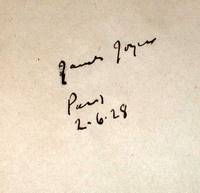
1927WRCLIT51592Paris: Shakespeare and Company 1927. Oblong octavo. Original blue wrappers. Extremities somewhat shelfworn with small sliver loss at crown of lower joint a few creases to spine otherwise a very good copy. Half morocco folding slipcase with inner cloth chemise. The 9th printing printed from the wholly new and corrected setting of type prepared for the eight edition. Inserted in front of this copy by unknown parties at a time unknown and for unknown reasons is an extra leaf signed by the author: "James Joyce Paris 2-6- 28." SLOCUM & CAHOON A17n. Shakespeare and Company hardcover books
1919029930Zurich: Rascher & Cie. 1919. The first German edition of Joyce's play Exiles and the first of his works to be published in translation in any language. One of 600 copies printed: Joyce was living in Zurich at the time and he paid for the publication of this book out of his own pocket. This copy is inscribed by the author: "To J.R. sic Watson Jun / with grateful regards / James Joyce / 8. ix. 1919." J.S. Watson Jr. was at the time the co-owner of the modernist literary journal The Dial which he bought from Martyn Johnson with his friend and fellow Harvard graduate Scofield Thayer. Watson became president of the magazine and Thayer became its editor. The "grateful regards" refers to a gift of $300 that Watson had sent Joyce earlier in the year at the urging of Thayer who had himself sent Joyce $700. These sums bailed Joyce out of dire financial straits allowed him to settle a court case against him and helped him support the theater group that he had associated with in Zurich the English Players. In 1920 The Dial published a piece by Joyce and in 1921 Thayer was one of his most ardent and influential supporters in the censorship case in New York against Ulysses and its publication in the Little Review. A notable association copy of Joyce's first translation. Slocum & Cahoon D44. Pages browned and acidified and covers strengthened at all the edges and spine with tape with a hole cut in the spine for the title to show through. The first blank on which the inscription appears is also strengthened at the edges with tape. Fragile and a candidate for de-acidification but a significant association copy from a critical point in Joyce's life and career. Unless otherwise noted our first editions are first printings. First Edition. Softcover. Good. Rascher & Cie. paperback books
1930LV1873Paris:: Henry Babou & Jack Kahane Fountain Press 1930. 1930. 4to. 72 1 1 pp. Original printed wrappers glassine dust-jacket in original green-over-gilt paper-backed slipcase; spine slightly darkened glassine spine head faintly chipped lacks chemise. Bookplate of ODD Olga Drexel Dahlgren designed by Rockwell Kent. Near fine. SIGNED BY JAMES JOYCE LIMITED FIRST EDITION—this number 92 of 100 copies of a total 685 printed on imperial hand-made iridescent Japan paper SIGNED BY AUTHOR. OLGA DREXEL DAHLGREN’S COPY: LOVER OF ROCKWELL KENT – IN ORIGINAL SLIP-CASE. Haveth Childers Everywhere is a "fragment of Work in Progress the working title of what was to become Finnegans Wake first published in June 1930 by Henry Babou and Jack Kahane in Paris and by the Fountain Press in New York. It comprises the last part of chapter 3 in Book III of Finnegans Wake FW 532.1-554.10. According to Richard Ellmann Joyce composed an advertisement for the first British edition published by Faber and Faber in 1931: ‘Humptydump Dublin squeaks through his norse/ Humptydump Dublin hath a horrible vorse/ And with all his kinks english/ Plus his irismanx brogues/ Humptydump Dublin’s grandada of all rogues" Fargnoli & Gillespie p. 101. "Haveth Childers Everywhere would first be published in Paris by Henry Babou and Jack Kahane for an advance of 25000 francs but much of their stock was bought by Wells for the Fountain press. . . .Reviewing the book in the New Statesman G. W. Stonier called Joyce ‘one of the very few great writers of our time’ who deserved ‘not a little admiration.’ Haveth Childers Everywhere he thought ‘a collector’s piece beautifully printed and bound but to me at least almost completely unintelligible’" Bowker p. 398. PROVENANCE: Olga Drexel Dahlgren 1898-1970 was a "daughter of Philadelphia banking heiress and New York society grande dame Lucy Wharton Drexel 1867-1944 and Eric Bernard Dahlgren Sr. and the granddaughter of Lucy Wharton 1841-1912 and the New York and Philadelphia banker and philanthropist Joseph William Drexel 1833-1888. . . .In the late 1920s Miss Dahlgren was romantically linked to acclaimed artist author and political activist Rockwell Kent. Kent is well known for his oeuvre in American bookplate design; over the course of more than fifty years Kent designed for individuals and institutions some 160 bookplates and secured the patronage of the haute bourgeoisie to become the court bookplate artist to the aristocracy of American tastemakers including Arthur Sulz" Blocksy description of property for sale available on-line. REFERENCES: Begnal Michael H. Joyce and the City: The Significance of Place. Syracuse NY: Syracuse University Press 2002; Bowker Gordon. James Joyce: A New Biography. New York: Macmillan 2012; Deming Robert ed. James Joyce. Vol. 2: 1928-41. London: Routledge 2002. Fargnoli A. Nicholas and Michael Patrick Gillespie. Critical Companion to James Joyce: A Literary Reference to His Life and Work. New York: Infobase 2006. Henry Babou & Jack Kahane, Fountain Press, 1930. unknown books
192925938Paris: Shakespeare and Company Sylvia Beach 1929. First edition. 3-194 2 p. 191 x 140 mm. 7 1/2 x 5 1/2 in. Original printed paper wrappers. Copy no. 60 of 96 numbered copies printed on Arches paper. Mogens Boisen's copy the Danish translator of Ulysses inscribed to him by Sylvia Beach and with two letters from him to a former owner explaining the circumstances. Small chip from rear wrapper edge light creasing on front wrapper otherwise a fine copy. In a folding box with the announcement. "Dante.Bruno. Vico.Joyce" published here constitutes Samuel Beckett's first appearance in print. <br/><br/> Shakespeare and Company, Sylvia Beach unknown books
1919029930Zurich: Rascher & Cie. 1919. The first German edition of Joyce's play Exiles and the first of his works to be published in translation in any language. One of 600 copies printed: Joyce was living in Zurich at the time and he paid for the publication of this book out of his own pocket. This copy is inscribed by the author: "To J.R. sic Watson Jun / with grateful regards / James Joyce / 8. ix. 1919." J.S. Watson Jr. was at the time the co-owner of the modernist literary journal The Dial which he bought from Martyn Johnson with his friend and fellow Harvard graduate Scofield Thayer. Watson became president of the magazine and Thayer became its editor. The "grateful regards" refers to a gift of $300 that Watson had sent Joyce earlier in the year at the urging of Thayer who had himself sent Joyce $700. These sums bailed Joyce out of dire financial straits allowed him to settle a court case against him and helped him support the theater group that he had associated with in Zurich the English Players. In 1920 The Dial published a piece by Joyce and in 1921 Thayer was one of his most ardent and influential supporters in the censorship case in New York against Ulysses and its publication in the Little Review. A notable association copy of Joyce's first translation. Slocum & Cahoon D44. Pages browned and acidified and covers strengthened at all the edges and spine with tape with a hole cut in the spine for the title to show through. The first blank on which the inscription appears is also strengthened at the edges with tape. Fragile and a candidate for de-acidification but a significant association copy from a critical point in Joyce's life and career. Unless otherwise noted our first editions are first printings. First Edition. Softcover. Good. Rascher & Cie. paperback
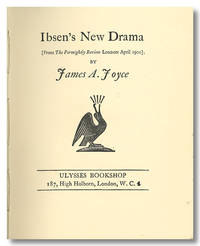
1930WRCLIT79519London: Ulysses Bookshop 1930. 12mo. Cloth backed boards printed label edges untrimmed. Usual very slight tan offsetting to endsheets otherwise a fine copy. First edition in book form of this essay first published in THE FORTNIGHTLY REVIEW April 1900. The edition consisted of forty press-numbered copies of which this is #11 plus an unspecified number of review and out of series copies printed by H.D.C. Pepler. The review copies are denoted "Press Copy" and like these numbered copies bear the approbation: "No copy for sale." Shortly after publication Jacob Schwartz proprietor of The Ulysses Bookshop informed Joyce that twenty-two sets of this work and its companion volume were sent to libraries ten sets to friends and one set each to Joyce Stuart Gilbert and Harriet Shaw Weaver. He retained five sets which he assured Joyce would not be offered for sale. He did not however provide an accounting of the "Press" copies in that letter. But in later years he inscribed at least one 'press' copy of its companion suggesting it was one of about fifteen copies thus. SLOCUM & CAHOON A40. Ulysses Bookshop hardcover books
1907514413London: Elkin Mathews 1907. Hardcover. Fine. First edition first issue. 16mo. 40pp. Light green cloth gilt. Contemporary owner name in blue pencil on front fly faint soil mark on front board the lettering on the spine is still bright thus near fine in a fine example of the publisher's unprinted glassine dust jacket. The very scarce first issue of James Joyce's first trade book preceded by two broadsides. This is the first binding variant according to Smoot and Cahoon A3: "First variant: Thick laid end papers with horizontal chain lines. 16.2 x 11 cm. Poems in signature C well centered on page." Published in a total edition of 509 copies. According to booksellers Bernard Quaritch Bulletin 19 1984 only "fifty or a hundred" copies of the first variant were bound and issued in 1907. Contemporary presentation copies appear in the first binding and it certainly seems plausible that due to low demand only a small number of copies were bound in 1907. Elkin Mathews hardcover
1935151736New York: The Limited Editions Club 1935. The Limited Editions Club signed limited edition of Joyce’s landmark Ulysses widely recognized as the first illustrated edition. Large quarto original gilt-stamped pictorial brown cloth with 26 illustrations. One of 1500 numbered copies this is number 1476. Boldly signed by Henri Matisse in pencil on the colophon page at the rear. In near fine condition. Introduction by Stuart Gilbert. Housed in the rare original board slipcase which is in good condition. One of the 20th-century’s most desirable illustrated books combining the work of two great modern artists. A nice example with the rare slipcase. One of the most arresting collaborations in 20th-century literature. "It was a great idea to bring them together; celebrities of the same generation of similar virtuosity" Wheeler 15. The 26 beautiful full-page illustrations by Matisse accompany the text of Joyce's Ulysses including six soft-ground etchings with reproductions of the sketches on blue and yellow paper. "One of the very few American livres de peintres issued before World War II. According to George Macy this work's designer who undertook this only American publication of Matisse's illustrations he asked the artist how many etchings the latter could provide for $5000. The artist chose to take six subjects from Homer's Odyssey. The preparatory drawings reproduced with the soft-ground etchings Matisse's only use of this medium record the evolution of the figures from vigorous sketches to closely knit compositions" Artist and the Book 197. The Limited Editions Club hardcover
19282091202133212392Crosby Gaige New York 1928. Soft Cover. Fine. Volume: 1 Crosby Gaige, New York paperback
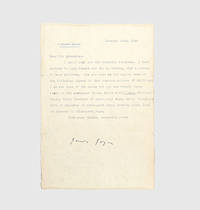
1930190805Paris: 1930. Lady Cunard. is sending over a person to hear Sullivan An unpublished letter sent to the future proprietor of the Ulysses Bookshop enlisting him in the promotion of the Irish tenor John O'Sullivan. Joyce first heard the singer perform in October 1929 and was immediately enthralled by his powerful voice. Upon meeting Joyce and O'Sullivan became friends and drinking companions and Joyce worked tirelessly to help O'Sullivan achieve success. In early 1930 Joyce was struggling against a creative slump in his work on Finnegans Wake. Furthering O'Sullivan's career became an alternative pursuit; Joyce was himself an amateur tenor and regarded the singer as "a kind of alter ego" Ellman p. xlv. He attended as many performances as possible always sitting in the front row and responding enthusiastically and encouraged his friends and admirers to do the same. He also attempted to get the tenor noticed by music critics and potential patrons such as Nancy Cunard's mother who he mentions in the present letter: "I have written to Lady Cunard and she is sending over a person to hear Sullivan". Ultimately few others were found who shared Joyce's enthusiasm for the singer but he was immortalized as the character "Jean Souslevin" i.e. "under the wine" in Finnegans Wake. Jacob Schwartz was "one of the first to recognize the market potential for letters and manuscripts of Joyce" Brockman p. 174. He met the writer in London in 1929 and shortly afterwards embarked on a journey to Dublin to purchase Joyce-related documents and memorabilia. The Ulysses Bookshop opened later in 1930. Single sheet of Joyce's printed letterhead 232 x 158 mm typed on one side. Housed in custom orange cloth chemise with acetate internal pocket. Short splits at ends of former folds two with small tape repairs to verso holding fast edges a little chipped and creased lightly toned. In very good condition. Richard Ellman ed. Letters of James Joyce Volume II 1966; William S. Brockman "Jacob Schwartz - 'The Fly in the Honey'" Joyce Studies Annual vol. 9 Summer 1998. hardcover
1928029919New York 1928 Crosby Gaige Hardcover 1st Edition Signed by Author
22066Préface de C. K. Ogden et portrait de l’auteur par C. BRANCUSI. P., The Black Sun Press, 1929, in-8, broché, couv. rempl., 58 p., sous chemise étui de l’éditeur papier vert et argent. Edition originale. Cette édition est due à Harry et Caresse Crosby qui dirigeaient une maison d'édition, The Black Sun Press, installée à Paris rue Cardinale. Elle comporte trois importants fragments de " Work in Progress " : The Mookse and the Gripes, The Muddest Thick that was Ever Heard Dump et The Ondt and the Gracehoper. En outre le recueil est illustré en frontispice du célèbre portrait " abstract " de Joyce par Brancusi constitué d'une spirale et de trois lignes verticales, dans lequel on reconnaît sans peine l'auteur d'Ulysses. Tirage à 650 exemplaires, celui-ci 1/100 de tête num sur Japon (thirty-four), signé à l'encre par Joyce page de faux-titre. Excellent état. Slocum & Cahoon, A 36.