ZOLA (Emile)Biblio.com
6 559 résultats
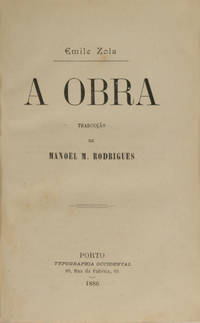
2202JS544<p>Traducção de Manoel M. Rodrigues. Typographia Occidental. Porto. 1886.</p>_x000d_<p>De 185x125 cm. Com 536 págs. Encadernação com lombada em pele com ferros a ouro. Exemplar com pequenas falhas na coifa superior e etiqueta do encadernador no verso da pasta anterior.</p> I-245-F-9 hardcover
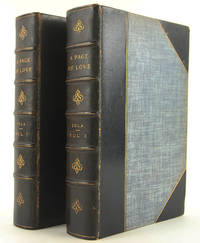
1897EE-0832-13778George Barrie and Son 1897. hardcover. Very Good. 0x0x0. 1897 limited edition Copy 519 of 1000 'Printed only for subscribers' G. Barrie & Son Philadelphia Pennsylvania two 6 x 8 3/4 inches tall half leather bound volumes blue cloth over brown leather spine and tips five raised bands and gilt decorations and lettering to spines top page edges gilt fore and bottom page edges untrimmed marbled endpapers printed on Japanese vellum paper illustrated with 11 etchings by Albert Duvivier with captioned tissue guards 319 361 pp. 680 pages total. Slight soiling rubbing and edgewear to covers most noticeable to tips and along joints but the bindings are quite solid. Very mild age toning with a couple of instances of slight marginal soiling. Light dampstaining to lower edges of blank rear endpapers of Volume 1. Otherwise a very good set - clean and unmarked - in a fine binding with great shelf appeal. Note that this is a heavy and oversized set so additional postage will be required for international or priority orders. ~EE~ 5.0P A magnificently bound limited edition set of the widely praised 1897 English translation by T. F. Rogerson of Une page d'amour A Page of Love the eighth novel in the 20-novel 'Rougon-Macquart' series by French novelist Emile Zola 1840-1902 set among the petite bourgeoisie in Second Empire suburban Paris The Rougon-Macquart series illustrates Zola's theory of naturalism. Zola brought to the novel 'a force unprecedented in legally published French fiction' Hollier 775. George Barrie and Son hardcover
0267329806.Ghardcover. Good. Access codes and supplements are not guaranteed with used items. May be an ex-library book. hardcover
133356466X.Gpaperback. Good. Access codes and supplements are not guaranteed with used items. May be an ex-library book. paperback
1897mon0002879963George Barrie & Sons 1897-01-01. Hardcover. Very Good. . 2-volume set. Deluxe binding in full red morocco with extensive gilt decorations rasied bands on the spines. Covers show minor rubbing to the extremities joints starting and slight loss at the crown of the spines. To edges gilt tooled doublure pastedowns silk moire free endpapers. Pages are tanned and clean. George Barrie & Sons hardcover
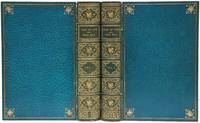
1897143835Philadelphia: George Barrie & Son 1897. Hardcover. Near fine. Edition Magnifique of Chefs-d'Oeuvre du Roman Contemporian Realists. Limited to five copies. viii 319; viii 361 pp. unpaginated plates. 2 Volumes. Octavo hardcover. Bound in full teal levant morocco leather boards designed with impressed gilt decorations double ruled in gilt. Spines with 5 raised bands each divided in six compartments decorated and lettered in gilt slightly darkened. All edges trimmed and gilt. Each volume with a vertical fore-edge painting. Inner side of the boards covered with terra cotta levant morocco doublures elaborately decorated impressed in gilt designed in green blue and white. Joints starting as usual to the fore-edge painting books. Pale blue moiré silked free endpapers; the majority of the blue silk has become detached and is laid-in in incomplete pieces. Free endpapers toned with light pencil notations. Small gallery labels to rear free endpapers recto. Illustrated with monochrome copper etchings each with a hand-coloured douplicate some guarded with tissue paper. Leaves bright and charming tight binding. Near fine condition. 2 volumes each with a fore-edge painting. vol. 1 depicting a couple standing together vol. 2 depicting a nude woman holding a child.</p><p>Limited edition of five copies of which this is number one. Printed only for subscribers. </p><p>Hammer Galleries typed letter signed on their stationary laid in dated March 1941 </p><p>From the Estate of Randall J. Moskovitz MD Memphis Tennessee. 1897 George Barrie & Son hardcover
189064630Imp. Chaix, s.d. [1890] Spectaculaire affiche destinée aux colonnes Morris où la Justice aux yeux bandés déverse une pluie d'argent sur les spéculateurs qui s'affairent devant le Palais Brongniart. Exemplaire plié, en bon état malgré de petites déchirures au centre, sans manques.
189064630Imp. Chaix, s.d. [1890] Spectaculaire affiche destinée aux colonnes Morris où la Justice aux yeux bandés déverse une pluie d'argent sur les spéculateurs qui s'affairent devant le Palais Brongniart. Exemplaire plié, en bon état malgré de petites déchirures au centre, sans manques.
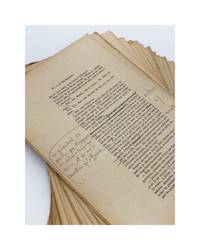
1890Zola7<p><strong>ZOLA Emile 1840-1902</strong></p><p>Corrected proofs for his novel <em>The Beast within</em><br />Paris January 1890 45 proofs printed on recto<br />Very good overall condition except some slightly frayed margin on the first folios some browning</p><p><strong>A precious complete set of proofs for the original edition of his masterpiece <em>La Bête humaine</em> the seventeenth volume in the <em>Les Rougon-Macquart</em> series.</strong></p><p><strong><u>At the heart of the writer's creative process:</u></strong><strong> a total of 45 proof sheets with extensive autograph corrections in Zola's own hand.</strong></p><p><strong><u>One of the very rare Zolian relics still in private hands</u></strong></p><p><strong><em><u>La Bête humaine</u></em></strong><strong><u> in the Making</u></strong><br />The proof sheets in this set bear witness to the author's progress in writing his masterpiece. Émile Zola undertook a meticulous rereading of every line refining the style striking through passages and making corrections to achieve greater accuracy in tone and rhythm. As such the set is extensively annotated with the exception of proof sheets no. 35 to 38. The most substantial corrections appear on sheets no. 2 to 13 and no. 40 which correspond to Chapters I to IV and XI. Special attention was also paid to typography further evidence of the naturalist writer's thorough and exacting rereading.<br />Georges Charpentier added penciled notes on twenty-nine of the proof sheets along with two annotations instructing Zola to henceforth adhere to the paginated layout.</p><p><u>These proofs represent an intermediate stage between the manuscript and the published text as evidenced by certain excerpts:</u><br />– " Roubaud près de sa femme écoutait en fixant également sur elle des yeux vacillants. Il y eut une minute de mortelle angoisse " become " Près de sa femme Roubaud écoutait en fixant également sur elle ses gros yeux pâles " then in the final version " Près de sa femme Roubaud écoutait en fixant sur elle ses gros yeux vifs ".<br />– " Seulement ce matin-là Roubaud dut reprendre haleine comme si sa respiration lui manquait à la suite d'un saisissement inutile. Il hésitait il chercha avant de se rappeler ce que lui avait dit son collègue " become " Seulement ce matin-là Roubaud hésitant dut chercher avant de se rappeler ce que lui avait dit son collègue ".</p><p>Folio #40 includes an important addition of seventeen lines in which the author plays with the lyrical register. Love and death invite each other:<br /><em>" – Dis mon chéri pourquoi donc ai-je peur Sais-tu toi quelque chose qui me menace </em><br /><em>– Non non sois tranquille rien ne te menace. </em><br /><em>– C'est que tout mon corps tremble par moments. Il y a derrière moi un continuel danger que je ne vois pas mais que je sens bien… Pourquoi donc ai-je peur </em><br /><em>– Non non n'aie pas peur… Je t'aime je ne laisserai jamais personne te faire du mal… Vois comme cela est bon d'être ainsi l'un dans l'autre ! </em><br /><em>Il y eut un silence délicieux. " </em></p><p><strong><u>The novel<br /></u></strong><em>La Bête humaine</em> the seventeenth volume in the <em>Rougon-Macquart</em> saga was written between May 1889 and January 1890 and released in bookstores by Georges Charpentier during the first week of March 1890 following its serialization in the weekly magazine <em>La Vie populaire</em> from November 14 1889 to March 2 1890. Like <em>Germinal</em> 1885 it focuses on a facet of the industrial and working-class world of the late 19th century.<strong><br /></strong>In this judicial novel the main characters are murderers. Émile Zola wove together several real-life criminal cases likely including the infamous crimes of "Jack the Ripper" creating a bleak violent and monstrous tableau in which killings occur for motives as varied as greed jealousy or even hereditary madness. Through this narrative—and his exploration of remorse—Zola situates his work within contemporary debates on the moral and social meaning of crime. His writing was nourished by readings of <em>Crime and Punishment</em> by Dostoevsky in a French translation published in 1885 and criminological studies by Cesare Lombroso Prosper Lucas and Gabriel Tarde.<br />He also takes the opportunity to satirize a judiciary subservient to political power through the character of Judge Denizet. The judicial error he commits underscores the limits of justice as administered by men and the inherent fallibility of any rational method.<br />Readers were struck by the confrontation between tradition and modernity by the stunning fusion of primal instinct and technological advancement. The locomotive is endowed with human traits becoming a character in its own right—ultimately transformed into a tragic "blind and deaf beast loosed amid death."<br />Finally this lyrical element is enriched by a fantastical dimension as Henri Mitterrand explains: <em>" La Bête humaine</em> endures through its fantastical elements the intensity of its leitmotifs and rhythms and the perfection of certain passages—such as the final ones—where the extravagance of the action and the baroque modernity of the setting come together in astonishing harmony. <em>" </em></p><p><u>Literary relics of Émile Zola are extremely rare in private hands</u>. In accordance with the novelist's wishes his wife Alexandrine Zola entrusted nearly all of his manuscript materials to the nation in 1904. As a result the invaluable dossiers and a large portion of the corrected proofs for <em>Les Rougon-Macquart</em> and <em>Les Trois Villes</em> are now held by the Bibliothèque nationale de France BnF.</p><p>This set of proofs was unknown to Henri Mitterand when he prepared his edition of <em>La Bête humaine</em> for the Bibliothèque de la Pléiade Paris Gallimard NRF 1966; reissued in 2021.</p> Charpentier
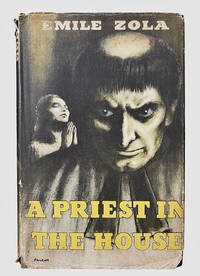
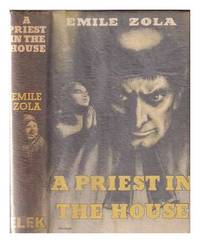
19570106459<p>Elek Books: 1957. First UK edition. Translated from the French by Brian Rhys. Hardcover with unclipped dust cover. Dust cover intact but wear to its extremities. Some marks to cover- now protected by a lightweight mylar cover. Previous owners name to FFEP. Binding tight and text clean.</p> Elek Books hardcover
1957344890London: Elek Books 1957. 1st UK Edition. Hardcover. Very good cloth copy in a good if somewhat edge-nicked and dust-dulled dust wrapper not price clipped now mylar-sleeved. Remains quite well-preserved overall. Physical description: 294 pages 21 cm. Summary: The arrival of Abbé Faujas in the provincial town of Plassans has profound consequences for the community and for the family of François Mouret in particular. Faujas and his mother come to lodge with François his wife Marthe and their three children and his cousin Marthe quickly falls under the influence of the priest. Ambitious and unscrupulous Faujas gradually infiltrates into all quarters of the town intent on political as well as religious conquest. Intrigue slander and insinuation tear the townsfolk apart creating suspicion and distrust and driving the Mourets to ever more extreme actions. In one of the most psychological of his novels Zola links small-town politics to the greater political and national dramas of the Second Empire. Subjects: Fiction. French fiction in English. 19th century fiction. London: Elek Books hardcover
0236309641.Ghardcover. Good. Access codes and supplements are not guaranteed with used items. May be an ex-library book. hardcover
19575259New York: The Citadel Press ELEK 1957. First American Edition. Cloth. Very Good/Very Good. 8vo black cloth with gold lettering on spine Introduction by Brian Rhys archival mylar-protected pictorial dust jacket by Pauram unclipped: Price $3.50 ix x 294 pages. Émile Zola 1840 - 1902 was a French novelist playwright journalist political Liberal and practitioner of "naturalism." His works were favored by ELEK a small British Leftist publishing house who published this book in England during 1957 and several others by Zola around this time. A Priest in the House had been previously published in 1917 as The Conquest of Plassans. According to Jonathan https://readingzola.wordpress.com/category/translators/rhys-brian/ "All you need to know about the plot is that Mouret has become a bit of a recluse and rumours are spreading about the town that he has been beating his wife Marthe and that he's mad. Mouret meanwhile is oblivious to these rumours." VERY SCARCE in such a complete and bright dust jacket and such Very Good cloth. Tight clean copy with typical age-toning to pages. Jacket has a clean bright cover; soiled back panel with a 1" clean tear mid-top. SCARCE title. Rare in this exceptional condition and with a Near Fine dust jacket. The Citadel Press [ELEK] hardcover
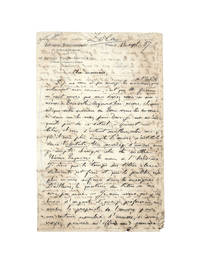
Zola11<p><strong>ZOLA Émile 1840-1902</strong></p><p>Autograph letter signed " Emile Zola " to Albert Lacroix<br />Paris 13 September 1867 2 pp. in-8° in black ink letterhead of the <em>Librairie Internationale</em><br />" Zola " annotation from period and in black ink from another hand small gaps in the lower margin affecting a letter slits in the folds discreet repairs with Japan paper</p><p><strong>A remarkable letter from the very young Zola a few weeks before the launch of <em>Thérèse Raquin</em> the first novel that made him famous to the general public – Expressing a pressing financial need the writer nevertheless cherishes high ambitions for the success of his work</strong></p><p><strong><u>It is in this very same letter that Zola first announces the final title of the book</u></strong></p><p><em>" Cher Monsieur<br />Si je ne vous ai pas envoyé les numéros de <u>L'Artiste</u></em>¹ <em>qui contiennent mon roman c'est que M. Guérin</em> employé de la <em>Librairie Internationale</em> <em>m'avait assuré que vous deviez avoir ces numéros à Bruxelles. Aujourd'hui encore il me dit que votre maison de Paris vous les enverra si vous ne les avez pas. Donc je ne m'inquiète pas de ce détail. <strong>Quant au titre il sera d'autant meilleur selon moi qu'il sera plus simple. L'œuvre s'intitule dans <u>L'Artiste</u> : <u>Un Mariage d'amour</u> mais je compte changer cela et mettre : <u>Thérèse Raquin</u> le nom de l'héroïne. Je crois que le temps des titres abracadabrants est fini et que le public n'a plus aucune confiance dans les enseignes. D'ailleurs la question du titre n'en sera pas une</strong>. Je vous avoue que j'ai besoin d'argent et que je préférerai vous vendre la propriété de l'œuvre pour un certain nombre d'années si vous croyez pouvoir m'offrir une somme raisonnable. Dans le cas où vous ne voudriez pas acheter l'œuvre je vous demanderais le douze pour cent sur le prix fort payable le jour de la mise en vente. Je tiens surtout à éviter les ennuis qui se sont produits au sujet de <u>La Confession de Claude</u></em> son deuxième ouvrage publié également chez Lacroix deux ans auparavant<em>. Il est préférable que la question argent soit réglée sur-le-champ entre nous sans avoir besoin de recourir plus tard à des inventaires.<br />Veuillez chez Monsieur me donner une réponse définitive au plus tôt. <strong>Je tiens à ce que ce livre paraisse en octobre</strong>. Prenez connaissance de l'œuvre laissez-moi choisir un titre bien simple</em>²<em> et faites-moi à votre tour vos conditions. Dites-moi combien vous me donneriez pour la propriété de l'œuvre pendant un nombre fixé d'années. L'affaire peut être conclue en quelques jours et c'est ce que je désire.<br /><strong>En deux mots voici le sujet du roman : Camille et Thérèse deux jeunes époux introduisent Laurent dans leur intérieur. Laurent devient l'amant de Thérèse et tous deux poussés par la passion noient Camille pour se marier et goûter les joies d'une union légitime. Le roman est l'étude de cette union accomplie dans le meurtre ; les deux amants en arrivent à l'épouvante à la haine à la folie et ils rêvent l'un et l'autre de se débarrasser d'un complice. Au dénouement ils se suicident. L'œuvre est très dramatique très poignante et je compte sur un succès d'horreur.</strong><br />Une prompte réponse je vous prie.<br />Votre dévoué<br />Émile Zola "</em></p><p>1- Illustrated weekly magazine from 1831 to 1904 renowned for having published prints and quality writers. The novel originally titled <em>Un Mariage d'amour</em> had previously been serialized in the magazine.</p><p>2- On November 9 1867 A. Lacroix and Verboeckhoven booksellers-publishers informed Zola that they had given the proof to print the title and cover of <em>Thérèse Raquin</em> adding: "We have suppressed the word <em>study</em> which was in our opinion of the worst effect on the cover and which on the other hand could have harmed the volume in the sense that it might make people believe that your volume was an arid and too serious work and thereby alienate a whole class of readers. In any case this subtitle seemed useless to us; Isn't that your opinion too "</p><p>The young Zola then 27 years old already gives us a glimpse of the confidence that would later be known for that of a writer who was quite certain of his work. He nevertheless remained in need which he explains here to Lacroix the latter being known among other things for having been the first publisher of <em>Les Misérables</em>.</p><p><u>" I think the time for crazy headlines is over… "</u><br />What is implied by Zola's choice to call the book <em>Thérèse Raquin</em> tends to erase the stage of serialization in <em>L'Artiste</em>. The writer flatters the publisher and therefore defines the "second birth" of the novel. This sense of the title which Zola was already refining at this time would later become one of his great talents giving decisive importance to this significant beginning.</p><p><u>" The work is very dramatic very poignant and I'm counting on a horror success "</u><br />By summarizing the story at the end of the letter Zola shows us that he is always very scrupulous in adapting to the recipient's preferences. He insists on the plot the dramatic scope the psychological dimension and finally the stylistic innovations. He makes hypotyposis his trademark at key moments. At that time Zola was the only standard-bearer of naturalism a literary movement that succeeded realism which he had exposed three years earlier in his famous missive to Anthony Valabrègue by means of the famous metaphor of the "trois écrans". Zola's reading effects are therefore data that can be easily converted into terms of editorial success.</p><p>Thérèse Raquin was severely judged by the critics notably by Louis Ulbach who published in <em>Le Figaro</em> a violent article entitled "La littérature putrid". However it was a success and Zola became known to the general public. His career as a novelist was definitively launched…</p><p><u>Bibliography:<br /></u><em>Correspondance</em> t. I éd. du CNRS Les Presses de l'université de Montréal p. 522-523 n°199</p>
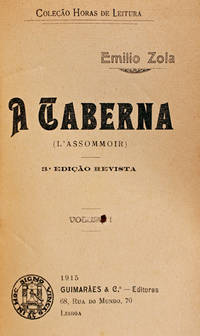
2010SB295<p>Colecção Horas de Leitura. 3.ª edição revista. Guimarães & C.ª editores. Lisboa. 1915.</p>_x000d_<p>3 volumes em um de 195x135 cm. Com 163 iii 176 188 iii págs. Encadernação com lombada em pele com ferros a ouro. Não preserva as capas de brochura.</p>_x000d_<p>Exemplar com um pequeno furo na folha de rosto do volume I.</p> I-190-F-16 unknown
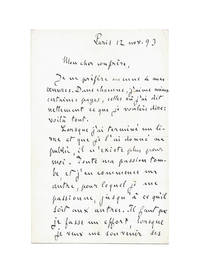
1893ZOLA3<p><strong>ZOLA Emile 1840-1902</strong></p><p>Autograph letter signed " Emile Zola " to a colleague Paris 12th November 1893 1 p. 1/2 in-8 Usual fold marks some tiny spots</p><p><strong>A very moving letter almost entirely unpublished written at the end of the <em>Rougon-Macquart</em> saga – Zola explains that he no longer owns his books once published and evokes with a superb metaphor what they represent years later. The writer expresses with relevance and sensitivity the distance he feels from his books once all published. This letter offers a more general reflection on the author's relationship to his work.</strong></p><p><em>" Mon cher confrère <strong>Je ne préfère aucune de mes œuvres</strong>. Dans chacune j'aime mieux certaines pages celles où j'ai dit nettement ce que je voulais dire : voilà tout. <strong>Lorsque j'ai terminé un livre et que je l'ai donné au public il n'existe plus pour moi. Toute ma passion tombe</strong> et j'en commence un autre pour lequel je me passionne jusqu'à ce qu'il soit aux autres. Il faut que je fasse un effort lorsque je veux me souvenir des romans hélas ! trop nombreux que j'ai écrits. <strong>Ce sont comme des tombes de parents et d'amis autrefois bien chers sur lesquelles il me serait trop triste d'aller m'attendrir</strong>. Cordialement à vous. Emile Zola "</em></p><p>The Rougon-Macquart saga came to an end with the publication by Charpentier of <em>Docteur Pascal</em> in the spring of 1893. Among the most famous of the saga are <em>Germinal</em> <em>Nana</em> and <em>L'Assommoir</em>. A total of twenty novels were written and published between 1870 and 1893.</p><p>Zola is probably responding here to a fellow journalist wishing to make an article on the whole saga and what it represents in the eyes of the novelist.</p><p>A summary of the letter and the quotation of a sentence are published in Volume VIII of the correspondence from an extract from the catalogue: <em>"They are like graves of relatives and friends …" – </em>This comparison illustrates the sadness that emanates from the moving statement and what Zola's works represent for Zola himself. Personification of books or metonymy designating the characters to whom the author gave life the "<em>tombs</em>" of course refer to death.</p><p><u>References:</u> Extr. cat. libr. Charavay n° 6599 Corr. t. VIII Presses de l'Université de Montréal / Editions du CNRS 1991</p>
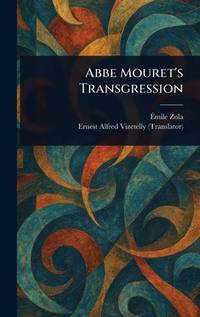
ria9783732617654_inpHardcover. New. New Book; Fast Shipping from UK; Not signed; Not First Edition; Reproduction of the original. hardcover
ria9783732617647_inpPaperback. New. New Book; Fast Shipping from UK; Not signed; Not First Edition; Reproduction of the original. paperback
B9783732617647Paperback. New. paperback
B9783732617654Hardback. New. hardcover
18866653900Vizetelly & Co 1886. This is an ex-library book and may have the usual library/used-book markings inside.This book has hardback covers. With usual stamps and markings In fair condition suitable as a study copy. No dust jacket. Gilt design and lettering on front board. Gilt lettering on backstrip. Slight shelf wear. Bumped corners. Split binding. Illustrated Please note the Image in this listing is a stock photo and may not match the covers of the actual item700grams ISBN: Vizetelly & Co hardcover
1426476582.Gpaperback. Good. Access codes and supplements are not guaranteed with used items. May be an ex-library book. paperback
1426476078.Gpaperback. Good. Access codes and supplements are not guaranteed with used items. May be an ex-library book. paperback
055434193X.Ghardcover. Good. Access codes and supplements are not guaranteed with used items. May be an ex-library book. hardcover
1022970453.Ghardcover. Good. Access codes and supplements are not guaranteed with used items. May be an ex-library book. hardcover