6 894 résultats
193817714FILE OF LETTERS being some nearly 60 in number between science writer and German Rocket Society founder Willy Ley and esteemed international film director Fritz Lang between the years 1938 & 1952. A wonderful correspondence with all letters from Ley SIGNED full of deep personal feelings intimate revealing thoughts and mentioning in detail or in passing FRAU IN MOND Science Fiction Pulp Magazines a history of the meeting of the 2 men in the form of a letter by Lang to the Dept. of Justice Immigration Service on Ley's behalf H.P. Lovecraft David Selznick Joseph Cotten Ingrid Bergman being Lang's alibi for canceling a trip to N.Y.C. for the chance of working with her Arthur Murray WWII Hitler Goebbels Truman Bemelmans E. E. Smith the Atomic Bomb John Campbell the film SCARLET STREET and subsequent censorship in New York and the cuts that had to be made to reinstate it Arkham country Providence R.I. August Derleth Chesley Bonestell John Hersey Robert Oppenheimer Robert Heinlein DESTINATION MOON 20th Century Fox MGM Gary Cooper and the film CLOAK AND DAGGER Wernher Von Braun Forrest Ackerman L. Sprague De Camp CLASH BY NIGHT WHEN WORLDS COLLIDE Robert Goddard Dianetics and L. Ron Hubbard etc. An incredible archive. N.p. unknown
1965918Germany - Israel 1965. Original half-cloth binding with marbled paper panels and ornamented printed endpapers. Pages are handmade Zanders paper. Binding slightly rubbed corners bumped some pages loose. Rear endpaper restored at the joint. Inside clean. Overall in very good condition. The guestbook contains 17 full-page artworks paintings and drawings in ink crayon and pencil many signed and dated 1920–1921 in Berlin some with short dedications. Additionally there are 12 pages of handwritten greetings dated 1955&n. The guestbook contains 17 full-page artworks paintings and drawings in ink crayon and pencil many signed and dated 1920–1921 in Berlin some with short dedications. Additionally there are 12 pages of handwritten greetings dated 1955&n. Original half-cloth binding with marbled paper panels and ornamented printed endpapers. Pages are handmade Zanders paper. . 38 leaves including 17 with full-page artworks graphics and paintings and 12 pages of handwritten greetings. Page size: 22 × 28 cm. <p><br /> Illustrated guestbook of Hugo Graetz art dealer and managing director of the Novembergruppe a collective of German Expressionist artists.<br /> <p><p><br /> This guestbook belonged to Hugo Graetz an art dealer and the managing director of the Novembergruppe a prominent collective of German Expressionist artists. The volume includes:<br /> <p><br /> Two drawings by Friedrich Feigl 1884–1965 Czech Expressionist painter.<br /> <p><p><br /> An ink drawing by Jakob Steinhardt 1887–1968 a German-born Israeli painter member of the Berlin Secession founder of the Pathetiker Group and later associated with the Bezalel school group.<br /> <p><p><br /> Three images by Willy Robert Huth 1890–1977 a founding member of the “Jung-Erfurt†artist group and two collaborative works with Martel Schwichtenberg 1896–1945 who also contributed an individual pencil drawing. Schwichtenberg was a member of the Deutschen Werkbund and the Novembergruppe.<br /> <p><p><br /> A portrait of Hugo Graetz playing the cello by Wilhelm Schmid 1892–1971 a founding member of the Novembergruppe.<br /> <p><p><br /> A gouache by Otto Beyer 1885–1962 member of the Berlin Secession.<br /> <p><p><br /> A signed crayon drawing and an unsigned painting by Franz Winninger 1893–1960.<br /> <p><p><br /> Four works by unidentified artists.<br /> <p><p><br /> The greetings written during the Graetz family’s later years in Israel provide a personal and historical complement to the artworks.<br /> <p><p><br /> The Novembergruppe was founded in 1918 by Max Pechstein and César Klein to promote Expressionist art and its connection to social and cultural transformation. Hugo Graetz became its managing director in 1919 a position he held until Hitler’s rise to power in 1933. After emigrating to Palestine with his wife Trude Graetz left the art business settling in Safed and working as a meteorologist and weatherman on Mount Canaan where he lived for the rest of his life.<br /> <p>. unknown
199094211Birkhauser Architecture. New. 1990. Hardcover. 3764355158 . FREE UPGRADE to Courier/Priority Shipping Upon Request - IN STOCK AND IMMEDIATELY AVAILABLE FOR SHIPMENT - Flawless copy brand new pristine never opened -- EIGHT 8 VOLUME SET. 1708 pages; 1720 color illustrations and 3500 in black and white. Description: "This exceptional Complete Works edition documents the enormous spectrum in the uvre of one of the most influential architects of the 20th Century. Published between 1929 and 1970 in close collaboration with Le Corbusier himself and frequently reprinted ever since the eight volumes comprise an exhaustive and singular survey of his work." Catalogue Raisonne Catalog Raisonné Complete Works Life and Work Raisonnee -- with a bonus offer . Birkhauser Architecture hardcover
1990C94211Birkhauser Architecture. As New. 1990. Hardcover. 3764355158 . FREE UPGRADE to Courier/Priority Shipping Upon Request - IN STOCK AND IMMEDIATELY AVAILABLE FOR SHIPMENT - Flawless copy brand new pristine never opened -- EIGHT 8 VOLUME SET. 1708 pages; 1720 color illustrations and 3500 in black and white. Description: "This exceptional Complete Works edition documents the enormous spectrum in the uvre of one of the most influential architects of the 20th Century. Published between 1929 and 1970 in close collaboration with Le Corbusier himself and frequently reprinted ever since the eight volumes comprise an exhaustive and singular survey of his work." Catalogue Raisonne Catalog Raisonné Complete Works Life and Work Raisonnee -- with a bonus offer-- - May be EITHER: out of print OOP and extremely rare in this pristine condition; signed by author or contributor; or a first or special edition; inquire for details . Birkhauser Architecture hardcover
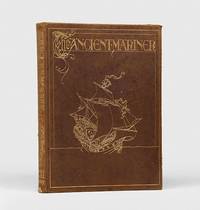
1910184938London: George Harrap & Co. 1910. The rarest issue of Pogány's masterpiece First Pogány edition signed extra limited issue number 23 of 25 copies signed by the artist. Pogány's illustrated edition of Coleridge's famous long poem is one of the artist's most lavish undertakings and was clearly inspired by the grand medieval tradition of book illustration. This extra limited issue was "for sale in England and America". A further 525 signed copies were issued on paper and there was also a standard trade issue. As noted by Richard Dalby "Willy Pogány was Dulac's most successful European contemporary during the highest peak of the Golden Age of book illustration. The Rime of the Ancient Mariner was his most ornate and impressive production with hand-scripted text full-page black and white drawings and colour plates tipped-in on grey matte paper. This combination of illustration and calligraphic text by the artist was rarely repeated" p. 87. Quarto. With title page 20 tipped-in colour plates other full-page illustrations each page of text within decorative borders all by Pogány. Original vellum by Morrell spine and front cover lettered in gilt and with illustrations in gilt blue green and red illustrated endpapers top edge gilt others untrimmed. Housed in a custom blue morocco entry slipcase. Vellum moderately soiled boards bowed as usual contents bright. A very good copy. Richard Dalby The Golden Age of Children's Book Illustration 1991. hardcover
04915London: George G. Harrap & Co. Ltd. 1916. An Exceptionally Fine Riviére Rubáiyát<br/>Illustrated by Willy Pogany<br/><br/>RIVIÉRE & Son binders. Rubáiyát of Omar Khayyám. Presented by Willy Pogany. The illustrations and decorations in this edition of Fitzgerald's translation of the "Rubáiyát" are by Willy Pogany. London: George G. Harrap & Co. Ltd. ca. 1916.<br/><br/>Octavo 8 1/8 x 5 1/2 inches; 207 x 140 mm. Text printed in blue and black. 112 unnumbered pp. With sixteen tipped-in color plates within decorative borders by Willy Pogany and numerous text illustrations printed in blue.<br/><br/>Bound ca. 1916 by Riviére & Son stamp-signed in gilt on front turn-in. Full vermillion crushed levant morocco. Front cover with a central oval panel of green morocco with Eve the serpent and the tree of life inlaid in various color morocco's. This central panel is surrounded by a gilt floral border of flowers and bunches of grapes which in turn is surrounded by a border lettered "Oh Thou Who Man of Baser Earth Didst Make / And Who With Eden Didst Devise The Snake / For All The Sin Wherewith The Face Of Man / is Blacken'd. Man's Forgiveness Give - And Take". Rear cover with an oval panel featuring the snake twined around a large chalice also surrounded by a gilt floral border of flowers and bunches of grapes which in turn is surrounded by a border lettered "Oh Thou Who Man of Baser Earth Didst Make / And Who With Eden Didst Devise The Snake / For All The Sin Wherewith The Face Of Man / is Blacken'd. Man's Forgiveness Give - And Take". Spine with five raised bands decoratively paneled tooled and lettered in gilt in compartments gilt board edges decorative gilt turn-ins decorative floral endpapers all edges gilt. Housed in the original felt-lined red cloth over boards slipcase. A very fine example.<br/><br/>Willy Pogany had previously illustrated the Rubaiyat in 1909 but these later illustrations are quite a different interpretation more westernized and modernized than the earlier ones.<br/><br/>"Had Omar Khayyam the old tentmaker visioned the beauty of his verses centuries later in Western dress as embroidered by a Hungarian artist he might have had a new conception of the meaning of immortality. For Pogany the Hungarian had made Omar the Persian live again." Willy Pogany and his Work. eight-page leaflet.<br/><br/>Willy Pogány born in Szeged Hungary in 1882 studied at Budapest Technical University and in Munich and Paris. His reputation as a muralist painter and illustrator was well established in Paris London and Munich before arriving in the United States in 1915 at the age of thirty-three. Skilled in an unusually wide range of media he had won gold medals at exhibitions in Budapest Leipzig and at the Panama Pacific International Exhibition.<br/><br/>"Among Pogány's many murals are those for the Heckscher Children's Theatre in New York City and the Niagara Falls Power Station. As a painter he did portraits of famous people in all walks of life. An expert on scenery design and lighting effects Pogány also designed sets for ballets and operas including "Le Coq d'Or" and for many films such as Modern Times for Charlie Chaplin as well as animated cartoons based on his children's books.<br/><br/>"Among his other artistic endeavors Pogány was an accomplished book illustrator. It was this phase of his career especially as an illustrator of children's books which gives this collection special relevance for Special Collections & University Archives at the University of Oregon Libraries. Pogány designed and illustrated more than 150 books. His illustrations include those for the Rubaiyat and the Sonnets from the Portuguese The Song Celestial The Adventures of Odysseus Gulliver's Travels and many others both classic and original.<br/><br/>"Working tirelessly right up until the end Willy Pogány died in 1955" University of Oregon Guide to the Willy A. Pogány Papers 1910-1967. London: George G. Harrap & Co., Ltd., [1916] unknown books
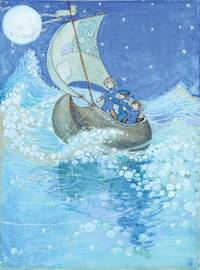
19081697681908. Wynken Blynken and Nod one night / Sailed off in a wooden shoe. Published as a colour plate within a selection by M. G. Edgar entitled A Treasury of Verse for Little Children and illustrating Eugene Field's classic bedtime poem "Wynken Blynken and Nod". The volume was first published in 1908 by G. G. Harrap and featured eight colour plates by Pogany. One contemporary review of Pogany's illustrations described them as "beautiful" The Sphere. Another noted "fantastic pretty drawings by Willy Pogany" Saturday Review. The original poem by the writer Eugene Field 1850-1895 frequently called the "poet of childhood" was published in 1889. It has been set to music on numerous occasions became the basis for a Walt Disney "Silly Symphony" cartoon in 1938 and inspired Mabel Landrum Torrey's 1919 fountain sculpture in Denver's Washington Park. Original drawing 217 x 160 mm on paper laid down on artist's board 270 x 215 mm ink and watercolour signed with artist's monogram lower right. Mounted framed and glazed glazed size 390 x 310 mm. A fine and unfaded watercolour. Saturday Review of Politics Literature Art and Science 13 December 1908 supplement p. xii; The Sphere 5 December 1908 p. 718. unknown
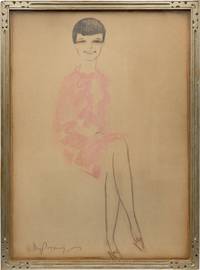
1930163830N.p.: N.p. 1930. Vintage caricature drawing of silent film actress dancer and Jazz Age icon Louise Brooks smiling in a short pink dress executed in graphite charcoal and pastel by noted Hungarian artist Willy Pogány circa 1930s. <br /> <br /> Drawing comes with a letter of provenance from the Louise Brooks estate.<br /> <br /> A contemporary of Edmund Dulac Harry Rountree Sarah Stilwell Weber and others artist Willy Pogány is perhaps best remembered today for his versatile illustrations for children's books. He also worked prolifically as a sculptor painter portraitist and muralist and even briefly as a designer of stage sets and costumes. During the 1930s Pogány moved to Los Angeles where he found employment as an art director in Hollywood-likely the time period in which this drawing was created. <br /> <br /> Drawing approximately 14 x 19 inches unexamined out of frame. Near Fine lightly age toned along the edges. N.p. unknown
190869956N.p. ca. 1908. in a gilt-lined silk mat framed to an overall size of approx. 20 x 16 inches. Very fine original condition. Image 8-1/2 x 5-1/2 inches. unknown
328855London: George G. Harrap. hardcover. fine. Pogany Willy. Beautifully illustrated by Willy Pogany with 16 tipped-in color plates and ornate marginal designs and initials printed in turquoise. Unpaginated. 8vo magnificently bound by Riviere & Son in full black crushed morocco with a large multi-color oval inset on the front cover depicting Eve in front of the apple tree with lurking snake the whole surrounded by an elaborate grape vine with leaves & fruit. The back cover has an identical oval enclosing a snake entwined around a gilt wine glass. The spine with raised bands is elaborately gilt as are the dentelles; all edges gilt. London: George G. Harrap no date circa 1935. An immaculate copy preserved in a cloth slipcase.<br/> <br/> George G. Harrap unknown
2092902141701296Not Available N.A. Soft Cover. Fine. The book is in fine condition. Not Available paperback
12691 Album personnel de Willy Godenne, imprimeur à Malines et membre du Studio Novio avec le graphiste Jos Léonard. Il compte 83 travaux d'imprimerie et/ou publicitaire du Studio Novio, documents internes comme travaux réalisés pour d'autres comme le photographe René Malevez ou le sculpteur (!!) Willy Kessels, bientôt photographe également. Album oblong, 25,1 x 33,9 cm, couverture à motifs répétés imprimés + un ensemble de 15 feuillets. Malines, Godenne, [c. 1928] pour l'album.
1831No Binding. Very Good. Original oil painting of a clown. On canvas. Canvas measures 12 x 10 inches. Label on reverse from The Canton Art Institute. Canton Ohio. Titled "Clown" by Pogany Willy. Donated by Robert A Luntz. unknown
1953140947434New York: The Viking Press 1953. First Edition. Very Good/Very Good. First edition first printing. Signed by Wernher von Braun on the title page. viii 126 pp. Bound in publisher's green cloth stamped in silver. Very Good with moderate wear and soiling to covers 1-3/4 inch tear to lower edge of contents page. Gift inscription dated 1984 to half-title page. Offsetting from two newspaper clippings taped to facing page likely indicating occasion of book's signing. In a Very Good unclipped dust jacket with moderate edgewear and toning. <p>Dr. Wernher von Braun was a brilliant and visionary German engineer and onetime SS Stormbahnfuerer who led the V-2 ballistic missile program during the Second World War. He convinced his colleagues to surrender themselves and their materials to the Americans after the war ignoring orders to kill themselves rather than fall into enemy hands. The Americans knew a good thing when they saw it and smuggled 118 German scientists one hundred V-2s and tons of related components and documents out of the country. To Stalin's fury the Soviets were left only with lower-level rocket scientists to press into service hindering their performance in the Space Race years later. <p>Once in the United States von Braun spent fifteen years working for the United States Army on ballistic weapons but his true passion was space travel. He once told a group of British journalists: “The V-2 was a fine rocket. The only thing wrong with it was that it landed on the wrong planet.†Frustrated with being sidelined von Braun convinced Collier’s associate editor Cornelius Ryan whom he met at a symposium on space medicine in San Antonio to run a series on space travel. The magazine series provided the material for The Conquest of the Moon published in 1953 by Viking. Neil Armstrong read the book when he returned from his tour of duty in Korea and it influenced his decision to become an astronaut. <p>Von Braun’s work co-written with popular science writers and beautifully illustrated by Chesley Bonestell inspired the U.S. government as well. In 1960 President Eisenhower transferred von Braun’s rocket development group from the Army to the newly established National Aeronautics and Space Administration NASA separating space science from military science for the first time. Von Braun became the director of the Marshall Space Flight Center and was in charge of developing the Saturn space boosters used as the launch vehicles for the Apollo Moon program. His work was essential in the competition with the Soviet Union and the former Nazi was lauded as a national hero. The Viking Press unknown
1956140947438New York: The Viking Press 1956. First Edition. Near Fine/Good. First edition first printing. Signed by Wernher von Braun on the half-title page and inscribed to a young recipient: "Your Uncle Stu has told me of your interest in rockets and satellites. Good luck. Christmas 1958." x 176 pp. Bound in publisher's green cloth titled in silver on the spine blindstamped rocket design to front board. Near Fine with light soiling to covers rubbing to corners and softening to head and tail of spine. Contents lightly toned. In a Good unclipped dust jacket with moderate edgewear creasing and horizontal tears to fold lines and spine and chipping at fold ends and head and tail of spine. <p>Wernher Magnus Maximilian Freiherr von Braun a Prussian aristocrat and SS Stormbahnfuerer who was spirited to the United States after the Second World War was one of the most important rocket developers of the 20th century. His passion had always been space exploration but during the 1940s he was charged with the development of the ballistic missiles that terrorized London during the final months of the war. After surrendering to the Americans in 1945 in order to safeguard his legacy and scientific work and himself von Braun was frustrated to spend the next few years cooling his heels with fellow German scientists in Texas and Alabama. He told one of his colleagues: “We can dream about rockets and the Moon until Hell freezes over. Unless the people understand it and the man who pays the bill is behind it no dice.†<p>Von Braun wrote the book The Mars Project in order to spark public enthusiasm for his project. Eighteen publishers turned it down but von Braun had a stroke of luck when he met Cornelius Ryan associate editor of Collier’s magazine at a symposium on space medicine in San Antonio. Ryan was impressed with the German engineer’s vision and the magazine published eight influential features on space travel over the next two years starting March 1952 in which von Braun essentially outlined the future of NASA. <p>Those features were expanded into the book The Conquest of the Moon in 1953 and by the time Viking published The Exploration of Mars in 1956 von Braun had become a national figure appearing on a “Tomorrowland†feature on Disney’s popular television show watched by tens of millions of people. The book was co-written with his Collier’s collaborators Willy Ley who had fled Nazi Germany in 1935 to become a science fiction and popular science writer in the United States and the astronomical artist Chesley Bonestell. <p>The Christmas 1958 inscription to little Jimmy was written at the end of a momentous year for von Braun: on January 31 after years of development the satellite Explorer I was successfully launched into orbit. Americans were thrilled and The American Weekly ran von Braun’s autobiography in three installments. The story was turned into the 1960 biopic I Aim at the Stars which inspired Kennedy speechwriter Mort Sahl to quip that Wernher von Braun had aimed for the stars but sometimes hit London. The Viking Press unknown
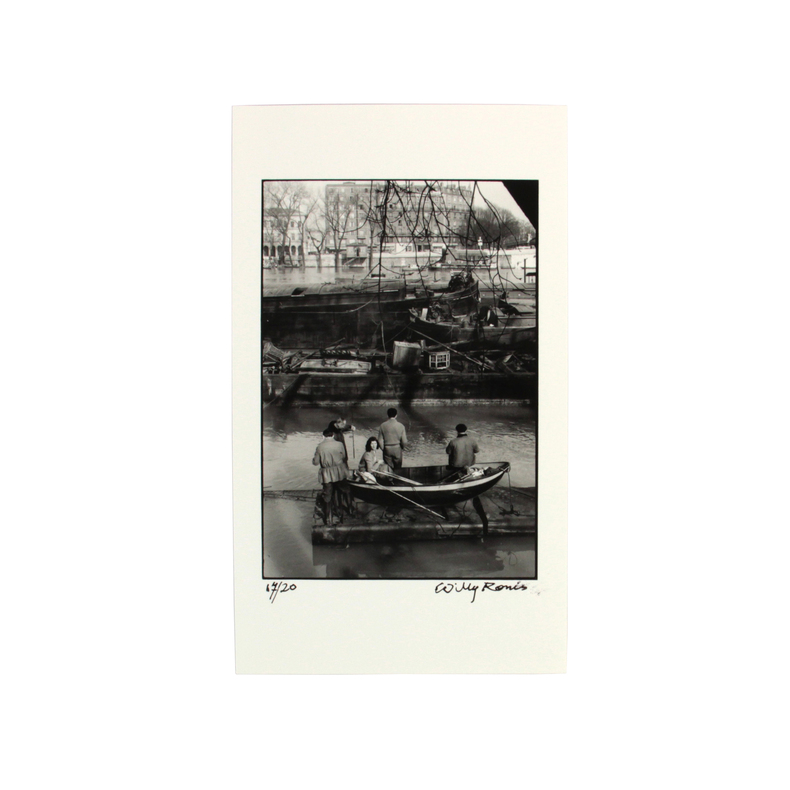
1945150388Paris: Willy Ronis 1945. Django and son Captivating and deeply compatissant image of Django with his young son Babik captured in 1945 by the celebrated French photographer Willy Ronis. At the time Django and his wife Naguine "were living in such a crummy cramped apartment in Paris Ronis was forced to shoot the image in a mirror to have space to capture them both" Dregni p. 102. Willy Ronis 1910-2009 "has been called 'the most poetic photographer of the menu peuple this century'. He travelled little preferring his native France better still his native Paris and best of all the patch around Belleville-Ménilmontant where he could photograph the local people of the 'popular classes' with whom he felt such a gentle affinity. Ronis was born in Paris the son of a Jewish refugee from Odessa who had a photographic studio near the Place de la Nation. His first love was music. He learned the violin and studied composition but his studies were interrupted in 1932 when his father fell ill and he took over the studio. He later claimed to find a resemblance between music and photography in 'the taste I have for composition particularly counterpoint. Many of my photographs are taken from above either looking down or up three planes in one image like three different melodies in a fugue which work together to give the piece structure and harmony'" The Guardian obituary. Distinguished jazz historian James Lincoln Collier remarks that Reinhardt is "without question the single most important guitarist in the history of jazz and probably would be named on most lists of all-time jazz greats. Despite a crippled left hand he had a solid technique; his melodic conception was formidable. and his ability to swing was immense". Original silver gelatin print image size: 316 x 260 mm sheet size: 400 x 305 mm verso with Ronis's studio wet stamp and pencilled inventory numbers. One or two minor creases otherwise in excellent condition. James Lincoln Collier The Making of Jazz: A Comprehensive History 1978; Michael Dregni Django Reinhardt and the Illustrated History of Gypsy Jazz 2006. unknown
04916London: G.G. Harrap 1913. A Superb Early Bayntun Inlaid Binding<br/>On One of Willy Pogany's Masterpieces<br/><br/>BAYNTUN binder. POGANY Willy illustrator. WAGNER Richard. ROLLESTON T.W. The Tale of Lohengrin Knight of the Swan after the Drama of Richard Wagner by T.W. Rolleston. Presented by Willy Pogany. London: G.G. Harrap n .d. 1913. <br/><br/>First trade edition. Quarto 10 x 7 1/4 inches; 254 x 184 mm. 192 unnumbered pages. Eight tipped-in color plates including frontispiece with original tissue guard numerous full page color illustrations calligraphic text head- tailpieces; an image on every page. Printed on heavy gray stock. Some minor discoloration to first three and last three leaves otherwise fine.<br/><br/>Bound ca. 1930 by Bayntun of Bath stamp-signed in gilt on front turn-in. Full black morocco covers with single gilt rule front cover with multi color morocco inlays reproducing the illustration on page 53. Spine with five raised bands decoratively tooled and lettered in gilt in compartments. Decorative gilt board edges gilt ruled turn-ins blue cockerel endpapers all edges gilt. Housed in the original blue cloth over boards clamshell case.<br/><br/>The design on the front cover is taken from the illustration on p. 53.<br/><br/>"And then aloud spake she-<br/>"O King a champion waits<br/>the hoar<br/>To take my part with godlike power<br/>And my Deliverer be.<br/><br/>"In dreams I saw him; silver-bright<br/>His jewell'd armour shone.<br/>His sword was as a beam of light<br/>His crest a silver swan.<br/><br/>"He is my Lord he is my King.<br/>And his till death am I.<br/>Come Victor Lord the hoar is near-<br/>Oh hear thy poor maid's cry!"<br/><br/>William Andrew "Willy" Pogany born Vilmos Andreas Pogány August 1882 - 30 July 1955 was a prolific Hungarian illustrator of children's and other books. Pogany's best known works consist of illustrations of classic myths and legends done in the Art Nouveau style. He also worked as an art director on several Hollywood films including Fashions of 1934 and Dames.<br/><br/>The publication of Pogány's Lohengrin was the final act in his trilogy of masterworks focused on Wagner's Germanic tales and one of the quintet that is considered his finest work. Pogány clearly approached the commission to illustrate Lohengrin as an opportunity to improve and extend techniques that he had developed through his preceding work particularly The Rubáiyat of Omar Khayyám The Rime of the Ancient Mariner Tannhäuser and Parsifal the other four books that immortalized his career as an illustrator. That commitment to ongoing innovation resulted in an incredible suite of illustrations including color lithographs monotone and marginal illustrations and the delightful tipped-in color plates produced with a four-color process included in Lohengrin. Themes of medieval chivalry erotic love and moral tests are illustrated in a lavish fashion by Pogány with an outstanding use of iconography form and color.'. London: G.G. Harrap, 1913 unknown books
419451969. 59 x 79 cm Kleine Farbfehlstellen sonst tadell. Mythologisches Bild mit religiösen Anspielungen. Fries Willy 1907 Wattwil SG †18.7.1980 Wattwil SG Maler Zeichner und Grafiker. Wandbild Glasfenster Zeichnung Holzschnitt und Illustration. Der im ländlichen Wattwil aufgewachsene Willy Fries bricht 1929 sein Studium der Kunst- und Literaturwissenschaft an der Universität Zürich auf Anraten von Heinrich Wölfflin zugunsten einer Laufbahn als freier Künstler ab. In Paris kurzzeitig an den Académies Scandinave und Grande Chaumière sowie in den Ateliers von Fernand Léger und Amédée Ozenfant. 1930–34 weitere Ausbildung an der Universität und der Akademie in Berlin sowie Anschluss an den Kreis der bekennenden Kirche um Dietrich Bonhoeffer. Studienreisen nach Italien Frankreich Holland und Flandern. 1935 zwingt ihn ein Skiunfall zum Verbleib in Wattwil. Dort entsteht mit dem Gemäldezyklus Die Passion 1936–1944 Köln-Marienburg Garnisonskirche der die Leidensgeschichte Christi in der damaligen Gegenwart und mit dem Toggenburg als Kulisse schildert in den folgenden Jahren sein Schlüsselwerk. 1939 Heirat mit der Pfarrerstochter Dorothea Wieser und endgültige Niederlassung in Wattwil. Fries entwickelt sich zu einem vielbeschäftigten Künstler der zahlreiche Fresken und Glasfenster für Kirchen Spitäler und Gemeinschaftsräume vorwiegend in der Ostschweiz aber auch in Berlin Bonn und Seifhennersdorf entwirft. Mit der Passion und weiteren Gemäldezyklen wie Christ ist geboren 1944–49 einer Schilderung der Weihnachtsgeschichte vor den Ruinen der zerbombten Stadt München findet er im Kontext zeitgenössischer religiöser Malerei in der Nachkriegszeit starke Beachtung und wird mit Einzelausstellungen in der Schweiz in Deutschland und Frankreich geehrt. Die filmische Umsetzung der Passion in eigener Regie unter dem Titel Gib uns Frieden wird 1962 mit dem Anerkennungspreis der Interfilmtagung in Brüssel prämiert und von zahlreichen Fernsehstationen gesendet. 1964 Gesamtausstellung im Kunstmuseum St. Gallen. Auszeichnung mit dem Rembrandt-Preis in Salzburg 1970. Für seine Bemühungen um die Darstellung des Evangeliums in der Malerei wird er 1972 mit dem Doktor honoris causa der theologischen Fakultät der Universität Bern geehrt. 1977 Jubiläumsausstellung in den beiden Kirchen von Wattwil. Die vom Künstler in seinem Todesjahr gegründete Stiftung veranstaltet 1982 in St. Gallen sowie 1987 in Hamburg und Berlin Gedächtnisausstellungen. 500 1969 unknown
72191Zürich Emil Matthieu 1967. 58 x 46 cm HLwd.- Mappe mit innenliegenden Mappe m. losen Blatt. Lithographien am Rande minimalst gebräunt nicht beschienen. Exemplar 81 von 100. Unten links num unten rechts m. Bleistift sign. VARLIN. - «Varlin 16.3.1900 als Willy Guggenheim Zürich - 30.10.1977 Bondo heute Gem. Bregaglia von Lengnau AG. . Kantonsschule 1918-19 Lehre in der Lithografenanstalt Seitz und 1919-21 Kunstgewerbeschule in St. Gallen. 1921-22 Schüler von Emil Orlik in Berlin ab 1922 an den Akad. de la Grande Chaumière Julian und André Lhote in Paris. V. begegnete 1930 Leopold Zborowski der zu seinem ersten Förderer wurde und ihm das Pseudonym V. vorschlug. 1932 kehrte er in die Schweiz zurück und liess sich in Zürich nieder. Ab 1963 lebte er hauptsächlich in Bondo. Ab den 1950er Jahren wurden ihm die ersten wichtigen Ausstellungen gewidmet u.a. im Kunsthaus Zürich und 1960 an der Biennale in Venedig. Sein in der realistisch-expressiven Tradition stehendes Werk enthüllt mit teilnehmender Ironie die Zerbrechlichkeit des Daseins indem es die Poesie der Dinge sprechen lässt und den Alltagsgegenstand aufwertet. V. schuf auch Porträts bedeutender Schweizer» HLS. 010 Zürich, Emil Matthieu, 1967 unknown
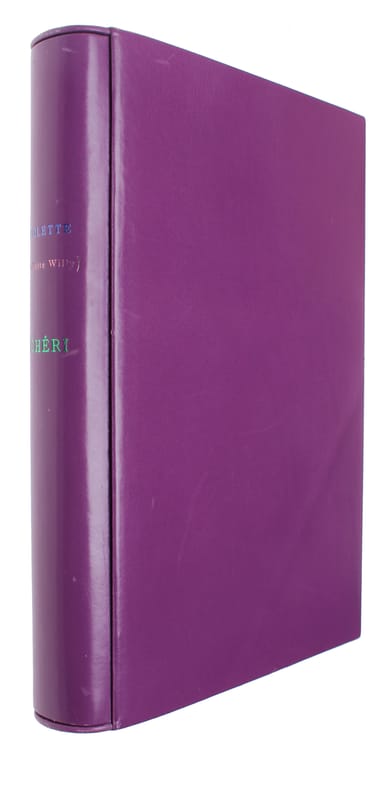
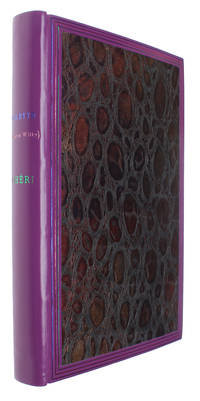
192060344Paris, 1920. Bound uncut with the original printed wrappers, also the backstrip, in a magnificent bright purple lambskin binding with title and author in bright, metallic lettering to spine, blue, pink, and green respectively. Triple bright metallic line-borders to boards (same three colours), inside which the remainder of the boards are covered with a large inlay of shiny, coloured leather in crocodile skin-like relief pattern. Recto and verso respectively of flyleaves covered with pink/purple suede. Housed in a chemise with purple lambskin spine with same lettering as the binding and purple cloth boards, inside grey suede, and purple full lambskin slipcase. The binding is signed Leroux (in shiny green lettering to inside of front board). A handwriiten postcard from Leroux to the previous owner of the book is enclosed. The postcard is dated 1997 and concerns the binding, including the price. The slipcase has a bit of edgewear, but the binding is near mint. Apert from a tiny tear (no loss) to the upper margin of the front wrapper, also internally near mint. Front free end-paper with a four-line inscription for ""René Baer"" signed ""Colette de Jouvenel"".
192060344Paris 1920. Bound uncut with the original printed wrappers also the backstrip in a magnificent bright purple lambskin binding with title and author in bright metallic lettering to spine blue pink and green respectively. Triple bright metallic line-borders to boards same three colours inside which the remainder of the boards are covered with a large inlay of shiny coloured leather in crocodile skin-like relief pattern. Recto and verso respectively of flyleaves covered with pink/purple suede. Housed in a chemise with purple lambskin spine with same lettering as the binding and purple cloth boards inside grey suede and purple full lambskin slipcase. The binding is signed Leroux in shiny green lettering to inside of front board. A handwriiten postcard from Leroux to the previous owner of the book is enclosed. The postcard is dated 1997 and concerns the binding including the price. The slipcase has a bit of edgewear but the binding is near mint. Apert from a tiny tear no loss to the upper margin of the front wrapper also internally near mint. Front free end-paper with a four-line inscription for "René Baer" signed "Colette de Jouvenel". <br/><br/><em>First edition - presentation-copy and one of 175 numbered copies on Hollande premier papier out of a total of 725 numbered copies - of Colette's fascinating novel "Chéri" published at the dawn of the roaring 20'ies. The scandalous novel which portrays the love between an older woman and a much younger man is partly inspired by Colette's own life and is considered one of her very best works. Extremely controversial as a person Colette has always been the object of fascination as well as controversy. In 1893 she married Henry Gauthier-Villars who was already a famous author and publisher. He used the pen-name "Willy" under which Colette's famous first novels the Claudine-stories also appeared. Colette and Willy separated in 1906 with a final divorce in 1910. Colette is well known for the series of lesbian relationships she embarked upon after her separation. In 1912 however she married Henry de Jouvenel editor of Le Matin and took his name. Not for her publications but she clearly used it in her personal correspondence. Their marriage ended in divorce in 1924 however due partly to her affair with her 16-year-old stepson Bertrand de Jouvenel. Chéri is partly based upon her experiences with her much younger stepson. " 'Me a feminist' She scoffed in 1910. 'I'll tell you what the suffragettes deserve: the whip and the harem'. COLETTE is an intriguing and flamboyant figure. Born in Burgundy in 1873 she moved to Paris at the age of twenty with her husband the writer and critic Henry Gauthiers-Viller Willy. Forcing Colette to write Willy published her novels in his name and the Claudine series became an instant success. She escaped her exploitative first husband to live by her pen and work in music-halls as a dancer. Colette had a lesbian love affair with a niece of Napoleon's she married three times had a baby at 40 and at 47 preferring 'passion to goodness' she seduced her teenage stepson. In the meantime she wrote stunning novels that were admired by Proust and Gide -- Gigi Sido Cheri and Break of Day. Colette lived to be over 80. She was the first woman President of the Academie Goncourt and was the first woman in France to be accorded a state funeral." "Colette in full Sidonie-Gabrielle Colette 1873 - 1954 outstanding French writer of the first half of the 20th century whose best novels largely concerned with the pains and pleasures of love are remarkable for their command of sensual description. Her greatest strength as a writer is an exact sensory evocation of sounds smells tastes textures and colours of her world. Her best work was produced after 1920 and followed two veins. The first vein followed the lives of the slightly depraved postwar younger generation. Among these novels are Chéri 1920 and La Fin de Chéri 1926; The Last of Chéri dealing with a liaison between a young man Chéri and an older woman. Encycl. Britt. René Baer 1887 - 1962 was a famous French author journalist playwright and songwriter. Georges Leroux 1922-1999 was one of the most accomplished and esteemed French binders of the twentieth century. Before he became a book binder in 1959 he was a poet. His works are known for their exotic materials use of metallic effects and strong polychromatic color. </em> hardcover
100395Watercolor gouache and pencil on paper mounted on board; signed "W.P." lower left and titled by artist. 13.5 x 10.5 in. Pogány Willy. Watercolor gouache and pencil on paper mounted on board; signed "W.P." lower left and titled by artist. 13.5 x 10.5 in. A fine illustration for Book II of Spencer's The Faerie Queene showing Phaedria in her boat tempting Sir Guyon representing Temperance who stands ashore with the Palmer. unknown books
192639150Paris Editions Excelsior 1926 In-4, chagrin noir orn sur la partie infrieure des deux plats en passant par le dos d'une composition de formes mosaques alternativement en creux ou en relief en mme chagrin noir et accompagnes dans leurs mouvements sinueux de jeux de filets dors et froid; dos sans nerfs portant les noms de l'auteur et de l'artiste ainsi que le titre de l'ouvrage en petites capitales dores; doublures et gardes de papier orn d'un dcor abstrait dans des tons beiges et verts, tte dore, non rogn, couverture imprime. Bote-tui (Godelieve).20 eaux-fortes en couleurs hors texte par Louis Icart. Tirage limit 546 exemplaires numrots. Un des 50 premiers exemplaires (aprs un exemplaire unique) numrots (n16) sur japon imprial. Exemplaire bien complet du fac-simil d'une lettre autographe de Colette sur papier bleu.
192858375New York:: Doubleday Doran and Company ca. 1928. Traces of adhesive on verso; otherwise fine. 8vo. Doubleday, Doran and Company, unknown