Voltaire, Francois Marie Arouet deBiblio.com
5 625 résultats
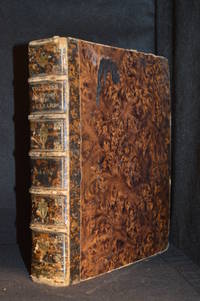
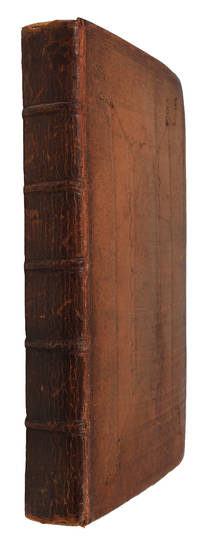
17627601Geneva: Cramer 1762. First Edition. Hard Cover. Very Good. Octavo. 358 pages. The first authorized edition with a number of piracies appearing before this epic based upon the life of Joan of Arc. Twenty plates by Gravelot. The ornament on the title page is the same as the one on the 1759 first edition of Candide. Contemporary 3/4 brown leather all edges stained red; a few letters lost on red label on spine; some scuffing and edge wear; light marginal stain not affecting text on about 50 leaves; overall a very good copy. <br/><br/> Cramer hardcover
136860London: Lutetian Society 1899 a numbered copy from a limited edition of 500. Hardcover 406pp. Very good. The two volumes bound as one in 3 / 4 leather with raised bands and marbled boards. Extra-illustrated with 20 engraved plates removed from a smaller and quite earlier volume tipped-in. The spine is a bit scuffed and the covers are worn around the edges. Also known as Francois Marie Arouet Voltaire. Identified on spine as Voltaire The Maid of Orleans. Translated by Ernest Dowson. Revised and enlarged by W.H. Ireland. Poetry. Lutetian Society Hardcover
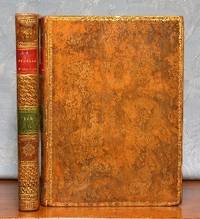
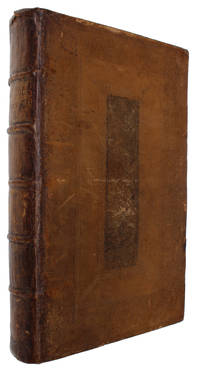
176424563Londres: aux depens de la compagnie 1764. 8vo pp. xvi 384; engraved frontispiece and 20 engraved plates; 20th-century full crimson straight-grain morocco by Zaehnsdorf decorative gilt border on covers gilt-paneled spine and preserving the original blue printed wrappers which are bound in. First published without plates at Louvain in 1755. This is likely a 'variorum' edition probably Dutch based on the first authorized edition of 1762 Geneva with variant readings from earlier piracies. Bengesco 491. aux depens de la compagnie unknown
1795ILTPVOLT95Paris: Didot Le Jeune L'An Troisième 1795. 1795. 2 Volumes. 4to. pp. 211; 212. with half-titles. engraved frontis. portrait of Jeanne d'Arc by Gaucher & 21 engraved plates by engraved by A very tall fine crisp copy on thick paper deckle edge visible on some leaves bound in contemporary tree calf gilt backs all edges gilt some surface scarring to covers but still a very nice copy. First Edition with these Illustrations the frontispiece portrait of Jeanne d'Arc by Gaucher and the other twenty-one plates engraved by Bacquoy Choffard Delignon Delvaux Duhamel Dupréel Lemire Lingée Malbeste Patas Pauquet Ponce and Romanet after designs by Lebarbier Marillier Monnet and Monsiau. "Très belle édition." Cohen-De Ricci Cohen-De Ricci 1034. Brunet V 1362. Bengesco 513. F. Hardcover. Paris: Didot Le Jeune, L'An Troisième [1795]. Hardcover
a79048Londres Paris no date or publisher. In French. 16mo. 272pp. 3. Nice engraved frontispiece showing Joan and Voltaire we assume it is Voltaire Full leather with marbled end papers. All edge gilt. Good cover leather worn cover tips leather worn off; later paper backstrip reinforcement. Original multicolored endpapers hinges not cracked. Binding secure; text clean. Owner bookplate. Pictures available. . hardcover
0428692613.Ghardcover. Good. Access codes and supplements are not guaranteed with used items. May be an ex-library book. hardcover
elala2018Parma: Bodoni Press 1798. 8vo. pp. 3 p.l. 128. with initial blank. 19th century quarter roan bit rubbed some light foxing. BOUND WITH: .La Marianna Tragedia Di Voltaire Nuovamente Tradotta. 8vo. pp. 1 p.l. x 2 107. complete with initial blank. Parma: Bodoni Press 1804. BOUND WITH: .L'Olimpia Tragedia Di Voltaire Nuovamente Tradotta. 8vo. pp. 1 p.l. xii 2 135. Parma: Bodoni Press 1805. BOUND WITH: .L'Alzira Tragedia Di Voltaire Nuovamente Tradotta. 8vo. pp. 2 p.l. viii 106. some light foxing. Parma: Bodoni Press 1797. New Italian translations by Luigi Landriani of four of Voltaire's plays: a nice grouping of Bodoni imprints. Brooks 711 932 961 679. Parma: Bodoni Press, 1798. unknown
1731231308Paris: Josse 1731. First. hardcover. very good. Slim 8vo pp. xxix 3. 110 3 approbation and errata. Decorative copper engraved head-pieces a few contemporary ink annotations full gilt brown calf covers lightly warped and rubbed with a bright gilt heraldic crest on front and back red edges. Paris: J.F. Josse 1731. First Edition. Scarce. Very good.<br/> <br/> Josse unknown
1334980039.Gpaperback. Good. Access codes and supplements are not guaranteed with used items. May be an ex-library book. paperback
0266015271.Gpaperback. Good. Access codes and supplements are not guaranteed with used items. May be an ex-library book. paperback
0428634966.Ghardcover. Good. Access codes and supplements are not guaranteed with used items. May be an ex-library book. hardcover
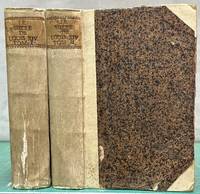
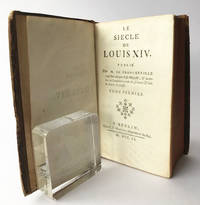
175116247Berlin: C F Henning. Very Good- with no dust jacket. 1751. First Edition; First Printing. Hardcover. Vellum darkened and with some surface cracking light extremity wear; light foxing. No half-title pages. Errata page for both volumes bound at end of Vol I. Two custom owners' bookplates in first volume. Solid hardcovers. ; French language. Half vellum binding with marbled boards. Two of two volumes complete. Bengesco I 1178. This work was the most researched and carefully prepared of Voltaire's works. He began work on this project in 1734 while at the Chateau Cirey put it aside in 1738 and resumed work on it in 1750. First Edition First Printing of Voltaire's pioneering historical study of the age of King Louis XIV published while Voltaire was resident at the court of King Frederick II of Prussia.; xii 488 2 errata; ii 466 in 2v pages . C F Henning hardcover
17512359The first edition of Voltaire's brilliant historical study of the age of King Louis XIV. Begun as early as 1732 Voltaire sent a manuscript version to Frederic II who was enthusiastic and encouraged its publication. In 1739 Voltaire published a 'Plan Raisonné' of the project including two finished chapters but this was condemned by the court and seized. In 1750 Voltaire left France for Frederic's court at Berlin where he set himself to complete the work. Failing to obtain the 'privilège royal' or even the non-written 'permission tacite' he decided to go ahead and publish the work in Berlin at his own expence. Voltaire continued to add to the work in subsequent editions most notably in the 1753 Berlin edition where he added a supplement in which he refuted the attacks made by La Beaumelle.<br /><br /><i>Two volumes in one 12mo 144 x 85mm pp. xiv 488 1 errata; ii 466 2 errata with the half-title to the first volume in contemporary calf rather worn spine gilt in compartments foot of spine chipped wormhole to the head of spine wanting the front endpaper red edges.</i><br /><br />BN Voltaire Catalogue 3361-3363. C.F. Henning
6930413like new. unknown
1617Paris: Rene Kieffer 1926. Soft cover. Good. Quarto. 98 pages. Edition limited to 550 copies; this is No. 191 on vélin blanc. Original decorated stiff paper wrappers. Glassine dustwrapper spine mostly missing. Illustrated by Georges Braun with 41 plates in pochoir. <br/> <br/> Paris: Rene Kieffer, 1926. paperback
1166746992.Gpaperback. Good. Access codes and supplements are not guaranteed with used items. May be an ex-library book. paperback
0483368083.Gpaperback. Good. Access codes and supplements are not guaranteed with used items. May be an ex-library book. paperback
19842080202105500431The Univ. of Oxford 1984. Soft Cover. Fine. Number of books: 1 The Univ. of Oxford paperback
19702080202105500432Institut et Musee Voltaire 1970. Soft Cover. Fine. Number of books: 1 Institut et Musee Voltaire paperback
003195Edinburgh: Alexander Donaldson Sept 16 1768. Soft cover. Very Good. Edinburgh: Alexander Donaldson Sept 16 1768. Large quarto. 8pp. Disbound. <br/> <br/> Edinburgh: Alexander Donaldson, Sept 16, 1768. paperback
1333303378.Gpaperback. Good. Access codes and supplements are not guaranteed with used items. May be an ex-library book. paperback
173361360London 1733. 8vo. Bound in a lovely contemporary English Cambridge-style full calf binding with a plain spine with five raised bands. Spine a bit cracked vertically and with minor loss to capitals. Corners a bit bumped and adges of boards a bit worn. Binding overall nice and tight. Small damp stain at the lower blank corner of the first few leaves otherwise a very good clean copy on thick crisp paper. 16 -including preface contents advertisements 253 1 18 -Index pp. <br/><br/><em>The important actual first edition of this highly celebrated key work of the Enlightenment in which the anecdote of how Newton discovered gravity the story about Newton and the falling apple appeared for the first time together with the description of the difference between the physical world view of the English and the French the "plenum" and the "vacuum". This seminal work in which Voltaire famously depicts British philosophy science society and culture in comparison to French can be viewed as the Enlightenment equivalent to Tocqueville's "Democracy in America". This series of essays which is based on Voltaire's experiences when living in England was actually written by Voltaire mostly in English which he mastered to perfection. It has often been presumed that the first edition of the work was that published in French in 1734 but actually the present English edition constitutes the actual first appearance of the work as well as the version that is closest to Voltaire's intention as the French language version is the re-written one and the English version the original. Curiously almost all modern English versions are translations into English of the French edition instead of the original English version making this edition of the utmost importance.After the original English edition of 1733 two French editions soon followed the first in 1734. Unlike the British the French resented the book and already in 1734 the French Parliament issued an order for the author's arrest and condemned the work causing the impact of it in France to be delayed. The book was burned for being "dangerous to religion and civil order". At the same time the work became a bestseller in Britain and as much as 14 editions of the work were published in the eighteenth century. "Inspired by Voltaire's two-year stay in England 1726-8 this is one of the key works of the Enlightenment. Exactly contemporary with Gulliver's Travels and The Beggar's Opera Voltaire's controversial pronouncements on politics philosophy religion and literature have placed the Letters among the great Augustan satires. Voltaire wrote most of the book in English in which he was fluent and witty and it fast became a bestseller in Britain. He re-wrote it in French as the Lettres philosophiques and current editions in English translate his French." Nicholas Cronk Introduction to the Oxford's Classics edition from 1999.The great French philosopher Voltaire was greatly impressed by the philosophical and scientific achievements of the English especially those of Newton Locke and Bacon. As a disseminator of scientific knowledge Voltaire came to play a great rôle in the popularization of Newtonian science and its discoveries the present work being a prime example. Although the work was condemned by the French authorities it still came to play a great rôle in the spreading of Newtonian ideas in France. The present work generally came to play a dominant rôle in Enlightenment accounts of the history of science and philosophy. The work focuses on British science and thought and uses the accounts of these to emphasize what is lacking in French society and French thought. The work is generally very critical towards the French "ancient régime" and when Voltaire here discusses the emergence of empiricism it is viewed as an English tradition that stands in opposition to the French rationalist tradition with Descartes as the prime example. This view is taken over by the following Enlightenment historians of science and philosophy e.g. d'Alembert see for instance his "Preliminary Discourse" of 1751. Some of the most influential passages of the work are probably those on Bacon who Voltaire sees as the founder of modern experimental science Newton and Descartes. Letters XIV on Descartes and Newton XV on attraction and XVI on Newton's Optics from 1704 are among the most influential essays of the work. In XVI Voltaire reflects upon Newton's "Optics" and the way that he rejected Descartes' theory and set out his own account of the properties of light. In XV he presents the first account of Newton and the falling apple: "As he was walking one Day in his Garden and saw some Fruits fall from a Tree he fell into profound Meditation on that Gravity the Cause of which had so long been sought but in vain by all the Philosophers whilst the Vulgar think there is nothing mysterious in it. He said to himself that from what height soever in our Hemisphere those Bodies might descend their Fall wou'd certainly be in the Progression discover'd by Galileo; and the Spaces they run thro' would be as the Square of the Times. Why may not this Power which causes heavy Bodies to descend and is the fame without any sensible Diminution at the remotest Distance from the Center of the Earth or on the Summits of the highest Mountains; Why said Sir Isaac may not this Power extend as high as the Moon." pp. 127-28.But perhaps the most famous passage in the volume is the opening of Letter XIV: "A Frenchman who arrives in London will find Philosophy like every Thing else very much chang'd there. He had left the World a "plenum" and he now finds it a "vacuum". At Paris the Universe is seen compos'd of Vortices of subtile Matter; but nothing like it is seen in London. In France 'tis the Pressure of the Moon that causes the Tides; but in England 'tis the Sea that gravitates towards the Moon; so that when you think that the Moon should make it Flood with us those Gentlemen fancy it should be Ebb which very unluckily cannot be prov'd." pp. 109-10. </em> hardcover
173360085London C. Davis and A. Lyon 1733. 8vo. Lovely contemporary full Cambridge-style binding with five raised bands to spine and blindstamped ornamental borders to boards. . Double gilt line-borders to boards. All edges of boards with gilt borders. Gilt title to spine. Hinges neatly and professionally re-inforced. Internally very nice clean and fresh. A lovely crisp and large copy with good margins printed on heavy fine paper. 16 -including preface contents advertisements 253 1 18 -Index pp. <br/><br/><em>The important actual first edition of this highly celebrated key work of the Enlightenment in which the anecdote of how Newton discovered gravity the story about Newton and the falling apple appeared for the first time together with the description of the difference between the physical world view of the English and the French the "plenum" and the "vacuum". This seminal work in which Voltaire famously depicts British philosophy science society and culture in comparison to French can be viewed as the Enlightenment equivalent to Tocqueville's "Democracy in America". This series of essays which is based on Voltaire's experiences when living in England was actually written by Voltaire mostly in English which he mastered to perfection. It has often been presumed that the first edition of the work was that published in French in 1734 but actually the present English edition constitutes the actual first appearance of the work as well as the version that is closest to Voltaire's intention as the French language version is the re-written one and the English version the original. Curiously almost all modern English versions are translations into English of the French edition instead of the original English version making this edition of the utmost importance.After the original English edition of 1733 two French editions soon followed the first in 1734. Unlike the British the French resented the book and already in 1734 the French Parliament issued an order for the author's arrest and condemned the work causing the impact of it in France to be delayed. The book was burned for being "dangerous to religion and civil order". At the same time the work became a bestseller in Britain and as much as 14 editions of the work were published in the eighteenth century. "Inspired by Voltaire's two-year stay in England 1726-8 this is one of the key works of the Enlightenment. Exactly contemporary with Gulliver's Travels and The Beggar's Opera Voltaire's controversial pronouncements on politics philosophy religion and literature have placed the Letters among the great Augustan satires. Voltaire wrote most of the book in English in which he was fluent and witty and it fast became a bestseller in Britain. He re-wrote it in French as the Lettres philosophiques and current editions in English translate his French." Nicholas Cronk Introduction to the Oxford's Classics edition from 1999.The great French philosopher Voltaire was greatly impressed by the philosophical and scientific achievements of the English especially those of Newton Locke and Bacon. As a disseminator of scientific knowledge Voltaire came to play a great rôle in the popularization of Newtonian science and its discoveries the present work being a prime example. Although the work was condemned by the French authorities it still came to play a great rôle in the spreading of Newtonian ideas in France. The present work generally came to play a dominant rôle in Enlightenment accounts of the history of science and philosophy. The work focuses on British science and thought and uses the accounts of these to emphasize what is lacking in French society and French thought. The work is generally very critical towards the French "ancient régime" and when Voltaire here discusses the emergence of empiricism it is viewed as an English tradition that stands in opposition to the French rationalist tradition with Descartes as the prime example. This view is taken over by the following Enlightenment historians of science and philosophy e.g. d'Alembert see for instance his "Preliminary Discourse" of 1751. Some of the most influential passages of the work are probably those on Bacon who Voltaire sees as the founder of modern experimental science Newton and Descartes. Letters XIV on Descartes and Newton XV on attraction and XVI on Newton's Optics from 1704 are among the most influential essays of the work. In XVI Voltaire reflects upon Newton's "Optics" and the way that he rejected Descartes' theory and set out his own account of the properties of light. In XV he presents the first account of Newton and the falling apple: "As he was walking one Day in his Garden and saw some Fruits fall from a Tree he fell into profound Meditation on that Gravity the Cause of which had so long been sought but in vain by all the Philosophers whilst the Vulgar think there is nothing mysterious in it. He said to himself that from what height soever in our Hemisphere those Bodies might descend their Fall wou'd certainly be in the Progression discover'd by Galileo; and the Spaces they run thro' would be as the Square of the Times. Why may not this Power which causes heavy Bodies to descend and is the fame without any sensible Diminution at the remotest Distance from the Center of the Earth or on the Summits of the highest Mountains; Why said Sir Isaac may not this Power extend as high as the Moon." pp. 127-28.But perhaps the most famous passage in the volume is the opening of Letter XIV: "A Frenchman who arrives in London will find Philosophy like every Thing else very much chang'd there. He had left the World a "plenum" and he now finds it a "vacuum". At Paris the Universe is seen compos'd of Vortices of subtile Matter; but nothing like it is seen in London. In France 'tis the Pressure of the Moon that causes the Tides; but in England 'tis the Sea that gravitates towards the Moon; so that when you think that the Moon should make it Flood with us those Gentlemen fancy it should be Ebb which very unluckily cannot be prov'd." pp. 109-10. </em> hardcover
1347308806.Ghardcover. Good. Access codes and supplements are not guaranteed with used items. May be an ex-library book. hardcover
1980Q-014044386XPenguin 1980-07-31. Paperback. New. New. In shrink wrap. Looks like an interesting title! Penguin paperback