Satia, PriyaAntiquariat.de

1 478 résultats
107995Allen Lane 2020. ix, 363 Seiten.
In 8°, brossura con sovraccoperta editoriale illustrata, pp. 304, (6), con 60 tavole fotografiche illustrate f.t. b/n; buon esemplare, lievi fioriture al taglio superiore, lieve strappetto allasovraccoperta alla testa del dorso. (XC5/B) (XC5/B)
19903261Arthaud 1990 In-8 broché, 410 pp. Illustrations en noir
560464P., Braun, (1931). 2 vol. in-4 brochés, 244 et 522 pp., nbr. ill. in et h.-t. dont 60 planches. Edition limitée à 1000 exemplaires numérotés. Un des 900 sur vélin d’Arches, n°303.
54391En vente chez tous les Libraires ("Paris, Bibliothhèque des Sciences Médicales et Théologiques" sur la couverture), sans date, grand in 8° broché, XXXV-297 pages ; papier terni avec quelques rousseurs ; couverture illustrée en couleurs par Armengol (défraichie, petit manque en tête du dos).
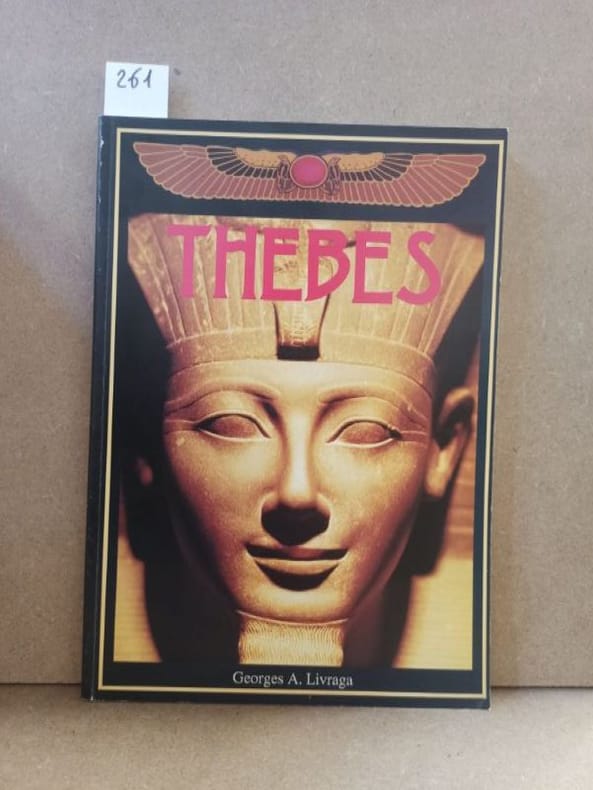
19912611991 - broché - Editions N.A.D.P. (Organisation Internationale Nouvelle Acropole) - 2e édition - 1991 - In-4 (29,5 x 21 cm) broché - 123 pages + Lexique illustré et tables en fin d'ouvrage - Livre signé sous le nom "Georges A. LIVRAGA"- Traduit de l'espagnol par Giovanni MENEGHIN
New English Paperback. Pbo. 4to. (26 x 22 cm). In English and Turkish. 128 p., color ills. This side of The Aegean from a westerner's brush.= Batilinin firçasindan Ege'nin bu yakasi. [Exhibition catalogue].
727pp., text in latin, 23cm., orig.softcover, VG, X58592
As New English Paperback. Pbo. Mint. 4to. (29 x 22 cm). In English. 169, [13] p. Color and b/w ills. The Turkish sale including works of art, miniatures and calligraphy, textiles, European and Turkish paintings. Soyheby's London. Friday 11 October 1996. [Auction catalogue].
In 8°, tutta tela con brossura editoriale illustrata, pp. 349, (1); esemplare molto buono. (ZE3/A) (ZE3/A)
Very Good English Paperback. Pbo. Cr. 8vo. (20 x 14 cm). In English. 260, [2] p., 32 b/w plts. The sultans' harem. An account of the institution as it existed in the Palace of the Turkish Sultans with a history of the Grand Seraglio from its foundation to modern times.
New New English Original bdg. Dust wrapper. 4to. (30 x 24 cm). In English. 343 p., color and b/w ills. The Sultan's procession: The Swedish embassy to Sultan Mehmed IV in 1657-1658 and the Rålamb paintings. In 1657, King Charles X Gustaf of Sweden sent Claes Ralamb as an envoy to Sultan Mehmed IV's court. While he was there, Ralamb commissioned 20 large paintings in oil on canvas, depicting an imperial procession through Istanbul in September 1657, providing a revealing insight into the court of Sultan Mehmed IV in Ottoman Turkey. For the first time, Ralamb's paintings are published here in "The Sultan's Procession". This beautifully illustrated book - containing over 150 colour illustrations - comprehensively covers the full history of the paintings, including a technical analysis from the conservation of one of the paintings. The book also provides a full history of Claes Ralamb and his mission, including the political background of the Swedish embassy, Ralamb's biography and English translations of primary sources in Swedish and Turkish archives. Among the illustrations are over 100 watercolours of people in the Ottoman society from the costume album acquired by Ralamb in Istanbul. These unique Ralamb paintings provide a rare window into life at the Ottoman court in the 17th century.
In 8°, tutta tela editoriale (alcune piccole abrasioni), pp. XXXII, 618, più 32 di catalogo editoriale; buon esemplare,lievi fioriture. Z D 5/B
In 8°, tutta tela editoriale con sovraccoperta illustrata, pp. XVI, 149, (3), con tavole illustrate f.t b/n; buon esemplare, lievi fioriture alle tavole. (ZD4/B) 710020953 (ZD4/B)
In 8°, brossura editoriale illustrata, pp. 191, (1), con tavole illustrate n.t. b/n; esemplare molto buono. (ZB2/A) 0090588819 (ZB2/A)
New English Paperback. Roy. 8vo. (24 x 17 cm). In English. 401 p., b/w ills. The Port-city in the Ottoman Middle East at the age of Imperialism. Acknowledgments Abbreviations Introduction SECTION I Economy: Trends & Developments 1. "ReImagining the World Economy: Market Connectivity and the Ottoman City in the Early Modern and Modern Era". Initially published as "Congruence of Economic Trends and Practices in the Creation of Izmir's Social Space: the City, the Market and the Individual during Mercantile Capitalism", in Alp Yücel Kaya, Ayse Sabuktay & Dilek Akyalçin Kaya, eds., Culture and Politics in the Mediterranean (Izmir Mediterranean Academy: Izmir, 2016), pp. 53-73. 2. "Market Networks and Ottoman-European Commerce, c. 1700-1825", in Ebru Boyar & Kate Fleet, eds., The Ottomans and Trade, special issue of Oriente Moderno, Vol. LXXXVI/1 (Rome, 2006), pp. 109-128. 3. "Commerce in the eastern Mediterranean from the Eighteenth to the Early Twentieth Centuries: the City-Port of Izmir and its Hinterland", International Journal of Maritime History, Vol. X, No. 2 (December 1998), pp. 125-154. 4. "Le développement d'un port méditerranéen d'importance interna-tionale: Smyrne (1700-1914)" Marie-Carmen Smyrnelis, ed., Smyrne, la ville oubliée? Mémoires d'un grand port ottoman (Éditions Autre-ment: Paris, 2006), pp. 21-49. 5. "The Port of Smyrna in the Nine-teenth Century," in Apostolos Vakalopoulos, Constantine Svolopoulos & Bela Kiraly, eds., War and Society in East Central Europe, Vol. XXIII (Institute for Balkan Studies: Thessaloniki, 1988), pp. 261 272. 6. "The Making of a Nineteenth-Century Ottoman Port: the Quay of Izmir", The Journal of Transport History, 3rd Series, Vol. 22/1 (March 2001), pp. 23-46. SECTION II Western Anatolia & The Aegean Islands 7. "The Western Anatolian Coast and the Aegean Islands in the Late Nineteenth and Early Twentieth Centuries: An Economic Survey," Proceedings of the First International Con-gress on the Hellenic Diaspora from Antiquity to Modern Times (Amsterdam, 1991), Vol. II, pp. 251-266. 8. "L'économie de l'Anatolie occidentale, 1908-1914", in Marcel Bazin, Salgur Kan-çal, Roland Perez & Jacques Thobie, eds., La Turquie entre trois mondes (Institut Français d'Études Anatoliennes: Istanbul & Paris, 1998), pp. 239-248. 9. "The Dynamics of Economic Development: Izmir and Western Anatolia, Late 19th/Early 20th Centuries", Kolokyum 19. Yüzyilda Mersin ve Akdeniz Dünaysi (T.C. Mersin Universitesi Yayinlari: Mersin, Turkey, 2002), pp. 65-72. SECTION III The Wider Region 10. "The Mediterranean Commercial World of the Eighteenth Century: Ottoman and Italian Ports", in Michela D'Angelo, Gelina Harlaftis & Carmel Vassalo, eds., Making Waves in the Mediterranean, (Instituto di Studi Storici: Messina, 2010), pp. 467-482. 11. "Greek Commercial practices and long-distance trade: Russia and the Ottoman Mediterranean in the 18th and early 19th cen-turies", in Olga Katsiardi-Hering, Athina Kolia-Demirtzaki & Kater-ina Gardica, eds., Russia and the Mediterranean (Herodotos Press: Athens, 2011), Vol. I, pp. 439-456. 12. "Patras", Review, Vol. XVI (Fall 1993), pp. 387-410. 13. "Monoculture in Nineteenth-Century Greece and the Port-City of Patras", Journal of the Hellenic Diaspora, Vol. 20/2 (1994), pp. 9-34. SECTION IV The Economic Actors 14. "The Greek Mercantile Community of Izmir in the First Half of the Nineteenth Century" in Daniel Panzac, ed., Les Villes dans l' Empire ottoman: Activités et Sociétés, Vol. I (CNRS: Paris, 1991), pp. 391-416. 15. "Ottoman-European Trade, Tax-Farming and the Implemen-tation of the 1838 Anglo-Turkish Convention". Initially published as "The Implementation of the 1838 Anglo-Turkish Convention on Iz-mir's Trade: European and Minority Merchants", New Perspectives on Turkey, Vol. 7 (Spring, 1992), pp. 91-112. 16. "Concurrence commer-ciale et financière entre les pays occidentaux à Izmir pendant le XIXe et début XXe siècles," in Jacques Thobie, Roland Perez & Salgur Kan-çal, eds., Enjeux et Ra
Fine English Paperback. Small 4to. (27 x 20 cm). In English. 54, [2] p., 53 numerous b/w plts., 46 numerous color plates. The people & places of Constantinople. Watercolours by Amadeo Count Preziosi, (1816-1882). It's prepared for the first exhibition on Count Amadeo Preziosi, (1816-1882) in Great Britain. "This is the first exhibition of the work of Amadeo Preziosi to be held in this ccountry. It does not cclaim to be definitive, but it centered on the Museum's substantial holdings and augmented by loans from collections in Great Britain. Preziosi's name is now little known except to specialists, but in the period 1840-70 he was by far the most reknowned artist in Constantinople. He was only retrieved from the critical neglect into which he had fallen in the 20th century by Rodney Searight who began to appreciate his importance while building up his unsurpassed collection of views of the Near and Middle East. Indeed, it is fitting that the exhibition honours not only Preziosi himself but also Rodney Searight, pioneer of the study of this field, whose collection the Museum is raising funds to acquire. It is hoped that the enthusiasm Preziosi's contemporaries felt foe his lively and colourful studies of a now vanished way of life will be appreciated by visitors to the exhibition". (From the Kaufmann's preface).
Fine Fine English Original bdg. Dust wrapper 4to. (28 x 20 cm). In English and Turkish. [viii], 351, [9] p., b/w and color ills. The Ottoman palace women (Women in Turkey).= Osmanli saray kadinlari (Türkiye'de kadin). Ottoman palace women is the third volume of study entitled Women in Turkey, and is a detailed and documentational account of how women of many races, faiths and creeds entered palace service, and of their lifestyles from the humblest to those who attained the coveted position of favourite of wife to the sultan. It was impossible for anyone but the members of the sultan's own household to see and describe the harem of the Ottoman palace. That is why, with rare exceptions, the portrayals of palace officials, female slaves, odalisques, favourites, wives and sultan mothers by foreign artists who visited Istanbul at various times are mere figments of the imagination and as such are interesting testimony to the power of imagination and artistic ability of European painters...".
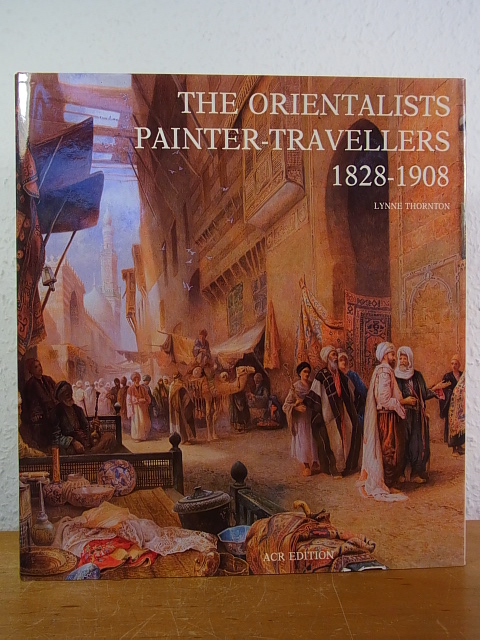
1983126639ACR Edition Internationale, Paris, 1983. 272 S. ; 28,5 x 25,5 cm ; Leinen.
1797MEA1066London:: Printed for the Editor by Cooper and Graham 1797. 1797. Four parts in one vol. 4to. iii-xii 92 viii 93-196 iv 197-300 iv 301-403 1 pp. Lacks the preliminary title for the annual supplied in photocopy facs. Advertisement prospectus contents 18 engraved plates 2 hand-colored 5 figures including 1 hand-colored pp. 16 307 310 338 2 index errata; minor penciling p.95-6 267. At end of first issue: "Subscription for the four numbers . . . for 1797. Modern half navy blue blind- and gilt-stamped calf blue cloth covers raised bands new endleaves. Very early periodical which lasted for about three years bringing Oriental-themed essays dealing with Middle Eastern & Asian literature language music archeology history fauna & flora birds & animals and celebrates as well some of the earliest translations of the great Persian poets such as Hafez and Sa'di. The work contains anecdotes and an especially early rendition into English of the Arabian Nights "A Tale from an original MS. of the Arabian Nights" translated by Jonathan Scott. The two hand-colored plates depict the Musk Deer of Nepal "The Fighting Bulbul of Bengal" an additional plate offers four beasts shown as "Persian zoology" with four figures. / "Many of his academic contributions were published in the Oriental Collections the three volumes of which appeared in London between 1797 and 1800." "William Ouseley as well as his brother Gore continued the pioneering work of William Jones 1746-94; q.v. in the field of Persian studies in Great Britain. Jones and the Ouseley brothers shared the experience of extended stays in India and their careers in turn illustrate how Great Britain's economic interests in India indirectly promoted Persian studies." / Includes translations from a number of Middle Eastern and Asian literatures including: Arabic Persian Turkish Hebrew Sanskrit with illustrative plates including alphabets and some music; original texts included with commentary on various languages./ Selected papers include all of these from the first fascicule: Sketch Biographical and Literary of Abu'l Taieb Al Motanabbi; with his two Poems on the Sickness and Recovery of Saif Uddaula by the Rev. John Haddon Hindley -- Of the Fighting Bulbul of Bengal -- Extraordinary Persian Distich by P.D.V. -- On the different modes of writing the word ---- in European Characters by Philologus -- Extract of a Journal and Memorandums written during a Tour in the Nizam's Country in the Month of November 1791 by an Officer -- Hebrew Running Hand -- Cufick Inscription -- Persian Lines on the Deity quotes in the Historical Work entitled "Tarik Moagem si Athar Moluck al Agem translated by W. Ouseley -- Sonnet b ythe Poet Sadi paraphrased from the Persian by P.D.V. -- On the Christianity of the Mohammedans; with Anecdotes of Murad Beg a Trukish Writer of the sixteenth Century by I.U. -- Remarks on the Collation of Manuscripts; with various Readings in the Gulistan of Sadi by Major Ouseley -- The Lover to his Taper translated from the Arabick of the Sheick Safy Eddin Alhillay by the Rev. J.D. Carlyle . . . -- The Conquest of the Island of Zoos from the Persian by the Rev. R. Gerrans -- Anecdotes of Indian Musick by W. Ouseley -- Account of a Large Tree Communicated by Colonel Ironside -- Account of a Banian Tree in the Province of Bahar. . . -- Persian Sonnet by Khosroo -- Dialogues in the vulgar Arabick of Morocco by Mr. William Price -- Explanation . . . -- Queries and Notes. Three other fascicules contain as much additional material. BIOGRAPHICAL: Major Sir William Ouseley 1767-1842 British Orientalist went to Paris to learn French in 1787 and then became interested in Persian literature which he undertook to learn in Leiden 1794. He was in the year 1800 knighted by "Charles Lord Cornwallis 1738-1805 who from 1786 to 1793 had been Governor-General of India had him knighted in recognition of his promotion of oriental studies." "Ouseley's life as gentleman-scholar is marked by his unsuccessful efforts to obtain government support for a journey to Iran and by his unfulfilled ambition to become a government envoy to a Near-Eastern court. It was the diplomatic career of his brother Gore that allowed William to make the personal acquaintance of the Qajar envoy Abu'l-asan n Ili 1776-1845; q.v. who visited England between 1809 and 1810 and to become his brother's secretary when between 1810 and 1815 Gore traveled as the British ambassador to the Qajar court in Tehran. Ouseley's memoir of Travels in Various Countries of the East is an important source of British-Persian politics during the Napoleonic Wars." -- Encyclopaedia Iranica. His works are notable including the present annual issued from 1979-1800 Persian Miscellanies. An Essay to Facilitate The Reading of Persian Manuscripts; With Engraved Specimens Philological Observations And Notes Critical And Historica Persian Lyrics of scattered poems with the Diwan-I-Hafiz 1795 Epitome of the ancient history of Persia. Extracted and translated from the Jehan Ara a Persian manuscript 1799 The oriental geography of Ebn Haukal an Arabian Traveller of the Tenth Century 1800 Observations On Some Medals And Gems Bearing Inscriptions In The Pahlavi Or Ancient Persick Character 1801 The Bakhtyar nameh or Story of Prince Bakhtyar and the ten viziers : a series of Persian tales 1801 Travels in Various Countries in the East; More Particularly Persia 1819-23 an edition of John Lewis Burckhardt's Travels in Arabia Comprehending an Account of Those Territories in Hedjaz Which the Mohammedans Regard as Sacred 1829 Arabian Proverbs Notes on the Bedouins and Wahbys Catalogue of Several Hundred Manuscript Works in Various Oriental Languages London 1831 A Critical essay on various mss. works Arabic & Persian illustrating the history of Arabia Persia Turcomania India Syria Egypt Mauritania and Spain 1832. REFERENCES: English Short Title Catalog P6556; "William Ouseley" in Encyclopaedia Iranica Printed for the Editor, by Cooper and Graham, 1797. hardcover books
New English Paperback. 4to. (28 x 24 cm). In English and Turkish. 229 p., color and b/w ills. The logbook of the Ottoman navy: Ships, legends, sailors.= Osmanli donanmasinin seyir defteri: Gemiler, efsaneler, denizciler. Ottoman Principality was introduced to the dark sea of the Middle Ages early in the 14 th century. The battles with the Venetians and the Genoese, conquests in Rumelia, and the establishment of the first shipyards all occurred during this period. As the conquest of Istanbul marked the end of the period of transition from Principality to Empire, the foundations of a strong navy that would unite the Mediterranean and the Black Sea over a political geography were laid. The power of the corsairs diminished by the end of the Renaissance; Barbaros Hayreddîn Pasha personified the golden age of Ottoman sea power. The discovery of the New World had instigated a revolution in the maritime world. Traditional Venetian galleys gave way to Spanish galleons and manpower was replaced by wind power. The Ottoman navy assumed a pioneering role in the process of modernization that extended from the 18 th to the 20 th century. Naval education in the Western sense, the implementation of new technologies and the organization of a modern fleet were all consequences of this period. Advancing from the galley to the battlecruiser, Ottoman sea power had the final say in the affairs of the Empire. "The Logbook of the Ottoman Navy: Ships, Legends, Sailors" exhibition intertwines three distinct, yet integrated mythologies of the sea. The imprint of the ships in Ottoman seafaring history, the battles they were engaged in and the heroes who became legendary in these battles assume their places on the stage of civilization in all their historic magnitude. At the center of the construct lies the extraordinary adventure of the transition from traditional to modern seafaring methods. The quest for power, the demolished thrones and man's identification of his fate with the sea is perhaps the oldest story behind this adventure. The cornerstones of a long history that extends from the legacy of a 16 th century Ottoman galley to the battlecruiser, Yavuz, is brought to light through the memories of seamen.
In 8°, tutta tela con sovraccoperta editoriale, pp. L, 295, (5), con tavole più volte ripiegate ; esemplare molto buono, lievissime fioriture ai risguardi. (XB5/B)ISBN : 710021658 710021658 (XB5/B)
In 8°, tutta tela con sovraccoperta editoriale, pp. L, 295, (5), con tavole più volte ripiegate ; esemplare molto buono, lievissime fioriture ai risguardi. (XB5/B) 710021658 (XB5/B)
Very Good English Original bdg. with new spine. Roy. 8vo. (23 x 15 cm). In English. [xxviii], 507 p., 1 folded engraved color plate of Sebastopol from the sea, 12 numerous folded plans and maps. First Edition. Third volume. The invasion of the Crimea: Its origin, and an account of its progress down to the death of Lord Raglan. Vol. III. Kinglake was an English travel writer and historian. He was born near Taunton, Somerset, and educated at Eton College and Trinity College, Cambridge. He was called to the Bar in 1837, and built up a thriving legal practice, which, in 1856, he abandoned to devote himself to literature and public life. His first literary venture was Eothen; or Traces of travel brought home from the East (London: J. Ollivier, 1844), a very popular work of Eastern travel, apparently first published anonymously, in which he described a journey he made about ten years earlier in Syria, Palestine and Egypt, together with his Eton contemporary Lord Pollington. Elliot Warburton said it evoked "the East itself in vital actual reality" and it was instantly successful. However, his magnum opus was THE INVASION OF THE CRIMEA: Its Origin, and an Account of its Progress down to the Death of Lord Raglan, in 8 volumes, published from 1863 to 1887 by Blackwood, Edinburgh, one of the most effective works of its class. The History, which Geoff Bocca describes as a book "by which no intelligent man can fail immediately to be fascinated, no matter to what page he might open it" has been accused of being too favourable to Lord Raglan and unduly hostile to Napoleon III for whom the author had an extreme aversion. The town of Kinglake in Victoria, Australia, and the adjacent national park are named after him. A Whig, Kinglake was elected at the 1857 general election as one of the two Members of Parliament (MP) for Bridgwater, having unsuccessfully contested the seat in 1852. He was returned at next two general elections, but the result of the 1868 general election in Bridgwater was voided on petition on 26 February 1869. No by-election was held, and after a Royal Commission found that there had been extensive corruption, the town was disenfranchised in 1870.
Very Good English Original bdg. with new spine. Roy. 8vo. (23 x 15 cm). In English. [xviii], 482, [24] p., 1 folded sketch map frontispiece. First Edition. Sixth volume. The invasion of the Crimea: Its origin, and an account of its progress down to the death of Lord Raglan. Vol. VI. Kinglake was an English travel writer and historian. He was born near Taunton, Somerset, and educated at Eton College and Trinity College, Cambridge. He was called to the Bar in 1837, and built up a thriving legal practice, which, in 1856, he abandoned to devote himself to literature and public life. His first literary venture was Eothen; or Traces of travel brought home from the East (London: J. Ollivier, 1844), a very popular work of Eastern travel, apparently first published anonymously, in which he described a journey he made about ten years earlier in Syria, Palestine and Egypt, together with his Eton contemporary Lord Pollington. Elliot Warburton said it evoked "the East itself in vital actual reality" and it was instantly successful. However, his magnum opus was THE INVASION OF THE CRIMEA: Its Origin, and an Account of its Progress down to the Death of Lord Raglan, in 8 volumes, published from 1863 to 1887 by Blackwood, Edinburgh, one of the most effective works of its class. The History, which Geoff Bocca describes as a book "by which no intelligent man can fail immediately to be fascinated, no matter to what page he might open it" has been accused of being too favourable to Lord Raglan and unduly hostile to Napoleon III for whom the author had an extreme aversion. The town of Kinglake in Victoria, Australia, and the adjacent national park are named after him. A Whig, Kinglake was elected at the 1857 general election as one of the two Members of Parliament (MP) for Bridgwater, having unsuccessfully contested the seat in 1852. He was returned at next two general elections, but the result of the 1868 general election in Bridgwater was voided on petition on 26 February 1869. No by-election was held, and after a Royal Commission found that there had been extensive corruption, the town was disenfranchised in 1870.