43 résultats
18112110502150908881Hanmoto fumei 1811. Soft Cover. Fine. Number of books: 1 Hanmoto fumei paperback
18112110502150908882Hanmoto fumei 1811. Soft Cover. Fine. Number of books: 1 Hanmoto fumei paperback
18112110502150908590Hanmoto fumei 1811. Soft Cover. Fine. Number of books: 1 Hanmoto fumei paperback
18082110502150903230Soshichi Nishimura and other editions 1808. Soft Cover. Fine. Number of books: 5 Soshichi Nishimura and other editions paperback
18122091202133201307Shuseikaku / Gungyokudo 1812. Soft Cover. Fine. Number of books: 2 books in total Shuseikaku / Gungyokudo paperback
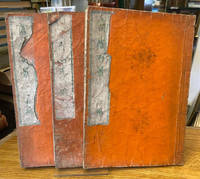
184560421Osaka Kawachiya 1845 fourth month KÅka 2. 4to 255 x 180 mm. 6 volumes uniformly bound in orange contemporary stitched spineless Fukuro Toji bindings with white paper title label pasted on to front wrappers. Housed in a chitsu. Severly affected by wormholes. Heavily affected by wormholes throughout otherwise clean. Chitsu-case with wear. 35; 39; 39 36 30; 28 pp. <br/><br/><em>Beautiful work written by Yamada Isai with illustrations by Katsushika Hokusai consisting 55 episodes in the life of Shaka Buddah. Hokusai has made 35 illustrations for 27 episodes and 23 of those are new iconographies in Shaka’s biography inspired by various pictorial resources while other 12 scenes originate in the former or traditional ones of these subjects. With thirty-two monochrome illustrations and covers various events starting from the court of King Suddhodana the Buddha's father before his birth in the Indian kingdom of Kapilavastu and ending with the distribution of the Buddha's relics after his death. Throughout Asia depictions of the Buddha's life have followed common narrative structures and artistic conventions for centuries. There is no single authoritative textual source for the Buddha's life story so visual narratives have relied on well-known episodes such as his birth as Prince Siddhartha his renunciation of worldly life his ascetic practice attainment of enlightenment and eventual death. These narratives have been adapted creatively to specific contexts sometimes incorporating new episodes or extending the story beyond the Buddha's death. The Illustrated Record of the Life of Sukyamuni by Yamada Isai and Katsushika Hokusai can be compared to historical fiction rather than a strict historical account. Hokusai's illustrations in particular prioritize creative additions to the story over adhering strictly to canonical episodes. For example the book does not depict the Buddha's death but focuses on other aspects such as familial conflicts supernatural encounters and scenes of hell. The included double-page illustration portrays a dramatic episode that concludes volume 1. The right-hand illustration shows the canonical episode of the Buddha's conception where his mother lady Maya receives a dream indicating her pregnancy. However the left-hand illustration deviates from the conventional depiction of Maya's sister Gotami as a benevolent aunt to the Buddha. Instead she is portrayed as a jealous character transformed into a giant snake due to her envy. This aspect of the narrative draws inspiration not from the Buddha's life stories but from the tale of Lady Xi 468-499 a would-be empress during the Chinese Liang dynasty. For more information see The Arthur Tress Collection of Japanese illustrated books Kislak Center University of Pennsylvania Libraries. </em> unknown
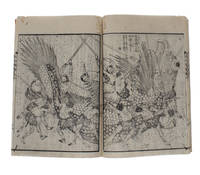
184560421Osaka, Kawachiya, 1845, fourth month (Kōka 2). 4to (255 x 180 mm). 6 volumes uniformly bound in orange contemporary stitched spineless Fukuro Toji bindings with white paper title label pasted on to front wrappers. Housed in a chitsu. Severly affected by wormholes. Heavily affected by wormholes throughout, otherwise clean. Chitsu-case with wear. 3539 39, 36, 30 28 pp.
18102110502150908533Not Available 1810. Soft Cover. Fine. Number of books: 1 Not Available paperback
18922111902160200155Nihonbashi District Wakamatsucho Oseki Toyo 1892. Soft Cover. Fine. Number of pages: 12 maps Size: 17cmx11.5cm Prints: 17cmx22.5cm Number of books: 1 Nihonbashi District Wakamatsucho Oseki Toyo paperback
18542111902160200045Touto Bunnoyagura 1854. Soft Cover. Fine. Number of pages: 42 pages Size: 18.8cmx12.6cm 42p Number of books: 1 Touto Bunnoyagura paperback
18022111902160200052Not Available 1802. Soft Cover. Fine. Number of pages: 78 pages Size: 15.8cmx11.5cm 78p Number of books: 1 Not Available paperback
187074672c. 1870. 8vo. Complete series 3 volumes in orange stitched wraps illustrated. Unpaginated. Covers marked and worn labels coming away crinkling fading and darkening especially vol. 2 which has a bump to its top corner. Light soiling to edges of vol. 2 leaves other volumes internally in VG condition throughout. Short ink inscriptions to top of inside front cover of vols. 1 and 3. As its name suggests these volumes contain over a hundred views of Mount Fuji with innovative compositions a wide variety of landscapes flora and fauna and working people going about everyday activities. Vol. 1 & 2 are b/w but a number of vol. 2 leaves are coloured. The series followed Hokusai's successful colour prints of thirty-six views of Mount Fuji which includes the iconic 'Under the Great Wave off Kanagawa'. The three volumes are considered the masterpiece of the woodblock artform and some of Japan's finest illustrated books e-hon. Alongside the Hokusai Manga this is one of the most influential Japanese works to the West. . Very Good. Japanese Binding. 1870. c. 1870 unknown
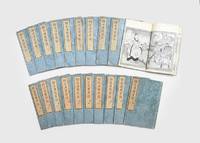
1845186060Edo: Yamashiroya Sahee and 4 others 1845. An ancient Chinese war for early modern Japanese readers First complete edition. This historical novel is a semi-fictional retelling of the Chu-Han Contention with depictions of peasant massacres put alongside fantastical scenarios of heroes fighting giant snakes and dragons. Hokusai illustrated this work in the final years of his life displaying the full range of the expressive skills he had honed for decades. After the fall of the Qin dynasty in 206 BC the empire split into 18 kingdoms the most powerful of which were the Western Chu led by Xiang Yu and the Han led by Liu Bang. The two rivals fought over four years culminating in a last stand at the Battle of Gaixia where the Chu leader committed suicide after a total Han victory. These legendary warriors and their battles were immortalized through literature including the Chinese work Xihan tongsu yanyi. This present work is Tamenaga Shunsui's 1790-1844 translation of that novel for the Japanese market with Hokusai's illustrations "providing an appealing vision of a foreign country unknown to readers" Marks p. 195. It is a blend of history and fiction where the real figures of Xiang Yu and Liu Bang perform semi-mythical acts of bravery and strength. One notably gory scene shows Xiang Yu's men killing 5000 peasants loyal to the Qin dynasty. The soldiers on the left behead two captives while their fellow soldiers shovel an overwhelming number of heads into baskets to be carried away. Part 1 the first ten volumes was initially released in 1843. It was then followed by Part 2 in a further ten volumes two years later. At this time the first part was also reissued as was likely the case with this set. It has a variant colophon with Yamashiroya listed as the most important publisher. Other copies instead rank Chojiya Heibee first. 2 parts in 20 vols octavo. Woodblock illustrations throughout; text in Japanese inner wrapper title pages of vols I and XI printed on yellow paper. Original grey-blue patterned paper wrappers renewed white thread fukuro-toji binding spine ends capped in grey silk printed paper labels on front wrappers. Housed in two 20th-century blue folding cases. Bindings weathered some small abrasions to wrappers paper label of vol. I lacking contents bright a few ink marks in vol. VII f. 15v.: a very good set folding cases repaired at joints one toggle detached. Hillier The Art of Hokusai in Book Illustration p. 256. Andreas Marks Japan's Manga Revolution: From Painted Scrolls to Comic Books 1680-1920 2025. unknown
18202111902160200401Kakumaruya Jinsuke Eirakuya Toshiro Minoya 1820. Soft Cover. Fine. Number of pages: 58 pages Size: 26.8cmx18cm 58p Number of books: 1 Kakumaruya Jinsuke Eirakuya Toshiro Minoya paperback
18452091202133206230Bunkeido 1845. Soft Cover. Fine. Number of books: 20 books in total Bunkeido paperback
18062110502150908524Izumi-shi-ban 1806. Soft Cover. Fine. Number of books: 1 Izumi-shi-ban paperback
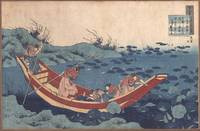
183674922<p>Poem by Bunya no Asayasu Fumiya no Asayasu</p><p>from the series One Hundred Poems Explained by the Nurse Hyakunin isshu uba ga etoki 「百人一首ã†ã¯ã‹æµã¨ã 文屋æœåº·ã€</p><p>Publisher: Iseya Sanjirô Eijudô Japanese</p><p>Original Japanese Woodblock</p><p>Edo period about 1835–36 Tenpô 6–7</p><p>Oban 26.2 x 36.7 cm 10 5/16 x 14 7/16 in.</p>
18382110502150903186Kawauchiya Mohei Board Naniwa Shobayashi Okada Gunnodo 1838. Soft Cover. Fine. Number of books: 90 Kawauchiya Mohei Board Naniwa Shobayashi Okada Gunnodo paperback