2 721 résultats
18382110502150903186Kawauchiya Mohei Board Naniwa Shobayashi Okada Gunnodo 1838. Soft Cover. Fine. Number of books: 90 Kawauchiya Mohei Board Naniwa Shobayashi Okada Gunnodo paperback
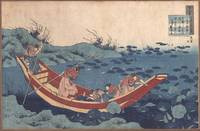
183674922<p>Poem by Bunya no Asayasu Fumiya no Asayasu</p><p>from the series One Hundred Poems Explained by the Nurse Hyakunin isshu uba ga etoki 「百人一首ã†ã¯ã‹æµã¨ã 文屋æœåº·ã€</p><p>Publisher: Iseya Sanjirô Eijudô Japanese</p><p>Original Japanese Woodblock</p><p>Edo period about 1835–36 Tenpô 6–7</p><p>Oban 26.2 x 36.7 cm 10 5/16 x 14 7/16 in.</p>
18062110502150908524Izumi-shi-ban 1806. Soft Cover. Fine. Number of books: 1 Izumi-shi-ban paperback
23014201Japan circa 1868. Gold brocade green cloth covers clean accordion folded all edge silver gilt album: 17 x 25 cm. 12 double-page prints opens to 34 x 25 cm. Oban size with illustrated introductory page. EXCEPTIONALLY RARE EXAMPLE ! . . . . ONE OF HOKUSAI'S MOST FASCINATING EROTIC BOOKS . . . PROFUSELY COLOR ILLUSTRATED WOODBLOCK BOOKS . . . REVEALING ALL ASPECTS OF CARNAL LOVE-MAKING . . KATSUSHIKA HOKUSAI 1760-1849: . Hokusai was one of Japan's most celebrated loved and famous painters and woodblock print artist of the Edo period. He was fondly and commonly known as the "Mad Man on Painting." . The original was work printed around the late 1810's it was unsigned several variant editions are known most copies were lost or now unaccounted for. It is part of Hokusai's erotic trilogy. . This posthumous edition has been fashioned after the period original. It was meticulously woodblock carved and color-printed with utmost professional skill by the best artisans of the time. It has impeccable color impression and registry. . The book was printed in some twenty-odd different colors each color printed by a different woodblock. . An interesting proof of age is found on page six the rape scene. The girl's red under-Kimono was printed from a color made from finely ground iron oxide. The red has now turned to an iron-red patina with a dark purple hue. This common color was used at the beginning of the Meiji period 1868-1912 for most solid reds. Humidity content determines the amount of time it takes to give this patina on the average about 100-135 years for this reaction to change the properties of the iron forcing it to oxidize and change into a marvelous color and affect see scans posted to our website. . Although the book has a title slip it was intentionally left blank due to the subject being designated as "contraband" and banned by the Shogun as well as in the early Meiji era 1868. . ABOUT JAPANESE EROTIC ART: . A truly magnificent and unusual example of early Meiji polychrome printing. Most of the Shun Pon erotic books commonly call "Erotic Pictures of Spring" of this period show small images drawn from a distance with room decorations food bedding flowing robes furniture and outside scenery. . Shunga & Shunpon Erotic pictures & books reflect the "awakening" of human sexual desire after a long winter's sleep. Sex became an "art" used to stimulate enhance and evocative of love making. . THE CONTENTS: The work starts out with a double-page showing sliding Fusuma doors an invitation to voyeurism. The doors are subtly decorated giving no clue to the true nature of the contents useful for coercing young virgins to have a look.also the reason for no title slip. Each of the subsequent 12 double pages are devoted to the real subject of this book. The joy art & pleasure of love-making. . From the beginning of recorded time the Japanese were not a prudish people. In fact they held strong beliefs in and worship of inanimate sexual objects such as trees rocks and other things that showed a natural resemblance to the genitalia. These objects were collected & placed in shrines. Later some were carved from wood and stone and placed in special "fertility shrines" in Japan. Barren women often visited these shrines offering prayers to the Gods for fertility and evoked charms. Stories passed down over the centuries that some of the Monks or keepers of these fertility shrines or their priests were willing "assistants" of these "Gods" and gladly inseminated such vulnerable women. . The Japanese had an affinity with the natural expression of passion and lust. Rape of women alone along a pathway or in their own room was not uncommon. While some may truly object others feigned objection while in ecstasy see page #6. The book therefore beings when with point in mind. . Page one shows a very young woman. She has mounted an unseen suitor while she sits upon his gigantic penis her eyes are closed in the throes of ecstasy her lips are red with excitement and a very pale but obvious pink flush envelops her face. On the floor is the usual package of Chirishi or toilet paper used to wipe the aftermath. . The male's organ is huge and the veins are blue and popping her very excited vulva takes on the color of deep red and faint purple displaying the maximum color of excitement. While fully clothed her Kimono is open just enough to accomplish the act of love. To the Japanese partially clothed women with their genitals exposed was more erotic than a full nude.after all they did mixed public bathing for centuries. . Page two shows a couple. She is almost nude with just her red under Kimono draped over her stomach while he exposes his organ as he enters her from the "X" angle he cradles her from behind while holding her left breast. She pulls him from behind the neck to be close enough to share a tongue kiss rarely shown in Japanese prints. He inserts his tongue into her willing mouth as she holds his cheek fast. Her long and flowing hair is still tied with a black ribbon at the bottom suggesting that she is some kind of royal person. She also shows a pink flush to her mouth and vaginal lips. . Page three shows newlyweds. The woman still wears the traditional head gear of a bride. She holds a package of Chirishi in her lips ready for the flood of love juices that are already flowing out. The man enters her from the top while she willingly spreads her legs wide open. . Page four shows the woman on top in a contortion revealing the organs involved in love-making. . Page five shows the influence from an earlier Utamaro classic erotic work. The woman is on the bottom pulling the covers over her lover's bare back-side while they are making love in the winter. Her wooden platform pillow is ready as the are hidden from view by a small folding screen to keep cool the draft out. Her vermilion-red under Kimono is tangled with her outer Kimono. . Page six shows a ruffian raping a young girl. He is likely a common coolie all he wears is a "Fundoshi" or loin cloth which was easily moved to reveal his huge and erect penis. He has tumbled this innocent girl by pulling her foot from under her; then with his other hand inserts his organ into her. She is pushing his cheek away and attempting to pull his hand off her foot. What is ironical is that her face is flushed pink and her face shows no frown of rejection but her eyes are almost closed as she secretly anticipates the oncoming pleasure. For sure she must resist being innocent young coquettish and demure in an attempt to save face. It is important to note at this time that there exists a most similar print by Utamaro showing this very scene. Surely Hokusai was so impressed that as a tribute to Utamaro he utilized this stunning image in his own work the old adage "Copying is the greatest compliment." See more below regarding page six. . Page seven shows an unabashed nude couple enjoying a fully the pleasure of love-making sans restraints. In fact this must the a second or third time of love-making as noted the voluminous as the amount of expended Chirishi. It has been thrown about the room. It is known in Japan that after the first round of love-making if the man can wipe up love juices promptly enough a new erection can be achieved. The the drying of vulva will give the next round of love-making a new and more pleasurable sensation. . In this view the man enters from the rear while holding her fast his right foot is set and placed for maximum traction! . Page eight shows a couple engaged in love-making. The woman on top but with her back side facing him. Vis-a-vis each other to observe each other thus increasing the erotic passion. A tiny bit of silver color has accented her Kimono highly usual in any woodblock print. Of special note her toes are curled down in a fit of ecstasy! An exhibition of Hokusai humor ! . Page nine shows one of the most fascinating of all prints in this series. In the traditional "sixty-nine" position he has his tongue in her very excited and swollen purple-red vulva. She tries with difficulty to contain his very large penis with a dark pink-purple flush. Again this woman curls her toes in painful-erotic-ecstasy. Her expression shows her eyebrows in a frown as she enjoys the agony and ecstasy of wonderful carnal pleasures. . Page ten shows a mature couple nude she holds the tie-died head band in her mount to silence her cries of joy while she embraces her lover's neck. The spectacular view of the genitals fully engaged is stunning. The penis has its veins popping out while the lips of her vulva are flushed bright red the love juices flowing out. Her breasts are pointed downward revealing that she has given birth previously. Her her toes are curled in a passionate dream of pleasure. The pair both display a pink flush to their faces with very bright red lips. It is not common to see this in men. . Page eleven shows a couple preparing to make love. The man is on top displays a very large and erect penis while he sucks on her upturned breast. She is being manipulated to move her left leg up so he can then enter her open and eager waiting vulva. She clutches a handful of Chirishi in preparation for the flood of love juices. Her eyebrows are shaved with a faint pink flush just above her eyes has emerged from the excitement. . Page twelve shows a most unusual scene in the world of Shunpon. While lesbianism is not unusual in Japan openly depicting girls at such play are. This shows two ordinary nude women likely bored or abandoned by their male suitors have taken to the mutual pleasure of dildo play. One wears a huge and black penis tied about her waist. The other reveals her open and moist vagina clutches the penis while holding a few sheets of Chirishi. The other opens a tiny container with some sort of stimulating potion or lubricant. This will either be applied to the dildo or her partner's vagina. It seems clear the two girls have already shared this joy before. The girl grasping the dildo penis has already applied it to her partner and is now awaiting her turn to be "penetrated." . ATTRIBUTION: . The erotic book begins as usual without artist's name or title. By stylistic analysis and compared with many other signed Hokusai works its easy to understand who the artist was. . It is a long-standing tradition of most famous Japanese artists of the 17-19th centuries to create and discretely distribute banned erotic books and prints against Shogun laws. . Erotic books and prints were a quick cash resource for hard pressed artists regardless of how famous they were. Most all famous artists drew painted and provided artwork for woodblock-printed erotica. These earned immediate cash and the Shogun had a nearly impossible time proving guilt with unsigned materials. . ABOUT SHUNPON/BON & SHUNGA: Books of this erotic subject quality nature and rarity are seldom found on the open market. Shun=spring; Ga=picture; Pon/Bon=book. . Superbly colored in pastels prior to the very garish and bright advent and use of aniline dyes imported from Europe. Because Hokusai had lived during the life-time of Utamaro 1754-1806 he was influenced by this great master. . The most vivid example of this influence is found in number six above the rape scene. The original inspiration for this print was done by Utamaro in his most celebrated erotic album: UTA MAKURA: PILLOW OF SONG dated 1788. . Of this print Dr. Lane stated: "Utamaro's masterpieces.most impressive .series of twelve prints .this is one of the most dramatic scenes: a plebeian maiden being attacked by a middle-aged laborer and putting up stiff resistance" See Lane below. . The original Utamaro shows the exact same action with nearly identical composition; the man suppresses the girl by holding her left leg while she pushes his cheek away with her right hand.clearly Hokusai was so impressed with this superb composition and subject that he "borrowed" it in his own masterpiece. Note how even the man's "Fundoshi" loin cloth is in the exact format draped over his stiff penis. This is no coincidence ! This series and a few similar prints illustrated are found in Evans see below. . A RARE stunning and fantastic book of color erotica by Japan's master painter. . CONDITION: The over all condition is quite good with very minor amount of the usual period foxing. By and large this does not greatly detract from the over all images. Some images are in fine condition. On page #11 the print is about 5 mm. shorter at the bottom again this does not greatly affect the image. A small faint amount of transfer from the black is evident with a common result of books being folded and closed. . Overall the work is quite lovely and the viewer is exceptionally impressed by the fascinating and high quality of the subject images and drama. Please review photos posted to our website. . REFERENCE: . LANE Richard: IMAGES OF THE FLOATING WORLD p.140 plate 140 for a similar example. . --. EROTIC THEME IN JAPANESE PAINTING: THE EARLY SHUNGA SCROLL. . --. GREETINGS FROM EROS ! HOKUSAI AND THE EROTIC CALENDAR-PRINT. Japanese Title: HATSU HARU NO IRO GOYOMI. EVANS Tom.: SHUNGA: The Art of Love in Japan p.249 for text he text see illustrations: 6.83 6.85 and 6.86; 6.88 is an exact match for our number 9 above. BEURDELEY Michel. et al.: EROTIC ART OF JAPAN: The Pillow Poem. GICHNER Lawrence E.:EROTIC ASPECTS OF JAPANESE CULTURE. ILLING Richard.: JAPANESE EROTIC ART: And the Life of the Courtesan. UHLENBECK Chris. ed. et al.:JAPANESE EROTIC FANTASIES: Sexual Imagery of the Edo Period. WINZINGER Franz.: MEISTERWERKE DER EROTISCHEN KUNST JAPANS. MASTERWORKS OF JAPANESE EROTIC ART. RAWSON Philip.: ORIENTAL EROTIC ART. GROSBOIS Charles.: SHUNGA IMAGES OF SPRING: Essay on Erotic Elements in Japanese Art. DOUGLAS Nik. et al.: THE PILLOW BOOK: The Erotic Sentiment and the Paintings of India Nepal China & Japan. SHIBUI Kiyoshi.: UKIYO-E NAISI. BIBLIOGRAPHY OF JAPANESE EROTIC ILLUSTRATED WOODBLOCK PRINTED BOOKS. Modern Reading: UKIYO-E NAISHI . . hardcover books
23014201Japan circa 1868. Gold brocade green cloth covers clean accordion folded all edge silver gilt album: 17 x 25 cm. 12 double-page prints opens to 34 x 25 cm. Oban size with illustrated introductory page. EXCEPTIONALLY RARE EXAMPLE ! . . . . ONE OF HOKUSAI'S MOST FASCINATING EROTIC BOOKS . . . PROFUSELY COLOR ILLUSTRATED WOODBLOCK BOOKS . . . REVEALING ALL ASPECTS OF CARNAL LOVE-MAKING . . KATSUSHIKA HOKUSAI 1760-1849: . Hokusai was one of Japan's most celebrated loved and famous painters and woodblock print artist of the Edo period. He was fondly and commonly known as the "Mad Man on Painting." . The original was work printed around the late 1810's it was unsigned several variant editions are known most copies were lost or now unaccounted for. It is part of Hokusai's erotic trilogy. . This posthumous edition has been fashioned after the period original. It was meticulously woodblock carved and color-printed with utmost professional skill by the best artisans of the time. It has impeccable color impression and registry. . The book was printed in some twenty-odd different colors each color printed by a different woodblock. . An interesting proof of age is found on page six the rape scene. The girl's red under-Kimono was printed from a color made from finely ground iron oxide. The red has now turned to an iron-red patina with a dark purple hue. This common color was used at the beginning of the Meiji period 1868-1912 for most solid reds. Humidity content determines the amount of time it takes to give this patina on the average about 100-135 years for this reaction to change the properties of the iron forcing it to oxidize and change into a marvelous color and affect see scans posted to our website. . Although the book has a title slip it was intentionally left blank due to the subject being designated as "contraband" and banned by the Shogun as well as in the early Meiji era 1868. . ABOUT JAPANESE EROTIC ART: . A truly magnificent and unusual example of early Meiji polychrome printing. Most of the Shun Pon erotic books commonly call "Erotic Pictures of Spring" of this period show small images drawn from a distance with room decorations food bedding flowing robes furniture and outside scenery. . Shunga & Shunpon Erotic pictures & books reflect the "awakening" of human sexual desire after a long winter's sleep. Sex became an "art" used to stimulate enhance and evocative of love making. . THE CONTENTS: The work starts out with a double-page showing sliding Fusuma doors an invitation to voyeurism. The doors are subtly decorated giving no clue to the true nature of the contents useful for coercing young virgins to have a look.also the reason for no title slip. Each of the subsequent 12 double pages are devoted to the real subject of this book. The joy art & pleasure of love-making. . From the beginning of recorded time the Japanese were not a prudish people. In fact they held strong beliefs in and worship of inanimate sexual objects such as trees rocks and other things that showed a natural resemblance to the genitalia. These objects were collected & placed in shrines. Later some were carved from wood and stone and placed in special "fertility shrines" in Japan. Barren women often visited these shrines offering prayers to the Gods for fertility and evoked charms. Stories passed down over the centuries that some of the Monks or keepers of these fertility shrines or their priests were willing "assistants" of these "Gods" and gladly inseminated such vulnerable women. . The Japanese had an affinity with the natural expression of passion and lust. Rape of women alone along a pathway or in their own room was not uncommon. While some may truly object others feigned objection while in ecstasy see page #6. The book therefore beings when with point in mind. . Page one shows a very young woman. She has mounted an unseen suitor while she sits upon his gigantic penis her eyes are closed in the throes of ecstasy her lips are red with excitement and a very pale but obvious pink flush envelops her face. On the floor is the usual package of Chirishi or toilet paper used to wipe the aftermath. . The male's organ is huge and the veins are blue and popping her very excited vulva takes on the color of deep red and faint purple displaying the maximum color of excitement. While fully clothed her Kimono is open just enough to accomplish the act of love. To the Japanese partially clothed women with their genitals exposed was more erotic than a full nude.after all they did mixed public bathing for centuries. . Page two shows a couple. She is almost nude with just her red under Kimono draped over her stomach while he exposes his organ as he enters her from the "X" angle he cradles her from behind while holding her left breast. She pulls him from behind the neck to be close enough to share a tongue kiss rarely shown in Japanese prints. He inserts his tongue into her willing mouth as she holds his cheek fast. Her long and flowing hair is still tied with a black ribbon at the bottom suggesting that she is some kind of royal person. She also shows a pink flush to her mouth and vaginal lips. . Page three shows newlyweds. The woman still wears the traditional head gear of a bride. She holds a package of Chirishi in her lips ready for the flood of love juices that are already flowing out. The man enters her from the top while she willingly spreads her legs wide open. . Page four shows the woman on top in a contortion revealing the organs involved in love-making. . Page five shows the influence from an earlier Utamaro classic erotic work. The woman is on the bottom pulling the covers over her lover's bare back-side while they are making love in the winter. Her wooden platform pillow is ready as the are hidden from view by a small folding screen to keep cool the draft out. Her vermilion-red under Kimono is tangled with her outer Kimono. . Page six shows a ruffian raping a young girl. He is likely a common coolie all he wears is a "Fundoshi" or loin cloth which was easily moved to reveal his huge and erect penis. He has tumbled this innocent girl by pulling her foot from under her; then with his other hand inserts his organ into her. She is pushing his cheek away and attempting to pull his hand off her foot. What is ironical is that her face is flushed pink and her face shows no frown of rejection but her eyes are almost closed as she secretly anticipates the oncoming pleasure. For sure she must resist being innocent young coquettish and demure in an attempt to save face. It is important to note at this time that there exists a most similar print by Utamaro showing this very scene. Surely Hokusai was so impressed that as a tribute to Utamaro he utilized this stunning image in his own work the old adage "Copying is the greatest compliment." See more below regarding page six. . Page seven shows an unabashed nude couple enjoying a fully the pleasure of love-making sans restraints. In fact this must the a second or third time of love-making as noted the voluminous as the amount of expended Chirishi. It has been thrown about the room. It is known in Japan that after the first round of love-making if the man can wipe up love juices promptly enough a new erection can be achieved. The the drying of vulva will give the next round of love-making a new and more pleasurable sensation. . In this view the man enters from the rear while holding her fast his right foot is set and placed for maximum traction! . Page eight shows a couple engaged in love-making. The woman on top but with her back side facing him. Vis-a-vis each other to observe each other thus increasing the erotic passion. A tiny bit of silver color has accented her Kimono highly usual in any woodblock print. Of special note her toes are curled down in a fit of ecstasy! An exhibition of Hokusai humor ! . Page nine shows one of the most fascinating of all prints in this series. In the traditional "sixty-nine" position he has his tongue in her very excited and swollen purple-red vulva. She tries with difficulty to contain his very large penis with a dark pink-purple flush. Again this woman curls her toes in painful-erotic-ecstasy. Her expression shows her eyebrows in a frown as she enjoys the agony and ecstasy of wonderful carnal pleasures. . Page ten shows a mature couple nude she holds the tie-died head band in her mount to silence her cries of joy while she embraces her lover's neck. The spectacular view of the genitals fully engaged is stunning. The penis has its veins popping out while the lips of her vulva are flushed bright red the love juices flowing out. Her breasts are pointed downward revealing that she has given birth previously. Her her toes are curled in a passionate dream of pleasure. The pair both display a pink flush to their faces with very bright red lips. It is not common to see this in men. . Page eleven shows a couple preparing to make love. The man is on top displays a very large and erect penis while he sucks on her upturned breast. She is being manipulated to move her left leg up so he can then enter her open and eager waiting vulva. She clutches a handful of Chirishi in preparation for the flood of love juices. Her eyebrows are shaved with a faint pink flush just above her eyes has emerged from the excitement. . Page twelve shows a most unusual scene in the world of Shunpon. While lesbianism is not unusual in Japan openly depicting girls at such play are. This shows two ordinary nude women likely bored or abandoned by their male suitors have taken to the mutual pleasure of dildo play. One wears a huge and black penis tied about her waist. The other reveals her open and moist vagina clutches the penis while holding a few sheets of Chirishi. The other opens a tiny container with some sort of stimulating potion or lubricant. This will either be applied to the dildo or her partner's vagina. It seems clear the two girls have already shared this joy before. The girl grasping the dildo penis has already applied it to her partner and is now awaiting her turn to be "penetrated." . ATTRIBUTION: . The erotic book begins as usual without artist's name or title. By stylistic analysis and compared with many other signed Hokusai works its easy to understand who the artist was. . It is a long-standing tradition of most famous Japanese artists of the 17-19th centuries to create and discretely distribute banned erotic books and prints against Shogun laws. . Erotic books and prints were a quick cash resource for hard pressed artists regardless of how famous they were. Most all famous artists drew painted and provided artwork for woodblock-printed erotica. These earned immediate cash and the Shogun had a nearly impossible time proving guilt with unsigned materials. . ABOUT SHUNPON/BON & SHUNGA: Books of this erotic subject quality nature and rarity are seldom found on the open market. Shun=spring; Ga=picture; Pon/Bon=book. . Superbly colored in pastels prior to the very garish and bright advent and use of aniline dyes imported from Europe. Because Hokusai had lived during the life-time of Utamaro 1754-1806 he was influenced by this great master. . The most vivid example of this influence is found in number six above the rape scene. The original inspiration for this print was done by Utamaro in his most celebrated erotic album: UTA MAKURA: PILLOW OF SONG dated 1788. . Of this print Dr. Lane stated: "Utamaro's masterpieces.most impressive .series of twelve prints .this is one of the most dramatic scenes: a plebeian maiden being attacked by a middle-aged laborer and putting up stiff resistance" See Lane below. . The original Utamaro shows the exact same action with nearly identical composition; the man suppresses the girl by holding her left leg while she pushes his cheek away with her right hand.clearly Hokusai was so impressed with this superb composition and subject that he "borrowed" it in his own masterpiece. Note how even the man's "Fundoshi" loin cloth is in the exact format draped over his stiff penis. This is no coincidence ! This series and a few similar prints illustrated are found in Evans see below. . A RARE stunning and fantastic book of color erotica by Japan's master painter. . CONDITION: The over all condition is quite good with very minor amount of the usual period foxing. By and large this does not greatly detract from the over all images. Some images are in fine condition. On page #11 the print is about 5 mm. shorter at the bottom again this does not greatly affect the image. A small faint amount of transfer from the black is evident with a common result of books being folded and closed. . Overall the work is quite lovely and the viewer is exceptionally impressed by the fascinating and high quality of the subject images and drama. Please review photos posted to our website. . REFERENCE: . LANE Richard: IMAGES OF THE FLOATING WORLD p.140 plate 140 for a similar example. . --. EROTIC THEME IN JAPANESE PAINTING: THE EARLY SHUNGA SCROLL. . --. GREETINGS FROM EROS ! HOKUSAI AND THE EROTIC CALENDAR-PRINT. Japanese Title: HATSU HARU NO IRO GOYOMI. EVANS Tom.: SHUNGA: The Art of Love in Japan p.249 for text he text see illustrations: 6.83 6.85 and 6.86; 6.88 is an exact match for our number 9 above. BEURDELEY Michel. et al.: EROTIC ART OF JAPAN: The Pillow Poem. GICHNER Lawrence E.:EROTIC ASPECTS OF JAPANESE CULTURE. ILLING Richard.: JAPANESE EROTIC ART: And the Life of the Courtesan. UHLENBECK Chris. ed. et al.:JAPANESE EROTIC FANTASIES: Sexual Imagery of the Edo Period. WINZINGER Franz.: MEISTERWERKE DER EROTISCHEN KUNST JAPANS. MASTERWORKS OF JAPANESE EROTIC ART. RAWSON Philip.: ORIENTAL EROTIC ART. GROSBOIS Charles.: SHUNGA IMAGES OF SPRING: Essay on Erotic Elements in Japanese Art. DOUGLAS Nik. et al.: THE PILLOW BOOK: The Erotic Sentiment and the Paintings of India Nepal China & Japan. SHIBUI Kiyoshi.: UKIYO-E NAISI. BIBLIOGRAPHY OF JAPANESE EROTIC ILLUSTRATED WOODBLOCK PRINTED BOOKS. Modern Reading: UKIYO-E NAISHI . . unknown
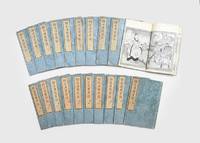
18452091202133206230Bunkeido 1845. Soft Cover. Fine. Number of books: 20 books in total Bunkeido paperback
18202111902160200401Kakumaruya Jinsuke Eirakuya Toshiro Minoya 1820. Soft Cover. Fine. Number of pages: 58 pages Size: 26.8cmx18cm 58p Number of books: 1 Kakumaruya Jinsuke Eirakuya Toshiro Minoya paperback
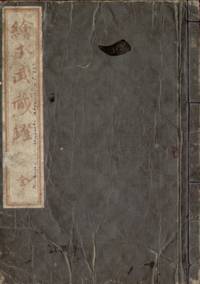
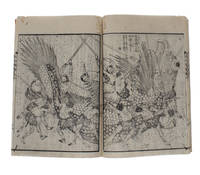
1845186060Edo: Yamashiroya Sahee and 4 others 1845. An ancient Chinese war for early modern Japanese readers First complete edition. This historical novel is a semi-fictional retelling of the Chu-Han Contention with depictions of peasant massacres put alongside fantastical scenarios of heroes fighting giant snakes and dragons. Hokusai illustrated this work in the final years of his life displaying the full range of the expressive skills he had honed for decades. After the fall of the Qin dynasty in 206 BC the empire split into 18 kingdoms the most powerful of which were the Western Chu led by Xiang Yu and the Han led by Liu Bang. The two rivals fought over four years culminating in a last stand at the Battle of Gaixia where the Chu leader committed suicide after a total Han victory. These legendary warriors and their battles were immortalized through literature including the Chinese work Xihan tongsu yanyi. This present work is Tamenaga Shunsui's 1790-1844 translation of that novel for the Japanese market with Hokusai's illustrations "providing an appealing vision of a foreign country unknown to readers" Marks p. 195. It is a blend of history and fiction where the real figures of Xiang Yu and Liu Bang perform semi-mythical acts of bravery and strength. One notably gory scene shows Xiang Yu's men killing 5000 peasants loyal to the Qin dynasty. The soldiers on the left behead two captives while their fellow soldiers shovel an overwhelming number of heads into baskets to be carried away. Part 1 the first ten volumes was initially released in 1843. It was then followed by Part 2 in a further ten volumes two years later. At this time the first part was also reissued as was likely the case with this set. It has a variant colophon with Yamashiroya listed as the most important publisher. Other copies instead rank Chojiya Heibee first. 2 parts in 20 vols octavo. Woodblock illustrations throughout; text in Japanese inner wrapper title pages of vols I and XI printed on yellow paper. Original grey-blue patterned paper wrappers renewed white thread fukuro-toji binding spine ends capped in grey silk printed paper labels on front wrappers. Housed in two 20th-century blue folding cases. Bindings weathered some small abrasions to wrappers paper label of vol. I lacking contents bright a few ink marks in vol. VII f. 15v.: a very good set folding cases repaired at joints one toggle detached. Hillier The Art of Hokusai in Book Illustration p. 256. Andreas Marks Japan's Manga Revolution: From Painted Scrolls to Comic Books 1680-1920 2025. unknown
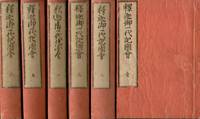
85001701Osaka 1845 Kawachiya. Orange stitched wrappers 6 vol.set very nice copy in original and worn blue silk Chitsu clips lacking original title paper slip case used as inside cover to the Chitsu 17.5 x 25 cm. 2538383735342936 double . . . THE LEGENDARY AND SELDOM FOUND . . . THE COMPLETE SET . Copy notes: continued: "leaves Japanese text 33 single & double page illustrations by the master signed: Zen Hokusai Manji Rojin." . Profusely & marvelously illustrated by Hokusai with some of his best & most famous impressive graphics of the Buddha his life and the Sangha. This is perhaps one of Hokusai's best and most famous works. . Like all Buddhist art the mere fact of drawing the Buddha image or copying Buddhist texts or sutras is a form of Buddhist faith & obeisance earning merit in Buddhism. Hokusai like most Japanese of the period were devout and faithful Buddhist delighted to express fervor and belief by saying prayers. . It was more than likely not the main reason for Hokusai to undertake this work. Nevertheless surely in the back of Hokusai's mind was the additional benefit of earning 'merit' in the Buddha's eyes for drawing and publishing this work. After all a little 'insurance' is a good thing. . Text were written by Yamatoya Keizo. . THE STORY CONTENTS: . This work is written in a Jataka stories of rebirth format simple direct and even parables or true from stories from the Buddha's pasts. . They show by example to the Sangha the Buddhist community what the "Righteous Path" is by telling stories with examples; showing right from wrong. Dukkha suffering is one of the main themes and the associated punishments for "wanting greed wrong livelihood and other sins" are herein illustrated. Most of the scenes are set in a tropical background with banana and other warm climate plants. Since the Buddha was from tropical India this work shows the Japanese idea of that setting. Sanskrit is also written appropriately but the Japanese text is for a lay public. . Great serpents and demons are illustrated as omens many of the people illustrated are in lavish Chinese or Korean gowns showing the movement of Buddhism from India through China & Korea as it progressed to Japan. . THE CONTENTS OF EACH VOLUME: Vol. 1 begins with illustrations of the Gods of the Elements: Sky Earth Wind Water Fire and a picture of the Lotus a flower that grows in the most filthy of atmospheres but sends up the most beautiful & fragranced flower representative of human life. . Vol. II shows a great gathering of the Sangha as they see the young Shakyamuni standing on a lotus blower as the Heavenly Two-Headed Dragon blows his powerful breath upon the Buddha giving him life. Other great and holy Gods in the Heavens also look upon the Buddha as he is born of the Lotus. Later the powerful and older Buddha suppresses a wild elephant fights great horse-mounted warriors. . Vol. III shows the Buddha as he is seated beneath the Bo Tree ficus religiosa as he speaks to disciples. One impressive illustration shows Shakyamuni as he meditates on a craggy rock with a gigantic four-eyed daemon who tries to distract him. . Vol. IV shows Shakyamuni as an itinerant priest another shows great warriors with spears and lances being fended off by the Master's great radiant powers later one shows a Heavenly Demon holding a lance with a small lantern suspending a Sake bottle with a Swastika Buddhist design under which are two naked and highly emaciated men who float in black space likely for drinking too much.the last one show a sinner with face to the floor as each arm is held fast by the feet of two stick wielding Bodhisattva's as they thrash his backside as Shakyamuni looks on. . Vol. V starts with a great prayer meeting of the Sangha as Shakyamuni displays two Mudras as two disciples sit on either side of him on a high pedestal while other Bodhisattva's look on; one beats the prayer drum & another hits the bronze gong while the others bow their heads in obeisance one single Bodhisattva looks to the sky as a great and Terrible Dragon flies over the whole Sangha. The next shows Shakyamuni on a great cliff while the Wind God does his best to blow the small Sangha away. In the next we are presented with an example of those that have been re-incarnated as half animal and human. The Shakyamuni looks upon a man with the "right livelihood" who is bone thin but is a Mochi maker rice pounder but does not eat animals while in the background sheep-faced animals with human bodies look on in the distant background is a man & woman that have human heads on horse-like bodies they are sinners. The last dramatic illustration has a black background with a warrior costumed Shakyamuni holding a long lance Naginada as he spears & tumbles a three-eyed demon in the night. . Vol. VI shows the aftermath of a battle with broken arrows spears and two young women half naked--one is pulled by her Chignon and is about to be raped the girl is limp and clearly dead who is being hoisted by a warrior; many Naginada lances in the background. The next shows fourteen Bodhisattva's suppressing a gigantic fish as they thrash it with long poles.their hair style implies the Buddhist image. Next shows the God of Wind as he tries to evoke a Typhoon. The last shows a gigantic elephant as it carries a lotus with a small shrine on its back while being led by attendants. . STUNNING ART WORK & COMPOSITION BY HOKUSAI'S GENIUS: . This work was inspired and superbly executed by Hokusai who was a devout Buddhist. He creates and expresses his faith by the stunning art work not found in any of his other works. Hints of this greatness were littered throughout his production of prints and books but this book exemplifies his greatest artistic effort and supreme skill. He remains Japan's best and most uniquely creative artist. . This is an exciting and great Buddhist work showing the stories and experiences of the Buddha as he went out into the world. An impressive and great artistic work by the old master 1760-1849. It is observed that near the end of Hokusai's life this work was one of the last twenty books he illustrated. . In some way like so many Japanese of his time at age 81 he began to think of Buddhism and of his own life and where he wanted to go after he died. Eighty one was indeed ancient during this time. In a way this is possibly his own testament to becoming a Buddhist or a way to prepare himself for death All Japanese are born under Shinto Gods but die as Buddhist and assume Buddhist names posthumously. Hokusai had already signed his name: Manji Rojin Manji = Swastika a Buddhist symbol Rojin=an old man. Hokusai first used Manji in 1836 then with the publication of this work added Rojin to his name. This is significant. This work was originally issued in 1841 but re-issued in 1845. The re-issuance is also significant for Hokusai seldom re-issued many of his books. This is his only full study of Buddhism & clearly came at a time in his live when it was meaningful to his own future. Hokusai poured his heart and imagination out and this is a major success. . Wonderful representations of the noble Life of the Buddha of Hell Temptation & the Eight-Fold Noble Path. . Color photos are posted to our website. . RARITY: One of Hokusai's more obscure titles seldom found on the market. Today this remains one of Hokusai's rarest books when found complete and in good condition. Seldom found complete if at all. An exceptionally RARE example ! . BURAKUMIN: KEGARI: Defiled & Polluted Occupations . It is important to point out that "Burakumin" were ostracized Japanese whose trade was killing animals and making things from leather. In Buddhism they were earmarked to Dukkha suffering forever with no possibility of redemptions. . Butchers executioners undertakers & tanners lived in separate villagers and were considered "untouchables" who could only intermarry. For the most part they believed in Shinto and were excluded from Buddhist temple life and worship. . Though this designation in modern Japanese society has been 'officially expunged' from the records prior to marriage Japanese continue to investigate origins of prospective marriage partners and continue to exclude Burakumin from intermarrying non-Burakumin children. . BIBLIOGRAPHY: . L. Roberts: DICTIONARY OF JAPANESE ARTISTS p.48-9. Jack Hillier: THE ART OF HOKUSAI IN BOOK ILLUSTRATION p.279 #253 Note the typo in the Romanization of title: Shaka Go Icki should be Ichi Dai Ki Zue. K. Toda: DESCRIPTIVE CATALOGUE OF JAPANESE & CHINESE ILLUSTRATED BOOKS IN THE RYERSON LIBRARY OF THE ART INSTITUTE OF CHICAGO p.263. H. Kerlen: CATALOGUE OF PRE-MEIJI BOOKS & MAPS IN PUBLIC COLLECTIONS IN THE NETHERLANDS p.605-6 #1464. S. Sorimachi: CATALOGUE OF JAPANESE ILLUSTRATED BOOKS & MSS. IN THE SPENCER COLLECTION OF THE N.Y. PUBLIC LIBRARY p.131 #594. FORRER Matthi. comp. et al.: HOKUSAI AND HIS SCHOOL: Paintings Drawings And Illustrated Books. See item 61 pages 88-89 and 4 illustrations. BROWN Louise N. BLOCK PRINTING AND BOOK ILLUSTRATION IN JAPAN: p.184. Goncourt 217. KSM IV 199 Not in: Dawes Edgren or Mitchell. . BURAKUMIN: en-wikipedia-org/wiki/Burakumin . . unknown
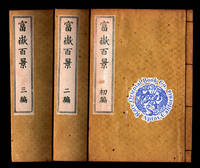
84211701Nagoya 1875 Katano. Yellow stitched wrs.3 vol. settitle slips vol.1: covers very clean red stamp; vols. 2 3 a bit dusty all contents very cleanexcellent registry/impression bright examples firm in Chitsu board folding box. RARE ! . . . . FUGAKU HYAKKEI: 100 VIEWS OF MT. FUJI . . . HOKUSAI'S MOST FAMOUS BOOK ON JAPAN'S SACRED SYMBOL . . . COLOR WOODBLOCK-PRINTED ON HAND-MAID WASHI PAPER . . . HIS GREATEST CLASSIC ! . THE ARTIST: KATSUSHIKA Hokusai 1760-1849: Hokusai's most famous work in book form illustrating a profusion of views of Mt. Fuji from all perspectives. . Hokusai was Japan's most famous Edo period illustrator of Japanese genre landscape scenery and of the daily lives and occupations of the commoners. His works are full of cheerfulness humor optimism and he had a knack of capturing the true nature of his time people and life style. He was affectionately called the "MAD MAN ON DRAWING" by the Japanese. His works continue to fascinate the world over ! . This book was also the prototype for his great color woodblock print series of multiple views of Mt. Fuji. . A delightful and impressive work considered a classic for nearly 200 years. . This monograph is devoted to Japan's most sacred Mt. Fuji in all its glory portrayed in various seasons and as seen by common folk as they go about their daily lives and daily occupations and along the Tokaido highway. . THE INTRODUCTION: The introduction was written by Hokusai on the first two pages of each volume. . THE COMPLETE SET OF 3 VOLUMES: The collation is: 252525 double folded leaves or 150 pages in all with illustrations of Mt. Fuji on 144 pages 6 pages of Japanese text. . The history of the various editions and volume count are complex the work was originally issued complete in two volumes which included all pages found in the 3 volume set. The set of 3 volumes is no different than those bound in 2 volumes it is simply a matter of combining pages into two or three bindings. The binding format was a choice made by publishers & their binders. The usual format is 3 volumes numbered 1 2 & 3. There are 3 volumes bound into a single binding and other variants contents by and large is the same. . THE SUBJECT: MT. FUJI JAPAN'S MOST SACRED SYMBOL: . The work is marvelous it shows Mt. Fuji portrayed in the daily life of the common people. . In the spring time how ordinary Japanese sat outdoors and viewed the cherry blossoms with Mt. Fuji in the background. Mt. Fuji was always present in daily life as a background. . The composition artistry and skill of Hokusai is without parallel. The book illustrates his unique talent and drawing skills. His artistry pictured Mt. Fuji in myriad scenes early morning evening rain and cloudy days. The mystical quality of Mt. Fuji demonstrates the great respect Hokusai felt showing the great grandeur of the sacred mountain. . Hokusai used acute visual composition concepts insight and visionary-like "Avant-garde" talent to impress viewers to identify with the splendor of Mt. Fuji. . Hokusai is still hailed as Japan's greatest artist of the 19th century. His woodblock printed books and printed command solid prices. . THE EDITIONS: There were two main editions: the FIRST EDITION published in 1834-5 was bound in pink stiff stitched covers commonly called "FALCON FEATHERS." All later editions are reprints with various dates bound in yellow blue purple green black and several other variants. Contents remains the same it would be a matter of quality of impression. The later editions do not always have a colophon or date. Some editions do show publisher's information and date. Other copies may have been rebound omitting the colophon. . There is no 'standard' relationship between date and color of binding however we have had many editions and copies information below reflects this history: . In 1875 Meiji 8th year reprint bound in either yellow covers with green printed title slips or blue covers with red printed title slips. . In 1877 Meiji 10th year reprint in black covers with red printed title slips. . A late final reprint in 1940 with yellow covers. . All of the above were woodblock printed editions on Washi hand-made paper. The contents is identical regardless of edition. The volume size varied by a few centimeters mostly a difference of the top or bottom margins. . The quality of the reprints are determined by the freshness of the impression and registry. As the original woodblocks wore down and warped they were replaced with new blocks. Some later editions were printed from very worn poor quality original blocks others from a mixed variety of old and new blocks quality varies in each copy. . Please visit our website to see the editions currently in stock. Photos posted to our website may not reflect the exact copies in stock but are 'generic' examples of the contents. . NOTE: Not all copies are identical contents each have specific and unique condition and different cover colors all about the same size. . SIZE: Depending on edition the First Edition was typically bound 15.5 x 22.5 cm. The Meiji editions were about 15.3 x 24.2 cm. with a very minor difference in size dependent on which publisher printed & bound their copies. There are minor size differences by edition the images remain the same size it was strictly a matter of larger margins in later editions. . For the most part this set was uniformly bound each with title slips. The Meiji title slips were red Kanji on a red bordered white Washi paper. . THE ENGLISH TRANSLATION OF FUGAKU HYAKKEI: There was a complete English translation of the 3 volume set and each of its pages. Please visit our website and search for F.V. Dickins 1960 edition which may be in stock. See below for more details. . CONDITION NOTE: General: Unless otherwise stated bound in the original publisher's stitched stiff yellow or other color covers with green or red printed title slip. . The registry and impressions are excellent most likely early pulls off the woodblocks. . We may have different dated editions each copy has been described not all are in the same condition dates also vary. Please inquire about any particular copy for more details. Photos posted to our site are 'generic' and represent general examples of the contents & illustrations. Please review photos posted to our website. . The 1877 edition has a small mend at the last page the colophon in vol. 3 else very clean nice. . Color photos of a generic example are posted to our website copies vary please read the individual copy notes for subtle differences. . SPECIFIC COPY DETAILS: . Copy 6. This is an early edition with soft Washi paper and excellent registry and imression clearly an early pull off the woodblocks. . Bound in the publisher's variant orange color with the green printed title slip. The covers have the typical soil common for a famous book by a Hokusai a famous artist which is nearly 200 years old. The covers have the usual vertical minor wrinkles & bends. The pages show the usual touch of lower right corner 'thumbing.' . Some old minor and bit of tiny worming in top margin & top text from beginning to page 15; a similar small hole in the upper plates beginning from the front through to page 16; a similar small hole in the heel below the lower margin from page 7-13 of no impact to the image other two also of little impact to the image. Else the book is solidly bound without issues. Cover title in green ink. . There is a boksellers advertisement inside the front and back covers. Copy 7: Exceptionally bright & clean example a tiny bit of dustiness to the covers else excellent. Cover title slip in green ind.Contents are pristine. Cover . Copoy 8: Similar to above but with English written on the front covers:"Peole In Landscape" & Mabel D. Ely." Else the front & back covers have some minor dustiness typical signs of wear and feint marks contents remains pristine. Dated Meiji 8th year 1875. Copy 9: Excellent black covers very clean & solid with red ink printed title slip. Contents prestine. Dated Meiji 10th. year 1877. . REFERENCES: . DICKINS TRANSLATION: TWO EDITIONS: WITH ENGLISH TRANSLATION & ILLUSTRATIONS: a. F.V. Dickins.: FUGAKU HIYAKU-KEI: sic OR A HUNDRED VIEWS OF FUJISAMA FUJI BY HOKUSAI. London in 1880. This book contained 3 original woodblock illustrated volumes of Hokusai's book FUGAKU HYAKKEI. . b. A 1960 reprint of the above. H. Kerlen: CATALOGUE OF PRE-MEIJI JAPANESE BOOKS & MAPS . for more bibliographic details item #396 pp.163-166. BROWN Louise N.: BLOCK PRINTING AND BOOK ILLUSTRATION IN JAPAN p.183 she cites two entries. Henry Smith II: HOKUSAI ONE HUNDRED VIEWS OF MT. FUJI pp.21-22 outline of the editions. K. Toda: THE RYERSON COLLECTION OF JAPANESE AND CHINESE . ILLUSTRATED BOOKS p.263. L. Dawes: CATALOGUE OF JAPANESE ILLUSTRATED BOOKS p.47. FORRER Matthi. comp. et al.: HOKUSAI AND HIS SCHOOL: Paintings Drawings And Illustrated Books. See item 110 and associated photos. RIJKSMUSEUM: HOKUSAI AND HIS SCHOOL: Japanese Prints c. 1800-1840. see pp. 58-59 #87 & photos. Jack Hillier: no. 241 p.278. --. : HOKUSAI: no. 110 --. : THE ART OF JAPANESE BOOK ILLUSTRATION p.213-225 . plates 195-208 Kraft: VOL.3 NO. 185-=195; VOL. 4 NO.36 R. Keyes: EHON: The Artist and the Book in Japan: pp.218-223 i.e. exhibit #54 color plates: figures 54.1-54.5. KSM: Kaiga 7-18-1 Forrer: 170-177 . !! NOT LISTED IN: C. Mitchell: THE ILLUSTRATED BOOKS OF THE NANGA MARUYAMA SHIJO AND OTHER RELATED SCHOOLS OF JAPAN. . . unknown
187074672c. 1870. 8vo. Complete series 3 volumes in orange stitched wraps illustrated. Unpaginated. Covers marked and worn labels coming away crinkling fading and darkening especially vol. 2 which has a bump to its top corner. Light soiling to edges of vol. 2 leaves other volumes internally in VG condition throughout. Short ink inscriptions to top of inside front cover of vols. 1 and 3. As its name suggests these volumes contain over a hundred views of Mount Fuji with innovative compositions a wide variety of landscapes flora and fauna and working people going about everyday activities. Vol. 1 & 2 are b/w but a number of vol. 2 leaves are coloured. The series followed Hokusai's successful colour prints of thirty-six views of Mount Fuji which includes the iconic 'Under the Great Wave off Kanagawa'. The three volumes are considered the masterpiece of the woodblock artform and some of Japan's finest illustrated books e-hon. Alongside the Hokusai Manga this is one of the most influential Japanese works to the West. . Very Good. Japanese Binding. 1870. c. 1870 unknown
18022111902160200052Not Available 1802. Soft Cover. Fine. Number of pages: 78 pages Size: 15.8cmx11.5cm 78p Number of books: 1 Not Available paperback
18922111902160200155Nihonbashi District Wakamatsucho Oseki Toyo 1892. Soft Cover. Fine. Number of pages: 12 maps Size: 17cmx11.5cm Prints: 17cmx22.5cm Number of books: 1 Nihonbashi District Wakamatsucho Oseki Toyo paperback
18542111902160200045Touto Bunnoyagura 1854. Soft Cover. Fine. Number of pages: 42 pages Size: 18.8cmx12.6cm 42p Number of books: 1 Touto Bunnoyagura paperback
18102110502150908533Not Available 1810. Soft Cover. Fine. Number of books: 1 Not Available paperback
85001503Edo 1836 Nishimiya. Original green stitched covers very good 58p. woodcut illustrations 32 double folded sheets strong impression blue cloth case Chitsu usual edgecorner wear & a bit thumbed 16 x 22 cm. RARE FIRST EDITION . . . ONE OF HOKUSAI'S MOST FAMOUS WORKS . . . INCLUDING MUSASHI BO-BENKEI . . In this sequel to Hokusai's companion work EHON SAKIGAKE his warrior series Hokusai again explains in the preface his goal to express the freedom of movement of the human body under heavy armor. . A very nice example of some of Hokusai's best warrior drawings and action-packed-sword wielding Samurai defending against enemy attacks. Done at age 77 Hokusai signed this work: "The Mad Old Man of Painting." . Musashi takes on his advisories fights the great carp pays homage to the great serpent rides his fearless steed into war sword fights against the forces of evil and saves the helpless and meek. Stunning period work covering the exploits of Musashi the Buddhist warrior monk. & Original FIRST EDITIONS of this vintage are RARE. This example represents a "by-gone era" of this fine caliber of artistic creation. Seldom found for sale in a complete and solid state with an early & strong impression. . THE ARTIST: KATSUSHIKA HOKUSAI 1760-1849: Hokusai was Japan's most famous Edo period illustrator of Japanese genre landscape scenery and of the daily lives and occupations of the commoners. His works are full of cheerfulness humor optimism and he had a knack of capturing the true nature of his time people and life style. He was affectionately called the "MAD MAN ON DRAWING" by the Japanese. His works continue to fascinate the world over ! . Please visit our website where others by/about Hokusai are posted along with photographs. . BIBLIOGRAPHY: J. Hillier: HOKUSAI pp. 227-232. BROWN Louise N.: BLOCK PRINTING AND BOOK ILLUSTRATION IN JAPAN p.183 TODA Kenji.: DESCRIPTIVE CATALOGUE OF JAPANESE AND CHINESE ILLUSTRATED BOOKS IN THE RYERSON LIBRARY OF THE ART INSTITUTE OF CHICAGO. p.263. Dawes pp.55-57. KERLEN H.: CATALOGUE OF PRE-MEIJI JAPANESE BOOKS & MAPS IN PUBLIC COLLECTIONS IN THE NETHERLANDS. #295 James S. DE BENNEVILLE: SAITO MUSASHI-BO BENKEI: TALES OF THE WARS OF THE GEMPEI.Saito Musashi-bo Benkei the Warrior Monk. . unknown
2080502106508951Not Available N.A. Soft Cover. Fine. Volume: 1 Not Available paperback
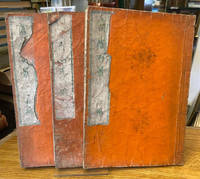
184560421Osaka Kawachiya 1845 fourth month KÅka 2. 4to 255 x 180 mm. 6 volumes uniformly bound in orange contemporary stitched spineless Fukuro Toji bindings with white paper title label pasted on to front wrappers. Housed in a chitsu. Severly affected by wormholes. Heavily affected by wormholes throughout otherwise clean. Chitsu-case with wear. 35; 39; 39 36 30; 28 pp. <br/><br/><em>Beautiful work written by Yamada Isai with illustrations by Katsushika Hokusai consisting 55 episodes in the life of Shaka Buddah. Hokusai has made 35 illustrations for 27 episodes and 23 of those are new iconographies in Shaka’s biography inspired by various pictorial resources while other 12 scenes originate in the former or traditional ones of these subjects. With thirty-two monochrome illustrations and covers various events starting from the court of King Suddhodana the Buddha's father before his birth in the Indian kingdom of Kapilavastu and ending with the distribution of the Buddha's relics after his death. Throughout Asia depictions of the Buddha's life have followed common narrative structures and artistic conventions for centuries. There is no single authoritative textual source for the Buddha's life story so visual narratives have relied on well-known episodes such as his birth as Prince Siddhartha his renunciation of worldly life his ascetic practice attainment of enlightenment and eventual death. These narratives have been adapted creatively to specific contexts sometimes incorporating new episodes or extending the story beyond the Buddha's death. The Illustrated Record of the Life of Sukyamuni by Yamada Isai and Katsushika Hokusai can be compared to historical fiction rather than a strict historical account. Hokusai's illustrations in particular prioritize creative additions to the story over adhering strictly to canonical episodes. For example the book does not depict the Buddha's death but focuses on other aspects such as familial conflicts supernatural encounters and scenes of hell. The included double-page illustration portrays a dramatic episode that concludes volume 1. The right-hand illustration shows the canonical episode of the Buddha's conception where his mother lady Maya receives a dream indicating her pregnancy. However the left-hand illustration deviates from the conventional depiction of Maya's sister Gotami as a benevolent aunt to the Buddha. Instead she is portrayed as a jealous character transformed into a giant snake due to her envy. This aspect of the narrative draws inspiration not from the Buddha's life stories but from the tale of Lady Xi 468-499 a would-be empress during the Chinese Liang dynasty. For more information see The Arthur Tress Collection of Japanese illustrated books Kislak Center University of Pennsylvania Libraries. </em> unknown
184560421Osaka, Kawachiya, 1845, fourth month (Kōka 2). 4to (255 x 180 mm). 6 volumes uniformly bound in orange contemporary stitched spineless Fukuro Toji bindings with white paper title label pasted on to front wrappers. Housed in a chitsu. Severly affected by wormholes. Heavily affected by wormholes throughout, otherwise clean. Chitsu-case with wear. 3539 39, 36, 30 28 pp.
18082110502150903230Soshichi Nishimura and other editions 1808. Soft Cover. Fine. Number of books: 5 Soshichi Nishimura and other editions paperback
18122091202133201307Shuseikaku / Gungyokudo 1812. Soft Cover. Fine. Number of books: 2 books in total Shuseikaku / Gungyokudo paperback
44008501Tokyo 1948 Oshima. Yellow stitched stiff wrs. 3 vol. set woodblock printed on hand-made paper very goodcleanbright set contents very clean white clear impressions in tones of grey Sumi black stiff buff paper Chitsu case. R A R E . . . AN IDENTICAL TO THE FIRST EDITION 1948 REPRINT . . . FUGAKU HYAKKEI: 100 VIEWS OF MT. FUJI . . . HOKUSAI'S MOST FAMOUS BOOK ON JAPAN'S SACRED SYMBOL . . . COLOR WOODBLOCK-PRINTED ON HAND-MAID WASHI PAPER . . . HIS GREATEST CLASSIC ! . THE ARTIST: KATSUSHIKA Hokusai 1760-1849: Hokusai's most famous work in book form illustrating a profusion of views of Mt. Fuji from all perspectives. . Hokusai was Japan's most famous Edo period illustrator of Japanese genre landscape scenery and of the daily lives and occupations of the commoners. His works are full of cheerfulness humor optimism and he had a knack of capturing the true nature of his time people and life style. He was affectionately called the "MAD MAN ON DRAWING" by the Japanese. His works continue to fascinate the world over ! . This book was also the prototype for his great color woodblock print series of multiple views of Mt. Fuji. . A delightful and impressive work considered a classic for nearly 200 years. . This monograph is devoted to Japan's most sacred Mt. Fuji in all its glory portrayed in various seasons and as seen by common folk as they go about their daily lives and daily occupations and along the Tokaido highway. . THE INTRODUCTION: The introduction was written by Hokusai on the first two pages of each volume. . THE COMPLETE SET OF 3 VOLUMES: The collation is: 252525 double folded leaves or 150 pages in all with illustrations of Mt. Fuji on 144 pages 6 pages of Japanese text. . The history of the various editions and volume count are complex the work was originally issued complete in two volumes which included all pages found in the 3 volume set. The set of 3 volumes is no different than those bound in 2 volumes it is simply a matter of combining pages into two or three bindings. The binding format was a choice made by publishers & their binders. The usual format is 3 volumes numbered 1 2 & 3. There are 3 volumes bound into a single binding and other variants contents by and large is the same. . THE SUBJECT: MT. FUJI JAPAN'S MOST SACRED SYMBOL: . The work is marvelous it shows Mt. Fuji portrayed in the daily life of the common people. . In the spring time how ordinary Japanese sat outdoors and viewed the cherry blossoms with Mt. Fuji in the background. Mt. Fuji was always present in daily life as a background. . The composition artistry and skill of Hokusai is without parallel. The book illustrates his unique talent and drawing skills. His artistry pictured Mt. Fuji in myriad scenes early morning evening rain and cloudy days. The mystical quality of Mt. Fuji demonstrates the great respect Hokusai felt showing the great grandeur of the sacred mountain. . Hokusai used acute visual composition concepts insight and visionary-like "Avant-garde" talent to impress viewers to identify with the splendor of Mt. Fuji. . Hokusai is still hailed as Japan's greatest artist of the 19th century. His woodblock printed books and printed command solid prices. . THIS IS THE 1948 EXACT REPRINT OF THE 1830'S FIRST EDITION: . This is an exact reprint of the First Edition complete with matching yellow covers green printed title slips and brown thread string bindings. . What differs is that in volume 3 where the usual illustrations end begins a section of 19 double-folded leaves of text by the xxxxxxx Ohshima Torimizu and the recent colophon indicating the publishing details. . This the latest final exact reprint edition matching the First Edition in all ways. . The work was woodblock printed on Washi hand-made paper. The registry & impression are excellent. The volume size varied by a few centimeters mostly a difference of the top or bottom margins. . Color photos are posted to our website. . CONDITION: This is an excellent copy fresh no bends to the cover hinges contents pristine immaculate so near the original that without the recent colophon and Oshim's comments one less versed in these things could easily think of this set being the original edition! . The set comes in a stiff paper folding Chitsu case printed in red & black on the front cover and black titles on the spine witih a string tie. . This five-part-folding Chitsu has been restored & mended from the inside to strengthen the folding hinge areas. The paper is 'toned' as usual for n immediate post-World War Two example. . REFERENCES: . There are no references to this edition in the traditional resources below which focus on 19th century editions or machine reprints. . DICKINS TRANSLATION: TWO EDITIONS: WITH ENGLISH TRANSLATION & ILLUSTRATIONS: a. F.V. Dickins.: FUGAKU HIYAKU-KEI: sic OR A HUNDRED VIEWS OF FUJISAMA FUJI BY HOKUSAI. London in 1880. This book contained 3 original woodblock illustrated volumes of Hokusai's book FUGAKU HYAKKEI. . b. A 1960 reprint of the above photo lithographed edition. H. Kerlen: CATALOGUE OF PRE-MEIJI JAPANESE BOOKS & MAPS . for more bibliographic details item #396 pp.163-166. BROWN Louise N.: BLOCK PRINTING AND BOOK ILLUSTRATION IN JAPAN p.183 she cites two entries. Henry Smith II: HOKUSAI ONE HUNDRED VIEWS OF MT. FUJI pp.21-22 outline of the editions. K. Toda: THE RYERSON COLLECTION OF JAPANESE AND CHINESE . ILLUSTRATED BOOKS p.263. L. Dawes: CATALOGUE OF JAPANESE ILLUSTRATED BOOKS p.47. FORRER Matthi. comp. et al.: HOKUSAI AND HIS SCHOOL: Paintings Drawings And Illustrated Books. See item 110 and associated photos and pp.170-177. RIJKSMUSEUM: HOKUSAI AND HIS SCHOOL: Japanese Prints c. 1800-1840. see pp. 58-59 #87 & photos. Jack Hillier: no. 241 p.278. --. : HOKUSAI: no. 110 --. : THE ART OF JAPANESE BOOK ILLUSTRATION p.213-225 . plates 195-208 Kraft: VOL.3 NO. 185-=195; VOL. 4 NO.36 R. Keyes: EHON: The Artist and the Book in Japan: pp.218-223 i.e. exhibit #54 color plates: figures 54.1-54.5. KSM: Kaiga 7-18-1 . !! NOT LISTED IN: C. Mitchell: THE ILLUSTRATED BOOKS OF THE NANGA MARUYAMA SHIJO AND OTHER RELATED SCHOOLS OF JAPAN. . . unknown
85004002Edo 1836 Kozanbo. Original stitched green wrappers very good 31 woodcuts prints 15.5 x 23.5 cm. blind-stamped covers a bit scuffed contents clean no worming solid a variant with uncolored frontis. RARE FIRST EDITION . . . ONE OF HOKUSAI'S MOST FAMOUS ILLUSTRATED BOOKS . . . ON CHINESE & JAPANESE HISTORIC HEROES . . This important work shows the human body moving under the heavy armor and the flow of Hokusai's 1760-1849 skilled and fluid brush. An exciting and action-packed Samurai illustrated book. Shows a number of Japanese and Chinese heroes as they struggle to suppress evil and encounter over- whelming robust and fierce opponents. Toki Kintaro struggled with a giant bronze-casted Buddhist temple Bell; other heroes struggle and fight with Inoshishi wild boar; tiger; suppressing a great wild stallion and huge spider; a giant dragon-snake; devils; Sumo; butchering one's enemy; haunted by living Yurei ghost; ogres; Fu-dog and one blood- curdling scene of a person holding a newborn baby by the feet over a boiling cauldron while he split it's stomach shows the blood flowing into the "soup" while a colleague looks on in delight; Buddhist saints and Goddess; seeking salvation refuge and Nirvana under a freezing cold waterfall in fervent prayer; suffering a barrage of arrows and assailants. . A most dramatic and emotional work of the strongest Heroes and most powerful warriors as they wield their all-mighty Samurai swords. Executed with the greatest of skill as only Hokusai could do. Contains one double-page preface thirty double-page and two single illustrations. The entire book printed on double-folded leaves by woodblocks printed on hand-made Washi paper. . Showing Hokusai's brilliant imagination and ability to fantasize. Books of this high caliber and unique subject condition and vintage are always S C A R C E. . THE ARTIST: KATSUSHIKA HOKUSAI 1760-1849: Hokusai was Japan's most famous Edo period illustrator of Japanese genre landscape scenery and of the daily lives and occupations of the commoners. His works are full of cheerfulness humor optimism and he had a knack of capturing the true nature of his time people and life style. He was affectionately called the "MAD MAN ON DRAWING" by the Japanese. His works continue to fascinate the world over ! . THE VARIANT EDITIONS: We have become aware of the fact that there is a strong possibility that each of the two variant copies may have slightly different plates. For example the current copy in hand does not have plates 212 nor 214 as cited in Hillier above. One needs to have the luxury of having both variants on their desk and compare page by page to note actual and complete differences. Our copy is consecutively numbered per Kerlen and so we know that it is complete but a variant to what Hillier saw in one of the museums cited on his "Acknowledgement" page. All other illustrations he cited are present. . Color photos are posted to our website. . BIBLIOGRAPHY: . A famous work cited in many standard references we list a few of the many works.: . J. Hillier: THE ART OF HOKUSAI IN BOOK ILLUSTRATION plates: 209 210 212 214 215; text on pp.227-231. Because Hiller understood this book to be of exceptional importance has devoted substantial space to this title which is part of a major trilogy on the subject of great Japanese and Chinese heroes. This genre was called the "Toshisen" and done in the final decade of Hokusai's artistic life 1840-1849. There are two versions of the First Edition relating to the first illustration opposite the title page: a. Sumi-zuri or black and white uncolored plate. b. Saishiki or colored version. The Saishiki type was strictly a made-to-order version for wealthy merchants; the Sumi-zuri being the more common of the two variants. H. Kerlen: CATALOGUE OF PRE-MEIJI JAPANESE BOOKS AND MAPS IN PUBLIC COLLECTIONS IN THE NETHERLANDS item #312 p.126-127. K. Toda: THE RYERSON COLLECTION OF JAPANESE AND CHINESE ILLUSTRATED BOOKS p.263. KSM KAIGO 1-494-2 Kraft: vol. 1 no. 125 J. Hillier: no.245 p.278 . . unknown
196246618æ±äº¬ Tokyo: èŠ¸è‰¸å ‚ Unsodo 1962. Revised edition. Softcover. vg- to near fine. Quartos. Unpaginated. 15 string-bound volumes in blue paper wrappers. White paper labels with gilt lettering on the front covers. Housed in a large dark blue cloth-covered clamshell portfolio with a printed paper label on the front cover and bone fasteners. English label on the spine of the portfolio. Gorgeous reproduction of the classic monumental work by Hokusai 1760-1849 originally issued in 15 volumes between 1812-1878. The first 12 volumes were issued by the artist during his lifetime while volumes 13-14 were issued posthumously from previously unpublished material. The final volume includes a compilation of some previously published material and of other work not even by Hokusai and is therefore not considered authentic.<br /> <br /> The vast amount of content covered in these "sketchbooks" consists of thousands of images ranging from domestic and social scenes animals landscapes plants architecture historical scenes legends and martial arts to masks as well as household and ritual objects. Of interesting note are some detailed close up images of firearms. Finely printed to reproduce the quality and look of the original editions with images printed in b/w and hues of light pink. The set includes a 22-page informative text booklet in Japanese and English. Additionally the final section of each volume contains text in Japanese and English relating to the specific content of the volume and giving additional technical and historical context. <br /> <br /> Text in Japanese and English.<br /> <br /> Portfolio with some light foxing to the label and on the interior. A few of the wrappers with minor rubbing to corners. Foxing to the edges of book blocks. Interiors with some sporadic minor to light foxing mostly to top margins with images almost entirely unaffected. Images clean bold and bright. Portfolio in very good wrappers in very good to near fine interiors in very good- to near fine. 芸艸堂 (Unsodo) unknown
18112110502150908589Hanmoto fumei 1811. Soft Cover. Fine. Number of books: 1 Hanmoto fumei paperback