2 721 résultats
18112110502150908881Hanmoto fumei 1811. Soft Cover. Fine. Number of books: 1 Hanmoto fumei paperback
18112110502150908882Hanmoto fumei 1811. Soft Cover. Fine. Number of books: 1 Hanmoto fumei paperback
18112110502150908590Hanmoto fumei 1811. Soft Cover. Fine. Number of books: 1 Hanmoto fumei paperback
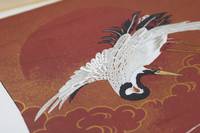
188391742Paris: A. Quantin 1883. Fine. The Bible of Japonism in its original silk binding A. Quantin Paris 1883 28.8 x 36.6 cm 2 volumes en reliures de l'éditeur First edition one of 1400 numbered copies only issue. Outstanding publishers cream silk Bradel binding signed by Engel at the foot of the spine flat spine decorated with Japanese characters; upper boards in excellent condition elaborately decorated with a reproduction of Shinmans starlings against a setting sun from the Henri Cernuschi collection also illustrated pl. 26 vol. 1; corners slightly rubbed; both volumes complete with their illustrated dust jackets showing tears and some losses. Illustrated with 64 tissue-guarded plates most in colour 13 etchings 21 heliogravures 2 typographic engravings in black and gold 10 chromolithographs and 18 watercolours the majority signed by Gillot and Guérard. Numerous illustrations in black throughout. An exceptional copy of the first history of Japanese art written outside of Asia housed in its magnificent publishers silk binding signed by Jean Engel in pristine condition throughout: with its one thousand and twenty-four illustrations in black and in colour is not a conventional ornamental repertoire. It marks a clear break with traditional perception and reception of Japanese art that had prevailed in France and the West since the 1860s François Gonse Une histoire de lart japonais en 1883. Lil de Louis Gonse Histoire de lart N°40-41 1998. The author Louis Gonse was an art historian exhibition curator and director of the Gazette des beaux-arts. The celebrated Asian art dealer Tadamasa Hayashi who had come to Paris as an interpreter for the Exposition Universelle of 1878 helped him in the preparation of LArt japonais. Translated into English in 1891 and into Japanese in 1893 this seminal work proved a landmark publication. Its illustrations include works by artists much admired among French Japonistes including Hokusai and Hiroshige whom Gonse hailed as the greatest paysagist of 19th-century Japan. His views of Yedo he wrote helped us better understand the country than all of previous travelers descriptions. The discovery of this new formal repertoire was to exert a considerable influence on artists of the fin-de-siècle among them Félix Régamey and Henri Guérard who engraved some of the illustrations in this volume. A. Quantin hardcover
1818907811818. Katsushika HOKUSAI 葛飾北斎. Denshin Kaishû HOKUSAI GAKYÔ. ä¼ç¥žé–‹æ‰‹ã€€åŒ—æ–Žç”»é¡ã€€å…¨ã€€Nagoya: Hishiya Kyuubei Edo: Maekawa Rokuzaemon Osaka: Kawachiya Tasuke Kyoto: Hishiya Jihei. The preface is date Bunka 15 1818. Almost certainly an original printing of this surprisingly scarce work. 26.1 x 17.3 cm. The covers and title label are original. Later Meiji era issues had a printed title page mounted on the front mikaeshi. This copy does not but it may well be that there was none in the first printings.Jack Hillier in his THE ART OF HOKUSAI IN BOOK ILLUSTRATION devotes a whole chapter to this book. It exists in at least 2 early editions. One printed in color but always missing three fascicles when found is titled SHUGA ICHIRAN. Our version at hand is printed in sumi only and usually considered the first appearance in 1818 but there has been controversy on that point for years. Our copy is complete save the possible absence of the title page pastedown as mentioned. But the covers are original with the blindstamped pattern of the earliest copies so it would be hard to believe the title page was steamed off the inside of the cover and there is an appropriate sheet of paper affixed there.<br /> <br /> In any event one of the most underappreciated of all Hokusai's books as it is usually found in worn and poorly printed late copies. unknown books
18362080502106500818Not Available 1836. Soft Cover. Fine. Volume: 1 Not Available paperback
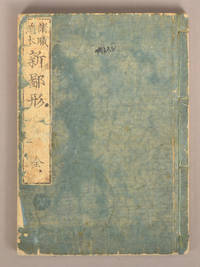
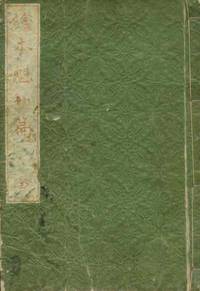
90683Katsushika Hokusai 葛飾北斎. Shoshoku Ehon Katsushika Shin Hinagata 諸è·çµµæœ¬ 葛飾新鄙形. Kyoto Osaka & Edo: Katsumura Jihei et al. TempÅ 7 1836. Single volume 22.4 x 15.9cm string-bound Japanese-style fukuro toji and housed in a modern navy portfolio 22.5 x 16.3cm with ribbon ties. Green blind-patterned covers and printed paper title label. 1 cho preface 25 cho of black and white woodblock illustrations 1 cho of ads with colophon in Japanese text. As in Ryerson 262 save that Suharaya MÅhei of Edo is here listed as subsidiary not principal publisher. Interesting and well-printed designs and architectural renderings by a master. By no means a common book here in good or better impression. Wear and some soiling to wrappers and damage to title slip. unknown books
2091202133200086Izumiya Ichibei N.A. Soft Cover. Fine. Volume: 1 Izumiya Ichibei paperback
1870908441870. Katsushika HOKUSAI 葛飾北斎 「æ¦è€…絵本ã€MUSHA-EHON WARRIOR BOOKS〠EHON SAKIGAKE 絵本é; EHON MUSASHI ABUMI 絵本æ¦è”µé™; EHON WAKAN NO HOMARE 絵本和漢誉. Toukyou Suzuki Tadashi éˆ´æœ¨å¿ . n.d. c. early Meiji 1870s 23.5 X15.5 CM in three matching volumes bound in green string bound fukuro-toji with the original title labels. Suzuki Tadashi is described as the owner of the blocks. The blocks were originally cut and the first volumes issued in 1836. The third volume also appears to have been slated to appear as a trilogy at that time but its appearance was delayed until 1850. Much has been made of the fact that Egawa Tomekichi Hokusai's preferred craftsman cut the blocks for these books as well as the 100 VIEWS OF FUJI and the Hokusai contributions to the TOUSHISEN. and for good reason. His fine and detailed work is superb and still keeps much of its beauty even in these later issues from the blocks.<br /> <br /> The set is in very good condition restrung. A very worthwhile edition in original woodcut. The warrior books have become quite difficult to find in any edition - they did not receive the huge volume of reprintings that the MANGA did for example.<br /> <br /> As a set complete. unknown
2007102208Harry N. Abrams Inc. New. 2007. Hardcover. 0810993406 . FREE UPGRADE to Courier/Priority Shipping Upon Request - IN STOCK AND IMMEDIATELY AVAILABLE FOR SHIPMENT - Flawless copy brand new pristine never opened -- 120 pp. ; 52 color illustrations -- with a bonus offer-- . Harry N. Abrams, Inc. hardcover
201196108Prestel Publishing. New. 2011. Paperback. 3791346148 . FREE UPGRADE to Courier/Priority Shipping Upon Request - IN STOCK AND IMMEDIATELY AVAILABLE FOR SHIPMENT - Flawless copy brand new pristine never opened -- 96 pp. ; 52 illus. 50 in color. -- with a bonus offer-- . Prestel Publishing paperback
200873367Kehrer Verlag; Et Al. New. 2008. Hardcover. FREE UPGRADE to Courier/Priority Shipping Upon Request - IN STOCK AND IMMEDIATELY AVAILABLE FOR SHIPMENT - Flawless copy brand new pristine never opened -- TWO 2 VOLUMES. Text in English and German. 26 x 18 cm. Vol. 1 Hokusai : 144 pp. With 121 col. Ills. Vol. 2 Nobuyoshi Araki : 144 pp. With 100 col. Ills. -- with a bonus offer-- . Kehrer Verlag; Et Al hardcover
200873439RMN. New. 2008. Hardcover. 271185406X . FREE UPGRADE to Courier/Priority Shipping Upon Request - IN STOCK AND IMMEDIATELY AVAILABLE FOR SHIPMENT - Flawless copy brand new pristine never opened -- Text in French. 248 pp. With 238 col. Ills. 29 x 23 cm. -- with a bonus offer-- . RMN hardcover
2017129607PIE International. New. 2017. Paperback. 4756248101 . - IN STOCK AND IMMEDIATELY AVAILABLE FOR SHIPMENT - BRAND NEW FLAWLESS COPY NEVER OPENED - with a bonus offer--; 8.9 X 7.2 X 0.8 inches; 240 pages . PIE International paperback
196885479Kodansha International. As New. 1968. Hardcover. FREE UPGRADE to Courier/Priority Shipping Upon Request - IN STOCK AND IMMEDIATELY AVAILABLE FOR SHIPMENT - AS NEW THE TEXT BLOCK IS PRISTINE CLEAN UNMARKED AND IN EXCELLENT CONDITION - - 96 pages; 81 illustrations. -- with a bonus offer-- . Kodansha International hardcover
196585480Smithsonian Institution. As New. 1965. Paperback. FREE UPGRADE to Courier/Priority Shipping Upon Request - IN STOCK AND IMMEDIATELY AVAILABLE FOR SHIPMENT - AS NEW THE TEXT BLOCK IS PRISTINE CLEAN UNMARKED AND IN EXCELLENT CONDITION - - 38 pages. ; well illustrated. -- with a bonus offer-- . Smithsonian Institution paperback
200672547Gallery; Harpercollins Distribution ; Et Al. New. 2006. Hardcover. 1588342395 . FREE UPGRADE to Courier/Priority Shipping Upon Request - IN STOCK AND IMMEDIATELY AVAILABLE FOR SHIPMENT - Flawless copy brand new pristine never opened -- Text in English. 264 pp. With 224 col. Ills. 28 x 25 cm. -- with a bonus offer-- . Gallery; Harpercollins (Distribution) ; Et Al hardcover
200672548Gallery; Et Al. New. 2006. Paperback. 0934686025 . FREE UPGRADE to Courier/Priority Shipping Upon Request - IN STOCK AND IMMEDIATELY AVAILABLE FOR SHIPMENT - Flawless copy brand new pristine never opened -- Text in English. -- with a bonus offer-- . Gallery; Et Al paperback
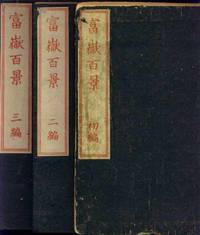
84211706Tokyo 1836-7 Eirakuya. Orange stitched stiff wrs.vol. 3 only woodblock printed very goodcover edges & corners bit scuffed contents clean excellent impressions and registry colors: grey Sumi blackfirm solidly bound16.5 x 2.8 cm. . . . . FUGAKU HYAKKEI: 100 VIEWS OF MT. FUJI . . . HOKUSAI'S MOST FAMOUS BOOK ON JAPAN'S SACRED SYMBOL . . . COLOR WOODBLOCK-PRINTED ON HAND-MAID WASHI PAPER . . . HIS GREATEST CLASSIC ! . THE ARTIST: KATSUSHIKA Hokusai 1760-1849: Hokusai's most famous work in book form illustrating a profusion of views of Mt. Fuji from all perspectives. . Hokusai was Japan's most famous Edo period illustrator of Japanese genre landscape scenery and of the daily lives and occupations of the commoners. His works are full of cheerfulness humor optimism and he had a knack of capturing the true nature of his time people and life style. He was affectionately called the "MAD MAN ON DRAWING" by the Japanese. His works continue to fascinate the world over ! . This book was also the prototype for his great color woodblock print series of multiple views of Mt. Fuji. . A delightful and impressive work considered a classic for nearly 200 years. . This monograph is devoted to Japan's most sacred Mt. Fuji in all its glory portrayed in various seasons and as seen by common folk as they go about their daily lives and daily occupations and along the Tokaido highway. . THE INTRODUCTION: The introduction was written by Hokusai on the first two pages of each volume. . THE COMPLETE SET OF 3 VOLUMES: The collation is: 252525 double folded leaves or 150 pages in all with illustrations of Mt. Fuji on 144 pages 6 pages of Japanese text. . The history of the various editions and volume count are complex the work was originally issued complete in two volumes which included all pages found in the 3 volume set. The set of 3 volumes is no different than those bound in 2 volumes it is simply a matter of combining pages into two or three bindings. The binding format was a choice made by publishers & their binders. The usual format is 3 volumes numbered 1 2 & 3. There are 3 volumes bound into a single binding and other variants contents by and large is the same. . THE SUBJECT: MT. FUJI JAPAN'S MOST SACRED SYMBOL: . The work is marvelous it shows Mt. Fuji portrayed in the daily life of the common people. . In the spring time how ordinary Japanese sat outdoors and viewed the cherry blossoms with Mt. Fuji in the background. Mt. Fuji was always present in daily life as a background. . The composition artistry and skill of Hokusai is without parallel. The book illustrates his unique talent and drawing skills. His artistry pictured Mt. Fuji in myriad scenes early morning evening rain and cloudy days. The mystical quality of Mt. Fuji demonstrates the great respect Hokusai felt showing the great grandeur of the sacred mountain. . Hokusai used acute visual composition concepts insight and visionary-like "Avant-garde" talent to impress viewers to identify with the splendor of Mt. Fuji. . Hokusai is still hailed as Japan's greatest artist of the 19th century. His woodblock printed books and printed command solid prices. . THE EDITIONS: There were two main editions: the FIRST EDITION published in 1834-5 was bound in pink stiff stitched covers commonly called "FALCON FEATHERS." All later editions are reprints with various dates bound in yellow blue purple green black and several other variants. Contents remains the same it would be a matter of quality of impression. The later editions do not always have a colophon or date. Some editions do show publisher's information and date. Other copies may have been rebound omitting the colophon. . There is no 'standard' relationship between date and color of binding however we have had many editions and copies information below reflects this history: . In 1875 Meiji 8th year reprint bound in either yellow covers with green printed title slips or blue covers with red printed title slips. . In 1877 Meiji 10th year reprint in black covers with red printed title slips. . A late final reprint in 1940 with yellow covers. . All of the above were woodblock printed editions on Washi hand-made paper. The contents is identical regardless of edition. The volume size varied by a few centimeters mostly a difference of the top or bottom margins. . The quality of the reprints are determined by the freshness of the impression and registry. As the original woodblocks wore down and warped they were replaced with new blocks. Some later editions were printed from very worn poor quality original blocks others from a mixed variety of old and new blocks quality varies in each copy. . Please visit our website to see the editions currently in stock. Photos posted to our website may not reflect the exact copies in stock but are 'generic' examples of the contents. . NOTE: Not all copies are identical contents each have specific and unique condition and different cover colors all about the same size. . SIZE: Depending on edition the First Edition was typically bound 15.5 x 22.5 cm. The Meiji editions were about 15.3 x 24.2 cm. with a very minor difference in size dependent on which publisher printed & bound their copies. There are minor size differences by edition the images remain the same size it was strictly a matter of larger margins in later editions. . For the most part this set was uniformly bound each with title slips. The Meiji title slips were red Kanji on a red bordered white Washi paper. . THE ENGLISH TRANSLATION OF FUGAKU HYAKKEI: There was a complete English translation of the 3 volume set and each of its pages. Please visit our website and search for F.V. Dickins 1960 edition which may be in stock. See below for more details. . CONDITION NOTE: General: Unless otherwise stated bound in the original publisher's stitched stiff yellow or other color covers with green or red printed title slip. . The registry and impressions are excellent most likely early pulls off the woodblocks. . We may have different dated editions each copy has been described not all are in the same condition dates also vary. Please inquire about any particular copy for more details. Photos posted to our site are 'generic' and represent general examples of the contents & illustrations. Please review photos posted to our website. . The 1877 edition has a small mend at the last page the colophon in vol. 3 else very clean nice. . Color photos of a generic example are posted to our website copies vary please read the individual copy notes for subtle differences. . SPECIFIC COPY DETAILS: . Copy 6. This is an early edition with soft Washi paper and excellent registry and imression clearly an early pull off the woodblocks. . Bound in the publisher's variant orange color with the green printed title slip. The covers have the typical soil common for a famous book by a Hokusai a famous artist which is nearly 200 years old. The covers have the usual vertical minor wrinkles & bends. The pages show the usual touch of lower right corner 'thumbing.' . Some old minor and bit of tiny worming in top margin & top text from beginning to page 15; a similar small hole in the upper plates beginning from the front through to page 16; a similar small hole in the heel below the lower margin from page 7-13 of no impact to the image other two also of little impact to the image. Else the book is solidly bound without issues. Cover title in green ink. . There is a boksellers advertisement inside the front and back covers. Copy 7: Exceptionally bright & clean example a tiny bit of dustiness to the covers else excellent. Cover title slip in green ind.Contents are pristine. Cover . Copoy 8: Similar to above but with English written on the front covers:"Peole In Landscape" & Mabel D. Ely." Else the front & back covers have some minor dustiness typical signs of wear and feint marks contents remains pristine. Dated Meiji 8th year 1875. Copy 9: Excellent black covers very clean & solid with red ink printed title slip. Contents prestine. Dated Meiji 10th. year 1877. . REFERENCES: . DICKINS TRANSLATION: TWO EDITIONS: WITH ENGLISH TRANSLATION & ILLUSTRATIONS: a. F.V. Dickins.: FUGAKU HIYAKU-KEI: sic OR A HUNDRED VIEWS OF FUJISAMA FUJI BY HOKUSAI. London in 1880. This book contained 3 original woodblock illustrated volumes of Hokusai's book FUGAKU HYAKKEI. . b. A 1960 reprint of the above. H. Kerlen: CATALOGUE OF PRE-MEIJI JAPANESE BOOKS & MAPS . for more bibliographic details item #396 pp.163-166. BROWN Louise N.: BLOCK PRINTING AND BOOK ILLUSTRATION IN JAPAN p.183 she cites two entries. Henry Smith II: HOKUSAI ONE HUNDRED VIEWS OF MT. FUJI pp.21-22 outline of the editions. K. Toda: THE RYERSON COLLECTION OF JAPANESE AND CHINESE . ILLUSTRATED BOOKS p.263. L. Dawes: CATALOGUE OF JAPANESE ILLUSTRATED BOOKS p.47. FORRER Matthi. comp. et al.: HOKUSAI AND HIS SCHOOL: Paintings Drawings And Illustrated Books. See item 110 and associated photos. RIJKSMUSEUM: HOKUSAI AND HIS SCHOOL: Japanese Prints c. 1800-1840. see pp. 58-59 #87 & photos. Jack Hillier: no. 241 p.278. --. : HOKUSAI: no. 110 --. : THE ART OF JAPANESE BOOK ILLUSTRATION p.213-225 . plates 195-208 Kraft: VOL.3 NO. 185-=195; VOL. 4 NO.36 R. Keyes: EHON: The Artist and the Book in Japan: pp.218-223 i.e. exhibit #54 color plates: figures 54.1-54.5. KSM: Kaiga 7-18-1 Forrer: 170-177 . !! NOT LISTED IN: C. Mitchell: THE ILLUSTRATED BOOKS OF THE NANGA MARUYAMA SHIJO AND OTHER RELATED SCHOOLS OF JAPAN. . . unknown
1875912491875. EHON Katsushika HOKUSAI. FUGAKU HYAKKEI. 100 Views of Fuji. Meiji 8 1875. Aichi Katano Toshiro. 3 vols. Yellow covers. 15.7 x 22.6 cm. Paper labels. This Meiji reprint of Hokusai's classic is in very good condition with original yellow covers and title labels. The impressions are fair to good and preserve the remarkable aesthetic sense of the master. The original blocks cut some 40 years earlier are here used by skilled printers to produce a fair example of the original work. unknown
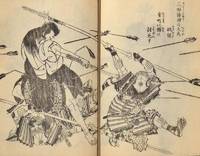
85004003Tokyo 1868 Suzuki. Stitched pink stiff wrs. very good 31 woodcuts of heroic Japanese & Chinese figures Japanese text indigo-blue Chitsu case colored frontispiece signed Gakyo Rojin Manji 15.5 x 23 cm. IMPORTANT HOKUSAI WORK ! . . . ONE OF HOKUSAI'S MOST FAMOUS ILLUSTRATED BOOKS . . . ON CHINESE & JAPANESE HISTORIC HEROES . . This important work shows the human body moving under the heavy armor and the flow of Hokusai's 1760-1849 skilled and fluid brush. An exciting and action-packed Samurai illustrated book. Shows a number of Japanese and Chinese heroes as they struggle to suppress evil and encounter over- whelming robust and fierce opponents. Toki Kintaro struggled with a giant bronze-casted Buddhist temple Bell; other heroes struggle and fight with Inoshishi wild boar; tiger; suppressing a great wild stallion and huge spider; a giant dragon-snake; devils; Sumo; butchering one's enemy; haunted by living Yurei ghost; ogres; Fu-dog and one blood- curdling scene of a person holding a newborn baby by the feet over a boiling cauldron while he split it's stomach shows the blood flowing into the "soup" while a colleague looks on in delight; Buddhist saints and Goddess; seeking salvation refuge and Nirvana under a freezing cold waterfall in fervent prayer; suffering a barrage of arrows and assailants. . A most dramatic and emotional work of the strongest Heroes and most powerful warriors as they wield their all-mighty Samurai swords. Executed with the greatest of skill as only Hokusai could do. Contains one double-page preface thirty double-page and two single illustrations. The entire book printed on double-folded leaves by woodblocks printed on hand-made Washi paper. . Showing Hokusai's brilliant imagination and ability to fantasize. Books of this high caliber and unique subject condition and vintage are always S C A R C E. . THE ARTIST: KATSUSHIKA HOKUSAI 1760-1849: Hokusai was Japan's most famous Edo period illustrator of Japanese genre landscape scenery and of the daily lives and occupations of the commoners. His works are full of cheerfulness humor optimism and he had a knack of capturing the true nature of his time people and life style. He was affectionately called the "MAD MAN ON DRAWING" by the Japanese. His works continue to fascinate the world over ! . THE VARIANT EDITIONS: We have become aware of the fact that there is a strong possibility that each of the two variant copies may have slightly different plates. For example the current copy in hand does not have plates 212 nor 214 as cited in Hillier above. One needs to have the luxury of having both variants on their desk and compare page by page to note actual and complete differences. Our copy is consecutively numbered per Kerlen and so we know that it is complete but a variant to what Hillier saw in one of the museums cited on his "Acknowledgement" page. All other illustrations he cited are present. . Color photos are posted to our website. . BIBLIOGRAPHY: . A famous work cited in many standard references we list a few of the many works.: . J. Hillier: THE ART OF HOKUSAI IN BOOK ILLUSTRATION plates: 209 210 212 214 215; text on pp.227-231. Because Hiller understood this book to be of exceptional importance has devoted substantial space to this title which is part of a major trilogy on the subject of great Japanese and Chinese heroes. This genre was called the "Toshisen" and done in the final decade of Hokusai's artistic life 1840-1849. There are two versions of the First Edition relating to the first illustration opposite the title page: a. Sumi-zuri or black and white uncolored plate. b. Saishiki or colored version. The Saishiki type was strictly a made-to-order version for wealthy merchants; the Sumi-zuri being the more common of the two variants. H. Kerlen: CATALOGUE OF PRE-MEIJI JAPANESE BOOKS AND MAPS IN PUBLIC COLLECTIONS IN THE NETHERLANDS item #312 p.126-127. K. Toda: THE RYERSON COLLECTION OF JAPANESE AND CHINESE ILLUSTRATED BOOKS p.263. KSM KAIGO 1-494-2 Kraft: vol. 1 no. 125 J. Hillier: no.245 p.278 . . unknown
84211707Edo 1875 Suharaya. Yellow stitched wrappersvol.3 only title slip very bright & clean copy woodblock printed the contents excellent impressions & registry colors grey Sumi & black exceptionally cleanfirm and solid example. RARE . . . . FUGAKU HYAKKEI: 100 VIEWS OF MT. FUJI . . . HOKUSAI'S MOST FAMOUS BOOK ON JAPAN'S SACRED SYMBOL . . . COLOR WOODBLOCK-PRINTED ON HAND-MAID WASHI PAPER . . . HIS GREATEST CLASSIC ! . THE ARTIST: KATSUSHIKA Hokusai 1760-1849: Hokusai's most famous work in book form illustrating a profusion of views of Mt. Fuji from all perspectives. . Hokusai was Japan's most famous Edo period illustrator of Japanese genre landscape scenery and of the daily lives and occupations of the commoners. His works are full of cheerfulness humor optimism and he had a knack of capturing the true nature of his time people and life style. He was affectionately called the "MAD MAN ON DRAWING" by the Japanese. His works continue to fascinate the world over ! . This book was also the prototype for his great color woodblock print series of multiple views of Mt. Fuji. . A delightful and impressive work considered a classic for nearly 200 years. . This monograph is devoted to Japan's most sacred Mt. Fuji in all its glory portrayed in various seasons and as seen by common folk as they go about their daily lives and daily occupations and along the Tokaido highway. . THE INTRODUCTION: The introduction was written by Hokusai on the first two pages of each volume. . THE COMPLETE SET OF 3 VOLUMES: The collation is: 252525 double folded leaves or 150 pages in all with illustrations of Mt. Fuji on 144 pages 6 pages of Japanese text. . The history of the various editions and volume count are complex the work was originally issued complete in two volumes which included all pages found in the 3 volume set. The set of 3 volumes is no different than those bound in 2 volumes it is simply a matter of combining pages into two or three bindings. The binding format was a choice made by publishers & their binders. The usual format is 3 volumes numbered 1 2 & 3. There are 3 volumes bound into a single binding and other variants contents by and large is the same. . THE SUBJECT: MT. FUJI JAPAN'S MOST SACRED SYMBOL: . The work is marvelous it shows Mt. Fuji portrayed in the daily life of the common people. . In the spring time how ordinary Japanese sat outdoors and viewed the cherry blossoms with Mt. Fuji in the background. Mt. Fuji was always present in daily life as a background. . The composition artistry and skill of Hokusai is without parallel. The book illustrates his unique talent and drawing skills. His artistry pictured Mt. Fuji in myriad scenes early morning evening rain and cloudy days. The mystical quality of Mt. Fuji demonstrates the great respect Hokusai felt showing the great grandeur of the sacred mountain. . Hokusai used acute visual composition concepts insight and visionary-like "Avant-garde" talent to impress viewers to identify with the splendor of Mt. Fuji. . Hokusai is still hailed as Japan's greatest artist of the 19th century. His woodblock printed books and printed command solid prices. . THE EDITIONS: There were two main editions: the FIRST EDITION published in 1834-5 was bound in pink stiff stitched covers commonly called "FALCON FEATHERS." All later editions are reprints with various dates bound in yellow blue purple green black and several other variants. Contents remains the same it would be a matter of quality of impression. The later editions do not always have a colophon or date. Some editions do show publisher's information and date. Other copies may have been rebound omitting the colophon. . There is no 'standard' relationship between date and color of binding however we have had many editions and copies information below reflects this history: . In 1875 Meiji 8th year reprint bound in either yellow covers with green printed title slips or blue covers with red printed title slips. . In 1877 Meiji 10th year reprint in black covers with red printed title slips. . A late final reprint in 1940 with yellow covers. . All of the above were woodblock printed editions on Washi hand-made paper. The contents is identical regardless of edition. The volume size varied by a few centimeters mostly a difference of the top or bottom margins. . The quality of the reprints are determined by the freshness of the impression and registry. As the original woodblocks wore down and warped they were replaced with new blocks. Some later editions were printed from very worn poor quality original blocks others from a mixed variety of old and new blocks quality varies in each copy. . Please visit our website to see the editions currently in stock. Photos posted to our website may not reflect the exact copies in stock but are 'generic' examples of the contents. . NOTE: Not all copies are identical contents each have specific and unique condition and different cover colors all about the same size. . SIZE: Depending on edition the First Edition was typically bound 15.5 x 22.5 cm. The Meiji editions were about 15.3 x 24.2 cm. with a very minor difference in size dependent on which publisher printed & bound their copies. There are minor size differences by edition the images remain the same size it was strictly a matter of larger margins in later editions. . For the most part this set was uniformly bound each with title slips. The Meiji title slips were red Kanji on a red bordered white Washi paper. . THE ENGLISH TRANSLATION OF FUGAKU HYAKKEI: There was a complete English translation of the 3 volume set and each of its pages. Please visit our website and search for F.V. Dickins 1960 edition which may be in stock. See below for more details. . CONDITION NOTE: General: Unless otherwise stated bound in the original publisher's stitched stiff yellow or other color covers with green or red printed title slip. . The registry and impressions are excellent most likely early pulls off the woodblocks. . We may have different dated editions each copy has been described not all are in the same condition dates also vary. Please inquire about any particular copy for more details. Photos posted to our site are 'generic' and represent general examples of the contents & illustrations. Please review photos posted to our website. . The 1877 edition has a small mend at the last page the colophon in vol. 3 else very clean nice. . Color photos of a generic example are posted to our website copies vary please read the individual copy notes for subtle differences. . SPECIFIC COPY DETAILS: . Copy 6. This is an early edition with soft Washi paper and excellent registry and imression clearly an early pull off the woodblocks. . Bound in the publisher's variant orange color with the green printed title slip. The covers have the typical soil common for a famous book by a Hokusai a famous artist which is nearly 200 years old. The covers have the usual vertical minor wrinkles & bends. The pages show the usual touch of lower right corner 'thumbing.' . Some old minor and bit of tiny worming in top margin & top text from beginning to page 15; a similar small hole in the upper plates beginning from the front through to page 16; a similar small hole in the heel below the lower margin from page 7-13 of no impact to the image other two also of little impact to the image. Else the book is solidly bound without issues. Cover title in green ink. . There is a boksellers advertisement inside the front and back covers. Copy 7: Exceptionally bright & clean example a tiny bit of dustiness to the covers else excellent. Cover title slip in green ind.Contents are pristine. Cover . Copoy 8: Similar to above but with English written on the front covers:"Peole In Landscape" & Mabel D. Ely." Else the front & back covers have some minor dustiness typical signs of wear and feint marks contents remains pristine. Dated Meiji 8th year 1875. Copy 9: Excellent black covers very clean & solid with red ink printed title slip. Contents prestine. Dated Meiji 10th. year 1877. . REFERENCES: . DICKINS TRANSLATION: TWO EDITIONS: WITH ENGLISH TRANSLATION & ILLUSTRATIONS: a. F.V. Dickins.: FUGAKU HIYAKU-KEI: sic OR A HUNDRED VIEWS OF FUJISAMA FUJI BY HOKUSAI. London in 1880. This book contained 3 original woodblock illustrated volumes of Hokusai's book FUGAKU HYAKKEI. . b. A 1960 reprint of the above. H. Kerlen: CATALOGUE OF PRE-MEIJI JAPANESE BOOKS & MAPS . for more bibliographic details item #396 pp.163-166. BROWN Louise N.: BLOCK PRINTING AND BOOK ILLUSTRATION IN JAPAN p.183 she cites two entries. Henry Smith II: HOKUSAI ONE HUNDRED VIEWS OF MT. FUJI pp.21-22 outline of the editions. K. Toda: THE RYERSON COLLECTION OF JAPANESE AND CHINESE . ILLUSTRATED BOOKS p.263. L. Dawes: CATALOGUE OF JAPANESE ILLUSTRATED BOOKS p.47. FORRER Matthi. comp. et al.: HOKUSAI AND HIS SCHOOL: Paintings Drawings And Illustrated Books. See item 110 and associated photos. RIJKSMUSEUM: HOKUSAI AND HIS SCHOOL: Japanese Prints c. 1800-1840. see pp. 58-59 #87 & photos. Jack Hillier: no. 241 p.278. --. : HOKUSAI: no. 110 --. : THE ART OF JAPANESE BOOK ILLUSTRATION p.213-225 . plates 195-208 Kraft: VOL.3 NO. 185-=195; VOL. 4 NO.36 R. Keyes: EHON: The Artist and the Book in Japan: pp.218-223 i.e. exhibit #54 color plates: figures 54.1-54.5. KSM: Kaiga 7-18-1 Forrer: 170-177 . !! NOT LISTED IN: C. Mitchell: THE ILLUSTRATED BOOKS OF THE NANGA MARUYAMA SHIJO AND OTHER RELATED SCHOOLS OF JAPAN. . . unknown
84211708Nagoya 1875 Katano. Yellow stitched wrappers vol.3 only title slip covers slightly dusty/former owner's name else contents excellent impressions & registrycolors grey Sumi & black bright firm and solid example. RARE . . . . FUGAKU HYAKKEI: 100 VIEWS OF MT. FUJI . . . HOKUSAI'S MOST FAMOUS BOOK ON JAPAN'S SACRED SYMBOL . . . COLOR WOODBLOCK-PRINTED ON HAND-MAID WASHI PAPER . . . HIS GREATEST CLASSIC ! . THE ARTIST: KATSUSHIKA Hokusai 1760-1849: Hokusai's most famous work in book form illustrating a profusion of views of Mt. Fuji from all perspectives. . Hokusai was Japan's most famous Edo period illustrator of Japanese genre landscape scenery and of the daily lives and occupations of the commoners. His works are full of cheerfulness humor optimism and he had a knack of capturing the true nature of his time people and life style. He was affectionately called the "MAD MAN ON DRAWING" by the Japanese. His works continue to fascinate the world over ! . This book was also the prototype for his great color woodblock print series of multiple views of Mt. Fuji. . A delightful and impressive work considered a classic for nearly 200 years. . This monograph is devoted to Japan's most sacred Mt. Fuji in all its glory portrayed in various seasons and as seen by common folk as they go about their daily lives and daily occupations and along the Tokaido highway. . THE INTRODUCTION: The introduction was written by Hokusai on the first two pages of each volume. . THE COMPLETE SET OF 3 VOLUMES: The collation is: 252525 double folded leaves or 150 pages in all with illustrations of Mt. Fuji on 144 pages 6 pages of Japanese text. . The history of the various editions and volume count are complex the work was originally issued complete in two volumes which included all pages found in the 3 volume set. The set of 3 volumes is no different than those bound in 2 volumes it is simply a matter of combining pages into two or three bindings. The binding format was a choice made by publishers & their binders. The usual format is 3 volumes numbered 1 2 & 3. There are 3 volumes bound into a single binding and other variants contents by and large is the same. . THE SUBJECT: MT. FUJI JAPAN'S MOST SACRED SYMBOL: . The work is marvelous it shows Mt. Fuji portrayed in the daily life of the common people. . In the spring time how ordinary Japanese sat outdoors and viewed the cherry blossoms with Mt. Fuji in the background. Mt. Fuji was always present in daily life as a background. . The composition artistry and skill of Hokusai is without parallel. The book illustrates his unique talent and drawing skills. His artistry pictured Mt. Fuji in myriad scenes early morning evening rain and cloudy days. The mystical quality of Mt. Fuji demonstrates the great respect Hokusai felt showing the great grandeur of the sacred mountain. . Hokusai used acute visual composition concepts insight and visionary-like "Avant-garde" talent to impress viewers to identify with the splendor of Mt. Fuji. . Hokusai is still hailed as Japan's greatest artist of the 19th century. His woodblock printed books and printed command solid prices. . THE EDITIONS: There were two main editions: the FIRST EDITION published in 1834-5 was bound in pink stiff stitched covers commonly called "FALCON FEATHERS." All later editions are reprints with various dates bound in yellow blue purple green black and several other variants. Contents remains the same it would be a matter of quality of impression. The later editions do not always have a colophon or date. Some editions do show publisher's information and date. Other copies may have been rebound omitting the colophon. . There is no 'standard' relationship between date and color of binding however we have had many editions and copies information below reflects this history: . In 1875 Meiji 8th year reprint bound in either yellow covers with green printed title slips or blue covers with red printed title slips. . In 1877 Meiji 10th year reprint in black covers with red printed title slips. . A late final reprint in 1940 with yellow covers. . All of the above were woodblock printed editions on Washi hand-made paper. The contents is identical regardless of edition. The volume size varied by a few centimeters mostly a difference of the top or bottom margins. . The quality of the reprints are determined by the freshness of the impression and registry. As the original woodblocks wore down and warped they were replaced with new blocks. Some later editions were printed from very worn poor quality original blocks others from a mixed variety of old and new blocks quality varies in each copy. . Please visit our website to see the editions currently in stock. Photos posted to our website may not reflect the exact copies in stock but are 'generic' examples of the contents. . NOTE: Not all copies are identical contents each have specific and unique condition and different cover colors all about the same size. . SIZE: Depending on edition the First Edition was typically bound 15.5 x 22.5 cm. The Meiji editions were about 15.3 x 24.2 cm. with a very minor difference in size dependent on which publisher printed & bound their copies. There are minor size differences by edition the images remain the same size it was strictly a matter of larger margins in later editions. . For the most part this set was uniformly bound each with title slips. The Meiji title slips were red Kanji on a red bordered white Washi paper. . THE ENGLISH TRANSLATION OF FUGAKU HYAKKEI: There was a complete English translation of the 3 volume set and each of its pages. Please visit our website and search for F.V. Dickins 1960 edition which may be in stock. See below for more details. . CONDITION NOTE: General: Unless otherwise stated bound in the original publisher's stitched stiff yellow or other color covers with green or red printed title slip. . The registry and impressions are excellent most likely early pulls off the woodblocks. . We may have different dated editions each copy has been described not all are in the same condition dates also vary. Please inquire about any particular copy for more details. Photos posted to our site are 'generic' and represent general examples of the contents & illustrations. Please review photos posted to our website. . The 1877 edition has a small mend at the last page the colophon in vol. 3 else very clean nice. . Color photos of a generic example are posted to our website copies vary please read the individual copy notes for subtle differences. . SPECIFIC COPY DETAILS: . Copy 6. This is an early edition with soft Washi paper and excellent registry and imression clearly an early pull off the woodblocks. . Bound in the publisher's variant orange color with the green printed title slip. The covers have the typical soil common for a famous book by a Hokusai a famous artist which is nearly 200 years old. The covers have the usual vertical minor wrinkles & bends. The pages show the usual touch of lower right corner 'thumbing.' . Some old minor and bit of tiny worming in top margin & top text from beginning to page 15; a similar small hole in the upper plates beginning from the front through to page 16; a similar small hole in the heel below the lower margin from page 7-13 of no impact to the image other two also of little impact to the image. Else the book is solidly bound without issues. Cover title in green ink. . There is a boksellers advertisement inside the front and back covers. Copy 7: Exceptionally bright & clean example a tiny bit of dustiness to the covers else excellent. Cover title slip in green ind.Contents are pristine. Cover . Copoy 8: Similar to above but with English written on the front covers:"Peole In Landscape" & Mabel D. Ely." Else the front & back covers have some minor dustiness typical signs of wear and feint marks contents remains pristine. Dated Meiji 8th year 1875. Copy 9: Excellent black covers very clean & solid with red ink printed title slip. Contents prestine. Dated Meiji 10th. year 1877. . REFERENCES: . DICKINS TRANSLATION: TWO EDITIONS: WITH ENGLISH TRANSLATION & ILLUSTRATIONS: a. F.V. Dickins.: FUGAKU HIYAKU-KEI: sic OR A HUNDRED VIEWS OF FUJISAMA FUJI BY HOKUSAI. London in 1880. This book contained 3 original woodblock illustrated volumes of Hokusai's book FUGAKU HYAKKEI. . b. A 1960 reprint of the above. H. Kerlen: CATALOGUE OF PRE-MEIJI JAPANESE BOOKS & MAPS . for more bibliographic details item #396 pp.163-166. BROWN Louise N.: BLOCK PRINTING AND BOOK ILLUSTRATION IN JAPAN p.183 she cites two entries. Henry Smith II: HOKUSAI ONE HUNDRED VIEWS OF MT. FUJI pp.21-22 outline of the editions. K. Toda: THE RYERSON COLLECTION OF JAPANESE AND CHINESE . ILLUSTRATED BOOKS p.263. L. Dawes: CATALOGUE OF JAPANESE ILLUSTRATED BOOKS p.47. FORRER Matthi. comp. et al.: HOKUSAI AND HIS SCHOOL: Paintings Drawings And Illustrated Books. See item 110 and associated photos. RIJKSMUSEUM: HOKUSAI AND HIS SCHOOL: Japanese Prints c. 1800-1840. see pp. 58-59 #87 & photos. Jack Hillier: no. 241 p.278. --. : HOKUSAI: no. 110 --. : THE ART OF JAPANESE BOOK ILLUSTRATION p.213-225 . plates 195-208 Kraft: VOL.3 NO. 185-=195; VOL. 4 NO.36 R. Keyes: EHON: The Artist and the Book in Japan: pp.218-223 i.e. exhibit #54 color plates: figures 54.1-54.5. KSM: Kaiga 7-18-1 Forrer: 170-177 . !! NOT LISTED IN: C. Mitchell: THE ILLUSTRATED BOOKS OF THE NANGA MARUYAMA SHIJO AND OTHER RELATED SCHOOLS OF JAPAN. . . unknown
29012301Edo 1850 Suharaya. Original grey stitched wrs. 2 vol.set grey covers title slips faint Takai Ranzan commentator and author vol.1: pp.2-28; vol.2: pp. 29-49title page supplied in facsimile vol. 1 as is 15.5 x 23 cm. Third Edition . . . . HOKUSAI ILLUSTRATES THE CONFUCIAN CLASSIC . . . ON FILIAL PIETY The famous and celebrated Chinese Confucian classic HSIAO-CHING XIAO QING was a well-know treatise in Japan and it was imported from China centuries ago. The original classic was done in Chinese in one volumes with 18 chapters. . The contents are the teachings of Confucius on filial piety given as a talk with his pupil Tseng Ts'an. It is thought that the work was written by some pupils of Confucius listening to his master's talk with Tseng Ts'an. See Toda below. . TITLE: The alternate title as per Kerlin is EHON KOBUN KOKYO. The wood blocks were carved by Egawa Sentaro. The work was compiled by Goshatei Kizan. . THE ARTIST: KATSUSHIKA HOKUSAI 1760-1849: The work is signed Zen Hokusai I-itsu ga. . Hokusai was Japan's most famous Edo period illustrator of Japanese genre landscape scenery and of the daily lives and occupations of the commoners. His works are full of cheerfulness humor optimism and he had a knack of capturing the true nature of his time people and life style. He was affectionately called the "MAD MAN ON DRAWING" by the Japanese. His works continue to fascinate the world over ! . THE ILLUSTRATIONS: The work has 25 illustrations in vol.1 and 2 in vol. 2. For exact collation see Kerlin & Toda below. . EDITION: The first edition was issued in 1834 and is very difficult to obtain. The contents of the first and third editions of 1850 remain the same. See Dr. Lane who refers to the 1864 second edition on p. 308 item #241 per citation below. In any case the first and third editions are identical in size illustration count. . CONDITION: This set is bound in the original orange stitched wrappers with the usual minor rubbing to the covers dusty and a bit minor soil. . Contents a bit dusty usual but minor thumbing some old worming mostly in margins illustrations are by and large not affected. Vol. 1 a few pages have a few small worm holes not major. Vol. 2 last two illustrations have 3.4 cm. worm in lower part of page. . With a facsimile of the title page stitched into volume one new end papers inside front covers. . BIBLIOGRAPHY: . K. Toda: THE RYERSON COLLECTION OF JAPANESE AND CHINESE ILLUSTRATED BOOKS p.265 bottom of page. H. Kerlin: CATALOGUE OF PRE-MEIJI JAPANESE BOOKS.see item number 281 KSM kyokun kyoten 1-493-1 Jack Hillier.: ART OF HOKUSAI BOOK ILLUSTRATION: item #242 no. 142 p.108 plate 190 shows the title page of this book now provided from this resource in facsimile. Text begins on p. 208-208. Per Hillier: ".a few brilliant improvisations including the charming title-page with opposing panels of crows on a plain ground and plovers in reserve on a black ground." He continues on p.208-209: "One of them illustrations is Basho showing the great haiku poet standing on a dangerous cliff-ledge path leading to the infamous Hanging Bridge of Kiso. He is in the very pose bent over a supporting stick that Hokusai adopted in a famous self-portrait and the haiku by Basho." Basho is illustrated as plate 191 on p.209. Kraft: vol.2 no. 72 1864 edition; vol. 3 NO. 110 Richard Lane; HOKUSAI LIFE AND WORK plate 315 on p.247; pp. 248 308 #241. He also refers to the 1864 second edition on p. 308 item #241. It would appear the first and third editions are identical in size & illustration count. . . unknown
84211709Tokyo 1877 Hayashi. Black stitched stiff wrs.vol.3 only woodblock printed very good clean covers firmly boundvery excellent registry very good impression colors:Sumi black & grey 16.1 x 24 cm. Meiji 10th. year =1877. . . . . FUGAKU HYAKKEI: 100 VIEWS OF MT. FUJI . . . HOKUSAI'S MOST FAMOUS BOOK ON JAPAN'S SACRED SYMBOL . . . COLOR WOODBLOCK-PRINTED ON HAND-MAID WASHI PAPER . . . HIS GREATEST CLASSIC ! . THE ARTIST: KATSUSHIKA Hokusai 1760-1849: Hokusai's most famous work in book form illustrating a profusion of views of Mt. Fuji from all perspectives. . Hokusai was Japan's most famous Edo period illustrator of Japanese genre landscape scenery and of the daily lives and occupations of the commoners. His works are full of cheerfulness humor optimism and he had a knack of capturing the true nature of his time people and life style. He was affectionately called the "MAD MAN ON DRAWING" by the Japanese. His works continue to fascinate the world over ! . This book was also the prototype for his great color woodblock print series of multiple views of Mt. Fuji. . A delightful and impressive work considered a classic for nearly 200 years. . This monograph is devoted to Japan's most sacred Mt. Fuji in all its glory portrayed in various seasons and as seen by common folk as they go about their daily lives and daily occupations and along the Tokaido highway. . THE INTRODUCTION: The introduction was written by Hokusai on the first two pages of each volume. . THE COMPLETE SET OF 3 VOLUMES: The collation is: 252525 double folded leaves or 150 pages in all with illustrations of Mt. Fuji on 144 pages 6 pages of Japanese text. . The history of the various editions and volume count are complex the work was originally issued complete in two volumes which included all pages found in the 3 volume set. The set of 3 volumes is no different than those bound in 2 volumes it is simply a matter of combining pages into two or three bindings. The binding format was a choice made by publishers & their binders. The usual format is 3 volumes numbered 1 2 & 3. There are 3 volumes bound into a single binding and other variants contents by and large is the same. . THE SUBJECT: MT. FUJI JAPAN'S MOST SACRED SYMBOL: . The work is marvelous it shows Mt. Fuji portrayed in the daily life of the common people. . In the spring time how ordinary Japanese sat outdoors and viewed the cherry blossoms with Mt. Fuji in the background. Mt. Fuji was always present in daily life as a background. . The composition artistry and skill of Hokusai is without parallel. The book illustrates his unique talent and drawing skills. His artistry pictured Mt. Fuji in myriad scenes early morning evening rain and cloudy days. The mystical quality of Mt. Fuji demonstrates the great respect Hokusai felt showing the great grandeur of the sacred mountain. . Hokusai used acute visual composition concepts insight and visionary-like "Avant-garde" talent to impress viewers to identify with the splendor of Mt. Fuji. . Hokusai is still hailed as Japan's greatest artist of the 19th century. His woodblock printed books and printed command solid prices. . THE EDITIONS: There were two main editions: the FIRST EDITION published in 1834-5 was bound in pink stiff stitched covers commonly called "FALCON FEATHERS." All later editions are reprints with various dates bound in yellow blue purple green black and several other variants. Contents remains the same it would be a matter of quality of impression. The later editions do not always have a colophon or date. Some editions do show publisher's information and date. Other copies may have been rebound omitting the colophon. . There is no 'standard' relationship between date and color of binding however we have had many editions and copies information below reflects this history: . In 1875 Meiji 8th year reprint bound in either yellow covers with green printed title slips or blue covers with red printed title slips. . In 1877 Meiji 10th year reprint in black covers with red printed title slips. . A late final reprint in 1940 with yellow covers. . All of the above were woodblock printed editions on Washi hand-made paper. The contents is identical regardless of edition. The volume size varied by a few centimeters mostly a difference of the top or bottom margins. . The quality of the reprints are determined by the freshness of the impression and registry. As the original woodblocks wore down and warped they were replaced with new blocks. Some later editions were printed from very worn poor quality original blocks others from a mixed variety of old and new blocks quality varies in each copy. . Please visit our website to see the editions currently in stock. Photos posted to our website may not reflect the exact copies in stock but are 'generic' examples of the contents. . NOTE: Not all copies are identical contents each have specific and unique condition and different cover colors all about the same size. . SIZE: Depending on edition the First Edition was typically bound 15.5 x 22.5 cm. The Meiji editions were about 15.3 x 24.2 cm. with a very minor difference in size dependent on which publisher printed & bound their copies. There are minor size differences by edition the images remain the same size it was strictly a matter of larger margins in later editions. . For the most part this set was uniformly bound each with title slips. The Meiji title slips were red Kanji on a red bordered white Washi paper. . THE ENGLISH TRANSLATION OF FUGAKU HYAKKEI: There was a complete English translation of the 3 volume set and each of its pages. Please visit our website and search for F.V. Dickins 1960 edition which may be in stock. See below for more details. . CONDITION NOTE: General: Unless otherwise stated bound in the original publisher's stitched stiff yellow or other color covers with green or red printed title slip. . The registry and impressions are excellent most likely early pulls off the woodblocks. . We may have different dated editions each copy has been described not all are in the same condition dates also vary. Please inquire about any particular copy for more details. Photos posted to our site are 'generic' and represent general examples of the contents & illustrations. Please review photos posted to our website. . The 1877 edition has a small mend at the last page the colophon in vol. 3 else very clean nice. . Color photos of a generic example are posted to our website copies vary please read the individual copy notes for subtle differences. . SPECIFIC COPY DETAILS: . Copy 6. This is an early edition with soft Washi paper and excellent registry and imression clearly an early pull off the woodblocks. . Bound in the publisher's variant orange color with the green printed title slip. The covers have the typical soil common for a famous book by a Hokusai a famous artist which is nearly 200 years old. The covers have the usual vertical minor wrinkles & bends. The pages show the usual touch of lower right corner 'thumbing.' . Some old minor and bit of tiny worming in top margin & top text from beginning to page 15; a similar small hole in the upper plates beginning from the front through to page 16; a similar small hole in the heel below the lower margin from page 7-13 of no impact to the image other two also of little impact to the image. Else the book is solidly bound without issues. Cover title in green ink. . There is a boksellers advertisement inside the front and back covers. Copy 7: Exceptionally bright & clean example a tiny bit of dustiness to the covers else excellent. Cover title slip in green ind.Contents are pristine. Cover . Copoy 8: Similar to above but with English written on the front covers:"Peole In Landscape" & Mabel D. Ely." Else the front & back covers have some minor dustiness typical signs of wear and feint marks contents remains pristine. Dated Meiji 8th year 1875. Copy 9: Excellent black covers very clean & solid with red ink printed title slip. Contents prestine. Dated Meiji 10th. year 1877. . REFERENCES: . DICKINS TRANSLATION: TWO EDITIONS: WITH ENGLISH TRANSLATION & ILLUSTRATIONS: a. F.V. Dickins.: FUGAKU HIYAKU-KEI: sic OR A HUNDRED VIEWS OF FUJISAMA FUJI BY HOKUSAI. London in 1880. This book contained 3 original woodblock illustrated volumes of Hokusai's book FUGAKU HYAKKEI. . b. A 1960 reprint of the above. H. Kerlen: CATALOGUE OF PRE-MEIJI JAPANESE BOOKS & MAPS . for more bibliographic details item #396 pp.163-166. BROWN Louise N.: BLOCK PRINTING AND BOOK ILLUSTRATION IN JAPAN p.183 she cites two entries. Henry Smith II: HOKUSAI ONE HUNDRED VIEWS OF MT. FUJI pp.21-22 outline of the editions. K. Toda: THE RYERSON COLLECTION OF JAPANESE AND CHINESE . ILLUSTRATED BOOKS p.263. L. Dawes: CATALOGUE OF JAPANESE ILLUSTRATED BOOKS p.47. FORRER Matthi. comp. et al.: HOKUSAI AND HIS SCHOOL: Paintings Drawings And Illustrated Books. See item 110 and associated photos. RIJKSMUSEUM: HOKUSAI AND HIS SCHOOL: Japanese Prints c. 1800-1840. see pp. 58-59 #87 & photos. Jack Hillier: no. 241 p.278. --. : HOKUSAI: no. 110 --. : THE ART OF JAPANESE BOOK ILLUSTRATION p.213-225 . plates 195-208 Kraft: VOL.3 NO. 185-=195; VOL. 4 NO.36 R. Keyes: EHON: The Artist and the Book in Japan: pp.218-223 i.e. exhibit #54 color plates: figures 54.1-54.5. KSM: Kaiga 7-18-1 Forrer: 170-177 . !! NOT LISTED IN: C. Mitchell: THE ILLUSTRATED BOOKS OF THE NANGA MARUYAMA SHIJO AND OTHER RELATED SCHOOLS OF JAPAN. . . unknown