(BINDINGS - SETS). SPENSER, EDMUNDBiblio.com
171 résultats
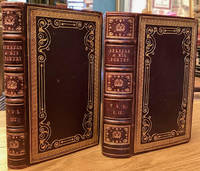
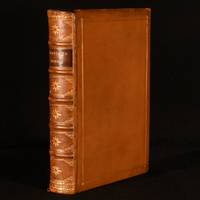
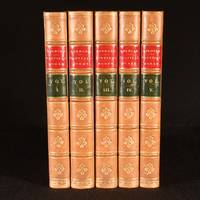
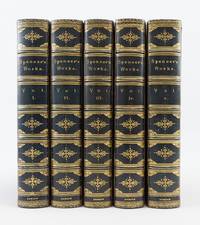
1862ST19567-034London: Bell and Daldy 1862. 229 x 152 mm. 9 x 6". Five volumes. Edited by John Payne Collier. <br/> VERY ATTRACTIVE DEEP BLUE PEBBLE-GRAIN MOROCCO HANDSOMELY GILT covers with frames of one dogtooth and three plain rules raised bands spines in antique-style compartments with delicate scrolling cornerpieces and intricate central fleuron surrounded by small tools densely gilt floral turn-ins marbled endpapers all edges gilt. With frontispiece portrait of Spenser in volume I. Front pastedown with armorial bookplate of Herbert Lionel Bashford M. A. Dibon Lodge Godalming. See: Day "History of English Literature to 1660" pp. 187-89. Spines just a shade darker than covers a couple covers with a slightly blotchy appearance due to leather preservative but quite an attractive set in generally fine condition the text fresh and bright and the leather lustrous.<br/> <br/> The first modern English poet to achieve major stature Spenser ca. 1552-99 in Day's words demonstrated "with his fluency in many meters and stanzaic forms . . . that English was at least the equal to any other language as a vehicle of great poetry." While his poems particularly "The Faerie Queene" look backward as the culmination of the allegorical verse tradition of the Pearl Poet Langland and Chaucer he has influenced with "his fertile imagination and especially his sensuous imagery and melodic language" nearly every important English poet who followed him. Day DNB praises Collier's "Spenser" first published in 1862 as "an excellent edition with the completest life of the poet that had as yet appeared." Despite his great knowledge and love of early English authors Collier 1789-1883 suffered a certain diminished respect because of his propensity for textual fabrication. This was true particularly in the case of the notorious "Perkins folio" supposedly containing an early copy of Shakespeare's works with superior variant readings which turned out to be forged. Britannica comments that these "fabrications . . . may charitably . . . be attributed to literary monomania but . . . it is difficult to speak with patience of them so completely did they for a long time bewilder the chronology of Shakespeare's writings." Apart from its important content this set is quite lovely on the shelf. The bindings are unsigned but they have the feel and appearance of work done by James Hayday 1796-1872 one of the most prominent and productive English binders of the 19th century. The present set is typical of Hayday's decorative work for a large market using high quality leather and being liberal with gilt embellishment. Bell and Daldy unknown
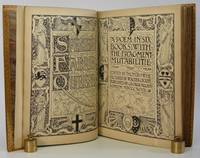
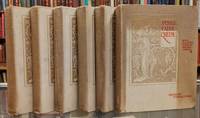
1897206378London: George Allen 1897. Rear cover of the final volume detached hinges tender; some surface scratches; spines faded a shade. A very handsome set. Six volumes. 4tos; lxxxvii 1-248 18 viii 251-527 13 viii 529-805 13 viii 807-1044 12 viii 1045-1274 16 viii 1277-1546 24; full polished tree calf gilt with exquisitely tooled spines with red and tan leather labels marbled endpapers; t.e.g. One of 1000 unnumbered copies on handmade paper printed by Charles Whittingham & Co. at the Chiswick Press this copy has been beautifully bound in the Riviere style by H.S. Nichols. One of the high-water marks of Art & Crafts book design this was Walter Crane's last major commission and one of his most fully executed and highly prized publications featuring 88 full-page illustrations along with head and tailpieces devices and initials throughout. The set was issued in parts between 1894 and 1897 and the original title pages and publisher's devices are bound in at the rear of each volume of this set. n.b. this is a heavy multi-volume set and will require additional shipping charges. George Allen unknown
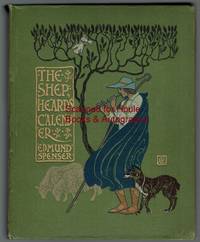
18981717First American edition. Octavo. 12 full-page b/w illustrations text borders pictorial endpapers and cover designs by Walter Crane. Original pictorial green cloth with color illustrations on spine and both covers top edge stained green uncut joints cracked. No dust jacket. Good. <br /><br />Ink inscription of the first preliminary page: "Abbie Burr from Clara F. Palmer." Harper hardcover
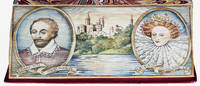
1863TK0408London:: Routledge Warne and Routledge 1863. 1863. 8vo. lx 562 pp. Engraved portrait frontispiece of Spenser pictorial half-title of Kilcolman Castle Ireland index. Original full red blind- and gilt-stamped morocco raised bands all edges gilt marbled endsheets – supper cover heraldic tile in gilt "OXON: MAG: AUL: UNIV: COLL:" Magdalen College Oxford; rubbed. With a fore-edge painting with oval portraits of Edmund Spenser and Queen Elizabeth yellow-gold border around each oval their names painted on a banner-ribbon – in the distance stands a massive turreted castle set within a forest a river in front. / No bookseller's markings erased – but clearly from Harrington's. Painted approximately in the period of 1990-2010. Routledge, Warne, and Routledge, 1863. hardcover
188943130London 1889. EDITED FROM THE BEST EDITIONS. WITH MEMOIR NOTES AND GLOSSARY. 8vo. xxvi 413pp. FROM THE LIBRARY OF W.G. GRACE jun. SIGNED INSCRIBED AND DATED BY HIM on the half-title: 'W.G. Grace Xmas 1890'. W.G. Grace jun. 1874-1905 played for Gloucestershire between 1893 and 1898 for Cambridge University between 1894 and 1896 and for London County between 1900 and 1903. He was son of the famous Gloucestershire and England cricketer and died at an early age after an appendicitis operation. A volume in the 'Chandos Classics' series. unknown
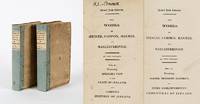
180931943AB1809. First Hibernia Press Edition in the year 1809 of the original 1633-Edition. Two Volumes complete set. Dublin Printed by the Society of Stationers / Reprinted at the Hibernia Press for the Proprietors by John Morrison 1809. Large Octavo. Pagination: Volume I: 2 22 4 pages including the rare engraved dedication-leaf with allegorical vignette for the "Dublin Society" showing the Irish Harp etc. 10 266 8 204 pages plus one errata-leaf / Volume II: 4 410 II 32 pages. Hardcover / Original 19th century publisher's binding. Now professionally restored by a professional bookbinder. Very good condition with only minor signs of wear. Binding with some staining. Deckled edges. Name of pre-owner H.L.Conner. to both title-pages. hardcover
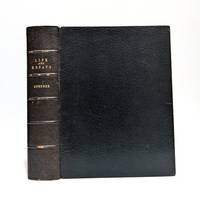
1882648787Printed for the Spenser Society 1882. First Edition. Leather Binding. Near Fine. Beautifully bound in full black crushed Levant morocco by Blackwell's of Oxford spine with raised bands and gilt titling gilt-tooled inner dentelles all edges gilt marbled endpapers slight wear. There is no outward indication that this work is part of a set. Volume I only of a projected 9 volumes of which only 8 were issued this volume including the 'Life' and essays by various scholars about Spenser's life and work. Only 100 copies were apparently issued. Printed for the Spenser Society unknown
188619726London: For Private Circulation 1886. Hardcover. Good overall. A memorial vanity printing consisting of Burns' correspondence with his parents regarding his travels and exploration in America Australasia and Africa signed by his parents. Burns visited New Zealand and Australia between March and December of 1881. The majority of the letters pertain to his experience in Africa; these begin in 1883 and continue to 1885. Edward Spenser Burns 1861 - 1885 died on an expedition in the Congo at Stanley Pool at the age of 24 Proceedings of the Royal Geographical Society Annual Address June 8 1885. Burns was on the mission to the Congo for the International African Association opening up a new route towards the Kouilou-Niari River. His father a noted British temperance activist and minister assembled his son's correspondence and wrote the explanatory text in this memorial. <br /> <br /> Burns spent two years and 20 pp on his time in New Zealand from 1879 to 1881. He states that on his arrival there was a depression and there were no openings anywhere. He states there is a great deal of drinking in NZ visits the New Zealand Alps and has memories of a NZ Christmas. His time in New South Wales is shorter but covers 15pp writing about his droving a mob of horses some 300 miles to make money and visiting Newcastle Tamworth the Rivers Darling & Barwon Goondi Homebush & Sydney. One copy listed on Trove Lib Aus ID 44683907 at the State Library of NSW.<br /> <br /> The International African Association was established at the Brussels Geographic Conference in 1876 and was conceived of as a multi European nation scientific and humanitarian group meant to explore central Africa. It rapidly devolved into separately organized nationalized expeditions bent on African land acquisition. Henry M. Stanley worked secretly at this time for Leopold of Belgium to organize the Congo as a state; the French explorer de Brazza claimed the western Congo basin for the French; and Great Britain and Portugal cooperated to block access to the Atlantic. <br /> <br /> Young Edward Burns had just been named the Chief of Grantville which was the principal Station of the International Association in the Kwilu district. Burns' letters record many of his encounters with Henry Stanley including this one written from the "station of Isangila River Congo Sept 21 1884: "Stanley has had often a great difficulty with idiots to deal with and he told me himself that had he only had a few good English men and not a useless mixture of Belgians Swedes Germans Italians and Americans he could have done four times what he has towards the opening up of the Congo. If only this thing was under English management it would be very different! but the Belgian management in Brussels is something frightful". p195. Stanley wrote a letter of condolence to Burns' father included here.<br /> <br /> Small 8vo 240pp. Cream gilt cloth covers marked spine darkened. Libraries Australia ID<br /> 44683907. OCLC: 154556857 lists the Turnbull Library holding a copy. Not in Ferguson. For Private Circulation hardcover
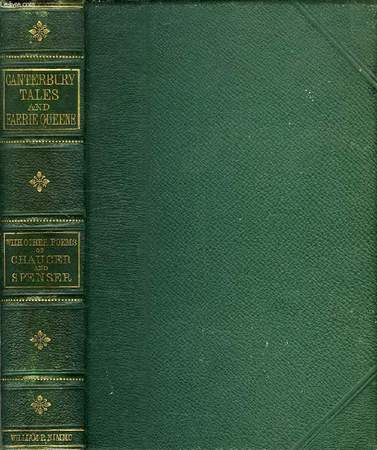
1870RO40111448William P. Nimmo, Edinburgh. 1870. In-8. Relié. Bon état, Couv. convenable, Dos frotté, Quelques rousseurs. 624 pages. Gravures en noir et blanc en frontispices et en page de titre. Auteurs, titres, fleurons, cadres et roulettes dorés sur le dos. Tranche de tête dorée. Texte encadré, sur 2 colonnes. Annotations d'époque (1871) à la plume en page de garde. Feuillets de la 2e moitié de l'ouvrage jaunis.. . . . Classification Dewey : 420-Langue anglaise. Anglo-saxon
1889RO60071488W. P. Nimmo, Hay, & Mitchell, Edinburgh. 1889. In-8. Relié. Bon état, Couv. légèrement passée, Dos satisfaisant, Intérieur frais. 616 pages. Gravures en noir et blanc en frontispice et en page de titre. Titre, fleurons, roulettes et filets dorés sur le dos. Tranche de tête dorée. Mors droit très légèrement fendu.. . . . Classification Dewey : 420-Langue anglaise. Anglo-saxon
1870174<p>Green boards with gilt titles and tooling to spine.</p><p>Very well preserved for its age with some minor wear to the top of the spine and pale staining to front and rear boards.</p><p>Top edge of the page block is gilt.</p><p>Contemporary inscription"To Thos Middleton my most valued friend from Thos Kenworthy".</p><p>Engraving of Chaucer to the frontispiece decorative title page and engraving of Spenser at the start of the Faerie Queene.</p><p>624 pages with a 16-page catalogue of Nimmo publications dated November 1869</p> Nimmo hardcover
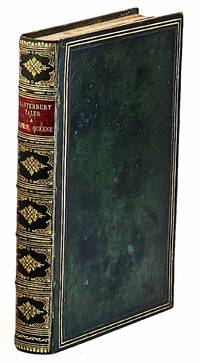
1874103370Edinburgh: William P. Nimmo. 1874. 1st thus royal octavo full leather binding spine decorated in gilt with red spine title label all edges gilt gilt decorated edges marbled endpapers pp viii 616. Engraved author portraits of Chaucer and Spenser. Tipped-in photo postcard of Canterbury Cathedral. Tipped-in reproduction illustration Jacomb-Hood etching illustrating the Farie Queene. Gift inscription 1877. Previous owner's bookplate of British historian A.W. Searley to front paste-down. Very good condition. Chaucer and Spenser "Edited for Popular Perusal with Current Illustrative and Explanatory Notes". Double-column text with Purves's notes at the foot of the page bound in full leather. 1st thus. Leather. William P. Nimmo hardcover
184576255London: Charles Knight & Co. 1845. 12mo. 3 volumes in 2. 252 266 pp; 252 pp. Full brown morrocco with gilt lettering and raised bands to the spines and gilt decoration to the spines and boards. All edges gilt. Some rubbing at the spines and edges. Missing p.3/4 of volume II bound in the first volume. Ink ownership inscriptions to the prelims of both volumes. With the bookseller's label of 19th century publisher and bookseller Charles Westerton to the front pastedown of volume 1. The works of 16th century poet Edmund Spenser containing both his first major work the Shepherd's Calendar and his celebrated epic poem The Fairie Queen written in honour of Queen Elizabeth and the Tudor dynasty. Craik's commentary provides a extensive biographical and literary insight into the life and works - both lost and known - of one of England's most influential poets. . Very Good. Gilt-decorated Morocco. 1845. Charles Knight & Co. 1845 unknown
18981717New York Harper 1898. 1898. First American edition. 8vo. 12 full-page b/w illustrations text borders pictorial endpapers and cover designs by Walter Crane. Original pictorial green cloth with color illustrations on spine and both covers top edge stained green uncut joints cracked. Very good. Ink inscription of the first preliminary page: "Abbie Burr from Clara F. Palmer.". Signed by Authors. F. Hardcover. New York, Harper, 1898. hardcover books
1899099650London England: Lawrence and Bullen 1899. Hardcover. First Edition. From Cromwell to Wellington: Twelve Soldiers. Foxing to end inside covers. Previous owners name to inside cover. Ticks in margin in pencil to a couple of pages. Corners of cloth worn. Sunned spine and fading to cloth With age boards. Few marks to cloth. Red cloth with gilt lettering. Contents: Cromwell. Marlborough. Peterborough. Wolfe. Clive. Coote. Heathfield. Abercromby. Lake. Baird. Moore. Wellington. Plans of Battles and Sieges. Sketches to Illustrate Campaigns. Illustrated. 508 pp. Hand cut pages. We carry a wide selection of titles in The Arts Theology History Politics Social and Physical Sciences. Academic and Scholarly books and Modern First Editions and all types of Educational Reference Literature. . First Edition. Cloth. Good/No Jacket. 8vo - over 7¾" - 9¾" Tall Octavo. Hardback. Lawrence and Bullen Hardcover
1877987G22London : George Routledge and Sons 1877. Leather. Very Good Indeed. 9.5" by 6.5". Not Stated. A smart volume containing the works of the premier craftsmen of nascent Modern English verse Edmund Spenser with a frontispiece and vignette title page. The new edition of the work.In full brown calf binding with a decorative spine marbled fore edge and endpapers. Includes a portrait frontispiece and a vignette title page.This volume contains the works of English poet Edmund Spenser best known for The Faeire Queene. Spenser is recognized as one of the premier craftsmen of nascent Modern English verse and he is considered one of the great poets in the English languageWith a selection of notes from various commentators and a glossarial index with some account of the life of Spenser by Rev. Henry John Todd. In full calf. Externally very smart. Shelf wear to extremities with calf cracking to the head and tail of the spine. Slight rubbing to joints. Previous owner's book plate to front paste down. Internally firmly bound. Pages are bright and clean with some spotting to the front and rear. Ink inscription to first blank. Very Good Indeed George Routledge and Sons hardcover
1897102598George Allen 1897. Hardcover. Very good/No jacket. Walter Crane. The original 19 parts published between 1894 through 1896 with illustrations by Walter Crane bound into six volumes with the original wraps. Limited to 1000 copies. Bound in white cloth covers are darkened in places with a couple water stained on the spine though no damage seen on the text block. George Allen hardcover
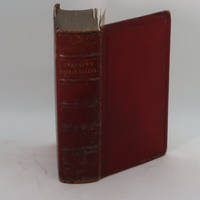
1859FB197 /Str shlf<p>Red leather binding with gilt lettering and raised banding on the spine. All edges gilt.</p><p>This book also has "Epithalamion" added. <strong><em>The Faery Queene</em></strong> is an English epic poem by Edmund Spenser. Books I–III were first published in 1590 then republished in 1596 together with books IV–VI. <em>The Faerie Queene</em> is notable for its form: at over 36000 lines and over 4000 stanzas it is one of the longest poems in the English language; it is also the work in which Spenser invented the verse form known as the Spenserian stanza. On a literal level the poem follows several knights as a means to examine different virtues and though the text is primarily an allegorical work it can be read on several levels of allegory including as praise or later criticism of Queen Elizabeth I. In Spenser's "Letter of the Authors" he states that the entire epic poem is "cloudily enwrapped in Allegorical devices" and that the aim of publishing <em>The Faerie Queene</em> was to "fashion a gentleman or noble person in virtuous and gentle discipline". Spenser presented the first three books of <em>The Faerie Queene</em> to Elizabeth I in 1589 probably sponsored by Sir Walter Raleigh. The poem was a clear effort to gain court favour and as a reward Elizabeth granted Spenser a pension for life amounting to £50 a year though there is no further evidence that Elizabeth I ever read any of the poem. This royal patronage elevated the poem to a level of success that made it Spenser's defining work. <strong>Edmund Spenser</strong> 1552/1553 – 13 January 1599 was an English poet best known for <em>The Faerie Queene</em> an epic poem and fantastical allegory celebrating the Tudor dynasty and Elizabeth I. He is recognized as one of the premier craftsmen of nascent Modern English verse and is often considered one of the greatest poets in the English language. Though Spenser was well-read in classical literature scholars have noted that his poetry does not rehash tradition but rather is distinctly his. This individuality may have resulted to some extent from a lack of comprehension of the classics. Spenser strove to emulate such ancient Roman poets as Virgil and Ovid whom he studied during his schooling but many of his best-known works are notably divergent from those of his predecessors. The language of his poetry is purposely archaic reminiscent of earlier works such as <em>The Canterbury Tales</em> of Geoffrey Chaucer and <em>Il Canzoniere</em> of Francesco Petrarca whom Spenser greatly admired. An Anglican and a devotee of the Protestant Queen Elizabeth Spenser was particularly offended by the anti-Elizabethan propaganda that some Catholics circulated. Like most Protestants near the time of the Reformation Spenser saw a Catholic church full of corruption and he determined that it was not only the wrong religion but the anti-religion. This sentiment is an important backdrop for the battles of <em>The Faerie Queene</em>. Spenser was called "the Poet's Poet" by Charles Lamb and was admired by John Milton William Blake William Wordsworth John Keats Lord Byron Alfred Tennyson and others. Among his contemporaries Walter Raleigh wrote a commendatory poem to <em>The Faerie Queene</em> in 1590 in which he claims to admire and value Spenser's work more so than any other in the English language. John Milton in his <em>Areopagitica</em> mentions "our sage and serious poet Spenser whom I dare be known to think a better teacher than Scotus or Aquinas". In the eighteenth century Alexander Pope compared Spenser to "a mistress whose faults we see but love her with them all."</p> Routedge Warnes. hardcover
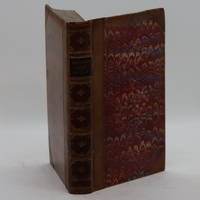
1868FB940 /str shlf<p>Tan calf binding with red and blue marbled boards. Black title plate with gilt lettering banding and decoration on the spine. From the Chandos Classics Library published circa 1868<strong>.</strong></p><p><strong><em>The Faery Queene</em></strong> is an English epic poem by Edmund Spenser. Books I–III were first published in 1590 then republished in 1596 together with books IV–VI. <em>The Faerie Queene</em> is notable for its form: at over 36000 lines and over 4000 stanzas it is one of the longest poems in the English language; it is also the work in which Spenser invented the verse form known as the Spenserian stanza. On a literal level the poem follows several knights as a means to examine different virtues and though the text is primarily an allegorical work it can be read on several levels of allegory including as praise or later criticism of Queen Elizabeth I. In Spenser's "Letter of the Authors" he states that the entire epic poem is "cloudily enwrapped in Allegorical devices" and that the aim of publishing <em>The Faerie Queene</em> was to "fashion a gentleman or noble person in virtuous and gentle discipline". Spenser presented the first three books of <em>The Faerie Queene</em> to Elizabeth I in 1589 probably sponsored by Sir Walter Raleigh. The poem was a clear effort to gain court favour and as a reward Elizabeth granted Spenser a pension for life amounting to £50 a year though there is no further evidence that Elizabeth I ever read any of the poem. This royal patronage elevated the poem to a level of success that made it Spenser's defining work.</p><p><strong>Edmund Spenser</strong> 1552/1553 – 13 January 1599 was an English poet best known for <em>The Faerie Queene</em> an epic poem and fantastical allegory celebrating the Tudor dynasty and Elizabeth I. He is recognized as one of the premier craftsmen of nascent Modern English verse and is often considered one of the greatest poets in the English language. Though Spenser was well-read in classical literature scholars have noted that his poetry does not rehash tradition but rather is distinctly his. This individuality may have resulted to some extent from a lack of comprehension of the classics. Spenser strove to emulate such ancient Roman poets as Virgil and Ovid whom he studied during his schooling but many of his best-known works are notably divergent from those of his predecessors. The language of his poetry is purposely archaic reminiscent of earlier works such as <em>The Canterbury Tales</em> of Geoffrey Chaucer and <em>Il Canzoniere</em> of Francesco Petrarca whom Spenser greatly admired. An Anglican and a devotee of the Protestant Queen Elizabeth Spenser was particularly offended by the anti-Elizabethan propaganda that some Catholics circulated. Like most Protestants near the time of the Reformation Spenser saw a Catholic church full of corruption and he determined that it was not only the wrong religion but the anti-religion. This sentiment is an important backdrop for the battles of <em>The Faerie Queene</em>. Spenser was called "the Poet's Poet" by Charles Lamb and was admired by John Milton William Blake William Wordsworth John Keats Lord Byron Alfred Tennyson and others. Among his contemporaries Walter Raleigh wrote a commendatory poem to <em>The Faerie Queene</em> in 1590 in which he claims to admire and value Spenser's work more so than any other in the English language. John Milton in his <em>Areopagitica</em> mentions "our sage and serious poet Spenser whom I dare be known to think a better teacher than Scotus or Aquinas". In the eighteenth century Alexander Pope compared Spenser to "a mistress whose faults we see but love her with them all."</p> Frederick Warne & Co. hardcover
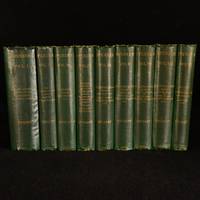
1844864N58-: Printed for Private Circulation 1844-1884. First edition. Cloth. Good Only. 8" by 5". None. A privately printed set of the complete works of Edmund Spenser. With illustrations and a biographical introduction to the sixteenth century poet. A privately printed set of the complete works of Edmund Spenser with an autobiographical introduction by the literary editor Alexander Grossart. With four illustrations to volume I collated but Hamerton's Woodcuts and the facsimile called for. With three illustrations to volume III collated but lacking frontispiece. With two illustrations to volume V collated and complete. Only 150 copies of this set were printed for private circulation only. Complete in nine volumes. Whilst the title pages in the set state ten volumes the final book was not published. Grossart provides a detailed biographical introduction to the sixteenth century poet in the first volume which is followed by Spenser's first major work The Shepheardes Calendar. This is followed by Complaints his collection of poems that mournfully or mockingly express the poet's grievances and his narrative elegy for the heiress Douglas Howar Daphnaida. Spenser's celebrates the Tudor dynasty in allegorical poem The Faerie Queen which can be found in volumes five to seven followed by a collection of his letters. The prior owner's pencil inscription can be found to the half title or the recto of the front endpaper of the volumes 'S. B. M. In a full green cloth binding. Externally generally smart. Bumped to the head and the tail of the spines with some closed tears to each across the set. Lightly bumped to the extremities. The front hinge has failed to volumes I and IX and the rear hinge has failed to volume IV but the spines have been re-adhered to all three volumes. Both hinges are starting but firm to volume II the front hinge is starting to volume VII and the rear hinges is starting but firm to volumes V and IX. Internally the binding is strained to volumes I IV and IX with the front endpaper disbound to the latter volume. Otherwise the volumes are generally firmly bound. Pages are bright and clean across the set. Good Only Printed for Private Circulation hardcover
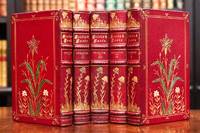
19001041London: British Literary Society 1900. Extra Illustrated Edition of the Aldine Poets Limited to Ten Numbered and Registered Copies of Which This Is No. 4. Publishers Fine Leather Bindings. Near Fine. A complete five volume set in near fine condition beautifully bound in publishers full leather inlaid Morocco bindings with bright gilt floral patterns to covers and spine. Leather inlaid doublures silk end pages bright gilt page edges pages are bright and clean without marks and no foxing. illustrated with color plates. Limited edition #4 of 10. No publication date stated - circa 1900. A stunning example in excellent condition. Near Fine. British Literary Society unknown
1897038763London: Archibald Constable 1897. 1st Edition. Hardcover. Near Fine/No Dust Jacket. small octavo. pp All complete. 1st printing. Books I and II published 1897. Book III 1898 Book IV 1899 Book V 1898 and Book VI 1900. All block embossed presented by Archibald Constable to title page except Vol III which stamped file copy Archibald Constable to reply. An excellent set. Archibald Constable hardcover
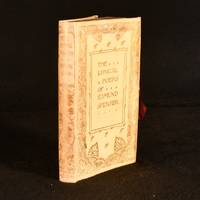
1894916Z34London: J. M. Dent & Co. 1894. Leather. Very Good Indeed. 6" by 4". None stated. A collection of poetry by Edmund Spenser bound in a decorative vellum binding with yapp edges. A collection of poetry by Edmund Spenser. Bound in full decorative vellum with gilt details to the front and spine with Yapp edges and ribbons. Illustrated with a monochrome frontispiece portrait and an engraved title page. This work features a collection of lyrical poetry by the English poet Edmund Spenser best known for his epic poem 'The Faerie Queene'. The volume attempts to showcase Spenser's other poetical works which the editor Ernest Rhys believes to be overlooked such as 'The Shepheardes Calendar'.Undated dated by copies held institutionally. Bound in full vellum. Ribbon detached to the rear board. Externally smart with discolouration to the rear handling marks and some sunning to the spine. Internally firmly bound with bright and clean pages. Very Good Indeed J. M. Dent & Co. hardcover
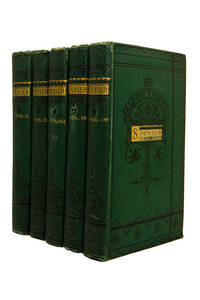
1888MD27096George Bell & Sons 1888. Hardback. Very good condition. No dust jackets. Some sunning. Cover of Volume II has some humidity stains. Overall in very good condition. . In Five Volumes Complete Volume I includes The Life of Spenser by J. Payne Collier George Bell & Sons hardcover
1859955F21DEdinburgh: James Nichol 1859 . Leather. Fine. 9" by 6". None. A complete five volume set of the poetical works of Edmund Spenser in attractive half calf bindings by C. Cross binder to Queen Victoria. Complete in five volumes.In half calf bindings with the binder's stamp 'C. Cross Binder to the Queen' to each volume.Elizabethan poet Edmund Spenser is best known for his epic poem and fantastical allegory 'The Faerie Queene' a work which celebrates the Tudor dynasty and Elizabeth I. 'The Shepheardes Calendar' was Spenser's first major work it emulates Virgil's 'Eclogues'. Both of these works are present in this collection which also includes many of Spenser's minor poems including hymns 'Colin Clout's Come home Again' and 'Amoretti or Sonnets'. Including a memoir of Spenser and also critical dissertations by the Reverend George Gilfillan. George Gilfillan was a spasmodic poet who also edited the works of several British poets. In half calf signed bindings with marbled paper covered boards. Externally excellent with back strips just a touch age toned and instances of minor rubbing to back strip heads. Internally firmly bound. Pages clean and bright. Fine James Nichol hardcover