783 résultats
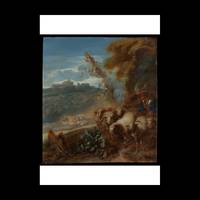
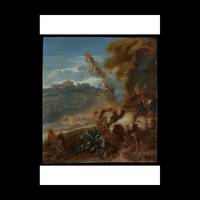
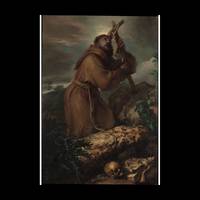
338782Contentum Ltd. Loose sheet. New. High-quality art print based on an original work from the Met. Created in the 17th century ca. 1650. Professionally printed on premium fine-art paper Photo Rag Bright White premium quality in size A2. The artwork is printed with a white border museum-style presentation. Contentum Ltd. unknown
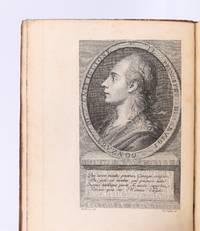
177791097n. l.: s. n. 1777. Fine. s. n. n. l. Lu à la Royal Society de Londres 1777 18.1 x 22.9 cm Relié An intriguing first edition complete with its engraved frontispiece of the author by Giovanni Volpato after Domenico Corvi and its introductory poem by the Abbé Luigi Godard. A copy unrecorded in non-European libraries according to WorldCat. Contemporary binding of fawn mottled calf smooth spine divided into five gilt compartments by gilt rolls brown morocco lettering-piece triple gilt fillet framing the boards double gilt fillet on the board edges blue speckled edges and shell-pattern marbled pastedowns and endpapers. The lower cap lacking some surface wear to the spine and corners the upper joint slightly split for several centimetres a few discreet wormholes and small areas of loss to the leather on the boards light rubbing to the edges; the interior in very good condition. A marginal tear to p. 51 very slightly affecting the text and a marginal stain to p. 47. The spirit of the Enlightenment is vividly reflected in this essay on the achievements of the human mind by an enlightened princethe last descendant of the cadet branch of the Gonzaga dynastywho sold his lands in exchange for an annual life annuity; an eloquent writer and admirer of English and French philosophers notably Montesquieu whom he cites repeatedly in this volume; and very much a libertine of his age the lover of the poet Maria Maddalena Morelli. s. n. hardcover
177791097s. n. | s. l. [Lu à la Royal Society de Londres, 1777] | 18.1 x 22.9 cm | Relié
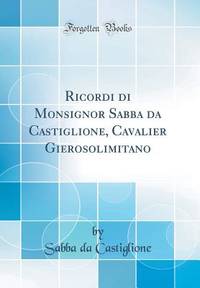
cm 17 x 24, x-496 pp. con 16 figg. n.t. e 54 tavv. f.t. di cui 6 a col. Biblioteca dell'?Archivum Romanicum? - Serie I: Storia, Letteratura, Paleografia Figura poliedrica di religioso, acceso difensore dell?ortodossia cattolica nei confronti della Riforma luterana, ebbe interessi umanistici e antiquari. Oltre che amante delle arti, fra Sabba fu anche un raffinato collezionista e bibliofilo e artefice dei restauri e ampliamenti della Commenda faentina. L?opera per cui ? maggiormente noto sono i suoi Ricordi ovvero ammaestramenti, insieme di precetti rivolti ai cavalieri cristiani del suo tempo, che, dal 1546 al 1613, ebbe venticinque edizioni. This versatile religious figure, fervid defender of Catholic orthodoxy in confrontation with the Lutheran Reform, had a great many humanistic and antiquarian interests. More than just a lover of arts Fra Sabba was also a keen collector and bibliophile responsible for the restoration and extension of Faenza?s Commenda. He is best known for his Ricordi, a compilation of teachings, rules and precepts addressed to Christian gentlemen of his time which went through twenty-five editions from 1546 to 1613. 1060 gr. x-496 p.
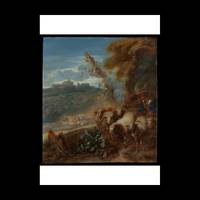
355092Contentum Ltd. Loose sheet. New. High-quality art print based on an original work from the Met. Created in the 17th century late 1640s. Professionally printed on premium fine-art paper Photo Rag 308 in size A2. The artwork is printed with a white border museum-style presentation. Contentum Ltd. unknown
355093Contentum Ltd. Loose sheet. New. High-quality art print based on an original work from the Met. Created in the 17th century late 1640s. Professionally printed on premium fine-art paper Photo Rag Bright White premium quality in size A2. The artwork is printed with a white border museum-style presentation. Contentum Ltd. unknown
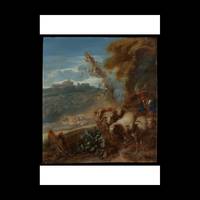
355094Contentum Ltd. Loose sheet. New. High-quality art print based on an original work from the Met. Created in the 17th century late 1640s. Professionally printed on premium fine-art paper Museum Etching museum quality in size A2. The artwork is printed with a white border museum-style presentation. Contentum Ltd. unknown
355091Contentum Ltd. Loose sheet. New. High-quality art print based on an original work from the Met. Created in the 17th century late 1640s. Professionally printed on premium fine-art paper Museum Etching museum quality in size A3. The artwork is printed with a white border museum-style presentation. Contentum Ltd. unknown
In 16, pp. 516 + (2). Danni al d. rip. M.pl. coeva con tit. e fregi in oro al d. Romanzo storico di impronta byroniana in cui si narra la storia di un pirata che vive per vendicare il supplizio inferto a suo tempo al padre. Finira' sul patibolo non prima di essere riuscito a vendicarsi dell'ammiraglio veneziano Marcello. L'autore si rifa' a un'ideologia nettamente conservatrice, negli anni del diffondersi del Romanticismo anche nella cultura meridionale, tentando un'egemonizzazione in chiave clericale del movimento risorgimentale.
Mm 165x225 Collana "La Civiltà Europea" fondata da Giovanni Gentile - Opera pubblicata tra il 1961 ed il 1965. Quattrro volumi di XLII - 1750 pagine complessive nella loro brossura editoiale muta con uniforme sovraccoperta a stampa in due colori. Opera mai frequentata con pagine ancora intonse. Leggere, sporadiche fioriture ai tagli che non compromettono in alcun modo il testo. Spedizione in 24 ore dalla conferma dell'ordine.
In 8° (31,5x21); (1), 98, pp. e 12 grandi carte più volte ripiegate. Brossura editoriale con titolo in nero al piatto anteriore. Copia dattiloscritta. Prima rarissima edizione, nessun esemplare censito in ICCU, di questo importantissimo testo, basilare per la comprensione della strategia bellica italiana nel periodo post Prima Guerra Mondiale. Questa pubblicazione era riservata, stampata in pochissime copie e distribuita solo agli ufficiali più alti dell'esercito italiano e della milizia Fascista. L'opera descrive minuziosamente le caratteristiche di alcuni teatri di guerra. Le carte fuori testo riguardano: Fascio operativo del piccolo S. Bernardo tratto in territorio italiano (2); la Valle D'Aosta fra Ivrea e Castiglione Dora; la Valle D'Aosta da Castiglione Dora a Sarre; la Valle D'Aosta fra Sarre e S. Desiderio Terme; il solco a mezzogiorno del Monte Bianco - la Valle D'Aosta da S. Desiderio Terme al confine; il bacino del Buthier e la Valtornenza (2); Fascio operativo del piccolo S. Bernardo tratto in territorio francese (4); Esemplare inbuone-ottime condizioni di conservazione, rarissimo.
17,7x11,3 cm; (4), XXIX, (1), 494, (2) pp. Legatura in mezza pelle con autore, titolo e fregi in oro al dorso. Piatti foderati con carta marmorizzata coeva. Dono dell'autore al noto letterato ed Arciprete di Castiglione de Pepoli che scrisse diversi studi storici dedicati a Castiglione, Fusignano, Giuseppe Fignagnani. Il volume contiene numerosissime note manoscritto dello stesso Fignagani e tre sue pagine manoscritte di commento all'opera, poste in fondo al volume. Prima edizione, non comune, di quest'opera filosofica del noto sacerdote, originario di Sassoferrato, Ubadlo Baldini che fu insigne professore di filosofia apprezzato da numerosi letterati dell'ottocento. Il volume che si presenta in buone-ottime condizioni di conseervazione, presenta in fondo al volume 4 pagine fittamente chiosate da mano coeva a commento dell'opera ad opera del curato di Imperia, Raffaele Biale. In fondo al commento, chiosato a mano dallo stesso Giuseppe Fignagnani, al recto del piatto posteriore, segue una nota autografa nel quale il noto , letteratro si dissocia dalla note ponendo in calce, il suo autografo.
in-8, pp. 21, bross. edit. [488]
155475<p>4to 214x152 mm. 8 135 1 leaves. Collation: 4 †4 a-z4 A-L4. With the large woodcut portrait of the author on the title page and the printer's device on last leaf verso. Contemporary limp vellum inked title on the spine and lower edge remnants of ties new endpapers small stains. On title page manuscript ownership's inscription Ballybay Library. Inner margin of the title page reinforced small holes to the gutter of the first two leaves with no loss of text small ink stain on the upper blank margin at the end of the volume otherwise a very good genuine copy.</p><p>FIRST COMPLETE EDITION. First published in Bologna in 1546 containing only seventy-two chapters the <i>Ricordi</i> appeared in an enlarged edition in 1549 124 chapters also in Bologna. The present definitive edition containing 133 'ricordi' was edited by Zaccaria Bellenghi Fra Sabba's chaplain in Faenza shortly after the latter's death. The work became very popular and between 1546 and 1613 twenty-five editions were published.</p><p>In the present edition is also found for the first time the title woodcut showing Fra Sabba in his study. Ugo Rozzo <i>Lo studiolo nella silografia italiana 1479-1558</i> Udine 1998 pp. 90 114 deems this frontispiece to be remarkable for the mid-sixteenth century both for its Hospitaller imagery and its display of books within the study. The woodcut is emblematic of Sabba's monastic life conducted within the Order's parameters of social utility. He presents an iconographic image of the devout humanist knight who prefers the tranquility of his Commenda to the bustle of the city see also D. Thornton <i>The Scholar in his Study: Ownership and Experience in Renaissance Italy</i> New Haven CT 1997 pp. 106-114.</p><p>The work consists of two series of "avvertimenti" advices each closely related to Castiglione's initial idea of providing to his grandnephew Bartolomeo Righi useful hints on how to become a perfect knight Hospitaller but its numerous printings in the sixteenth century and its breadth of scope suggest a wider target audience. The other 'ricordi' were developed into true small treatises or essays that Castiglione expanded and augmented in every new edition. Despite not having a wide-ranging extent nevertheless they present a considerable interest especially when compared to the works of contemporaries on the same topics i.e. the life of a courtier the government of a city the prince and the tyrant men of arms and religion marriage how to decorate a house clothes food and drink physical exercise travel etc. But included were also his life in Faenza his political aspirations linguistic experiments ideas on religious reform. Geopolitical issues of the day are vigorously engaged and farcical passages replete with colloquial phrasing appear alongside passionate theological discourse expressing a strident anti-Lutheran viewpoint cf. C. Scarpati <i>Per il testo dei 'Ricordi'</i> in: "Studi sul Cinquecento italiano" Milano 1982 pp. 68-82; see also D.F. Allen <i>The Hospitaller Castiglione's Catholic Synthesis of Warfare Learning and Lay Piety on the Eve of the Council of Trent</i> in: "The Hospitallers the Mediterranean and Europe: Festschrift for Anthony Luttrell" K. Borchardt & al. eds. London 2016 pp. 286-298.</p><p>The <i>Ricordi</i> is also very interesting from the point of view of art history and criticism showing Fra Sabba's antiquarian efforts for Isabella d'Este his admiration for Dürer's prints and the artists he had known at Rome e.g. Gian Cristoforo Romano Bramante Raphael Cristoforo Foppa 'Il Caradosso' the San Gallo family just to mention a few cf. M. Collareta <i>Il mondi dell'arte dei 'Ricordi' di Fra Sabba</i> in: "Sabba da Castiglione 1480-1554. Dalle corti rinascimentali alls Commenda di Faenza. Atti del Covegno Faenza 19-20 maggio 2000" A.R. Gentilini ed. Florence 2004 pp. 297-312.</p><p>At the end of the volume is reprinted another work by Fra Sabba the <i>Consolatoria</i> written during his stay at Rhodes November 25 1517. This consolatory epistle addressed to the Milanese poet Camilla Scarampi for the death of her husband Ambrogio Guidoboni. This letter was published at Bologna in 1529. From the dedication dated March 15 1527 to Giacomo Guicciardini vice-president of Romagna we learn that Fra Sabba had submitted the work in the last ten years to Niccolò Machiavelli and Panfilo Sassi asking them if they considered it worthy of being published M.C. Tarsi <i>Una poetessa nella Milano di primo Cinquecento Samilla Scarampi</i> in: "Giornale storico della letteratura italiana" 192/639 2015 pp. 414-451.</p><p>Sabba da Castiglione was an instance of the self-fashioned courtier-knight of the later Renaissance who combines an unusual set of roles: Hospitaller commander canon regular art collector courtier poet and preceptor of knightly rules. He was born in Milan around 1480 where he also became his first. education. He pursued post-secondary studies at the University of Padua studying jurisprudence from about 1500 to late spring 1505 but did not finish his legal education. After a brief stay in Mantua in 1505 at the age of 25 he decided to join the Order of the Knights of Jerusalem later called Knights of Malta of which he soon became Deputy Attorney General. He lived in Rhodes until 1508 then moved to Rome where he sojourned seven years as legal aide-de-camp to the admiral of the Order of the Knights Hospitaller and later Grand Master Fabrizio del Carretto cultivating his interest in the arts and literature. In Rome he also met his cousin Baldassare Castiglione author of Il <i>Cortegiano</i>. Fra Sabba was a passionate forerunner of archaeology and during his stay on the Aegean Sea he was able to procure several ancient marble pieces to Isabella d'Este in Mantua. In 1515 at the age of thirty-five Fra Sabba became a Hospitaller commander accepting a post previously held by his friend Giulio de' Medici the future Pope Clement VII. He took up residence at the Order's Commenda or commandery a district headquarters similar to a feudal estate in Faenza Romagna part of the Papal States. He accepted this post to better dedicate himself to the studies he loved so much away from mundane affairs the intrigues of courts and military life. His residence in Faenza was the Church of Commenda Saint Mary Magdalene also called 'Magione' dating back to the XII century. It was not in good conditions when Fra Sabba came. This was due to the fact that previous commanders had not chosen the complex of the Commenda as their own living place employing their revenues for other purposes. In 1533 Fra Sabba entrusted Girolamo da Treviso with the task to embellish the church with a fresco portraying the 'Enthroned Madonna between Saint Mary Magdalene and Saint Catherine of Alexandria'. Another work of art of great importance accomplished in the year of his death is the one painted by Francesco Menzocchi from Forlì: a monochrome fresco depicting him as an old man presented by Saint Joseph to the Virgin. Underneath this image lies Fra Sabba's sepulchre with a Latin epigraph composed by himself. His interests as a man of study and collector gave birth to a library unfortunately lost and to a collection of pieces of art whose surviving items are to be seen in the Pinacoteca Comunale of Faenza F. Petrucci <i>Sabba da Castiglione</i> in: "Dizionario biografico degli italiani" 22 1978 pp. 100-106.</p>Edit 16 CNCE 10159; Universal STC 819593; Index Aureliensis 133.665; R.M. Bell <i>How To Do It. Guides to Good Living for Renaissance Italians</i> Chicago IL 1999 p. 337; C. Scarpati <i>op. cit.</i> p. 89. Paolo Gherardo books
0484737929.Ghardcover. Good. Access codes and supplements are not guaranteed with used items. May be an ex-library book. hardcover
155475<p>4to 214x152 mm. 8 135 1 leaves. Collation: 4 †4 a-z4 A-L4. With the large woodcut portrait of the author on the title page and the printer's device on last leaf verso. Contemporary limp vellum inked title on the spine and lower edge remnants of ties new endpapers small stains. On title page manuscript ownership's inscription Ballybay Library. Inner margin of the title page reinforced small holes to the gutter of the first two leaves with no loss of text small ink stain on the upper blank margin at the end of the volume otherwise a very good genuine copy.</p><p>FIRST COMPLETE EDITION. First published in Bologna in 1546 containing only seventy-two chapters the <em>Ricordi</em> appeared in an enlarged edition in 1549 124 chapters also in Bologna. The present definitive edition containing 133 'ricordi' was edited by Zaccaria Bellenghi Fra Sabba's chaplain in Faenza shortly after the latter's death. The work became very popular and between 1546 and 1613 twenty-five editions were published.</p><p>In the present edition is also found for the first time the title woodcut showing Fra Sabba in his study. Ugo Rozzo <em>Lo studiolo nella silografia italiana 1479-1558</em> Udine 1998 pp. 90 114 deems this frontispiece to be remarkable for the mid-sixteenth century both for its Hospitaller imagery and its display of books within the study. The woodcut is emblematic of Sabba's monastic life conducted within the Order's parameters of social utility. He presents an iconographic image of the devout humanist knight who prefers the tranquility of his Commenda to the bustle of the city see also D. Thornton <em>The Scholar in his Study: Ownership and Experience in Renaissance Italy</em> New Haven CT 1997 pp. 106-114.</p><p>The work consists of two series of "avvertimenti" advices each closely related to Castiglione's initial idea of providing to his grandnephew Bartolomeo Righi useful hints on how to become a perfect knight Hospitaller but its numerous printings in the sixteenth century and its breadth of scope suggest a wider target audience. The other 'ricordi' were developed into true small treatises or essays that Castiglione expanded and augmented in every new edition. Despite not having a wide-ranging extent nevertheless they present a considerable interest especially when compared to the works of contemporaries on the same topics i.e. the life of a courtier the government of a city the prince and the tyrant men of arms and religion marriage how to decorate a house clothes food and drink physical exercise travel etc. But included were also his life in Faenza his political aspirations linguistic experiments ideas on religious reform. Geopolitical issues of the day are vigorously engaged and farcical passages replete with colloquial phrasing appear alongside passionate theological discourse expressing a strident anti-Lutheran viewpoint cf. C. Scarpati <em>Per il testo dei 'Ricordi'</em> in: "Studi sul Cinquecento italiano" Milano 1982 pp. 68-82; see also D.F. Allen <em>The Hospitaller Castiglione's Catholic Synthesis of Warfare Learning and Lay Piety on the Eve of the Council of Trent</em> in: "The Hospitallers the Mediterranean and Europe: Festschrift for Anthony Luttrell" K. Borchardt & al. eds. London 2016 pp. 286-298.</p><p>The <em>Ricordi</em> is also very interesting from the point of view of art history and criticism showing Fra Sabba's antiquarian efforts for Isabella d'Este his admiration for Dürer's prints and the artists he had known at Rome e.g. Gian Cristoforo Romano Bramante Raphael Cristoforo Foppa 'Il Caradosso' the San Gallo family just to mention a few cf. M. Collareta <em>Il mondi dell'arte dei 'Ricordi' di Fra Sabba</em> in: "Sabba da Castiglione 1480-1554. Dalle corti rinascimentali alls Commenda di Faenza. Atti del Covegno Faenza 19-20 maggio 2000" A.R. Gentilini ed. Florence 2004 pp. 297-312.</p><p>At the end of the volume is reprinted another work by Fra Sabba the <em>Consolatoria</em> written during his stay at Rhodes November 25 1517. This consolatory epistle addressed to the Milanese poet Camilla Scarampi for the death of her husband Ambrogio Guidoboni. This letter was published at Bologna in 1529. From the dedication dated March 15 1527 to Giacomo Guicciardini vice-president of Romagna we learn that Fra Sabba had submitted the work in the last ten years to Niccolò Machiavelli and Panfilo Sassi asking them if they considered it worthy of being published M.C. Tarsi <em>Una poetessa nella Milano di primo Cinquecento Samilla Scarampi</em> in: "Giornale storico della letteratura italiana" 192/639 2015 pp. 414-451.</p><p>Sabba da Castiglione was an instance of the self-fashioned courtier-knight of the later Renaissance who combines an unusual set of roles: Hospitaller commander canon regular art collector courtier poet and preceptor of knightly rules. He was born in Milan around 1480 where he also became his first. education. He pursued post-secondary studies at the University of Padua studying jurisprudence from about 1500 to late spring 1505 but did not finish his legal education. After a brief stay in Mantua in 1505 at the age of 25 he decided to join the Order of the Knights of Jerusalem later called Knights of Malta of which he soon became Deputy Attorney General. He lived in Rhodes until 1508 then moved to Rome where he sojourned seven years as legal aide-de-camp to the admiral of the Order of the Knights Hospitaller and later Grand Master Fabrizio del Carretto cultivating his interest in the arts and literature. In Rome he also met his cousin Baldassare Castiglione author of Il <em>Cortegiano</em>. Fra Sabba was a passionate forerunner of archaeology and during his stay on the Aegean Sea he was able to procure several ancient marble pieces to Isabella d'Este in Mantua. In 1515 at the age of thirty-five Fra Sabba became a Hospitaller commander accepting a post previously held by his friend Giulio de' Medici the future Pope Clement VII. He took up residence at the Order's Commenda or commandery a district headquarters similar to a feudal estate in Faenza Romagna part of the Papal States. He accepted this post to better dedicate himself to the studies he loved so much away from mundane affairs the intrigues of courts and military life. His residence in Faenza was the Church of Commenda Saint Mary Magdalene also called 'Magione' dating back to the XII century. It was not in good conditions when Fra Sabba came. This was due to the fact that previous commanders had not chosen the complex of the Commenda as their own living place employing their revenues for other purposes. In 1533 Fra Sabba entrusted Girolamo da Treviso with the task to embellish the church with a fresco portraying the 'Enthroned Madonna between Saint Mary Magdalene and Saint Catherine of Alexandria'. Another work of art of great importance accomplished in the year of his death is the one painted by Francesco Menzocchi from Forlì: a monochrome fresco depicting him as an old man presented by Saint Joseph to the Virgin. Underneath this image lies Fra Sabba's sepulchre with a Latin epigraph composed by himself. His interests as a man of study and collector gave birth to a library unfortunately lost and to a collection of pieces of art whose surviving items are to be seen in the Pinacoteca Comunale of Faenza F. Petrucci <em>Sabba da Castiglione</em> in: "Dizionario biografico degli italiani" 22 1978 pp. 100-106.</p><p>Edit 16 CNCE 10159; Universal STC 819593; Index Aureliensis 133.665; R.M. Bell <em>How To Do It. Guides to Good Living for Renaissance Italians</em> Chicago IL 1999 p. 337; C. Scarpati <em>op. cit.</em> p. 89.</p> Paolo Gherardo
0364089482.Gpaperback. Good. Access codes and supplements are not guaranteed with used items. May be an ex-library book. paperback
0364919027.Ghardcover. Good. Access codes and supplements are not guaranteed with used items. May be an ex-library book. hardcover
0428774091.Ghardcover. Good. Access codes and supplements are not guaranteed with used items. May be an ex-library book. hardcover
Bologna, Marsigli, 1810, foglio a stampa ("Relazione") di cm. 23,5 x 15, posto in cornice di legno con passepartout e vetro (cm. 37 x 28)
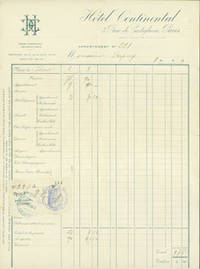
63-8191Paris: Hotel Continental 1913. 30 x 22.5 cm. Single Page. Hand-written receipt on Hotel Continental letterhead. Good with marginal tears. En Francais. Hotel Continental was the original name for what would later become the Westin Paris Vendome. Paris: Hotel Continental, 1913. unknown
S.d.t. ma in fine: Napoli, 30 ott.1738.<BR> 4°, pp.(22) 2 bb. Memoria legale di una complicata causa per l'eredità della signora Nicola per "l'erezzione de' Benefizj": "Ella vicino a morte nell'anno 1735 fe l'ultimo suo nuncupativo testamento a 12 agosto, per mano di notar Giuseppe Bocciarelli della città di Atri e come che contratto avea sponsali con Giuseppe Tranquillo della terra di Castiglione suo concittadino, istituì erede il medesimo, per non aver altri a sé più congonti, ed ingiunse allo stesso ciò che di suffragi per la sua anima bramava..."(p.3). La causa fu agitata da altri presunti eredi.
1470975092.Ghardcover. Good. Access codes and supplements are not guaranteed with used items. May be an ex-library book. hardcover