28 785 résultats
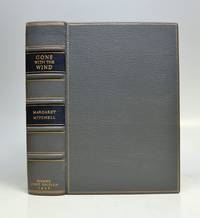
1936282730New York: Macmillan 1936. First. hardcover. fine. Thick 8vo re-bound in gray leather with black spine labels lettered in gilt. N.Y.: Macmillan 1936. First Edition.<br/><br/> Published in May 1936. Autographed by Mitchell with a 1936 ownership inscription.<br/><br/> Macmillan unknown books
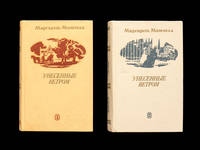
26<p><strong>This is a very rare first hardcover edition of Margaret Mitchell's Gone with the Wind Russian: УнеÑённые ветром published in 1982 by the Khudozhestvennaya Literatura Russian: ХудожеÑÑ‚Ð²ÐµÐ½Ð½Ð°Ñ Ð›Ð¸Ñ‚ÐµÑ€Ð°Ñ‚ÑƒÑ€Ð° publishing house in two volumes: the first volume was translated by Tatyana Ozerskaya Russian: ТатьÑна ОзерÑÐºÐ°Ñ the second by Tatyana Kudryavtseva Russian: ТатьÑна КудрÑвцева. A total of 10000 copies were printed which is a very small circulation for the USSR with its multi-million copies.</strong></p> Khudozhestvennaya Literatura hardcover
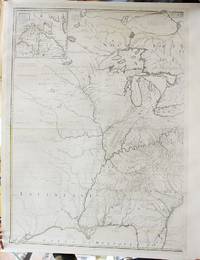
1770M10905Paris c.1770. Very Good backed on linen for long term preservation. Notes: French edition of Mitchell's map of the Central and Southern part of North America. It lacks the Eastern part.<br>The map was used for every treaty and boundary dispute from the French & Indian War until the end of the 19th Century. This example was published by the French cartographer Georges Le Rouge. Size : 1300x950 mm 51.18x37.40 Inches Coloring: Original Outline Coloring Category: Maps United States; unknown
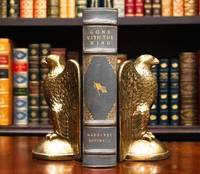
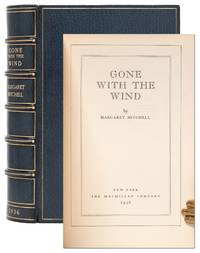
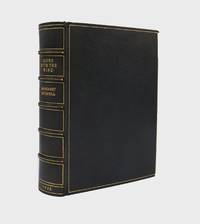
1936890New York: The Macmillan Company 1936. First Edition First Issue. Fine Leather Binding. Near Fine. A near fine example beautifully bound in 3/4 leather. Faint amount of rubbing to extremities. Binding and hinges are excellent pages are remarkably bright and clean no marks or writing no foxing. Book measures 8.75"x6". First Edition First Issue published May 1936. A stunning example scarce in leather. The Macmillan Company unknown
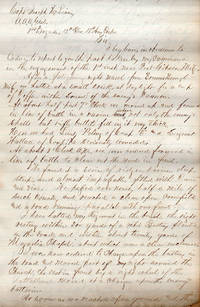
5491In the field Port Gibson Mississippi May 1863. 4to 8" x 12" lightly lined sheets fastened together at top. 33 pp. of manuscript. <p>A compelling brigade battlefield report composed in the immediate wake of the Battle of Port Gibson Mississippi 1 May '63 an assault that set the stage for Grant's pivotal siege of Vicksburg; the eight reports of Army of the Tennessee regiments and batteries chronicle extensive combat; the capture of Confederate colors; the taking of hundreds of rebel prisoners and guns; casualties and more.</p> <br /> <br /> <p>Likely transcribed by a regimental brigade clerk this fascinating document comprises highly detailed reports submitted by regimental and battery commanders with a prefatory brigade report by Brig. Gen. George F. McGinnis 1826-1910 Commander of the 1st Brig. 12th Div. 13th Army Corps of the Army of the Tennessee. Included here are the official reports for each of the following regimental battery commands: the 11th 24th 34th and 46th Indiana; the 2nd and 16th Ohio; and the 29th Wisconsin. All reports record combat and provide accounts of the participation of these regiments and batteries in the Battle of Port Gibson. Commanders whose companies endured serious casualties append lists of the killed and wounded and often record the specific nature of injuries.</p> <br /> <br /> <p>The seven regimental reports were written by the following commanders: Col. Dan Macauley 11th Indiana Inf.; Col. Wm. J. Splicely 24th Ind. Inf. Vols.; Col. R. H. Cameron 34th Ind. Inf. AKA "Morton Rifles"; Col. Chas. R. Gill 29th Regiment Wis. Inf.; Capt. James A. Mitchell 16th Ohio Inf.; Col. Thos. H. Bringhims 46th Ind. Inf.; Lieut. Aug. Beach 2nd Ohio Bat.</p> <br /> <br /> <p>The Battle of Port Gibson-in which the Union prevailed-was fought near Port Gibson Mississippi during Grant's Vicksburg Campaign. On 30 April '63 the Army of the Tennessee-composed of the 13th and 17th Corps-crossed the Mississippi River at Bruinsbur some thirty miles south of Vicksburg. Grant sought to move east toward the capital at Jackson Mississippi to prevent the Rebel Army commanded by Gen. Joseph E. Johnston from reinforcing Vicksburg. Port Gibson-ten miles east of Bruinsburg on the Bayou Pierre River-was the best route of approach and thus became the Union's primary target.</p> <br /> <br /> <p>Intense fighting broke out around midnight on 1 May when Union forces came upon Rebel Maj. Gen. John Bowen's men in the brush around Port Gibson. After a brief cessation the battle continued again at dawn. The fighting continued for the majority of the day as multiple Confederate lines suffered under the weight of the Union assault. After a rebel counterattack was thwarted in the late afternoon the Confederate forces retreated for good. 131 of Grant's men were killed and 719 were wounded of the 23000 engaged; 60 Confederate men-including Gen. Edward Tracy-were killed and 340 were wounded of some 8000 engaged. While Grant lost more men his victory enabled his army to secure a foothold on Mississippi soil.</p> <br /> <br /> <p>In turn Grant launched his campaign deeper into the interior of the state and started moving his army inland and eastward towards Jackson without resistance. Revealing the Confederate's inability to defend the line of the Mississippi River the Union victory forced the Confederate evacuation of Grand Gulf precipitating the fall of Vicksburg. "Local lore has it that Union forces marching through Mississippi spared the town of Port Gibson from the torch because it was too beautiful to burn" American Battlefield Trust.</p> <br /> <br /> <br /> <p>SOME REPRESENTATIVE PASSAGES:</p> <br /> <br /> <p>May 6 1863; Brig. Gen. George F. McGinnis "The balance of my brigade moved rapidly to the front and were soon within range of a rebel battery supported by a brigade of Infantry.a fearfully destructive fire was poured upon them that Col. Cameron very properly and with much coolness and judgment halted his command and protected them from the enemy's fire behind the brow of the hill.the 11th Ind. which had been in reserve moved to the front in double quick.the gunners and horses were shot down and the brigade in support turned their backs upon us and fled in confusion from the field. The result of this gallant dart.was the capture of the two twelve pounder Howitzers three Caissons three wagons loaded with ammunition three stand of colors several horses and over two hundred prisoners."</p> <br /> <br /> <p>Col. Dan Macauley 11th Ind. Inf. "My command was immediately ordered forward to support the 2nd .took up a position in the ravine and on the brow of the hill and opened fire upon the enemy. At this point the conflict was terrific and was kept up without any intermission whatever for an hour and thirty-seven minutes when the enemy finding that they could not drive us from our position retreated in dismay and made no further resistance on that part of the field. During this last engagement I received information that the rebels."</p> <br /> <br /> <p>"The 24th Ind. and 29th Wisconsin stood the brunt of this engagement occupying the front and most dangerous position. It was here that their heaviest loss occurred owing to the nature of the ground on which they moved.The expressions of admiration in which the two batteries were handled the precision and rapidity with which they were fired were frequent and well deserved. Officers and men are entitled to much praise."</p> <br /> <br /> <p>"I cannot refrain however from special mention of the 29th Wisconsin not that they fought longer or more gallantly than others; not that are more brave or better disciplined but that it is a new Regiment and this was the first time that they had been engaged with an enemy or that any of their men had even been under fire. They fought like veterans and suffered severely as their report of casual this will show."</p> <br /> <br /> <p>"A deep ravine choked by an almost impassable canebrake and undergrowth was before no through which with great exertion we succeeded in forcing our way. there was stationed a rebel battery supported by a heavy force of infantry."</p> <br /> <br /> <p>Col. Wm. J. Splicely 24th Ind. Inf. Vols. "At about daylight on the morning of May 1st 1863. Here we formed in line stacked arms and commenced breakfast. At about 7 O'clock A.M. while eating our whole line was assailed by a terrific shower of shot & shell from the enemy's batteries. Our line was soon formed.we moved rapidly over the hills and ravines and dense thickets of cane vines and underbrush."</p> <br /> <br /> <p>"We moved forward at double quick time formed in line in a deep gulch or ravine & were soon engaged with the enemy.The battle at this point raged fiercely for one hour & a half; my men standing up like veterans under this terrific fire the whole of that time. Here it was that I lost most of the killed & wounded of my command. About 3 o'clock PM the enemy gave way and left us in possession of the field."</p> <br /> <br /> <p>Col. R. H. Cameron 34th Ind. Inf. "After a fatiguing night march from Brewers Borough Mississippi. we halted at a small creek at daylight for a cup of coffee within sound of the enemy's cannon.we moved up and formed in line of battle in a ravine where not only the enemy's shells but rifle bullets fell in it very thick. Here we had Lieut. Poling of Comp. "E" and Sergeant Hallace of Comp. "H" seriously wounded."</p> <br /> <br /> <p>"After a hot fire for fifteen minutes the 11th Ind. came to our relief and both Regiments advanced with a shout upon the rebel guns.At this point it was impossible to distinguish the 11th Ind. from my own regiment except by their uniform as they were indiscriminately mixed with each other and the enemy."</p> <br /> <br /> <p>Col. Chas. R. Gill 29th Reg. Wis. Inf. "The well directed fire from my Reg. prevented the advance of this part of his line one foot. I produced fearful slaughter in the enemies ranks.I take great pleasure and pride in informing you that although he position of the regiment was a trying one being unexpectedly attached & so situated that it could not change position to advantage no man flinched-all faced the enemy bravely while their comrades fell dead & wounded at their sides.The night before the battle the Reg. had marched all night with knapsacks four days rations in harisacks & one hundred rounds of ammunition to each man."</p> <br /> <br /> <p>Capt. James A. Mitchell 16th Ohio Inf. "In front of the Battery the enemy appeared in large numbers in the bushy field beyond the ravine.-Formed Battery & commenced firing immediately with what effect could not be seen as the enemy were concealed in the grass & bushes. From this point about a mile to the east on a high hill commanding a full view of the field was what appeared to be the enemy's post of observation or Head Quarters."</p> <br /> <br /> <p>"During the action up to about 4 P.M. when the enemy disappeared from the Battery's front the men were exposed to a brisk fire from the enemy's sharpshooters said to be posted in the trees-although the gun carriages were struck several times by rifle balls yet strange enough none of the men or horses were injured."</p> <br /> <br /> <p>A rich compilation of reports composed in the immediate aftermath of the Battle of Port Gibson.</p> <br /> <br /> <p>REFERENCES: American Battlefield Trust. May 1 1863 The Battle of Port Gibson and Port Gibson at battlefields.org</p> <br /> <br /> <p>CONDITION: Short tears some staining and soiling mainly on the first and final few pp.; last leaf frayed along bottom edge; contents generally quite clean formerly rolled up a few missing letters to a few pp.</p> In the field, Port Gibson, Mississippi, May 1863 unknown
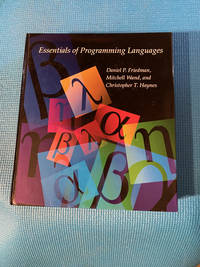
19922649<p><strong>Essentials of Programming Languages First Edition Association Copy</strong></p><p><strong>Daniel P. Friedman; Mitchell Wand; Christopher T. Haynes</strong> Cambridge MA: MIT Press 1992 ISBN: 0262061457 / 9780262061452 Hardcover</p><p><strong>Description</strong></p><p>The first edition of <em>Essentials of Programming Languages</em> EOPL is one of the most influential textbooks in the formal study of programming languages. Written by Daniel P. Friedman Mitchell Wand and Christopher T. Haynes the book provides a rigorous introduction to:</p><ul><li><p><strong>operational semantics</strong></p></li><li><p><strong>continuations and control structures</strong></p></li><li><p><strong>interpreters and abstract machines</strong></p></li><li><p><strong>type systems and program analysis</strong></p></li><li><p><strong>functional and logic programming foundations</strong></p></li></ul><p>The 1992 MIT Press hardcover is the true first printing preceding later revised editions that reshaped the text. Early printings in strong condition are increasingly scarce.</p><p><strong>Association Copy Significance</strong></p><p>Your copy contains a <strong>signed dated inscription from Daniel P. Friedman to Hassan Aït‑Kaci</strong> making it a <strong>primary‑source artifact</strong> linking two major contributors to programming language theory and computational logic.</p><p>This matters because:</p><ul><li><p>Friedman is a foundational figure in <strong>Scheme</strong> <strong>continuations</strong> and <strong>semantics</strong>.</p></li><li><p>Aït‑Kaci is a foundational figure in <strong>logic programming</strong> <strong>type systems</strong> and <strong>computational semantics</strong>.</p></li><li><p>Association copies between major researchers in the same field are <strong>highly prized by archives and institutional buyers</strong>.</p></li><li><p>The inscription documents a <strong>direct intellectual relationship</strong> between the authors and Aït‑Kaci.</p></li><li><p>This elevates the book from a standard collectible to a <strong>research‑grade provenance item</strong>.</p></li></ul><p>In institutional terms this is the kind of copy that becomes the <strong>centerpiece</strong> of a programming‑languages archive.</p> Cambridge, MA: MIT Press hardcover
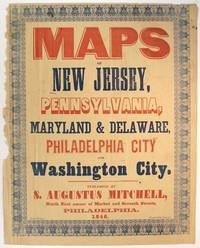
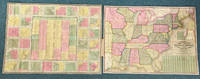
184660347Philadelphia: Evans printer Fourth below Chestnut 1846. Folio broadside approx. 17½" x 13¾" printed in red and blue with wood and metal type and within an ornate typographic border printed in blue. Left-hand margin slightly ragged but not touching the border; the whole slightly toned but on the whole very good. Purchased as a broadside in fact this is likely the upper wrapper of Mitchell's Maps of New Jersey Pennsylvania Maryland & Delaware Philadelphia City and Washington City five color maps issued together in 1846. Whether this colorful setting of type was used as a commercial advertisement beyond the obvious display on the wrapper is uncertain. Phillips List of Geographical Atlases in the Library of Congress 3692. Evans, printer, Fourth below Chestnut unknown
1935355490720525London: Grayson 1935. First Edition. Hard Cover. Dust Jacket. London: Grayson & Grayson 1935. First UK Edition. Publisher's black boards with gilt spine lettering. Red top edge. The book is in very good condition. 287 pages. Contents are complete clean and tight. Attractive bookplate M W F Cottrill to the front paste-down. Text block edges are a little dusty. No other marks or inscriptions. Black boards are exceptionally clean and bright. In a supplied D/W that has benefited from some skilful restoration to a piece missing from the base of the spine including reinstatement of the publisher's logo and now shows as a VG D/W. Superb front cover illustration. An exceedingly rare book. A nice copy. Photographs/scans available upon request. Grayson hardcover
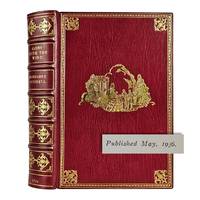
1936335 - 307 - 471<p><em>First printing bound by Asprey of London in full crimson morocco</em></p><p><strong>Publisher and Year</strong>: New York: The Macmillan Company 1936</p><p><strong>Edition</strong>: First edition first printing "Published May 1936" with no other dates. Finely rebound in the traditional English style.</p><p><strong>Condition and Description</strong>: Octavo bound in full crimson morocco leather elaborately stamped in gilt with dentelles to the turn-ins and silk moiré endleaves. "Asprey" stamped in gilt to the lower front pastedown. The front board features a gilt recreation of the iconic plantation vignette used on the design of the first edition dust jacket. The gilt remains gleaming the leather supple and the binding tight. Trace wear and handling marks to the boards and to the edges of the text block. A striking copy of Mitchell's classic.</p><p><em>"Perhaps - I want the old days back again and they'll never come back and I am haunted by the memory of them and of the world falling about my ears."</em></p><p>Inventory ID: 335 - 307 - 471</p> The Macmillan Company hardcover
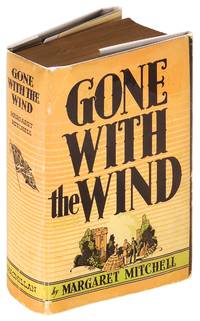
1936548823New York: Macmillan 1936. Hardcover. Very Good/Very Good. First edition first issue in first issue dust jacket. Very good or better with a hint of toning at the rear pastedown and foxing to the edges of the boards particularly the topedge in about very good price-clipped dust jacket with some rubbing and moderage edgewear including small tears nicks and creases at the extremities. A presentable copy of the Pulitzer Prize-winning novel that helped both to cement the legend of the "Old South" and subtly subvert it at the same time. One of the most famous and popular American novels of the 20th Century and basis for the Oscar-winning 1939 film adaptation. Macmillan hardcover
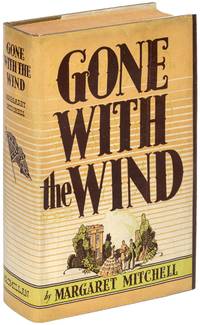
193636661New York: Macmillan Company 1936. Hardcover. Very Good/Very Good. Hardcover. First Edition First State with "published May 1936" on the copyright page. A lovely copy of this classic work in the original dust jacket. "The stirring drama of the Civil War and Reconstruction is brought vividly to life in this really magnificent novel" jacket. Bound in grey cloth boards with dark blue title to spine and front board. Gentle bumping and light rubbing to corners. A few short closed tears to the book cloth along the spine ends. Offsetting to endpapers and light even browning to interior. Small spot of soiling to top margin of first few pages and occasional finger smudges to margins else clean and bright. In illustrated first edition first issue dust jacket with dark brown title to spine and front panels. The price of $3.00 is printed on the bottom corner of the front flap and the rear panel of Macmillan Spring Novels features "Gone with the Wind" in the second column in the second position underneath "South Riding." There are a few chips to the edges of the jacket creases wear and several long closed tears along the edges of both panels and across the spine. The jacket is protected from further damage with a removable mylar cover but has not been taped or repaired in any way. 1037 pages. LIT/071223. Macmillan Company hardcover
1936WRCLIT54197New York: Macmillan 1936. Thick octavo. Gray cloth lettered in blue. Spine extremities worn and bumped with 2cm creased snag at crown of spine usual slight tanning to endsheets but internally a very good copy. First edition first "May 1936" printing. Inscribed and signed by Mitchell on the front free endsheet: "For Charles J. Trenkle Margaret Mitchell" and with the recipient's bookplate on the front pastedown. A modest albeit inscribed and signed copy suitable for craft binding in stars and bars perhaps as seems to have become fashionable. "The book that lives on and on decried by the devotees of higher criticism scorned by the intellectuals and loved by the public. It was awarded a Pulitzer Prize in 1937" - Harwell. WILLINGHAM & HARWELL 120. IN TALL COTTON 125. Macmillan hardcover books
1846WRCAM39939Philadelphia: S. Augustus Mitchell 1846. 46pp. plus large folding map 25 x 34 1/4 inches with full period color. 16mo. Original blindstamped and gilt blue morocco with original clasp. Morocco a bit rubbed and edgeworn. Map with two closed tears in left edge where bound in with no loss; small closed tear along Iowa-Missouri border with no loss. The text is very clean. In very good condition the map with brilliant contemporary color. Second edition after the first of 1843 of this rare pocket map of North America showing the United States west to Texas Indian Territory and Dakota Territory i.e. 19° longitude west of Washington D.C. The map J.H. Young's "Mitchell's National Map of the American Republic or the United States of North America" is revised and updated from the 1843 version most notably by the addition of the newly created Territory of Iowa. The inset map of Texas is new to this 1846 edition and dates from the first year of statehood still showing Texas with its Republic boundaries. The Oregon inset is also new and shows the Oregon border going north into Canada i.e. before the 1846 treaty boundaries. There are also two population tables and the text lists the major railroad steamboat and stage routes all the way west to Iowa Wisconsin and Missouri. The four insets are: "Map of the North-Eastern boundary of the United States According to the Treaty of 1842" "Map of the Southern part of Florida" "Map of Oregon Territory" and "Map of the State of Texas." These four insets take the place of the thirty-two small inset maps of cities and town from the 1843 version of the map. Rumsey lists only the wall map version of this 1846 map. OCLC locates eight copies of this important pocket map. RISTOW p.310. OCLC 228693421 8551053. RUMSEY 3796 ref. S. Augustus Mitchell unknown books
184631381Philadelphia: S. Augustus Mitchell 1846. 16mo. 46pp. plus large folding map 25 x 34 1/4 inches with full period color. Original blindstamped and gilt purple morocco with original clasp. Morocco a bit rubbed and edgeworn. One significant tear from the left edge where bound in with no loss; several other noticeable separations along folds.<br/> <br/>Second edition after the first of 1843 of this rare pocket map of North America showing the United States west to Texas Indian Territory and Dakota Territory i.e. 19° longitude west of Washington D.C.<br/> <br/>The map J.H. Young's "Mitchell's National Map of the American Republic or the United States of North America" is revised and updated from the 1843 version most notably by the addition of the newly created Territory of Iowa. The inset map of Texas is new to this 1846 edition and dates from the first year of statehood still showing Texas with its Republic boundaries. The Oregon inset is also new and shows the Oregon border going north into Canada i.e. before the 1846 treaty boundaries. There are also two population tables and the text lists the major railroad steamboat and stage routes all the way west to Iowa Wisconsin and Missouri. The four insets are: "Map of the North-Eastern boundary of the United States According to the Treaty of 1842" "Map of the Southern part of Florida" "Map of Oregon Territory" and "Map of the State of Texas." These four insets take the place of the thirty-two small inset maps of cities and town from the 1843 version of the map. Rumsey lists only the wall map version of this 1846 map. OCLC locates eight copies of this important pocket map.<br/> <br/>OCLC 228693421 8551053; Ristow p.310; Rumsey 3796 ref. S. Augustus Mitchell unknown books
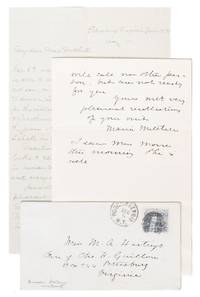
18707830Poughkeepsie NY & Petersburg VA 1870. Near Fine. This exceptional correspondence documents the esteemed astronomer Maria Mitchell 1818 - 1889 supporting the career of Troy Female Seminary science educator Mary Anne Hastings 1822 - 1906. Two ALS and an envelope: Maria Mitchell's letter dated December 6 1869 2 pp. on one sheet measuring 116 x 181 mm folded and her envelope measuring 132 x 73 mm addressed to Hastings and postmarked Poughkeepsie NY; and Mary A. Hastings' letter dated January 10 1870 1 p. measuring 133 x 205 mm. In Near Fine condition. Both letters with old folds and Mitchell's with a patch of toning but clean overall. Mitchell's letters are scarce in commerce and letters with significant content are rare: this correspondence is definitely significant evidencing Mitchell's connections with other women in the sciences and how those connections were essential for women's success in the strictly male-controlled scientific field of the nineteenth century.<br /> <br /> In 1869 Maria Mitchell was in the fifth year of her appointment as Professor of Astronomy and Directory of the Observatory at Vassar College in Poughkeepsie New York. She had already been an influential astronomer for over two decades: she discovered the comet C/1847 T1 "Miss Mitchell's Comet" in 1847; was "the only American woman to gain self-supporting scientific employment and international recognition" throughout the 1850s ANB; and had recently been elected to the American Philosophical Society only the third woman and the first American woman to gain membership. <br /> <br /> These two letters between Mitchell and Mary A. Hastings capture an instance of Mitchell advocating professionally for another prominent science educator. The letters refer to a meeting at Vassar between the two educators in which they discussed Hastings' potential employment at Swarthmore College: Hastings writes "Thank you very heartily for the interest you have taken in my going to Swarthmore" and "I am glad I met you for those pleasant hours in Vassar - I dare hardly tell you how precious they were to me." In her own letter Mitchell notes that she discussed Hastings in correspondence with Swarthmore President Edward Parrish 1822 - 1872: Mitchell forwards Parrish's response "Thy mention of Miss H. is noted. We still keep her in view" and explains "So it is as I supposed. They will call no other person but are not ready for you." Mitchell concludes her letter with well wishes for Hastings and a mention of her colleague Ann Eliza Morse "I saw Miss Morse this morning. She is well" the longtime assistant to Vassar's Lady Principal Hannah W. Lyman. <br /> <br /> Throughout her career Mitchell was dedicated to cultivating solidarity between professional women; an incident during her tenure at Vassar demonstrates how crucial that solidarity could be. Though Mitchell had already well earned her esteem as an astronomer and educator by the time she began working at the college she and her fellow educator Dr. Alida Avery realized that they were both being paid less than half the salary of their male counterparts Mitchell herself was being paid less than a third. Beginning in 1870 Mitchell and Dr. Avery became embroiled in a years-long battle with the administration eventually being granted a significant salary increase that still capped their pay below that of male professors. Mitchell later went on to help organize the Association for the Advancement of Women a precursor to the General Federation of Women's Clubs and was an ardent advocate for the acceptance of women in the sciences in particular; her "advocacy and influence" can be partially credited with bringing many women into the field as astronomical computers in the late nineteenth century ANB. <br /> <br /> By the time Hastings and Mitchell had their meeting at Vassar Hastings had been an educator for over twenty years primarily in mathematics and the sciences. The same year that Mitchell observed her comet Hastings had gained a teaching appointment at the Troy Female Seminary her alma mater where she "became one of the first women in America to offer laboratory lectures with experiments" University of Michigan. She later served as principal of the Female Seminary in Hamilton New York and held a teaching position at Ripley Female College in Vermont. At the time she wrote this letter she had left New England for Virginia then in the midst of Reconstruction; she observes in a nod to Mitchell's own abolitionist convictions: "I am learning how the world looks to educated people who have no belief in human rights or faith in human progress and every day I think God for New England." Though Hastings seemingly never found employment at Swarthmore she did return to New England to teach mathematics to the inaugural class of fifteen students at Smith College in 1875. <br /> <br /> Full transcripts of the letters are available upon request.<br /> <br /> "Maria Mitchell Determined Stargazer." American Philosophical Society September 13 2018. University of Michigan. "Finding Aid: Ruth Hastings papers 1852-1853."<br /> General Catalogue of the Officers and Graduates of Vassar College 1881. Vassar Encyclopedia "Maria Mitchell Salary Dispute." Near Fine. unknown
19367776New York: The Macmillan Company 1936. First edition. Fine. First printing with "May 1936" as the only date on the copyright page. Finely bound by the Chelsea Bindery in full blue crushed morocco all edges gilt deep burgundy endpapers. Internal contents are fresh and clean. <br /> <br /> Set in Georgia during the Civil War and Reconstruction the novel follows the fall of the South and its gentility as experienced by Scarlett O'Hara one of literature's most ruthlessly optimistic characters. More than a war story Gone With the Wind is a reflection on humanity and an unmatched portrayal of old Southern aristocracy. "Mitchell carefully analyzes the nature of human resilience and hold up hopefulness as the critical tool for getting through the worst of times" The Guardian. Popular from its release and an almost-immediate best-seller Gone With the Wind won the Pulitzer Prize the following year and would be transformed into one of the most iconic Hollywood golden-era films starring Vivien Leigh and Clark Gable. "This is beyond a doubt one of the most remarkable first novels produced by an American writer. It is also one of the best" contemporary New York Times review. Fine. The Macmillan Company unknown
18454885Philadelphia: S. Augustus Mitchell 1845. Copper-engraved wall map with full original colour expertly repaired backed with modern linen trimmed in green cloth on contemporary rollers with bright colour overall in very good condition. An impressive wall map of the United States from a crucial year in American history.<br/> <br/> In 1834 Mitchell republished his A New Map of the United States under the title of Reference and Distance Map. New updated editions appeared almost yearly. When compared to the 1833 edition of the former this 1845 edition of the Reference and Distance Map shows many new developments in the upper Midwest. The outline of Lake Michigan has undergone extensive corrections. An oversized Wisconsin Territory 1836 now appears. Two of the small insets of American towns have been removed from the upper left-hand corner so that the new oversized Territory of Iowa 1838 could be added. The large inset General Map of the United States now shows Texas in its last year as an independent Republic. An important American map showing the country on the eve of its second great national expansion.<br/> <br/> Rumsey 4223; Phillips Maps p. 898. S. Augustus Mitchell unknown
1936355490725460London: Michael Joseph 1936. First Edition. Hard Cover. Dust Jacket. First UK Edition in dustwrapper . Publisher's rust-brown boards with silver spine lettering. Boards exceptionally bright and clean. No inscriptions. Pale yellow patterned end-papers that show the shields of the dancers and the jingle to accompany their dance. Very light foxing to the fore-edge hardly worth mentioning otherwise a near fine copy in a complete dustwrapper that is in VG condition and priced 7/6 net to the inside flap as called for. There are several minor closed tears which have historically been neatly repaired on the verso with archival tape. The spine of the dustwrapper is faded from red to orange with creasing to the spine tips and several white marks thereto likely caused by rubbing. This is a nice example of an exceedingly uncommon book. The first of Gladys Mitchell's books to be published by Michael Joseph. Gladys Mitchell is one of the 'Big Three' female crime fiction writers from the Golden Age alongside Agatha Christie and Dorothy L. Sayers. Further photographs available upon request. Michael Joseph hardcover
184343311Philadelphia: Mitchell Publishing Company 1843 1843. First edition. 11 x 18.2 cm original roan folder with titles and decorations stamped in gold gilt on the front and rear covers. Contains a beautifully colored 61.8 x 85.7 cm of this brightly colored map and a 64 x 88 cm Sheet of Views with 32 regional inset maps. An exceptional example of this brightly colored map of what is today the Eastern portion of the United States. There is also a listing of states and population by classes white men white women male and female colored and the number that are slaves. A fine copy and a splendid production. Mitchell Publishing Company, 1843 unknown
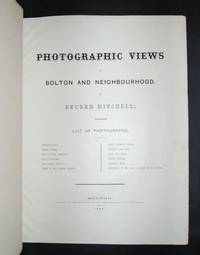
40163Bolton: Printed at the Old Post Office Bradshawgate by John Booth 1868. First edition large folio 486 x 375 mm 2 leaves of letterpress followed 12 albumen prints mounted on individual stiff card tinted mounts images 195 x 285 mm each accompanied by a descriptive leaf of letterpress and tissue guards some occasions spotting but images and text generally very clean original publishers half morocco gilt rebacked some light water-staining to both boards protruding to silk moire endpapers 'Photographic Views' stamped in gilt on upper cover. Mitchell 1810-1895 was a partner for many years in the firm of Jackson & Mitchell of the Albion Foundry Bolton. The images depict grand houses churches and a grammar school in the Bolton area. List of photographs: Smithhills Hall; Turton Tower; Viiew in the Jumbles; Hall I'-Th'-Wood; Old Parish Church; Porch of Old Parish Church; Free Grammar School; Worsley Old Hall; Peel Old Hall; Deane Church; Worsley Hall; Monument To The Late Countess Of Ellesmere. Not in Gernsheim or Grolier Club The Truthful Lens. JISC locating the the British Library and Manchester Metropolitan University copies only OCLC adds a single copy at the University of Arizona. Bolton: Printed at the Old Post Office, Bradshawgate, by John Booth, 1868 hardcover
19492060Atlanta Georgia: Margaret Mitchell in reaction to The Reader's Digest & The Atlanta Journal 1949. Original 3 pieces. Envelope. Very Good/Envelope Good. Autograph Letter Penned & Signed characteristically "M.M.M." Margaret Mitchell Marsh by the famed American Author on a Small Folio 8.5" x 14" page copied from "The Atlanta Journal" June 19 1949; <br/> <br/> with a marginal ink note in the left margin of "The Atlanta Journal" from the recipient Dr. Mayo docketed "July 5 - 1949"; <br/> <br/> accompanied by the original envelope addressed by Mitchell to "Dr. C.E. Mayos / 612 West 13 St. / Davenport / Iowa." stamp and partial postmark cut away leaving only "5 ATLA. Jul /10.19./ G; with Mitchell's return address on the envelope flap preprinted as: "1268 Piedmont Avenue N. E. / Apartment 3 / Atlanta 5 Georgia." Dr. Mayos has written on the envelope: "Letters from / Margaret Mitchell slight paper loss / Please save." <br/> <br/> plus a copy of the July1949 edition of "The Reader's Digest" containing a short entry under "Facts to the Contrary"page 18 in which contributor Clemmie R. Galloway pointed out a "discrepancy in time between the death of Melanie's husband in the Battle of Gettysburg July 1 1863 and the birth of her son during the siege of Atlanta September 3 1864." We offer Margaret Mitchell's irritated reaction to a late-blooming literary SCANDAL over whether RHETT Butler had been the REAL FATHER of Melanie's child <br/> <br/> Because of Mitchell's supposedly faulty internal chronology in Gone With The Wind some readers thought that Melanie's husband Ashley had died at Gettysburg during early July of 1863--more than a year before Melanie had borne a son during the siege of Atlanta on September 3rd 1864. <br/> <br/> As a consequence of this supposed mistake enthusiasts of the novel and its larger-than-life characters eagerly speculated that dashing Rhett had had a compromising affair with saintly Melanie during her husband's absence! <br/> <br/> In the July 1949 edition of "The Reader's Digest" contributor Clemmie R. Galloway published a small entry under "Facts to the Contrary" in which he accused Mitchell of a "discrepancy in time between the death of Melanie's husband in the Battle of Gettysburg July 1 1863 and the birth of her son during the siege of Atlanta September 3 1864." The entry was read by many! <br/> <br/> Galloway went on to say that "When the publisher called Margaret Mitchell's attention to the timing the author was silent for a moment; then she said 'Well I know the Yankees will never change the date of the Battle of Gettysburg and I'm certainly not going to change the date of the Battle of Atlanta.' The publisher moved uncomfortably in his chair 'But--how will we explain it to the public Miss Mitchell' Miss Mitchell shrugged 'Let's hope they will be so interested in the story they will overlook the discrepancy of time if not' she added 'we'll just say that southern women do things more leisurely.'"<br/> <br/> Penned shortly before her untimely death a few weeks later on August 16th Mitchell penned a quick note in the lower right of this broadside reprinting the June 19 1949 scandalous edition of "The Atlanta Journal" which was headlined "Row Over Melanie's Baby / Peggy Mitchell Hits / Magazine 'Falsity.'"<br/> <br/> Addressed to "Dr. M" Dr. Mayos a psychiatrist with whom she had corresponded since the mid-1930's Mitchell expressed her disbelief and ire regarding Galloway's slanderous write-up. <br/> <br/> In full: "Dear Dr. M -- This is one of the reasons why I haven't answered your nice letter. This stupid false hood is causing us a lot of trouble. May be you can figure why they'd print such an error but I can't! <br/> Don't forget to let us know before you come through Atlanta next time. We'd love to meet you. M.M.M. meaning: Margaret Mitchell Marsh a characteristic initialled signature used by the author." <br/> <br/> On the envelope is a penned ink note from Dr. Mayo: "Letter from / Margaret Mitchell / Please save." <br/> <br/> "The Atlanta Journal "article includes Margaret Mitchell's rebuttal in which she notes that Ashley DID NOT DIE at Gettysburg on July 3-4-5 1863 but "As a matter of fact Ashley never did die in the book." Indeed he was interned as a POW in notorious Rock Island Prison Illinois after which he was released and returned home. <br/> <br/> As noted we offer three companion pieces: <br/> <br/> 1 an Autograph Letter Signed by Margaret Mitchell November 8 1900 -- August 16 1949 on a personally embarrassing and aggravating copy of "The Atlanta Journal" headline article from "The Atlanta Journal" sheet with the ink date "july 5 - / 1949" in its left margin. r June 19 1949; <br/> <br/> & 2 her personal envelope of transmission addressed by the renowned author to a longtime friend psychiatrist Dr. C.E. Mayos of 612 West 13 St Davenport Iowa; annotated by him "Letter from Margaret Mitchell"; <br/> <br/> plus 3 a copy of "The Reader's Digest" for July 1949 containing the brief entry under "Facts to the Contrary" p.18 about the chronological error supposedly made by Mitchell in Gone With The Wind that had unexpected embarrassing ripple-effects. <br/> <br/> Condition: Margaret Mitchell's letter is in very good condition with three horizontal mailing folds on "The Atlanta Journal" small folio sheet on which her letter has been penned. The folds have been professionally strengthened verso. Some light soiling and age-toning; faint rust mark from a paperclip upper left corner.<br/> <br/> Her envelope of transmission has some tears with slight wear and soil.<br/> <br/> The July 1949 copy of "The Reader's Digest" is surprisingly bright clean and tight. <br/> <br/> We shall provide a Certificate of Authenticity and another from the party from whom we obtained this very special piece. Margaret Mitchell (in reaction to The Reader's Digest & The Atlanta Journal) unknown
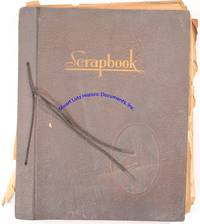
5600ARTHUR W. MITCHELL 1883-1968. Mitchell was the first Black Democrat elected to Congress. He served Illinois from 1935 to 1943 and he was the only Black member during that time. Born in Alabama he attended the Tuskegee Institute Columbia University and Harvard University. Although Mitchell was a Republican early in life he switched parties in 1932 with the election of Franklin Roosevelt. In 1934 he defeated the Black Congressman Oscar De Priest. Much of his time in Congress was spent introducing anti-lynching and anti-discrimination bills.Scrapbook. Approximately 50 pages. Circa mid 1930s. A scrapbook covering the early political career of Congressman Arthur W. Mitchell; it was kept by Harriet Mitchell in Birmingham Alabama this is likely his sister as Congressman Mitchell was from Alabama. The scrapbook mostly consists of press clippings many with original halftone images of Mitchell. The origin of the clippings is clearly marked and many of them are from prominent Black newspapers such as The Washington Tribune The Afro American with stories like No Rear Door For Mitchell at Abes Tomb and To Attend White House Reception The Pittsburgh Courier Congressman Mitchell Fights Discrimination In The Civil Service The Second Ward Square Dealer of Chicago Millions Laud Congressman Mitchell For Great Act and The St. Louis Argus. There are also pasted-in articles from more mainstream newspapers such as The Birmingham News Chicago World The Birmingham Weekly Review Congressman Mitchell Defies Foes Defends His Pet Bill Time magazine The Chicago Daily Times and others. Also tipped in are ten separates from The Congressional Record Not Printed At Government Expense so the Congressman paid for these. They record Mitchell speeches mostly about lynch mobs but one on Booker T. Washington and another on The Negro and the Democratic Party. There is a photograph of a Franklin D. Roosevelt signed letter to Mitchell. There is also an illustrated political campaign broadside of Mitchells dating from mid 1930s against his opponent DePriest in which he denigrates DePriest for allowing black Gold Star Mothers to be sent overseas via a cattle boat to visit their sons graves. As the scrapbook was ephemeral the pages are brittle and loose from the original binding although no pages are seemingly missing. Some pages have various degrees of soiling. One page uses two rusted paper clips. Despite the condition issues this scrapbook is historic; Mitchells election heralded the future many Blacks found in the Democratic Party leaving behind the party of Lincoln. It is also a family memento indicating the pride that his sister felt for her accomplished brother. unknown
1936376734New York: Macmillan 1936. First Edition First Printing published May 1936 with no other dates. 8vo. Dark Grey full crushed levant with gilt borders raised bands aeg by the Chelsea Bindery. First Edition First Printing published May 1936 with no other dates. 8vo. Macmillan unknown
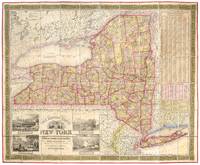
1845416409Philadelphia: S. Augustus Mitchell 1845. Hardcover. Near Fine. Canvas-backed folding engraved colored map in publisher's red morocco gilt and marbled paper over boards folding chemise and red morocco slipcase with "Empire State" rules and elaborate border decorations stamped in gilt. The map measures approximately 50.75" x 41" and has four engraved illustrations from New York history. Map has some very light overall foxing else fine. Chemise and slipcase have some modest rubbing one joint of the chemise with a crack but sound the slipcase has two horizontal scuffs or stains but both are very good or better. The publisher's chemise and slipcase are rare survivors. S. Augustus Mitchell hardcover
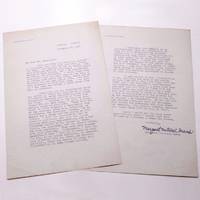
1937374822Atlanta 1937. Two pages on her personal stationery 64 lines approx. 375 words. 1 vols. 4to. Fine. With mailing envelope and a carbon copy of Mitchell's letter of same date to publisher Hasselbalch. Two pages on her personal stationery 64 lines approx. 375 words. 1 vols. 4to. Margaret Mitchell's novel Gone with the Wind was the colossal best seller of the twentieth century selling more than a million copies within months of its appearance in 1936. David O. Selznick bought the film rights soon after publication but the film version was not released until December 1939. The Nordic lands were among the first to secure translation rights and a Danish edition Borte med Blæsten illustrated by Axel Mathiesen was published in the autumn of 1937. It was a publishing sensation in Denmark population under one million at the time: the first printing of 10000 copies sold out almost immediately and went back to press. <br /> A cordial and informative letter of appreciation reading in part:<br /> <br /> "My dear Mr. Mathiesen:<br /> "Your original illustrations arrived on Christmas Eve and they gave more pleasure than I can express to you on paper. How very kind you were to send them! I was happy enough to have copies and I am overwhelmed at having the originals. I shall frame them with great care and hang them on the wall of my living room above the divan where all my visitors can see and admire them. You were very generous to part with them. I am sure if I had been the artist I could never have been as generous. . "Gone With the Wind" is still enjoying a remarkable sale at the original price and naturally my publishers The Macmillan Company see no reason why a cheap edition should be published. I told Mr. Hasselbalch that my American publishers had seen the Danish edition with your illustrations for I had presented copies to Mr. George P. Brett Junior the president and Mr. Harold Latham the vice president. They were both charmed with your pictures. Furthermore I told Mr. Hasselbalch that I thought it would be well for him as my Danish publisher to communicate directly with Mr. Brett my American publisher about the matter of using your illustrations in some future edition.<br /> ". I learn with some interest that the film of "Gone With the Wind" which has been delayed for a year now will probably be begun on February 1st. I have no connection with the picture and am not responsible for anything in it but of course I am interested. As yet the moving picture producers have not announced what actors and actresses will play Rhett and Scarlett. The public however believes that Clark Gable will be cast as Rhett."<br /> <br /> Mitchell sent Mathiesen a carbon of her detailed letter to Danish publisher Steen Hasselbalch expressing appreciation for the drawings describing her belated Christmas gift old Confederate currency with the poem "Lines on the Back of a Confederate Note" and suggesting that the publisher might wish to take out American copyright on Mathiesen's drawings to prevent piracy. unknown