363 résultats
1912ROLFEFRE015836William Rider London. 1912. First edition. Octavo. pp xxii 299. 16-page publisher's catalogue at rear. Original blue buckram covers decorated in blind and lettered in gilt. A fantasy novel. Corvo wrote in a letter: ''I wrote nine tenths of that book to Pirie-Gordon's one tenth & we were to share profits half & half''. On page 14 of the advertisements at the rear of the book Rolfe is given sole credit for the book. Laid in are parts of the scarce and extremely friable dustwrapper: most of the front and rear panels and the flaps.Small ownership inscription in top corner of front free endpaper. Some spotting to edges. Very good indeed in chipped and nicked dustwrapper which is a bit tanned at the spine and almost entirely present but with long closed tears especially along the joint folds and a postage stamp sized chip at bottom edge of rear panel which is repaired on the reverse. William Rider, London. hardcover
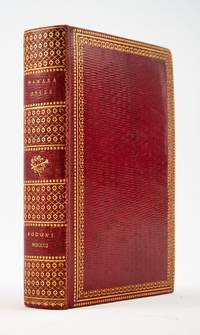
1801ST20887Parma: Giambattista Bodoni 1801. 165 x 113 mm. 6 1/2 x 4 1/2". 3 p.l. 100 pp. 1 leaf blank; 8 p.l. 132 pp. 1 leaf blank; 1 p.l. VIII 2 86 pp. 1 leaf blank; 2 p.l. first blank VII 1 135 1 pp. Four parts bound in one volume. Virgil's "Bucolics" and "Georgics" translated into Italian verse by Prospero Manara. <br/> Handsome contemporary scarlet straight-grain morocco gilt in the style of Bozerian covers framed by annular dots gilt fillet and cresting loop and dagger roll smooth spine divided into panels by gilt rule and annular dots four panels with lattice-work design two with gilt lettering one with Neoclassical ornament gilt-rolled turn-ins blue paste-paper endpapers fore- and tail edges untrimmed. Front pastedown with engraved armorial bookplate of Comte Dmitry Boutourlin and ex-libris of Dr. Tibulle Desbarreaux-Bernard. Brooks 808. A couple of faint scratches to rear board extremities lightly rubbed otherwise QUITE A FINE COPY--remarkably clean fresh and bright internally the smooth untrimmed paper with enormous margins and the binding lustrous and altogether pleasing.<br/> <br/> With distinguished provenance this is a very appealing copy of a collection of a Parma poet's works and an excellent specimen of Bodoni printing. Giambattista Bodoni 1740-1813 worked for more than 20 years at the Royal press in Parma before obtaining permission to set up his own private press in 1791. Brooks says "He took his printing in all its branches very seriously laboured incessantly to perfect his type had a fine artistic sense . . . and produced books not only of a very high standard but also showing a remarkably distinct individuality." Bodoni used the finest quality paper available and his clear beautiful types have been envied and copied for many generations. "The result of his labours is a long list of books which . . . reach a very high many of them the highest level of technical excellence." That technical expertise is much on display here. Bodoni has clearly laid out text here as for a duodecimo but printed it on especially fine octavo-sized paper giving the book the luxurious feel of an especially Large Paper Copy. In addition a range of his roman and italic types appears here with some pages displaying up to 10 different type sizes. The text comprises the poems of Marchese Prospero Valeriano Manara 1714-1800 a Parma statesman who through his career served as Minister of State and was a close correspondent of the duke. Assembled by Manara's sons following his death the present work is composed of four parts. The first is made up of Manara's original eclogues and sonnets; this is followed by Italian translations of Virgil's "Bucolics" and "Georgics" the latter appearing here for the first time; and the fourth section contains an elegy written in Manara's honor by Count Antonio Cerati pen name Filandro Cretense 1738-1816. The present copy in attractive contemporary morocco comes with the provenance of two major 19th century collections. Previous owner Count Dmitry Boutourlin 1763-1829 was a general politician historian librarian and one of Russia's most famous bibliophiles whose impressive library included 244 early manuscripts and about 1000 incunables in addition to a complete collection of Bodoni imprints and a nearly complete assemblage of Aldine editions. After his retirement from the military Boutourlin served as director of the Russian Imperial Library. Our copy later resided in the collection of Toulouse physician and bibliophile Tibulle Desbarreaux-Bernard 1798-1880 who published widely on print history. Giambattista Bodoni unknown
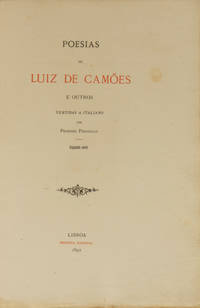
2505PG001<p>E outros. Vertidas a italiano por Prospero Peragallo. Segunda serie. Imprensa Nacional. Lisboa. 1892.</p>_x000d_<p>De 286x20 cm. Com ii 144 págs. Magnífica encadernação artística da época inteira de marroquim vermelho com nervos e ferros a ouro em casas fechadas título com ferros a ouro na segunda casa e a data no pé da lombada. Pastas com esquadrias constituídas por dois filetes a seco e três filetes a ouro que enquadram molduras com elaborados ferros a ouro com motivos vegetalistas similares aos dos cabeções e vinhetas do livro que cobrem também as seixas. Cortes das folhas dourados à cabeça e por aparar nos restantes cortes. Folhas de guarda em papel de seda moirée.</p>_x000d_<p>Exemplar n.º 123 da tiragem de apenas 150 impresso em papel de linho branco. Tem a folha com o colofon na frente e o verso em branco encadernada no início e não no fim como devia ser.</p>_x000d_<p>Muito rara. Não existem exemplares nas principais bibliotecas de Portugal com a excepção da BNP que possui 4.</p>_x000d_<p>Edição esplêndida comemorativa do décimo segundo aniversário do Tricentenário de Camões que foi patrocinada por António Augusto Carvalho Monteiro a quem o autor dedica a sua obra. Bela e nítida impressão em caracteres redondos com a letra inicial de cada poema a vermelho cabeções no início do prefácio nas duas páginas do início do episódio dos Lusíadas e vinhetas de remate no fim de todas as poesias.</p>_x000d_<p>Edição bilingue com os textos originais em português impressos nas páginas da esquerda e as respectivas traduções em italiano nas páginas da direita.</p>_x000d_<p>As páginas 1 a 10 compreendem a folha de anterrosto com a justificação da tiragem na página 2 a folha de rosto com a 4 em branco a página 5 apresenta a dedicatória impressa do autor a A. A. de Carvalho Monteiro possuidor de uma magnífica biblioteca camoniana página 6 em branco página 7 com o prefácio datado de 28 de Março de 1892 a página 8 em branco. Na página 9 Começa o texto com o título da primeira peça até à página 141. Página 142 em branco e as páginas 143 a 144 com o índice.</p>_x000d_<p>Inclui o episódio da Batalha do Salado dos Lusíadas Canto III 101-117; 29 sonetos; a Ode III Se do meu pensamento; a Canção XVII A vida já passei assás contente; e três Redondilhas. A partir da página 126 até à página 141 inclui as seguintes poesias camonianas de outros poetas: Soneto de Bocage em louvor de Camões; Soneto à Fonte dos Amores de um anónimo e outro de Elpino Duriense; poesia à Fonte das Lágrimas de Garret; e poesia à Fonte dos Amores de Soares de Passos.</p>_x000d_<p>Prospero Luigi Peragallo Génova 1823 - Génova 1916 Estudou na escola do Seminário Arquiepiscopal de Génova e no noviciado dos Franciscanos Reformados na mesma cidade onde mudou o seu nome de Luigi para Prospero que passou a usar toda a vida. Foi ordenado sacerdote em 19 de Setembro de 1846 e incardinado no clero secular da diocese de Génova em 1858. Na sua cidade natal foi professor do ensino secundário. Chegou a Lisboa em Agosto de 1865 para prencher o munus de pároco e Reitor da Igreja do Loreto em Lisboa que desempenhou até Julho de 1896 data em que voltou para a sua terra natal. Foi um dos sócios fundadores da Sociedade de Geografia. Dedicou um grande interesse à figura de Cristóvão Colombo e à literatura portuguesa que divulgou em Itália mediante numerosas traduções e estudos de escritores portugueses.</p>_x000d_<p>Brito Aranha continuador do Dicionário Bibliográfico de Inocêncio elenca 34 obras de Peragallo até 1904 tendo consciência que não as conhecia todas.</p>_x000d_<p>Escreveu obras de caracter didáctico e religioso em italiano enquanto viveu em Génova. Depois de vir para Portugal escreveu obras sobre Cristóvão Colombo sobre italianos que viveram em Portugal nomeadamente influindo nos descobrimentos e um <em>Manual do Christianismo para a Missa Confissão e Comunhão</em> com pelo menos 10 edições a partir de 1881 além de ter muito colaboração dispersa por diversas publicações periódicas nomeadamente sobre música no períódico A Arte Musical onde publicou 16 artigos. Mas destacou-se especialmente pelas suas numerosas traduções para italiano de muitos poetas portugueses em especial de Camões publicadas em revistas jornais obras colectivas e em livro as quais elencamos a seguir:</p>_x000d_<p><em>O soneto de Luiz de Camões: Alma minha gentil</em> Traduzido em verso italiano Lisboa. Casa Portuguesa. 1884 e 1903; <em>Sonetos escolhidos de Luiz de Camões traduzidos em sonetos italianos</em>. Lisboa. Empreza Editora de Francisco Arthur da Silva. Lisboa typ. Elzeveriana. 1885; <em>Poesias de Luiz de Camões e outras vertidas a italiano</em>. Lisboa imprensa Nacional. 1890; <em>O gigante Adamastor. Episodio dos Lusiadas de Luís de Camões</em> com a traducção em versos italianos de Prospero Peragallo e um prefacio de Xavier da Cunha. Lisboa typ. Castro Irmão 1898; <em>Due episodi del poema I Lusiadi di Camões: ed altri poeme stranieri</em> colla traduzione in versi italiani per Prospero Peragallo. Genova: Stab. Tipografico Ved. Papini & Figlio 1905.</p>_x000d_<p>EN 28.6x20 cm. ii 144 pages. Magnificent contemporary artistic binding in full red morocco with raised bands and gilt tools at spine title in the second panel and the date at the foot of the spine. Covers with frames made up of two blind fillets and three gold fillets with elaborate gilt work with plant motifs similar to those of the book's headpieces and vignettes which also cover the panels. Trimmed gilt top untrimmed in the remaining edges. Moirée silk endpapers.</p>_x000d_<p>Copy no. 123 of a print run of only 150 printed on white linen paper. It has the colophon on the front with blank back bound at the beginning and not at the end as it should be.</p>_x000d_<p>Very rare. There are no copies in the main libraries in Portugal with the exception of the National Library which has four.</p>_x000d_<p>A splendid edition commemorating the twelfth anniversary of the Camões Tricentenary sponsored by António Augusto Carvalho Monteiro to whom the author dedicates his work. Beautiful clear printing in round characters with the initial letter of each poem in red headpieces at the beginning of the preface on the two pages at the beginning of the episode of the Lusiads and closing vignettes at the end of all the poems.</p>_x000d_<p>Bilingual edition with the original texts in Portuguese printed on the left-hand pages and the respective Italian translations on the right-hand pages.</p>_x000d_<p>Pages 1 to 10 comprise the title page with the justification for the print run on page 2 the title page with page 4 blank page 5 with the author's printed dedication to A. A. de Carvalho Monteiro possessor of a magnificent Camonian library page 6 blank page 7 with the preface dated 28 March 1892 page 8 blank. Page 9 begins with the title of the first play until page 141. Page 142 blank and pages 143 to 144 with the table of contents.</p>_x000d_<p>It includes the episode of the Battle of Salado from the Lusiads Canto III 101-117; 29 sonnets; Ode III Se do meu pensamento; Song XVII A vida já passei assás contente; and three Redondilhas. From page 126 to page 141 it includes the following Camonian poetry by other poets: Soneto de Bocage in praise of Camões; Soneto à Fonte dos Amores by an anonymous author and another by Elpino Duriense; poesia à Fonte das Lágrimas by Garret; and poesia à Fonte dos Amores by Soares de Passos.</p>_x000d_<p>Prospero Luigi Peragallo Genoa 1823 - Genoa 1916 studied at the school of the Archiepiscopal Seminary of Genoa and at the novitiate of the Reformed Franciscans in the same city where he changed his name from Luigi to Prospero which he used all his life. He was ordained a priest on 19 September 1846 and incardinated into the secular clergy of the diocese of Genoa in 1858. In his hometown he was a secondary school teacher. He arrived in Lisbon in August 1865 to take up the post of parish priest and Rector of the Church of Loreto in Lisbon which he held until July 1896 when he returned to his homeland. He was one of the founding members of the Geographical Society. He took a great interest in the figure of Christopher Columbus and in Portuguese literature which he publicised in Italy through numerous translations and studies of Portuguese writers.</p>_x000d_<p>Brito Aranha continuator of Inocêncio's Bibliographical Dictionary lists 34 works by Peragallo up to 1904 realising that he didn't know them all.</p>_x000d_<p>He wrote didactic and religious works in Italian while living in Genoa. After coming to Portugal he wrote works on Christopher Columbus on Italians who lived in Portugal namely influencing the discoveries and a <em>Manual do Christianismo para a Missa Confissão e Comunhão</em> with at least 10 editions from 1881 onwards as well as his many collaborations in various periodicals particularly on music in the periodical A Arte Musical where he published 16 articles. But he stood out especially for his numerous translations into Italian of many Portuguese poets especially Camões published in magazines newspapers collective works and books which we list below:</p>_x000d_<p><em>Luiz de Camões somnet: Alma minha gentil</em> Translated into Italian verse Lisboa. Casa Portuguesa. 1884 e 1903; <em> Selected sonnets by Luiz de Camões translated into Italian sonnets </em>. Lisboa. Empreza Editora de Francisco Arthur da Silva. Lisboa typ. Elzeveriana. 1885; <em> Poems by Luiz de Camões and others translated into Italian </em>. Lisboa imprensa Nacional. 1890; <em> The giant Adamastor. Episode from the Lusiadas by Luís de Camões </em> with the Italian verse translation by Prospero Peragallo and a preface by Xavier da Cunha. Lisboa typ. Castro Irmão 1898; <em>Due episodi del poema I Lusiadi di Camões: ed altri poeme stranieri</em> colla traduzione in versi italiani per Prospero Peragallo. Genova: Stab. Tipografico Ved. Papini & Figlio 1905.</p>_x000d_<p>Referências/References:<br />Pe. Sérgio Filippi - Monsignor Prospero Peragallo. Fábrica da Igreja Italiana do Loreto. Lisboa. 2017 212 e 280. <br />Vitor Aguiar e Silva - Dicionário de Luís de Camões. Caminho. Lisboa. 20 p. 1321. <br />Inocêncio XVIII 12-15 pág. 14 n.º 17 <br />José do Canto - Colecção Camoniana. Imprensa Nacional. Lisboa. 1895. Edição fac-similada 1972 n.º 231 exemplar n.º 25.</p> M-11-C-78 hardcover
1616716111616. Crimes of Heresy-And Their Punishment Farinacci Prospero 1554-1618. Tractatus de Haeresi. In Quo per Quaestiones Regulas Ampliationes & Limitationes. Quid a Iure Civili & Canonico. Quid a Sacris Conciliis Summorumque Pontificum Constitutionibus Statutum. Quid Verius & Magis Communiter in hac Materia Receptum Sit. Et Quid Demum in Practica Servetur Solito Authoris Ordine Explicatur. Cum Argumentis Summariis Et Indice Locupletissimo. Rome: Ex Typographia Andreae Phei 1616. xx 686 2 240 pp. Folio 13-1/2" x 9-1/2". Contemporary vellum with early rebacking raised bands and early hand-lettered title and shelf number to spine. Light rubbing to boards heavier rubbing to extremities with a few small chips to edges and considerable wear to corners boards slightly bowed joints starting at ends rear pastedown detached and edgeworn some edgewear to leaves at beginning and end of text block. Title page printed in red and black within copperplate architectural border. Moderate toning somewhat heavier in places occasional faint dampstaining light foxing and minor worming in places faint vertical crease through title page. $2500. First edition as an independent work. This work on questions of heresy in civil and canon law appears to have drawn great interest since editions appeared the same year in Antwerp Frankfurt and Douai. It also helped as Schulte notes that the author's "reputation as a criminalist was enormous." Farinacci begins by defining the act of heresy. He then proceeds to examine where it can be found and how it should be investigated. As indicated by several examples of schismatics Farinacci was motivated in part by the Counter-Reformation. He also addresses heretical books pp. 81-99 practitioners of magic witches on those who invoke and consorting with demons pp. 99-155 and the apostasy of clerics. There is much on the power of the inquisition and the role the inquisitor in the investigation of charges of heresy the use of excommunication and methods for investigating guilt which has a detailed section on the use of torture pp. 287-297. Schulte Die Geschichte der Quellen und Literatur des Canonischen Rechts III:1 462. unknown books
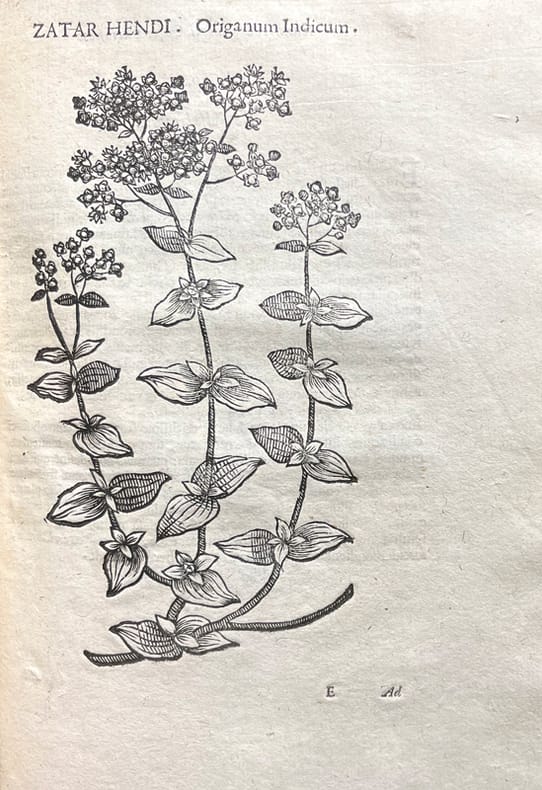
11119Patavii (Padova), Pauli Frambotti, 1638-1640 ; in-4 ; plein veau blond, dos à nerfs orné de filets dorés, titre doré, filet doré d'encadrement des plats, tranches mouchetées (reliure de l'époque) ; (14) pp., (1) f. blanc, 144 pp. et 49 grands bois gravés représentant des plantes, la plupart à pleine page. SUIVI DE : Prosperi Alpini de Balsamo dialogus. In quo verissima Balsami plantae, Opobalsami, Carpobalsami, et Xylobalsami cognitio, plerisque antiquorum atque juniorum Medicorum occulta, nunc elucescit. Patavii (Padova), Pauli Frambotti, 1639 ; 54, (4) pp., (1) f. blanc, 1 bois gravé. SUIVI DE : Joannis Veslingii Mindani, equitis, et in patavino Gymnasio Anatomiae et Chirurgiae Professoris primarii, de Plantis Aegyptis observationes et notae cum additamento aliarum eiusdem regionis. Patavii (Padova), Pauli Frambotti, 1638 ; (8), 80, (4) pp. et 23 grands bois gravés de plantes ; soit en tout 73 plantes illustrées.
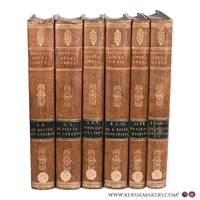
178779001Venetiis Venice: J. Remondini / A. Zatta 1787-1788. 39x26 cm half leather bindings with gilt decorations on the spines title labels and marbled paper-covered boards. Complete in 15 volumes bound in 6 physical tomes. Illustrated with some engravings in the text 7 plates and 5 folding engravings. Text in Latin. Bindings show small signs of wear labels on spines. with some rubbing on the corners and edges. Some volumes have some minor occasional stains and browning. Few pages with larger old waterstains not affecting the text. Although the set is in very good condition. Rare. See pictures. Contents: Volume 1 Tomi I-II: half-title portrait lxxxviii 363 folding engraving iv 380 pages. Volume 2 Tomi III-IV: iv 440 iv 476 pages. Volume 3 Tomi V-VII: 212 viii 2071 with 2 ill. in the text 7 plates and 4 folding engravings xii 215 1 pages. Volume 4 Tomi VIII-X: xx 240 iv 227 1 xii 284 pages. Volume 5 Tomi XI-XII: xx 218 iv 258 pages. Volume 6 Tomi XIII-XV: xii 246 ii 211 viii 158 pages. J. Remondini / A. Zatta hardcover
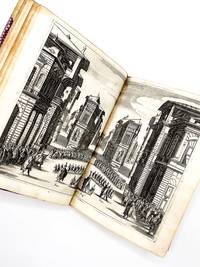
162050700Firenze Florence: Pietro Cecconcelli 1620. Second state. Very good. First edition of this landmark neoclassical tragedy - the first documented performance using moveable scenes - with exquisite double-page etchings of the stage by an influential innovator of the form. First performed in Florence in 1619 IL SOLIMANO was a turning point in modern European theater. Bonarelli not only rejected the chorus format of the long-established ancient Greek model but made use of extravagant set design to tell his political-historical drama. <br /> <br /> Bonarelli based the tragedy loosely on Suleiman the Magnificent the famed Turkish sultan of the 16th century under whose rule the Ottoman Empire experienced a Golden Age of the arts. The story of a tyrant who puts to death his eldest son IL SOLIMANO culminates in the awe-inspiring destruction of the city by fire. Otto Benesch calls the moveable scenes created for the performance "the first in the history of theatre" 17 and notes that despite the ostensibly Turkish setting these sets depict early modern Florence. A mixture of neoclassicism and orientalism IL SOLIMANO captured the imagination of Europe going through multiple editions over the century and inspiring further plays and operas. <br /> <br /> This first edition remains highly sought for its Callot plates that not only depict the innovative set but show many of the subtleties of style and technique that Callot pioneered under the patronage of the Medicis. His well-known mastery of stoppings out for example is evident in the final plate of the city in flames where tendrils of smoke and individual bursts of fire cross the scene in a variety of depth light and shade. <br /> <br /> An important work in both the history of theater and of the graphic arts. Quarto 8.75'' x 6.45''. Later half parchment with marbled boards gilt-ruled spine red goatskin spine label. Complete with six plates by Callot engraved title page and 5 double-page etchings. Engraved title with Callot's name in bottom left. 10 162 2 pages. Repairs in gutters of a number of leaves including reinforcements or new stubs to engraved spreads. Light scattered foxing spot of browning to title page gutter. Engravings crisp. Pietro Cecconcelli unknown
1936200120Lima: Antonio Lulli 1936. Paperback. Good Wraps are toned/edgeworn/scuffed/smudged; bookplate of former owner ifc; interior is toned with occasional smudging and foxing; binding is solid. Grey stapled wraps with black lettering and design; 24 pp.; richly illustrated. Text in Spanish. [Antonio Lulli] paperback
16206296Small 4to. Florence: Pietro Cecconcelli 1620. Small 4to xiv 162 ii pp. With an etched title-page and five double-page etched plates by Jacques Callot. Strictly contemporary limp vellum backstrip titled in manuscript some wear and soiling to binding and an inoffensive waterstain in the lower margin from a2-D2 but an entirely unsophisticated copy with superb strikes of the plates. § First edition of this important tragedy produced in 1619 and published many times in the 17th century. The illustrations are regarded as some of Callot’s finest work. “French etcher engraver and draughtsman. He was one of the most accomplished printmakers in the Western tradition and one of the major exponents of the Mannerist style in the early 17th century. His often fantastic compositions combine grotesque and elegant elements in a compelling and personal manner.†Grove Dictionary of Art. Callot based his illustrations on the work of his colleague Parigi architect and chief designer of courtly festivities under the Grand Duke Cosimo Medici II who died two years later causing Callot to return to his native Nancy. Gamba 1810. Cicognara 1086. Lieure 363-368. The book is quite scarce especially in unsophisticated condition and with such fine impressions of the plates. The Schaeffer copy for example 1994 lot 38 had the plates on stubs was cut down slightly and rebound in recent red morocco. Of the six copies at auction since 1975 only one was in contemporary vellum 1978. Pietro Cecconcelli hardcover books
159265469Venedig, Francesco de Franceschi, 1592. 4°. Mit 2 Holzschn.-Druckermarken u. 50 (39 ganzs.) Textholzschnitten. 4 nn., 80 (recte 84) num., 8 nn. Bll. - Angeb. - Ders. De medicina Aegyptiorum. Libri quatuor in quibus multa cum de vario mittendi sanguinis usu per venas, arterias, cucurbitulas, ac scarificationes nostris inusitatas [...], & alijs chyrurgicis operationibus, tum de quamplurimis medicamentis apud Aegyptios frequentioribus, elucescunt. Ebda., 1591. Mit Holzschn.-Druckermarke u. 7 (2 ganzs.) Textholzschnitten. 11 (statt 12; fehlt das Erratablatt c1) nn., 150 num., 25 nn. Bll., Etw. späterer Pgmt.-Bd. m. durchzogenen Bünden, goldgepr. gekrönten verschlungenen Initialen als Supralibros, handschriftl. Rückentitel u. erneuerten Schließbändern.
1591942P35Venetiis: Franciscis Senensem 1591. First edition. Hardback. Good Only. 10" by 7". Not Stated. The first edition of this important work on Egyptian medicine by Prosper Alpini a very scarce work. The very scarce first edition. Title page is in the second state with the correct "scarificationes" and lines seven and eight ending "chyrurgi-" and "apud" respectively. In the original Latin.Illustrated with seven woodcuts two of which are full-paged.Register runs as: a-c4 A-S8 T6.Collated bound without the index which was printed to V-X4 Aa4 and Bb6.'De Medicina Aegyptiorum' is considered to be the first important work on the history of Egyptian medicine and one of the first European studies on non-Western medicine. A pioneering and important text.This work contains the first known description of the coffee plant published in Europe as well as descriptions of moxibustion which Alpini introduced to European medicine. Additionally this text introduces a number of plant species previously unknown to Europe such as Abrus Abelmoschus Lablab Melochia and the Baobab tree. Alpini wrote this work based on his observations made during a three year sojourn in Egypt. He was a physician and botanist from Venice and set off on his travels to Egypt in 1580. In the original boards. Externally worn. Boards are discoloured with handling marks. A small amount of loss to the spine and with lifting to the head. Ink to the spine. Hinges are tender. Internally binding is tender in places. Pages are lightly age-toned and generally clean with scattered spots and handling marks. The occasional small patch of worming to the textblock though with no loss to the text. Good Only Franciscis Senensem hardcover
1687123752Daniel Horthemels 1687 1687. leather_bound. Good. 9x7x2. Daniel Horthemels 1687 9" x 13" leather bound front board detached. Tiny bit of pencil to text. Light foxing. Illustrated. Text is in Latin. Please email for photos. Daniel Horthemels, 1687 hardcover
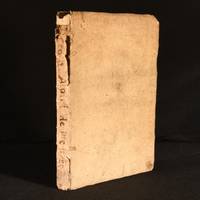
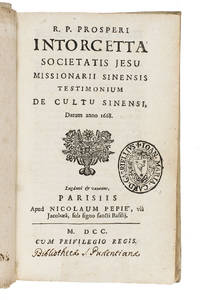
1700ABC_47581Paris 1700. 8vo. Nicolas Pepié Contemporary vellum with the manuscript title on the spine blue sprinkled edges. With a small woodcut ornamental vignette on the title page and some head- and tail-pieces built up from typographical ornaments 2 318 10 pp. This particular account on Chinese cults known as the De cultu sinensis was authored in 1668 and published posthumously. It was written by Prosper Intorcetta 1625-1696 who embarked on a journey to China in 1656 alongside Father Martini and a group of fifteen other priests who were engaged in missionary work in the province of Jiangxi. Intorcetta who assumed the Chinese name of In-to-tsé and the nickname of Koi-ssé was imprisoned in Canton in 1664. After his initial release he managed to travel to Rome in 1671 to witness the fate of his fellow missionaries before being arrested again in 1690. Alongside his work on the translation and study of Confucius' classics for which he proposed a complete translation the present work played a crucial role in the establishment of the subject of sinology in Europe as it dates back to the early years of missionary presence in China. Furthermore it contributed to enhancing understanding of the Chinese language. The De cultu sinensis was a response to the concerns raised by Domenico Navarette a Spanish Dominican archbishop and missionary who served in Mexico the Philippines and later in China. Navarette strongly opposed certain Chinese rituals and Intorcetta's book addresses this contentious issue.With the large oval black owner's stamp of Cardinal Jean-Marie Gabriel on the title-page and page 5 a manuscript owner's inscription in brown ink "Bibliotheca J. Pudentiana" on the title page and with a small manuscript annotation "J. Pud." on the front board. With some offsetting from the manuscript owner's incription in the first free flyleaf and a small paper repair to the bottom margin of the title-page without affecting the text. Slightly browned throughout otherwise in very good condition.l Cordier Sinica 884; Sommervogel IV 642 no.6; WorldCat 18792180 12 copies. hardcover