919 résultats
1806SAVLD129Paris: Detournelle & J. Charles 1806. Hardcover. Very Good. Elephant folio 500 x 340mm. Collation complete: 120 plates of French Architecture and plans including the Arc de Triomphe Place de la Concorde and other famous Academy projects. With woodcut vignette of cornucopia and muse on title-page table generale listing architectural designs and copper engraved title-page listing academy members. Three-quarter calf-backed over tree-design boards; scattered marginal foxing. Late 19th-century armorial bookplate of Hoffmann Josef Franz Maria Hoffmann on front pastedown. Hoffmann 1870-1956 was an influential Austrian architect who won the Rome Prize in 1895. Known for his contributions to the arts and crafts movement Hoffmann also designed rooms for the Paris Expositions Universelle in 1900. Second series of this magnificent collection of the 1806 Projets dArchitecture 120 fine French Academy competition plates by Allais Detournelle and Vaudoyer which followed a previous publication of Prieur c. 1787-1801 originally issued in 20 cahiers. As these Grands Prix engravings show Academy neoclassicists revived eclectic motifs from antiquity with their prominent use of obelisks pyramids and blank walls in their design. Egpytianizing forms were becoming part of the landscape of Parisian architecture and were used to achieve a solemn appearance; this style was fascinating to young Academics who still wanted to maintain regal tradition. Notably the Grands Prix drawings contain the Chapelle Sepulchrale by la Barre which demonstrated many of these Egyptian design elements including Pantheon-domes pyramids sphinxes and sarcophagi. This fine production of accomplished watercolors was primarily meant for the education of young Academics in this successful architectural style. Many plates include the scale given in French toises or metres. It continued the Collection des Prix 1787-1801 and was continued as the Grands Prix dArchitecture in 1818. <br/><br/>Second series of this magnificent collection of the 1806 Projets dArchitecture 120 fine French Academy competition plates by Allais Detournelle and Vaudoyer which followed a previous publication of Prieur c. 1787-1801 originally issued in 20 cahiers. As these Grands Prix engravings show Academy neoclassicists revived eclectic motifs from antiquity with their prominent use of obelisks pyramids and blank walls in their design. Egpytianizing forms were becoming part of the landscape of Parisian architecture and were used to achieve a solemn appearance; this style was fascinating to young Academics who still wanted to maintain regal tradition. Notably the Grands Prix drawings contain the Chapelle Sepulchrale by la Barre which demonstrated many of these Egyptian design elements including Pantheon-domes pyramids sphinxes and sarcophagi. This fine production of accomplished watercolors was primarily meant for the education of young Academics in this successful architectural style. Many plates include the scale given in French toises or metres. It continued the Collection des Prix 1787-1801 and was continued as the Grands Prix dArchitecture in 1818. Detournelle & J. Charles hardcover books
1806SAVLD129Paris: Detournelle & J. Charles 1806. Hardcover. Very Good. Elephant folio 500 x 340mm. Collation complete: 120 plates of French Architecture and plans including the Arc de Triomphe Place de la Concorde and other famous Academy projects. With woodcut vignette of cornucopia and muse on title-page table generale listing architectural designs and copper engraved title-page listing academy members. Three-quarter calf-backed over tree-design boards; scattered marginal foxing. Late 19th-century armorial bookplate of Hoffmann Josef Franz Maria Hoffmann on front pastedown. Hoffmann 1870-1956 was an influential Austrian architect who won the Rome Prize in 1895. Known for his contributions to the arts and crafts movement Hoffmann also designed rooms for the Paris Expositions Universelle in 1900. Second series of this magnificent collection of the 1806 Projets dArchitecture 120 fine French Academy competition plates by Allais Detournelle and Vaudoyer which followed a previous publication of Prieur c. 1787-1801 originally issued in 20 cahiers. As these Grands Prix engravings show Academy neoclassicists revived eclectic motifs from antiquity with their prominent use of obelisks pyramids and blank walls in their design. Egpytianizing forms were becoming part of the landscape of Parisian architecture and were used to achieve a solemn appearance; this style was fascinating to young Academics who still wanted to maintain regal tradition. Notably the Grands Prix drawings contain the Chapelle Sepulchrale by la Barre which demonstrated many of these Egyptian design elements including Pantheon-domes pyramids sphinxes and sarcophagi. This fine production of accomplished watercolors was primarily meant for the education of young Academics in this successful architectural style. Many plates include the scale given in French toises or metres. It continued the Collection des Prix 1787-1801 and was continued as the Grands Prix dArchitecture in 1818. <br/><br/>Second series of this magnificent collection of the 1806 Projets dArchitecture 120 fine French Academy competition plates by Allais Detournelle and Vaudoyer which followed a previous publication of Prieur c. 1787-1801 originally issued in 20 cahiers. As these Grands Prix engravings show Academy neoclassicists revived eclectic motifs from antiquity with their prominent use of obelisks pyramids and blank walls in their design. Egpytianizing forms were becoming part of the landscape of Parisian architecture and were used to achieve a solemn appearance; this style was fascinating to young Academics who still wanted to maintain regal tradition. Notably the Grands Prix drawings contain the Chapelle Sepulchrale by la Barre which demonstrated many of these Egyptian design elements including Pantheon-domes pyramids sphinxes and sarcophagi. This fine production of accomplished watercolors was primarily meant for the education of young Academics in this successful architectural style. Many plates include the scale given in French toises or metres. It continued the Collection des Prix 1787-1801 and was continued as the Grands Prix dArchitecture in 1818. Detournelle & J. Charles hardcover
SLIVCN-9782416018053Eyrolles (11/2024)
1971265157New York: Albondocani Press 1971. First edition copy 69 of 300 numbered and signed by the illustrator. 36 pp. illustrated by Edward Gorey. 1 vols. 5 x 6 inches. Yellow paper wrappers text printed on yellow paper. Faint rubbing to edges of the wrappers otherwise fine. First edition copy 69 of 300 numbered and signed by the illustrator. 36 pp. illustrated by Edward Gorey. 1 vols. 5 x 6 inches. Publisher's promotional postcard laid in. Albondocani Press unknown books
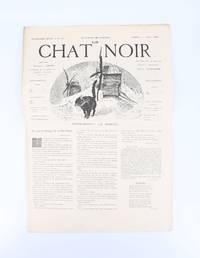
188588583Paris: Au cabaret Le Chat noir 1885. Fine. Au cabaret Le Chat noir Paris 1er août 1885 31 x 45 cm en feuillets First edition one of the rare copies printed on laid paper. This issue comprises 4 pages and features an illustration by Steinlen: ""Coqs et poule"". Literary contributions by Alphonse Allais with ""Le pauvre bougre et le bon génie"" dedicated to Henry Somm François Villon with the poem ""Rondel"" George Auriol with ""Au diable vert"" dedicated to Steinlen Rodolphe Salis. A handsome copy. Le Chat noir was a weekly review founded by Rodolphe Salis and Emile Goudeau published from 1882 to 1897 created to promote the famous cabaret of the same name and to serve as its memory. It published the texts performed during the shows. More broadly it constitutes a major literary and artistic record of the late 19th century centered on bohemian life and the unique creative fervor of Paris at the time. Au cabaret Le Chat noir unknown
1994LITTFRXXE58211Belfond, 1994, 15,5 x 24, 557 pages sous couverture illustrée d'un portrait photographique d'Allais. Quelques illustrations n&b.
188588583Au cabaret Le Chat noir | Paris 1er août 1885 | 31 x 45 cm | en feuillets
189024031Rouen E. Augé, libraire éditeur 1890
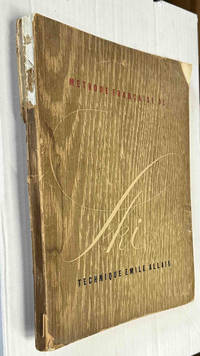
192315Preface by Frison-Roche. Translated from the French by Agustin R. Edwards Vice-President of the Ski Union of the Americas. Paris: Editions Fleche Publishers: 1947 Decorated wrappers that is flexible covers pp. 112 300 x 232 mm Photos and Layout by Pierre Boucher including IX coloured plates additional to the pagination. Near fine copy in good dust-jacket which has a long clean tear. unknown
1947230788<p>Magazine size Trade paperback in stiff wraps with Weak binding missing piece from top of spine. Unmarked text. Acceptable Good reading copy 9 color plates & copius B&W photos. French skiing method Émile Allais technique. Preface by Frison-Roche. Photos Pierre Boucher. 109 pages augmented by numerous black and white illustrations in and out of the text Ski Instructions Technique French Language 050924</p> Editions Fleche paperback
180935406Paris: Imprimerie Impériale 1809. Fine. Imprimerie Impériale Paris 1809-1829 71 x 54 cm une feuille Original unshaved full-page etching from the Imperial edition of the Description de l'Égypte or Recueil des observations et recherches faites en Égypte pendant l'expédition française publié par les ordres de Sa Majesté l'Empereur Napoléon le Grand A Collection of the observations and research carried out in Egypt during the French expedition published on the orders of his Majesty the Emperor Napoleon the Great'.Produced between February 1802 and 1830 on the orders of Naopleon Bonaparte and published between 1809 and 1828 1000 copies were printed and distributed to institutions on vergé paper with an 'Égypte ancienne et moderne' watermark visible when held up to the light. Light marginal spotting not touching image otherwise in very fresh fine condition. An engraving from the Description de l'Egypte one of the masterpieces of French printing and the birth of a new field: Egyptology. A gigantic survey of Egypt at the time of Bonaparte's conquests in 1798 and 1799 the work is divided into 13 volumes of engravings making up 892 plates of which 72 colored as well as presenting the splendors of the Egypt of the Pharaohs in 9 volumes. The other volumes discuss natural history and present a fascinating portrait of Coptic and Islamic Egypt as it was seen by Bonaparte's Eastern Armies. The Egyptian campaign' militarily a disaster demonstrates through the engravings of the Description d'Egypte the scientific success it nonetheless became thanks to the 167 expert members of the Commission of the Sciences and Arts of the Institut d'Egypte Egyptian Institute who followed Napoleon's army. The Institut gathered together in Egypt the mathematician Monge the chemist Berthollet the naturalist Geoffroy Saint-Hilaire as well as numerous artists engineers architects and doctors. They were tasked with re-discovering modern and ancient Egypt and displaying its natural treasures as well as the know-how of its inhabitants.This edition the so-called Imperial edition of the plates for the Description de l'Egypte was printed in four large formats two of which were specially created for it and christened Moyen-Egypte and Grand-Egypte. A special press was built to print it the process extending over 20 years from 1809 to 1829. The Imperial edition proved so popular that a second edition this time in black and white and without the Egypte ancienne et moderne watermark known as the Royal Edition was published during the Restoration by the printing house of C.-L.-F. Panckoucke Paris.The engravings of the Description d'Egypte owe a great deal to Baron Dominique-Vivant Denon illustrator diplomat collector and later Director of the Musée Napoléon the Louvre. His exploration of the South of Egypt gave Bonaparte the idea of sending the experts of the Institut there thus creating a faithful and complete portrait of the area. This was the research gathered together from 1802 in the mammoth Description de L'Egypte.Denon embarked on this story of archeological exploration at the age of 51 reaching first Alexandria and then Cairo before exploring Upper Egypt. Along with the members of the Institut d'Egypte the Natural History Museum's painter H.J. Redouté brother of Pierre-Joseph Redouté author of Roses the mineralogist Dolomiue and the draughtsman Joly Denon then explored the Nile Delta and Lower Egypt. When however he joined the 21st Light Infantry Regiment as it marched across Upper Egypt in pursuit of the retreating Mameluks in November 1798 he found himself the only civilian. In the very midst of the battle itself he reeled off sketches of the works of art that peppered his path right up to the threshold of the Sudan. He said that he had crossed a country that is apart from its name entirely unknown to Europeans and therefore everything was worth describing Voyages dans la Basse et la Haute Egypte pendant les campagnes de Imprimerie Impériale unknown
180926226Paris: Imprimerie Impériale 1809. Fine. Imprimerie Impériale Paris 1809-1829 53.50 x 71 cm une feuille Original unshaved full-page etching from the Imperial edition of the Description de l'Égypte or Recueil des observations et recherches faites en Égypte pendant l'expédition française publié par les ordres de Sa Majesté l'Empereur Napoléon le Grand A Collection of the observations and research carried out in Egypt during the French expedition published on the orders of his Majesty the Emperor Napoleon the Great'.Produced between February 1802 and 1830 on the orders of Naopleon Bonaparte and published between 1809 and 1828 1000 copies were printed and distributed to institutions on vergé paper with an 'Égypte ancienne et moderne' watermark visible when held up to the light. Light marginal spotting not touching image otherwise in very fresh fine condition. An engraving from the Description de l'Egypte one of the masterpieces of French printing and the birth of a new field: Egyptology. A gigantic survey of Egypt at the time of Bonaparte's conquests in 1798 and 1799 the work is divided into 13 volumes of engravings making up 892 plates of which 72 colored as well as presenting the splendors of the Egypt of the Pharaohs in 9 volumes. The other volumes discuss natural history and present a fascinating portrait of Coptic and Islamic Egypt as it was seen by Bonaparte's Eastern Armies. The Egyptian campaign' militarily a disaster demonstrates through the engravings of the Description d'Egypte the scientific success it nonetheless became thanks to the 167 expert members of the Commission of the Sciences and Arts of the Institut d'Egypte Egyptian Institute who followed Napoleon's army. The Institut gathered together in Egypt the mathematician Monge the chemist Berthollet the naturalist Geoffroy Saint-Hilaire as well as numerous artists engineers architects and doctors. They were tasked with re-discovering modern and ancient Egypt and displaying its natural treasures as well as the know-how of its inhabitants.This edition the so-called Imperial edition of the plates for the Description de l'Egypte was printed in four large formats two of which were specially created for it and christened Moyen-Egypte and Grand-Egypte. A special press was built to print it the process extending over 20 years from 1809 to 1829. The Imperial edition proved so popular that a second edition this time in black and white and without the Egypte ancienne et moderne watermark known as the Royal Edition was published during the Restoration by the printing house of C.-L.-F. Panckoucke Paris.The engravings of the Description d'Egypte owe a great deal to Baron Dominique-Vivant Denon illustrator diplomat collector and later Director of the Musée Napoléon the Louvre. His exploration of the South of Egypt gave Bonaparte the idea of sending the experts of the Institut there thus creating a faithful and complete portrait of the area. This was the research gathered together from 1802 in the mammoth Description de L'Egypte.Denon embarked on this story of archeological exploration at the age of 51 reaching first Alexandria and then Cairo before exploring Upper Egypt. Along with the members of the Institut d'Egypte the Natural History Museum's painter H.J. Redouté brother of Pierre-Joseph Redouté author of Roses the mineralogist Dolomiue and the draughtsman Joly Denon then explored the Nile Delta and Lower Egypt. When however he joined the 21st Light Infantry Regiment as it marched across Upper Egypt in pursuit of the retreating Mameluks in November 1798 he found himself the only civilian. In the very midst of the battle itself he reeled off sketches of the works of art that peppered his path right up to the threshold of the Sudan. He said that he had crossed a country that is apart from its name entirely unknown to Europeans and therefore everything was worth describing Voyages dans la Basse et la Haute Egypte pendant les campagnes Imprimerie Impériale unknown
180923435Paris: Imprimerie Impériale 1809. Fine. Imprimerie Impériale Paris 1809-1829 70 x 51.50 cm une feuille Original unshaved full-page etching from the Imperial edition of the Description de l'Égypte or Recueil des observations et recherches faites en Égypte pendant l'expédition française publié par les ordres de Sa Majesté l'Empereur Napoléon le Grand A Collection of the observations and research carried out in Egypt during the French expedition published on the orders of his Majesty the Emperor Napoleon the Great'.Produced between February 1802 and 1830 on the orders of Naopleon Bonaparte and published between 1809 and 1828 1000 copies were printed and distributed to institutions on vergé paper with an 'Égypte ancienne et moderne' watermark visible when held up to the light. Light marginal spotting not touching image otherwise in very fresh fine condition. An engraving from the Description de l'Egypte one of the masterpieces of French printing and the birth of a new field: Egyptology. A gigantic survey of Egypt at the time of Bonaparte's conquests in 1798 and 1799 the work is divided into 13 volumes of engravings making up 892 plates of which 72 colored as well as presenting the splendors of the Egypt of the Pharaohs in 9 volumes. The other volumes discuss natural history and present a fascinating portrait of Coptic and Islamic Egypt as it was seen by Bonaparte's Eastern Armies. The Egyptian campaign' militarily a disaster demonstrates through the engravings of the Description d'Egypte the scientific success it nonetheless became thanks to the 167 expert members of the Commission of the Sciences and Arts of the Institut d'Egypte Egyptian Institute who followed Napoleon's army. The Institut gathered together in Egypt the mathematician Monge the chemist Berthollet the naturalist Geoffroy Saint-Hilaire as well as numerous artists engineers architects and doctors. They were tasked with re-discovering modern and ancient Egypt and displaying its natural treasures as well as the know-how of its inhabitants.This edition the so-called Imperial edition of the plates for the Description de l'Egypte was printed in four large formats two of which were specially created for it and christened Moyen-Egypte and Grand-Egypte. A special press was built to print it the process extending over 20 years from 1809 to 1829. The Imperial edition proved so popular that a second edition this time in black and white and without the Egypte ancienne et moderne watermark known as the Royal Edition was published during the Restoration by the printing house of C.-L.-F. Panckoucke Paris.The engravings of the Description d'Egypte owe a great deal to Baron Dominique-Vivant Denon illustrator diplomat collector and later Director of the Musée Napoléon the Louvre. His exploration of the South of Egypt gave Bonaparte the idea of sending the experts of the Institut there thus creating a faithful and complete portrait of the area. This was the research gathered together from 1802 in the mammoth Description de L'Egypte.Denon embarked on this story of archeological exploration at the age of 51 reaching first Alexandria and then Cairo before exploring Upper Egypt. Along with the members of the Institut d'Egypte the Natural History Museum's painter H.J. Redouté brother of Pierre-Joseph Redouté author of Roses the mineralogist Dolomiue and the draughtsman Joly Denon then explored the Nile Delta and Lower Egypt. When however he joined the 21st Light Infantry Regiment as it marched across Upper Egypt in pursuit of the retreating Mameluks in November 1798 he found himself the only civilian. In the very midst of the battle itself he reeled off sketches of the works of art that peppered his path right up to the threshold of the Sudan. He said that he had crossed a country that is apart from its name entirely unknown to Europeans and therefore everything was worth describing Voyages dans la Basse et la Haute Egypte pendant les campagnes Imprimerie Impériale unknown
180923431Paris: Imprimerie Impériale 1809. Fine. Imprimerie Impériale Paris 1809-1829 70 x 51.50 cm une feuille Original unshaved full-page etching from the Imperial edition of the Description de l'Égypte or Recueil des observations et recherches faites en Égypte pendant l'expédition française publié par les ordres de Sa Majesté l'Empereur Napoléon le Grand A Collection of the observations and research carried out in Egypt during the French expedition published on the orders of his Majesty the Emperor Napoleon the Great'.Produced between February 1802 and 1830 on the orders of Naopleon Bonaparte and published between 1809 and 1828 1000 copies were printed and distributed to institutions on vergé paper with an 'Égypte ancienne et moderne' watermark visible when held up to the light. Light marginal spotting not touching image otherwise in very fresh fine condition. An engraving from the Description de l'Egypte one of the masterpieces of French printing and the birth of a new field: Egyptology. A gigantic survey of Egypt at the time of Bonaparte's conquests in 1798 and 1799 the work is divided into 13 volumes of engravings making up 892 plates of which 72 colored as well as presenting the splendors of the Egypt of the Pharaohs in 9 volumes. The other volumes discuss natural history and present a fascinating portrait of Coptic and Islamic Egypt as it was seen by Bonaparte's Eastern Armies. The Egyptian campaign' militarily a disaster demonstrates through the engravings of the Description d'Egypte the scientific success it nonetheless became thanks to the 167 expert members of the Commission of the Sciences and Arts of the Institut d'Egypte Egyptian Institute who followed Napoleon's army. The Institut gathered together in Egypt the mathematician Monge the chemist Berthollet the naturalist Geoffroy Saint-Hilaire as well as numerous artists engineers architects and doctors. They were tasked with re-discovering modern and ancient Egypt and displaying its natural treasures as well as the know-how of its inhabitants.This edition the so-called Imperial edition of the plates for the Description de l'Egypte was printed in four large formats two of which were specially created for it and christened Moyen-Egypte and Grand-Egypte. A special press was built to print it the process extending over 20 years from 1809 to 1829. The Imperial edition proved so popular that a second edition this time in black and white and without the Egypte ancienne et moderne watermark known as the Royal Edition was published during the Restoration by the printing house of C.-L.-F. Panckoucke Paris.The engravings of the Description d'Egypte owe a great deal to Baron Dominique-Vivant Denon illustrator diplomat collector and later Director of the Musée Napoléon the Louvre. His exploration of the South of Egypt gave Bonaparte the idea of sending the experts of the Institut there thus creating a faithful and complete portrait of the area. This was the research gathered together from 1802 in the mammoth Description de L'Egypte.Denon embarked on this story of archeological exploration at the age of 51 reaching first Alexandria and then Cairo before exploring Upper Egypt. Along with the members of the Institut d'Egypte the Natural History Museum's painter H.J. Redouté brother of Pierre-Joseph Redouté author of Roses the mineralogist Dolomiue and the draughtsman Joly Denon then explored the Nile Delta and Lower Egypt. When however he joined the 21st Light Infantry Regiment as it marched across Upper Egypt in pursuit of the retreating Mameluks in November 1798 he found himself the only civilian. In the very midst of the battle itself he reeled off sketches of the works of art that peppered his path right up to the threshold of the Sudan. He said that he had crossed a country that is apart from its name entirely unknown to Europeans and therefore everything was worth describing Voyages dans la Basse et la Haute Egypte pendant les campagnes Imprimerie Impériale unknown
180923431Imprimerie Impériale | Paris 1809-1829 | 70 x 51.50 cm | une feuille
180923435Imprimerie Impériale | Paris 1809-1829 | 70 x 51.50 cm | une feuille
180926226Imprimerie Impériale | Paris 1809-1829 | 53.50 x 71 cm | une feuille
180935406Imprimerie Impériale | Paris 1809-1829 | 71 x 54 cm | une feuille
2018L3 box740 a8<p>Knowledge Curriculum and Preparation for Work Knowledge Economy and Education 10. Edited by Stephanie Allais Yael Shalem. 2018 by Koninklijke Brill NV; Brill Sense. Hardcover 278 pp.</p> Koninklijke Brill NV; Brill | Sense. hardcover
2018L3 box733 a21<p>Knowledge Curriculum and Preparation for Work Knowledge Economy and Education 10. Edited by Stephanie Allais Yael Shalem. 2018 by Koninklijke Brill NV; Brill Sense. Paperback 278 pages.</p> Koninklijke Brill NV; Brill Sense. paperback
198525AbParis Grasset 1985 14x22,5 310 pages -
198525AbParis Grasset 1985 14x22,5 310 pages -
1989LFA-126712877Revue fondée en 1920 par Jacques Bainville : 64 pages, format 235 x 160 mm, bon état
1989LFA-126712878Revue fondée en 1920 par Jacques Bainville : 64 pages, format 235 x 160 mm, bon état
21555Paris : Ludovic Baschet, éditeur, 1885-1886. Un fort volume in-4°, demi-chagrin.