Anon [John Ledyard]Biblio.com
443 résultats
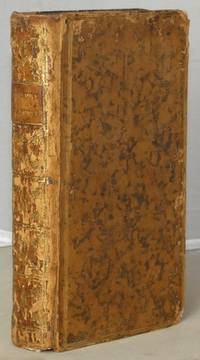
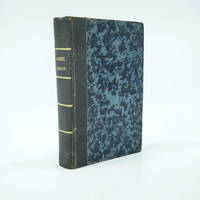
1791278119United Kingdom: T Cadell 1791. Book. Good. hardback. hardback octavo bound in half calf and marbled paper covered boards and edges. Gilt title to spine. Lower hinge weak with board just attached.Tightly sewn with a text free of markings. The date at the foot of the final leaf has been excised. Foxing to the front endpapers and with one or two spots to the title page. The large folding map of North Africa by J Rennell has a short closed edge tear and is generally in very good order xvi 351pp. Scarce. . T Cadell Hardcover
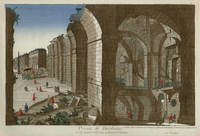
178022841780. Copper-line engraving with original hand-colouring. 260mm by 380mm platemark. Prison de Dardanus / Ou Vue nouvelle Dediee aux amaleurs de l'Optique. "Avec Privilege". "A Paris chez J. Chereau rue St. Jacques au defsus de la Fontaine St. Severin aux 2 Colonnes no 257". <br /> Late 18th century engraving published in Paris by Jacques Chereau.Faint toning just outside the platemark from a previous mount. unknown
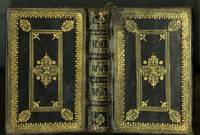
18000454511800. Hardcover Full Leather. Good Condition. Portuguese religious manuscript - a translation of an Italian devotion - in a richly gilt black morocco binding light wear at edges heavy wear and damage at the spine ends some worming and two bookplates to endpapers. 149 leaves nearly all written on both sides in an attractive hand 3 blanks at rear. 2 in the front. Ca. late 18th early 19th century. Size: Octavo 8vo. Quantity Available: 1. Shipped Weight: Under 1 kilo. Category: Antiquarian & Rare; Religion & Theology. Inventory No: 045451. hardcover
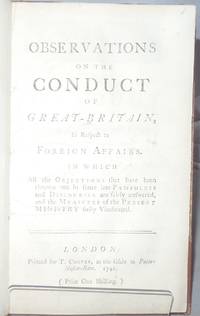
173912979London: Printed for T. Cooper 1739. 30 pp. 1 vols. 8vo. A very good copy with some minor browning to a few pages. Former owner's inscription in margin of title page. Modern half blue morocco gilt over marbled boards. 30 pp. 1 vols. 8vo. Printed for T. Cooper unknown
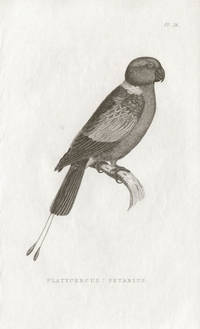
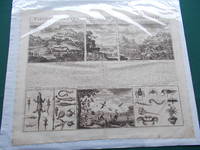
180010281800. Copper-line engraving. 220mm by 130mm sheet. From George Shaw's 'General Zoology or Systematic Natural History'. unknown
1758744London: : Gentleman's Magazine 1758. 7-1/2" x 9-3/4"- 19 x 24.7 cm. Copper engraved map. Very slight offsetting else very good. The Great Northern War spanned almost twenty years and pitted Sweden's Charles XII against a coalition group of Russian Prussian and Danish troops. The Swedes had dominated possessions in Northern Europe but in 1715 their stronghold in northern Germany at Stralsund fell followed by Wismar. Charles was to be killed three years later which removed the last obstacle to peace in the area. Gentleman's Magazine, unknown
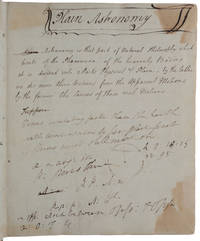
17805309N.p.: N.p. 1780. <p>A fascinating manual of astronomy particularly as it relates to the form of the motions of the heavens. The manuscript is in three parts: the first part covers the elementary parts of 'spherical astronomy' the second and third parts are more advanced covering sections of the Principia dealing with lunar theory and the inverse-square law of attraction. </p>. EIGHTEENTH-CENTURY MANUSCRIPT NOTEBOOK ON ASTRONOMY. <p>A fascinating manual of astronomy particularly as it relates to the form of the motions of the heavens dating from the period 1780-1825 probably from the beginning of that range. It is in a single hand with the exception of one page though with some variations indicating that different parts of the MS were written at different times. The MS could have been prepared for personal use or as part of public tuition probably the former. The writer summarizes the subject matter of the manual on the first leaf: 'Astronomy is that part of Natural Philosophy which treats of the Phenomena of the heavenly Bodies. It is divided into 2 Parts Physical and Plain: by the latter we discover their Motions from the Apparent Motions; by the former the Causes of these real Motions.' The MS is in three parts which are distinct in terms of subject matter. The first part covers the motion of the Earth around the Sun and its rotation about its axis with the consequences for the apparent motions of the Sun and the heavens; with the Moon and its phases and motion; and with lunar and solar eclipses. There are several references to John Keill's An Introduction to the True Astronomy London 1721 and subsequent editions. The second part principally consists of a discussion of section 11 of Newton's Principia 1713 or later editions in particular as it relates to the motion of the moon. This part ends with a short section on algebra particularly polynomials which seems to have been composed more haphazardly than the remainder of the text. The third part which runs backwards starting from the end of the notebook gives demonstrations of various results in Book I of Principia notably the theorem that the orbits of the bodies in the solar system do not precess if and only if the central attractive force operating on them is exactly inverse-square. This is an important result not only for Newton's system of universal gravitation but also for the observational astronomy of the solar system which is discussed in the opening section of the book. Between the end of the second part and that of the third there are a few blank leaves and others have been torn out but the text appears complete.</p> <br /> <p>The MS appears to be a working through of at least two different texts beginning with Keill's on astronomy. The first part of the MS refers particularly to the material in chapters 7-14 of Keill. It begins with the geometry of the sphere of the Earth and its orbit great circles and poles the plane of the ecliptic equinoctial points and the Tropics of Cancer and Capricorn. Then comes a section on the different systems of the world Ptolemaic Tychonic and Copernican illustrated by a diagram. The arguments supporting each system are given including the aberration of the fixed stars discovered by James Bradley in 1729 which supports Copernicus. It is noted that the Sun's apparent diameter varies according to the time of year which is explained by the fact that the Earth's distance from the Sun is not constant. Kepler's laws are stated with a long discussion of the area law and a statement that the Earth's orbit is an ellipse. The consequences of the fact that the plane of the Earth's orbit is inclined at an angle to the plane of the ecliptic are discussed the seasons. There is a section devoted to the precession of the equinoxes - the author notes that "Sir Isaac Newton has demonstrated that it arises from the broad spheroidal figure of the Earth." The author then turns to sunspots and the arguments for and against their being on the surface of the Sun. Then comes a long discussion of the planets: the planes and periods of their orbits phases conjunctions retrograde motions apparent brightness and their distances from the Sun. Special attention is given to the phases of Venus the varying appearances of Mars and Saturn's rings. This is followed by an extensive discussion of the Moon: its phases and motion and the fact that the same face is always turned to the Earth which implies that the Moon turns on its axis in the same time as it takes to orbit the Earth. This first part concludes with a fairly detailed account of lunar and solar eclipses.</p> <br /> <p>The second and third parts are notably more mathematical in nature than the first. The second works through Section 11 Prop. 66 of Principia and its corollaries which presents the perturbations of a remote body on a two-body system such as the Sun on the Earth-Moon system. This is one of the most difficult parts of Principia and one with which Newton was never completely happy and which is not entirely correct. The language used by the author of the notebook is reminiscent of the Principia but is primarily directed at following through Newton's working. There is a reference to a numbered figure '80' which does not appear to be numbered in any edition of the Principia. But it seems likely that the language and form of this discussion derives from familiarity with Robert Thorp's edition of Book 1 of the Principia 1777; cf. the notes published in Latin in 1765: pp. 266-90 in 1777 although Thorp is not referenced explicitly as Keill is. Thorp does have a figure 80 but it is not clear that he is the author being used at that particular point. There is then a discussion of algebra and the solution of equations which is fragmentary and incomplete followed by a number of blank and torn-out pages.</p> <br /> <p>The third part of the manuscript consists of a reading of various sections of Newton's Principia 1713 or later editions. Again it appears to take the form of working through and in some cases repeating the proofs of Newton's work rather than representing a translation or paraphrase. It is not based on Motte's translation nor does it correspond with the partial translation and edition of Thorp. It does not appear to be based on any other intermediary between Newton and the writer e.g. Pemberton but to rely on Newton's Latin original here rendered in places pretty exactly into English. It renders propositions 43 to 59 of section 9 of book 1 of the Principia which concern the motion of bodies in moveable orbits and the motion of the apsides. This is a topic which is still of some considerable interest to astronomers and historians of astronomy. Here Newton introduces what has come to be called Newton's 'rotating ellipse proposition' in which a rotating or precessing ellipse is described by a body for which the central force includes a term proportional to the cube of the distance from the focus; this rotating ellipse is compared with a similar stationary ellipse in which another similar body rotates about the same centre of force. Careful analysis leads to expressions for the extra inverse cube force depending on the number of upper and lower apses found in the moving ellipse. This part of the notebook includes the demonstration of the important proposition that the extra inverse cube force is absent i.e. the central force is exactly inverse-square if and only if the orbits of the bodies in the solar system do not precess.</p> <br /> <p>From the hand which seems constant throughout the book although with some considerable variation which might indicate a second writer or more likely the same writer at a different time or with a different pen and the paper we can with some confidence date the notebook to the period 1750-1825. If our supposition that it was Thorp's edition of Principia which was being used we might be able to narrow its date down to 1780-1825. The section of the planets in the first part does not mention Uranus Georgium sidus discovered by William Herschel in 1781 which appears to place this as an upper bound. This would therefore suggest a composition date in the late 1770s.</p> <br /> <p>We are indebted to Scott Mandelbrote for his assistance with the description of this notebook.</p> <br/> <br/> 4to 196 x 162 mm manuscript in ink on Dutch paper with Maid of Dort watermark without countermark. 101 and 26 leaves of text and diagrams 39 blank leaves in the middle last 26 leaves reversed illustrated with several astronomical and mathematical diagrams including one of a solar system. Late 18th century half calf marbled sides. N.p. unknown
179822675Published by T. N. Longman London 1798 First Edition. Hardback. front cover with front free endpaper detached rear gutter open backstrip chipped with a one inch strip missing at tail edges rubbed contemporary previous owner's name to title page one inch strip including date clipped from bottom of title page otherwise internally sound book in good condition. 12mo 17.5 x 10.5 cm . 147 pages with 8 introductory pages and a one page publishers catalogue at rear illustrated with engravings in the style of Bewick at chapterheads half black calf with marbled paper to sides gilt title and bands to spine marbled endpapers Published by T. N. Longman hardcover
1754BS68GILTBNParis: Joseph Barbou 1754. Hardback contemporary full-calf decorative gilt spine. Edges gilt. Marbled end-papers. Text in Latin. 16cm x 9.5cm. xlviii 305pp. Frontispiece by Jean-François Durand and title vignette. 1st edition 1754. Binding slightly rubbed and worn. A rather lovely copy. bs68 . 1st Edition. Hard Cover. Good. Joseph Barbou Hardcover
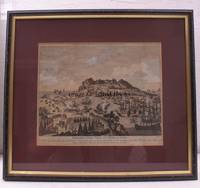
17826215European Magazine 1782. Engraved aquatint measuring approx. 6.75 x 9.00 ins 17.25 x 22.75 cms tastefully coloured in wash by hand in mulberry bevel-cut mount some very light age-marking a bright clean copy. This engraving was prepared by Lodge published on 1 October 1782 by J. Fielding of Paternoster Row J. Sewell of Cornhill and J. Debrett of Piccadilly and issued with the September 1782 number of the 'European Magazine'. It depicts the Rock from the Spanish town of La Linea with the Spanish troops encamped and deployed in the foreground. The English fleet appears in the middle distance with Gibraltar and its fortifications in the backgound. SCARCE ESPECIALLY IN THIS CONDITION. European Magazine, unknown
1719016252Amstelædami: L'Honore & Chatelai Freres Chatelain Amsterdam 1719. Print measures 48x37.cm plus margin. Rubbed along fold some light wear. Print in good clean condition. . Very Good. L'Honore & Chatelai, Freres Chatelain, Amsterdam unknown
171010089Rotomagi Rouen: Richardi Lallemant 1710. First Edition. Hardcover. Good/No DJ. First Edition. DESCRIPTION: Two volumes bound as one in black cloth spine and marbled boards. Marbled endpapers. One volume in Latin the other in French. Language: Latin / French. Book Condition: Good: Rebound with light wear to corners edges and spine ends. Tightly bound with lightly toned intact endpapers and pages. DJ Condition: No DJ Pages 196 287. Size: 15.5cm by 9.5cm. Richardi Lallemant hardcover
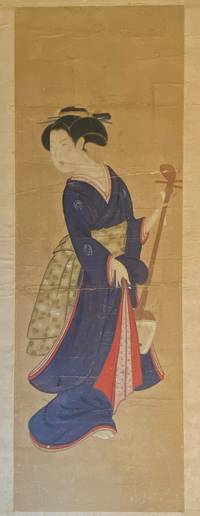
17755002Japan: NP 1775. A lovely large water colour showing a woman in traditional geisha clothing holding a Shamisen. Painted onto thin mustard coloured paper this has been laid onto a cream backing sheet also thin paper which has in turn been laid onto a larger sheet of thin paper. The three sheets together giving much more strength than a single thin sheet. The painting itself has been expertly produced but is unsigned. We have priced this as an un-attributable artist. The painting has some small cracks with creasing and a tiny amount of paint loss to it but still a lovely authentic piece of Edo art very similar in style to the portraiture of Katsushika Hokusai even to the background colour of the sheet. It is of a very similar period between 1775 and 1800. The style of the painting including the detailed depiction of clothing patterns and the graceful posture of the figure is characteristic of bijin-ga paintings of beautiful women which were popular in Japanese art during this time. The use of vibrant colors such as deep blue and red and intricate patterns suggests that this piece may have been created by an artist influenced by ukiyo-e a genre of woodblock prints and paintings that flourished during the Edo period. Artists like Kitagawa Utamaro or Suzuki Harunobu were renowned for similar depictions of women in elegant attire.It was possibly intended as a scroll painting. The painted sheet measures 70cm x 24cm. The largest backing sheet and hence work overall measures 81.5cm x 39cm. The shamisen 三味線 also known as sangen 三絃 or samisen all meaning "three strings" is a three-stringed traditional Japanese musical instrument derived from the Chinese instrument sanxian. Geisha's were often skilled Shamisen players and used them to entertain their customers. . Une belle grande aquarelle représentant une femme en tenue traditionnelle de geisha tenant un shamisen Peinte sur un papier fin de couleur moutarde celui-ci a été posé sur une feuille de support crème également en papier fin elle-même posée sur une feuille plus grande de papier fin. Les trois feuilles réunies donnent beaucoup plus de solidité qu'une seule feuille mince. La peinture elle-même a été réalisée par des experts mais elle n'est pas signée. Nous avons fixé le prix comme étant celui d'un artiste non attribuable. La peinture présente quelques petites fissures des plis et une minuscule perte de peinture mais il s'agit toujours d'une belle et authentique œuvre d'art Edo dont le style est très similaire à celui des portraits de Katsushika Hokusai jusqu'à la couleur de fond de la feuille. Elle date d'une période très similaire entre 1775 et 1800. Le style de la peinture y compris la représentation détaillée des motifs des vêtements et la posture gracieuse du personnage est caractéristique des bijin-ga peintures de belles femmes qui étaient populaires dans l'art japonais à cette époque. L'utilisation de couleurs vives comme le bleu profond et le rouge et de motifs complexes suggère que cette pièce a pu être créée par un artiste influencé par l'ukiyo-e un genre d'estampes et de peintures sur bois qui a fleuri pendant la période Edo. Des artistes comme Kitagawa Utamaro ou Suzuki Harunobu étaient réputés pour leurs représentations similaires de femmes en tenue élégante. La feuille peinte mesure 70 cm x 24 cm. La plus grande feuille de support et donc l'ensemble de l'œuvre mesure 815 cm x 39 cm. Le shamisen 三味線 également connu sous le nom de sangen 三絃 ou samisen tous signifiant "trois cordes" est un instrument de musique traditionnel japonais à trois cordes dérivé de l'instrument chinois sanxian. Les geishas étaient souvent d'habiles joueuses de samisen qu'elles utilisaient pour divertir leurs clients. NP hardcover
1743500052287Baptistae Pasquali 1743. 1st Edition . Hardcover. Fair. Boards detached. Inner temple library stamp <br/> <br/> Baptistae Pasquali, hardcover
173638403In Milano: Nella Stamperia Di Carlo Francesco Pastore. 1736. Reprint . Hardcover. Very Good/No Jacket Issued. 4to - over 9¾" - 12" tall. Small 4to later full vellum with spine lettered in red and black title page and many text pages lettered in red and black 3 fine full page woodcuts collates title page 14 preliminary pages including calendar pages then pages 1 to 432 plus 4 pages of index 24 pages of antifone music printed in red and black at the rear of the book this copy appears to lack pages 65-68 and pages 85 to 96 otherwise a very good copy. <br/> <br/> Nella Stamperia Di Carlo Francesco Pastore. hardcover
1742BS45SLIM17London: T. Cooper 1742. Pamphlet bound in half-calf. 61pp. Binding is slightly rubbed and worn. Private ownership. bs45. Hard Cover. Good. T. Cooper Hardcover
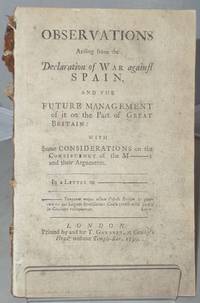
1739A5TRACT17London: T. Gardner 1739. Pamphlet no covers. 56pp. Title page and page 56 somewhat grubby. A decent copy. a5. Soft Cover. Good. T. Gardner Paperback
1785045481Madrid: Placido Barco Lopez 1785. Early Edition. Hardcover Vellum. Very Good Condition. Contemporary full vellum browned but sound. Endpapers with contemporary notes front pastedown missing a section old ink mark to title scattered foxing a nice clean copy generally. 279pp plus index.<br /> <br /> Early edition originally published in 1777 of a much reprinted manual. Size: Octavo 8vo. Quantity Available: 1. Shipped Weight: Under 1 kilo. Category: Books for Writers; Inventory No: 045481. Placido Barco Lopez hardcover
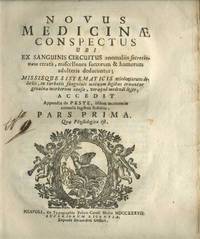
173715592AB1737. 2 Teile in 1 Band. Neapel F. C. Mosca 1737. Gr.-8°. 5 Bl. XII 96 XXV - 168 S. Interims-Pappband der Zeit mit handschriftlichem Rückentitel leicht bestoßen und angeschmutzt. Buchblock größtenteils unaufgeschnitten. Durchgehend geringfügig bis leicht fleckig stellenweise mit deutlich gebräuntem Textblock. Sonst in sehr schöner Erhaltung. Blake 202; vgl. Hirsch/H. III 112. - Philippe Hecquet 1661-1737 u.a. Arzt an der Charité und 1712 Dekan der med. Fakultät in Paris stand als Praktiker in hohem Ansehen. Das vorliegende Werk gehört zu seinen Hauptschriften und erschien zuerst 1772. unknown
1716500028552Amsterdam: d'Estienne Roger 1716. First Edition. . Hardcover. Good. Inscription by James Forbes Lord Forbes in 1756. Lord Forbes is the senior Lord of Parliament in the Peerage of Scotland. probably James Forbes 16th Lord Forbes 17351804. He married Margaret Gordon daughter of Rear Admiral William Gordon of Banff. The book is a presentation to William Gordon in 1756. Bookplate Lord Forbes <br/> <br/> d'Estienne Roger hardcover