Faulkner, WilliamBiblio.com
6 631 résultats
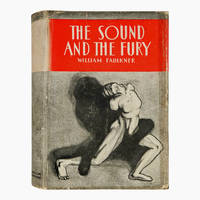
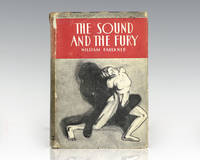
1929112328New York: Jonathan Cape and Harrison Smith 1929. First edition of Faulkner’s masterpiece. Octavo original cloth black and white patterned paper boards. Near fine in a very good unrestored first-issue dust jacket with the iconic design by Kathe Kollwitz on the front panel and a price of $3.00 for the book Humanity Uprooted on the rear panel with a chip to the spine. Petersen A6.2a. Brucolli & Clark I:121. Housed in a custom half morocco clamshell box made by the Harcourt Bindery. Although The Sound and The Fury is now considered one of top one hundred novels of the 20th century it actually wasn’t initially received well upon publication. This was mostly due to the fact that at the time Faulkner wasn’t well-known as a novelist although this was his fourth published work. Because he had not had much commercial success with his first few novels it is believed that the publisher limited the initial printing run to 1789 copies. It wasn’t until his novel Sanctuary was published in 1931 that he started being really noticed as a writer and more people started giving The Sound and The Fury more serious attention. The title of the book comes from the famous soliloquy of act 5 scene 5 of Shakespeare’s Macbeth. Faulkner literally takes Shakespeare’s words and writes a "tale told by an idiot"… in this case from the point of view of the members of the Compson family who are former Mississippi aristocrats who fall into financial trouble and over a 30 year period many of whom die tragically in one way or another…. Or as Shakespeare put it… “the way to dusty deathâ€. Faulkner used a stream of consciousness method conceived by other novelists such as James Joyce and Virginia Wolf. Although this narrative style and lack of regard for sentence structure can often alienate new readers it is considered a masterpiece by literary critics and scholars and played a large role in Faulkner’s receiving the Nobel Prize in Literature in 1949. Jonathan Cape and Harrison Smith hardcover
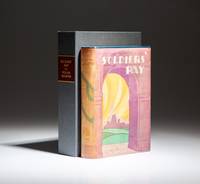
192613482New York: Boni & Liveright 1926. First Edition First Printing. Cloth. Near fine/very good. First edition first printing of Soldiers' Pay by William Faulkner in a first state dust jacket. Octavo 319pp. Blue cloth title stamped in yellow on spine and front cover. Contemporary ownership inscription across half title. Solid text block light rubbing to tips of spine a near fine example. In the publisher's restored first state dust jacket. Retail price of $2.50 on front flap An American Tragedy listed on rear panel restoration to spine and flap folds bright illustrations. Housed in custom gray cloth clamshell case title in gilt over red spine label. Bruccoli & Clark 121 Petersen A2a A handsome example of Faulkner's first novel one of approximately 2500 copies. Provenance: Sold by Parke-Bernet Galleries of New York in 1940 part of the library of the late Paul Lemperly of Lakewood Ohio who was a notable book collector of association copies. Includes Lemperly's bookplate on front pastedown. Boni & Liveright unknown
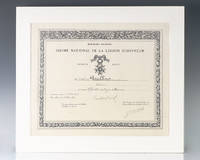
1949139733Republique Francaise 1949. Partially printed diploma awarded to William Faulkner as an Officer of the Légion d'Honneur conferred on him be the French government five months after he accepted the 1949 Nobel Prize in Literature. One page partially printed and completed in a calligraphic hand the diploma is signed by three French officials with an embossed seal. In near fine condition. Matted. The entire piece measures 15 inches by 18.5 inches. From the collection of William Faulkner. The formal presentation of this diploma was made at the French consulate on St. Charles Avenue in New Orleans in late October 1951. Faulkner was accompanied by his wife and mother who dressed in their finest attire for the occasion. Faulkner himself had made light of the ceremony saying he saw no reason to dress up "to receive another diploma and perhaps be kissed on both cheeks." He appeared with shoes unshined trousers unpressed and wearing the jacket with leather elbow patches he often wore hunting. This bluff however could not completely hide the importance this lifelong francophile placed on this award. He wrote a three-paragraph acceptance speech in French and delivered it slowly and precisely. In the surviving manuscript of the speech given to Saxe Commins lacking many accent marks and with words misspelled Faulkner stated that an artist ought to receive with humility an award conferred on him by the country which had always been "la mere universelle des artists." An American should cherish any souvenir from the country which had always been "la soeur d'Amerique." A man ought to guard with hope and pride any accolade from the country which was "la mere de la liberte de l'homme et de l'esprit humaine." The evening was a success and more than one commentator has surmised that Faulkner was probably more pleased and honored to be made an officer of the Légion d'Honneur that to have been awarded the Nobel Prize or any of his other many awards. Republique Francaise hardcover
194212382New York: Random House 1942. Limited Edition. Cloth. Very good. Signed limited edition of Go Down Moses and Other Stories by William Faulkner. Octavo 10 383pp. Three-quarter orange buckram paper covered boards top edge gilt title in gilt on spine. Stated "First Printing" on copyright page. Solid text block light wear to fore edge of text block. Archival repairs to spine and board edges tears on pages 285-288 repaired with Japanese tissue. Peterson A23.2a From a limited edition of 100 copies signed by William Faulkner this being number 55. The smallest limitation of any Faulkner signed works. A scarce example. Peterson A23.2a. William Faulkner 1897-1962 was an award-winning author with stories focusing on the American South. His work won the Nobel Prize in Literature and two Pulitzer Prizes for Fiction. A few specific pieces most notably The Sound and the Fury are considered to be in the top 100 best English-language novels of the 20th century. The title Go Down Moses and Other Stories was shortened to Go Down Moses in later editions. Random House unknown
1932WRCLIT63132New York: Harrison Smith & Robert Haas 1932. Large octavo. Rough woven tan cloth lettered in blue and orange. A fine copy in equally fine and unusually bright and fresh pictorial dust jacket with the very slightly chipped and tanned outer glassine wrapper carefully preserved. First edition first printing first binding. The first printing consisted of 8500 copies a relatively small number of which appeared with blue stamping only a characteristic of the bindings of the later impressions. The error "Jefferson" on p.340 has no bibliographic significance as it reoccurs in the reprints. PETERSEN A13a. MASSEY 103. Harrison Smith & Robert Haas hardcover books
193218444ENew York: Smith & Haas 1932. First Edition First Printing. From the library of film director Tod Browning with his signature in pencil to the front pastedown. Very good lightly used copy with a trace of edge wear a faint 1/3†spot to the cloth at the front board and slight edge wear in a very good bright dust jacket with a few tiny nicks and tears with two tears skillfully internally mended by an expert paper conservationist. At this time during the Great Depression Faulkner was attempting to break into Hollywood screenwriting as his income from his novels and stories provided very little. Tod Browning was Lon Chaney Sr.’s most noted director during the silent era specializing in strange and atmospheric crime films and pictures with elements of horror. With the coming of sound Browning directed Bela Lugosi in the original 1931 Dracula and at MGM he directed his 1932 masterpiece Freaks. Smith & Haas hardcover books
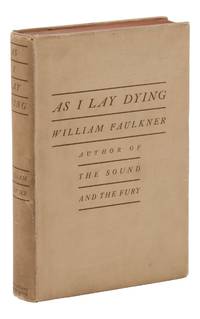
1933D1994London: Chatto and Windus 1933. Hardcover. Fine/Very Good. Original blue cloth gilt-stamped lettering on spine. Inscribed by Faulkner on the title-page to Else Faulkner's liaison when he visited Stockholm to collect the Nobel prize. Book is fine in a very nice example of the scarce dustwrapper price-clipped scuffed along the edges. <br/><br/>Faulkner met Else Jonsson 1912-1996 when he visited Stockholm in December 1950 to receive the Nobel Prize. Else was the widow of journalist Thorsten Jonsson 19101950 reporter for "Dagens Nyheter" in New York from 1943 to 1946 who had interviewed Faulkner in 1946 and introduced his works to Swedish readers. At the banquet in 1950 where Faulkner and Else met publisher Tor Bonnier referred to Else as widow of the man responsible for Faulkner being awarded the prize. They had an affair that lasted until the end of 1953. Chatto and Windus hardcover books
193218444ENew York: Smith & Haas 1932. First Edition First Printing. From the library of film director Tod Browning with his signature in pencil to the front pastedown. Very good lightly used copy with a trace of edge wear a faint 1/3†spot to the cloth at the front board and slight edge wear in a very good bright dust jacket with a few tiny nicks and tears with two tears skillfully internally mended by an expert paper conservationist. At this time during the Great Depression Faulkner was attempting to break into Hollywood screenwriting as his income from his novels and stories provided very little. Tod Browning was Lon Chaney Sr.’s most noted director during the silent era specializing in strange and atmospheric crime films and pictures with elements of horror. With the coming of sound Browning directed Bela Lugosi in the original 1931 Dracula and at MGM he directed his 1932 masterpiece Freaks. Smith & Haas hardcover
1933D1994London: Chatto and Windus 1933. Hardcover. Fine/Very Good. Original blue cloth gilt-stamped lettering on spine. Inscribed by Faulkner on the title-page to Else Faulkner's liaison when he visited Stockholm to collect the Nobel prize. Book is fine in a very nice example of the scarce dustwrapper price-clipped scuffed along the edges. <br/><br/>Faulkner met Else Jonsson 1912-1996 when he visited Stockholm in December 1950 to receive the Nobel Prize. Else was the widow of journalist Thorsten Jonsson 19101950 reporter for "Dagens Nyheter" in New York from 1943 to 1946 who had interviewed Faulkner in 1946 and introduced his works to Swedish readers. At the banquet in 1950 where Faulkner and Else met publisher Tor Bonnier referred to Else as widow of the man responsible for Faulkner being awarded the prize. They had an affair that lasted until the end of 1953. Chatto and Windus hardcover
19592373830/11/1959. <blockquote><p>It is dated 1959; we have found no later letter of Faulkner having reached the market</p><p>William Faulkner is among the greatest American writers of the 20th century and a Nobel Prize winner. Perhaps his most well known work is ""The Sound and the Fury"".</p></blockquote><p>By the time he was a teenager Faulkner was an accomplished hunter and was already displaying some of the characteristics that would mark him as a hunter for the rest of his life. He was also an avid lover of horses.</p><p>The “big woods†as he called them offered Faulkner an escape from the pressures of his art a turbid personal life and at least late in his life fame. But the hunt and the wilderness were more than just an escape for Faulkner; they were also an inspiration for some of his greatest literary works.</p><p>In late October Faulkner and his wife Estelle settled into their recently purchased Georgian brick house on Rugby Road in Charlottesville VA where they stayed till New Years. He would hunt enjoy his time outdoors write and take care of his horse. In his biography of Faulkner Joseph Blotter wrote of Faulkner ""Outdoors in the golden fall weather he was consistently working with Powerhouse a tremendous big strong hunter.""</p><p>On November 13 ""The Mansion"" the last of a trilogy on the unscrupulous Snopes family was published.</p><p>In this letter Faulkner announces his arrival in Virginia to his mother discusses fox hunting with his horse Powerhouse and refers to ""all three"" meaning himself Estelle and his only daughter Jill. John likely refers to Johnny his brother. Tiger Lily is almost certainly another pet.</p><p><strong>Autograph letter signed</strong> <em>""Billy""</em> November 30 1959 from Virginia to his mother Maud in Oxford MS the envelope still present written in his hand.</p><p><em>""Here we all three are 5 counting 'Power House' and 'Tiger Lily.' Dear we expect you and Jon to come on up here when you go to N. Carolina. All well here. Weather not too cold yet. I go fox hunting every other day every day when some friend can spare a horse since a hunter has to have one day of rest between hunts.""</em></p><p>ALSs of Faulkner are not common. We found only a handful stretching back decades.</p><p><img class=""alignnone wp-image-23729 size-post-window"" src=""https://cdn.raabcollection.com/wp-content/uploads/20231204152429/Folder-site-7-1600x1327.jpg"" alt="""" width=""1600"" height=""1327"" /></p> unknown
1930140947812New York: Jonathan Cape & Harrison Smith 1930. First Edition. Near Fine/Near Fine. First edition first printing first issue text with "I" misaligned on page 11. vi 254 pp. Bound in publisher's beige cloth lettered in brown red topstain. Near Fine with darkening to cloth at joints and trivial wear. In a Near Fine price-clipped dust jacket with light edgewear and soiling tanned spine panel small stain to bottom of rear panel and minimal worming to lower edge of spine and rear panel. A beautiful copy with firm binding. Jonathan Cape & Harrison Smith unknown
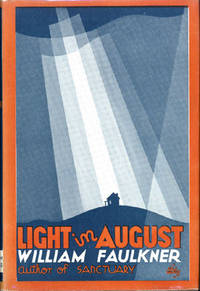
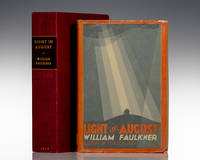
1932149881New York: Harrison Smith & Robert Haas 1932. First edition first issue with first printing statement on copyright page and “Jefferson†for “Mottstown†on page 340 line 1; first-issue binding lettered in blue and orange. Octavo original cloth. Fine in a near fine dust jacket with the rare original glassine. Petersen A13a; Howard A13.1a; Massey 103. Housed in a custom clamshell box. An exceptional example. One of William Faulkners most admired and accessible novels Light in August reveals the great American author at the height of his powers. Lena Groves resolute search for the father of her unborn child begets a rich poignant and ultimately hopeful story of perseverance in the face of mortality. It also acquaints us with several of Faulkners most unforgettable characters including the Reverend Gail Hightower plagued by visions of Confederate horsemen and Joe Christmas a ragged itinerant soul obsessed with his mixed-race ancestry. Powerfully entwining these characters stories Light in August brings to life Faulkners imaginary South one of literatures great invented landscapes in all of its unerringly fascinating glory. "No man ever put more of his heart and soul into the written word than did William Faulkner. If you want to know all you can about that heart and soul the fiction where he put it is still right there" Eudora Welty. Harrison Smith & Robert Haas hardcover
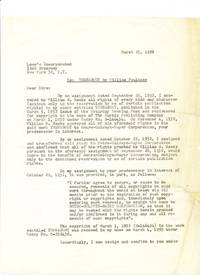
4043Faulkner signed this contract which transferred distribution rights of the film based on Faulkner's story "Turnabout" to the Loew's Corporation. "By an assignment dated September 26 1932 I conveyed to William B. Hawks all rights of every kind. in my story. TURNABOUT published in the March 5 1932 issue of the Saturday Evening Post and registered for copyright. On November 4 1932 William B. Hawks conveyed all. rights. to Metro-Goldwyn-Mayer. your predecessor. In my assignment. it was provided that I. secure. renewals of all copyrights.The copyright of March 1 1932. was renewed in my name on March 4 1959.Accordingly I now assign and confirm to you. the same rights in the work entitled TURNABOUT." Signed in full on the signature line "William Faulkner.". The film referenced in our document is titled "Today We Live" released in 1933 by MGM. According to the Turner Classics Movies web site this film is listed as being distributed by Loew's which was the parent company of MGM from 1924-1959. The story is about an American World War I aviator who befriends a British torpedo boat pilot and comes to see the war from a different perspective. The film considered a romance drama was produced and directed by Howard Hawks and starred Joan Crawford Gary Cooper Robert Young and Franchot Tone. Faulkner provided dialogue for the film. Hawks purchased the option on the story but Irving Thalberg then Vice President of MGM forced Hawks to hire Crawford for the film and forced Faulkner to write a love interest for the men. Crawford was under contract for MGM at the time. <br/><br/>All of this weakened Faulkner's original story and thus the film's plot. In addition the film apparently included inappropriate use of non-period costumes and an unconvincing Crawford. "Today We Live" turned into a failure. According to a movie review in the "New York Times" on April 15 1933 by Mordaunt Hall this "first of William Faulkner's literary efforts to reach the screen. is understood to have been amplified in the studio by the author. is at times vague and cumbersome. It possesses however the spark of sincerity. " Margin tears and stains show on right margins of both pages. unknown books
1929478 - 713 - 932<p><em>First printing of Faulkner's magnum opus in the first state of the dust jacket</em></p><p><strong>Publisher and Year</strong>: New York: Jonathan Cape and Harrison Smith 1929</p><p><strong>Edition</strong>: First edition first printing "First Published 1929" with no statement of reprint one of just 1789 copies. First-state dust jacket with <em>Humanity Uprooted</em> priced $3.00 on the rear panel incremented to $3.50 in the second state. Petersen A6.1; Meriwether 1962.</p><p><strong>Condition and Description</strong>: Octavo publisher's original art deco boards with matching endpapers spine lettered in black 401 pp. Modest toning to the boards; light foxing to the spine; wear to the edges mainly to the bottom edge. Rear board with a localized patch of discoloration consistent with printer's ink set-off during production of the book. Bookstore stamp to the front free endpaper "The Book Shop / 136 Park Place / Johnstown - PA" with light offsetting to the pastedown. Clean pages otherwise with no writing underlining or prior owner markings. The dust jacket shows rubbing to the surface; significant fading to the spine as usual; toning to a strip of the fore-edge and bottom edge of the front panel; closed tears to the edges sealed on the blindside with tape; and light creasing and a little loss to the tips and extremities. An attractive example of one of the most influential novels and one of the most iconic dust jackets of the twentieth century.</p><p><em>".I give you the mausoleum of all hope and desire.I give it to you not that you may remember time but that you might forget it now and then for a moment ." </em> Ranked #6 on the Modern Library's list of the 100 greatest novels of the 20th century <em>The Sound and the Fury</em> is widely considered Faulkner's finest work and a defining achievement in American modernism. Its formal experimentation and psychological depth secured its inclusion in TIME Magazine's All-Time 100 Novels and The Guardian's list of the 100 best novels written in English cementing its reputation as one of the most influential novels ever published.</p><p>Inventory ID: 478 - 713 - 932</p> Jonathan Cape and Harrison Smith
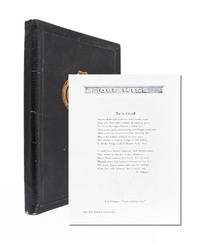
19204386Oxford Mississippi 1920. First edition. Embossed sheep over card stamped in gilt to front board. Marbled endpapers. A bit of rubbing and shelfwear to covers; spine cracked and several signatures loose but in all holding well. Ownership stamp to front pastedown. Internally a pleasing example with minimal wear and no marking. A Fine copy of this scarce piece which does not appear in the auction record and of which there is no other example on the market; the present yearbook contains Faulkner's first literary appearance in book form his poem To a Co-Ed page 174.<br /> <br /> "The Ole Miss annuals have a particularly treasurable quality about them; they breathe with the life of Faulkner's first creativity.which annuals to collect may seem a question of some complexity when all the choices are considered" Petersen. After all they show a young man engaging with peers imagining a career in art and testing out new facets to his identity. But the 1919-1920 annual stands out. To a Co-Ed was "his first literary appearance and his second published poem" Petersen. In it one gets a sense of the canon Faulkner learned during his time as a student -- references to major figures from the Iliad and the Divine Comedy abound. And while he has not yet tapped into the stream-of-consciousness that would mark his mature style such allusions would appear in these adult works repackaged and reimagined in the South. While original works by Faulkner would appear in later yearbooks the present is a landmark first.<br /> <br /> In addition to Faulkner's verse the yearbook allows a glimpse into his active campus life. He contributes drawings that appear on pages 20 105 145 155 and 157. He appears in the membership photographs for the Ole Miss staff and with the local American Legion post. Under the name Count William Falkner sic his name is listed in the membership of the Freshman Literary Class as well as under William Faulkner as a Special Student. <br /> <br /> Cofield 55. Daniel 19. Massey 75. Petersen 17. unknown
19361508170Random House 1936. 1st Edition. Hardcover. Fine/Fine. A fine first edition in a fine dust jacket with a signed page from the signed limited edition laid in. Signed by William Faulkner. Small sticker attached on front paste-down. Housed in a custom-made collector's slipcse. Random House hardcover books
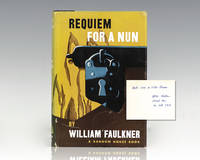
1951112874New York: Random House 1951. First edition of the sequel to Faulkner's Sanctuary. Octavo original cloth. Association copy inscribed by the author on the front free endpaper in the year of publication to his first cousin "With love to Sallie Burns <span class="match">William</span> Faulkner Oxford MS 20 Oct 1951." Sallie Falkner Burns was close with Faulkner and is mentioned in a number of Faulkner biographies as she knew more about his childhood and later years more than anyone living. Near fine in a near fine dust jacket. Jacket design M. McKnight Kauffer. The sequel to Faulkner's early novel Sanctuary Requiem for a Nun follows the previously introduced characters of Temple Drake her friend later husband Gowan Stevens and Gowan's uncle Gavin Stevens. The events in Requiem are set in Faulkner's fictional Yoknapatawpha County and Jackson Mississippi in November 1937 and March 1938 eight years after the events of Sanctuary. In Requiem Temple now married with a child must learn to deal with her violent turbulent past as related in Sanctuary. Random House hardcover books
1940109883New York: Random House 1940-1959. A complete set of the limited signed first edition of Faulkner's acclaimed Snopes Trilogy. Octavo original cloth. Each volume is signed by William Faulkner. Each are in near fine to fine condition. The Hamlet the first book of the series chronicles the advent and rise of the grasping Snopes family in mythical Yoknapatawpha County is a work that Cleanth Brooks called "one of the richest novels in the Faulkner canon." It recounts how the wily cunning Flem Snopes dominates the rural community of Frenchmans Bend- and claims the voluptuous Eula Varner as his bride. The Town the second novel records Flems ruthless struggle to take over the county seat of Jefferson Mississippi. Finally the Mansion tells of Mink Snopes whose archaic sense of honor brings about the downfall of his cousin Flem. "For all his concerns with the South Faulkner was actually seeking out the nature of man" noted Ralph Ellison. "Thus we must turn to him for that continuity of moral purpose which made for the greatness of our classics." Uncommon in this condition. Random House hardcover books
19292005419New York: Jonathan Cape Harrison Smith 1929. First. hardcover. Very good/Very good. A very good first edition so stated on copyright page in a very good restored dust jacket. Restoration to top of dj. 1st issue $3 price for Humanity Uprooted on back panel of dj. Housed in a custom made collector's clamshell case. Jonathan Cape Harrison Smith unknown books
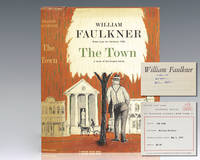
1957125095New York: Random House 1957. First edition first state with the 5/57 at the bottom of the front flap of the dust jacket. Octavo original cloth. Signed by the author on the title page in the year of publication "11 Nov 57 Best wishes William Faulkner." With the publisher's advance review copy slip dated May 1 1957 laid in and a copy of the jacket photograph of Faulkner by Phyllis Cerf laid in. Near fine in a near fine dust jacket with only light rubbing to the crown of the spine bookplate. Jacket design by Push Pin Studios. Rare and desirable signed in the year of publication. The Town follows the fictional Snopes family of Mississippi. It is the second of the "Snopes" trilogy following The Hamlet 1940 and completed by The Mansion 1959. Random House hardcover books
19361508170Random House 1936. 1st Edition. Hardcover. Fine/Fine. A fine first edition in a fine dust jacket with a signed page from the signed limited edition laid in. Signed by William Faulkner. Small sticker attached on front paste-down. Housed in a custom-made collector's slipcse. Random House hardcover
194082214New York:: Random House 1940. First edition; limited issue; No. 193 of 250 copies signed by William Faulkner. original light green paper covered boards; dark green cloth spine and corners; gilt-lettered spine; t.e.g. in plain glassine wrapper. Preserved in a custom quarter morocco clamshell folding box. Nearly fine; the glassine is chipped as usual. This is the scarcest of the Random House signed limited Faulkners. . 8vo. Peterson A22.1a. Random House, hardcover
1940109883New York: Random House 1940-1959. A complete set of the limited signed first edition of Faulkner's acclaimed Snopes Trilogy. Octavo original cloth. Each volume is signed by William Faulkner. Each are in near fine to fine condition. The Hamlet the first book of the series chronicles the advent and rise of the grasping Snopes family in mythical Yoknapatawpha County is a work that Cleanth Brooks called "one of the richest novels in the Faulkner canon." It recounts how the wily cunning Flem Snopes dominates the rural community of Frenchmans Bend- and claims the voluptuous Eula Varner as his bride. The Town the second novel records Flems ruthless struggle to take over the county seat of Jefferson Mississippi. Finally the Mansion tells of Mink Snopes whose archaic sense of honor brings about the downfall of his cousin Flem. "For all his concerns with the South Faulkner was actually seeking out the nature of man" noted Ralph Ellison. "Thus we must turn to him for that continuity of moral purpose which made for the greatness of our classics." Uncommon in this condition. Random House hardcover
19292005419New York: Jonathan Cape Harrison Smith 1929. First. hardcover. Very good/Very good. A very good first edition so stated on copyright page in a very good restored dust jacket. Restoration to top of dj. 1st issue $3 price for Humanity Uprooted on back panel of dj. Housed in a custom made collector's clamshell case. Jonathan Cape Harrison Smith unknown
1957140942299New York: Random House 1957. First Edition. First edition first printing with repeated line on p. 327 second state binding jacket lacks 5/57 but is priced at $3.95. Signed by William Faulkner on the title page inscribed to fellow Southern writer Manly Wade Wellman "To W M Wellman from Bill Faulkner Richmond 15 December 1958." A very interesting association as Faulkner notoriously made a stink when he was snubbed for a mystery story award in 1946 losing out to Wellman a prolific genre writer. Rumor has it that Faulkner was drunk and looking to pick a fight with Wellman a former college football player until he realized his size. But the feud appears to have been short-lived; Wellman was an admirer of Faulkner's style and wrote critically on it. Upon Faulkner's death in 1962 though Wellman was offered his position as writer-in-residence at University of Virginia but turned it down.<br /> <br /> <p>viii 371 pp. Bound in publisher's tan cloth with black lettering an green ruling. Near Fine with small ink smudge to title page slight reading wear in a Near Fine unclipped dust jacket. Random House unknown