606 résultats
17431545Glasguae Glasgow: In Aedibus Academicis Excudebat Robertus Foulis Academiae Typographus. 1743. First Edition. Leather Bound. pp. 2 105. 12mo. measuring 20 cm tall. Unassuming modest brown leather over boards; four raised bands to spine five compartments. Printed in Greek type with the Latin translation on the facing page. Extremities rubbed some scuffing some chipping to the spine ends. Internally very clean and unmarked with tight sound binding. The leather binding has recently been professionally replenished and treated with a natural leather preserver. Scarce in commerce. Correponds to OCLC #61707412. Glasgow born Robert Foulis 1707-1776 was a Scottish printer whose work had considerable influence on the printers and publishers of his time. Initially apprenticing as a master barber he was encouraged to take up the trade of printing and bookselling at the suggestion of his friend Francis Hutcheson of the University of Glasgow. Beginning in 1741 Foulis engaged in the selling of books in Glasgow and it was very shortly thereafter in 1742 that he set up his own press. He was appointed printer to the University of Glasgow in 1743 and in the same year produced the first Greek book printed in Glasgow the Peri herm neias in both Greek and Latin of the pseudo-Demetrius Phalereus. "Five years later he went into partnership with his brother Andrew and by 1775 had produced more than 500 separate editions including an edition of Homer 4 vol. folio 175658 Callimachus small quarto 1755 Thomas Grays Poems quarto 1768 Herodotus Thucydides and Xenophon with Latin translations and one of the first Scottish editions of Shakespeare. The Foulises best works were distinguished by their excellent layout legibility and accuracy." EB April 2019. Some of the credit for their achievement is attributable to the renowned type-maker and punch-cutter Alexander Wilson from whom they purchased their types. Robert Foulis died on 2 June 1776 in Edinburgh. <br/><br/> In Aedibus Academicis Excudebat Robertus Foulis Academiae Typographus. hardcover
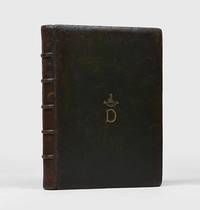
1824166494London: Josiah Taylor 1824. First Taylor edition of Theophrastus' timeless gallery of personality traits translated into English and beautifully illustrated with caricatures. The English translation is followed by the Greek text and notes. Taylor 1787-1865 was a philosophical and historical writer artist and inventor. Born into a family of engravers he initially followed this trade before turning to literature. This edition was welcomed with enthusiastic reviews the Literary Chronicle highlighting that "The sketches are bold and spirited full of character; there is scarcely an extraneous or unnecessary line in their whole engraving". This copy was bound for Sotheran's in London for Joseph Cockfield Dimsdale 1849-1912 with his gilt monogram stamp on the front cover. Dimsdale was a British banker and Conservative politician who served as Lord Mayor of London from 1901 to 1902. Quarto 270 x 193 mm. With 50 mounted wood-engraved illustrations. Late 19th-century green morocco over bevelled boards spine with raised bands gilt lettering in compartments monogram stamp "D" surmounted by a griffin's head and motto "quod Deus vult fiet" of Joseph Cockfield Dimsdale 1849-1912 on front cover marbled endpapers edges gilt. Spine and extremities faded to brown a few spots of wear at extremities front joint partly cracked short splits at rear joint ends and inner hinges but firm a little peripheral skinning to endpapers from adhesion margins of rear blanks toned occasional spot of foxing to contents otherwise clean. A very good wide-margined copy. hardcover
1967040653United States: University Books Inc 1967. Limited & Numbered . Hardcover. Very Good/NO Dustwrapper. 4to - over 9¾" - 12" tall. Two Volumes in Slipcase. Now for the first time faithfully translated into English. Edited with a biographical preface elucidatory notes Hermetic vocabulary and index by Arthur Edward Waite. Vol I: Hermetic Chemistry. Vol II: Hermetic Medicine and Hermetic Philosophy. Complete Reprint of the 1894 Edition. Unusual Ex-Libris Plate of B.J.H. King author. Limited & Numbered Edition No 655 of 1000 sets. University Books Inc. New York USA 1967. I: xxiv 394pp; II: viii 396pp hb slipcase No Dust-wrapper slightly worn & bumped 1/4 gilt grey/black cloth red cloth maroon slip case vg <br/> <br/> University Books Inc hardcover
1993BN108839Anger-Verlag 1993. 1993. Hardcover. Sämtliche Werke 4 Bde. <br/><br/>Sämtliche Werke 4 Bde. Anger-Verlag hardcover
1585D11004Frankfurt am Main: Apud heredes Andreae Wecheli heirs of Andreas Wechel MDLXXXV 1585. Hardcover. Very Good. 4to 210 x 149mm. 16 blank leaves at front and back 4 318 2 pages including final leaf with Wechel printers device. Title also with Wechels woodcut printers device a pegasus soaring over a caduceus pair of cornucopia and shaking hands AW monogram twice. Edited by Friedrich Sylburg. Dedicated to French scholar Joseph Justus Scaliger 1540-1609. Latin dedication notes and index. Greek text 18th-century calf marbled endpapers and red edges rebacked; light edgewear light marginal foxing title lightly browned. Likely remaining for several generations at the library of Balliol College Taylor Institution Oxford number B.181 deaccessioned sometime in the early 20th century two bookplates on front pastedown. Collection of Francis Howard Forbes 1881-1957 professor of Greek language and literature at Amherst College his round pictorial bookplate of Attic-style scribes on front pastedown. This particular copy was cared for by Oxford institutions for a good part of its history then crossed into a New England personal library of a classical scholar sometime in the early 20th century. <br/><br/>This is the self-contained volume from the 1584-1587 collected edition of the works of Aristotle in Greek and the Metaphysica of Theophrastus. Friedrich Sylburg 1536-1596 was a German classical scholar who made important contributions to several popular Greek texts of the later sixteenth century like Estiennes Greek Thesaurus. In 1583 Sylburg resigned from an educational post he held at Lich and moved to Frankfurt to work as leading active editor for the enterprising Wechel publishers. The humanist printers flourished in three distinct cities; Paris Frankfurt and Hanau. Andreas Wechel settled the firm in Frankfurt and distinguished it mainly by publishing neo-Latin literature classical philology and works by Ramus and his followers. The relationship between Sylburg and the Wechel printers was a seamless match; this 1585 edition of Aristotle was praised for its great critical power and finesse. It is widely regarded as the authoritative edition of its kind. Sound example of a sixteenth century published work on Aristotelian principles born from the inventive relationship between scholar and press.Fabricius-Harles III 444; Hoffmann I 275 and 289. Apud heredes Andreae Wecheli (heirs of Andreas Wechel) hardcover
1585D11004Frankfurt am Main: Apud heredes Andreae Wecheli heirs of Andreas Wechel MDLXXXV 1585. Hardcover. Very Good. 4to 210 x 149mm. 16 blank leaves at front and back 4 318 2 pages including final leaf with Wechel printers device. Title also with Wechels woodcut printers device a pegasus soaring over a caduceus pair of cornucopia and shaking hands AW monogram twice. Edited by Friedrich Sylburg. Dedicated to French scholar Joseph Justus Scaliger 1540-1609. Latin dedication notes and index. Greek text 18th-century calf marbled endpapers and red edges rebacked; light edgewear light marginal foxing title lightly browned. Likely remaining for several generations at the library of Balliol College Taylor Institution Oxford number B.181 deaccessioned sometime in the early 20th century two bookplates on front pastedown. Collection of Francis Howard Forbes 1881-1957 professor of Greek language and literature at Amherst College his round pictorial bookplate of Attic-style scribes on front pastedown. This particular copy was cared for by Oxford institutions for a good part of its history then crossed into a New England personal library of a classical scholar sometime in the early 20th century. <br/><br/>This is the self-contained volume from the 1584-1587 collected edition of the works of Aristotle in Greek and the Metaphysica of Theophrastus. Friedrich Sylburg 1536-1596 was a German classical scholar who made important contributions to several popular Greek texts of the later sixteenth century like Estiennes Greek Thesaurus. In 1583 Sylburg resigned from an educational post he held at Lich and moved to Frankfurt to work as leading active editor for the enterprising Wechel publishers. The humanist printers flourished in three distinct cities; Paris Frankfurt and Hanau. Andreas Wechel settled the firm in Frankfurt and distinguished it mainly by publishing neo-Latin literature classical philology and works by Ramus and his followers. The relationship between Sylburg and the Wechel printers was a seamless match; this 1585 edition of Aristotle was praised for its great critical power and finesse. It is widely regarded as the authoritative edition of its kind. Sound example of a sixteenth century published work on Aristotelian principles born from the inventive relationship between scholar and press.Fabricius-Harles III 444; Hoffmann I 275 and 289. Apud heredes Andreae Wecheli (heirs of Andreas Wechel) hardcover books
1589934320031<p>English description below</p><p>Dritter Band der seltenen ersten deutschen Gesamtausgabe von Paracelsus Schriften maßgeblich für alle späteren Ausgaben. Herausgegeben von Johann Huser mit Unterstützung des Kurfürsten und Kölner Erzbischofs Ernst Prinz von Bayern.</p><p>Mit 2 ganzseitigen Porträt-Holzschnitten wdh. die Paracelsus 1540 nach einem Kupferstich von Augustin Hirschvogel zeigen 1 Wappenholzschnitt Das Paracelsus-Wappen und als Wappenspruch die Grabinschrift PAX VIVIS REQVIES AETERNA SEPVLTIS und 1 Holzschnitt-Druckermarke am Ende. Basel Conrad Waldkirch 1589. Schweinslederband d. Zt. 24 x 17 cm 5 Bl.; 420 S. 55 Bll. Register. Ecken etwas beschabt durchgehend gebräunt vgl. die Fotos. Insgesamt gutes Exemplar der geschätzten ersten Huser'schen Ausgabe.</p><p>Ein Digitalisat aus der Sammlung der Bayerischen Staatsbibliothek finde sich hier: www.digitale-sammlungen.de/de/view/bsb00022504</p><p><br /><br />Third volume of the rare first German complete edition of Paracelsus' writings whose text became authoritative for all later editions. It came about with the support of the Elector and Archbishop of Cologne Ernst Prince of Bavaria and was edited by Johann Huser.<br />With 2 full-page portrait woodcuts ditto showing Paracelsus 1540 after an engraving by Augustin Hirschvogel 1 armorial woodcut the Paracelsus coat of arms and as heraldic motto the epitaph PAX VIVIS REQVIES AETERNA SEPVLTIS and 1 woodcut printer's mark at the end. Basel Conrad Waldkirch 1589. Contemporary pigskin binding 24 x 17 cm 5 fol.; 420 pp. 55 ll. Index. Corners a bit scuffed browning throughout please see the images. Overall good copy of Huser's esteemed first edition.<br />A digital copy from the collection of Bayerische Staatsbibliothek can be found here: www.digitale-sammlungen.de/de/view/bsb00022504<br /><br /><br /><br /></p> Conrad Waldkirch hardcover
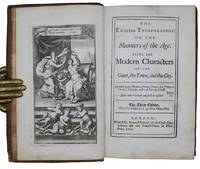
1708AQ28440London: Printed for Bernard Lintott 1708. 14 384pp. With an engraved frontispiece. Contemporary panelled calf calf lettering-piece. Extremities worn upper joint split lower joint starting loss to head-cap. Endpapers browned scattered spotting early inked ownership inscription of George Leslie to REP. Armorial bookplate to FEP of Scottish advocate and philosopher Henry Home Lord Kames 1696-1782. An extended edition of an early eighteenth-century work of moral philosophy sometimes attributed to lexicographer and journalist Abel Boyer 1667-1729. First printed in 1702 the book collects aphorisms and observations on contemporary character types and traits social institutions and behaviour drawn from the writings of La Bruyere La Rochefoucauld and others. ESTC T85463. Third edition. 8vo. Printed for Bernard Lintott unknown
159966183Editio altera recognita, & aliquot capitibus aucta ex MSS, cum indice triplici, primo nominum propriorum : secundo Graeco ; tertio Latino ; utroque vocum & rerum, 1 vol. petit in-8 reliure XVIIe plein veau marbré, dos lisse orné à la grotesque, Apud Antonium de Harsy [ Antoine de Harsy ], Lugduni [ Lyon ], 1599, 12 ff., 351 pp., 22 ff. n. ch., 1f. blanc, 1 f. n. ch. ("Excudebat Guichardus Jullieron, Typographus Regius, Lugduni, 1599")
In folio; due opere in un volume: (8), 396, (28) pp. e 143, (9) pp. Bella legatura seicentesca in piena pergamena con titolo in oro al dorso che si presenta a sei nervi, qualche lieve segno del tempo ma nel complesso in buone condizioni di conservazione. Bella marca tipografica di Guillaume Rouillé (1545-1589) al frontespizio di ogni volume. Alcune pagine leggermente ed uniformemente brunite a causa alla qualità della carta, ininfluente. Un leggerissimo alone ininfluente al margine esterno bianco delle ultime 10 carte del secondo volume e nel complesso ambedue le opere si presentano in buone-ottime condizioni di conservazione. Testatine, iniziali e finalini xilografici. Bell’edizioni stampate da Rouillé di queste due celebri opere del grande scrittore, medico e filosofo originario di Riva del Garda, Giulio Cesare Scaligero, latinizzato in Julius Caesar Scaliger (1484-1558). Di origine italiana, trascorse in Francia parte della sua vita, e la parte più fruttuosa della sua carriera. A dispetto del suo atteggiamento arrogante e incline alla polemica, era alta la sua reputazione tra i contemporanei, che lo giudicavano così distinto nel suo sapere e talento, che, secondo Jacques Auguste de Thou, nessuno degli antichi poteva essere collocato sopra di lui, e che l’età in cui visse non presentò nessun sapiente paragonabile a lui. Nelle proprie note biografiche, Scaligero si spaccia per un discendente del casato dei Della Scala (che furono, per 150 anni, i signori di Verona) e si dice nato nell’anno 1484 a Rocca di Riva, sulle rive del Lago di Garda. Era forse figlio di Niccolò della Scala, a sua volta figlio di Guglielmo.Quando era dodicenne, il suo protettore, l’imperatore Massimiliano I d’Asburgo, lo nominò tra i suoi paggi. Rimase per diciassette anni al servizio dell’imperatore, distinguendosi prima come soldato e poi come capitano. Ma non dimenticava di coltivare né le lettere, nelle quali aveva avuto come precettori alcuni tra i più eminenti studiosi del tempo, né le arti, che aveva studiato con considerevole successo sotto la direzione di Albrecht Dürer. Nel 1512 prese parte alla battaglia di Ravenna. Ma poco in verità è provato della vita dello Scaligero fino al 1525 quando divenne medico personale del vescovo di Agen, in Francia. Definiva i suoi studi classici come un gradevole rilassamento da compiti più severi. Qualsiasi siano state le sue vere faccende nei suoi primi 40 anni di vita, sicuramente queste lo resero un osservatore accurato e ravvicinato, e lo avevano reso edotto di molti fenomeni curiosi e poco noti, che aveva pienamente registrato in una tra le più tenaci memorie della storia. E’ celebre anche per aver in un certo modo anticipato il metodo induttivo. I due trattati qui presentati sono considerati fra i suoi più originali. In essi metteva a frutto le proprie dirette esperienze nel campo della botanica ed erboristeria, esperienze sia maturate nella sperimentazione diretta sia nella ricerca erudita di descrizioni di piante in fonti letterarie e artistiche, tanto classiche che moderne in parte mutate da Teofrasto ed Aristotele. Importante opera di botanica, farmacia ed erboristeria. Due rare edizioni. Good copies, rare. Bibliografia: I opera Pretzel 8090, II opera 8088.
2033Glasguæ: in ædibus academicis excudebat Robertus Foulis Academiae Typographus 1743. Hardcover. Good. Octavo. ii 53 52pp. 1 A4-G4 - G4 blank A4-F4 G2. Greek text followed by the Latin translation. Contemporary red morocco spine gilt. Bound with: 24 page Greek manuscript. This manuscript follows the divisional sections of the Greek text and acts as an explanatory or transilational adjunct to it. This is the first book in which Foulis described himself as University Printer to which office he was elected on 31 March 1743. <br/> <br/> Glasguæ: in ædibus academicis excudebat Robertus Foulis Academiae Typographus, 1743. hardcover
17654210Nouvelle édition avec des notes par M. Coste et un beau portrait de La Bruyère gravé par Cathelin.Notre exemplaire a appartenu à J. I. Commin, important consul de la ville d'Avignon, qui a laissé des Mémoires sur la Révolution à Avignon. Plein veau raciné, dos à nerfs orné, triple filet sur les plats, tranches rouges. Reliure de l'époque. Très bon Paris Hochereau et Panckoucke. 1765 1 volume grand in-4°;
In-4 p. (mm. 314 x 226), mz. pergamena coeva, titolo ms. al dorso, 8 cc.nn., 49 pp., 1 c.b., 2 cc.nn., 57 pp., 1 c.nn. (di Indice). L’opera, dedicata dal tipografo a Ferdinando Marescalchi, è divisa in due parti: la prima contiene il testo in greco antico e la seconda il testo in latino. Edizione greco-latina del “celebre opuscolo "I Caratteri morali" del filosofo, naturalista ed erudito greco Teofrasto (IV sec. a.C.), discepolo di Aristotele e suo successore nella direzione del Liceo. I "Caratteri" costituiscono una specie di galleria di ritratti morali tutti schizzati molto rapidamente in uno stile elegante ma semplice, e rivelano una penetrazione assai sottile della natura umana. I tipi psicologici descritti sono trenta; tra i principali si notano: l’ipocrita, l’adulatore, il chiacchierone, il rustico, il compiacente, il cinico, il pitocco, etc., etc.. "I Caratteri" sono infusi di quello spirito comico e buffonesco donde sorse e si sviluppò la commedia ateniese, così l’antica come la nuova”. Così Diz. Opere Bompiani,II, p. 121. Cfr. Brooks,561: “Edizione bella quanto l’altra (in folio)”. Pregevole esemplare con barbe.
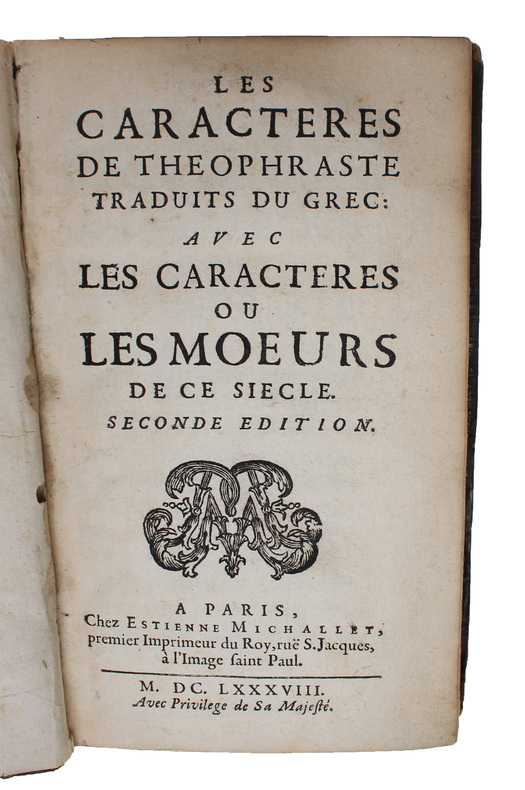
168828099Paris, Estienne Michallet, Se vend à Bruxelles chez Jean Leonard, 1688. Later (ca. 1800) cardboardbdg. w. marbled peper. Library-labels on back. Hinges, capitals and corners w. traces of use. Occationally brownspotted. (56), 226, (1) pp.
168828099Paris Estienne Michallet Se vend à Bruxelles chez Jean Leonard 1688. Later ca. 1800 cardboardbdg. w. marbled peper. Library-labels on back. Hinges capitals and corners w. traces of use. Occationally brownspotted. 56 226 1 pp. <br/><br/><em>This is the reimpression of the original second edition with the words "Se vend à Bruxelles chez Jean Leonard" on title-page from the same year as the first original edition. "Cette réimpression assez belle a 28 ff. prélim. et 226 pp. de texte plus un f. pour le privilége; l'errata n'y est pas reproduit bien que les corrections qu'il indique n'aient pas été faites dans le texte." Brunet III p.720. This work includes the first French translation of Theophrast's Characters and probably the first translation into any modern language. "Theophraste a eu le grand honneur comme on sait d'être ttraduit au XVIIe siècle par La Bruyère: et c'est pourquoi en France plus que dans tout autre pays en dehors même du cercle des érudits son nom et son opuscule sont populaires." navarre Budé-edition of "Caractères" Paris 1920.Jean de la Bruyère 1639/1644 - 1996 was a very famous French moralist and writer. "C'est au commencement de 1688 que parut la premiere édition des "Caractères de Théophraste traduits du grec ou les Mæurs de ce siècle." L'auteur mettait ses propres observations sur la société moderne sous le patronage d'un ancien." N.B.G. p. 427. The "Characters" gave La Bruyère quite a few enemies and created furor in the learned world. In Denmark Holberg calls him "trivial and simple" Epistle 404. "Mais si en effet la malignité contemporaine applaudissant aux traits satiriques de l'ouvrage a peu contribuer à sa vogue le jugement de la postérité l'a consacré comme un des meilleurs livres de notre langue." N.B.G. p. 427. This work is thus still considered to be one of the greatest French books. Voltaire writes in "Siecle de Louis XIV c. XXXII": "On peut compter parmi les productions d'un genre unique les "Caractères" de La Bruyère. Un style rigide concis nerveaux des expressions pittoresques un usage tout nouveau de la langue mais qui n'en bless pas les règles frappèrent le public". Bruyère's work with the translation really did cause astonishment and had an immense impact on late 17th century Europe and onwards; it created a new litterary genre in Europe and the age of Enlightenment was delighted with the short precise characterisations of people and their customs. For an analysis of the contents and the impact on the time of La Bruyère see Nouvelle Biographie Generelle N.B.G. pp. 426-39. Brunet V:798 III:721 Graesse 4:61. </em> unknown
152924241<p><strong>1529 GREEK Theophrastus BOTANY Philosophy Metaphysics Causes of PLANTS Botanical</strong></p><p><em>"Time is the most valuable thing a man can spend." </em></p><p>― Theophrastus </p><p>Theophrastus was a 4th-century BC Greek philosopher known for his studies in metaphysics and logic of Aristotle and Plato. One of his remaining works was '<em>On the Causes of Plants'</em> an extensive botanical treatise. In fact this work is <strong>considered to be one of the most important works of botany from the middle ages.</strong> Theophrastus describes plant growth instruction on planting and harvesting soils and fertilizers farming tools and the medicinal properties of many plants.</p><p>This 1529 edition of Theophrastus' '<em>Plants'</em> was published in Lutetia or Paris by Christian Wechel.</p><p>Item number: #24241</p><p>Price: $1950</p><p>THEOPHRASTUS</p><p><strong><em>Theophrasti De Cavsis Plantarvm Libri VI. Theodoro Gaza Interprete</em></strong></p><p>Lutetiæ: ex officina Christiani Wechel 1529.</p><p><u>Details</u>: </p><p><!-- if !supportLists-->· <!--endif-->Collation: Complete with all pages</p><p><!-- if !supportLists-->o <!--endif-->19 2-354 24</p><p><!-- if !supportLists-->o <!--endif-->Dozens of illustrated initials throughout</p><p><!-- if !supportLists-->· <!--endif-->Language: Latin </p><p><!-- if !supportLists-->· <!--endif-->Binding: Leather; secure</p><p><!-- if !supportLists-->· <!--endif-->Size: ~6.25in X 4.25in 16cm x 10.5cm</p><p><!-- if !supportLists-->· <!--endif-->Exceedingly rare valuable and desirable with auction records and price comparisons at over $3000</p><p>Our Guarantee:</p><p>Very Fast. Very Safe. Free Shipping Worldwide.</p><p>Customer satisfaction is our priority! Notify us with 7 days of receiving and we will offer a full refund without reservation!</p><p>24241</p><p>Photos available upon request. </p> Christiani Wechel hardcover
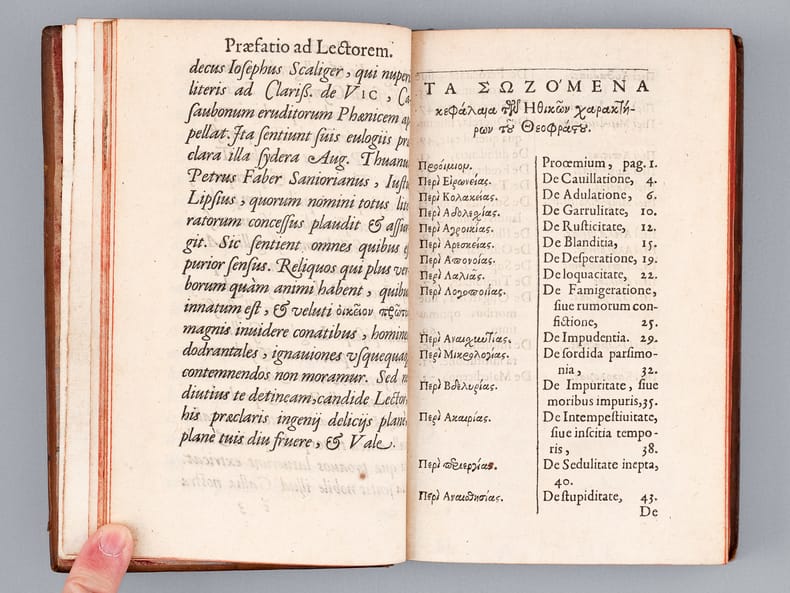
1599ST16215hLugduni Lyon: Excudebat Guichard Julliéron apud Antoine de Harsy 1599. Editio Altera Second Edition; EDITIO PRINCEPS of books 24-28. 173 x 109 mm. 6 7/8 x 4 1/4". 12 p.l. 349 1 pp. 24 leaves.Edited by Isaac Casaubon. <br/> 18th century French polished calf smooth spine gilt in compartments with central floral sprig surrounded by leaf tools gilt lettering of owner's name Brunck at tail of spine red morocco label marbled endpapers older repairs to joints. Printer's device on title page. Text in Greek and Latin. Title page with ink ownership inscription of Bibliothèque Villelufpen and Richard Brunck; isolated ink marginalia in Hebrew Arabic Greek or Latin. Dibdin II 501; STC French 419; Graesse VII 125; USTC 158510. ◆A couple of short scratches and two small water stains to upper board shallow chip to head of spine leaves somewhat browned due to paper quality a couple of tiny rust spots but a very good copy clean and fresh internally in a sound binding.<br/> <br/> From the library of a notable--and perhaps notorious--classical scholar this is an important edition of the Greek philosopher's "Characters" with Isaac Casaubon's revisions to his translation and commentary of 1592 and the addition of five sections printed here for the first time that Casaubon had recently discovered at the Palatine Library. One of the earliest known works of psychology "Characters" contains pithy descriptions of the various types of human foibles noted by the Oxford Companion for their "remarkable vivacity and keenness of observation." A pupil of Aristotle and the master's successor as head of the school of Peripatetic philosophy Theophrastus ca. 371 - ca. 287 B.C. wrote widely on a number of subjects ranging from ethics to physics to botany he is considered the "father" of the last discipline. He would have considered these descriptions of such characters as "The Flattering Man" "The Stupid Man" and "The Oligarch" a minor work but it is one that has weathered the centuries. The present translation and commentary marked a milestone in the life of the great classical scholar Isaac Casaubon 1559-1614. Sandys says "It is not until we reach his commentary on the 'Characters' of Theophrastus 1592 that we find a work that is marked by his distinctive merit an interpretation of a text of the most varied interest founded on wide reading and consummate learning. It was a work that won the highest praise from Scaliger." Dibdin called the commentary "a rich mine of Grecian literature." Former owner Richard François Philippe Brunck 1729-1803 was a classical scholar of considerable note who devoted his leisure to the critical revision of the Greek poets. According to Britannica "He spent considerable sums of money in publishing editions of the Greek classics." Flaunting the established mode of editing and criticism he did not hesitate to make clarifying changes to difficult or inscrutable passages of text--whether these alterations were supported by manuscript authorities or not. Deprived of his royal pension by the French Revolution Brunck was forced to sell portions of his library in 1790 and again in 1801. Excudebat Guichard Julliéron apud Antoine de Harsy unknown
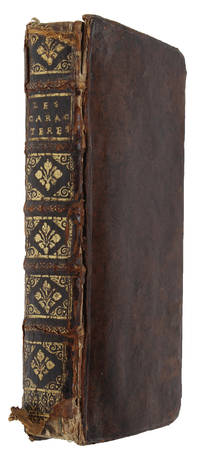
168827999Paris, Estienne Michallet, 1688. Cont. full calf. 5 raised bands on back, back richly gilt, all edges of boards gilt. Lacking leather at capitals, front-hinge cracked, so cords are showing.
168827999Paris Estienne Michallet 1688. Cont. full calf. 5 raised bands on back back richly gilt all edges of boards gilt. Lacking leather at capitals front-hinge cracked so cords are showing. <br/><br/><em>Second or third printing of the original edition. The title-page states "seconde edition" but it is probably the third printed in the same year as the first and second being a page-by-page re-impression of the second except for the fact that corrections have been made and the errata-leaf is thus not printed in the third. Both the second and third original editions are from the same year and by the same printer as the first. "La seconde édition également impr. en 1688 n'offre que quelques légers changements. et la troisième sous la même date ne qu'une simple réimpression de la seconde." Brunet III:720. This work includes the first French translation of Theophrast's Characters and probably the first translation into any modern language. "Theophraste a eu le grand honneur comme on sait d'être ttraduit au XVIIe siècle par La Bruyère: et c'est pourquoi en France plus que dans tout autre pays en dehors même du cercle des érudits son nom et son opuscule sont populaires." navarre Budé-edition of "Caractères" Paris 1920.Jean de la Bruyère 1639/1644 - 1996 was a very famous French moralist and writer. "C'est au commencement de 1688 que parut la premiere édition des "Caractères de Théophraste traduits du grec ou les Mæurs de ce siècle." L'auteur mettait ses propres observations sur la société moderne sous le patronage d'un ancien." N.B.G. p. 427. The "Characters" gave La Bruyère quite a few enemies and created furor in the learned world. In Denmark Holberg calls him "trivial and simple" Epistle 404. "Mais si en effet la malignité contemporaine applaudissant aux traits satiriques de l'ouvrage a peu contribuer à sa vogue le jugement de la postérité l'a consacré comme un des meilleurs livres de notre langue." N.B.G. p. 427. This work is thus still considered to be one of the greatest French books. Voltaire writes in "Siecle de Louis XIV c. XXXII": "On peut compter parmi les productions d'un genre unique les "Caractères" de La Bruyère. Un style rigide concis nerveaux des expressions pittoresques un usage tout nouveau de la langue mais qui n'en bless pas les règles frappèrent le public". Bruyère's work with the translation really did cause astonishment and had an immense impact on late 17th century Europe and onwards; it created a new literary genre in Europe and the age of Enlightenment was delighted with the short precise characterizations of people and their customs. For an analysis of the contents and the impact on the time of La Bruyère see Nouvelle Biographie Generelle N.B.G. pp. 426-39. Brunet V:798 III:721 Graesse 4:61. </em> hardcover
178635101Parmae, Ex Regio Typographeo, 1786. 4to. Orig. blank boards. Spine missing. Bdg. and bookblock tight. Minor occasional soiling"" lacking a small part of corners of some leaves, far from affecting text. An overall good and solid copy. Engr. frontispiece-portrait, engr. title-vignette. Printed on good and thick paper. (10), 128, (6) pp + (1) leaf, errata.
178635101Parmae Ex Regio Typographeo 1786. 4to. Orig. blank boards. Spine missing. Bdg. and bookblock tight. Minor occasional soiling; lacking a small part of corners of some leaves far from affecting text. An overall good and solid copy. Engr. frontispiece-portrait engr. title-vignette. Printed on good and thick paper. 10 128 6 pp 1 leaf errata. <br/><br/><em>The rare editio princeps of Theophrastus' 29th and 30th characters. Greek and Latin text.The work is renowned not only for containing the very first printing of Theophrastus' two last "characteres" but also for the beautiful printing of it and Amadutius' excellent and instructive foreword and notes. "A very splendid edition exhibiting only two chapters cap. 29 and 30 of this work from a Vatican MS. of the eleventh century. It is mentioned in order that the student may consult the very learned prolegomena which it contains." Dibdin II:503. Brunet 5:798. </em> hardcover
1688002823Paris, Estienne Michallet, 1688
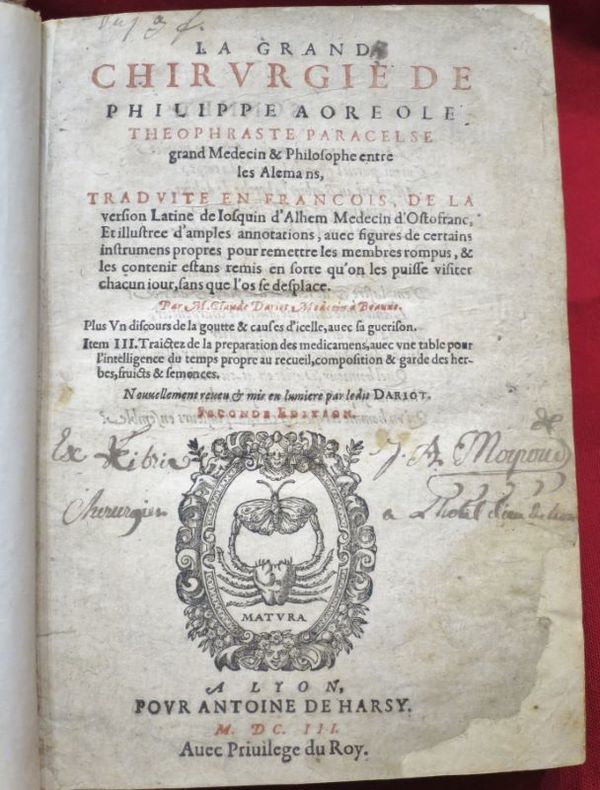
107846A Lyon, Pour Antoine de Harsy, 1603 (Paracelse), 1589 (Dariot), 3 textes reliés en 1 volume in-8 de 225x155x50 mm environ, 394 pages, 5ff. (Sonnet, indice des chapitres)-64 pages-256 pages, pleine basane brune, dos à nerfs portant titres dorés, orné de caissons à fleurons et motifs dorés, gardes marbrées, tranches rouges, avec un ex-libris gravé sur le premier contreplat. Textes complets des bois gravés, enrichis de bandeaux, magnifiques et délicates lettrines, et somptueux culs-de-lampe. Reliure et page de titre restaurées, gardes blanches remplacées et annotées, des rousseurs et pages brunies, petits trous de ver qui se transforment en galerie (troisième texte) sans atteinte au texte, notes manuscrites p. 217 et 221. La marque d'imprimeur Le Crabe et la Mite a été utilisée par les frères Frellon. A la mort de Jean Frellon, Antoine de Harsy prit la direction de la maison de son beau-frère et adopta cette marque.
536Lugduni : viduam Ant. de Hardy, 1612. UNE SUPERBE « RELIURE D'AGONOTHÈTE » AU DÉCOR « À L'ÉVENTAIL »
18139Paris, Estienne Michallet, 1688. In-12, [60]-308-[1] pp., maroquin lavallière postérieur, triple filet doré en encadrement sur les plats, dos à nerfs orné de caissons dorés, importante bordure de même maroquin ornée d'une dentelle dorée, tranches dorées (2 mors fendus, épidermures).