830 résultats
1766CAT000508Madrid: Antonio Marin 1766. First Edition. Hardcover Vellum. Good Condition. Contemporary vellum darkened with age lacking endpapers some soiling and a small old paper repair with old tape to title page very clean otherwise. First printed edition. 22 197pp with in text illustrations of implements. Cagle 1222 Simon 1578<br/><br/>Enrique de Villena was a 15th century courtier renowned for getting a divorce in order to join the order of Calatravaand then having it rescinded by the Pope - by the time of his death he was thought to be a necromancer and his library was burned.In 1423 he wrote the oldest surviving Spanish book on carving. Size: 8vo. Text is in Spanish. Quantity Available: 1. Shipped Weight: Under 1 kilo. Category: Cooking Wine & Dining; Spanish Language; Inventory No: CAT000508. Antonio Marin hardcover
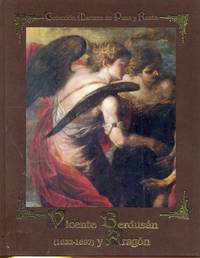
2006C93580Caja de Ahorros de La Inmaculada. As New. 2006. Hardcover. 8496007855 . FREE UPGRADE to Courier/Priority Shipping Upon Request - IN STOCK AND IMMEDIATELY AVAILABLE FOR SHIPMENT - FLAWLESS COPY BRAND NEW PRISTINE NEVER OPENED -- - Text in Spanish. 206 pages. Catalogue Raisonne Catalog Raisonné Complete Works Catalogo Razonado Obra Completa Raisonnee -- with a bonus offer-- - May be EITHER: out of print OOP and extremely rare in this pristine condition; signed by author or contributor; or a first or special edition; inquire for details . Caja de Ahorros de La Inmaculada hardcover
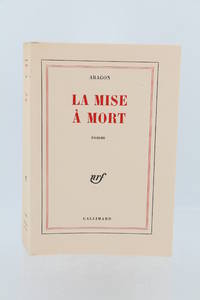
196584238Paris: Gallimard 1965. Fine. Gallimard Paris 1965 14 x 20.50 cm broché First edition one of 50 numbered copies on Holland vellum paper deluxe issue. A very fine copy. Gallimard hardcover
196585122Paris: Gallimard 1965. Fine. Gallimard Paris 1965 14 x 20.50 cm broché First edition one of 50 numbered copies on Holland paper deluxe copy. A very handsome copy. Gallimard unknown
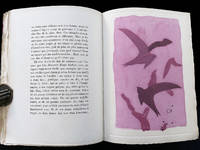
1962B-21-120027<p>Éditions Lazar-Vernet Paris 1962. Hardcover. Limited edition of 250 numbered copies N. 169. This complete portfolio features 14 original etchings by renowned artists including Chagall Magnelli Zadkine Gilioli Ubac Bissière Jacobsen Fiorini Max Ernst Bona Braque Dufour Lepatre and Vieillard. Each etching is accompanied by an unpublished poem written specifically to complement the corresponding artwork by poets such as Arp Mandiargues Follain Aragon Paulhan and others. Ref: Vallier 183 Kornfeld 121 Spies / Leppien 85.</p> Editions Lazar-Vernet hardcover
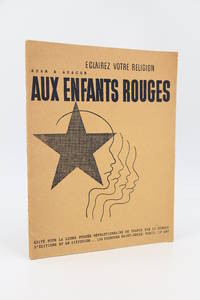
193286460Paris: Bureau d'Éditions et de Diffusion 1932. Fine. Bureau d'Éditions et de Diffusion Paris 1932 18 x 23.50 cm agrafé First edition. Illustrated with 16 drawings by Georges Adam. A superb copy of this rare booklet by Louis Aragon a true ""anti-clerical anti-capitalist anti-colonialist anti-patriotic"" Pierre Juquin catechism for the children of the exploited working masses. ""On June 25 1932 the Imprimerie centrale completed printing for the Bureau des éditions et de diffusion 132 Faubourg Saint-Denis Paris a beautiful pamphlet now a bibliophilic rarity . On the cover a large red star - an important and recurrent image in Aragon's work - appears imprinted on children's brains. Sixteen quatrains droll and didactic punctuated for ease of reading alternate with drawings by Georges Adam whose nearly expressionist mockery reminiscent of Rouault's paintings overturns taboos and myths."" Aragon. Un destin français 1897-1939 After breaking with the Surrealists Aragon threw himself wholeheartedly into the Journal de la lutte antireligieuse. He wrote this pamphlet from Moscow and published it on the Party's presses to ignite the fervor of proletarian youth. French poet Jacques Prévert would later follow a similar path with his play Émasculée conception. Anticlerical activism within French Communist associations was in full swing at the time: every symbol and events of religious life were reinterpreted through the lens of class struggle. ""Red baptisms"" were organised forming a community of ""Godless"" children drawing their name from the Association of Godless Workers who corresponded with their Soviet counterparts. Aragon contributed to these new rituals with this particularly radical children's book deemed excessively antipatriotic by Maurice Thorez which he would later disavow at the end of his life. Bureau d'Éditions et de Diffusion unknown
200693580Caja de Ahorros de La Inmaculada. New. 2006. Hardcover. 8496007855 . FREE UPGRADE to Courier/Priority Shipping Upon Request - IN STOCK AND IMMEDIATELY AVAILABLE FOR SHIPMENT - FLAWLESS COPY BRAND NEW PRISTINE NEVER OPENED -- - Text in Spanish. 206 pages. Catalogue Raisonne Catalog Raisonné Complete Works Catalogo Razonado Obra Completa Raisonnee Caja de Ahorros de La Inmaculada hardcover
192748608Paris. 1927. Original publisher's red printed wrappers stapled as issued titles to front cover in black. 12mo. 194 x 144 mm. Leaf with drop-head title printed text in English throughout final leaf with printed signatures of various Surrealists. The very scarce offprint of 'Hands Off Love' issued in defence of Surrealism's hero Charlie Chaplin after his divorce and the publication of Lita Grey Chaplin's scandalising 'The Complaint of Lita'.Charlie Chaplin's divorce from Lita Grey Chaplin was concluded in August 1927 but her divorce complaint i.e. 'The Complaint of Lita' listed above had been made public - likely by Lita's lawyers at her behest - and a grand scandalous furore resulted. 'Hands Off Love' largely an expression of distaste at the hypocrisy of the scandal and in defence of Chaplin was printed first in the literary review 'Transition' in September 1927 before its appearance as this offprint. It appeared again later and in French in 'La Révolution Surréaliste' in October 1927.The full list of signatories is as follows: Maxime Alexandre Louis Aragon Jacques Baron Jacques-André Boiffard André Breton Jean Carrive Robert Desnos Marcel Duhamel Paul Eluard Max Ernst Jean Genbach Camille Goemans Paul Hooreman Eugene Jolas Michel Leiris Georges Limbour Georges Malkine André Masson Max Morise Pierre Naville Marcel Noll Paul Nougé Elliot Paul Benjamin Péret Jacques Prévert Raymond Quénau sic Man Ray Georges Sadoul Yves Tanguy Roland Tual Pierre Unik.'Hands Off Love' is very scarce and we locate copies in France at the Bibliothèque Nationale and the Biliothèque Kandinsky only; in the US we trace examples at MoMA the Getty Indiana and the Ransome Center. unknown
201081721España: Lampreave s. XV - 2010. Lampreave unknown
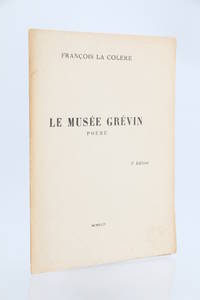
194487421s. l. Aurillac: Les Editions de MinuitComité national des écrivains 1944. Fine. Les Editions de Minuit Comité national des écrivains s. l. Aurillac circa aout 1944 13.50 x 19 cm broché First deluxe edition of this masterpiece of Resistance literature one of 100 numbered copies on coated paper the only deluxe copies. A small fold at the foot of the first cover also affecting the following leaves minute foxing in the right margin of the first cover. First published probably simultaneously in the northern zone as a leaflet by ""Les éditions de Minuit"" and in the southern zone as a handmade brochure the cover was wallpaper inaugurating the famous ""Bibliothèque française"" this long poem would subsequently appear for the first time in volume form in October 1943 before it was decided to finally produce a deluxe edition sold for 100 francs instead of 10 francs for the ordinary edition ""intended to honor the financial contributions of Resistance bibliophiles."" Le Musée Grévin considered upon its publication as ""Les Châtiments of 1943"" Les étoiles Dec. 1943 no. 14 would remain with Paul Éluard's Liberté ""one of the masterpieces of clandestine literature."" In L'Intelligence en guerre published in 1945 Louis Parrot would write about it: « ce poème traversé d'images éblouissantes est en même temps qu'une condamnation sans appel des traîtres une prière un acte de fois envers leurs malheureuses victimes. Il peint en termes vengeurs les misérables qui les livrèrent aux bourreaux et évoque le visage de tant de femmes françaises torturées. » This pivotal poem is indeed one of the very first public evocations and the first literary one of the Auschwitz camp: « Aux confins de Pologne existe une géhenne dont le nom siffle et souffle une affreuse chanson. Ausschwitz ! Ausschwitz ! Ausschwitz ! ô syllabes sanglantes ! Ici l'on vit ici l'on meurt à petit feu. On appelle cela l'exécution lente. Une part de nos curs y périt peu à peu ». Exceptional copy printed on fine paper a true act of war whose perilous operation to procure luxury paper in a France where the Nazis controlled printing paper production through the Comité d'organisation des industries arts et commerces du livre COIACL can only be imagined. Les Editions de MinuitComité national des écrivains unknown
51-5565Paris: Les éditeurs français réunis 1960. Folio. 27 x 38 cm One of 291 numbered copies. Sheets loose as issued in original wraps textured boards and slipase. 28 original lithographs some in color. Light foxing on cover but not elsewhere. OCLC no. 765770638; Monod no.7050.LÉGER Fernand & ARAGON Louis. Mes Voyages avec un poème d'Aragon et des lithographies de l'auteur. In-folio en ff. couv. imprimée rempliée sous chemise et étui. Complet des 28 lithographies de Fernand Léger en noir ou en couleurs. Tirage à 291 exemplaires sur vélin d'Arches ; n°124. Qqs rousseurs sur la couv. très rares petites rousseurs sur qqs pages. Bon exemplaire. [Paris]: Les éditeurs français réunis, 1960. paperback
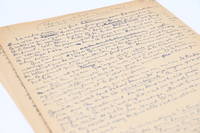
1950872201950. Fine. It has to be said that we are publishing here this masterpiece deliberately ignored by those who write literary history and which makes existentialist teeth grind or simply spoilt teeth as an example sure that it will not be in vain. s. d. circa 1950 21 x 30 cm une page sur un feuillet Autograph manuscript by Louis Aragon one page in blue ink on a leaf. Precious study by Louis Aragon accompanying the serial publication in Les Lettres Françaises of Marceline Desbordes-Valmore's novel L'Atelier d'un peintre 1833. Aragon rehabilitates the female poet-novelist canceled from the history of literature and snubbed by Existentialists placing her in the tradition of socialist realism. Autograph manuscript by Louis Aragon one page in blue ink on one leaf. Numerous crossed out words and rewritings. Slight rusting due to a paper clip slight shadows of an ink transfer from another page. Published in Les Lettres Françaises episode 16 23 February 1950. In 1949 Aragon chose to publish 'L'Atelier d'un peintre' serially with his own comments. The Cold War made socialist realism the official literary genre for Communist cultural policy: 'For Aragon reading Marceline Desbordes-Valmore is above all reading the history of a generation of a people. More precisely he made Marceline an incarnation of the unfinished Republic of a world still under construction and one that was tending towards freedom. To understand Marceline Aragon invites us to 'date her writings' and not be content to confine her to a single period of her life but to try to find an explanation for her stances which were as different as the regimes during the gestation of the Republic in the nineteenth century'. Aghbarian Lina 'Aragon éditeur de Marceline Desbordes-Valmore' Recherches croisées Aragon - Elsa Triolet no. 14. Of all his comments accompanying 'L'Atelier d'un peintre' this is one of his most polemical: Aragon opposes the Surrealists by contesting Lautréamont's distate of the Romantics with whom Desbordes-Valmore was associated. The writer criticizes the hasty rejection of her work which nevertheless has counterparts in modern literature: 'The Atelier that Aragon reopens with the publication of this novel to rework it to reveal it to give it a second life closer to his own concerns after having disentangled it from its time and emptied it of its Romantic religiosity to lay bare its richness which lies in the feminist cause defended by Marceline Desbordes-Valmore . . For her Ondine the literary character was a transposition of the missing child her son the son of Henri de Latouche her lover. Ondine is thus three times hybrid androgynous real and imaginary daughter and mother at the same time and Léonard her inverted double the one she would have liked to be in order to succeed in the forbidden world of painting. Aragon doubles androgyny with homosexuality as seen in Yorick's phrase 'Talma doubles my existence'. Among other allusions he refers to Henri Miller's Sexus an allusion is made about this work in this manuscript Aragon cultivates the theme of duality on which the whole novel is built. Without abandoning the imaginary world of the novel he seeks to bring out the realistic side of this romantic novel hidden in the shadow of the lyrical novel. In a word Aragon reverses the order of the foreground and background: the romanticism of Marceline Desbordes-Valmore's novel becomes secondary and the historical background takes precedence' ibid. 'We have now come to the night scene in the Place Vendôme which is one of the most intense the most beautiful minutes of the novel of the other century. I know that not everyone will agree. It's come to my attention that there are people who are superbly distracted from L'Atelier d'un peintre and find it wrong that we should publish a story in which there is absolutely nothing of what THEY are looking for in novels and it's possible that those who c unknown
193248563Paris.: Bureau d'Editions et de Diffusion. 1932. Original publisher's tan printed wrappers stapled as issued titles and illustration in black to front cover advertisements to rear. Small 4to. 230 x 184 mm. Leaf with title eight leaves with caricature vignettes by Georges Adam and verse by Aragon recto only two per page final leaf with achevé d'imprimer. André Breton's copy of this very scarce plaquette destined for the children of workers and noted for its virulent 'anticlérical anticapitaliste anticolonialiste antipatriotique' sentiments.This rare pamphlet by Louis Aragon was intended for the children of the exploited masses and as noted by Pierre Juquin was 'anticlérical anticapitaliste anticolonialiste antipatriotique'.Aragon had thrown himself into anti-clericalism after his break with Surrealism and wrote the verses accompanied by Adam's caricatures in Russia. The pamphlet was printed on the presses of 'L'Imprimerie Centrale'.'Pour faire oublier la Commune / Le Sacré-Coeur a vu le jour. / Un beau soir il aura son tour / Ce gâteau blanc comme lune!' From the text.Also included inserted loose is André Breton's membership card filled out in his own hand in black ink giving his address in rue Fontaine and signed beneath for the 'Union Fédérale des Libres-Penseurs Revolutionnaires de France'. A bifolium of blue card the front cover features the vignette of the 'Union' which matches the vignette for Aragon's plaquette. The membership card features Marx's famous slogan 'La Religion c'est l'opium du Peuple!' and a quotation from Lenin as well as fifteen stamps of the Union indicating membership or attendance at meetings nine dated '1932' and three dated '1931' and inscribed 'Octobre' 'Novembre' 'Décembre'.Aragon's plaquette is scarce: we locate copies at the Bibliothèque Nationale in France the Bibliothèque Génève in Switzerland as well as copies at Syracuse Duke Yale Bowdoin and the University of California in the US. Bureau d'Editions et de Diffusion. unknown
16308926Napoles: Lázaro Scorrigio 1630. Hardcover — Tapa dura. 213x157mm. 8½x6¼". Napoles Lázaro Scorrigio 1630. 2 obras en un volumen. En 4º 213 x 157mm. -I: 8 152 pp. -II: 20 1991 pp. Reencuadernado en pergamino de época guardas renovadas. Primera edición del "<em>Espejo del Duque de Alcalá</em>" y segunda edición la primera 1628 del "<em>Exemplar de la constante paciencia</em>" las dos obras de la constancia polÃtica y educación de prÃncipes de Francisco Lanario y Aragón duque de Carpiñano. Estos tratados posiblemente contratados por el Conde Duque de Olivares se encargaron para refutar las tesis de fray Juan de Santa MarÃa y su <em>Tratado de la República. </em> Lázaro Scorrigio hardcover
1942373129Neuchâtel: Éditions de la Baconn¡ère 1942. First edition no. 1993 of the trade issue edition of 4080. Frontispiece portrait of Aragon after a drawing by Matisse. 55 1 8 pp. 8vo. Decorative purple and black morocco boards stamped in silver on spine original wrappers bound in signed Leroux at front turn-in. Fine. Flannel-lined chemise. First edition no. 1993 of the trade issue edition of 4080. Frontispiece portrait of Aragon after a drawing by Matisse. 55 1 8 pp. 8vo. This long-form Aragon poem divided into seven sections was the third iteration of Éditions de la Baconniere's "rouge" series "Les poètes de Cahiers du Rhône" notable for their red wrappers and limited issue. <br /> <br /> This copy is further distinguished by a custom morocco binding n purple and black morocco by the celebrated book artist Georges Leroux who had been a poet prior to becoming a binder in 1959 A pencil note on an interior page cites a 1914 Pablo Picasso painting titled "Tête" but the design does not correspond to work of that title or imagery from that period. Instead it very closely resembles Picasso's 1958 painting "Tête de femme" - subsequently reworked as a series of linocut prints of the same name in 1962 - a timeframe which also aligns more closely with the start of Leroux's bookbinding career.<br /> <br /> A gorgeous example of French bespoke binding by a master of the craft. Éditions de la Baconn¡ère unknown
1929CARROLLL008490The Hours Press Chapelle-R�anville - Eure. 1929. First edition in French. Quarto. Unpaginated. Red boards printed in black. The translator's two-page introductory text is printed in red. Out of a total edition of 360 copies signed by the translator this is one of 300 numbered copies.Presentation copy from the translator inscribed on the first blank: ''� Louis Hay - qui me met dans l'obligation de continuer au jeu du Boojum lequel est de longtemps mort mais j'esp�re bient�t moi aussi - amicalement Aragon.'' The recipient was a French literary theorist and one of the founders of genetic criticism. In 1976 he established the Centre d'Analyse des Manuscrits under the aegis of the Centre National de Recherche Scientifique to which Aragon bequeathed his archive together with that of his wife Elsa Triolet.Some rubbing to spine. Very good. The Hours Press, Chapelle-R�anville - Eure. hardcover
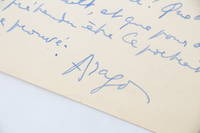
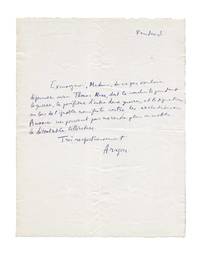
1950Aragon3<p><strong>ARAGON Louis 1897-1982</strong></p><p>Autograph letter signed "Aragon" to the "Red duchess" Elisabeth de Clermont-Tonnerre N.p.n.d 1950 1 p. in-4to</p><p><strong>Violent reproaches of Louis Aragon against Thomas Mann – The poet explains his hostility to the idea of meeting the German writer then on an official visit to Paris</strong></p><p><em>" <strong>Excusez-moi Madame de ne pas vouloir déjeuner avec Thomas Mann dont la conduite pendant la guerre le pacifisme d'entre deux guerres et la signature au bas de l'ignoble manifeste contre les exécutions en Russie ne peuvent pas me rendre plus aimable la détestable littérature. </strong></em> <em>Très respectueusement</em> <em>Aragon "</em></p><p><strong>Thomas Mann officially received in Paris in May 1950</strong></p><p>At the beginning of May 1950 Thomas Mann had begun a European lecture tour. On May 12 he arrived in Paris accompanied by his wife Katia. At the "Ritz" where his French publishing house has booked a suite they receive a very warm welcome. If during his stay in Paris which must have lasted a few days Thomas Mann could not see André Gide himself he spoke with Jean Schlumberger who had created with Gide La Nouvelle Revue Française. In the quick note he wrote for the bookseller Martin Flinker Mann mentions the "incredible beauty" of the capital of France and a French civilization at the "forefront of progress"… while confiding to his Journal his great fatigue and the aversion he felt for "the French linguistic sphere". He is indeed irritated by interviews that he considers malicious – such as that of Dominique Arban for Le Figaro who asks the author of Doctor Faustus if judging by his book it is possible to imagine a new Germany in which would have disappeared "the vertigo of obedience and blood". The interviewers' reminder of Paul Olberg's letter published in the Swiss newspaper Volksrecht also disturbs him to the highest degree. The Swedish journalist had indeed asked Thomas Mann how "he who had fought without concession Nazi Germany had been able to accept in 1949 the invitation of a regime that of the GDR which trampled underfoot with the same brutality freedom and humanity".</p><p><strong>Thomas Mann sensitive to communist propaganda</strong></p><p>At the end of the Second World War – after the election in 1945 of Harry Truman as President of the United States and until 1949 – Thomas Mann was sensitive like many intellectuals of the time to stalinist propaganda that presented the United States as an imperialist power ready to trigger a new conflict – and the USSR as concerned only with peace and the happiness of the peoples. Thus in March 1949 he supported the initiative of Harvard professor Harlow Shapley to convene in New York a world peace conference – directed against the Atlantic Pact finally signed on April 4 1949 – in which 24 delegates from communist countries participated in which Thomas Mann saw only "pure idealists". He telegraphed Dean Acheson the U.S. Secretary of State and father of the Marshall Plan to reconsider his ban on allowing other delegates from communist countries to enter American territory. Silent about the deportations and mass executions ordered by Stalin he does not miss an opportunity to protest against McCarthyism and "anti-communist hysteria" driven to this by his son Klaus and daughter Erika.</p><p>Thomas Mann still enthusiastically accepted the invitations – issued by the newly formed Federal Republic and the other part of Germany that would proclaim itself the "Democratic Republic" – to preside over the ceremonies given in July/August 1949 for the bicentenary of Goethe's birth first in Frankfurt West and Weimar East. Flattered by the honors that are rendered he wants to believe that it is only literature and does not want to see the instrumentalization to which he is the object of the communist leaders.</p><p><strong>Thomas Mann disappoints the Communists and abjures politics</strong></p><p>But soon after sensitive to criticism and becoming more far-sighted he refused to participate in the "World Congress of Supporters of Peace" which took place in Paris from 20 to 23 April 1949 under the patronage of Picasso with his famous "dove" and <strong>Aragon</strong>.</p><p><strong>Louis Aragon</strong>'s refusal to see Thomas Mann on the occasion of his official visit to Paris in May 1950 was thus explained by the hope aroused in the communist camp by some of his statements. The most prestigious German writer of the time an emeritus fighter of fascism since his American exile fundamentally hostile to the western part of Germany which he thought had not really got rid of Nazism represented a vector of propaganda of the highest order for the ideologues of communism. The spite felt by <strong>Louis Aragon</strong> and others following the defection of Thomas Mann is commensurate with their disappointment.</p><p>The many criticisms that Thomas Mann unleashed in the West helped to make him fully aware of the role that was intended to make him assume; this is how he declined the invitation to the 2nd Peace Congress organized in London from 13 to 19 November 1950. The English government banned Pierre Cot and Louis Aragon from entering British territory. The non-admitted delegates finally met in Warsaw. The organizers claim to have received a message of encouragement from Thomas Mann and even to have elected him to the office of the organization – which he firmly denies. In a scathing denial Thomas Mann says "he no longer wants to do anything with politics". All relations are permanently cut off.</p>
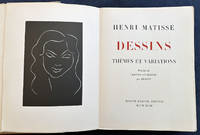
1943B-2022-0939<p>Paris: Martin Fabiani 1943. Preface Matisse-en-France by Louis Aragon. Limited numbered edition in 950 copies of which this is copy N 404. Loose as issued in the original publisher's lace-up hard chemise. Illustrated by Matisse with an original linocut on a black background in frontispiece three lithographs and 158 reproductions of drawings in full page and hors-texte. Ref: C. Duthuit Les Livres Illustres No. 9.; Monod 7847.Chemise is missing spine and is detached some of the reproductions are lightly tanned but linocut is in very good condition.</p> Martin Fabiani Editeur
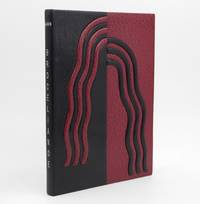
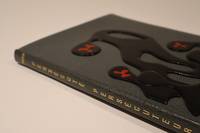
193149605Paris: Editions surrealistes Les Editions Denoel et Steele 1931. Hardcover. Fine. 4to pp. 83 5 errata leaf tipped in at end. Full leather design binding with original wrappers bound in with cancel slip over publisher's imprint on the title page and upper cover of the original red paper wrapper. The work is a collection of poems by Louis Aragon published in 1931. A radical turning point in his career marking the end of his Surrealist phase and his full commitment to communist political engagement. The collection comprises thirteen long poems characterized by violent imagery and destruction. It opens with the well known and highly politicized poem Front rouge which calls for the violent overthrow of capitalism and celebrates proletarian revolution. A couple of pamphlets relating to "Front Rouge" are loosely inserted. Finely bound by Georges Leroux in full grey morocco with gilt spine lettering and thick sculpted black leather onlays depicting oppressive figures marked with red inlays to their heads above figures without red inlays. A striking design binding in fine condition. Housed in a red card chemise with a felt-lined interior together within a matching red card slipcase. From a total edition of 1015 copies this being no. 675. Editions surrealistes [Les Editions Denoel et Steele] hardcover
1948872391948. Fine. ""Nose in the air arms flying with nonchalance with joy as Willy Ronis says. black shoes a large hat a wasp waist skirt in the wind and not the slightest idea what all this could be for but all the sunshine of late April in the veil. and like Paris absurdly inimitable."" s. d. avril 1948 21 x 30 cm 4 pages sur 4 feuillets Exceptional complete autograph manuscript by Louis Aragon. 4 pages in pencil on 4 leaves numbered in his hand. Discrete trace of rust discharge on the first leaf and on the verso of the last. Horizontal fold across all leaves. The article would be published under the title ""L'Art de prendre une photo pour Les Lettres Françaises"" Regards May 14 1948. Aragon accompanies the great Willy Ronis during a photographic session for a fashion portrait for Les Lettres Françaises. Following in Ronis's footsteps as he directs his spinning model the writer takes us through four pages across an enchanting Paris where popular life and worldly elegance intermingle. ""The aim was to illustrate Le Nez au vent by Louis Chéronnet. The column's theme was: The Elegance of Paris is moving westward and more specifically focused on avenue Montaigne"" begins Aragon in his chronicle. For the duration of a day the writer documents with fascination the photographer's work in one of his favorite settings: the streets of Paris. Several tableaux unfold in succession in the Montorgueil quarter at the milliner's in Ronis's studio on avenue Montaigne at the Théâtre des Champs-Elysées. The key word for both Aragon and Ronis is movement. Photography is not static nor are Aragon's impressions. We jump like the model in the photographer's shots from one place to another. The portrait of the elegant woman expands under the writer's pen to her surroundings to the bubbling life of Paris that stops for an instant to contemplate the model's silhouette animated by the photographer's instructions. Sixty years later Ronis would remember that memorable day: ""Aragon had a very beautiful regard for photography. He knew what an image was. Elsa too. He had me work when he founded and directed Les Lettres françaises. I did several reports for him. The first small report was in 1947 or 48 a report on fashion on avenue Montaigne. Aragon came with me we had chosen a model. I was a bit intimidated by Aragon it was my first contact with him. I wanted to get the maximum from my model I was working very hard because I was nervous. Seeing me work amused him so much that he didn't write the report about the model but about me working. I had seen him quite many times afterward we used the familiar form with each other."" Willy Ronis interview in Libération September 14 2009 Their militant paths crossed on numerous occasions - Ronis contributed through his photographs to witness the social revolts that shook the 1930s while Aragon devoted many articles to them. In 1949 the photographer would follow the commemorative day of the Oradour-sur-Glane tragedy in which nearly 400 artists participated at Aragon's initiative. He would also be the author of beautiful portraits of the Aragon-Triolet couple. Excerpts from the manuscript: Willy Ronis had arranged to meet me at 10:30 at the corner of rue Tiquetonne and rue Montorgueil. Apparently he was photographing athletes there. Ah! it was that restaurant where in the past we used to go eat with Vaillant-Couturier and there were Action Française types who would shoot daggers at us with their eyes. Instead of athletes Willy was there in his velvet jacket with his spectacles taking shots left and right at the counter of a couple of lovers. Sweet the lovers. The little one especially. Perhaps it's a sport. . There is nothing more solemn than Caroline Reboux. It is the temple of hats. If he lived in our times this is where Aristotle would write. Caroline Reboux herself made the bonnets for Nana and Eugénie de Montijo; at her place Bel-Ami would twist h unknown
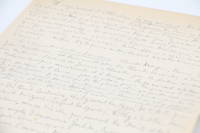
1945641571945. Fine. s. d. 1944-1945 19.80 x 26.50 cm une feuille sous étui-chemise Exceptionally rare autograph satirical poem by Louis Aragon entitledDistiques pour une Carmagnole de la Honte written between September 1944 and February 1945. 26 lines penned in black ink on a single leaf with a note from the author in blue ink at the foot of the page. Our manuscript belongs to a group of thirteen poems composed during the first half of 1945 intended for publication in a poetry anthology Aragon published by Pierre Seghers in Paris Collection Poètes daujourdhui no. 2 20 July 1945. It was sent by Aragon as a working copy to his editor and friend Claude Roy. This autograph poem is the only known manuscript of the Distiques with neither manuscript nor proofs held in the extensive Triolet-Aragon archives at the Bibliothèque nationale de France. The autograph poem is housed in a midnight blue half-morocco folder with patterned paper boards beige lambskin doublures and a matching morocco-edged slipcase. Binding signed by Thomas Boichot. A true historical document and scathing indictment of the collaborators who sought refuge in Sigmaringen Aragons Distiques were composed during the winter of 19441945 following the publication of Musée Grévin. A quintessential example of Aragons resistance poetry this octosyllabic and ten-line verse composition denounces in no uncertain terms the leaders of the Vichy regime and their most ardent supporters. Sarcasm insult and invective fuel a vengeful poetry reminiscent of the fiery tone of Front Rouge which marked his break with surrealism. Yet the poems tone remains brisk and lively: the residents of Sigmaringen castle sing dance and play and Aragon concludes with a rousing quatrain: «Ah ça ira ça ira Les Pétain Laval tous à la lanterne Ah ça ira ça ira ça ira Les Pétain Laval tous on les pendra» borrowed from the revolutionary anthem «Ah ça ira ça ira ça ira Les aristocrates à la lanterne. Ah! ça ira ça ira ça ira! Les aristocrates on les pendra.» Despite numerous appeals to flee France at the outbreak of war Aragon chose to remain going underground with Elsa Triolet after serving bravely during the German offensive. The Occupation marked a period of intense activity for the writer who clandestinely published his collections of resistance poetry Le Crève-cur 1941 Les Yeux dElsa 1942 Le Musée Grévin 1943 La Diane française 1944 and under various pseudonyms poems and responses to collaborationists in the Lettres Françaises. At the same time he was commissioned by the Communist Party to rally writers and intellectuals in the southern zone where he founded a branch of the Comité National des Écrivains bringing together Stanislas Fumet Auguste Anglès Henry Malherbe and Jean Prévost. Aragons example proved that in times of war poetry could itself be a form of resistance a refusal to yield. As Claude Roy recipient of the manuscript later remarked: «La parole dAragon sélevait avec une violence et une aisance qui se répercutaient dun bout de la France à lautre.» «Ça doit avoir de la dégaine/Le château de Siegmaringen/On sy retrouve entre félons/Sous les lustres du grand salon» Aragon wrote two poems about Sigmaringen the former Swabian stronghold of the Hohenzollern family which hosted Pétain and his entourage after their flight from Vichy and Belfort. As Allied forces advanced and on orders from the Reich the Marshal and his supporters set up a puppet government there in September 1944 later replaced by the Gouvernemental Delegation for the Defence of French Interests in Germany during the wars final months. Aragon dedicates a distich to Laval who had been ousted from power by this new structure: «Laval a lair bien embêté / Dêtre en disponibilité». Notably Aragon adds an e to Sigmaringen likely a sardonic play on the Nazi salute Sieg Heil. For nearly eight months until April 1945 this extraterritorial enclave shelter hardcover
1948328702Paris: Gallimard 1948. First. hardcover. fine. Small 8vo full garnet crushed levant both covers decorated with important design of stars and gold white and blue fillets leading toward a central abstract figure gilt over uncut edges by P.L. Martin original wrappers bound in. Morocco edged chemise and slipcase. Paris: Gallimard FRS Limited First Edition. Fine.<br/> <br/> Number IV of only 14 large-paper copies on papier velin de Hollande in a handsome binding by one of the great modern masters.<br/> <br/> Gallimard unknown
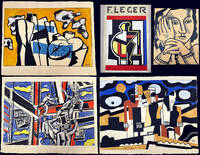
1959N - 2026 - 13<p>Contrastes 13 Aquarelles Gouache Lavis Crayon. Edition Au Vent d'Arles Paris 1959. Preface by Louis Aragon. Large portfolio with 13 pochoirs realized by Daniel Jacomet after Leger art works. Limited and numbered edition of 300 copies in Arabic 20 out of commerce in Roman numbered HC I to HC XX printed in Richard de Bass paper especially watermarked for this edition. Loose as issued and collected in the original pictorial cloth portfolio folder with Leger artwork. Published after Leger with the supervision of Nadia Leger Ref. Monod 7049.</p> Au Vent d'Arles
1948871601948. Fine. ""Pour moi l'amitié des assasins n'est pas l'amitié . tant pis si l'on me juge esclave et qu'on me juge sans coeur !"" For me the friendship of assassins is not friendship . too bad if I am judged a slave and judged heartless! s. d. 1948 21 x 30 cm 8 pages et demi sur 9 feuillets Exceptional autograph manuscript by Louis Aragon entitled ""Chronique de la pluie et du beau temps pour Europe mai"". 8 and a half pages in blue ink on 9 uniformly browned leaves. Numerous deletions and rewritings. Published in Europe no 29 May 1948 and does not appear in the book collecting these chronicles E.F.R. 1979. Superb nine-page militant profession of faith published in the anti-fascist literary review Europe. Aragon finds himself courted after the war in the name of ""friendship"" and ""freedom"" by various reviews but categorically refuses to publish alongside writers with Pétainist tendencies. The writer delivers his impressions after a radio interview in Belgium and meditates on ""two abstract monsters: freedom and friendship"" perverted at will in this early Cold War period when Sovietism becomes - to his great dismay - the new fascism. Very attached to the unified discourse advocated by communism which he calls ""national truth"" this notion serves as the guiding thread of his chronicle. Aragon writes in the midst of the Kravchenko affair and remains convinced by Sovietism which remains for him the great victor over Nazism. As a great literary witness to the suffering endured during the Occupation he is alarmed by the editorial choices of reviews seeking to obtain contributions from him: one shamelessly publishes a text by Montherlant totally oblivious to the Parisian martyrs during the war while the other affectionately justifies the allegiances of many French people to Marshal Pétain. It is also the occasion for a long and beautiful analysis of the idea of nation by Aragon who is unquestionably the national poet of this century. We find there in his inspired tirades the Aragonian ideal of healthy emulation among nations turned toward progress. Beautiful pages by Aragon in the midst of the crystallization of the Eastern and Western blocs. Aragon's ambition is to honor the memory of the Resistance by choosing to ""trust words when they are used for peace"". ""La Nation qui me paraît aujourd'hui encore être le groupe le plus étendu qui puisse se porter garant d'une vérité . la radio peut et doit transmettre à son public la vérité nationale . 'Qu'entendez-vous concrètement par vérité nationale ' Me demande-t-il comme il m'aurait sûrement demandé : qu'entendez-vous en disant qu'il fait grand jour en plein midi si je l'avais dit. C'est là le mécanisme des interviews. J'ai donc pris deux exemples concrets pour expliquer à quoi sert le maniement des abstractions. Deux cas récents où j'ai eu à me mesurer avec deux monstres abstraits : la liberté et l'amitié. La liberté d'abord. On sait comment les pires ennemis de la liberté font usage d'un livre qui s'appelle : J'ai choisi la liberté donnant le bénéfice d'un préjugé favorable de ce mot à tous ceux qui trahissent leur pays quand c'est pour choisir le système capitaliste . . Une revue qui s'édite à Montréal m'avait récemment écrit pour me demander ma collaboration. Son directeur littéraire faisait appel à l'homme libre l'italique est sienne que je suis. Cette façon de distinguer par la typographie en moi la possibilité d'être parfois un homme libre parfois non m'avait un peu inquiété. J'ai voulu voir sa revue . Mon Dieu le fait que ce numéro s'ouvre par un texte de M. de Montherlant me laisse libre de ne pas parler du contexte. On sait et j'imagine que M. Victor Barbeau de Montréal n'ignore pas que M. de Montherlant est sur la liste des écrivains avec lesquels les membres du Comité National des Ecrivains se refusent à collaborer. Ce qui doit sans doute m'expliquer pourquoi M. Barbeau s'adresse en moi à l'homme libre : c'est- unknown
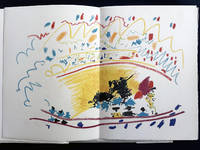
1949N - 2024 - 124<p>Five original prints. Prosper Merimée and Louis Aragon. La Bibliothèque Française Paris 1949 Editeurs Français Réunis Paris 1964. Portfolio with three aquatints one drypoint and one lithograph in colours by Picasso loose in Arches wove paper complete of title text numerous illustrations and border decorations also by Picasso and justification page. Signed by Picasso and Aragon on the justification page; one of 275 copies well preserved in the original publisher box. Reference Bloch. 1000-1005; Cramer books 126.</p> La Bibliothèque Française