Antiquariat.de

187 résultats
162580715Frankfurt a. M. [ca. 1625]. Darstellung 10,0 x 14,5 cm. Unter starkem Schrägschnitt-Passepartout mit vergoldeten Schnittkanten im Rahmen aus vergoldeter Profilleiste (diese etwas bestoßen).
20021220786Würzburg : Königshausen und Neumann, 2002. 219 S. ; 23 cm kart.
1967851451967. Blattfüllende Darstellung in grau-violett Tönen mit aquarellierter Rahmenbordüre. 24,6 x 16 cm.
17292158Regensburg, Lang, 1729. Siehe Lentner 10020; Pfister 572. - Das Blatt bildet das doppelblattgroße schöne allegorische Frontispiz, mit barockem Dekor, im Hintergrund die Ansicht von Regensburg.
199755981ABOstfildern-Ruit, Verlag Gerd Hatje, 1997. 4° (28x21), 181 S., 1 Bl., reich illustriert, ill OKart (KlappenBrosch), nahezu ungelesen, schönes gepflegtes Exemplar,
Frontespizio dell'atlante di Janssonius. Incisione in rame in ottimo stato di conservazione. Joannes Janssonius, figlio dell'editore di Arnhem Jan Janssen, sposò Elisabeth Hondius, figlia di Jodocus Hondius, ad Amsterdam nel 1612. Dopo il suo matrimonio, si stabilì in questa città come libraio ed editore di materiale cartografico. Nel 1618 si stabilì ad Amsterdam accanto alla libreria di Willem Jansz. Blaeu, entrando in una seria competizione. Le sue attività non riguardavano solo la pubblicazione di atlanti e libri, ma anche di mappe singole e un vasto commercio di libri con filiali a Francoforte, Danzica, Stoccolma, Copenaghen, Berlino, Koningsbergen, Ginevra e Lione. Nel 1631 iniziò a pubblicare atlanti insieme a Henricus Hondius. Nei primi anni 1640 Henricus Hondius lasciò l'attività di pubblicazione di atlanti completamente a Janssonius. La concorrenza con Joan Blaeu, figlio e successore di Willem, nella produzione di atlanti spinse Janssonius ad ampliare il suo Atlas Novus finalmente in un'opera di sei volumi, in cui furono inseriti un atlante marino e un atlante del Vecchio Mondo. Dopo la morte di Joannes Janssonius, il negozio e la casa editrice furono continuati dagli eredi sotto la direzione di Johannes van Waesbergen (c. 1616-1681), genero di Joannes Janssonius. Le matrici degli atlanti di Janssonius furono in seguito vendute a Schenk e Valck. Title page of Atlas Novus. Copperplate, in good conditions. Joannes Janssonius (Arnhem, 1588-1664), son of the Arnhem publisher Jan Janssen, married Elisabeth Hondius, daughter of Jodocus Hondius, in Amsterdam in 1612. After his marriage, he settled down in this town as a bookseller and publisher of cartographic material. In 1618 he established himself in Amsterdam next door to Blaeu’s book shop. He entered into serious competition with Willem Jansz. Blaeu.. His activities not only concerned the publication of atlases and books, but also of single maps and an extensive book trade with branches in Frankfurt, Danzig, Stockholm, Copenhagen, Berlin, Koningsbergen, Geneva, and Lyon. In 1631 he began publishing atlases together with Henricus Hondius. In the early 1640s Henricus Hondius left the atlas publishing business completely to Janssonius. Competition with Joan Blaeu, Willem’s son and successor, in atlas production prompted Janssonius to enlarge his Atlas Novus finally into a work of six volumes, into which a sea atlas and an atlas of the Old World were inserted. After the death of Joannes Janssonius, the shop and publishing firm were continued by the heirs under the direction of Johannes van Waesbergen (c. 1616-1681), son-in-law of Joannes Janssonius. The copperplates from Janssonius’s atlases were afterwards sold to Schenk and Valck.
Frontespizio della serie Palazzi di Roma de' più celebri architetti designati da Pietro Ferrerio pittore et architetto. L'opera fu progettata e iniziata da Pietro Ferrerio nel 1638 circa; il secondo libro, Nuovi disegni delle architetture e piante dei palazzi di Roma de' più celebri architetti..., fu realizzato da G. B. Falda, che ne fu anche l'intagliatore, e venne pubblicato nel 1655 da G. G. De Rossi. Riguardo al primo libro non si conosce il nome dell'incisore: il Ferrerio firma le tavole solo in qualità di disegnatore. Le più importanti tipologie edilizie romane sono illustrate dal Ferrerio sia in alzato sia in pianta, a partire dall'età d'oro di Bramante, Raffaello, Peruzzi e Michelangelo per poi passare a Vignola, Ammannati, Ligorio, Della Porta, dedicando infine un modesto spazio agli architetti del nuovo secolo, quali Bernini, Borromini o Domenico Fontana: segnale evidente, questo, di quanto l'orientamento della cultura e del gusto del Seicento maturo tendesse verso un recupero ed una preferenza nei riguardi del classicismo cinquecentesco o del tardo manierismo controriformato. Ogni tavola è corredata da un'iscrizione di carattere storica che riporta sempre, tra le altre notizie, il nome dell'architetto che progettò l'opera, e l'anno di inizio della costruzione. Le incisioni si caratterizzano per la precisione del disegno, l'attenzione verso il particolare e la nitidezza dell'immagine. L'opera costituisce una sorta di guida all'architettura romana tra cinquecento e seicento, di grande valore storico-documentario. Acquaforte, stampata su carta vergata coeva, in buono stato di conservazione. Plate from the series Palazzi di Roma de' più celebri architetti designate da Pietro Ferrerio pittore et architetto. The work was projected and begun by Pietro Ferrerio in about 1638; the second book, Nuovi disegni delle architetture e piante dei palazzi di Roma de' più celebri architetti..., was done by G. B. Falda, who was also the engraver, and was published in 1655 by G. G. De Rossi. Regarding the first book we do not know the name of the engraver: Ferrerio signs the plates only as a draftsman. The most important Roman building typologies are illustrated by Ferrerio both in elevation and in plan, starting from the golden age of Bramante, Raphael, Peruzzi and Michelangelo and then moving on to Vignola, Ammannati, Ligorio, Della Porta, finally dedicating a modest space to the architects of the new century, such as Bernini, Borromini or Domenico Fontana: This is an evident sign of how much the orientation of the culture and taste of the mature seventeenth century tended towards a recovery and a preference for sixteenth-century classicism or late counter-reformed Mannerism. Each panel is accompanied by a historical inscription that always reports, among other information, the name of the architect who designed the work, and the year in which construction began. The engravings are characterized by the precision of the drawing, the attention to detail and the sharpness of the image. The work constitutes a sort of guide to Roman architecture between the sixteenth and seventeenth centuries, of great historical-documentary value. Etching, printed on contemporary laid paper, in good condition.
Litografia, inciso mm. 522 x 730 su foglio di mm. 660 x 870 ca.. Bella litografia con allegoria della morte di Giuseppe Garibaldi contornata da episodi della vita militare dell'Eroe dei due mondi. Lievi arrossature ma ottimo esemplare. Rara.
18241000342AG[Paris, rue de Vaugirard no 15], [chez Brunet / Imp. Litho. de Langlume], [1824]. Grossformatige allegorische Lithographie von Maurin nach Prud'hon, am Bildrand Künstlerbezeichnungen Prud'hon pinx. ; Maurin del. Bildgröße 36 x 62 cm, alt montiert unter Passepartout 51 x 77 cm, *Thieme/Becker XXIV, 282.- [6 Warenabbildungen] geringe Bereibungen, schönes Exemplar,
200146015Berlin : Reimer, 2001. 383 S. : Ill. ; 24 cm broschiert
Opera tratta dall’Isolario dell’Atlante Veneto del P. Coronelli, In Venetia MDCXCVI. Coronelli visse un periodo di straordinaria fecondità editoriale a partire dal 1689, quando ebbe la cattedra di geografia presso l'Università alle Procuratie, con la pubblicazione, nel 1690, del primo volume dell'Atlante Veneto. In effetti sotto il nome di Atlante Veneto va tutta la raccolta di tredici opere composte nell'arco del decennio successivo, dall'Isolario allo Specchio del mare. L'Isolario mira, con una barocca e minuziosa ricerca del dettaglio, alla celebrazione dei possedimenti della Serenissima. Monumentale raccolta di carte e vedute di isole, rappresenta l'ultimo degli “isolari” concepiti, che, tra la fine del XVII e l'inizio del XVIII secolo, vennero progressivamente soppiantati dagli atlanti di moderna concezione, opere a stampa caratterizzate da crescente precisione scientifica e da sempre minore pregio artistico. Sulla scia delle nuove conquiste coloniali le rappresentazioni cartografiche vennero ad assumere un carattere sempre più tecnico, fino ad allora piuttosto arbitrario. Incisione in rame, in perfette condizioni. A finely engraved allegorical frontispiece by the eminant cartogapher Vincenzo Maria Coronelli.This highly attractive composition features the Royal Arms of England, including a garter featuring the motto: 'Honi Soit Mal Qui Pense' (Evil to him who thinks Evil). Below is the allegorical figure of Hercules bearing a tablet with another English royal motto: 'Dieu et Mon Droit' (God and my Right). To the right is the personification of the Enlgish Empire, 'Britannia', bearing the sceptre and orb of royal authority. To the right is St. George, the patron saint of England, slaying a Dragon. Likwise, Britannia and Hecules are shown to be vanquishing Britain's enemies below. The rhetoric is one of unadulterated Anglo power during a period when England was engaged in a long series of wars with Louis XIV's France. The map is taken from Isolario dell’Atlante Veneto del P. Coronelli, In Venetia MDCXCVI. Coronelli lived a period of extraordinary editorial fecundity starting from 1689, when he had the chair of geography at the University at the Procuratie, with the publication, in 1690, of the first volume of the Atlante Veneto. Under the name of Atlante Veneto goes the entire collection of thirteen works composed over the next decade, from the Isolario to the Specchio del mare. The Isolario aims, with a baroque and meticulous search for detail, to celebrate the possessions of the Serenissima. Monumental collection of maps and views of islands, represents the last of the "isolarios" conceived, which, between the end of the seventeenth and the beginning of the eighteenth century, were gradually supplanted by modern atlases, printed works characterized by increasing scientific precision and less and less artistic value. In the wake of the new colonial conquests, cartographic representations came to assume an increasingly technical character, until then rather arbitrary. Copperplate in very good condition.
Luciano Nicastro Allegorie (con disegni di Alberto Casarotti). Milano, Tipografia Confalonieri 1960 italian, 76 1960. "Piccola Collana Nivea. Secondo volumetto". Opera con copertina morbida in brossura e sovraccoperta. Illustrazioni in b/n ft. N155bis
139-Do.J. Feder und Pinsel in Grau, grau laviert, über Skizze in schwarzer Kreide, auf Bütten mit Fragment des Wasserzeichens: großes bekröntes Lilienwappen; mit mehreren Beschriftungen innerhalb der Darstellung. 34,2 x 21,5 cm. Die Aufschriften in holländischer Sprache bedeuten: ?Een karans van moerbije..? = Ein Maulbeerkranz, ?Olijf krans? = Olivenkranz; ?Plutus beelt? = Plutus Statue. Die Allegorie bedeutet: Frieden bringt Wohlfahrt. Die Frauenfigur links trägt einen phrygischen Hut, Symbol der Freiheit. Der Caduceus in ihrer rechten Hand bedeutet Frieden. Die Frau mit dem Olivenkranz (auch ein Friedenssymbol) entzündet Waffen neben einer Figur mit einem Blasebalg und einer Flamme. In der Korngarbe befindet sich eine Skulptur des Plutus, Gott des Reichtums. Für den Hinweis auf den Künstler und die Bestimmung des Bildmotivs danken wir Dr.E.P. Löffler, Rijksbureau voor kunsthist. Documentatie, Den Haag (Brief vom 14.09.2004). Vergleichsliteratur: Ausst. Katalog: ?Götter und Helden für Berlin. Gemälde und Zeichnungen von Augustin und Matthäus Terwesten. Zwei niederländische Künstler am Hofe Friedrichs I. und Sophie Charlottes. Berlin-Brandenburg, Stiftung Preuss. Schlösser und Gärten, 1995, Nr. 7.1 f.). Wohl Entwurf für eine Dekorationsmalerei.
077-Ao.J. Kupferstich, auf Bütten. 9,6:6,5 cm. Ausgezeichneter Druck, bis über die Einfassungslinie geschnitten. Rückstände früherer Montierung verso.
18461006771846. Links unten signiert "J. Wagener", datiert "46" und mit "E" bezeichnet. 25,8 x 19,3 cm. Unterlage: 39,5 x 33,9 cm.
1645130667Ca. 1645. In der Platte signiert und bezeichnet. Ausgezeichneter Druck vor der Löschung der Widmung an Garbesi. Auf Bütten mit Wasserzeichen "Kreis mit Anker und Kleeblatt". Unregelmäßig bis auf die Einfassungslinie geschnitten. 39,2 x 49,3 cm. Papier: 39,6 x 50,1 cm.
1983229739Köln: DuMont 1983. 418 (6) S., zahlr. s/w Abb. im Text und auf Taf., Reg. Kl 8° Br. *Besitzervermerk auf Vorsatz*.
19831093199Köln : DuMont, 1983. 418 S. : 250 Ill. ; 18 cm; kart.
198947490Tübingen: Wasmuth 1989. XII, 327 S.+ 189 Abb. auf Taf. Abb.-u. Lit.verz. Reg. Kl 4°. Kart. [Ein wichtiges Werk für das Verständnis von " öffentlicher Kunst" im 19. Jahrhundert. Die Autorin untersucht das Verhältnis von Allegorie und Geschichte der monumentalen Geschichtsmalerei des 19. Jahrhunderts in Deutschland an Hand von ausgewählten Beispielen von öffentlichen Bauten.] #statt 198,-#
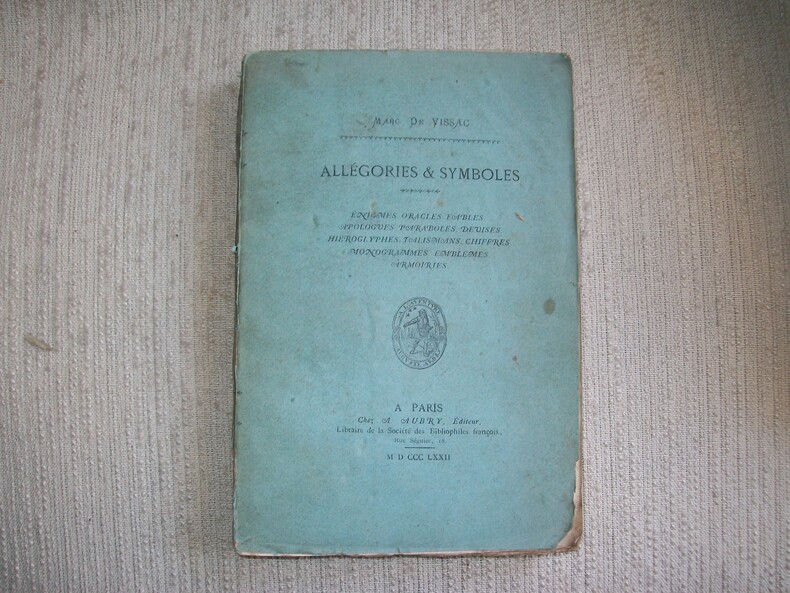
1872GITj552A paris chez Aubry 1872. In-8 broché VIII 247pp 1 feuillet non chiffré table. Tiré à 400 exemplaires, celui-ci 1 des 340 non justifiés imprimés sur beau papier. Couverture poussiéreuse avec manques de papier sur le dos, intérieur en bon état et complet. Caillet 11240.
197523710München, Fink, 1975. 559 S. Lex-8°, OLwd.
Frontespizio dell' “Atlas” di Reiner e Joshua Ottens, pubblicato ad Amsterdam nel 1730.Incisione in rame, incisa da J. van Munnikhuysen e disegnata da L. Webbers. Title page from the "Atlas" by Reiner e Joshua ttens, published in Amsterdam in 1730.Copper engraving, engraved by J. van Munnikhuysen after L. Webbers.
Frontespizio del "Atlas Novus" di Janssonius. Joannes Janssonius, figlio dell'editore di Arnhem Jan Janssen, sposò Elisabeth Hondius, figlia di Jodocus Hondius, ad Amsterdam nel 1612. Dopo il suo matrimonio, si stabilì in questa città come libraio ed editore di materiale cartografico. Nel 1618 si stabilì ad Amsterdam accanto alla libreria di Willem Jansz. Blaeu, entrando in una seria competizione. Le sue attività non riguardavano solo la pubblicazione di atlanti e libri, ma anche di mappe singole e un vasto commercio di libri con filiali a Francoforte, Danzica, Stoccolma, Copenaghen, Berlino, Koningsbergen, Ginevra e Lione. Nel 1631 iniziò a pubblicare atlanti insieme a Henricus Hondius. Nei primi anni 1640 Henricus Hondius lasciò l'attività di pubblicazione di atlanti completamente a Janssonius. La concorrenza con Joan Blaeu, figlio e successore di Willem, nella produzione di atlanti spinse Janssonius ad ampliare il suo Atlas Novus finalmente in un'opera di sei volumi, in cui furono inseriti un atlante marino e un atlante del Vecchio Mondo. Dopo la morte di Joannes Janssonius, il negozio e la casa editrice furono continuati dagli eredi sotto la direzione di Johannes van Waesbergen (c. 1616-1681), genero di Joannes Janssonius. Le matrici degli atlanti di Janssonius furono in seguito vendute a Schenk e Valck. Incisione in rame, coloritura coeva, in buono stato di conservazione. Title page of Janssonius' "Atlas Novus". Joannes Janssonius (Arnhem, 1588-1664), son of the Arnhem publisher Jan Janssen, married Elisabeth Hondius, daughter of Jodocus Hondius, in Amsterdam in 1612. After his marriage, he settled down in this town as a bookseller and publisher of cartographic material. In 1618 he established himself in Amsterdam next door to Blaeu’s book shop. He entered into serious competition with Willem Jansz. Blaeu.. His activities not only concerned the publication of atlases and books, but also of single maps and an extensive book trade with branches in Frankfurt, Danzig, Stockholm, Copenhagen, Berlin, Koningsbergen, Geneva, and Lyon. In 1631 he began publishing atlases together with Henricus Hondius. In the early 1640s Henricus Hondius left the atlas publishing business completely to Janssonius. Competition with Joan Blaeu, Willem’s son and successor, in atlas production prompted Janssonius to enlarge his Atlas Novus finally into a work of six volumes, into which a sea atlas and an atlas of the Old World were inserted. After the death of Joannes Janssonius, the shop and publishing firm were continued by the heirs under the direction of Johannes van Waesbergen (c. 1616-1681), son-in-law of Joannes Janssonius. The copperplates from Janssonius’s atlases were afterwards sold to Schenk and Valck. Copperplate with fine original colouring, very good condition.
1975205716Wien: Europaverlag, 1975. 308 S., 21 cm kart. , broschiert.
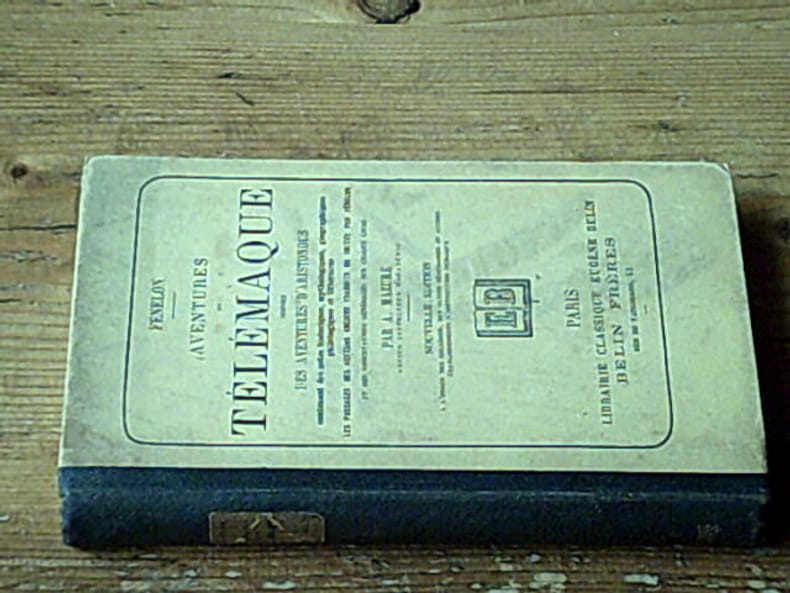
25091Belin Frères 423 pages Paris. in-12. Sans date. Dos en percaline. 423 pages. Nouvelle édition non datée