187 résultats
Acquaforte e bulino, 1729, firmata e datata in lastra in basso a sinistra.Magnifica prova, ricca di toni, impressa su carta vergata coeva, con margini, in ottimo stato di conservazione.Minerva e le scienze mettono un busto di Luigi XIV in una stanza decorata con busti scolpiti di altri uomini illustri; a destra, due personificazioni delle scienze fanno ghirlande di alloro; sopra di loro la Fama, che suona la sua tromba; tavola tratta da "Eloges des académiciens de l'Académie royale des Sciences", in "Oeuvres diverses" di Fontenelle. Etching and engraving, 1729.Lettered with production detail: 'B. Picart del. et sculp. 1729', title: 'Eloges des académiciens de l'Académie royale des Sciences', three lines of inscriptions in French, and explanatory key.Minerva and the Sciences setting a bust of Louis XIV in a room decorated with sculpted busts of other illustrious men; on the right, two personifications of Sciences are making laurel wreaths; above them flies Fame, who blows her trumpet; illustration to 'Eloges des académiciens de l'Académie royale des Sciences', in Fontenelle's 'Oeuvres diverses' (La Haye: Gosse & Neaulme, 1728-1729).A fine impression, very good condition. Dimier, Louis, Les peintres français du XVIIIe siècle, histoire des vies et catalogue des oeuvres, 1928, nn. 1500-1570.
14226, Erftstadt, Lukassen Verlag, 1984, Gebunden, Deckeltitelvergoldung, Ruckentitelvergoldung, Original-Schutzumschlag illustriert koloriert, 31x22cm, 314pp, illustriert s/w. ISBN 3923769040.
032-Lo.J. Kreidelithographie 1806, auf cremefarbenem Velin. 35:25 cm. Mit Flecken im Oberrand. Literatur: Nagler 15, 11; Aufseesser 275 (als Schiesel, Sommer und Herbst); Dussler 8; Winkler 706 (!). 6 und Abb. 16.- Aus lithographische Kunstproducte, Lieferung 9, Blatt 1.
1793121941Augsburg, bei Nicolaus Doll. 1793. Eine Kupfertafel, XVI, 380 Seiten (Blatt 379/380 "Erklärung des Kupferstiches" vorne eingeheftet). Brauner Halbleder-Einband der Zeit mit Rückentitel. (Bibl.-Exemplar. Einband an den Kanten berieben). 16x10 cm
190433489ABDresden, Stengel (Verlagsangabe auf Vorderdeckel und Titelseite überklebt mit 'Max Spielmeyer, Buchhandlung für Architektur und Kunstgewerbe, Berlin), o.J. [1904]. 2°, ein Blatt Titelseite, ein Blatt faksimilierte Titelseite sowie 3 beidseitig bedruckte Blatt mit dem franz. Text sowie 72 Blatt mit wunderbaren s/w-Illustr. (= alles), in der original Mappe mit den 3 Schließbändern, Neue Facsimile-Ausgabe in Photolithographie zwei der Textseiten seitlich mit winzigem Einrißchen, sonst ein erstaunlich schönes, sauberes und so gut wie nicht altersfleckiges Exemplar..
Ritratto di un giovane Vincenzo Maria Coronelli, inciso per il suo Corso geografico universale, o sia la terra divisa nelle sue parti e subdistinta ne' suoi gran regni. Esposta in tavole geografiche ricorrette et accresciute di tutte le nuove scoperte, ad uso dell'Accademia Cosmografica degli Argonauti dal Padre Maestro Vincenzo Coronelli M. C. Cosmografo della Serenissima Republica di Venetia. Dedicata alla Santità di Nostro Signore Innocenzo XII. P. I. In Venetia, a spese dell'autore. MDCXCII. Coronelli visse un periodo di straordinaria fecondità editoriale a partire dal 1689, quando ebbe la cattedra di geografia presso l'Università alle Procuratie, con la pubblicazione, nel 1690, del primo volume dell'Atlante Veneto. In effetti sotto il nome di Atlante Veneto va tutta la raccolta di tredici opere composte nell'arco del decennio successivo, dall'Isolario allo Specchio del mare. In realtà solo alcune di tali opere possono definirsi atlante, e sono di valore molto disuguale, dato che si passa da opere originali e fondamentali come quelle citate o il Corso Geografico ad opere di compilazione o semplici raccolte di vedute. Il Corso Geografico uscì in diverse edizioni con numeri diversi di carte - sessantotto tavole nel 1689-92; di centosettantatré tavole nel 1692; duecentosessanta tavole, nel 1694-97 - che venivano vendute anche separatamente, al ritmo di sei carte al mese per due anni. Le carte furono incise tra il 1688 e il 1692 nell'attrezzatissima officina cartografica del convento dei Frari, dove lavoravano anche incisori stranieri. Incisione in rame, in ottimo stato di conservazione. Scarce portrait of a young Vincenzo Maria Coronelli, engraved for his Corso geografico universale, o sia la terra divisa nelle sue parti e subdistinta ne' suoi gran regni. Esposta in tavole geografiche ricorrette et accresciute di tutte le nuove scoperte, ad uso dell'Accademia Cosmografica degli Argonauti dal Padre Maestro Vincenzo Coronelli M. C. Cosmografo della Serenissima Republica di Venetia. Dedicata alla Santità di Nostro Signore Innocenzo XII. P. I. In Venetia, a spese dell'autore. MDCXCII. Coronelli lived a period of extraordinary editorial fecundity starting from 1689, when he had the chair of geography at the University at the Procuratie, with the publication, in 1690, of the first volume of the Atlante Veneto. Under the name of Atlante Veneto goes the entire collection of thirteen works composed over the next decade, from the Isolario to the Specchio del mare. In reality, only some of these works can be defined as atlas, and are of very unequal value, since we go from original and fundamental works such as those mentioned or the Corso Geografico to works of compilation or simple collections of views. The Corso Geografico came out in several editions with different numbers of maps - sixty-eight maps in 1689-92; one hundred and seventy-three maps in 1692; two hundred and sixty maps in 1694-97 - which were also sold separately, at the rate of six a month for two years. The maps were alle engraved between 1688 and 1692 in the well-equipped cartographic workshop of the Frari convent, where foreign engravers also worked. Copperplate, very good condition.
199642102Köln, Weimar, Wien, Böhlau, 1996. XII, 374, [76] Seiten, mit zahlreichen Abbildungen. 23 x 16 cm, Broschur.
Mm 240x200 Brossura editoriale di 45 pagine con illustrazioni in nero. Lievi segni d'uso alla quarta di copertina. A cura di Brenno Bucciarelli. Buono stato. Spedizione entro 24 ore dalla conferma dell'ordine.
Due volumi in 8° grande legati in mezza pelle con unghie, titolo ai tasselli ai dorsi (restauri), sguardie, occhielli, frontespizi incisi davvero molto animati, LX, 594 pp. in numerazione continua, 42 (di 43, manca un ritratto nel primo volume), tavole incise in rame, alcune ripiegate. Di questa raccolta s'ha solo da dir bene. L'insieme è fantasmagorico e gustoso quanto gli squisiti manicaretti fiorentini. Nei 341 canti di questa raccolta, tra cui la celeberrima "Quant'e" bella giovinezza" del Magnifico ed una canzone del Machiavelli pubblicata per la prima volta nel 1553. ve ne sono diversi che trattano di argomenti di caccia quasi tutti allegorici e con palesi doppi sensi, comunque importanti per la conoscenza del modo di cacciare di quell'epoca. E poi tutta la giocosa sfrontatezza fiorentina: esemplare in barbe, in bello stato, fresco malgrado qualche sporadica brunitura. Importante e raro a reperirsi
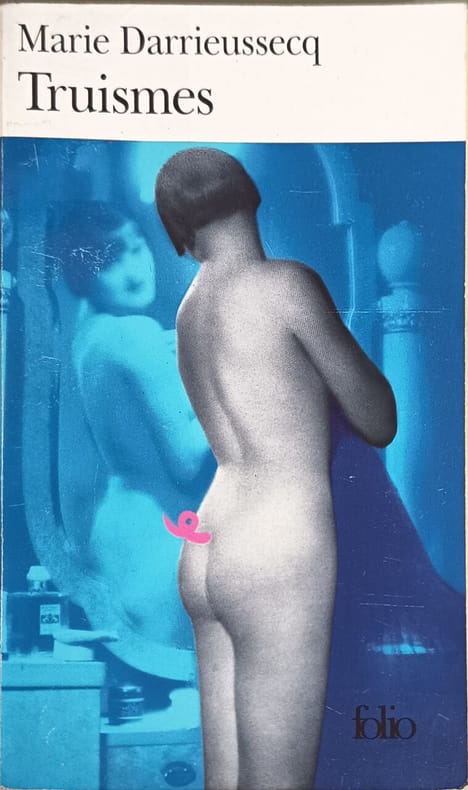
19986979Folio 1998 160 pages poche. 1998. broché. 160 pages. Truismes est un roman publié en 1996 qui raconte à travers un manuscrit rédigé par l'héroïne la transformation progressive d'une jeune femme naïve en truie. Employée dans une parfumerie parisienne où elle est exploitée sexuellement elle décrit chaque étape de sa métamorphose physique et sociale offrant un portrait glaçant et décadent de la société
Mm 225x290 Volume rilegato in tela con sovraccoperta originale, 225 pagine in gran parte illustrate con tavole in nero e a colori fuori testo. Volume in ottime condizioni. Spedizione in 24 ore dalla conferma dell'ordine.
1892107224Nantes Grimaud 1892 Nantes, Imp. Emile Grimaud, 1892, 324 p., broché, 25x17cm, des défauts sur la couverture (dos insolé, des taches de liquide sur le premier plat, second plat un peu sali), une petite étiquette sur le haut de la page de garde, sinon intérieur propre.
1892848321892 Imp. Emile Grimaud, Nantes, 1892, 324 p., bas du dos émoussé, dos insolé, quelques rousseurs sur les pages.
Frontespizio del "Itinerarium Italiae" di Martin Zeiler. Incisione in rame, in eccellente stato di conservazione. Frontespizio del "Itinerarium Italiae" di Martin Zeiler. Incisione in rame, in eccellente stato di conservazione. D. Cremonini, L’Italia nelle vedute e carte geografiche dal 1493 al 1894 libri di viaggi e atlanti, 1996, pp.37 e 64.
Frontespizio dell'edizione olandese dell’Atlas Novus di Blaeu. Willem Janszoon Blaeu, avviò nel 1599 la sua attività di costruttore di globi e strumenti astronomici ad Amsterdam. Nel 1630, dopo aver comprato alcune lastre dell’atlante del Mercator da Jodocus Hondius II, fu in grado di pubblicare un volume di 60 mappe con il titolo di Atlantis Appendix. Cinque anni dopo, pubblicò i primi due volumi del suo atlante Atlas Novus o Theatrum Orbis Terrarum, in sei libri. Dopo la sua morte, Joan (Johannes) continuò l’opera paterna, completando l’intera serie di sei volume dell’Atlas Novus intorno al 1655. Fu inoltre autore di un Atlas Maior sive Cosmographia Blaviana, in 12 volumi pubblicati nel 1662 -72. Incisione in rame, bella coloritura coeva, in ottimo stato di conservazione. Title page of the Dutch edition of Blaeu's Atlas Novus. Willem Janszoon Blaeu, started in 1599 his business as a builder of globes and astronomical instruments in Amsterdam. In 1630, after buying some plates of the Mercator atlas from Jodocus Hondius II, he was able to publish a volume of 60 maps under the title Atlantis Appendix. Five years later, he published the first two volumes of his atlas Atlas Novus or Theatrum Orbis Terrarum, in six books. After his death, Joan (Johannes) continued his father's work, completing the entire six-volume Atlas Novus series around 1655. He was also the author of an Atlas Maior sive Cosmographia Blaviana, in 12 volumes published in 1662 -72. Copperplate with fine original hand colour, very good condition.
17681601111768. Klarer Druck mit der vollen Darstellung auf Bütten. 15,2 x 23,6 cm. Papier: 17,5 x 25,2 cm.
Frontespizio del secondo volume dell'edizione francese del "Civitates Orbis Terrarum", il primo atlante devoto esclusivamente alle piante e vedute delle principali città del mondo. Stampato in sei volumi tra il 1572 ed il 1617 ebbe grande fortuna e diffusione, tanto che ne furono stampate diverse edizioni tradotte in latino, tedesco e francese. Il primo volume delle Civitates Orbis Terrarum fu pubblicato a Colonia nel 1572. Il sesto e ultimo volume apparve nel 1617. Questo grande atlante di città – cartografia urbana - curato da Georg Braun e inciso in gran parte da Franz Hogenberg, conteneva 546 prospettive, vedute a volo d'uccello e vedute cartografiche di città di tutto il mondo. Franz Hogenberg realizzò le tavole dei primi quattro volumi e Simon van den Neuwel (Novellanus, attivo dal 1580) quelle dei volumi V e VI. Georg Braun (1541-1622), un ecclesiastico di Colonia, fu il principale redattore dell'opera e fu molto aiutato nel suo progetto dalla vicinanza e dal continuo interesse di Abraham Ortelius, il cui Theatrum Orbis Terrarum del 1570 fu, come raccolta sistematica e completa di mappe di stile uniforme, il primo vero atlante. Le Civitates, in effetti, erano destinate ad accompagnare il Theatrum, come indicato dalla somiglianza dei titoli e dai riferimenti contemporanei sulla natura complementare delle due opere. Tuttavia, le Civitates erano progettate per avere un approccio più popolare, senza dubbio perché la novità di una raccolta di piante e vedute di città rappresentava un'impresa commerciale più rischiosa di un atlante mondiale, per il quale c'erano stati diversi precedenti di successo. Franz Hogenberg (1535-1590) era figlio di un incisore di Monaco che si era stabilito a Malines. Incise la maggior parte delle tavole del Theatrum di Ortelius e la maggior parte di quelle delle Civitates, e potrebbe essere anche indicato come il responsabile dell'origine del progetto. Oltre un centinaio di artisti e cartografi diversi, il più importante dei quali fu l'artista di Anversa Georg Hoefnagel (1542-1600), fornirono i disegni per le tavole delle Civitates. Hoefnagel non solo contribuì alla maggior parte del materiale originale per le città spagnole e italiane, ma rielaborò e modificò anche quello di altri collaboratori. Dopo la morte di Hoefnagel, il figlio Jakob continuò il lavoro per le Civitates. Gli autori della raccolta si proponevano di raffigurare "non icones et typi urbium", cioè non immagini generiche e tipizzate, "sed urbes ipsae admirabili caelaturae artificio, spectantium oculis subiectae appareant": non intendeva alludere o idealizzare, ma rappresentare fedelmente sulla carta, riprodurre esattamente, e in tempo reale, ciò che l'occhio vede, come annunciato nella prefazione al primo volume delle Civitates Orbis Terrarum. Incisione in rame, magnifica coloritura a mano, in ottimo stato di conservazione. Title page of the second volume of the French edition of Civitates Orbis Terrarum, the first atlas devoted exclusively to plans and views of the world's major cities. Printed in six volumes between 1572 and 1617 it was so successful and widespread that several editions translated into Latin, German and French were printed. The first volume of the Civitates Orbis Terrarum was published in Cologne in 1572. The sixth and the final volume appeared in 1617. This great city atlas, edited by Georg Braun and largely engraved by Franz Hogenberg, eventually contained 546 prospects, bird-eye views and map views of cities from all over the world. Fransz Hogenberg produced the plates for the first four books, and Simon van den Neuwel (Novellanus, active since 1580) those for volumes V and VI. Georg Braun (1541-1622), a cleric of Cologne, was the principal editor of the work, and was greatly assisted in his project by the close, and continued interest of Abraham Ortelius, whose Theatrum Orbis Terrarum of 1570 was, as a systematic and comprehensive collection of maps of uniform style, the first true atlas. The Civitates, indeed, was intended as a companion for the Theatrum, as indicated by the similarity in the titles and by contemporary references regarding the complementary nature of two works. Nevertheless, the Civitates was designs to be more popular in approach, no doubt because the novelty of a collection of city plans and views represented a more hazardous commercial undertaking than a world atlas, for which there had been a number of successful precedents. Franz Hogenberg (1535-1590) was the son of a Munich engraves who settled in Malines. He engraved most of the plates for Ortelius's Theatrum and the majority of those in the Civitates, and may have been responsible for originating the project. Over a hundred of different artists and cartographers, the most significant of whom was Antwerp artist Georg Hoefnagel (1542-1600), engraved the cooper-plates of the Civitates from drawings. He not only contributed most of the original material for the Spanish and Italian towns but also reworked and modified those of other contributors. After Hoefnagel's death his son Jakob continued the work for the Civitates. The author set out to depict "non icones et typi urbium," that is, not generic and typified images, "sed urbes ipsae admirabili caelaturae artificio, spectantium oculis subiectae appareant": not intended to allude or idealize but to represent faithfully on paper, to reproduce exactly, and in real time, what the eye sees, as announced in the preface to the first volume of Civitates Orbis Terrarum. Copperplate with fine clouring, very good conditions.
1332747396.Gpaperback. Good. Access codes and supplements are not guaranteed with used items. May be an ex-library book. paperback
1333577702.Gpaperback. Good. Access codes and supplements are not guaranteed with used items. May be an ex-library book. paperback
8vo., with illustrations and facsimiles in the text; original dove-blue cloth, upper board blocked in blind, gilt back, red top, pictorial endpapers, a very good, bright, clean copy in unclipped dustwrapper, the latter lightly age-soiled and frayed (without material loss) at extremities. With 16pp series catalogue bound in at end. First published in Everyman's Library in 1907. EL 204; Seymour 142.0.
8vo., on laid paper, with 2 woodcut frontispieces and 16 woodcut illustrations (a number full-page) in the text, endpapers very lightly browned; original brown cloth, boards with elaborate floral roll in blind, back with four flat bands, second compartment with label lettered in gilt, red edges, backstrip lightly pulled at head else a very good, crisp, clean copy. With the contemporary binder's ticket of Smith Brothers of Paternoster Row on rear paste-down. Bunyan's allegory was first published in 1678, less than a handful of copies are known to exist. This much-needed facsimile includes the frontispieces and titles to both parts, the 14 woodcut illustrations of the first part and the 2 woodcut illustrations of the second part. All marginalia (comprising arguments and biblical references) are faithfully retained. The work was not divided into chapters until Burder's edition of 1786. A notable and very scarce facsimile edition.
186652348London: Longmans Green Reader and Dyer Paternoster Row 1866. Thick 4to. xii 2 239 1 pp. Woodcut-engraved & illustrated title in red & black illust. half-title in red & black red & black frontisp. many leaves printed in blue red yellow or green woodcut-engraved plates historiated initials head- and tail-pieces woodcut borders. Contemporary full red morocco with gilt ornamented designs on front & back cover gilt decorated spine raised bands marbled endpapers t.e.g. very minor rubbing at hinges minor rubbing to corners very slight tidemark to fore-edge of first couple leaves still a NF copy bound by Riviere w/ their stamp on lower fore-edge of inner ruled dentelle on front pastedown. First edition of this lavish Victorian work celebrating the life span of man in the 12 months of a calendar year beginning with the infant in January the schoolboy in February the apprentice in March as well as the soldier in June the philosopher and statesmen in September and more. Pigot has drawn upon the verse of Bacon Cicero Carlyle Caxton Chaucer Dickens Dryden Emerson Goethe Martial Shakespeare Sallust and Virgil. Longmans, Green, Reader, and Dyer, Paternoster Row, hardcover
024318381X.Gpaperback. Good. Access codes and supplements are not guaranteed with used items. May be an ex-library book. paperback
024339960X.Gpaperback. Good. Access codes and supplements are not guaranteed with used items. May be an ex-library book. paperback
pp. xvi, 42 (2) lxviii + Plates (some in color). 4to. 27 cm. Attractive original full blue cloth binding, lettered in gold. Edited and translated by Nathaniel Hill, Katherine Isabella Cust, John Lydgate (Ca. 1370-1451), and others. The wonderful woodcuts are from the Paris edition of 1511. First Edition thus. Scarce. **PRICE JUST REDUCED! W144