Urusa MohsinMareMagnum

8 005 résultats
There is luminous literature available relating to women but very little attention is given towards the property rights of women. The law of inheritance is an important subject to be considered because it ensures the future security of women to arrival social tragedies. According to the UN. Report 1980, the women constitute half the world's population but possesse only one percent of immovable property. Despite the plethora of international conventions and declarations and legislative steps but the help system discriminates to inherit the property. In ancient times the women were devoid of any. Contents:- Contents, Preface 13, Abbreviation 17, Table of Cases 23, 1. Introduction 39-55, • An Overview 39, • Indian Scenario 45, • Practical Significance of Different Acts 50, • Another Legislative Step (The Amendment, Act of 2005) 51, • Hypothesis 53, • Scheme of Work 53, • Research Methodology 54, 2. Concept of Women’s Property under 57-78, Different Legal System, • An Overview 57, • Concept of Property 57, • Under Different Legal System 61, A. Islamic Law 61, • Hanafi School • Maliki School, • Shafii School • Hanalii School, • Shia School, B. Hindu Law 64, • Classification of Property, • Stridhana • Women’s Estate, C. Christian Law 72, • Concept of Matrimonial Property 48, D. Parsi Law 75, • Recapitulation 50, 3. Shares of Females under different, Legal System 79-191, • An Overview • Development of Family, System • Law of Inheritance in Different, Religo Legal System, A. Islamic Law 86, • Salient features • Nemo Est Heirs, Vevents • Dual Basis of Islamic Law of, Inheritance • Near in Degree Exclude, the Remorter • Rule of Representation, • Rule of Spes-Successionis • No, Concept of Joint Family • No Rule of, Primogeniture • No Birth Right • No, Concept of Survivorship • Rules, Relating to Illegitimate Child • Insanity, and Unchastity • Non-Muslim not be an, Heir • Homicide • Missing Person, • Unborn Person as being Heir, • Several death at a time, • Kinds of Heirs 89, • Sharer • Residuaries • Distant, Kindred, • Fluctuation of Shares among the, Sharers and Residuaries 98, • Apportionment of Heritage 100, • Doctrine of Awl • Doctrine of Radd, • Shia Law of Inheritance 101, • Comparison of Sunni and Shia, Law of Inheritance 104, B. Hindu Law 118, • Definition of Hindu • Position of, Women’s Property Right in Old Hindu, Law • Fundamental Changes Brought, by the Act of 1956 • Coparcenary • Joint, Family • Undivided Hindu Family, • Position of Women’s Property Right, after, 1956 • Critical analysis of Certain, Provisions of Hindu Succession Act of, 1956 • Section 6 before 2005 • Section, 6 after 2005 • Uniform Succession, whether really exist after 1956 ?, • Section 8, 8 Women’s Property Rights in India, • Kinds of Heirs 122, • Heirs specified Class I • Heirs, specified Class II • Heirs specified Class, III • Heirs specified Class IV., • Some Controversial Heirs 23, • Legitimate or Illegitimate Child, • Remarried Widow • Concubine., • Enlargement of Women’s estate (sec.14) 123, • Rao Committee Report 123, • Section 14 • ‘Any property’ - meaning 124-129, of • ‘possessed by female Hindu’, • Female Hindu • ‘Whether acquired, before or after the Commencement of, the Act’ • ‘Shall be held by her as full, owner thereof and not as a limited, owner’., • Succession of a Hindu Female Intestate 129-135, • Class I Heirs • Class II Heirs, • Class III Heirs • Class IV Heirs, • Class V Heirs • Section 15., • The Order and Manner of Distribution 135-136, • Some General Principles 136-137, • Preference of Full Blood over Half, Blood • Mode of Succession of two or, more Heirs • Unborn Child, • Simultaneous Death • Preferential, Right., • Section 23 before 2005 137, • Section 23 after 2005 137-140, • Heirs not Entitle to Inherit 141-142, • Remarried Widow after 2005, • Murderer • Conversion • Disqualified, Heir be Deemed Died • Abolition of the, Old Disqualification of Hindu Law., • Hindu Succession Amendment Act 2005 142-156, • The Effect of the Amendment Act,, 2005 • The Kerala Joint Hindu Family, System (Abolition) Act, 1975 • The, Andhra Pradesh Hindu Succession, (Amendment) Act, 1985 • Amendments, in other States • Critical Analysis of the, CONTENTS:- 9, 10 Women’s Property Rights in India, Amendment Act, 2005 • Deletion of Sub-, Section (2) of Sec. 4 of Principal Act •, Amendment of Sec. 6 • Induction of, Daughter as Coparcener • Prospective, Effect • Hindu Undivided Family •, Distinction between the Females of, Hindu Joint Family • Rule of, Survivorship • Mitakshara-Coparcenary, • Deemed Partition • Discrimination, between the Coparceners • No, Discrimination between Married and, Unmarried Daughters • No Provision, for the Devolution of the Interest of, Female Coparcener • Abrogation of the, Pious Duty of Son to Pay Father’s Debt, • Omission of Sec. 23 • Deletion of Sec., 24 • Amendment of Sec. 30 • Heirs, under the Amendment Act., C. Christian Law 156-158, • Indian Christian • Application of the, Act of 1925 • General Principles of the, Succession of a Christian., • Rules Regarding Domicile 158-161, • Trader or Merchant • Foreign, Representatives • Legitimate and, Illegitimate Child • Lunatic Person, • The Effect of Marriage to Regulate, the Succession • Abolition of English, Concept of Matrimonial Property, • Different Domicile of Spouses., • Intestate Succession 161-170, • Kinds of Heirs • Husband and Wife, • Widow and Widower • Judicial, Separation • Lineal descendants, • Lineal descendants of first degree, • Lineal descendants of Second degree, • Lineal descendants of third degree, • Lineal descendants not of same, degree • No Lineal descendant degree, • Doctrine of Escheat • In case of Nun, • Travancore Christian Succession Act, and the Cochin Succession Act., D. Parsi Law 170-191, • Succession of Parsis • General, principles of Intestate Succession of a, Parsi • Posthumous Child • PreContents, 11, Deceased Child • Remarriage, • Distribution of Property among, Widow, Widower, Children and Parents, • Distribution of Share of Predeceased, Child of Intestate leaving Lineal, Descendants., • Heirs 174, • If there is no lineal descendants but, a widow or widow of any lineal, descendant • If there is no lineal, descendants nor a widow or widower, nor a widow of any lineal descendant, The relatives who are not otherwise, entitle to inherit., 4. Comparative Study of Women’s Property, Rights under Different Legal System, • An Overview • Definition of, Comparative Law • Different Families, of Law • Romano Germanic Family •, The family of Common Law • The family, of Socialist Law • The family of, Religious Law., • Development of Different Religious Law 192-220, • Muslim Law • Hindu Law • Christian, Law • Comparison of General Rules of, Succession of Different Laws., • Comparative Charts 203-220, • Comparison of the Shares allotted to, Females in Different Capacities •, Mother, Grand mother, Great grand, mother, Step mother and Mother of an, illegitimate child • Widow, Widow of, predeceased son, Widow of predeceased, son’s son (his) and Widow of brother •, Sister, Consanguine sister and Uterine, sister • Daughter, Son’s Daughter and, Daughter’s daughter • Some, Comparative Illustration., 5. Judicial Responses 221-225, • An Overview • Historical Background, • Development of Indian Legal System, • Role of Judiciary in Developing the, Women’s Property Right., • Islamic Law 225-241, • Pre-lndependence Period • Post, Independence Period • During First, Decade • During Second Decade, • During Third Decade • During Fourth, Decade • During Fifth Decade., • Current Position 242, • Hindu Law 242, • Pre-lndependence Period • Post, Independence Period • During First, Decade • During Second Decade, • During Third Decade • During Fourth, Decade • During Fifth Decade., • Current Position 258-264, •Implementation of New (Amendment), Act of 2005 • Latest Cases upto 2009., • Christian Law 265-269, •Pre-lndependence Period • Post, Independence Period., • Current Position 269, • Parsi Law 270-272, • Pre-lndependence Period • Post, Independence Period., • Current Position 273, 6. Summation and Suggestion 281, Bibliography 295, Encyclopedias 307, Reports 307, Journals 309, Articles 309, Periodicals & Dailies 313, Acts and Statutes 313, International Conventions and Declarations 315, Index 319 The Title 'Women's Property Right's in India With Latest Amendments and Cases written/authored/edited by Urusa Mohsin', published in the year 2010. The ISBN 9788178357904 is assigned to the Hardcover version of this title. This book has total of pp. 330 (Pages). The publisher of this title is Kalpaz Publications. This Book is in English. The subject of this book is Women Studies. Size of the book is 14.34 x 22.59 cms Vol:-
Panchayats played a major role in the implementation of administration and also justice in ancient India, and our history tells us that Grama Panchayats were the bed-rocks for any development activity. Speaking about Grama Swaraj, Gandhiji said, “our native ancient institution like Grama Panchayat should be revived. Ours is a country of self-ruled institutions”. Huyen– Tsang of China, the famous traveller of 18th century, wrote highly appreciating our Panchayat Raj System and several historians wrote books analysing this ancient system. But, with the coming of Britishers, this system of decentralisation had been rooted out. Women are not to be treated as weaker segment of society or passive beneficiaries. To improve the status of women and for all-round development of society, it is necessary to harness the full potential of the silent half. Women should be involved at all level in planning, decision making, policy framing and in the implementation of all developmental programmes. Reservation for women in government and in parliamentary process is essential to enable them to influence gender sensitive local planning and implementation. Because of the many facilities, provided, new breed of women politicians in India’s small towns is coming up and they become a political force to reckon with in the years to come. They are educated and some favour to be active in public life. Increasing number of these enlightened women, who are articulate and active for making women greater participants in politics. Passage of the Bill is a formality but bringing about awareness is more essential. About The Author:- Varalakshmi Janapathy had a brilliant academic career and studied at the famous Andhra Christian College, Guntur and Law College, Madras. She took a PG-diploma in Politics and Public Administration from Madras University and another diploma in Journalism from BIET, Bombay. She took Visarada in Hindi from DBHP Sabha, Madras. She is a well known writer and was winner of a Gold Medal in inter-collegiate debates. Her interests range from music to gardening and traveling. ,Her research work on “Indian Women Through Ages” was well received by the press and the public as one of the outstanding works. Its English version was released by the Honourable Prime Minister, Man Mohan Singh ji, in 2004. She received the coveted AP Sahitya Academy Award, Grihalakshmi Swarna Kankanam from Kesari Kuteeram Madras and Kalaprapoorna from Andhra University, Durga Bai Deshmukh Award from Abhinandana, Narla Sahiti Puraskaram in addition to several other awards and Life Achievement Award from Vivekananda Institute of the Human Exellence, Hyderabad. She received “Akshara Jyothi” title from Subba Rao Academy of Fine Arts, ‘Mahila Ratna’ from Golden Star and a Gold Medal from Khaumi Ekta for National Integration. Her recent work, the Life Sketch of Indira Gandhi was released by Smt. Sonia Gandhi. She visited countries like Hongkong, Finland, Norway, Sweden, Denmark, Holland, Maritious, Singapore, and England. She is a good debator and participant in several national and international conferences, and has presented papers on women’s development and women’s empowerment. She is head of several organisations. The Title 'Women Key to Successful Democracy written/authored/edited by Varalaxmi Janapathy', published in the year 2009. The ISBN 9788178357362 is assigned to the Hardcover version of this title. This book has total of pp. 340 (Pages). The publisher of this title is Kalpaz Publications. This Book is in English. The subject of this book is Women Studies. Size of the book is 14.34 x 22.59 cms Vol:-
This book brings out the status of women all over the world in general and in India, in particular, in all. Important areas of human life, like health, education, employment, politics, religion, cultural institutions like marriage or family and development. It also explains the theories of feminism, women studies and reasons for subordinate of women. It outlines the efforts of women to achieve equality. Contents:- Contents, Foreword 9, Acknowledgements 13, 1. Introduction 15, 2. Women’s Studies and Feminism 23, 3. Man-Woman Relations : Sex, Division of Labour,, Stratification Based on Sex 37, 4. Status of Women in India Through the Ages 47, 5. Reform Movements and Social Legislation 55, 6. Women and Household 63, 7. Women and Education 71, 8. Women and Health 79, 9. Women and Employment 89, 10. Women’s Movement in India 99, 11. Women’s Organisations in India 111, 12. Women and Development 121, 13. Women’s Empowerment 133, 14. Women and Environment 141, 15. Women and Politics 157, 16. Women and Crime 175, 17. Women and Culture 197, 18. Women in Religion 215, 19. Women of Uttaranchal 231, 20. Conclusion 247, Bibliography 263, Index 269 The Title 'Women and Society written/authored/edited by Zainab Rehman', published in the year 2005. The ISBN 9788178354316 is assigned to the Hardcover version of this title. This book has total of pp. 300 (Pages). The publisher of this title is Kalpaz Publications. This Book is in English. The subject of this book is Sociology / Women Studies. Size of the book is 14.34 x 22.59 cms Vol:-
196725519Montreal Canadian Corporation for the 1967 World Exhibition 1967
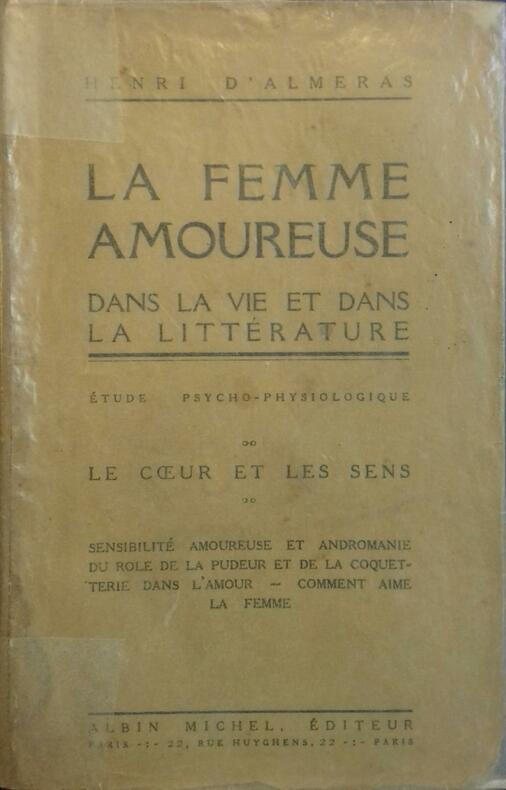
193063290Couverture souple. Broché. 288 pages. Defraîchi. Rousseurs.
196986465Couverture rigide. Cartonnage de l'éditeur. 255 pages. 12 x 21 cm.
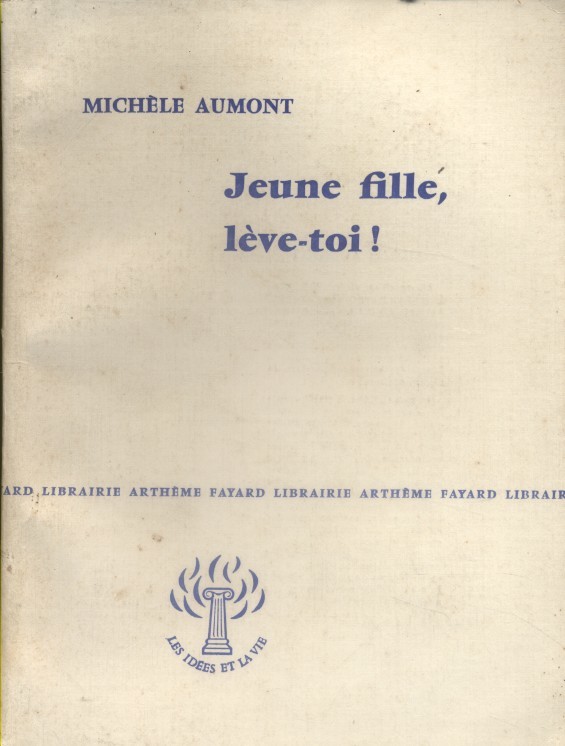
196389024Couverture souple. Broché. 185 pages. Légère mouillure en marge.
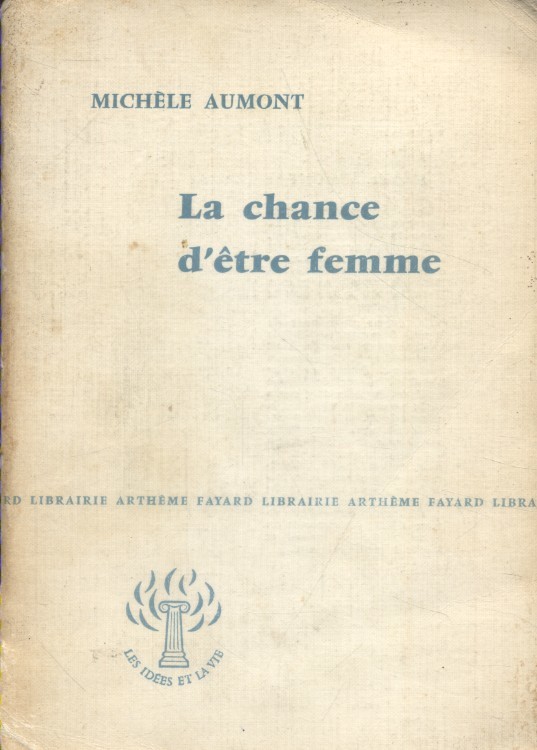
1964128033Couverture souple. Broché. 281 pages. Légèrement défraîchi.
2004206159Couverture souple. Broché. 204 pages.
195179546Couverture souple. Broché. 292 pages. Papier bruni. Légèrement défraîchi.
1968144555Couverture souple. Broché. 270 pages. Couverture légèrement défraîchie.
1961207000Couverture souple. Broché. 191 pages. Couverture légèrement défraîchie. Rousseurs.
190063321Couverture souple. Broché. 300 pages. Défraîchi. Nombreuses rousseurs. Cachet.
195763320Couverture souple. Broché. 252 pages.
197963314Couverture souple. Broché. 156 pages.
192989014Couverture souple. Broché. 204 pages.
197888991Couverture souple. Broché. 70 pages. Couverture légèrement défraîchie.
1994148806
1994205256
1927127480Couverture souple. Broché. 220 pages. Couverture factice. Rousseurs.
188989011Couverture souple. Broché. 151 pages. Quelques passages soulignés au crayon. Petit manque au dos.
197572082Couverture souple. Broché. 524 pages. Légèrement défraîchi.
1975107212Couverture souple. Broché. 524 pages. Légèrement défraîchi.
1989109817Couverture souple. Broché. 105 pages.
195388856Couverture souple. Broché. 247 pages. Jaquette défraîchie. Papier légèrement bruni. Manques en marges de quelques pages.