3 965 résultats
000059<p><strong>Huda Sha'rÄwÄ« 1879–1947</strong><br /><strong>Collection of 19 Photographs</strong></p><p>A group of <strong>nineteen individual photographic prints of varying sizes</strong> depicting <strong>Huda Sha'rÄwÄ«</strong> the pioneering Egyptian feminist leader nationalist and founder of the Egyptian Feminist Union.</p><ul><li><strong>Four photographs are signed by Huda Sha'rÄwÄ«</strong> including <strong>two dedicated and signed in Paris to Majd ed-Din Nasif</strong>.</li><li>Approximately <strong>fourteen are studio photographs</strong> taken predominantly in <strong>Paris</strong> with several examples from <strong>Cairo</strong>.</li><li>One notable photograph shows Sha'rÄwÄ« in <strong>Egyptian local dress</strong> <strong>signed by the photographer Lekegian Cairo</strong>.</li></ul><p>The photographs document Sha'rÄwÄ« in both European and Egyptian contexts reflecting her transnational life and public persona during the early twentieth century.</p><p><strong>Biographical Note:</strong><br />Huda Sha'rÄwÄ« June 23 1879 – December 12 1947 was a leading figure in Egyptian feminism and nationalism. Born into a wealthy family in Minya she was the daughter of Muhammad Sultan the first president of the Egyptian Representative Council. Raised in the seclusion of an upper-class harem she married her cousin Ali Pasha Sha'rÄwÄ« at the age of thirteen. A later separation allowed her to pursue formal education and develop an early sense of independence. Educated in Quranic studies Arabic Turkish and Islamic subjects she also wrote poetry in Arabic and French. Her memoir <em>Harem Years: The Memoirs of an Egyptian Feminist 1879–1924</em> remains a key source for understanding her life and era.</p>
Iconic preview issue of Ms. signed and inscribed by its co-founder, Gloria Steinem, upon front cover. This landmark feminist publication was "written for all women, everywhere, in every occupation and profession - women with deep, diverse ambitions, and those who have not yet had a chance to formulate ambition - women who are wives, mothers, and grandmothers, or none of these - women who want to be fully a female person and proud of it. In brief, women who want to humanize politics, business, education, the arts and sciences... in the home, the community , and the nation." - p113. Cover art by Miriam Wosk [1947-2010] depicts frantic eight-armed pregnant woman struggling to satisfy the many demands of her work, marriage and motherhood. 128 pages including such articles as: De-Sexing the English Language; Men's Cycles (They Have Them Too, You Know); Down With Sexist Upbringing; We Have Had Abortions; Why Women Fear Success; My Mother, The Dentist; How To Write Your Own Marriage Contract; The Black Family and Feminism - A Conversation with Eleanor Holmes Norton; The Sexual Revolution Wasn't Our War; Can Women Love Women; The Birth of Individual Architecture; and more. Interesting ads. Complete and unmarked with average wear. Signature and inscription appear more clearly than is indicated in our photos. A very special piece of American feminist history. Book
1833YQV-142 volumes in-8 (207 x 122 pp) de 4 ff.n.ch. (faux-titre, titre, dédicace, exergue) et 350 pp. pour le premier volume ; 3 ff.n.ch. (faux-titre, titre, vers d Alfred de Musset) et 383 pp. pour le second (comme dans la plupart des exemplaires reliés à l époque, le relieur a supprimé le dernier feuillet blanc du tome I et le premier feuillet blanc du tome II) ; demi-veau fauve, dos lisses, compartiments de filets et chaînettes ornés de grands fleurons géométriques dorés, roulette en pied, plats recouverts de papier marbré, tranches marbrées dans les mêmes tons (reliure de l époque).
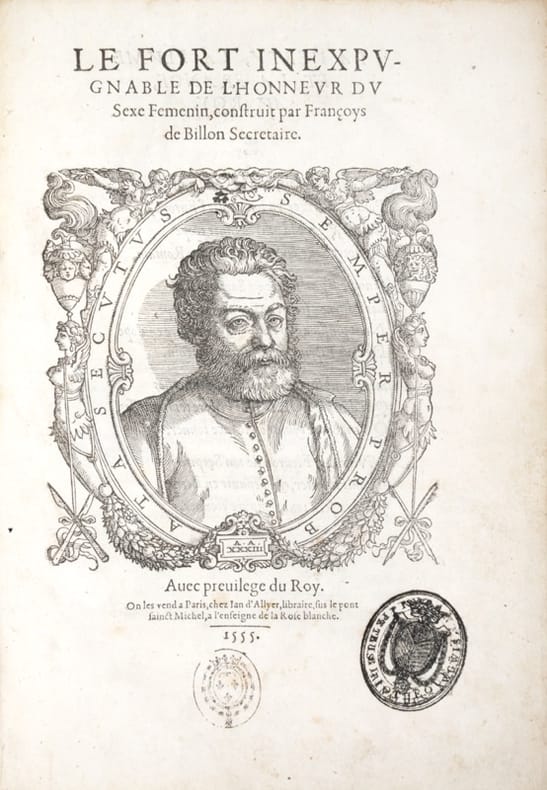
155541984Paris, Jean d’Allyer, 1555. In-4 (165 x 239 mm) de (6)-256-(3) ff. (erreurs de pagination sans manque, sign. A4, e2, A-3S4, 3T3), maroquin havane à grains longs, dos orné à nerfs, double filet et fleurons d’angle sur les plats, tranches dorées (bound by C. Lewis).
151741471Paris, Jehan Petit, (1517 ca). In-16 gothique (87 x 119 mm) de (259) ff. (sign. A-Z , a-i , k ), veau fauve glacé, dos orné à nerfs, pièces de titre en maroquin fauve et vert, triple filet doré d'encadrement sur les plats, filet et frise dorées intérieures, tranches dorées (Petit succr de Simier).
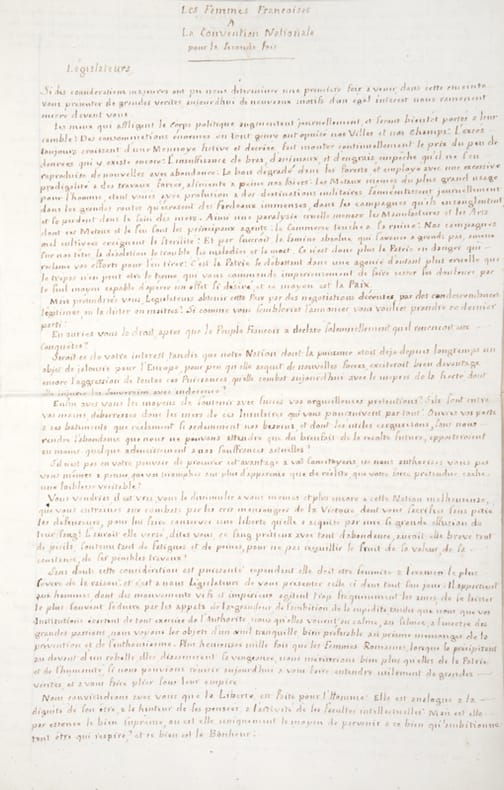
179542285S.l.n.d., , (1795). Manuscrit in-folio broché de 4 pp. à 62 lignes par page.
60342BBo.J. [6 Warenabbildungen] Niki de Saint Phalle, (eigentlich Catherine Marie-Agnès Fal de Saint Phalle), geboren am 29. Oktober 1930 in Neuilly-sur
155542249Paris, Jean d’Allyer, 1555. In-4 (161 x 232 mm) (6)-256-(3) ff. et 1 feuillet blanc (erreurs de pagination sans manque), demi-maroquin brun, dos à nerfs, tranches rouges (reliure du XIXe siècle).
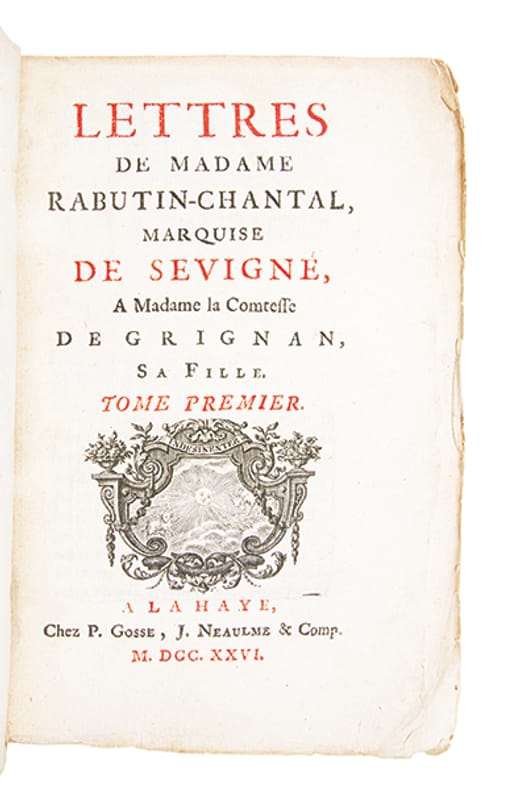
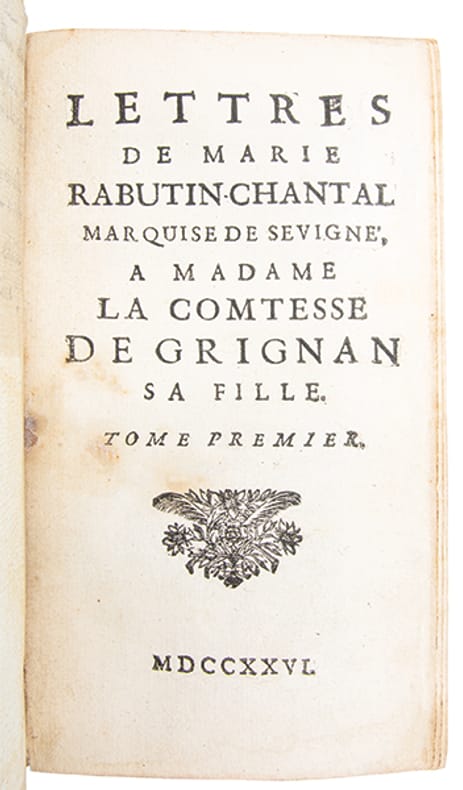
391532 volumes in-12 (175 x 114 mm), plein parchemin ivoire à petit recouvrement (reliure moderne), (10) f., 344 p., (1) f. derrata et (1) f., 298 p., (7) f. derrata et de table, exemplaire entièrement non rogné. La Haye, P. Gosse, J. Neaulme & Comp., 1726.
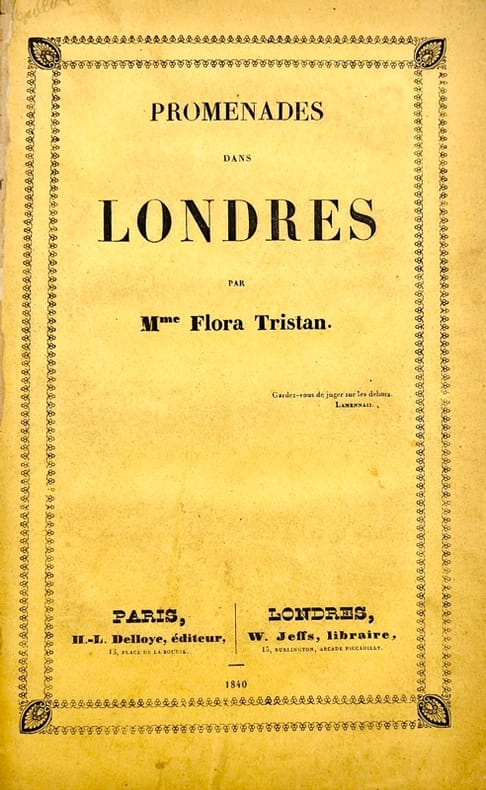
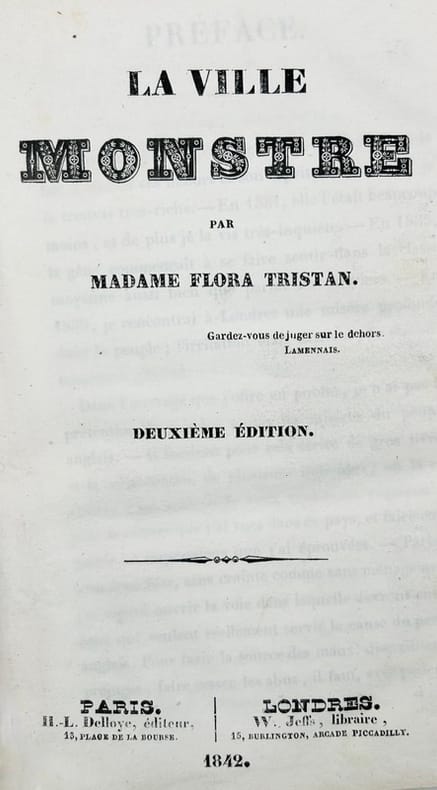
184044426Paris ; Londres, H.-L. Delloye, éditeur ; W. Jeffs, libraire, 1840. In-8 de LI-(3)-412 pp., demi-toile verte, dos lisse orné de filets à froid, couverture jaune imprimée conservée (relié vers 1870).
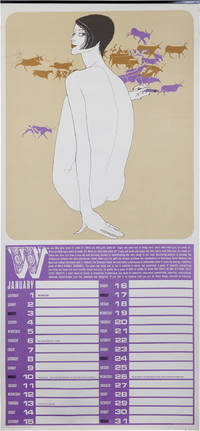
1965157435San Francisco: Determined Productions 1965. Vintage wall calendar for the year 1966 composed of twelve calendar sheets illustrated with twelve lithographs held together at the top edge with a metal rod. <br /> <br /> Designed and illustrated by noted fashion artist Betty Brader best known for her work for San Francisco specialty store Joseph Magnin as well as her freelance work for Neiman Marcus in Dallas. <br /> <br /> Bay Area publisher Determined Productions was founded by Connie Boucher in 1961 largely creating licensed products-including some of the first Peanuts merchandise. The company quickly expanded producing books and ephemera on a variety of topics including astrology the occult and alcohol. With a vibrant feminist overtone the calendar on offer here features illustrations of women from around the world posed in bright and nationally specific garments with text focusing on the way language is often used to discriminate against women. <br /> <br /> Not found in OCLC.<br /> <br /> Housed in the original pictorial paper tube. 19 x 14 inches rolled as issued. Calendar sheets Fine. Paper tube Near Fine with light wear at the right end of the tube. Determined Productions unknown
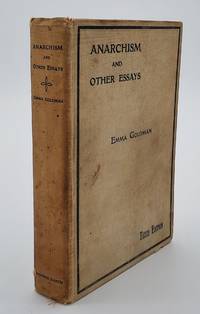
191168600New York: Mother Earth Publishing Association 1911. Third edition Second revised edition on title page. Hardcover. Good. SIGNED. 277pp. plus 8pp. of publisher's advertisements at the rear. Duodecimo 19 cm Beige cloth over boards with a black ink stamped title on the backstrip and front board and black ink stamped single-ruled borders on the front board. Reproduced photographic frontispiece portrait of the author by T. Kajiwara. Prominent toning to the spine and a large section of the rear board. Cloth a bit frayed at the edges with the underlying boards at times peeking through. Endpapers split along the hinges. Text block cracked at the title page. Name in pencil on the title page. Very occasional brief markings mostly in the form of hatching in pencil and colored pencil. With two newspaper clippings pertaining to Emma Goldman "Red Emma" laid in. A classic of radical literature. Third edition printed on front cover. Emma Goldman was once viewed as "the most dangerous woman in America" and was a thinker so far ahead of her time that even today her views seem strikingly revolutionary. This collection of essays is a magnificent introduction to her thoughts: ranging from her views on women's suffrage and emancipation patriotism's menace to liberty the psychology of political violence the prison system "a social crime and failure" the hypocrisy of Puritanism and the strategies of dissent. These writings all reflect her fearless joyousness her radical dedication to the idea that life is meant to be a source of delight- and that avoiding the meaningless grind of everyday life must be achieved in any way possible.<br /> <br /> This copy is inscribed not to a specific person by Emma Goldman on the front free endpaper: "Emma Goldman / Portland August / 1916."<br /> <br /> Emma Goldman 1869-1940 was born in Kovno now Kaunas Lithuania. She grew up in what is now Kaliningrad Russia and in St. Petersburg. Her formal education was limited but she read widely and in St. Petersburg became involved with a radical student circle. She immigrated to the United States in 1885 first settling in Rochester New York then in New Haven Connecticut where she worked in clothing factories and came into contact with socialist and anarchist groups. Subsequently she moved to New York City where in 1893 she was jailed for inciting a riot when a group of unemployed workers reacted to a fiery speech she had delivered. In 1895 upon her release Goldman began lecturing throughout Europe and the United States and later in 1906 Goldman founded Mother Earth a periodical that she edited until its suppression in 1917. Goldman's naturalization as a U.S. citizen was revoked by a legal stratagem in 1908. Two years later she published Anarchism and Other Essays.<br /> <br /> An early edition of Goldman's famous essays signed by the much revered revolutionary activist author just under a year before she was sentenced to two years in prison for her opposition to the U.S. involvement in World War I and for agitating against mandatory military service. Mother Earth Publishing Association hardcover
39503In-8 (175 x 109 mm), vélin souple doré, dos lisse entièrement orné dun riche décor de ramages dorés, double filet dencadrement aux plats et grandes armes dorées au centre, tranches mouchetées (reliure de lépoque). (4), 592 (i.e. 590), (2) pages. Paris, Augustin Courbé, 1661.
2544Paris, Jean Dupuis, 112 pp. 118 pp, 112 pp.Deux parties en un volume in-12, pleine basane brune, dos à quatre nerfs orné de fleurons, tranches mouchetées, manques aux coiffes, quelques usures. Reliure d’époque.
39200In-12 (170 x 98 mm), vélin souple d'époque, dos lisse titré à l'encre noire, (2), 381 p., (1) p. bl., (1) f. d'errata et (1) f. bl., (2), 324, pages, (1) f. d'errata, pages de titre rouge et noir. S.l. [Rouen], 1726.
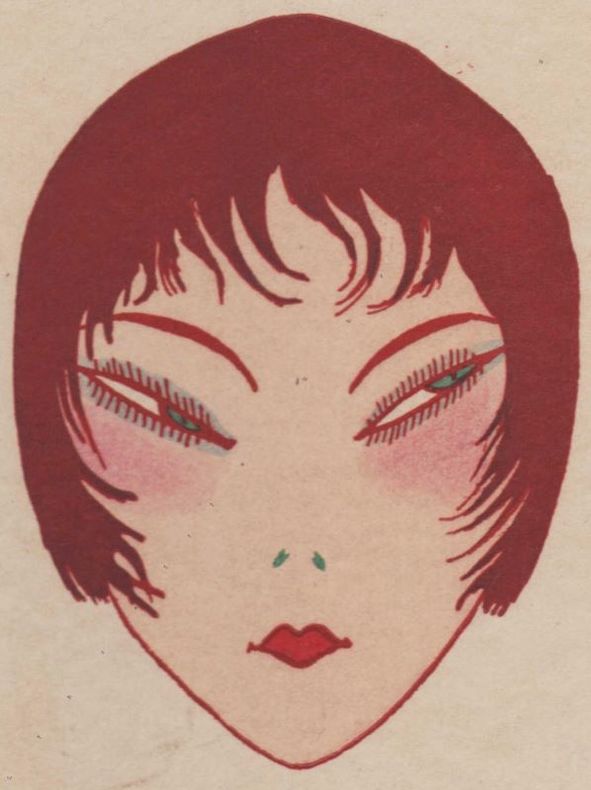
192021756Paris DEVAMBEZ 1920 1 Réflexions de René Kerdyk et images par Guy ARNOUX. Paris, Devambez, A l'Enseigne du Masque d'Or, 1920, in-4, cartonnage beige orné d'une tête de femme coiffée à la garçonne avec pattes effilées sur les joues, 10 planches et 10 pages.
Very Good Turkish, Ottoman (1500-1928) A large and fine collection and archive of Cahit Uçuk, (1909-2004) including various size clippings, a caricature, her biography, news, her serialized stories published in Turkish periodicals, and newspapers with several autograph corrections by Uçuk (Serialized novels include approx. 65 p., two are complete) as well as her original autograph - manuscript letter, manuscripts titled "Televizyon için notlar" [i.e. Notes for Television] (40 paged), a compilation of Turkish nursery rhymes (17 pp.), stories, fables, and fairy tales, and her population register document (it seems he was born in Diyarbakir city contrary to what is known as Istanbul, or Thessaloniki [Salonica] according to this document), manuscript report of her interview made by Hikmet Altinkaynak (1945-), and an essay titled "Yunanlilar'a Mektup" [i.e. A letter to Greeks]; and her plan for a journey to Italy. Cahit Uçuk was a Turkish female author and story writer. Ibrahim Vehbi Üçok, whose father was the Siverek Deputy and District Governor in the last Ottoman Parliament, and her mother was Hadiye Hanim, who was originally from Thessaloniki. Cahit's first tale was published in the magazine named "Yarim Ay" [i.e. Half Moon] published by Nâzim Hikmet in 1935. Mrs. Cahit, who also wrote poetry before, turned to story and novel writing. In her works, she mostly dealt with women's rights and the place of women in society, and occasionally worked on mystical themes. She's famous for her children's books. Many female writers have adopted male noms-de-plume, or otherwise gender-ambiguous pseudonyms, for a number of reasons: to publish without prejudice in male-dominated circles; to experiment with the freedom of anonymity or to encourage male readership. Cahit Uçuk, in his memoirs about the difficulties of being a woman writer in the world of men, could not keep a secret behind the name that everyone thought belonged to a man, and Bab-i Âlî [i.e. the street in Istanbul where publishers gathered in the Ottoman Empire] soon learned that she was a very beautiful woman.
178911350S.l., s.n., 1789 ; in-8 ; demi-chagrin rouge à petits coins, dos à nerfs, titre doré (reliure moderne) ; 206 pp. y compris le faux-titre et le titre (INED, 578 ; Barbier, I-531).
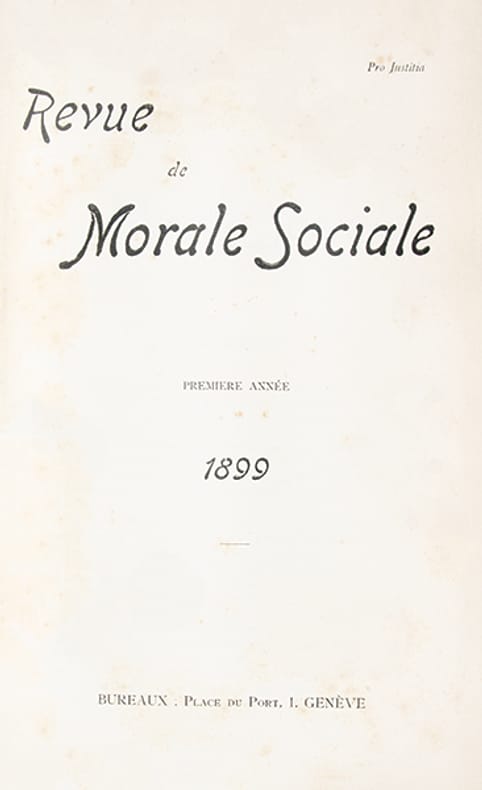
3878816 livraisons publiées sur 5 années en 4 tomes reliés en 2 volumes grand in-8 (235 x 155 mm), demi-veau rouge cerise de l'époque, dos lisses ornés de filets estampés à froid en place de nerfs et d'un fleuron doré répété au centre, titre et tomaisons dorés, tranches mouchetées rouges, (2), 527, (5) p. de table; (4), 544 p., (4) p. de table et bibliographie; (2), 512 p., (4) p. de tables et bibliographie et (4), 507 p., (3) p. de table et bibliographie. Genève, Bureaux Place du Port, 1 [imprimerie de Paul Richter], 1899-1903.
1375357Bruxelles: Berthod, 1834 2 ouvrages reliés en 1 volume in-12, 161-(2) pages et 288 pages. Demi reliure toile rouge, plats lég. frottés, pâle mouillure angulaire dans le 2è ouvrage, autrement bon état de ces deux ouvrages fort rares (le premier ouvrage en édition originale) de Zoé Gatti de Gamond (1808-1854), éducatrice et féministe belge d'abord saint-simonienne puis fouriériste.
164340267Jouxte la copie imprimée à Paris, (Leyde, Elzevier), 1643. In-12 de 1 f.bl. (14)-361-(10) pp., maroquin rouge, dos orné à quatre nerfs, plaque et roulette à froid sur les plats, frise dorée d'encadrement, roulette intérieure, tranches dorées (Ducastin).
18423983Paris ; Londres, H.-L. Delloye, éditeur ; W. Jeffs, libraire, 1842. In-8 de LI-(3)-412 pp., demi-basane havane, dos lisse orné de filets dorés (reliure de l'époque).
39537In-12 (148 x 82 mm), maroquin olive, dos à cinq nerfs, coupes et coiffes filetées or, large dentelle intérieure, tranches dorées sur marbrures (reliure janséniste signée de R. Petit), (6), 338 pages, (1) feuillet de privilège. Paris, Claude Barbin, 1685.
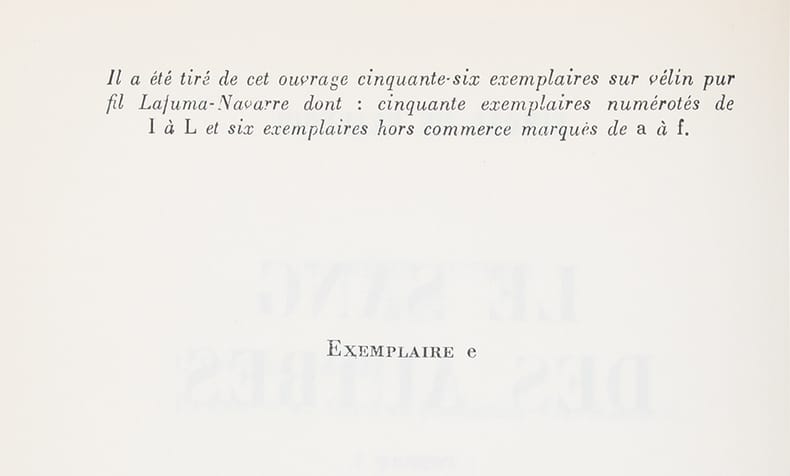
38657In-8, (260 x 143 mm), broché, couverture imprimée de l'éditeur, 224 p., (1) f. d'achevé d'imprimer. Paris, Gallimard, 1945 (Paris, Chantenay imprimeur, 25 juillet 1945).
39208In-12 (147 x 88 mm), maroquin taupe, dos janséniste à 5 nerfs, titre et date dorés, coiffes guillochées, double filet sur les coupes, dentelle intérieure, tranches dorées sur marbrures, (reliure signée Trautz-Bauzonnet), (8), 223 p., (25) p. de catalogue, titre rouge et noir orné dun fleuron, portrait frontispice gravé. Amsterdam, Michel Charles le Cene [i.e. En France], 1720.