3 966 résultats
8vo; Period full leather, 12mo, 246 pages. 3 volumes in 1, as issued. With seperate title page for each volume. Included in the "William B. Cairns Collection of American Women Writers 1650-1940" at UWisc-Madison. WR. I, #2252. Susanna Rowson, née Haswell (1762-1824) was a British-American novelist, poet, playwright, religious writer, stage actress, and educator, considered the first woman geographer and supporter of female education. She also wrote against slavery. Rowson was the author of the 1791 novel Charlotte Temple, the most popular best-seller in American literature until Harriet Beecher Stowe's Uncle Tom's Cabin was published serially in 1851-1852 and authored the first human geography textbook Rowson's Abridgement of Universal Geography in 1805. Charlotte: A Tale of Truth [was] later reissued in America as Charlotte Temple, where it became the new nation's first best-selling novel. This popular story of seduction and remorse has gone through more than 200 editions. The novel sparked much controversy, both over its content and whether it could actually be considered a novel due to its minimal number of pages. .in 1791, Susanna and [her husband] William took in his orphaned sister Charlotte Rowson and they all turned to acting .In 1793, the three Rowsons were recruited for the Philadelphia theatre company of Thomas Wignell, also performing with them in Baltimore. Over the next three years in Philadelphia, she wrote a novel, an opera, a musical farce about the Whiskey Rebellion (The Volunteers), a poetical address to the American troops, and several songs for the company in addition to performing 57 roles on the stage in two seasons. Rowson's work as a playwright and actor encouraged the growth of performing art in the United States. In response to her seemingly new-found republicanism and the liberal gender roles in her work, Slaves in Algiers, she was attacked by William Cobbett, who referred to her as 'our American Sappho' (she returned fire, calling him a 'loathsome reptile' in her introduction to Trials of the Human Heart).In 1796, Susanna reestablished contact with her old Edinburgh director, John Brown Williamson. He had taken over the Federal Street Theatre in Boston, and the Rowson trio relocated there in part to be closer to the more familiar residence of her youth and her core American literary fan-base. The bankruptcy and major restructuring of the Boston theatre in 1797 would have sent Susanna and William to Charleston, but rather than head south they abandoned the stage after a few summer performances in Newport and Providence, Rhode Island .On leaving the stage, Susanna opened the first 'female academy' in Boston in 1797 'Mrs Rowson's Academy for Young Ladies. The earliest American map samplers (1779,1780) were by students Lydia Withington and Sally Dodge who were educated there and cover detailed images of Boston harbour and islands and detailed street plan. Desiring a more rural setting, Rowson would move her school to Medford, then to Newton, Massachusetts, before returning it to Boston in 1809. She was a leader on female education and also the first woman geographer, publishing the first American education book on geography Rowson's Abridgement of Universal Geography in 1805, a textbook focussing on human geography not maps and including information on the position of women, the cultural, religious, financial and social structure of different continents and in particular the impact of the 'barbarous, degrading traffic' of slavery. She also published Youth's First Steps in Geography in 1811. She managed her school until 1822 and trained hundreds of girls overall. Rowson also continued her writings, producing several novels, an additional work for the stage, a dictionary as well as the two geographies and as a contributor to the Boston Weekly Magazine (18021805). Her educational and literary work helped provide support for a growing household. Having no children of their own, they took in many members of Williams family, including a niece, Rebecca Haswell, who would marry Roxbury mayor John Jones Clarke, becoming great-grandmother of poet E. E. Cummings (Wikipedia). No copy appearing for sale at any major auction house in the last 35 years. OCLC: 9108455. Front hinge stating, 1.5 chip to crown of spine, heavy wear to boards and blank endpapers. Wear, stains, and previous owners name (Eliza Colfax) in period hand to half title and title page. Good Condition Thus. Scarce 18th Century American Womens imprint. (AC-22-24).
In -8°, XX, 72 p., include una tavola all’antiporta con ritratto dell’autore disegnato da Gino Severini
Very Good Turkish, Ottoman (1500-1928) The collection includes one full diary, 4 notebooks, 120 letters addressed to Nevin Pertev Demirhan and Meryem Ana Efes ruins photo negatives in an envelope, and ID cards, court documents of Demirhan family (Father Pertev Pasha, brother Ömer Ilhan Demirhan, and mother Hatice Leman Demirhan). 4 notebooks of her from "English High for Girls, Constantinople" including the lessons of dictation, rough notebook, setback, essays, and letters. All notebooks are in English. Also, there are letters addressed to Fatma Behçet Hanim. Diary includes [336] p. with full of writings between the dates August 4, 1955 (Thursday) and November 24, 1955 (Thursday). This collection contains an Ottoman / Turkish intellectual woman's political thoughts, social life, travels, recipes, and friendships in a short time in 1955. A hardcover manuscript diary and letters to and from her. Letters have very interesting correspondences in the mostly Ottoman script as well as in modern Turkish, English, French, and German. One of the letters addressed to her (Ömer Ilhan Demirhan's letter) and some others include very interesting thoughts about women and femininity. Ömer Ilhan told her that he wants to be married and that did not find a suitable wife for himself. Some of the letters in this collection like that have very important and interesting hints for "Turkish women". Letters dated usually from the 1930s to the 1950s. Nevin Pertev Demirhan was an intellectual and translator as well as pianist according to 'Türkischer Biographischer Index'. She translated her father's book titled 'Islam' into English with her father. Her father was Sait Pertev Demirhan who was an important Turkish soldier, intellectual, and politician.
1949es349Gallimard Les Cartonnages NRF, Cartonnage NRF, Sélection Le Seanachi, Sélection Abraxas-libris Reliure d'éditeur 1949 Deux volumes in-8 soleil, Editions originales, cartonnages décorés de l'éditeur d'après une maquette de Prassinos, 395 et 577 pp., 1 des 2050 sur Alfama ; habituelles rousseurs sur les tranches, les 5 premières et les 5 dernières pages de chaque volume, une plissure sur les 10 premières pages du 2° vol., cartonnages en très bel état, bel exemplaire de cet ouvrage fondateur du féminisme. Livraison a domicile (La Poste) ou en Mondial Relay sur simple demande.
39219In-12 (185 x 120 mm), broché, couverture imprimée, 301, (3) pages. Paris, Julliard, 1951.
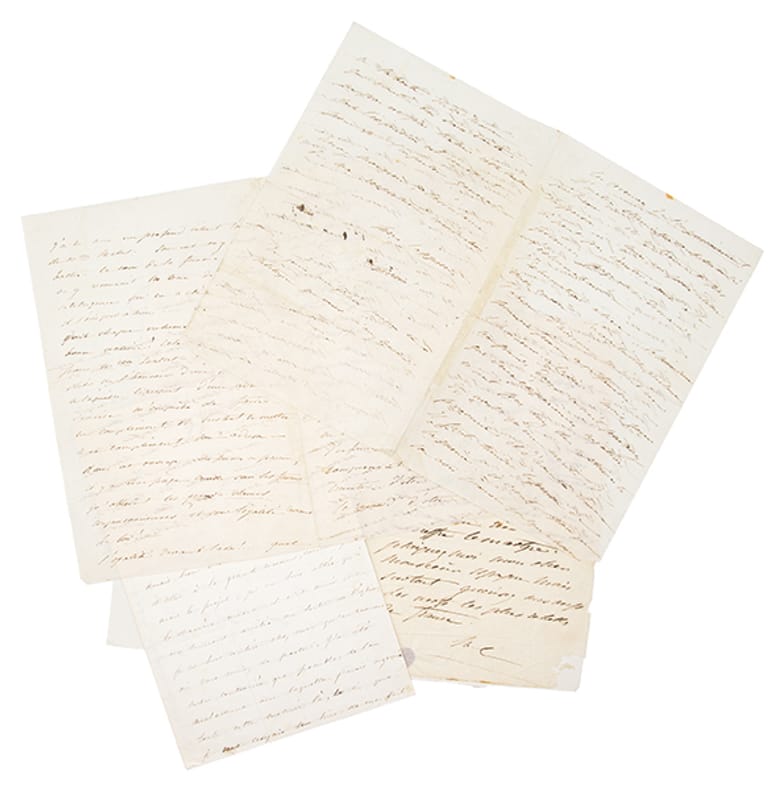
378842 feuillets rempliés de 8 pages (210 x 136 mm), un feuillet (210 x 135 mm), et un feuillet remplié (205 x 135 mm) "En prison", [Montpellier, 1843].
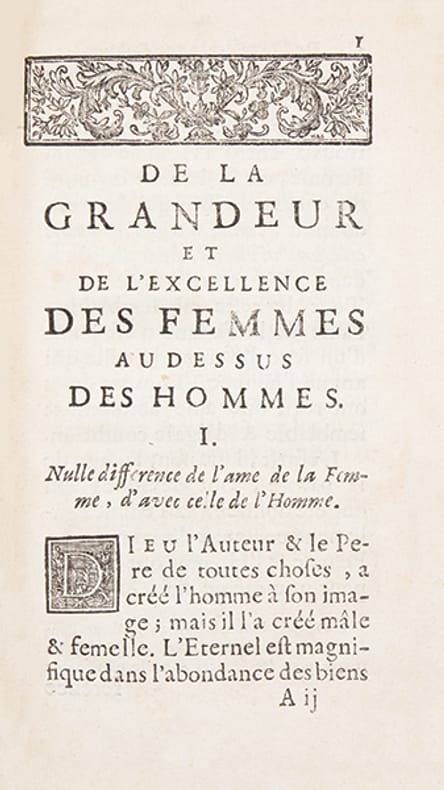
167329231Paris Chez Jean Du Puis, à La Couronne D'or 1673 In-12 8 ff -243 ( 1 ) et un ff d'approbation et privilège , manque de cuir en coiffe de queue et coiffe de tête élimée, dos passé et lors frotté Exemplaire rare en reliure d'époque. édition originale de ce livre essentiel et précurseur qui valut beaucoup d'ennuis à son auteur
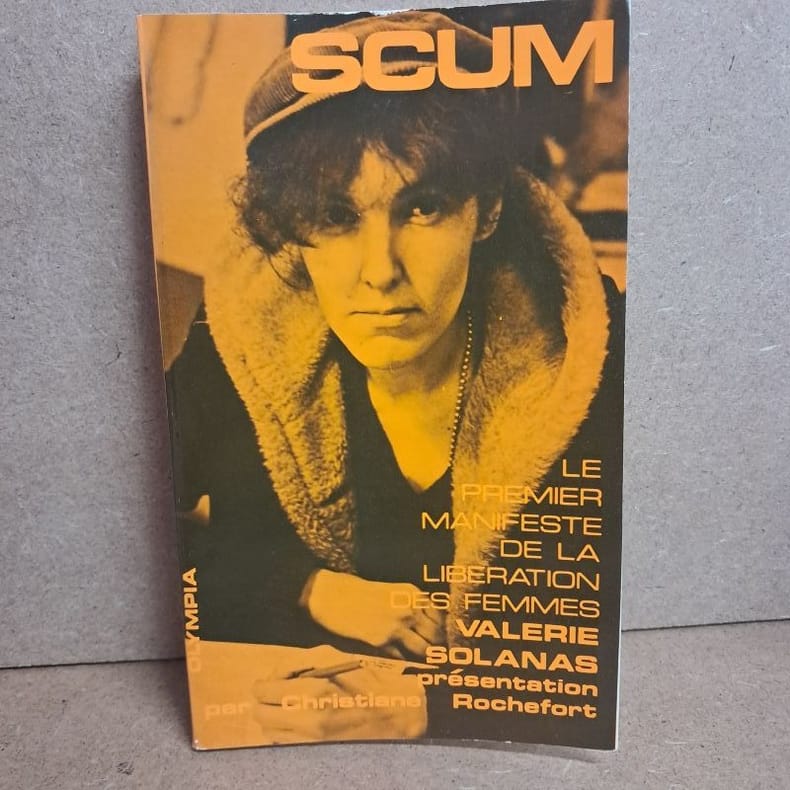
19715021971 - broché - Editions La Nouvelle Société - Collection "Olympa" - 1971 - In-8 (18 x 11 cm) broché - 103 pages - Traduction de Emmanuelle de LESSEPS - Présentation de Christiane ROCHEFORT - S.C.U.M : Society for Cutting Up Men (Société pour émasculer les hommes), le titre original de l'ouvrage étant "SCUM Manifesto" - Ouvrage sous titré "Le premier manifeste de la libération des femmes" - A PROPOS : Pamphlet radical et provocateur qui appelle à l'élimination des hommes pour établir une société matriarcale. Écrit dans un style satirique et agressif, l'ouvrage dénonce le patriarcat, le capitalisme et la société de consommation, tout en proposant une vision utopique basée sur l'automatisation et la suprématie féminine. Bien que souvent associé à la tentative d'assassinat de l'artiste Andy Warhol par l'auteure, le texte reste une référence majeure du féminisme radical et de la littérature underground des années 60
A stunning large-paper copy of the first edition of the definitive text of the author's most important work, one of the chief literary manifestations of Catalan modernism. The first two editions appeared in 1905, and were printed on cheap paper, and there were no large-paper copies. 135 large-paper copies of this 1909 edition were printed, of which THIS IS ONE OF 35 NUMBERED COPIES PRINTED ON FINE JAPANESE PAPER AND SIGNED IN INK BY THE AUTHOR (the remaining 100 large-paper copies were printed on laid paper, and were not signed). 8vo. A PRISTINE COPY IN THE ORIGINAL WRAPS, ADORNED WITH A BEAUTIFUL MODERNIST (i.e., Catalan art nouveau) DESIGN. UNCUT AND UNOPENED. A bit of foxing to edges (not on pages), else FINE AND BRIGHT, with no defects. Complete with prospectus, also printed on Japanese paper. A wonderful copy of perhaps the most important modern Catalan novel--very, very few copies of this deluxe issue have surivived in the original wraps.
Large A1 sheet (66 x 94 cm), original bold coloured lithograph, with folds, small closed tear hole to middle left of image. 1957 European Women's Artistic Gymnastics Championships took place in Bucharest, Romania, and it was the very first European competition for artistic gymnastics for women.
38936In-12 (145 x 82 mm), plein veau brun moucheté de l'époque, dos à 5 nerfs orné de compartiments garnis d'un fer spécial central répété et de filets dorés, pièce de titre de maroquin bordeaux, roulette dorée sur les coupes, tranches rouges, (1) f., (40), 125, (8) p. de table, approbation et privilège. Paris, François Babuty, 1713.
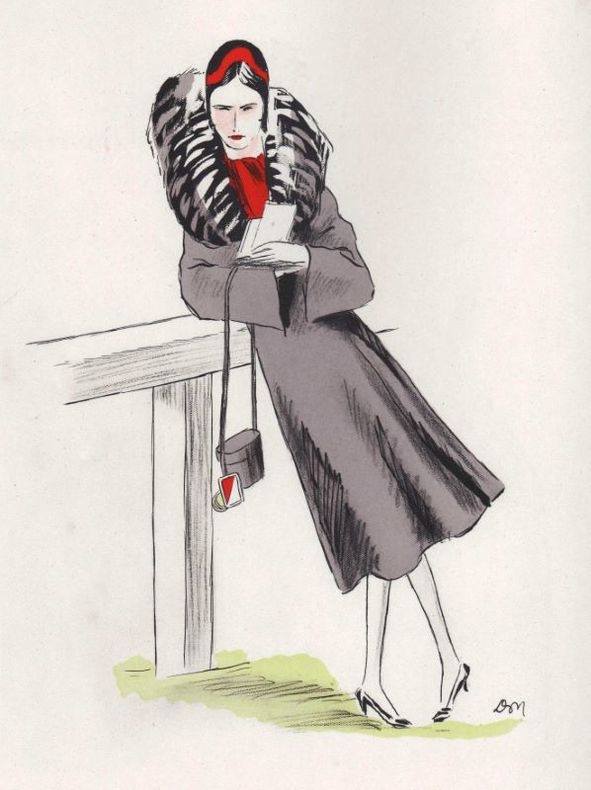
1931171801931 Paris, André Dantan imprimeur, 1931, in-folio, en feuilles, sous couverture rouge rempliée, titre imprimé en noir;
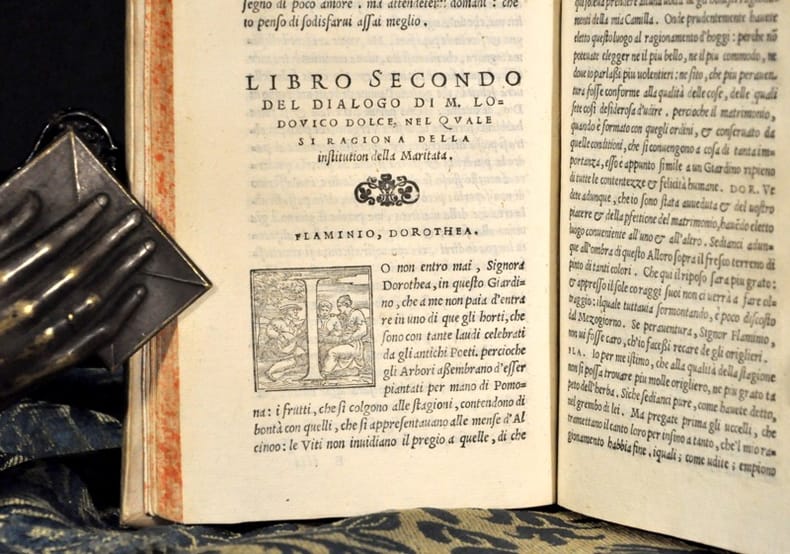
2822In Venegia Appreso Gabriel Giolito de Ferrari 84pp (3) Agréable exemplaire In 8 relié en vélin à l’imitation de l’ancien, traces d’annotations. Très belle marque d’imprimeur sur la page de titre et en fin d’ouvrage avec la devise de l’imprimeur vénitien «De la mia morte, eterna, vita io vivo. Semper eadem»«de ma mort, éternelle, la vie que je vis. Toujours le même»
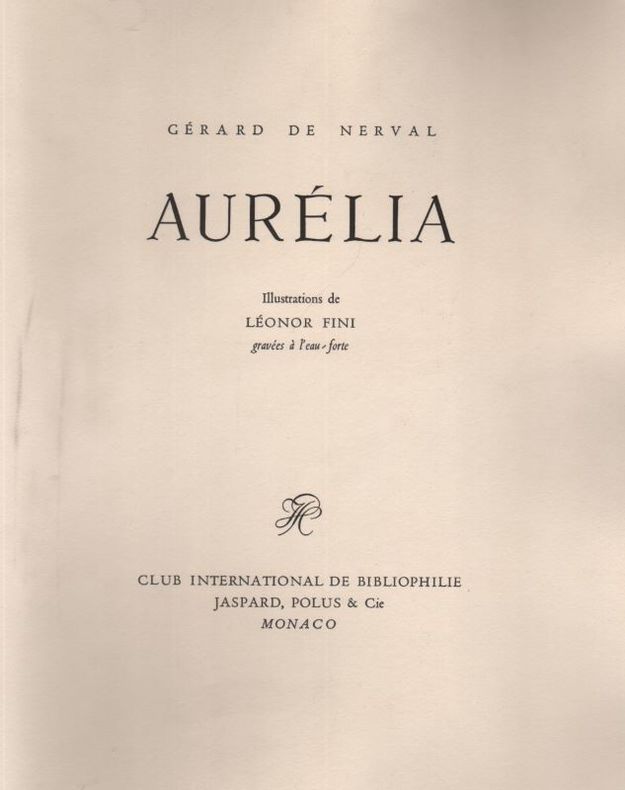
196022839Monaco CLUB INTERNATIONAL BIBLIOPHIL. 1960 1 Illustrations de Léonor Fini gravées à l'eau forte. Monaco, 1960, Club International de Bibliophilie, Jaspard, Polus & Cie, in-4, en feuilles, sous couverture rempliée illustrée d'une eau-forte en couleur, sous étui cartonné toilé brun, titré sur le dos, 156 pages.
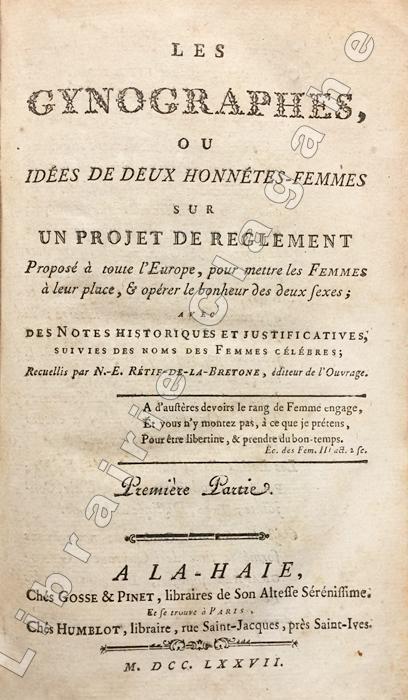
177717807La-Haie, Gosse et Pinet et se trouve à Paris chés Humblot, 1777 ; deux paries reliées en un tome in-8 ; veau fauve marbré, dos à nerfs décoré et doré, pièce de titre grenat, tranches rouges (reliure de l'époque) ; VIII, 567, (1) pp. en pagination continue.
39345In-8 (203 x 140 mm), demi-maroquin havane à grands coins, dos 5 nerfs filetés, auteur et titre dorés, tête dorée. 579 p., (1) f. d'achevé d'imprimer, non rogné, couvertures et dos conservés. Paris, Gallimard, (4 octobre 1954).
39348In-8 (216 x 147 mm), broché, couverture rempliée, (6), 248, (8) pages. Paris, Gallimard, collection NRF, 1979.
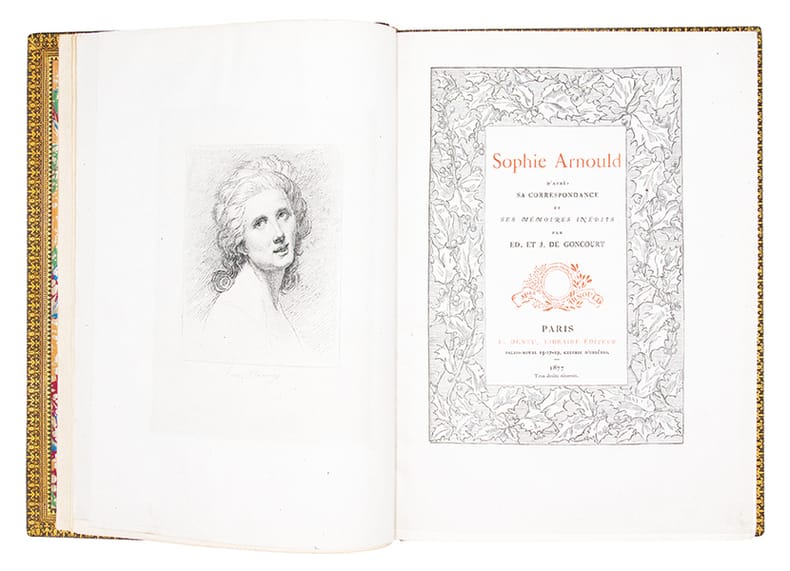
38986In-4 (240 x 185 mm), plein maroquin acajou, dos à 5 nerfs orné de compartiments richement garnis de fleurons et volutes dorés, triple filet d'encadrement sur les plats, filets sur les coupes, large dentelle intérieure, tranche supérieure dorée (reliure de l'époque signée de Lemardeley), (4), vii, (1), 223, (4) p., portrait gravé, vignette, fac-similé de lettre, texte imprimé dans une riche large encadrement floral. Paris, E. Dentu, 1877.
AMA-915Moulins, P.-A. Desrosiers, Paris, Chamerot, Marc-Aurel, 1845. In 8°, demi-veau bleu, dos à nerfs orné, quelques rousseurs, ex-libris (Reliure de Lebrun). [2 ff.], XII, 392 pp.
1st edition, first printing, of Authors only book. Original Publishers Cloth, Brown cloth cover stamped in gold, 16mo, 7-124 pages; 15 cm. Singerman 2085 (for the 126 page edition) . Singerman notes as well that he, the "compiler[, ] saw the rarer 124 page edition without the publisher's statement [about Dickens]. " Poems. The true first edition, first printing, dedicated to Charles Dickens but without his warm letter thanking her reproduced, as appeared in later printings. The success of this book meant that later editions appeared the same year in London as well as in the US (published by Lippincott) but with more pages (141 & 126, respectively) and the Dickens letter reproduced. Includes some poems with Jewish themes, such as Judith (Oh forget not that I am Judith! /And I know where sleeps Holofernes) , Hear, O Israel (The God of Jacob is our Shield) , etc. Menken (1835-1868) was Internationally famous for her starring role in the equestrian melodrama Mazeppa, in which she was stripped on stage to a flesh-colored body stocking, lashed to the back of the wild horse of Tartary, and sent flying on a narrow ramp above the theater, Adah Isaacs Menken consistently defied social mores. She cropped her black hair and smoked cigarettes, and publicly disparaged conventional married life. Menken represented an early example of the cult of personality, blurring her private life with her public persona. She married four times in the course of seven years. Her second marriage, in 1859, was to the heavyweight boxing champion of the world, John C. Heenan . One of the most glamorous celebrities of the 1860s, Menken also cultivated a literary following. She wrote poetry and developed relationships with the likes of Walt Whitman, Charles Dickens, Dante Gabriel Rossetti, Alexandre Dumas, and Algernon Swinburne. George Sand was a close friend to the actor and was godmother to Menkens second child . A major bone of contention to this day is the authenticity of her Jewishness. Though scholars have some evidence that Menken was raised a Catholic and converted to Judaism only after marrying her first husband, Menken herself once publicly rebuked a journalist who labeled her a convert by announcing that she was born in that faith [Judaism], and have adhered to it through all my erratic career. Through that pure and simple religion I have found greatest comfort and blessing. Whatever her origins, it is clear that Menken was fervently Jewish in her adult life. After moving to Cincinnati with her first and only Jewish husband, Alexander Isaacs Menken, Adah learned Hebrew fluently, studied classical Jewish texts, and contributed many poems and essays to The Israelite, a weekly founded by Rabbi Isaac M. Wise. Her poems indicate a passionate temperament, deeply committed to a kind of proto-Zionism and even messianism. Many are collected in the posthumously published volume Infelicia [this volume]. Menken viewed herself as a modern Deborah, calling on Jews to rise up against persecution in Turkey and protesting the kidnapping of a six-year-old Jewish boy in Bologna by representatives of the Catholic Church. She was one of the few Jews in America to protest when Lionel Nathan was denied the seat in the English Parliament to which he had been elected. And, at the height of her acting career, she refused to perform on Jewish High Holidays. On her deathbed at age thirty-three, suffering from what may have been peritonitis or tuberculosis (or both) , and treated by the personal doctor of Napoleon III, Menken was visited by a rabbi. Adah Isaacs Menken died on August 10, 1868, in Paris. She is buried in the Jewish section of Montparnasse Cemetery (Ackerman, 2014) . The book is also cited in Podeschi, J. B. Dickens & Dickensiana, ; B295(2) ; Wolff, R. L. 19th cent. Fiction, ; 4738. OCLC lists 28 copies of this rare first printing. Light wear to cloth, stains to title and half title, otherwise a nice clean book, about Very Good- Condition. (AMR-45-45)
196019935Monaco CLUB INTERNATIONAL BIBLIOPHIL. 1960 1 Illustrations de Léonor FINI gravées à l'eau forte. Monaco, 1960, Club International de Bibliophilie, Jaspard, Polus & Cie, in-4, en feuilles, sous couverture rempliée illustrée d'une eau-forte en couleur, sous étui cartonné toilé brun, titré sur le dos, 156 pages.
1531352251531 153 + 1 pages in4 - bon état - râtures et corrections -
3522343 pages in4 - bon état - râtures et corrections -
In-8 (192 x 123 mm), demi-chagrin rouge, dos lisse orné de double filet et petits fers dorés, titre doré en long (rel. signée L. Hauser), 37 p., (1) f. blanc. Edition originale, rare, de ce réquisitoire d'une extrême violence des "Dames de la Halle", harengères, poissardes et marchandes de Paris, contre la vie chère, la noblesse et le pouvoir en place, les fermiers généraux et la fiscalité, le clergé, l'état de délabrement des hôpitaux, la spéculation, la corruption des magistrats... De longs passages sont consacrés à dénoncer la prostitution, à décrire le malheur des jeunes filles abandonnées à leur sort et jetées sur les trottoirs parisiens par la misère et l'avidité d'individus sans scrupules. "Epicentre de la politique révolutionnaire", les "Dames de la Halle" ont été à l’origine de la marche sur Versailles, les 5 et 6 octobre 1789, événement qui fit basculer la Révolution. Les autrices précisent, en tête du pamphlet (p. 3 et 4), qu'il aurait été rédigé à leur demande et diffusé par "M. Josse, écrivain à la pointe Saint-Eustache"; écrivain public, celui-ci prenait également en charge les comptes et la correspondance des "Dames de la Halle & des marchés de Paris", signataires de cet écrit. L'authenticité de ce texte a été récemment confirmée. Il est cité par les études spécialisées, aussi bien à propos de l’intervention des femmes à la veille des États Généraux que du langage populaire, des parisianismes et de l'argot de la période. (S. Blanc, 'Les femmes et la Révolution française', p.8. Tourneux, I, 978). Petites restaurations de papier au titre sans perte de texte. Quelques rousseurs éparses. Bon exemplaire.
In-8, broché sous cordelette de soie verte, 15 p., (1) p. bl., entièrement non rogné, tel que paru. Edition originale et unique. Appel des femmes de la noblesse bretonne à ne pas se compromettre avec celles du Tiers États: "avec aucunes femmes, filles ou parentes [sic] de ces gens déshonorés, & les déclarer infâmes, traîtres à la Patrie indignes du nom de vrais citoyens" (p. 4-5) et à les menacer de sanctions ainsi que ceux qui leur prêteraient assistance. "Arrêté en l'Hôtel de madame Dubosq, sur le champ de bataille, A Brest, le 24 janvier 1789", signé nommément par quarante-deux femmes issues de grandes familles de la marine brestoise, comme les trois sœurs de Kerouartz, mariées au commandant de la Marine de Brest – au comte de Soulanges et à De La Porte-Vezins. D’autres familles nobles d’officiers de marine apparaissent comme les De Langle, de Rosily, de Saint-Prix, de Trémigon. Quatre hommes sont aussi nommés comme adhérant à l’arrêté : Rhedon de Beaupréau, De Linoi, Le Provost et le Comte d’Hector, tous hauts gradés de la marine à Brest. "L'arrêté" est suivi (p. 7 à la fin) d'une sorte d'utopie politique: " vision qui n'en sera pas une" qui met en scène un "bon citoyen" transporté dans le palais du "Génie des nations" qui y réside sous la garde d'un Dieu jaloux veillant à l'éloigner de tout esprit d'innovation. Endormi depuis longtemps, le Dieu "n'avait été réveillé qu'au commencement de ce siècle par les cris d'une philosophie hardie..., ennemie des abus…". L’impression conjointe des deux textes, dont le second est favorable aux idées nouvelles, suggère que l'Arrêté des dames de Brest aurait été repris et détourné par le camp des patriotes. Sur cette brochure, cf. Solenn Mabo. 'Les citoyennes, les contre-révolutionnaires (…), engagements et rapports de genre dans la Révolution en Bretagne', Thèse, Univ. de Rennes, 2019, p. 121-124. (Conlon, 'Siècle des Lumières', 89:1505. Martin et Walter, n°3716). Rare. WorldCat ne recense que deux exemplaires dans le monde: BnF et British libr. Très bon exemplaire, bien conservé, non rogné, tel que paru.