1 314 résultats
1942129472Brisbane: William Brooks and Co 1942. First Edition. Hardcover. Fair/Fair. Brisbane William Brooks and Co. 1942. Octavo xvi 186 pages with an illustration and 4 maps plus 67 pages of plates containing 108 plates in all; the regimental colour patch is printed in three colours on the title page. Maroon sand-grain cloth lettered in gilt on the spine and front cover; cloth a little stained and rubbed with two small worm holes to the spine and front cover with some short tracks visible on the front pastedown; edges marked; binding a little shaken and cracked between some gatherings; trifling remnants of the original tipped-in plain opaque paper dustwrapper on the leading edges of the pastedowns as often; minimal adhesive residue to one page from an old insert; paper a little tanned; some scattered foxing; overall a decent copy. This is a rare item with provenance from two light horsemen. An inscription on the front free endpaper reads: 'Originally owned by the late 868 Corporal Jack Ledlie but given to me by his widow Olive. Clive Kynaston. 512 - 12th ALH'. A second inscription in the same hand at the head of one of the contents pages indicates that he later presented the book to '2/14 QMI' Queensland Mounted Infantry. <p>The author was Signal Sergeant of the Regiment. <p>Dornbusch 393; Fielding and O'Neill page 233; Trigellis-Smith 282. William Brooks and Co hardcover
19822091202133105888Automobile Regiment History Publishing Society 1982. Soft Cover. Fine. Volume: 1 Automobile Regiment History Publishing Society paperback
8vo., First Edition, with 48 plates on 24, and 13 full-page maps (one double-page) in the text; handsomely bound in full dark red crushed morocco, sides with gilt frame border, back with raised bands, second and fourth compartments ruled and lettered in gilt, all other compartments tooled in gilt with 'airborne Pegasus' emblem, gilt top, hand-made endpapers, ribbon marker, an elegant copy ideal as a gift or for presentation. An elegant copy. This classic memoir by the commander of 1 Airborne Division remains the best eye-witness account of the most poignant (and by far the most documented) airborne operation in history. Includes transcripts of the airborne corps instruction, confirmatory notes of GOC's verbal orders, glider and unit allotments and 1 Airborne Div OOB. Enser, p.36.
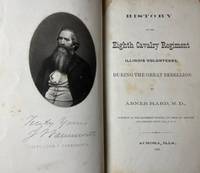
186834967Aurora Illinois: Self published 1868. First Edition. Hardcover. Fair. Octavo. Restored. Complete. 4 pages 33-368 3. Frontispiece engraving of General John F. Farnsworth. Illustrated with portraits. Original cloth laid back down onto newer covers. Newer gilt stamped title on the spine. Newer end sheets. Frontispiece engraving is the first original sheet. Scattered foxing and light staining to the text. Ocassional pencil corrections made to the text. Illustrated bookplate of Ray Russell on the front paste down. Illusrated bookplate of Marshall D. Krolick on the right front flyleaf. <br /> <br /> The 8th Illinois Cavalry called "Farnsworth's Abolitionist Regiment" by President Lincoln was the only Illinois cavalry regiment to serve the entirety of the war in the Army of the Potomac. The unit was involved in several major conflicts including Antietam Fredericksburg and Gettysburg. At the latter Lt. Marcellus E. Jones fired what is considered the first shot of the battle when he fired at an unidentified Confederate. After President Lincoln's assassination the regiment aided in the hunt for John Wilkes Booth and served in Lincoln's honor guard while he lay in state in the rotunda. Scarce regimental history of an important regiment. <br /> <br /> Nevins I page 100 "Written by the regimental surgeon this study contains both facts and personal incidents; some humor also enriches the narrative. Self published hardcover
Sm. folio, First Edition, with very numerous photographs and maps in the text; cloth, backstrip lettered in silver, a fine copy in unclipped dustwrapper. SIGNED BY THE AUTHORS ON TITLE. The first detailed and dedicated account of 21st IPC, the pathfinder unit of 1 British Airborne. Its role was to arrive at the drop zones in advance of the main body of troops to set up electronic and visual markers pin-pointing the dropping area for the oncoming aircraft. Being first on the ground the pathfinders were to use their initiative and make their own decisions: in short, to be independent. A valuable addition to the literature of MARKET GARDEN. EXTREMELY SCARCE, ESPECIALLY IN SIGNED FORM
18322352London: Thomas and William Boone 1832. First edition. Hardcover. Very Good. To Which is Prefixed A Reply to Various Opponents; Together With Observations Illustrating Sir J. Moore’s Campaigns. 8vo full calf raised bands and gilt titles and decoration on spine. Marbled endpapers and edges. A uniformly bound set of mixed editions mainly first. 1832-1840 with vol.s I & II second edition 1832 vol.s III 1831 IV 1834 V 1836 & VI 1840 first editions. Vol. I lxxix 618pp illustrated with 8 plates; vol. II xi 530pp with 8 plates; vol. III xiii 640pp with 12 plates; vol. IV xvi 589pp with 9 plates; vol. V lxxxvi 622pp with 8 plates; vol. VI cv 710pp with 10 plates corner of a couple of pages missing with no loss of text looks like an error during binding. A little damp staining to the base of a couple of volumes. With occasional pencil notes inside and a little age toning generally to the plates. Occasional chipping small tear to a couple of plates. An extensive history of the war the political machinations battlefields state of the countries involved strategy letters state of the various armies etc. Vol VI has prefixed Several Justificatory Pieces in reply to criticism. From the collection of George Gilbert Ramsay of Glasgow University with his personal bookplate on the front pastedowns. A very attractive matching set of these volumes in excellent condition with a fine provenance.Heavy and may require extra overseas postage. Thomas and William Boone hardcover
17022The account of 'Events in 1855 and 1856' dated by Wrench from Park Lodge Baslow Derbyshire 1902. The duplicated letter dated 12 December 1880. The printed advertisement for talk at the School Baslow and dated 14 January 1881. Wrench was the son of a clergyman and well connected being presented to the Prince of Wales and staying at Chatsworth in his old age. His obituary in the British Medical Journal 27 April 1812 describes how he went out to the Crimea in 1854. 'He had been gazetted Assistant Surgeon to the 34th Regiment in November and joined it on its arrival in the Crimea. He served during the terrible winter of that year and was present at the capture of the quarries the successful assault on the Redan of June 18th and the final capture of Sebastopol on September 8th 1855. He was mentioned in despatches and received the Crimean medal and clasp for Sebastopol and the Turkish medal.' Wrench's own account of his experiences in the Crimea Item One below – entirely unpublished – is a personal one vividly-written and full of detail. It does not appear to be present in the collection of his family papers at Nottingham University Library. ONE: Manuscript consisting of 'Events in 1855' 4pp and '1856 12pp making a total of 16pp. 8vo on twelve leaves attached with a stud. In good condition on aged and dogeared paper. The first page of the 1855 manuscript is headed '12 sic Pages in this Year' but comprises four numbered pages. The beginning of account sets the scene and gives an indication of the level of detail: 'The 1st Janry found me doing duty with the 28th Foot or Slashers in the 3rd. Divt of the army before Sebastopol having landed at Balaclava from the Ship "Queen of the South" on the 20th. Nov. 1854. On the 6th July I was ordered to do duty with the 50th. Foot but as I did not wish to move the weather being very bad and my tent being as comfortable or rather as little uncomfortable as it could be made except to join my own Regt. the 34th. to which I had been gazetted on the 1st. of December 1854. I applied to be sent to it and was ordered to join which I did on 9th of Janry.' The account is made up from diary entries and is none the less vivid and interesting for that: 'On the following morning a wounded Russian named Alexo was brought into our Hospital and we amputated his leg he did really well and was eventually exchanged at Odessa. Poor Jordan's death threw a great damp on the Regiment as he was the first Officer we had had killed. On the 9th. of April being Easter Monday the 2nd. Bombardment took place. It was a fearfully wet windy day so that no one was able to go out to see what damage was done. On the 10th. I was on trenches and the noise was terrific but nothing to what I have since heard. I had a very narrow escape from a round shot which hopped over the parapet close to where I was.' In June 'after 68 hours bombardment an assault was made on the Quarries by ourselves . I did not go down till about 8 with Robinson Scott & Peel and 100 men. We were marching about the Trenches half the night and were finally sent to the middle ravine just below Mamelon. The scene there was most horrible the ground being strewn with dead & wounded. English French & Russians. One poor Russian boy was dragged up by two Zouaves but fainted just opposite to where we were lying. I got a light and found he was shot through the belly and that nothing could be done for him. I gave him some water and he lie sic by me some time but died before morning. I got an amulet off his neck & his cap pouch which I sent home'. The 1856 account begins in dramatic style: 'The first entry in this Diary relates to the explosion which took place within the British Lines during the Siege of Sebastopol. Feb 3rd. I was not many hundred yards from this explosion when it took place & will here relate now Janry 1900 my recollection of it. It took place in Novr. or Decr. 1855. I had just come in from a ride & had given my horse to my Batman when I noticed a vast cloud of smoke shoot up from the Right Siege train an open air arsenal about 500 yds from my house - a tremendous noise of explosion followed & knowing that there would be a rain of missiles from above to fall immediately I jumped under my doorway - hoping the strong lintel would protect me . a shower of fragments fell around me rattling on my iron roof - and wounding many men in the Regiment - 70 men were killed by the explosion some over half a mile off. The artillery horses were passing in front of my door to water & stampeded hurting several men in their rush. Both my horse and my dog bolted. I got the horse back in a few hours - but my dog taken sic a few weeks before out of Sebastopol returned to her old home and was found there weeks afterwards I brought her to England My house that I had just finished building myself did not sustain much damage. .' The account continues packed with incident. At one point he writes: 'I had written the above in 1859 and continue it forty one years after November 4 1900. The events & fights of May 1856 being written so legibly in my brain that I can read much of what we did & said. Alas all the actors except myself are passed away. My notice has been called to the excursion by reading an Illustrated article in a magazine named "Travel" in which Dr. Hy. Lansell has been describing a tour taken last year over the same ground - so little altered from what I saw in 1856 that his description would do for mine'. The diary concludes in fine style. On 2 May 1856 he goes to Yalta where he finds 'the daughters of the English Clerk of the Works of Prince W's Palace were keeping the Hotel a very rough primitive structure low stone built rooms with a long rough wooden verandah overlooking the lovely Bay - We enjoyed an excellent dinner of Turbot & Oyster Sauce & a bottle of excellent local wine like Hock - as we returned we went over the Emperor's Villa Orianda . One day when I remember seeing for the first time a Persian horizontal Water Wheel in a very pretty village embosomed in Walnut Trees where also I bought an embroidered linen neck scarf which I still possess - On another occasion I accompanied Best & Chapman to the Alma & where I picked up the Russian Cannon Ball now on top of the Study Clock - I tried hard to get someone to accompany me to Bagshi Serai & Chuphut Kale but I had to go alone - I wonder now how I dare. For it was in the heart of the Enemies Country. I remember the Priest spit when I went near them in the Church in the Rock and I rode home at night through the Russian Camp on the river Balbec. I certainly felt no fear but that was the Ignorance of youth'. A final note more than half a page long records a meeting at Chatsworth in 1902 with Grand Duke Michael and his wife the Countess Torby. TWO: Duplicated letter by Wrench a hectograph in purple ink intended for circulation among his 'dear children'. 4pp. 12mo. Bifolium. In fair condition on aged and lightly-creased paper. Signed 'E. M. Wrench'. At the beginning is a half-page drawing by Wrench captioned 'Russian Soldier - In the Valley of the Shadow of Death. near Sebastopol - 1855 on Black Sea in the distance'. He describes a lecture he gave at Bakewell the previous Monday on the Siege of Sebastopol beginning 'I began by describing the terrible state of the hospital at Balaclava in November 1854. I had a ward full of wounded from Inkerman with bad cases of fever & cholera - All the windows had been blown out by the great storm of November the 14th. The sick had no beds and often nothing to eat until 3 or 4 oclock in the afternoon. The harbour of Balaclava was crowded with steamers while the coast near was strewn with the wrecks of the 21 ships that had gone down in the storm. .' The letter continues with much valuable detail and a drawing of a 'Section of "sunk" tent with fire place' on the third page. In the final paragraph he reports that 'Lord Edward Cavendish M.P. took the chair at my lecture. The room was quite full and some of the audience had come 8 or 10 miles to hear me.' THREE: Printed handbill advertisement with duplicated illustration another purple hectograph by Wrench on reverse joke featuring two soldiers and a horse and cart. 1p. 12mo. In good condition on lightly-aged paper. The printed advertisement is crisply printed and the date '14th' is added in red ink. It reads: 'A Lecture will be delivered in the School Baslow On Friday January 14th. 1881 At 7.30 p.m. By E. M. Wrench F.R.G.S. entitled Personal recollections of the Siege of Sebastopol. Illustrated by Drawings &c. Admission One Penny. No Change given at the Door.' The account of 'Events in 1855 [and 1856]' dated by Wrench from Park Lodge, Baslow [Derbyshire], 1902. The duplicated letter dat unknown
1790B4011London: Captain Sutherland J. Johnson 1790. Occaisional light browning but otherwise a very good copy. . Binding: Expertly rebacked in a brown half calf saving the original marbled boards. 5 Raised bands in 6 compartments. Tooled gilt lettering on two. Notes: Blackmer 1623; Weber 618 Size: 8vo 130mm x 210mm Category: Book Voyages General;Book Mediterranean;Book Near East Turkey; Captain Sutherland, J. Johnson hardcover
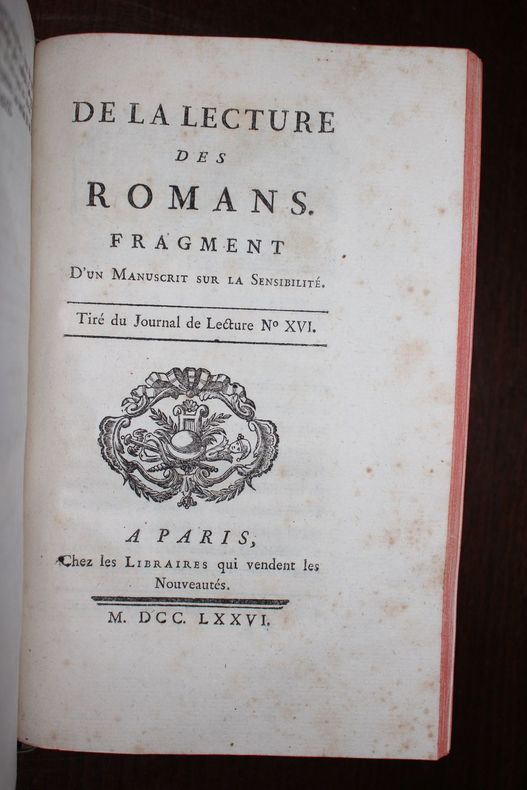
007094Helvetius ; Claude-Marie Guyétant ; Lamy, ancien soldat du régiment d'Auvergne ; Joseph Mathon de la Cour ; Germain-Hyacinthe de Romance de Mesmon ; « Mélanges » contenant, dans l'ordre des auteurs : 1. Le Bonheur, poème en six chants ; 2. Le Génie vengé ; 3. Précis historique sur le régiment d'Auvergne depuis sa création jusqu'à présent. Précédé d'une épitre aux manes du chevalier d'Assas ; 4. Par quelles causes et par quels degrés les lois de Lycurgue se sont altérées chez les Lacédémoniens jusqu'à ce qu'elles ayent été anéanties ; 5. De la Lecture des romans, fragment d'un manuscrit sur la sensibilité. Volume in-8. Londres, s.n., 1772. [4]-CXX-116p. La Haye & Paris, s.n., 1780. [2]-16p. Clostercamp, s.n., 1783. front.-51p. Lyon & Paris, Durand & Vallat, 1767. [4]-100-[2]p. Edition originale posthume de la pièce d'Helvetius, sans le feuillet d'errata qui manque souvent. La longue préface est du à Saint-Lambert qui a retrouvé la pièce dans les papiers d'Helvetius. Edition originale de la pièce de Guyétant. Né en 1748, il publia cette pièce à la louange de Voltaire puis devint le secrétaire du marquis de Villette. Edition originale rare du texte sur le régiment d'Auvergne et Louis d'Assas, célèbre chevalier mort lors de la bataille de KlosterKampen en 1760, bien complet de son frontispice dépliant. Cet ouvrage ne se rencontre que très rarement et a bénéficié de deux tirages qui ne diffèrent que par le nom de l'auteur sur la page de titre (L*** au lieu de Lamy comme sur le nôtre). L'ouvrage est publié tardivement (23 ans après la mort d'Assas) et s'inscrit, après Voltaire en 1769, dans une lignée d'ouvrages sur Assas et le régiment. Le frontispice représente « Le Curtius Français ou la mort du chevalier d'Assas ». En effet, la victoire eut lieu car avant de mourir, le chevalier aurait eu le temps de dire : « A moi, l'Auvergne, c'est l'ennemi ! » (version contestée). Seuls deux exemplaires répertoriés sur CCfr et WorldCat (BnF & BM Lyon - ce dernier numérisé sur googlebooks). L'ouvrage contient quelques notes marginales d'époque, à l'encre. Edition originale de l'ouvrage de Mathon, couronné par l'Académie des Inscriptions. Le dernier ouvrage est en première édition séparée d'un texte de Mesmon paru dans le Journal de Lecture. Reliure demi-basane, dos à nerfs orné, pièce de titre maroquin, tranches rouges, petits défauts. Bon exemplaire avec un texte rare.
Complete set of eight colour plates dated 1951 by artist. Printing date not stated. Each illustration depicts a regimental member in ceremonial dress. Regiments illustrated include: The Argyll and Sutherland Highlanders, The Seaforth Highlanders, The Toronto Scottish Regiment, The Canadian Scottish Regiment, The 48th Highlanders, The Black Watch - Royal Highland Regiment of Canada; The Calgary Highlanders, and The Essex Scottish. Colour portion of plates measures 8.5" x 6.5". Mat backing for each plate measures 13" x 10". All illustrations stored in sturdy original manilla folder. All plates in pristine condition. Moderate wear to storage folder. An excellent set. Book
116 pages. Circa 1950. Many full-page black and white reproductions of photos. Minor blemish on back cover otherwise clean and unmarked with moderate wear. Tight and square. A quality copy of this precious reference. Book
187522602Berlin, Meidinger, [1875/76]. 2. Auflage. Armee-Ausgabe. OHLdr. 98 S. 50 Bll. (Tafeln) 4°. Mit 50 farblithogr. Tafeln sowie zahlr. Holzschnitt-Illustr. nach Menzel, Burger, Lüders u.a. im Text. Angestaubt. Exemplar. Ebd. beschabt. Stellenw. -auch stärker- stock-, finger-/fleck. Vorsatz mit Eintragungen v. alter Hd.
[6], 229 pages. Black and white photographic plates, including frontis portrait of Officer Commanding Lieut.-Col. Earle P. Hall, C.D. Footnotes. An authoritative account of the regiment compiled from a wide variety of sources, including the Department of National Defence, The Department of Veterans Affairs, the Public Archives of Canada, and elsewhere. Prior owner's name and dates upon front free endpaper. Moderate wear to publisher's red cloth lettered in black. Binding intact. No dust jacket, presumably as issued. 24 x 16cm. A sound copy of this informative history. Dornbusch 277, Cooke [3] p252. Book
Signed, without inscription, by author upon title page. 42, [2] one-sided pages. Black and white reproductions of photos, maps, and many fascinating wartime documents. Undated but appears to be circa 1989. "I compliment you on your vivid account of your capture and escape at Verrieres Ridge. It is fascinating and very well expressed. I wouldn't suggest you change a word." - Col. C.C.I. Merritt V.C. Author's address ink stamped inside back cover, otherwise clean and unmarked. A sound copy of this important and dramatic personal WWII account. Book
182821229London: John Murray/Thomas and William Boone 1828-1840. 1st Edition. 3/4 calf with marbled boards. All volumes Very Good throughout boards/leather lightly scuffed and rubbed. 6 volumes 8vo. b&w maps Complete set in 6 volumes of Napier's Peninsular War published between the years 1828-1840 first volume published by John Murray volumes 2-6 by Thomas and William Boone; all volumes 3/4 maroon calf with 6 compartments to spine 2 black title labels with gilt titling 4 gilt devices marbled boards marbled endpapers and text block; includes numerous full-page plates being maps illustrating key battle moments and strategies; also includes substantial reference appendices; to foot of title page vol 5 reads 'to which are prefixed answers to some attacks in Robinson's Life of Picton and in The Quarterly Review; with counter-remarks to Mr. Dudley Montagu Perceval's remarksupon some passages in Colonel Napier's fourth volume of The History of the Peninsular War' and similar to vol 6; vol 1 530pp with 96pp appendices 8 plates; vol 2 467pp 67 8 plates; vol 3 564pp 76 12 plates; vol 4 479pp 110 9 plates; vol 5 581pp 41 8 plates; vol 6 688pp 22 10 plates; all volumes with foxing to endpapers and prelims mild-medium offset from maps shelfwear to boards o.w. Very Good throughout; leather scuffed and with occasional minor loss to corners and to head and tail of spine and along hinges; leather a little tanned to spines. John Murray/Thomas and William Boone hardcover
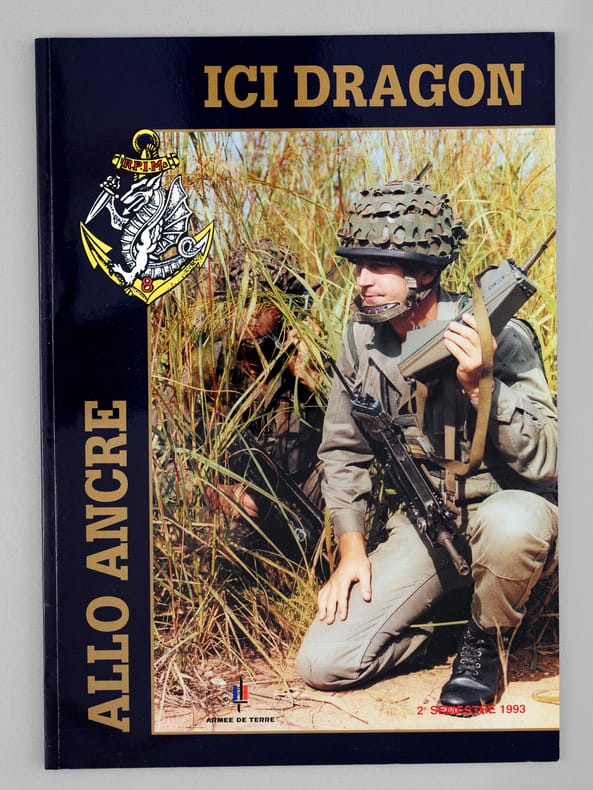
19846747246 numéros in-4 agraphés ou brochés (depuis 1987), 8e RPIMa, Castres, 1984-2004. Liste des numéros, par année : 1984 Février-Mars, Avril-Mai-juin, Juillet-Septembre, Octobre-Décembre ; 1985 Janvier-Février-Mars, Avril-Mai-juin, Juillet-Octobre, Nov-Décembre ; 1986 Janvier-Avril, Mai-Août, Septembre-Décembre ; 1987 Janvier-Mai ; 2e semestre ; 1988 1er semestre, 2e semestre ; 1989 1er semestre, 2e semestre ; 1990 1er semestre, 2e semestre ; 1991 1er semestre, 2e semestre ; 1992 1er semestre, 2e semestre ; 1993 1er semestre, 2e semestre ; 1994 1er semestre, 2e semestre ; 1995 1er semestre, 2e semestre ; 1996 1er semestre, 2e semestre ; 1997 2e semestre (seul) ; 1998 1er semestre, 2e semestre ; 1999 1er semestre, 2e semestre ; 2000 1er semestre, 2e semestre ; 2001 1er semestre, 2e semestre ; 2002 1er semestre, 2e semestre ; 2003 1er semestre, 2e semestre ; 2004 1er semestre, 2e semestre
19041091Berlin, Mittler und Sohn 1896-1904. Graue, silbergepr. illustr. OLn.-Bde. XVI, 620, 113 und XII, 840, 192 S. Mit sehr zahlreichen Textabbildungen sowie zus. 13 (12 mit Uniformbildern) farblithographischen Tafeln, 10 großformatigen Faltkarten (alle in Bd. 1) und 10 weiteren Tafeln in scharz-weiß (Portraits u. a.). 4°. Die Einbände an den Buchrücken fachmännisch restauriert bzw. hinterlegt. Stellenweise vereinzelt gering fleckig und bestoßen. Gut erhaltene Bände.
174700JT32nFrance 1747. In 1747 the Marquis A.M. De Roquepines requests an absolute leave of his superior officer for reasons of poor health. It appears he is so ill that he is putting his affairs in order. Research finds the very same Roquepines becomes the Marechal de Camp. Very Good. 8vo - over 7¾" - 9¾" tall. Manuscript. unknown
8vo., First Edition, with coloured frontispiece, title in red and black, 17 monochrome plates, 9 illustrations and 12 maps and plans (a number full-page) in the text and a large folding map on japon; handsomely bound in full burgundy crushed morocco, sides with gilt frame border, back with raised bands, second and fourth compartments ruled and lettered in gilt, all other compartments tooled in gilt, gilt top, hand-made endpapers, a most attractive copy ideal as a gift or for presentation. With 16pp publisher's catalogue bound in at end. Published in the 'Country Life Series of Military Histories'. Includes coloured plate of uniform, monochrome plates of colours (1-4 Bns), medals, bibliography, ROH (first two years of WWI), and list of officers serving in August 1916. Sutcliffe, p.327; White, p.109.
Oblong roy. 4to., First Edition, with title in red and black, text and captions in red, blue and black, 34 splendid large plates in photo-collotype and full-page musical score in blue; original red cloth, upper board ruled and blocked with regimental badge in gilt, expertly recased, BUT WITH SOME AGE- OR DAMP-DAMAGE TO 22 OF THE LATER PLATES (mercifully restricted mainly to upper blank margins and only materially affecting around ten plates); nevertheless a valuable record and a very scarce work. An unusually lavish production for a single battalion, this work is distinguished by the quality of the plates, which (damage apart) varies from very good to magnificent. The photographs are superbly executed by F. Bremner, photographer, variously of Lahore, Simla & Quetta, and their rendering as collotypes preserves the quite extraordinary detail of faces, uniforms and equipment. The plates include fine portraits of Major-General Frederick Walter Kitchener (Commanding 3rd (Lahore) Division) and Colonel J.C. Yale (commanding 1st Battalion), together with close-ups of the Colours and mess plate. The main body of plates is devoted, of course, to group studies. These include the officers (individually captioned), the battalion on parade, the Colour and colour sergeants (individually captioned), the NCOs (individually captioned), corporals, companies A-H (each company photographed separately), and a fine series of the battalion's various support units, trades and sports teams. An unusual composition is the plate 'Regimental Types' and depicting eight members of the battalion in a variety of uniforms including officer's full dress and OR's marching order. In addition to the plates, there is a detailed account of the battalion's service from Tournay (1794) to its arrival at Lahore Cantonment in 1906, together with pages devoted to regimental marchess. Not the least importance of this work must be as a superbly detailed record of the appearance of a regular battalion of line infantry of the period - crucially, the last phase of Edwardian opulence and before the irreversible changes brought about by the Great War. EXTREMELY SCARCE. IT IS UNCLEAR HOW MANY OF THESE REMARKABLE PORTFOLIOS WERE PRODUCED; CERTAINLY NOT MANY, AND EVEN FEWER CAN HAVE SURVIVED. Sutcliife p.103; not recorded by White (1965).
19190011016Coblenz Germany Benton Pa: Occupied Germany Coblenz Benton PA 56th Infantry. Good. 1919. Softcover. On offer is a superb pocket notebook kept by an American soldier in occupied Germany in the months immediately following World War One WW1. The author of this notebook is Ezra Skow. Little is known of Skow's early life. He was born in 1892 and enlisted in the U. S. Army in about September 1918 at the age of 25 or 26. Burial records in Benton PA indicate that he was attached to the 156th Infantry Regiment. However there was no 156th Infantry in the United States Order of Battle in WWI. In his notebook Skow records that he served in the 56th Infantry. This accords with the record of service of the 56th Infantry Regiment. The 56th Infantry Regiment was a regular infantry regiment in the United States Army. Its roots date back to the American Civil War where it served in the North's Army of the Potomac. It originated from personnel of the 17th Infantry Regiment in 1917 and fought in the region of Metz during World War I. In April 1919 a battalion of the 56th entered Metz as an honour guard for the Commanding General of the American Expeditionary Force John J. Pershing. Skow was married before joining the army. His wife Laura lived until 1987 passing away at the age of 93. Skow himself died in 1947 at the age of 57. His entries take the form of letters to his wife. They cover the period Jan 11 1919 through June 25 1919. In his diary Skow records several of the towns and cities in which his unit was stationed including Metz France Mulheim Metternich and other places in and around the city of Coblenz Germany. His entries speak about the day-to-day existence of a private soldier: "This is some place. Gee I wish I was home now. I would tell you a lot. The women are carrying their things on their back when they go to the store" Jan 13; ". I wrote you a letter tonight and send you the worlds clock too as I saw that today over at the city. And I was to see Charley Chaplin in the front line trenches and it was good. I would like to see you now. . I sit here at a Dutch table now writing notes and the Dutch man is reading the paper and his wife is talking out of the front window and you can see they are like but not quite as bad. Your Husband Ezra Skow xxxx" May 2; ". I was over to Coblenz today and wrote you a letter. And it is a fine day. I didn't do very much today. But believe me I would love to be home to loved you again. As I am getting tired of this life and will be able to tell you all about it when I get home . Your most lonely husband this side of the water. Ezra Skow" May 12. On June 4th he writes that he has learned his unit is going to be leaving the Coblenz area and hopefully heading home to the United States. In fact this is exactly what happened. By June 23rd he is in Fort Dix NJ and on the 25th he is out of the army. : ". I am out of the army now. Coming home to you dear." June 25. There are several other pages of note which include among other things the names and addresses of several other men - likely men he met and befriended. For a historian this is an outstanding piece of primary source material. It details the very ordinary day-to-day life of a soldier in WWI capturing his duties and his longing for home. For a regimental historian this fills in details of the history of their regiments. For a genealogist it offers some links to other Americans who served in that regiment. Measuring 5.25 inches by 3.5 inches this notebook contains 72 pages and is 85% complete. The book is in good condition. The binding and pages are intact. His handwriting is cramped but generally legible. ; Manuscripts; 24mo 5" - 6" tall; 72 pages; Keywords: handwritten manuscript document letter autograph writer hand written documents signed letters manuscripts historical holograph writers autographs personal memoir memorial antiquité contrat vélin document manuscrit papier antike brief pergament dokument manuskript papier oggetto d'antiquariato atto velina documento manoscritto carta antigüedad hecho vitela documento manuscrito papel 56th Infantry World War One US Army American soldier Occupied Germany . Occupied Germany, Coblenz, Benton, PA, 56th Infantry paperback
18481309221848. Signiert "pinx. P.C. Seekatz" und datiert. Auf bräunlichem Zeichenpapier. 13,5 x 9 cm. Papier: 18,7 x 23 cm.
1926129485Sydney: The Motor Press of Australia Limited 1926. First Edition. Hardcover. Sydney The Motor Press of Australia Limited 1926. Octavo 232 pages with a facsimile letter plus 3 plates portraits of the Commanding Officers and 7 folding maps on 4 leaves in an end-pocket. Printed papered boards later rebacked in brown cloth lettered in gilt; original boards marked stained and worn at the extremities with a heavy bump to the leading edge of both covers; new endpapers and rear endpocket; edges foxed with scattered foxing throughout; small light tidemark to the top margin of the plates and a few leaves; folding maps tidemarked and worn with some chipped edges stabilized with archival tape; signs of age and use but overall a presentable copy of a very rare book. The retained original front flyleaf carries the contemporary ownership details of 'Staff Sergt U J Cunneen Late 5 L.H. 295' June 1926; two other family members have added their details later and one of them has put a relevant annotation on an early page. 'Saddler/Sergeant Urban James Cunneen' appears in the nominal roll see page 176. <p>Dornbusch 404; Fielding and O'Neill page 232; Trigellis-Smith 276. The Motor Press of Australia Limited hardcover
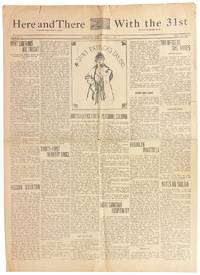
191947912Vladivostok Siberia: 31st Infantry Regiment 1919. Very Good -. Vladivostok Siberia: 31st Infantry Regiment 1919. First Edition. Oversized tabloid 59.5cm; 6pp. Folds chips and a few splits along edges; paper toned and a bit brittle; Good to Very Good. <br /> <br /> Quite scarce publication from the 31st Infantry Regiment published "Every Once In A While" "Wherever We Happen To Be." This issue was published during the Russian Civil War and the United States' failed Siberian Intervention. The paper itself is full of local and international news and leads with an article "What Siberians Are Taught: One Paper Says America Treats the Russians in the Same Way as Negroes."<br /> <br /> We find three holdings in OCLC at the Hoover Institution Montana State and U.S. Army War College. . 31st Infantry Regiment unknown
1836113830London: John Macrone 1836. Hardcover. Good. viii 273 xxx p. 20 cm. Cloth hardcover with blank impressing. Gilt print on spine. Corners bumped small dents in fore-edges spine faded. Darkened endpapers. Presentation copy signed by author in year of publication on front free endpaper. Also signed by author at top of title page in 1839. Stains to inner margins pp. 142-143 195-198 and mark on lower corner of p. 193. A few other small spots. In general paper clean and bright. Page torn out after xxx. <br/><br/>General George De Lacy Evans raised a force of British half-pay officers and mainly Irish volunteers to fight on behalf of Queen Christina against the usurper Don Carlos in what has become known as the Carlist Wars. Author Charles William Thompson often wrote home to his parents while serving as an ensign in the 9th Regiment British Legion. As stated in the preface he wrote of "anything new and striking that fell under his observation in the course of his wanderings." These included Andalusian horses soaking rain billets with Spanish families Cathedral bas-reliefs prisoners executed by garrote fever dysentery and digging boots out of the mud while wearing white gloves. The author was wounded in the hip at San Sebastian on May 5 1836 an event graphically described on pages 238-241. Appendix lists officers who died of typhus or in action as well as general orders and copies of letters. John Macrone hardcover