1 314 résultats
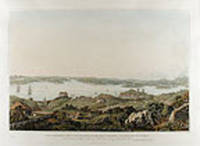
198814758London: Alecto Editions and the State Library of New South Wales 1988. Originally engraved by Robert Havell and son printed by Edward Egerton-Williams in colours and finished by hand with printer's blindstamp. "By 1820 Sydney was a town of 12000 inhabitants about a third of whom were convicts. It had grown dramatically during the administration of Lachlan Macquarie who was appointed governor of New South Wales in 1810. Unlike previous governors Macquarie was not content merely to oversee a penal colony. His vigorous building programme changed forever the appearance of Sydney while his policy of accepting emancipated convicts as respected citizens demonstrated a social attitude strangely out of step with the times. Both these policies earned him criticism. In 1819 alarmed by Macquarie's extravagant public works the British Government commissioned a lawyer and civil servant J.T.Bigge to investigate. The attacks by his critics were met head on by Macquarrie's supporters in New South Wales. Books pamphlets and paintings luded the governor's undoubted achievements. Almost certainly Major Taylor's drawings were used in if not commissioned for this cause. The engraved view presents a flattering image of the Australian seat of government and by extension of Macquarie's term there.Taylor arranged the engraving and printing of the of the three sheet Panorama. upon his return to England in July 1822.Havell appears to have worked from Taylor's. large watercolours but amended them with additional details. and decorative elements.It is most fortuitous that the copper plates.have survived. There is no other example of such a case for 19th century Australian engravings. Alecto Editions and the State Library of New South Wales unknown books
14758London: Alecto Editions and the State Library of New South Wales 1988. Originally engraved by Robert Havell and son printed by Edward Egerton-Williams in colours and finished by hand with printer's blindstamp. "By 1820 Sydney was a town of 12000 inhabitants about a third of whom were convicts. It had grown dramatically during the administration of Lachlan Macquarie who was appointed governor of New South Wales in 1810. Unlike previous governors Macquarie was not content merely to oversee a penal colony. His vigorous building programme changed forever the appearance of Sydney while his policy of accepting emancipated convicts as respected citizens demonstrated a social attitude strangely out of step with the times. Both these policies earned him criticism. In 1819 alarmed by Macquarie's extravagant public works the British Government commissioned a lawyer and civil servant J.T.Bigge to investigate. The attacks by his critics were met head on by Macquarrie's supporters in New South Wales. Books pamphlets and paintings luded the governor's undoubted achievements. Almost certainly Major Taylor's drawings were used in if not commissioned for this cause. The engraved view presents a flattering image of the Australian seat of government and by extension of Macquarie's term there.Taylor arranged the engraving and printing of the of the three sheet Panorama. upon his return to England in July 1822.Havell appears to have worked from Taylor's. large watercolours but amended them with additional details. and decorative elements.It is most fortuitous that the copper plates.have survived. There is no other example of such a case for 19th century Australian engravings. Alecto Editions and the State Library of New South Wales unknown
39913London W. Bulmer and Co. 1800 Hardcover book first edition 503 pages with engraving and maps- some folding as called for. Dedicated the the chairman of the east India Company. this lovely volume explores the history geography people and natural history of the country now referred to as Myanmar and formerly Burma. The author undertook a long and arduas journey throgh the country ending in 1795. a Very good copy bound in half-calf brown boards and marbled endpapers. all plates and maps are present as listed in the directions to the binder at the rear. Maps and plates have some light foxing. Fold-out map of the Irrawwady river has some perforations to the foldsalthough this is not serious. Other plates have light foxing and some margin stains but this does not affect the images. One page 288 has some margin notes and one page 157 has a short closed tear to edge. Previous owners contemporary signature to top of title page. Binding is lightly rubbed but firm and without splits. Pictures available. Please note this is a heavy volume and will require additional shipping charges. London, W. Bulmer and Co. 1800 hardcover
1792LBW-3758Auray, 1792. 1 p. in-4 oblong (22,4 x 29,3 cm), en-tête imprimé "Régiment du Port-au-Prince" corrigé à l'encre "Cap", vignette et encadrement gravés, sceau de la municipalité d'Auray et apostille des officiers municipaux, traces de plis.
18071812290002Boston: Beecher & Armstrong 1807. Hardcover. Acceptable. Boston Massacre Early American Printing Contemporary boards conserved and rebacked on modern spine. Ink and perforated stamps on title page. 120 p. First published in 1770 under the title: The trial of William Wemms James Hartegan etc. Taken in short hand by John Hodgson. <br> Future President John Adams successfully represented the accused British soldiers in the tumultuous trial. <br> "The trial of the British soldiers of the 29th Regiment of Foot : for the murder of Crispus Attucks Samuel Gray Samuel Maverick James Caldwell and Patrick Carr on Monday evening March 5 1770 before the Honorable Benjamin Lynde John Cushing Peter Oliver and Edmund Trowbridge esquires justices of the Superior court of judicature Court of assize and general gaol delivery held at Boston by adjournment November 27 1770." <br> From the library of Richard Manning Hodges 1827-1896 noted American surgeon Harvard College 1847 Harvard Medical School 1850. Boston: Beecher & Armstrong hardcover
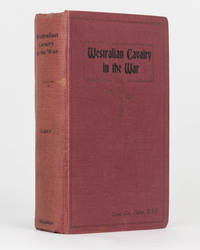
1901129531Sydney: Angus and Robertson 1901. First Edition. Hardcover. Fair. Sydney Angus and Robertson 1901. Quarto x 64 pages with an illustration plus 8 plates but lacking the colour frontispiece called for by Dornbusch. Modern binder's cloth with the front panel of the original green wrapper printed in red mounted on the front board; text block tide-marked near the head of the spine with the plates a little stained; some discolouration and foxing heavy in places; minor signs of age and use; a decent copy of an absolute rarity. This history of these two cavalry units from their foundation through to the end of the Boer War is 'undoubtedly a regimental record but it is something more - it is an attempt to explain and to some extent combat the unreasoning prejudice which has grown up as a result of the South African campaign against the cavalry arm of the service. On this point Mr. Wilkinson says:- "It is my purpose to show not only that cavalry regiments like the New South Wales Lancers have done equal yeoman service to the Empire in the South African struggle with their comrades in the other branches of the service but that they have done infinitely more as the pioneers of the cavalry movement in Australia to enhance the value of our defence force and to shew the world of what fighting stuff our men are made"' from a review in the 'Daily Telegraph' 12 October 1901. The last 18 pages contain numerous appendices including nominal and casualty rolls. <p>Dornbusch 126; Fielding and O'Neill page 126. Angus and Robertson hardcover
177834320London: Printed for the Author and Sold by J. Almon opposite Burlington House in Piccadilly 1778. First Edition. Full calf. Defective. Octavo.1 ii 67 pages 1 page blank. Folding map in front located between the front paste down and the right front flyleaf. Missing both plans and a part of the Table of distances. Brown calf leather binding with newer red leather title label on the spine. Front and rear hinges repaired at one point leaving the rear fly end paper partially stuck to the rear paste down. Leather boards are scuffed and pitted. Light toning to the text. A few pages are browned. Map of the United States measures 15" x 11.5". The contemporary 18th century map of the United States tipped in front probably was not issued with the book. The original map engraved by John Cheevers was 35-1/4" x 43-1/2" in size and issued separately. This map has an approximate two inch closed tear on the right edges and a few tape repairs to the lower edges made on the verso of the map. "Ralph & C" printed in small letters in the far lower right corner. <br /> <br /> Howes H 846 - "Valuable source for the western country during the late British period written by the first - and only-official geographer of the United States the originator of our range system of land surveys."; Sabin 34054; Field 744; Clark Vol. 1 258. Printed for the Author, and Sold by J. Almon, opposite Burlington House, in Piccadilly unknown
1860070469Richmond VA: West & Johnston 1860. First Edition. Softcover. Very Good -. 6.25" x 4.25" x 0.25. FIRST EDITION 1860. Since this was printed just before the beginning of the Civil War it is NOT a Confederate imprint. "Third Thousand" per the title page. Softcover. Spine is cocked; foxed throughout with some dampstain at the foot yet text has been uncompromised. Curling at the corners with some soiling. Predominantly unmarked except for a previous owner's name "L. J. Lee" dated April 1861 in pencil on the front flyleaf and a couple of markings in the margin on page 65 looking as the soldier was graphing the instruction of "By platoons left wheel. MARCH." and "Forward. March" also in pencil. The wear and soiling invokes a wonder if L. J. Lee carried this handbook with him in battle during the Civil War and what this little book has seen. A fascinating copy. Full refund if not satisfied. West & Johnston paperback
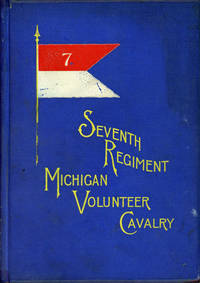
189348862New York: Town Topics Publishing Company 1893. 1893. MICHIGAN CIVIL WAR. First edition. 8vo. Original blue cloth with titles in gilt on the front cover and spine and Regiment banner design on the front cover dark brown front and rear endpapers 118 pp. frontispiece portrait of Colonel W. D. Mann 1893 preface illustrated from photographs portraits officers' register. O'Keefe 1207 says: "A regimental account that covers the third day at Gettysburg where the Michigan Cavalry led by General Custer fought off General J. E. B. Stuart and his Confederate Cavalry who were attempting to attack the rear of the Union line. The author served in F Company of the Seventh Regiment and was the regiment historian." Much information is provided on the officers of the regiment and their comments regarding battles and skirmishes. Signed twice in pencil on the front free fly leaf: "Compliments of Col. W. D. Mann. Mann was the colonel of the regiment and there is a photograph of him as the frontispiece. Also signed by William Covert who was a member of Company H 7th Michigan Cavalry and served in the regiment from Aug. 15 1864 to July 18 1865. Near fine bright copy of a very scarce book that is difficult to find especially in such nice condition. Town Topics Publishing Company, [1893]. hardcover
1893026678St Louis: Nixon-Jones Printing Co 1893. First Edition. Octavo. Important first-hand observations of the Civil War in the West. Nevins calls the book "A very readable and reliable narrative by a member of the 15th Texas Cavalry who saw much service in the Western theater; the volume deserves more attention than it has heretofore received." Quite scarce. Bound in blue cloth decorated in blind spine lettering gilt edges spine ends and corners show some wear previous owner's name. Howes C597; Nevins I p.72. Nixon-Jones Printing Co unknown books
1893026678St Louis: Nixon-Jones Printing Co 1893. First Edition. Octavo. Important first-hand observations of the Civil War in the West. Nevins calls the book "A very readable and reliable narrative by a member of the 15th Texas Cavalry who saw much service in the Western theater; the volume deserves more attention than it has heretofore received." Quite scarce. Bound in blue cloth decorated in blind spine lettering gilt edges spine ends and corners show some wear previous owner's name. Howes C597; Nevins I p.72. Nixon-Jones Printing Co unknown
19016224Valence, Jules Créas et Fils, 1901 ; grand in-4 ; demi-chagrin bleu pétrole, dos à quatre nerfs plats décorés d'une roulette de losanges dorés, caisson central à deux grands décors de rinceaux, feuilles et fleurs stylisés, reliés par une chainette, dorés, caissons de tête et de queue décorés de fleurons d'encadrement dorés, auteur et titre dorés sur les plats, tête dorée, plats conservés (reliure de l'épqoue) ; (8) pp., (1) f. blanc, 402, (2) pp., couverture illustrée en couleurs, page de titre imprimée en rouge et noir et armes de Bercheny en bleu ; (6) ff. de poèmes hors-pagination, 34 planches hors-texte dont 5 en couleurs (dont 1 par Job et 1 par David de Sauzéa), 9 bandeaux dont 1 par Caran d'Ache, 7 dessins in-texte, 39 lettrines historiées humoristiques et 25 culs-de-lampe également humoristiques ; les bandeaux, lettrines et culs-de-lampe sont imprimés de toutes les couleurs.
90, [4], xliv [ads] pages. Printed upon glossy stock. Black and white photos. Maps. Footnotes. Dozens of vintage ads for Toronto businesses. 27 x 20.5 cm. "We have tried in this volume to link up some of the honorable achievements of militia men of York County for a century back and show what the response has been when the bugle sounded or the alarm bell rang. We think we can discern in the men of this county a continuity of character; of deceptive equanimity in time of peace, of alacrity in time of war, of unchangeable faith in the Empire at all times." - Preface. Touched-up white decoration upon publisher's maroon cloth-covered front board. Former library copy with relatively few associated markings. Binding intact. A sound vintage copy. BISHOP p.381, COOKE p.87, DORNBUSCH 298. Book
xxiv, 179 pages. Index, bibliography, references, glossary. Almost one hundred black and white reproductions of photos and documents. Two fold-out maps. "This study was exciting and personally rewarding to me. I treasure the many Dutch and Canadian friends who so patiently worked with me to reconstruct the events of half a century ago. I still think it highly important that the record of Canadian actions in helping to throw off the Nazi yoke in the Netherlands be accurately and fully told to Canadian and Dutch peoples before we have all passed on. But this publication is really devoted to the 363 killed and 1760 other casualties suffered by the South Saskatchewan Regiment in the Second World War, to the other units involved in the liberation of Kamp Westerbork, but most of all to the 876 prisoners, mainly Jewish, we helped to liberate in Kamp Westerbork, the 4000 or so who passed through this transit camp to hell, but lived, and to the more than 103,000 who did not." - Foreword. After serving in WWII Professor Law [1922-2011] moved on to a career at Queen's University where he established the Business School's microcomputer lab in the 1980s, where this bookseller had the opportunity to meet him. Clean and unmarked with light wear. A quality copy of this important and highly-detailed study. Book
17845638Sarlouis, le 18 mars 1784. 1784 1 feuillet in-folio oblong ( 212 x 286 mm) imprimé à l'encre noire et completé à la main à l'encre brune, cachet de cire rouge du régiment et cachet humide rouge estompé; et au dos est rédigé et signé par l'intendant du régiment, le détail reçu par ce soldat. (salissures, traces de plis, défauts d'usage.)
45320Printed for the Author and Sold by J. Robson T. Payne Messrs. Cadell et al. London. 1799. First edition. SCARCE. viii 316pp. The military travels of Croker presented in a series of letters a few years before the Peninsular Wars. The tone is very honest and engaging. In one town the locals decided that it would be fun to throw stones at the troups and only stopped their sport when the use of guns were threatened. Croker writes in detail about the food and wine and is also very observant of the interest the Spanish men pay to the English women that travel with the soldiers. Recently rebound in quarter maroon calf and marbled boards original endpapers and half-title present. Some occ. light foxing one page has a close short tear to margin not affecting text. The pages are remarkably clean and fresh and the volume is very sound. Please contact us for photographs. hardcover
467539 planches dépliantes de 32 cms sur (pour certaines) 100 cms - 1917 - Bel ensembleJOINTS: Ouvrage en chinois - In-4 long - 8 pages sur papier "soie" - Couverture illustrée avec mention "Louis Grillet, Chef de Bataillon, Péking, 28 novembre 1917.Photographies de l'époque :"Bataille de Parnot & Personnage". Ces 2 photographies avec mention chacune (au dos) "10 décembre 1895, offert à Mr Grillet à titre de remerciements..." & "A Mr Grillet, from his friend...".
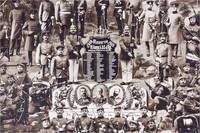
3733807<p>Metz Alsace-Lorraine German Empire: Gebrüder Notton Römerstr. 10 1908. Composite silver process photograph. Mount: 18¾ x 23½ inches. Image: 14¼ x 17¾ inches. Light rubbing to edges of mount with minor wear at bottom right; margins foxed; small mark at bottom extending faintly into image; very good.</p> <p>This is a rich and complex composite photograph from 1908 captioned with the words “Zur Erinnerung an Meine Dienstzeit†which translates to “In remembrance of my service time.†It was created for the 10th Company 8th Württemberg Infantry Regiment Grand Duke Frederick of Baden’s Regiment—possibly light infantry as in “Jäger infanterieregiment.†This regiment was based in Strasbourg in Alsace-Lorraine and served within the Imperial German Army. </p> <p>The surnames of these men are: Baibel Baierl Bauer Berger Jos. Burger Joh. Bumb Büchel Dirr Dirschedl Echtler Feibler Forster Fuchs Gaibl Ganslmeier Gundel Habender Hagl Haub Haüselmeier Herzog Hiemer Huber Jacob Janker Keim Kirchbauer Klemm Knott Kopp Kraus Kreckl Kübel Laubhardt Laubenbacher Lautner Lippert Maier Joh. Maier Seb. Merkel Miehling Moosburger Petermann Pfeilschifter Pflug Prior Rachl Rauschecker Ries Rommel Schmid Schmidt Schnabel Scholz Schraudolf Schweiber Stegmeier Sutter Ulm Weber Weindl Wenniger Wohlfarth Zieringer Zeilinger Zirngibl.</p> <p>The photograph presents a multitude of uniformed soldiers in a staged setting designed to resemble a military encampment or a gathering. The arrangement of soldiers is not casual but highly structured with officers shown with swords and details prominently positioned in the foreground. Many of the men are shown hoisting enormous beer steins with rather serious expressions.</p> <p>The photograph also features regimental flags and other military regalia which were symbols of pride and unity for the unit. The arrangement of soldiers in rows with some seated and others standing is typical of military portraiture of the time intended to display the order and discipline of the troops.</p> <p>The backdrop of the photograph features a bucolic scene a blend of a real outdoor setting and painted backdrops. This kind of photography allowed for the superimposition of studio-taken images onto a different background giving the impression that all individuals were present at a single location. Such methods were used to create cohesive unit photographs when it was not possible to gather everyone at once.</p> <p>The inclusion of phrases like “Mit Gott für König und Vaterland†With God for King and Fatherland reinforces the patriotic sentiment of the era and the soldiers’ commitment to their country and monarch. Other phrases such as “Die Well ist grofs Die Welt ist schön; Wer weifs ob wir uns wiedersehn!†“The world is big the world is beautiful; Who knows if we will see each other again!†reinforce the romanticism of military service.</p> <p>From a photographic history perspective the image represents the advancements in photo montage techniques at the turn of the 20th century. The image quality clarity and composition indicates that the photographers Gebruder Notton used a large-format camera which was capable of capturing detailed group portraits.</p> <p>A rather remarkable photograph encapsulating the military ethos of the German Empire during a period of intense nationalism and militarism leading up to the First World War.</p> unknown
67376E-374. Good. Hardcover. Leather. 8vo. Published by Printed for S Hooper. London UK. 1766 10 476 12 pp index. Illustrated with folding map 5 folding engraved plates. Bound in full leather boards with titles present to the spine. Boards have shelf-wear present to the extremities corners and edges of the boards lightly scuffed and rounded. Bookplate of Lord Exmouth present to the front pastedown. Text is clean and free of marks. Binding tight and solid. Captain John Northall c1723-1759 was a captain in the Royal Regiment of Artillery and is first recorded in Italy in April 1752 with a Mr Moore. He appears to have entered the service as a teenager and risen rapidly through the ranks. His Travels through Italy was written 1752-1753 but published posthumously and is dedicated to David Garrick who had visited Italy in 1763-4. He warns young aristocrats against being deceived by antiquarian guides in Rome into buying fake paintings presented as originals by Raphael Titian or Michelangelo. EB; 8vo 8" - 9" tall . hardcover
186432582Columbia: Evans and Cogswell 1864. Stiff wraps. Good. 12mo. 278 pages. Stiff paper boards with title on the front cover. Black cloth spine. Covers are worn and discolored. It appears the covers are facsimiles. Light to moderate foxing to the contents. Pencil inscription on the right front flyleaf reads "Col. Samuel W Milton from the publishers." <br /> <br /> The author wrote this book during his recovery from wounds in battle. He dedicates this work to Jefferson Davis. Jefferson Davis thanks the author and calls him "a master of the art of war" on page 12. Confederate imprint.<br /> <br /> Parrish & Willingham 4953; Confederate Hundred 60; Sabin 44651. The previous owner served as an Assistant Adjutant General under Samuel Cooper from 1863 to the end of the war. From Find A grave dot com taken from the Biography of Eminent Men of the Carolinas: <br /> <br /> Samuel Wickiff how it is spelled in the obit Melton was born in Yorkville S. C. February 7 183 hard to read. Receiving his early education in Yorkville he graduated from the South Carolina college in the class of 1852. He edited the Chester Standard published in Chester in 1852 and 1854. Then he returned to Yorkville and established the Yorkville Examiner on January 1 1855 running it until 1858 when he sold out to Lewis M. Grist. In the meantime in 1857 he was admitted to the bar and commenced the practice of law with his brother C. D. Melton at Chester continuing until the war broke out. He enlisted in the Confederate army in 1861 on the staff of Gen. M L. Bonham as aid-de-camp accompanying him to Virginia remaining with him until after the first battle of Bull Run. Subsequently he went on the staff of Maj. Gen. Gustavius W. Smith commanding the Second corps he having the rank of major. He remained with Gen. Smith until February 1863 and was then assigned to duty in the office of the adjutant and inspector general of the Confederate army at Richmond where he remained until the close of the war. He was in the first battle of Bull Run in the Peninsular campaign in the battles around Richmond at Seven Pines the campaign in 1863 in North Carolina and temporarily on the staff of Gen. Beauregard at the battle of Drury's Bluff. The chief duties however from early in 1862 to the close of the war were in the adjutant general's office in Richmond. Evans and Cogswell unknown
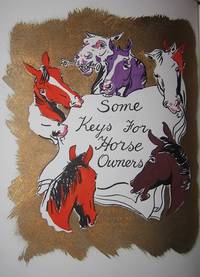
1928003636London: Country Life Ltd. 1928. First Limited Edition. Full Pictorial Pigskin. . Near Fine. No. 65 of 150 Edition de Luxe limitation signed by author and the illustrator using his pseudonym. 4to. 11.5 by 9.5 inches 29 by 24 cm. 240 6 pp. The illustrations through the body of the work are sprightly colorful fun and perfect exemplars of a twenties to thirties highball sophisticated aesthetic -- a sporting extension of the sleek look associated with thirties screwball comedies and musicals! The book makes riding and all its mishaps seem like one endless lark a party in which nothing really bad could possibly intrude. This is the kind of work that everyone will have a favorite image but few can not but admire the frontis of horses' heads awash with a gilt border. Much of the illustration by the way appears as if it were applied directly by hand and this slapdash manuscript quality greatly adds to the charm of the production. The pigskin binding has a film of soiling but remains attractive especially with its inked title and inkwell and feather quill pen imagery. With also a letter from the publisher. <br /><br /> Country Life Ltd. books
1928003636London: Country Life Ltd 1928. First Limited Edition. Full Pictorial Pigskin. Near Fine. No. 65 of 150 Edition de Luxe limitation signed by author and the illustrator using his pseudonym. 4to. 11.5 by 9.5 inches 29 by 24 cm. 240 6 pp. The illustrations through the body of the work are sprightly colorful fun and perfect exemplars of a twenties to thirties highball sophisticated aesthetic -- a sporting extension of the sleek look associated with thirties screwball comedies and musicals! The book makes riding and all its mishaps seem like one endless lark a party in which nothing really bad could possibly intrude. This is the kind of work that everyone will have a favorite image but few can not but admire the frontis of horses' heads awash with a gilt border. Much of the illustration by the way appears as if it were applied directly by hand and this slapdash manuscript quality greatly adds to the charm of the production. The pigskin binding has a film of soiling but remains attractive especially with its inked title and inkwell and feather quill pen imagery. With also a letter from the publisher. Country Life Ltd unknown
17021Two duplicate letters one dated from Park Lodge Baslow Derbyshire on 23 December 1907 and 'Christmas 1907'; and the other from the same place 'Aug 1909' and 13 September 1909. Third duplicate and typescript without place or date. Wrench was the son of a clergyman and well educated and well connected being presented to the Prince of Wales and staying at Chatsworth in his old age. His obituary in the British Medical Journal 27 April 1912 describes how after service in the Crimea 'he was transferred to the 4th Lancers went to Madras with that regiment in the following month and served with it during the whole of the Indian Mutiny. For his services in India he received the Indian medal and clasp for Central India. He returned to England in 1860 and married in 1861 his cousin the daughter of Mr. William Kirke of Markham Hall Nottinghamshire'. The four items in the present collection are all in good condition on lightly-aged paper. The three duplicates - all closely and neatly written in a vivid and informative style - are among ones produced by Wrench for circulation within his family there being copies in the collection of Wrench papers in Nottingham University Library. They comprise two letters and a narrative account. The typescript by an unnamed individual is not present at Nottingham. None of the four items is in the Imperial War Museum catalogue. ONE: Duplicate of Autograph Letter by Wrench 'Edwd M Wrench M.V.O - F.R.C.S. late asst Sugeon 12 R Lancers'. Dated at beginning 23 December 1907 and at end 'Christmas 1907 - Park Lodge Baslow Derbyshire'. The letter describes the 'Jubilee commemoration' at the Royal Albert Hall and is headed 'My last Parade'. It begins: 'It was indeed well done The dinner to the surviving Veterans who fought in the Indian Mutiny campaign in 1857 given by the proprietors of the London Daily Telegraph a procession of heart stirring episodes from the Inspection by F.M. Lord Roberts on the steps of the Albert Memorial where I found private Meredith of the 24th who was with me in the trenches at the assault on the Redan Sebastopol June 18 1855 to the surging chorus by the thousands in the Albert Hall of Auld Lang Syne near the end of what Lord Curzon in his thrilling speech said was a "ceremony" rather than a festival a speech that made the tears tremble on my eyelids. They overflowed at the solemn sounding of the "last post" recalling to my memory in the words of the poet O Hara a charge of the 12th Lancers I rode with at the battle of Banda .'. He names others present including 'Col Robertson . he was still the bravest of the brave for though 86 he was in velvet Levee dress silk stockings & pumps without a great coat. He told me he was a teetotaller his picturesque appearance attracted Lord Roberts eye and drew a heavy fire on us not of rifles but of snap shot cameras the result of which has been my portrait in such good company scattered by the hundreds of thousands in The Daily Mirror of Decr 24 . I have looked down the barrel of a loaded musket near enough to see a Sepoys yellow eyes taking aim at the butt end and ridden with cannon balls hopping over my head like balls in a cricket ground I cannot compare my perils during the Sepoy Mutiny to many others of the Kirke family'. 2pp. 8vo. TWO: Duplicate of Autograph Letter by Wrench 'Ed M Wrench'. Dated at beginning 'Park Lodge Baslow Aug 1909' and at end 13 September 1909. 3pp. 8vo. The letter begins: 'Having recently discovered that General W A Franks Major-General William Astell Franks 1838-1929 now living at Northland Road Southampton was present when Uncle Henry Kirke died when fleeing from the Mutineers of his Regt. 12 BNI in 1857 I took the liberty of writing to him he very kindly responded to my enquiries & I feel sure the information he has afforded will be interesting adding much to our scanty knowledge of that terrible time.' There follow extended transcriptions from Franks's letters: '. I saw him the day he died . he was on his horse but rolling about on it . he looked at me with a vacant stare & was deadly pale. I could see he was dying. Shortly after he fell off his horse he was the only one of our party that was buried all the rest being left where they fell .'. Of his own activities Wrench notes: 'I had gone to India almost direct from the Crimea in the year previous 1856. I was assistant Surgeon in the 12th Lancers so was never in the same danger as the Officers of the Native Regiments though I had my share of dangers . and had men blown to pieces by shell not a dozen yards from me . We went not as is said to revenge the Mutiny but to protect the loyal natives of which there were many & restore order yet in one battle we killed 500 rebels and looted two Palaces from one at Kabula we took 40 cart loads of gold & silver; my share of which was £750 . 0 . 0 so I have no personal grievance'. He continues with reference to the Battle of Banda and 'hunting rebels in the jungles'. THREE: Narrative account titled 'Cousin Henry Kirkes story of his escape from Mutineers June 1857'. The account begins: 'In 1857 Uncle Henry was commanding the Head Quarters of the 12th Bengal N.I. at Nowgong now spelt Naogaon Aunt Kirke Henry & St George were with him - He greatly distrusted the Sepoys and when he heard of the mutiny at Barrackpoor in April he immediately sent Aunt & St George off to the Hills just in time for they left Meerut only two days before the fatal 10 May'. A gripping account follows filled with incident: '. At the beginning of June Uncle heard that the left wing of his regiment stationed at Jhansi about sixty miles distant had killed the officers and all the Christian women and children there; Uncle forthwith ordered a parade and addressed the men. He told them of the mutiny of their comrades at Jhansi and added "Now I will let any man that wishes go and join the mutineers but let those who are true come and swear by the Colours". The whole 500 cheered and swore they would be true to him and the Colours. Two days afterwards they broke out into open mutiny shot the Regtl. Sergeant Major and made the officers fly for their lives. . The Europeans ten officers two ladies riding on Uncle's charger and a baby that Henry carried in front with a man riding behind him started for Banda. They asked a Brahmin the way he refused unless they gave him a rupee this Henry did when he ran off demanding another and swore by his gods that if given this he would be faithful but having got it he called to some villagers to come and kill the Faringhees for they had lots of money and so they would be rich for life. Some of the officers wished to shoot the man but Henry dissuaded them but presently the ruffian threw his lathi or club at the ladies horse which reared and they fell off. The man ran forward to kill them when Henry shot him through the back of the head he fell on his face. The villagers turned the dead man over and the two rupees fell out of his mouth when Henry heard them say "It is true they are rich for see they have loaded their guns with rupees". .'. 3pp. 8vo. FOUR: Mimeographed typescript titled '"Not to Revenge but to Protect."' 18pp. 8vo. Containing a transcriptions of Item One pp.16-18 and Item Three pp.4-9 and of passages from Item Two pp.13-15 with a commentary by a knowledgeable but unrelated party. Two duplicate letters, one dated from Park Lodge, Baslow, Derbyshire, on 23 December 1907 (and 'Christmas 1907'); and the other unknown
189017551Paris, Garnier Frères, 1890 ; fort in-8, cartonnage polychrome sur fond kaki, titre doré, dos décoré et doré, second plat décoré en noir, plats biseautés, tranches dorées ; (4), 1138 pp. , 54 illustrations aquarellées à la main, dont 16 hors-texte, 30 en-tête et 8 dessins in-texte, 7 vignettes en noir et blanc.
1921122313Melbourne: Alexander McCubbin 1921. First Edition. Hardcover. Very Good. Melbourne Alexander McCubbin 1921. Octavo 343 1 colophon pages plus 3 maps 2 folding 86 plates and 7 folding maps in a rear endpocket. Decorated cloth a little stained on the rear cover and lightly stained and sunned on the spine; endpapers offset; trifling signs of age and use; a very good copy internally excellent. The two-page foreword by Lieutenant-General Sir Harry Chauvel describes the author thus: 'Lieut.-Colonel Olden is well qualified to undertake the work as joining the Regiment on its inception he served with it throughout the War and though twice wounded was never long away from duty. He temporarily commanded it during the absence wounded of Colonel Todd on more than one occasion notably during the 2nd Battle of Gaza and finally succeeded to the command after the death of Colonel Todd'. He was awarded the DSO. <p>Dornbusch 399; Fielding and O'Neill page 233; Trigellis-Smith 280. Alexander McCubbin hardcover