1 575 résultats
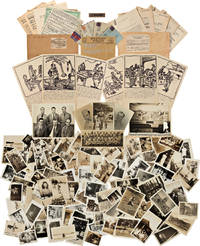
194520240The Hague ca. 1945. Hardcover. Near fine. Two oblong 8vo. albums. First album: 11.5" by 9" approx. String-tied faux-alligator boards. 43 gelatin-silver prints majority 3.75" by 2.5" but many 5.5" by 3.25" mounted to stiff gray leaves with cobweb-patterned tissue guards on each and handwritten captions in Dutch. Apparently complete. Near fine with several photos mildly yellowed but majority bright and sharp. <br /> <br />Second album: 13'' by 9'' approx. String-tied grey textured paper boards. 91 gelatin-silver prints of various sizes from 3.75'' by 2.5'' to 5.5'' by 3.25'' most of the latter size on stiff blue paper with tissue guards and handwritten captions in Dutch. Also contains an anti-Hitler card affixed to the front paste-down several cards with art and verse and two sepia-toned photographs on the final page. Two 5'' scuff marks to front board album corners and edges worn and bumped otherwise near fine with bright and sharp photographs. <br/><br/>A pair of carefully assembled albums possibly compiled for official use. The majority of the photos in both albums record the aftermath of a botched Allied bombardment in the Hague on March 3 1945; the attack claimed the lives of 511 civilians and left over 20000 people homeless. Targeted at a German missile base in the occupied Netherlands bombs deployed by the Royal Air Force landed instead in the adjacent Bezuidenhout neighborhood in the Hague destroying thousands of homes business and public buildings. The photos show several bombed-out churches and many apartment buildings with street names captioned underneath. Near the end of the first album three images show the burning of the Schevenigen Pier near the Hague which the compiler blames on the Germans but whose exact cause has never been established. The album forms a direct account of wartime destruction in the Netherlands. <br /> <br />The second album much more extensive includes some of the same material along with many other photographs. Affixed to the front paste-down is a black-bordered satirical memorial card for Hitler reading in Dutch "He came.but not to England / He saw.Moscow / He lost.the war." Beginning with two views of The Hague one in 1930 and one apparently mid-bombardment labeled March 3 1945 it also includes numerous scenes of destroyed buildings and monuments identified by street name. Some of these overlap with images from the first album; many do not. In addition to those showing the aftermath of the bombing several photos show intact monuments and buildings from neighboring cities like Middelburg possibly as a point of comparison with the ones destroyed. A few pages show photographs of various Bailey bridges at unspecified locations and other wartime construction. The final page of uncaptioned photos includes a shot of a pro-Hitler slogan painted in Dutch on a bridge underpass and a photo of several posters including a Dutch advertisement for "De Eeuwige Jood" The Eternal Jew a German propaganda film. A final leaf follows with two pro-R.A.F. cards with verses and drawings and three souvenir cards of Queen Wilhelmina Princess Juliana and her children Beatrix and Irene. The final page has two sepia-toned photos of a parade presumably celebrating the war's end. An important act of witnessing from an unfortunate event. hardcover books
194019884Various ca. 1940s. Thirteen brown paper leaves loose from a presumably perished scrapbook holding 57 black and white silver print photographs and dozens of ephemeral articles clippings postcards documents etc. tape-mounted to rectos and versos. Prints ranging in size from approximately 1.5” square to approximately 8” x 10” 42 of the 57 photos approximately 1.5” square contact prints. WITH Two ALS totaling approximately 650 words. Letters good to very good. WITH About 35 pieces of loose ephemera: military correspondence personal clippings and photographs etc. Scrapbook pages worn flaking at edges loose contents often with tape remnants or residue from previous mounting. Contents overall about good. Pearl Harbor letter very good with folds from mailing light toning and a small chip from right margin. <br/><br/>A small archive of World War II service and personal materials belonging to a Gerald Maynard Watkins of Memphis Tennessee highlighted by a monumental Pearl Harbor eyewitness letter written by Watkins to his mother less than 2 weeks after the Japanese attack. <br /> <br />Watkins was stationed at the Kanehoe Naval Air Station on the East side of the island of O’ahu site of the first Japanese attack carried out just minutes prior to Pearl Harbor approximately 30 miles to the West. His approximately 575 word letter of December 20 1941 describes the surprise onslaught in vivid and revealing detail exceprt: <br /> <br />"Then it happened. Never til my dying day will I forget. Bombers. They came from nowhere – Seemed to just be there. I looked up just in time to see them drop their eggs. For one startling second the world stood still as I followed the bombs line of drop with my eyes. I couldn’t help it. Fascinated by it all I watched until thy hit. That broke the spell. Courage – Every man there was a hero. <br /> <br />I rushed over to the hangar after the debris had settled. The first person I saw was Lawrence. He was just lying there kind of white looking and awful still. My throat tightened until it was hard to swallow. I knew he was dead." <br /> <br />This remarkable eyewitness account one of the best pieces of World War II correspondence we’ve seen is certainly the highlight of the group and its remaining contents are largely typical of World War II-era scrapbooks and archival material with several dozen photographs of his later service in the War many from Canton Island airfield in the Pacific with the decorated Patrol Bombing Squadron VPB-52. The balance of contents consist of personal clippings marriage photographs 3 pages seeming to be the fitful beginnings of an attempt at an early draft of a memoir of his Pearl Harbor Day experience and a second wartime ALS written on Christmas Eve 1941 in which he follows up his December 7 experience with a report on a mild injury he suffered during the attack: “Now that I am well and health once more I can tell you this. I had a very small piece of shrapnel from one of the bombs that were dropped here hit me in the shoulder. I didn’t even have to go to bed. I feel like a veteran now.” <br /> <br />Watkins left the Navy in 1946 after six years of service and went on to a career as a commercial airline pilot. His 2006 obituary notes he entered the University of Miami Law School at 67 years old passing the Florida Bar at 70 to become a practicing lawyer in retirement. <br /> <br />A handful of primary written accounts of the Pearl Harbor attack are known notably the diary of George Macartney Hunter whose family privately holds the manuscript but have made it available in multiple venues including for use in the 2003 PBS documentary THE PERILOUS FIGHT. The offering of similar materials in commerce appears to be rare with a significantly less impressive letter by a civilian witness to Pearl Harbor several miles from the battle itself making approximately $1200 nearly tripling its high estimate at a small regional auction in 2011. <br /> <br />A rare thoughtful and exceptionally revealing participant account with important supporting documentation lending additional context of arguably the defining event of the 20th century. unknown books
195732753London: Robert Hale Limited 1957. First edition. Illustrated. 1 vols. 8vo. Scarlet morocco-backed scarlet cloth. A very good copy. First edition. Illustrated. 1 vols. 8vo. The story of the June 1942 brutal massacre of the Czech village of Lidice by the Nazis following the murder of Reinhard Heydrich the German Deputy Reich protector in Bohemia and Moravia. Robert Hale Limited unknown books
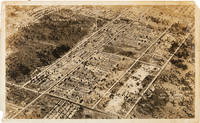
1941WRCAM56386Detroit: Spencer & Wyckoff 1941. Large format photograph 12 x 19 3/4 inches. A few small chips and short tears. Mild scuffing moderate staining and soiling. Good condition. A rare aerial view of the short-lived American military installation at Camp Livingston Louisiana. The camp opened in 1940 and closed in 1945 and was created to train field artillery regiments during World War II hence the "F.A." in the title of the photograph. The most notable use of Camp Livingston began the year after this photograph was taken when the American government used the camp to house thousands of Japanese German and Italian prisoners of war. In addition as many as a thousand Japanese-American citizens were held at Camp Livingston as part of the War Relocation Authority's wartime internment program. The present photograph would be useful in studying the accommodations for wartime prisoners and internees or perhaps the changes over time to the camp to accommodate them. No copies located in OCLC. Spencer & Wyckoff unknown books
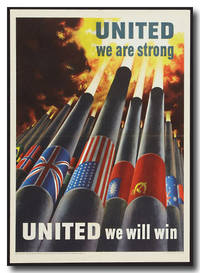
1943WRCLIT71230Washington D.C.: U.S. Government Printing Office / Office of War Information Poster 64 1943. Vintage color offset lithographed poster 28 x 20". Previously folded neat pinpricks in each of the top corners one panel on verso dust smudged short split at lower edge of midpoint margin else very good or better. One of the canonical WWII posters presenting a visual metaphor for the Allied nations executed by the Austrian-American artist 1915 - 1991 after his 1938 emigration to the US in the wake of Hitler's annexation of his home country. The image depicts a battery of artillery gun barrels decorated with the flags of the Allies all firing in unison into a tumultuous sky. Koerner later gained wide recognition for his portrait commissions for the covers of TIME magazine. This particular poster was produced in several sizes for different uses. U.S. Government Printing Office / Office of War Information Poster 64 unknown books
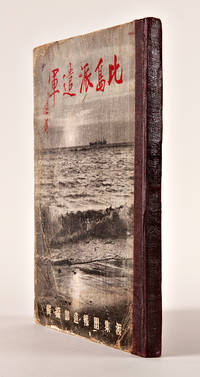
1943WRCAM43312Manila 1943. 103 leaves of photographic illustrations. Printed in Japanese characters. Quarto. Original red cloth spine and illustrated paper boards. Spine neatly repaired extremities worn. Contents generally clean. Very good. Pictorial account of the Japanese invasion of the Philippines published as a propaganda piece to support and commemorate the endeavor. Photographs are captioned in Japanese and include images of Japanese soldiers involved in actions all over the Philippines as well as a grateful populace. One image shows Japanese soldiers handing out treats to Filipino children. There are also several photographs of American POWs; one image shows men lying in hospital beds others show them seated in large groups. An interesting pictorial history. hardcover books
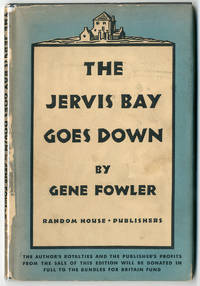
1941WRCLIT80906New York: Random House 1941. Cloth. First edition in book form. Binding faintly dust dulled endsheets darkened at gutters and pastedowns small closed nick in lower edge of pp. 11-12 else good in a worn and weary dust jacket. Random House hardcover books
1948WRCAM54508Various places including North Carolina San Francisco but mostly Hawaii 1948. 225 photographs; thirteen photographic negatives; six letters and telegrams; two folders of Brotherton's military paperwork; three original pencil sketches; eight large- format ink and pencil captioned cartoons of the 551st Ordnance H.M. Co.; Brotherton's wife's identification card for Fort McPherson Georgia; a small nameplate for "Lt. Henry Brotherton"; and a Nov. 27 1948 issue of the ARMY TIMES newspaper listing Brotherton as a major under the "Warrant List." Some insect damage to the pencil sketches and one cartoon otherwise generally very good or better condition. A nice collection of material on the wartime experiences of Maj. Henry Alton Brotherton 1920-86 a Warrant Officer from Iredell North Carolina. The numerous photographs feature a variety of settings and subjects. The majority of the photographs emanate from Hawaii showing Brotherton and his wife who apparently joined him at some point after his assignment there either to live for a while or visit other officers and soldiers at work and play studio portraits of Brotherton a handful of 8 x 10-inch press photos and a 4 x 10-inch panorama of the 551th Ordnance Company. Over thirty of the photographs are annotated mostly identifying Brotherton his wife or military subjects in Hawaii in 1945 with three photographs showing the 551st at a "Beer Party." <br> <br> Among the letters and telegrams are a small handwritten note by Brotherton to his wife in North Carolina wishing her congratulations on their wedding anniversary and a Western Union telegram wishing the same dated a day apart from each other; a Dec. 31 1945 telegram from Brotherton to his wife saying that he expects to "be home soon." <br> <br> A Dec. 22 1944 five-page letter from Brotherton's wife Polly includes extremely romantic and borderline racy content from a homefront wife to her husband while he was in training in San Francisco: "My Darling Husband I'm wanting you so terribly much tonight I hardly know how to begin my letter.If I dared put all my emotions on paper this letter would be scorched with passion Brother. I love you I love you I love you!!" <br> <br> The folders of documents include official army service forms rosters reports etc. Notable among the papers are a packet of documents relating to the visit of the President of Mexico to Kansas City in 1947 which Brotherton was tasked with coordinating; a certificate of training for "Mess Management;" a 1946 application for commission in the regular army as well as one for extended active duty; a list of Brotherton's ordnance depot bowling league in which Brotherton is listed near the top with a 163.1 average; and a snarky letter from Brotherton's superior commenting on a traffic citation received by Brotherton: "If all officers had the same attitude as Lt. Brotherton toward parking rules this post would have to have an M.P. on every street and intersection which is neither feasible nor desirable." <br> <br> Perhaps the most notable portion of the archive lies in the nine large black-and- white ink and pencil cartoons on eight sheets. They depict soldiers performing various ordnance tasks on a base presumably somewhere in the central Pacific accompanied by humorous commentary. Six of the cartoons directly reference either the Pacific or California. One cartoon pictures "the men most commonly called as the Bull Gangers who work on the big weapons which give Japs lead poisoning." A few cartoons picture palm trees or reference pineapples. Another cartoon shows two soldiers in conversation with a thought bubble above them showing the Golden Gate Bridge; the caption reads: "I figure that my new tool will speed this war up so fast that we will see the Golden Gate in forty eight." One of the cartoons includes a sign reading: "551st Ord. H. M. Co" Heavy Maintenance Company. These pieces are unsigned so it is unclear if they are Brotherton's work but some of the soldiers depicted are named e.g. Eddie Blackford Mullins and "Big Joe" Galecki. <br> <br> An unusually dense and diverse World War II archive with photographs military documents and original artwork relating to the Pacific Theater of the war. unknown books
194515609Glenview IL: Naval Air Training Command 1945. First Edition. Wraps. Good . 4to. Illustrated wraps. Contemporary post binding added at left margin. Most paper lost from spine. Wrapper edges worn chipped. Internally clean sound. <br/><br/>An original illustrated manual issued to WWII Naval flight cadets training at NAS Glenview dated July 1 1945 to the title page. Generously illustrated throughout with dozens of original drawings likely the work of a single unnamed illustrator and photograph reproductions executed and lettered in a decidedly Seuss-ian style heavily influenced by modern cartooning lending a simplistic treatment to gravely serious and technical material. A portion of the "Safety" chapter on p. 29 with the exaggerated likeness of a pilot resting upon a cloud holding a harp wearing angel wings and captioned: "Don't try to be the 'hottest' pilot but try to be the 'oldest.'" and "There are bold pilots and there are old piltos 'But!' - there are no old bold pilots." Six chapters are broken into dozens of sections with titles like: Your Parachute Safety Inherent Stability Turns Normal Spins Landings Steep Turns Precision Immelmans Progressive Spins etc. The impact of the allied air campaign and skill of American pilots during World War II is seldom mentioned in modesty. This is a rare flight training publication and exceptional example of illustrative instruction. OCLC notes only 2 institutional holdings one at The Smithsonian the other in the aviation archives at Wright State in Dayton OH. None in commerce June 2015. 243pp. Naval Air Training Command paperback books
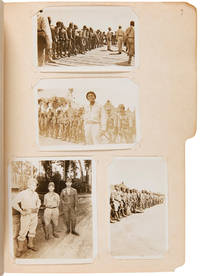
1945WRCAM55788Morotai Bougainville Green Island and other locations in the South Pacific 1945. Three clasp-bound collections of manila folders containing 113 mostly vernacular photographs occasionally captioned in pencil two divisional newsletters copies of Japanese surrender documents and numerous news clippings and assorted ephemera related to the soldier's war experiences. Minor dust-soiling to folders some toning to contents. Overall very good. An informative collection of photographs documents and clippings related to the World War II experiences of the African-American 93rd Infantry Division in the South Pacific. The 93rd Infantry Division was a segregated "colored" unit formed first during World War I and reactivated for service in 1944. The unit was shipped to the Pacific Theater where they served primarily in construction and defensive infrastructure operations. The 93rd occupied Morotai in the Dutch East Indies from April to October 1945 where they witnessed the surrender of the Second Japanese Army. <br> <br> The material in the present collection is organized in three compilations of clasp- bound manila folders with the contents of each compilation annotated in pencil on the front cover. The chief feature of the collection are the 113 photographs arranged thematically throughout the first two folders. <br> <br> Folder One contains photographs and documents pertaining to the Japanese surrender to the division's commander Major General Johnson. There are also photographs showing various Japanese troops surrendering to Australian officers including one of a Japanese officer surrendering to Gen. Thomas Blamey at Australian field headquarters in Morotai. A few photographs emanate from a Japanese hospital ship "taken over by our Div." showing "a few in the hospital." One photograph features an African-American soldier perhaps the compiler of this collection smiling in front of a line of surrendering Japanese soldiers. In the first folder there are also two copies of divisional newsletters: one from the 13th Jungle Air Force; and another titled IGUANA which was the daily newsletter for the 93rd Infantry we could locate no copies of IGUANA in OCLC. Rounding out the first folder are copies of an address on Japanese surrender delivered by Gen. Sir Thomas Blamey to Lieutenant-General Teshima Commander of the Second Japanese Army "On the occasion of the signing of their Surrender Morotai 9th September 1945" and a lithographic copy of the "Instrument of Surrender" between the two combatants. <br> <br> The front cover of Folder Two is titled in pencil "Places and People in the Netherland East Indies and Green Is. in the Northern Solomons and Bougainville." This folder contains images of Australian soldiers in Morotai; numerous pictures of indigenous Morotain people including men women and children; the entrance to the Morotai War Cemetery; photos of the 13th Australian Air Force; overhead images of an active volcano in Bougainville; pictures of Bob Hope Carol Landis a popular Hollywood actress who performed extensively for troops during the war and others on a U.S.O. mission at Bougainville; images of various aircraft including B-29 nose art and Japanese planes; a few pictures of dead Japanese soldiers in Morotai captioned "Good Japs"; photographs featuring the invasion of Morotai; and other images of the South Pacific islands where the compiler was stationed. <br> <br> Folder Three is labeled "Places I've Seen" and is composed of beer labels the compiler collected during his service along with numerous newspaper and magazine clippings memorializing his unit's service. The clippings indicate the compiler also served at Leyte in addition to Morotai Bougainville and Green Island in the Dutch East Indies. <br> <br> An interesting collection of firsthand photographs of an African-American unit's service in the South Pacific during the Second World War. unknown books
1945566New Caledonia 1945. Very good. Two issues 16pp. total. Old horizontal fold. Light tanning. Two Spring 1945 issues of this rare U.S. armed forces newspaper published in New Caledonia in the South Pacific Ocean both full of momentous war news. The first dated April 15 leads with the headline "F.D.R. Makes Last Trip to Washington" and provides an account of the return of Roosevelt's body from New York to the White House. A second sizable article reports on major Allied advances in Europe and a large map printed on the third page shows American British and Russian forces closing in on Berlin. Several other articles provide accounts of American victories against the Japanese in the Philippines and Okinawa and of bombing raids on Tokyo. The second issue dated may 5 is headlined "Allies Mop Up In Reich" and documents the collapse of the German armies in the days before the final surrender and is further highlighted by a cartoon depicting Hitler being stuck outside the gates of Hell until his death is confirmed by the Allied command. This issue also contains items of local interest such as scheduled social events for that Saturday night and the program for Sunday church services. OCLC locates only a scattered run of the periodical at the U.S. Army War College Library and copies of the May 8 1945 V-E Day issue at UC Davis Western Michigan and the University of Georgia as well as single issues at four Australian and New Zealand institutions. unknown books
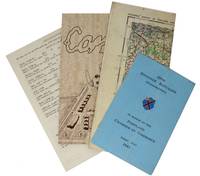
194444720v. p. 1944. The archive includes a copy of Contact Ryan Field Hemet CA class book; Checklist 44-F class book from Pecos Army Air Field Pilot School Twin Engine an aeronautical map 2nd Edition 1942 of "England South East and London" "Areas Dangerous to Flying are not Indicated on this Sheet" 1941 Army Day program Portland 'Restricted Extract' Operation Order Number 1 23 June 1945. 9cc. Dawe senior officer and listed pilot; photograph of Dawe in uniform; program for 'Graduation Class 44-F June 27 1944. Pecos Army Air Field Pecos Texas' and an unused invitation with accompanying envelope for said graduation ceremony. General signs of use. 'Contact' with Dawe's signature as well as some fellow 8th Squadmates' signatures at their photograph. Overall Very Good. Divers paginations. Illustrated. Map: folded 12-1/4" x 5-1/2"; unfolded 24-3/8" x 30-3/4" <br/><br/>Lt Wesley Dawe from San Francisco served in the Army Air Corps during WWII ultimately flying the B-17-G with here collected a number of items documenting his early aeronautical career primarily from the pilot training days of his second enlistment his first stint was 1938 - 1941 mustering out ~ 6 months before Pearl Harbor; he re-upped in 1943. unknown books
194430468New York: Harper & Brothers 1944. FIRST EDITION. Fine book in a fine dust jacket. <br/><br/> Harper & Brothers unknown books
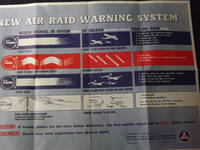
1943106046<p>Wartime poster 20" x 27 3/4" color print and some illustration. Slight edgewear creases at folds normal aging; overall very good plus. Issued by the Office of Civil Defense OCD on February 17 1943 OCD Publication 7015 to explain the new air raid warning system. The "Blue Warning" which is a steady blast from the air raid siren tells us enemy plans are coming and what to do. The "Red Danger" indicates that bombs are expected to fall with a series of short blasts from the sirens. The "All Clear" notice appears to be done by radio announcement. A scary reminder from the not too distant past. </p> U.S. Government Printing Office, books
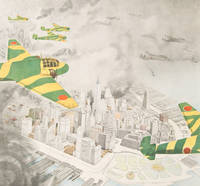
1943260152Tokyo: Dai Nihon Kaiyo Bijutsu Kyokai Greater Japan Pacific Art Association 1943. 35 mounted color plates with captioned tissue-guards. 1 vols. Oblong folio. Publisher's blue cloth boards printed paper label on cover. Fine. 35 mounted color plates with captioned tissue-guards. 1 vols. Oblong folio. The Japanese Bomb Lower Manhattan. "The purpose to publish this book is nothing but to let the people in Japan understand well the bravery and activity of the Japanese Navy. Every picture contained in this book signifies how vigorous and brave our Navy is fighting a desperate battle in the Pacific ." translated from the Preface. An imposing and colorful work of WWII propaganda by Imperial Japan illustrating events both true and wished-for. In the former category are the bombing of Pearl Harbor the sinking of the British Prince of Wales and Repulse at the Battle off Molaya the Japanese occupation of Singapore the Japanese assault on Wake Island showing captured Allied soldiers stripped to their briefs and waving a white flag and the Japanese landing on the Alaskan Aleutian Islands. In the latter category a Japanese plan to attack New York City showing Japanese bombers assaulting lower Manhattan. Dai Nihon Kaiyo Bijutsu Kyokai [Greater Japan Pacific Art Association] unknown books
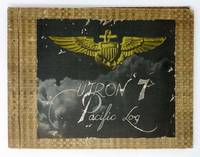
194545041Photographic Laboratory of Utility Squadron Seven 1945. 1st Printing. Basket-weave patterned paper-wrapped boards brass screw post binding. Photographic onlay to front board with large Navy gold aviator wings at top of onlay. General shelf wear with scraps and nicks to paper especially along edges. Board showing at tips. Overall Very Good. Unpaginated though 120 pp. 3 pages of muster rolls. Profusely illustrated primarily with b/w photographic images accompanied by some drawings. Oblong format: 12-1/2" x 17-1/4" <br/><br/>"This book has been prepared especially for shipmates of Utility Sqadron Seven their families and friends". "VU-7 was commissioned on 4 December 1942 at Alameda CA with the mission of providing utility aircraft services to units in the Pacific Fleet such as towing of aerial targets and launching of self-propelled drone targets for surface-to-air and air-to-air gunnery and missile firing; providing airborne targets for the fleet anti-aircraft warfare training center electronic countermeasure exercises inflight refueling and other utility and administrative services within the capabilities of the assigned aircraft which were F-8 Cruisers and A-4 Skyhawks." aviation-museum blogspot Quite uncommon with OCLC recording just one institutional holding. Photographic Laboratory of Utility Squadron Seven hardcover books
5101WORLD WAR II IN JAPAN. ALS. 2pgs. October 1 1945. Hirosaki Japan. An autograph letter signed “Dale†Christensen written home by an Allied serviceman stationed in Japan shortly after the official end of World War II. “Well I haven’t had a chance to write for some time. We made it up here O.K. but the ship sure was loaded. We landed at Aomori and this place is inland about 30 miles. We have had no trouble at all. We spent the first night at an airport and then moved to another Army camp the next day then the third bn came up and took over here. I was in on the big thing at this camp I came up with the first gen jeeps and saw the Jap General sign the camp over to us then to top it all off I was picked to take the Jap General to his home. He talked to me all the way but I didn’t know a thing he said. When he got out he saluted me. He seemed happy about the whole thing. The climate here is good and cool. We have a big mt right afore us and it looks just like Mt Fugiama sic. They say it sure gets cold here in the winter. The rice is just headed out and it is very pretty here but I hope I can soon come home…We are cleaning this camp up now it sure needed it. I don’t see how the Japs lived in it. Bugs and dirt all over. We sure are making a change in the looks of it. They say they might give each one of us a Jap Rifle and bayonet to take home I don’t think there is any thing to it. I sure would like to have one. They sure can grow the fruit and garden stuff here but they sure are way behind in the way to live. I think even behind the Philippines…The papulation sic of this place in 97000 and Aomori – 57000. Aomori was bombed and it sure was smashed and burned. Well we have a few Japs working in this camp and I think as a whole they will like better from now on that ever before. There clothes are all patches but they look healthy and happy. Well I will write more later. I hope we soon get a mail call. Tell Ann and the rest Hello. Everything is fine here. Write soon. Dale.†The letter is in fine condition. hardcover books
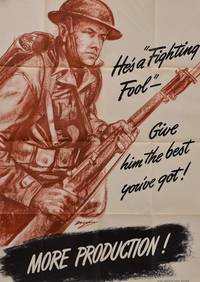
WRCLIT70196Washington DC War Production Board / GPO. 1942. Folio color photolithographic broadside 40 x 28" 102 x 72 cm. Folded as issued. Faint tanning to folds on blank verso a bit of foxing to verso a few minuscule breaks at junctions of folds otherwise a very near fine fresh unused copy. One of at least two War Production Board posters captioned thus in this case produced after a drawing by "Moxon" of a helmeted combat soldier leaning forward into the poster from the left with his M1 with bayonet mounted. The original drawing on which it is based appears to have been executed in reddish brown conte crayon. Full identification of the artist seems to have eluded references including OCLC etc. Washington, DC unknown books
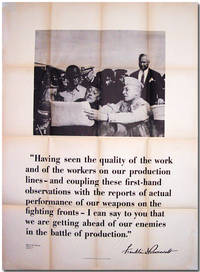
1942WRCLIT70812Washington DC: US Government Printing Office / Office of War Information Poster No. 13 1942. Folio photolithographed broadside 40 x 28"; 102 x 72 cm. Folded as issued. Very slight tanning at the folds on the blank verso but a very near fine bright unused example. A powerful WWII homefront poster promoting the achievement of war production. The poster incorporates a photograph of President Franklin D. Roosevelt in an automobile at an inspection site looking at a performance report with military officers. The text below the image states in part: "Having seen the quality of the work and of the workers . and coupling these first-hand observations with the reports of actual performance of our weapons on the fighting fronts -- I can say. that we are getting ahead of our enemies in the battle of production. Franklin D Roosevelt " printed signature in script. US Government Printing Office / Office of War Information Poster No. 13 unknown books
1960WRCLIT76294London: British Council and National Book League / Longmans Green & Co. 1960. 48pp. Printed wrappers. Portraits. First edition. Small nick in rear wrapper at fore-edge otherwise fine. Writers and Their Work No. 127. British Council and National Book League / Longmans, Green & Co. unknown books
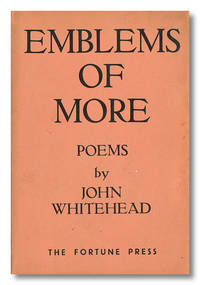
1945WRCLIT83855London: The Fortune Press 1945. Cloth. Near fine in faintly soiled jacket. First edition first book. At the time of publication the author was serving in the Anti-Tank Regiment of the Indian Army. The opening section of poems date to his school years in Belfast. REILLY p.351. D'ARCH SMITH 595. The Fortune Press hardcover books
1945WRCLIT75658London: Harrap 1945. Large octavo. Gilt cloth. About fine in lightly nicked and edgeworn dust jacket. First edition ordinary issue. Foreword by Lt.-General Sir Oliver Leese. Introduction by Sassoon. There was also a special edition of 110 numbered copies. REILLY WWII 44. KEYNES B18. Harrap hardcover books
1946WRCLIT84197London: Jonathan Cape 1946. Cloth. A very good copy in poor badly town and internally mended dust jacket. First edition. The poet's first collection one of the most distinguished volumes of verse to come out of World War II. He issued a pamphlet of criticism in the same year which may or may not precede. REILLY WWII p.273. Jonathan Cape hardcover books
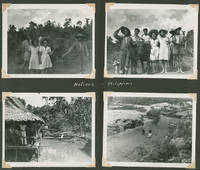
1945WRCAM54321Philippines; Okinawa; San Diego 1945. 133 silver gelatin photographs most 2 1/2 x 4 inches but ranging from 2 1/2 x 2 1/2 to several 10 x 7 inches. Oblong folio. Black leatherette album strong tied. Light wear. Photos in corner mounts with many captions. Very good. A fascinating photographic account of military service in the Philippines compiled by a member of the 142nd U.S. Naval Construction Battalion the Seabees in 1945. Most of the images approximately three- quarters of the album were taken in Guiuan on Samar Island in the central Philippines where the photographer was stationed. Guiuan city square the Seabees' camp numerous portraits of local girls who sometimes pose with American soldiers local families and their activities native architecture and other local scenes. They also show the Immaculate Conception Church with shots of the exterior and detailed views of the silver altar - built in 1595 to 1844 but completely destroyed by Typhoon Haiyan in 2013. Several other photos evidently portray the album's compiler posing next to an American fighter plane while boiling sea shells in front of his tent etc. <br> <br> The final portion of the album contains photos taken during the operations aboard the USS "Monrovia" and "President Harris" in October-November 1945 including views of Okinawa on the way to China and snapshots of soldiers unloading cargo in the Yellow Sea China before returning to Manila. There are also eight clear views of Manila showing destroyed Japanese cranes and boats in the harbor American army headquarters and a warehouse. The album concludes with a few photos of the homeward voyage and shows soldiers discharged in San Pedro California. <br> <br> Overall a very good album depicting local life and the activities of the 142nd U.S. Naval Construction Battalion in the Philippines and Yellow Sea in the last months of the World War II. hardcover books
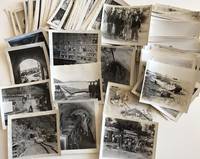
19461299Okinawa 1946. Overall very good. 363 original photographs most 3.25 x 4.5 or 3.75 x 5 inches. Loose photos some curling to approximately half of group. About 200 images neatly removed from previous album or other housing with adhesive remnants on blank versos. Pencil annotations with dates and locations on a substantial minority of photographs. Occasional minor wear some fading to several photos but mostly clean crisp images. A remarkable and large collection of over 360 vernacular photographs taken by an American soldier on Okinawa and several other outlying islands in the Amami and Tokara chains following the final surrender of Japanese forces and the end of World War II. The images present here depict a wide array of subjects including the destruction on Okinawa the building of American military camps cleanup and disarmament of Japanese military installations remnants of local villages and Japanese residents attempting to resume their lives.<br/><br/>One of the most fascinating and extensive series of images present here documents the disarmament and deconstruction of Japanese island military installations carried out by their own soldiers still in uniform. Numerous photographs depict soldiers carrying bombs arms and equipment out of bunkers and other installations being dismantled under the supervision of American forces. Many images incongruously depict American and Japanese officers deep in consultation or mixed groups of enlisted men working or milling about together. Several shots show Japanese soldiers Japanese soldiers posed at stations in the bunkers as if they were still on duty.<br/><br/>A second significant run of images present here depict life such as it was for surviving residents of the islands. Many photographs show rebuilding in progress men and women scavenging materials and farmers working fields and harvesting hay and grasses. Others document aspects of town life -- small gatherings of villagers children playing men returning from a fishing expedition women washing clothes in an irrigation ditch. A few photos show a group of women from the local red light district.<br/><br/>Overall these images give an excellent and detailed view of the situation on the outlying islands of Japan just after the conclusion of the war. The photographer clearly had license or orders to travel fairly widely and his photographs are taken from varied locations on Okinawa and several other islands south of the Japanese mainland including Tokunoshima Amami Oshima and Takarajima. The landscape on these as it appeared in the direct aftermath of the war is extensively documented.<br/><br/>Although the photographer is not identified he is clearly the subject of several portraits posed in front of military airplanes on ships with groups of soldiers and with local Japanese people. The images display a good sense of composition and a keen eye for interesting subject matter and given the access that many of these subjects required it seems clear that the photographer had some training or professional experience and was employed by the military. Nevertheless 170 of the images are clearly his own personal vernacular photography thereby making the scope and extent of this group all the more remarkable. An excellent and sizable group of postwar Pacific photographs and an outstanding visual document of Okinawa soon after one of the bloodiest and most desperate island campaigns of the war. unknown books