11 490 résultats
1858DEMO010017IChicago: Democratic Press 1858. First edition. printed wrappers. Fine. 8vo 56 pages sewn in complete blue wrappers. Rare <br/><br/>With a Full Statement of Her System of Railroads & General Synopsis. Byrd 2887 -cites 4 copies; ANTE-FIRE IMPRINTS 302 Democratic Press unknown
179133Pasted or mounted in a modern scrapbook. Most images are 2 inches x 3 inches not including wide margins; many have light browning to margins 3 are torn in margins.<br/> <br/> Most of the images are patriotic allegories some with pro-Union sayings. Other images are political cartoons that are anti-Confederate and/or pro-Union. In addition there are several larger images of state seals from some Northern states. Most of the images do not state a printer. Some of printers stated include: Charles Magnus of New York Magee of Philadelphia S.C. Rickards of New York William Ridenburgh of New York and Reagles of New York.<br/> <br/> unknown
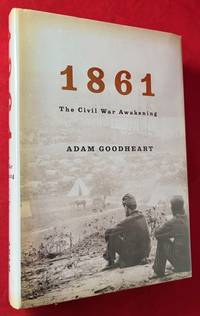
20117279New York: Alfred A. Knopf 2011. First Edition First Printing. Hardcover. Near Fine/Near Fine. 6 1/2 X 9 5/8 Inches. 481 PP. "Adam Goodheart is a Monet with a pen instead of a paintbrush."<br /> -James M. McPherson Pulitzer Prize-winning author of Battle Cry of Freedom<br /> <br /> Stated "First Edition" on the copyright page. Original price of $28.95 intact on the front flap. Signed by Goodheart directly on the title-page. Possibly the only man I actually know who was interviewed by Terry Gross on NPR's "Fresh Air" - which I adore. The book was one of the books of the year in 2011 and was named book of the year by the History Book Club. Only flaw is one small red dot remainder on bottom gutter. Special thanks to my great friend Robert Hicks for introducing me to Adam and his work. Alfred A. Knopf hardcover
6252EDWARD ALLEN GOODWIN unknown-1862. Goodwin was the Sergeant in Company K of the 23rd Regular Massachusetts Volunteers. This is the diary of Edward A. Goodwin Co. K 23rd Regt. M. of. M. This diary is THE AMERICAN UNION DIARY FOR 1862 an annual published diary accessible and likely provided to Union soldiers during the Civil War. After a few pages that include a calendar and interest tables the diary provides space for each day of the year 1862. Goodwin wrote entries every day from January 1st to April 7th and none thereafter. At the time Goodwin was serving in the 23rd Massachusetts Infantry Regiment which was a part of the Coast Division under General Ambrose Burnside. Entries are handwritten in either pencil or black ink. Notable entries include: aFriday 7: Naval engagementplace lasting from noon till sunset. Troops were landedin the afternoon and evening. Bivouacked on Roanoke Island in the rain. b Saturday 8: Captured a rebel battery in a swamp. Took 3000 rebel provisions and the whole island wasSergt. Howard hurt his foot. W.S. Clark missing. Both entries describe the Battle of Roanoke Island fought February 7th and 8th 1862. Part of General Ambrose Burnsides expedition to capture key ports in the Outer Banks the battle first saw Union gunboats first firing on Confederate forts under the command of Henry Wise until Burnsides soldiers could land ashore unopposed. and the forts on shore engaged in a gun battle with occasional contributions from the Mosquito Fleet. The next day the Union soldiers successfully flanked the Confederate artillery and infantry defenders on both sides forcing a retreat into the Confederate forts. The forts were then individually taken with the Union suffering only 264 casualties and capturing 2500 Confederate defenders. c Friday 14: Fought the battle of New Bern. Took over 100 pieces of artillery ammunitioncamp equipment &c. I arrived at night in the tents of the enemy. This entry describes the Battle of New Bern fought on March 14th 1862. After first advancing up the Trent River General Burnside had his soldiers exploit the weakened center of the line of the defending Confederates under Lawrence O'B. Branch. This allowed the Union Navy to shell Fort Thompson forcing its abandonment and shortly thereafter the city of New Bern too. 90 Union soldiers were killed and 64 Confederates were killed and 413 were captured. d Monday 31: Sick all day. Took horses.e Monday 7: Saw Amoat the hospital. DeceasedRain in the afternoon. These two entries foreshadow Goodwins ultimate fate including his last entry on April 7th 1862. Goodwin would pass away in New Bern on April 16th. Having survived two major battles unscathed at least according to his diary Goodwin most likely succumbed to disease. It is estimated that 2/3 of Civil War soldiers who died during the war died of disease not in battle. His body was ultimately returned to Massachusetts and is buried in Mansfield. The pages of the journal are in good condition but the exterior of black leather is frayed and partially torn. It should be handled very delicately but its value as a lens into the mindset of a Civil War soldier is immense. hardcover
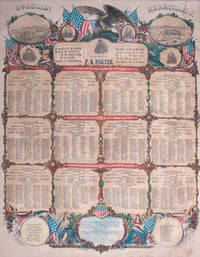
1864220485Baltimore Maryland 1864. Lithograph With Vignettes of Fort Henry and Federal Hill. Portraits of 5 officers Surmountd by Eagle Lithographed by H. Schroeder 69 W. Fayette St. Balt Lithograph. printed in colors by G. Sanders & Co.Balimore Maryland. 27-1/2 x 21-1/2 inches. Matted. Generally fine condition. Lithograph With Vignettes of Fort Henry and Federal Hill. Portraits of 5 officers Surmountd by Eagle Lithographed by H. Schroeder 69 W. Fayette St. Balt Lithograph. printed in colors by G. Sanders & Co.Balimore Maryland. 27-1/2 x 21-1/2 inches. "The Regiment was organized as the 129th N.Y. Infantry at Lockport N.Y. and mustered into the U.S. service Aug. 22 1862.was tarnsferred to Heavy Artillery in Dec. 1862 and designated the 8th N.Y. Vol. Artillery. Recruited to the maximum number 1839 men in Feb. 1864. unknown
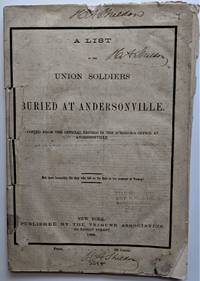
1866608New York: Published by the Tribune Association 1866. Tall 8vo. 260 x 180 mm. 10 ¼ x 7 inches. viii 74 pp. Self-wrappers with printed title-page stitched as issued; some soiling to the first leaves and a few chips to the corners and edges. With the signature of H. Henry Sheldon on the title-page in three places along with the stamp of the Sheldon Art Museum. First edition. The text comprises the "Report of the expedition to Andersonville Georgia July 1865 for the purpose of identifying the graves and enclosing the grounds of a cemetery created there during the occupation of that place as a prison for Union Soldiers in Rebel hands." Included is a history of the Andersonville Prison its administration and treatment of soldiers under its care. The lists of soldiers is organized by State and is 74 pages long. Published by the Tribune Association unknown
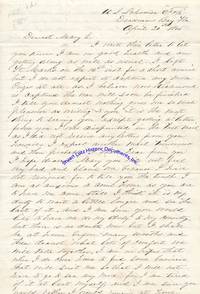
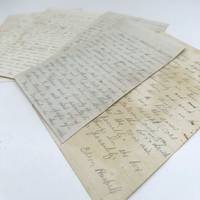
5560END OF THE CIVIL WAR. ALS. 4pgs. April 20 1865. Deadmans Bay Florida. An autograph letter signed Frank. A Union sailor writes home to his wife towards the end of the war just after the fall of Richmond. He tells her how eager he is to come home and start a new life on land while also mentioning the court martial of his former captain and some troubles with getting money hes owed. Dearest Mary I write this letter to let you know I am in good health and am getting along as well as usual. I left St. Marks on the 16th inst for a short cruise but I do not expect to capture any more prizes at all. As I believe now Richmond is captured the war will soon be finished. I tell you dearest nothing gives me so much pleasure as writing to you it is the next thing to seeing you except getting a letter from you I was disappointed in the last mail as I did not receive any letters from you. However I expect another mail tomorrow and then probably I shall hear from you. I hope dearest Mary you will not feel very bad and blame me because I have not resigned for to tell you the truth I am as anxious to come home as you are to have me come. Still I think it is my duty to wait a little longer and see the last of it. And I am sure you would like to have me do my duty to my country but there is no doubt now but I shall be at home before many months and then dearest what lots of comfort we will take together I am in hopes that when I do come home to find some business that will suit me so that I will not have to go to sea any more for I am tired of it at last myself and I am sure you would rather I would remain at home. I do not think I shall be able to go to Key West after all as most probably all these small vessels like the Fox will soon be sold as the Navy will have no use for them after the war is over. So they will not go to any expense to repair them. I have been employed this last few days painting The Fox My old Captain Baxter is being court martialed at Key West all of his officer reported him to the Admiral for drunkenness I think he will be dismissed from the service and he would be no loss. The Fort Henry has been in Key West these last three weeks and I expect she will be there for a month longer repairing but still I am not sorry. I left her for I never was so dissatisfied in my life as I was on board of her but I have enjoyed myself very much since I left herI still have great trouble to get the remainder of my Prize money. My Paymaster has wrote to the Admiral about it but has received no answer yet but expects to by next mail. He is in hopes to get it for me next month so I shall not be able to send any money home by the Union this time. It is in fine condition with very minor staining in a few places. unknown
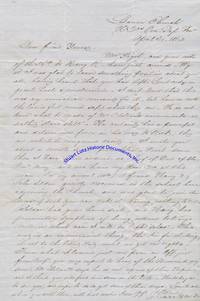
5431CIVIL WAR LETTER. ALS. 1pg. April 30 1862. Lebanon Church Pennsylvania. An autograph letter signed by a Union Army officer stationed in Lebanon Pennsylvania as Chief of Ordnance of the Pennsylvania Army. He mentions General George McClellan and his lack of movement during the Peninsula Campaign taking place at this time. He also mentions the USS Merrimack a Union frigate that the Navy burnt and sank in 1861 to prevent capture by the Confederacy. However the Confederates still raised and rebuilt the Merrimack in early 1862. They hoped that the ship renamed the CSS Virginia could help to end the Union blockade of Southern ports. Mr. Pigot and your note of the 26th to Harry R have just arrived. By it I was glad to learn something positive about you all having heard that you had left Lombardy in great haste & consternation. We do not know what to make of McClellans movements: or rather stand still. He certainly has a powerful and determined force in his way to Richmond; they are not to be conquered easily. I wrote you about a month since from Gloster Point. Since then I have been ordered as Chief of Ord of the Pena Army and now have my Head Qrs at this placeFrom what I learned just now from an Off just from Norrs you may expect to hear of the Merrimack very soon. Geo Tatnall says he is not afraid of their Torpedoes and I think you will find him soon in the York. It is in fine condition. unknown
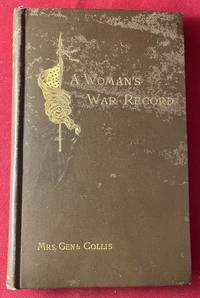
18896267New York: G.P. Putnam's Sons 1889. First Edition First Printing. Hardcover. Very Good. 4 1/2 X 7 Inches. 78 PP. First printing in the original brown cloth binding. Signed and inscribed by Collis directly on the FFEP. Septima was the wife of Union General and Medal of Honor winner Charles H.T. Collis. Her memoir recounts her life on the frontline alongside her husband as well as social life during the war and meeting President Lincoln. While not uncommon Septima remained torn by her Southern sympathies having been born in Charleston SC and her life with the Union army. Her brother David a Confederate soldier was killed at the Battle of Murfreesboro in July of 1862. Her concise memoir remains a terrific read and one of the few accounts we have of life for the female on the frontlines of the American Civil War. Signed copies extremely scarce. <br /> <br /> Light mottling and wear to covers. Binding remains clean and tight. A very attractive copy overall. G.P. Putnam's Sons hardcover
1865333099Vp 1865. Approx. 290 clipped signatures approx. 48 songsheets many illustrated and printed in colors and approx. 10 photographs cdvs removed from their mounts. Each autograph and photograph mounted recto and verso within the album the songsheets generally tipped in. Oblong small folio 7-1/2 x 11 inches. Black leather worn. Approx. 290 clipped signatures approx. 48 songsheets many illustrated and printed in colors and approx. 10 photographs cdvs removed from their mounts. Each autograph and photograph mounted recto and verso within the album the songsheets generally tipped in. Oblong small folio 7-1/2 x 11 inches. Includes signatures by Robert E. Lee E. Kirby Smith Daniel Ruggles Gideon Pillow Raphael Semmes Alexander Stephens M.F. Maury Jubal Early N.B. Forrest John Breckinridge S. Buckner Lew Wallace George Sykes W. T. Sherman P. H. Sheridan Daniel Sickles W. Rosencrans Fitz John Porter O.O. Howard G. B. McClellan H. W. Halleck D. C. Buell and more. The songsheets include many published by the Supervisory Commission for Recruitng Colored Regiments as well as examples by Magnus and Magee. unknown
a82333Original two-page printed announcement plus one original one-page manuscript letter by G. S. Griffith. Announcement is dated November 1865; letter is dated November 24 1865. Griffith was the president of The American Union Commission "constituted for the purpose of aiding and co-operating with the people of those portions of the United States which have been desolated and impoverished" by the American Civil War. Announcement is VG with horizontal folds; letter is Good with one inch chip from text taking out 2 or 3 words of text. Pair of documents: paperback ephemera. . paperback
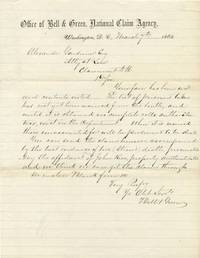
2224L. 1pg. 7 x 9 . March 7 1862. Washington D.C. A letter from the Bell and Green National Claim Office about missing Civil War soldiers. The company wrote on their letterhead to Alexander Gardiner of Claremont New Hampshire: The list of prisoners taken has not yet been received from the South and until it is obtained no complete rolls authoritative exist in the Department. When it is received those unaccounted for will be presumed to be dead. You can send the claim however accompanied by the best evidence of his Straws death procurable say the affidavit of John Rice properly authenticated and we think we can get the claim through. The letter is in fine condition. It appears that the recipient of the letter Alexander Gardiner was killed a few months later at Winchester. The condition is very fine with the usual mailing folds. unknown
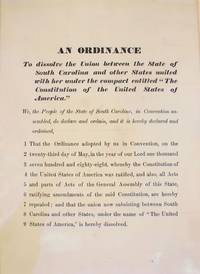
1860369308Charleston S.C.: Evans and Cogswell 1860. Broadside 11-1/2 x 8-1/4 inches. Old folds. Nicely mounted framed and glazed. Broadside 11-1/2 x 8-1/4 inches. One of the earliest Confederate imprints: South Carolina's official act of secession printed for delegates at the secession convention. This first printing of the South Carolina Ordinance of Secession the document which caused the departure of South Carolina from the Union set the nation irrevocably on the path to the Civil War. <br /> <br /> After Lincoln's election South Carolina moved vigorously to follow through its threat to secede from the Union. A secession convention was called and assembled at Charleston on December 20 1860. Their entire business was to debate the issue of secession which they favored overwhelmingly and to settle on the wording of a secession ordinance. Within the day the 169 members of the Convention voted unanimously for the ordinance.<br /> <br /> This is the printing of the ordinance made for the use of the delegates to the Convention. The ordinance was set up in the form of a "reading bill" or "slip bill" familiar to most delegates as the typical form of a legislative bill in working draft with the body of the text in numbered double-spaced lines to facilitate the making of corrections. Following the title given above the text reads:<br /> "We the People of the State of South Carolina in Convention Assembled do declare and ordain and it is hereby declared and ordained That the Ordinance adopted by us in Convention on the twenty-third of May in the Year of Our Lord one thousand seven hundred eighty-eight whereby the Constitution of the United States of America was ratified and also all Acts and parts of Acts of the General Assembly of this State ratifying amendments to the said Constitution are hereby repealed; and that the union now subsisting between South Carolina and other States under the name of 'The United States of America' is hereby dissolved."<br /> <br /> Presumably only several hundred copies of this "slip bill" version of the Secession Ordinance were printed - just enough to distribute to the members of the convention. They were probably printed just before the convention began. Indeed setting and printing it would have taken a few hours at most. After its passage the ordinance would famously be published as a newspaper extra by the Charleston Mercury with the following words in bold below the text of the ordinance: The Union Is Dissolved!<br /> <br /> This is one of four extant examples of the slip bill the others being examples at the Huntington Library Emory University and one in private hands being the example once belonging to Jay Snider sold to him by the William Reese Company in 1997 and resold at the sale of his collection at Christies June 21 2005 lot 165 selling for $66000. Parrish & Willingham 3795; Crandall 1888 Evans and Cogswell unknown
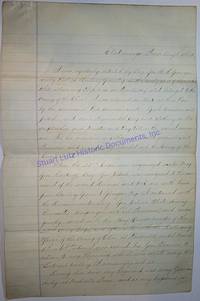
6767CIVIL WAR. ADS. 3pg. August 8 1864. Chattanooga Tennessee. A lengthy autograph document signed Wm. H. Bradbury of Company B of the 129th Illinois Infantry. Because he had been on detached duty clerking for various generals Bradbury lost his official records. This is his sworn statement that he was not a deserter and was owed back pay. He wrote in part: I was regularly detailed by Brig. Gen. R. S. Granger comdg Post at Bowling Green Ky in the early part of December 1862 when my Regt was in Kentucky and belonged to the Army of the Ohio. I was retained as clerk at that Post by the successive Post commandants - Gents Manson and Judah and drew Regimental pay and clothing on Descriptive List and Muster and Pay Roll in the usual manner. In the meantime my Regiment moved gradually into Tennessee and was finally absorbed into the Army of the Cumberland. When the 23rd Corps was reorganized under Maj: Gen: Hartsuff Brig: Gen Judah was assigned to the command of the second Division and took me with him from Bowling Green to Glasgow Ky. I continued with the Division under Brig: Gen Julius White during Burnsides campaign in East Tennessee; and subsequently served with the Chief Quartermaster of the 23rd Army Corps and afterwards with the Disbursing Officer of the Army of Ohio at Knoxville until March 5th or 6th 1864 when I was ordered by Gen Thomas to return to my Regiment which was on its way to Lookout Valley. I accordingly did so. During this time my Regiment was doing Garrison duty at Nashville Tenn: and at my Captains request I reported my whereabouts to him every monthIn the mean time as to my credibility and character I refer to Colonel Benjamin Harrison & many officers that knows me. I also refer to Major R. C. Kise 123rd Ind vol: Infty who is well acquainted with me & the greater part of the facts here stated. Wm. H. Bradbury Co B 129 Ill vols. On the final page are attestations by several adjutant generals including Gates P. Thruston Robert H. Ramsey John Speed and a secretarial signature of Benjamin Harrison; one of the attestations is on behalf of General George Thomas. The document has filing folds and is in very good condition. hardcover
1865353265Vp New York South Carolina Georgia and Virginia 1865. Approx. 260pp. Variously written in pencil or ink on a variety of paper but generally quite legible. A few with original envelopes. With: Haskell's manuscript discharge dated Nov. 18 1864 partly-printed discharge of the same date a cdv of Maj. Gen. Hunter and Haskell's 1865 marriage certificate. 8vo or 4to. Usual folds. Approx. 260pp. Variously written in pencil or ink on a variety of paper but generally quite legible. A few with original envelopes. With: Haskell's manuscript discharge dated Nov. 18 1864 partly-printed discharge of the same date a cdv of Maj. Gen. Hunter and Haskell's 1865 marriage certificate. 8vo or 4to. Haskell 1836-1877 enlisted at Canandaigua Ontario County New York on November 18 1861 and mustered for a three year enlistment in Company F of the 1st New York Engineers. At the start of the war the Army Corps of Engineers was severely underpopulated; Civil Engineer Edward Serrell began recruiting for the specialized service in October 1861 with promises of pay one-third greater than infantry service.<br /> <br /> The first five letters of this archive are written by Haskell from Camp Washington on Staten Island as the regiment was formed trained and awaited orders. The letters describe his daily routine quarters the batteries and harbor and relate news that he has passed as an engineer. Among the most interesting of these letters is one dated January 22 1862 in which he details a visit to Central Park with a lengthy description of the landscape and ongoing construction. <br /> <br /> The 1st New York was deployed to Port Royal Sound and was formed as the 10th Corps Engineers in the Department of the South. Haskell and his company are sent to Hilton Head arriving at the end of February 1862. The next six months are spent on the island working on its wharves and fortifications. He describes his quarters and rations inspection and drills his work on a powder magazine flood gate and surveying for new fortifications. <br /> <br /> He writes at length about the number "contrabands" i.e. the freed or escaped slaves from Confederate plantations coming to Hilton Head. He writes on March 1 1862 soon after arriving: "There are a plenty of contrabands slaves here. They chop and raft logs for the wharves that they are building. The women & children are around among the soldiers selling sweet potatoes oysters and such to them. There are a good many soldiers here on the island and there was a good many that have just left on an expedition and they keep coming." On April 1 1862 he adds: "The government is making preparation to put in a cotton crop here. The negroes are preparing the ground. Contrabands come in every day. Two came in yesterday who said that they had nothing to eat for 4 days." On May 10 1862: "There is a good many contrabands and they keep coming in all the time. When they first arrived they are very ragged both men and women but they are all provided with suitable clothes. The soldiers are down on them because the negroes are used better than they are and have more privilege granted to them by the authorities. And the soldier vents his spite on the negro every chance he can get. Most of the negroes are employed. General Hunter has just commenced getting up a negro regiment of 1500 men to do guard duty through the night and to garrison some of the forts. The officers are to be white men and are to be taken from our regiment. There is quite an effort by some northern society to educate them to work; a job which they have but a slight idea." On October 5 1862 he notes the work General Mitchel among the formerly enslaved: "I went yesterday Sunday to the ordination of the Negro Church Baptist. Our chaplain read the ordination service of the Episcopal church and made a few remarks but General Mitchell done most of the talking . He told them that he was going to have them time by themselves and was going to educate them and make them good citizens. He has a squad of 50 men building houses for them about 3 miles from head quarters called the negro villages."<br /> <br /> In April 1862 he participates in the Battle of Fort Pulaski giving a lengthy account on April 15: "We fell in and marched through the rain to the docks stood in the rain all of an hour and then went on board pretty well soaked. At 9 o'clock the steamboat started. About noon we anchored off Tybee Island in full sight of Fort Pulaski . at seven o'clock the next morning the bombardment of Fort Pulaski commenced. Before the firing commenced Gen. Benham sent a flag of truce and demanded the surrender of the fort in the name of the U.S. " After describing the bombardment he continues: "At sunset the firing ceased on both sides and the two companies of engineers was divided into squads of 8 or 10 men each and sent out to repair the batteries. We worked all night. " He details the work of mounting two 10-inch columbiads "which dismounted themselves the very first shot they made. One of these guns the boys mounted after sunrise and as soon as they discovered from the fort what they was about they directed all of the guns which they could bring to bare upon that particular place. But the boys stuck to their gun and mounted it while the cannon balls was flying over their heads. A feat which they received considerable praise for. " <br /> <br /> In November 1862 Haskell's company is transferred to Fort Pulaski where they work on repairing the damage to the fort remounting the artillery and building a new magazine. He tells news of the war related to his department including a November expedition to destroy railroad bridges between Charleston and Savannah and the death of General Mitchel: "Our Generals called it a partial result and considerable gained by it. But it was such results as I do not believe in for we got tremendously whipped and lost 225 men in killed wounded and missing. But our company succeeded in tearing up some 200 feet of rails on the reach and cutting the telegraph while they were guarded by a few companies of infantry and they all barely escaped being taken prisoner. They found the bridges all guarded by strong batteries. Just as our company and 4 companies of infantry came up to tracks there was a train of open cars going pass loaded with troops. Our men hid behind the fence and when the train came up fired into it and they think they killed a good many. Since then General Mitchel has died and two or three of the other head men . some think that they had yellow fever . others think they was poisoned by eating fish that they bought of the negroes."<br /> <br /> Much of his war commentary during his nine months on Fort Pulaski includes descriptions of the iron clads and monitors. On March 5 1863 for example he writes: "The rebel steamer Nashville was destroyed last Saturday by one of the Monitors The Passaic. She ran by a 13 gun battery and run up the river where she lay and fired two shots into her the first went clear through and the second a shell burst in the magazine and this blew the Nashville to atoms." On June 21 1863 he writes: "The rebel ram Fingal i.e. CSS Atlanta that was built at Savannah and which has kept us in a sweat for nearly a year here and at Hilton Head was captured by one of our monitors last Tuesday without firing a shot." He details the action and movements of the ships before continuing sarcastically: ".The means for building the ram was furnished by the ladies of Savannah and there was two boat loads of them followed the ram down to see her destroy our battery and gun boats but they went back closely followed by one of our gun boats and you must imagine their joy." <br /> <br /> Haskell provides news of the Battle of Fort Wagner on Morris Island including the role of African American troops. He writes on July 15 1863: ". Gen. Gilmour is working his way toward Ft. Sumter and Charleston. There has been some hard fighting on Morris Island." On the 24th he writes: ". our forces had taken eleven batteries on Morris Island and there was two that they had not got possession of yet and that our forces had taken 700 prisoners . yesterday it was reported by some fellows that came from the head that there had been more fighting on Morris Island that the two remaining batteries had been stormed three times and our forces had been repulsed each time with tremendous slaughter. The 55 i.e. 54th Mass. color reg. was one of the storming parties. They were 1200 strong. They lost 700 in killed wounded and missing and the NY 48 was another." Interestingly that same letter includes a commentary on the New York draft riots: "I see by the late NY papers that there is a riot in NY city to resist the draft . I should say that it was to burn buildings murder and to plunder the city. I hope that they will be put down."<br /> <br /> At the end of July 1863 his company is transferred to Morris Island South Carolina to participate in the shelling of Fort Sumter and Charleston where he remains until February 1864. His letters provide great detail of the shelling his work on the artillery and the condition of Fort Sumter. For example: "We are hard at work building batteries and mounting guns . We have just finished a three gun battery on a small island about two miles from our camp. All of the material except the sand had to be boated guns and all. The guns are pointed toward Charleston and the city may feel the effects of them . Two sides of Ft. Sumter are knocked down and the other sides are full of holes and badly shattered & she has not fired a gun in a number of days but we cannot get possession of her until our forces take Fort Wagner . Our regiment is what is called sapping Fort Wagner that is digging trenches in the ground and they are within 100 ft of the fort. We have some killed by grape and canister and by the sharp shooters . The rebels had rifle pits outside of the fort and from these pits they annoyed our boys very much. The 24 Reg. Mass. made a charge on these pits and took 80 prisoners and drove the rest of them into the fort ."<br /> <br /> In January 1864: "You must remember that it takes a tremendous force to throw a hundred lb shell over four miles and it is with the utmost difficulty that we can elevate our guns sufficiently to do it. It requires from 36 deg. to 40 deg. and this elevation allows but little recoil to the gun and the consequence is that we are using up more guns than the damage to the city amounts to. But our Colonel has invented a new wooden gun carriage and day before yesterday one of our men with myself laid the platform and put the carriage . on it and the artillery fellows mounted the gun and tried it. It works first rate and yesterday fired 175 shells into the city and got smoke to rising in a number of places."<br /> <br /> At the end of April 1864 with the shelling of Charleston continuing his regiment is reorganized and he is sent up the James River toward Richmond to join the Army of the Potomac in the Richmond-Petersburg Campaign writing on April 27: "the second battalion which includes our regiment starts for Fortress Monroe tonight . the whole of the 10th army corps are going to operate with the army of the Potomac . The report is that there will be no movement the present season and that all but the most important places will be evacuated and that those will be garrisoned by colored troops."<br /> <br /> Arriving at Bermuda Hundred Virginia in May he writes: "The infantry landed and had a skirmish and took 600 prisoners. Then we built docks to land the cavalry and artillery. The troops advanced some 12 miles our battalion stayed at the landing until most of the stuff was landed which took 24 hours and then we followed on . built fortifications and obstructions then we again advanced and had quite a severe fight and torn up the railroad between Richmond and Petersburg . they said that in one of the battles the 25th SC Reg lost all but three men . We hear that Meade has licked Lee and that he is falling back to Richmond . We are now about 14 miles below Richmond."<br /> <br /> After fortifying the breastworks at Bermuda Hundred his company is moved to Dutch Gap to work on the canal being built to flank the Confederate battery on the river. He writes on August 13 1864: "The river here is very crooked. It runs around five miles and comes within 200 yards of meeting again. The rebels have the most of this five miles filled in with torpedoes and obstruction and a powerful battery to protect them." After describing the topography he continues: "We are digging across here so as to let the monitors go through and thus cut off the rebels battery and their obstructions. But the working party has had a rough time of it today. The rebels have shelled us from their batteries and their iron clads. There has been some killed and quite a number wounded . I think that Gen. Grant will stick to them until he fetches them out of Petersburg and Richmond . There will be some hard fighting in northern Virginia and Maryland ." He adds the following week: "We are at work on the canal. Not exactly at the canal but on the fortifications to protect the canal and are building a corduroy road across a swamp able to get to the canal. We are encamped on the opposite side of the river from the canal and have to cross the river in small boats to our work; the negroes does most of the work on the canal and it does not progress very fast." <br /> <br /> In October he is moved forward to Deep Bottom writing on the 16th: ". Our reg was in the late advance on the north side of the James toward Richmond and have seen some rather rough times . Our company are at work on the advance line. They say about 5 miles from Richmond. I am with four other engineers in charge of building a ten gun fort. We have about 300 men helping us. I have charge of 75 who are cutting away the wood around the fort and carrying timber for it and obstructions to put around it . The rebels are about a mile from this line of works . Wednesday the 12th there was quite a fight here but there was nothing materially accomplished on either side save the killing and wounding of quite a number of men . things indicate a forward movement very soon."<br /> <br /> His letters from Deep Bottom at the end of October and the beginning of November largely concern the presidential and local elections sending his father his ballot to ensure that his vote would be cast. On November 18 1864 with his 3 year term up Haskell is discharged at Varina Virginia and the archive includes both a manuscript discharge and the official partly-printed one he subsequently received. The archive includes one additional letter dated May 19 1865 written from City Point Virginia suggesting he re-upped for another shorter term. He writes: ". For the past ten days we have been busy from 4-1/2 o'clock in the morning until dark at night fitting up boats for transporting troops and horses. The twenty-fifth corps colored are going to Texas to settle the hash with Kerby Smith. One division has already gone and the boats are being fitted up as fast as possible for the rest . I have been to Richmond and Petersburg ." <br /> <br /> A very good Civil War archive of letters by an enlisted man serving as an artificer and engineer on the Georgia and Carolina coast participating in the the Battle of Fort Pulaski and the bombardment and siege of Charleston and Fort Wagner and along the James River in the Richmond-Petersburg campaign. unknown
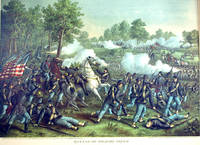
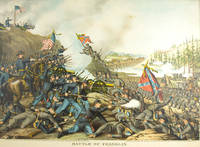
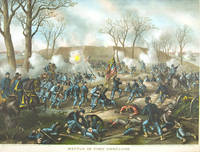
189140279Chicago: Kurz & Allison 1891. Chromolithographic print. 1 vols. 18 x 25 inches. Some chipping at margins else fine. Matted. Chromolithographic print. 1 vols. 18 x 25 inches. Kurz & Allison unknown
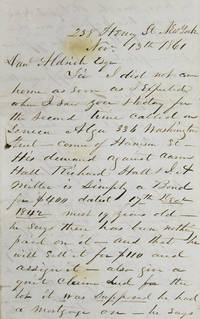
186114981258 Henry Street New York 1861. 4 pages. 1 vols. 8vo. Some spotting and light soiling else in good condition. 4 pages. 1 vols. 8vo. Bishop writes Aldrich regarding a legal case concerning a lien on some property in the post script he writes "The news from the South today is cheering-important & fully confirmed. Our troops have taken Port Royal 2 or 3 forts & made a good landing on South Carolina soil & with reinforcements supposed to be on the way will probably take Charleston. In Kentucky Gen. Nelson has obtained a most important victory--400 killed & 1000 prisoners among them 2 generals. unknown
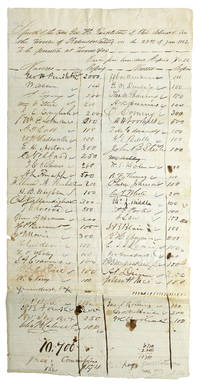
1862251158Washington D.C. 1862. 1 p. pen and ink on paper docketed on verso. Folio. Old folds else very good. 1 p. pen and ink on paper docketed on verso. Folio. This compelling historical manuscript was penned during the contentious and hostile political environment that was pervasive during the Lincoln Administration. The subscription is for a speech by Pendleton arguing the constitutionality of the proposed "Legal Tender Act" authorizing the government to issue paper money popularly known as "greenbacks" that were not backed by an equal value in gold or silver to help finance the war. Despite intense opposition the act was passed in February 1862 and laid the foundation for a permanent paper currency. <br /> <br /> Notable signatures on the subscription of which 10700 copies were ordered at 50 cents apiece Pendleton ordered 2000 include rabid "Copperhead" and hated Southern sympathizer Clement Vallandigham who was famously tried and convicted of treason in 1863 and subsequently banished to the Confederacy; Kentuckian John Crittenden author of the unsuccessful "Crittenden Compromise" of 1860; and the speech's author George Pendleton leader of the peace wing of the Democratic Party who ran for Vice President on the failed McClellan-Pendleton ticket that ran against Lincoln during the presidential election of 1864. <br /> <br /> The manuscript is signed by Republicans Democrats and members of the Unconditional Unionist Party and includes: William H. Wadsworth Kellian Van Rensalear Whaley George W. Dunlap Daniel Wolsey Voorhees William Alexander Richardson Anthony Lausett Knapp William Joshua Allen Albert Gallatin Porter John Benedict Steele Erastus Corning I Theodore Medad Pomeroy Robert Bruce Van Valkenburgh Chilton Allen White Albert Gallatin Riddle William Eckart Lehman Charles John Biddle Sydenham Elnathan Ancona William Gay Brown Sr. Jacob Beeson Blair Joseph Eggleston Segar James Sidney Rollins Thomas Lawson Price William Steele Holman William Gaston Steele James Edward English George Thomas Cobb Elijah Hise Norton Chauncey Vibbard Henry Grider James Addison Cravens Nehemiah Perry Warren Perry Noble Philip Johnson John Law and others. unknown
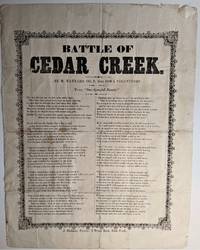
1864691New York: J. Dickson Printer 1864. Broadside in 4to. 310 x 235 mm. 12 x 9 ¼ inches. Caption and ten stanzas of verse in two columns within an ornamental border. Sheet somewhat dust-soiled with a few minor stains surface wear along folds one corner slightly chipped &c. Still entirely sound and with good margins. The Battle of Cedar Creek was fought in the Shenandoah Valley on October 19 1864. Surprised by the Confederate forces under the command of Jubal Early the Union troops were nearly routed. Riding to the battlefield from Winchester twenty miles away Gen. Philip Sheridan rallied the troops and carried the day. This action occasioned the slightly more famous poem by Thomas Buchanan Read. Private Maynard's poem centers more narrowly on the actions of the 28th Iowa. The regiment was organized in 1862 and mustered out in 1865 having fought campaigns in Mississippi Louisiana and Virginia losing 271 men in the process. "At dawn October 19 1864 the Confederate Army of the Valley under Lt. Gen. Jubal A. Early surprised the Federal army at Cedar Creek and routed the VIII and XIX Army Corps. Commander Maj. Gen. Philip Sheridan arrived from Winchester to rally his troops and in the afternoon launched a crushing counterattack which recovered the battlefield. Sheridan's victory at Cedar Creek broke the back of the Confederate army in the Shenandoah Valley. Lincoln rode the momentum of Sheridan's victories in the Valley and Sherman's successes in Georgia to re-election." Horace Maynard born ca. 1821 in Ohio is listed in the 1860 Federal census as a school teacher in Penn Iowa residing there with his wife and three small children. American Battlefield Trust Website. Kansas Historical Society Enrollment of Civil War Veterans 1889. Note cited in OCLC. National Park Service Website. . J. Dickson, Printer unknown
189340283Chicago: Kurz & Allison 1893. 18 x 25 inches. Matted. 1 vols. Some chipping at margins else fine. 18 x 25 inches. Matted. 1 vols. Kurz & Allison unknown
188840277Chicago: Kurz & Allison Art Publishers 76 & 78 Wabash Ave 1888. 18 x 25 inches. Matted. 1 vols. Some chipping at margins else fine. 18 x 25 inches. Matted. 1 vols. Kurz & Allison, Art Publishers 76 & 78 Wabash Ave unknown
189340284Chicago: Kurz & Allison 1893. 18 x 25 inches. Matted. 1 vols. Some chipping at margins else fine. 18 x 25 inches. Matted. 1 vols. Kurz & Allison unknown
189140278Chicago: Kurz & Allison Art Publishers 76 & 78 Wabash Ave 1891. 18 x 25 inches. Matted. 1 vols. Some chipping at margins else fine. 18 x 25 inches. Matted. 1 vols. Kurz & Allison, Art Publishers 76 & 78 Wabash Ave unknown
189140282Chicago: Kurz & Allison 1891. Matted. 1 vols. 18 x 25 inches. Some chipping at margins else fine. Matted. 1 vols. 18 x 25 inches. Kurz & Allison unknown
188740276Chicago: Kurz & Allison 1887. 18 x 25 inches. Matted. 1 vols. 17.5 x 25 inches. Matted. Some chipping at margins else fine. 18 x 25 inches. Matted. 1 vols. 17.5 x 25 inches. Kurz was the most prolific Civil War artist of the nineteenth century and he is most famous for the 36 chromolithographs of Civil War battles. see Schiele "The Civil War Artwork of Louis Kurz: An Escape from Realism. Kurz & Allison unknown