[AFRICAN-AMERICANA -- WORLD WAR II].Biblio.com
11 490 résultats
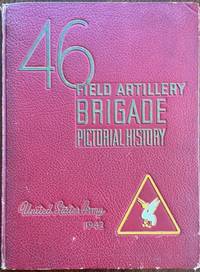
194260127Atlanta GA: Army Press Bona Allen Building 1942. 4to. 9.25 x 12.25 in. 2 134 pp. With 100’s of photo illustrations throughout. Pictorial embossed red pebbled publisher’s cloth raised gilt lettering unit badge of Pelican holding 3 cannon balls wear & rubbing to fore-edges minor wear to corners slightly shaken still VG- copy from the library of Private George Wallace 1922-2003 Battery D 351st Field Artillery following the War worked for Lincoln-Mercury and Chevrolet as auto salesman and then for America National Bank in Pflugerville TX w/ ownership markings on ownership page. First edition of this Unit Yearbook for 46th Field Artillery Brigade 5th Infantry Division which at the time was the first time in US Military history that a unit as a Brigade was formed completely of African-American troops. This yearbook covers the training at Camp Livingston Lousiana before the 46th FAB composed of the 350th Field Artillery 351st Field Artillery 353rd Field Artillery and the 846th Tank Destroyer Battalion before they later engaged in the Arnaville Altuzzo & Schmidt battles in Italy during World War II. Army Press, Bona Allen Building], hardcover
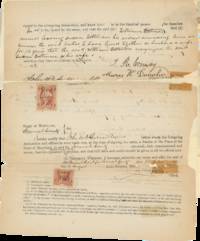
1865List3406Annapolis Baltimore and Somerset County Maryland 1865. Three documents. Two folded with normal wear else Near Fine; one very delicate torn into two pieces formerly mended with archival tape with some damage intersecting with text good. Overall very good. Three documents certifying the death of William Cottman a private with the 9th Regiment of the US Colored Troops USCT during the Civil War. The 9th was organized at Camp Stanton in Benedict Maryland in November of 1863 shortly following the establishment of USCT divisions; Cottman’s documents state that he enlisted on November 22. Coming from Maryland William Cottman was likely formerly enslaved; the Cottmans were a prominent Maryland family holding many enslaved people.<br /> <br /> According to the National Parks Service record during the 9th’s service forty-seven men one an officer were killed in combat and 266 enlisted men died from disease; the latter includes Cottman whose paperwork states that he “Died at Base Hospital Jones Landing of feverâ€. In fact not only did the USCT mortality rate exceed other that of other troops by thirty-five per cent the majority of the deaths were from disease.1 Living and sanitary conditions for these troops were subpar and there was significant difficulty in convincing qualified surgeons to work in African American regiments. <br /> <br /> These forms are possibly related to a pension claim by Cottman’s widow Susan Cottman; one of the documents certifies with two witnesses that the couple were married for fourteen years. Pension applications for Black Civil War veterans and their dependents were complicated—many were formerly enslaved and thus might be illiterate without documents such as a birth certificate or with marriages that were not legally recognized.<br /> <br /> Of interest to researchers of the USCT and the postbellum lives of their families.<br /> <br /> 1 Herbert Aptheker “Negro Casualties in the Civil War†The Journal of Negro History 32 no. 1 Jan. 1947: 10–80. unknown
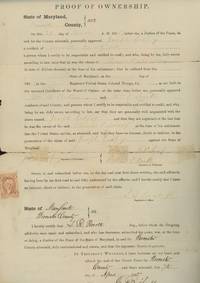
1865List2219Baltimore and Worcester County 1865. Two documents affixed at top edge measuring 9 x 6 ¾ and 14 x 8 ½ inches. Tape repairs at folds some with heavy clear tape else excellent good condition overall. With the embossed stamp of the Board of Claims to first document and two revenue stamps affixed. Good. A pair of documents relating to the emancipation through military service of Thomas Massey of Maryland and compensation to his enslaver Joseph Godrey of Worcester County Virginia. Massey enlisted in the 9th Regiment of the USCT in 1864 and in accordance with Order 329 of the U.S. War Department Godfrey received compensation which was not to exceed $300. The present documents “To facilitate recruiting in the states of Maryland Missouri Tennessee and Kentucky the War Department issued General Order No. 329 on October 3 1863. Section 6 of the order stated that if any citizen should offer his or her slave for enlistment into the military service that person would "if such slave be accepted receive from the recruiting officer a certificate thereof and become entitled to compensation for the service or labor of said slave not exceeding the sum of three hundred dollars upon filing a valid deed of manumission and of release and making satisfactory proof of title." https://www.archives.gov/education/lessons/blacks-civil-war/article.html The order was meant to provide financial incentives to enslavers following the Emancipation Proclamation earlier that year. We find a record of a Thomas Massey from Worcester County born in 1855 which would raise the possibility that he enlisted at age 9 or that the Thomas Massey in question in these documents is not findable in the genealogical references we checked. unknown
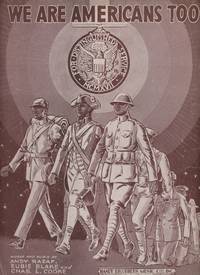
1941List3633New York City: Handy Brothers Music Co. Inc 1941. Sheet music measuring 9 x 12 ¼ inches. 8pp including covers. Covers with wear to edges and some wrinkling and folds very good plus. Interior pages with some wear to edges excellent. Overall very good to excellent. Sheet music for “We Are Americans Too†by Andy Razaf Eubie Blake and Charles L. Cooke. The three were significant figures in the jazz and ragtime scenes. Razaf 1895–1973 was a composer and lyricist known for jazz standards “Ain’t Misbehavin’†and “Honeysuckle Rose.†Pianist and composer Blake 1887–1983 was a child prodigy and vaudevillian who wrote the musical Shuffle Along 1921 the first Broadway production to be written directed produced and starring only Black artists. “Doc†Cooke 1891–1958 was a bandleader and arranger with a prolific recording ensemble who later worked at Radio City Music Hall and composed orchestrations for Broadway shows. The sheet music was published by Handy Brothers Music Company the publishing company of musician musicologist and “Father of the Blues†W. C. Handy. Handy donated 100 copies of “We Are Americans Too†to Martin Luther King Jr. to raise money for the Montgomery Improvement Association.1<br /> <br /> Razaf’s lyrics for the song proclaim African Americans’ patriotism and roles in the US’s major wars from the American Revolution to World War I; the cover art shows Black soldiers marching together in Revolutionary War Civil War and WWI-era uniforms. At the time of writing the US was deep in the Jim Crow era; African Americans during World War II served in segregated units were mostly excluded from officership and were treated poorly at home and abroad. Razaf writes: “None have loved Old Glory more than we. / Or have shown a greater loyalty / Bunker Hill to the Rhine / We’ve been right there in line / Serving the Red White and Blue / All our future is here / Everything we hold dear / WE ARE AMERICANS TOO.â€<br /> <br /> We find four copies on OCLC.<br /> <br /> 1 Martin Luther King Jr. to Lovie M. Rainbow July 10 1956 The Martin Luther King Jr. Research and Education Institute https://kinginstitute.stanford.edu/king-papers/documents/lovie-m-rainbow. Handy Brothers Music Co., Inc unknown
194033862Houston Texas: Published Exclusively by EM. Berry 1940. Soft cover. Very good. Oblong stapled pictorial soft cover. Approximately 6" x 9". 30 pages. Photograph of Colonel L.C. Mallory Commanding Officer on the first page. Contents full of black and white pictures of the headquarters base officers quarters barracks planes mechanics men at work athletics social activities. Inside the back cover is a place for autographs. There is no writing inside. Light wear to the booklet. Published Exclusively by E,M. Berry unknown
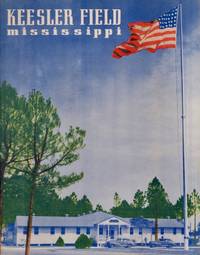
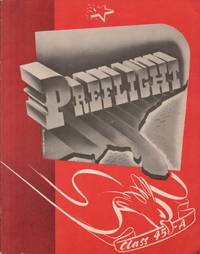
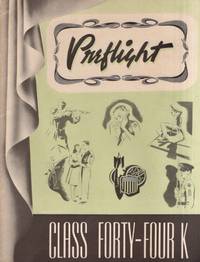
194233861San Antonio: Universal Press 1942. Soft cover. Very good. Stapled illustrated soft cover. 36 pages. Inside covers are illustrated. Illustrated with photographs of the training facility engineers downtown Biloxi barracks planes social life recreation etc. Photograph of the Biloxi Lighthouse on the back cover. From Keesler Air Force Base: ".In mid-1942 the Army Air Forces directed Keesler to focus upon the training of mechanics for B-24 Liberator heavy bombers. The school received its first B 24 in late September 1942. Six more arrived shortly thereafter and specialized B 24 maintenance training began on 19 October. Universal Press unknown
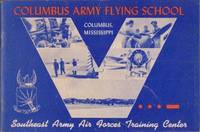
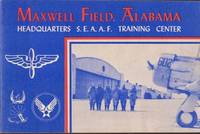
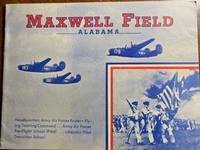
194233856Maxwell Field Alabama: Air Force 1942. Soft cover. Very good. Oblong stapled pictorial soft cover. Approximately 6" x 9". 30 pages. Contents full of black and white pictures of the headquarters base officers quarters barracks planes mechanics men at work athletics social activities etc. One photograph shows a group of men in black face. One of the pictures shows men buying war stamps. No date listed. Officers named on the first page include Major General Ralph Royce A.C. and Colonel Elmer J. Bowling A.C. Inside the back cover is a place for autographs. There is no writing inside. Light wear to the booklet. Maxwell Field was founded in 1918. The site of Maxwell Field was selected by Wilbur Wright in 1910. It became the headquarters for the Southeast Army Air Forces Training Center. <br /> <br /> From wikipedia: .In the May 1942 organization of South West Pacific Area Major General Royce became senior air staff officer Allied Air Forces. He was promoted to major general in June 1942. Royce returned to the United States in September 1942 and assumed command of during World War II the South Eastern Training Center at Maxwell Field in Montgomery Alabama. He commanded the First Air Force from April to September 1943.1. Air Force unknown
194233857Maxwell Field Alabama: Air Force 1942. Soft cover. Good. Oblong stapled pictorial soft cover. Approximately 8.25" x 11". 32 pages. Contents full of black and white pictures of the headquarters base local church planes mechanics men at work nurses WAC's athletics social activities etc. No date listed. Officers named on the first page include Major General Thomas J. Hanley Jr. and Colonel Elmer J. Bowling A.C. Inside the back cover is a place for autographs. Light shelf wear to the covers. Maxwell Field was founded in 1918. The site for Maxwell Field was selected by Wilbur Wright in 1910. It became the headquarters during World War II for the Southeast Army Air Forces Training Center. <br /> <br /> From Wikipedia: .Major General Hanley went on to be named the chief of the First Air Force and the base commander for that unit in June 1941. By the following January he had been assigned to the Army Air Force headquarters in Washington where he later became the chief of staff. In May 1943 Hanley was given command of the Southeast Air Force Training Center at Maxwell Field in Alabama. A year later he again left the United States this time as the commanding general of the China-Burma-India Air Service Command. By July 1945 he had assumed command of all Army Air Forces in India and Burma this in addition to his duties with the Air Service Command. Air Force unknown
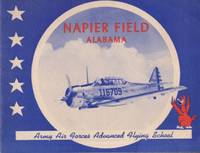
194333858Houston Texas: E.M. Berry 1943. Soft cover. Good. Oblong stapled illustrated booklet. Approx. 8.5" x 11". 32 pages. Illustrated with black and white photographs of the Commanding Officer Colonel James L. Daniel Jr. group of United Kingdom Cadets cadets ready for training planes social activities nurses buildings etc. Light shelf wear to the booklet. Napier Field was one of many fields of the Southeast Training Center with headquarters located at Maxwell Field Alabama. The field closed in 1945. E.M. Berry unknown
194533859Maxwell Field Alabama: Air Force 1945. Soft cover. Good. Stapled illustrated soft cover. Approx. 8" x 11." 48 pages. Illustrated with black photographs of Captain Paul F. Mahoney men of Maxwell training drill and parade recreation social activies cadet photograph sections etc. Light shelf wear to the covers. Contents are clean. Maxwell Field was founded in 1918. The site for Maxwell Field was selected by Wilbur Wright in 1910. It became the headquarters during World War II for the Southeast Army Air Forces Training Center. Air Force unknown
194433860Maxwell Field Alabama: Published by the Aviation Cadet School Social Fund Maxwell Field 1944. Soft cover. Good. Stapled illustrated soft cover. Approx. 8" x 11". 48 pages. Illustrated with black photographs of Captain Paul F. Mahoney men of Maxwell training drill and parade recreation social actives cadet photograph sections etc. Light shelf wear to the covers. Contents are clean. Maxwell Field was founded in 1918. The site for Maxwell Field was selected by Wilbur Wright in 1910. It became the headquarters during World War II for the Southeast Army Air Forces Training Center. Published by the Aviation Cadet School Social Fund Maxwell Field unknown
19455579Fort Richardson Ak: March 1 1945. Very good plus. 8pp. of text folded accordion style folded out to a full-page map on verso. Light soiling and toning. A seemingly unrecorded guide and map to Fort Richardson located near Anchorage Alaska. The fort opened in 1941 as the headquarters for the United States Army in Alaska. For a brief time Fort Richardson served as a holding center for fifteen Japanese American internee families. The present guide "was prepared primarily for the information and guidance of military personnel new to Fort Richardson. It presents the rules regulations and facilities of the Post for easy reference." The facilities included officers' clubs theatres a library skating rink ski bowl and much more. A total of thirty-eight of these facilities are keyed to the map of the fort printed on the verso. When folded the pamphlet measures 6 x 4 inches and folds out to a total of 12 x 15.75 inches. We could locate no other copies of this early guide to an important American military base in Alaska during the Second World War. March 1 unknown
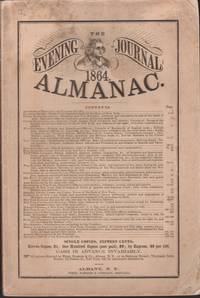
186432462Albany New York: Albany Evening Journal 1864. First Edition. Wraps. Good. Stitched wraps. 144 pages. Tan paper wraps with illustrated title top of the outer wrap. Contents printed on the front cover. Full page advertisement for the Albany Evening Journal printed on the back. Toning and light edge wear to the covers. Some corner creases to the pages. Much content on the Civil War. Almanac lists organization of the War Department and Navy Department; includes news of captured blockade runners; captures and losses in the Army; New York State volunteers; Rebel Government; and next to last on the bottom of the contents are two pages of Abraham Lincoln's Amnesty Proclamation. Albany Evening Journal unknown
D17848Album 60 pp recto and verso "Autographs and Sketches" stamped in gilt to front cover with approx. 35 gelatin silver prints laid in and letters maps diagrams postcards and foreign press clippings tipped in label "J.M. de Beaufort / Author Soldier War Correspondent late with the Belgian Army" attached to front cover de Beaufort's business card taped to inner front cover photographs laid in to front and back covers. Many pages loose or stained some loss to three leaves edgewear and toning throughout. Covers worn with tape remnants. Sold as is. <br/><br/>Belgium circa October-December 1914. At that point the Belgian Army had only recently entered the war and was being routed by the German Army's superior numbers. Belgium's high command cleverly devised a plan to flood the vicinity of Furnes to keep the Germans at bay. There are several fairly detailed hand-drawn diagrams in pen colored pencil and pencil of the flooding plan. The photographs in the journal mainly depict Belgian and French soldiers; de Beaufort is visible in several. One image shows two unexploded bombs with "aeroplane bombs" written on its verso in pencil beside de Beaufort's note about how they landed close to his room in Furnes. Other photographs show bombed-out buildings. There are cartoonsmostly anti-Germandrawn at various points throughout. De Beaufort also known as Count de Beaufort was quite an elusive figure. His real name was Uilenbroek and he was a Dutchman thought to have been a deserter. He came to Chicago in 1909 married a steel magnate's daughter and entered show business. By 1912 he was divorced and took up newspaper work; he became known as the "Dude Reporter." See American Cinematographers in the Great War 1914-1918 2015. <br /> unknown
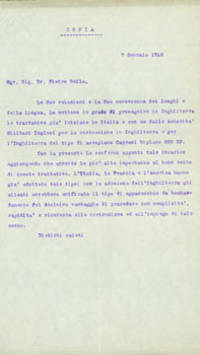
63-8240Roma Italy: Pietro Sella 1918. 20.5 x 29.5 cm. Copy of typed letter single sheet. Begins "Le Sue relazioni." Very Good. Italiano. [Roma, Italy: Pietro Sella, 1918]. unknown
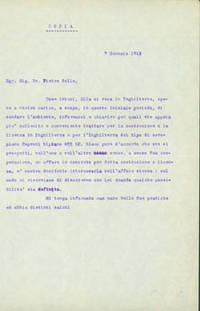
63-8239Roma Italy: Pietro Sella 1918. 20.5 x 29.5 cm. Copy of typed letter single sheet. Begins "Come intesi." Very Good. Italiano. [Roma, Italy: Pietro Sella, 1918]. unknown
198562181New York: Bantam Books 1985. 8vo. 12 403 1 pp. Half-blue cloth over blue boards gilt lettering on spine minor shelfwear w/ d.j. cover art by Jim Warren & Bob Larkin slight toning shelfwear still NF/NF copy signed by the author on title. First edition signed by the author of this ground-breaking alternative historical science fiction adventure with a time traveling team from the 1970’s attempting to alter the years leading to World War II so that Nazi Germany had not acquired atomic weapons and nearly conquered the World. Bantam Books, hardcover
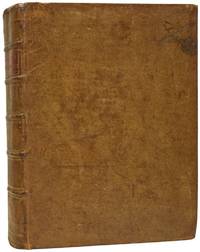
73453London: Knapton Hitch and Others 1761. Concordance FINELY BOUND. Octavo 26 x 18cm unpaginated complete. With an engraved frontispiece portrait of the author. Main text in small print over three columns. Elegantly bound in contemporary brown full polished calf with gilt-lettered red morocco title label raised bands and gilt centre ornament to spine. Bookplate of Earn Cornwallis to pastedown contents clean and fresh binding pleasingly aged with light rubbing and handling only. A near fine copy. Charles Cornwallis 2nd Earl Cornwallis 1738-1805 created Marquess Cornwallis in 1792 was an Eton and Cambridge-educated British soldier and noted military commander best known as one of the leading British generals in the American War of Independence; his surrender to George Washington's Franco-American army at Yorktown effectively ended the war. London: Knapton, Hitch and Others, 1761 unknown
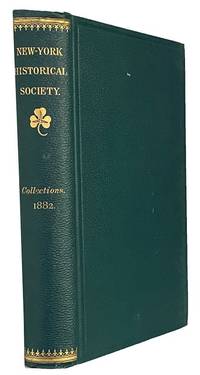
188343293New York: Printed for the Society. New York. 1883 1883. tall8vo. 23cm first edition xii515p. with 6 lithographed sketch maps 3 folded in Krafft part in the original green pebbled cloth gilt spine title and borders with gilt shamrock decoration a fine bright copy. fine. ~~ The Journal of Lieutenant John Charles Philip von Krafft 1776-1784 & the Letter-book of Captain Alexander McDonald 1775-1779. Includes index. Accounts of the Revolutionary War by officer's serving with the British Army. ~ Gephart V2: 13194. The author after attempting to obtain an appointment in the American army entered the British army serving in two Hessian regiments from 1778 to 1783. & Gephart 13912. Letter-book of Captain Alexander McDonald of the Royal Highland Emigrants 1775-1799. Pp203-498. Printed for the Society. New York. 1883 unknown
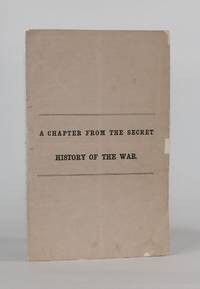
18646452Philadelphia 1864 1864. Original Wrappers. Fair binding. Octavo. 4 pp. Removed from volume retaining the original wrappers with title on the front cover. Wrappers are separated at the spine and detached; chipping to the extremities of the front wrapper; loss to the bottom corner of the rear wrapper. <br /> <br /> A letter from General H. M. Naglee to William D. Kelley dated September 27 1864 condemning disclosure of the treatment of McClellan by Stanton and Lincoln. A second letter A Second Chapter from the Secret. . . . was subsequently published and it appears both letters were collected and perhaps reissued together in 1864 as campaign material for General McClellan's 1864 bid for the White House. All editions of this letter are uncommon in the trade and scarcely more than a dozen institutional holdings of this edition according to OCLC. Sabin 51720. unknown
1861D11147Westhampton likely Massachusetts 1861-1864. Ephemera. Fine. Group of 13 manuscript letters black ink in tidy cursive addressed to "Hattie" who is perhaps in Springfield. Most are signed "Mother" one the last and only letter in pencil is signed "Sister Anna" and all are dated 22 April 1861 - "Sabbath Eve" May 1864 and located in Westhampton. A few are somewhat faint but still legible -- otherwise condition is fine. <br/><br/>An interesting group of letters quintessential for their reports on the health of seemingly everyone in town and for their concern with the American Civil War. "I am taking a great interest in war matters feel curious to read the daily paper think the North will come off conquered and I hope without shedding Oceans of blood" she remarks in the earliest letter in the group. Some remarks from later letters include: "We heard that Bolton and Alvin Clark were sick at Annapolis and that Henry Smith is a prisoner at Richmond. Mother England blusters about terribly doesn't she Hope she isn't going to declare war against us."; "Our people have had no letters since the battle are expecting some daily. Edward Coyt of Huntington was one of the wounded. After the battle of Roanoke he wrote to his folks he'd seen enough of war."; "Our men A. P. Bridgman Davis Burt Bartholt Bissell Edward Delany Charles Land Henry Sulliver a fellow living at Capt Custs and an Irishman. So you see we send seven married men."; "Frank Hule was killed in the battle at Murfeesboro Dec 31st by the first fire of the Rebs"; plus a few more comments and names. Mother seems to know everyone in town and some recurring surnames include King Montague Bissell Wright Chapman Davenport Parsons Land or Laud Burt Edwards Jewett Clark Hooker Hubbard Lyman. unknown
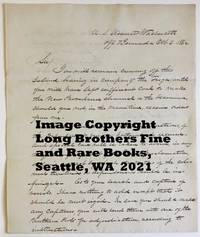
18624808USS Wachusett off Bermuda 1862. Single sheet folio. Near Fine. Single sheet measuring 15.75 x 12.5 inches folded to four pages. Dark brown ink on cream wove paper. Wilkes orders on first leaf recto and verso signed "Charles Wilkes/Rear Admiral/Comdr. West Indian Squadron". With clerical handwriting on second leaf verso "Order of October 2nd 1862." Document had been folded thrice horizontally as if to fit in a narrow envelope. Those creases now mellowed. Creases lightly toned and with a one-inch closed tear along center fold else Fine. On 8 September 1862 Wilkes was selected to command a "flying" squadron of seven ships to search for Confederate commerce raiders in the West Indies most particularly the Alabama and the Florida. In these orders Wilkes refers Stevens of the USS Sonoma to previously issued orders as they hunt off Bermuda adding that Stevens take care to avoid infringing the Queen's Proclamation regarding respect of Colonial Territorial waters to keep friendly his intercourse with US Consul Allen and hoping he will suffer nothing to escape him going in or out. And finally to allow Rodgers of the USS Tioga to read and copy these orders. Evidence of the calm cultivated side of "Stormy Petrel" Wilkes written in a graceful hand. Preserved in a clear archival sleeve with acid-free backing. unknown
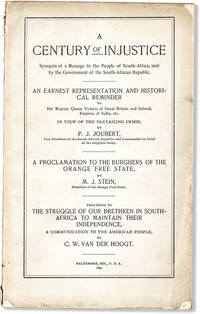
189960626Baltimore: Privately Published 1899. First Edition. Octavo. Printed buff wrappers; 119pp; portraits. Generally clean but with a faint diagonal crease to lower 1/3 of text block throughout; mild external soil and small paper losses at spine ends still about Very Good. <br /> <br /> Anti-British propaganda issued on behalf of the Orange Free State of South Africa for American readers compiled by a Dutch-American citizen of Baltimore. Though attributed to neither author here the essay "A Century of Injustice" has been credited variously to J.C. Smuts and F.W. Reitz. Uncommon. Privately Published unknown
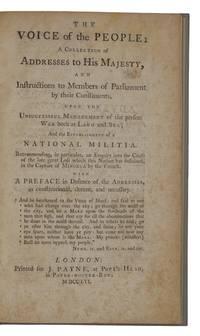
1756AQ26625London: Printed for J. Payne 1756. 2 xiii 1 56pp. Modern buff paper boards contrasting red morocco lettering-piece to spine. Title page browned. An anthology of letters addressed to the heads of state from numerous county officials occasioned by the conquest of the British controlled Mediterranean island of Minorca by French forces in 1756. The naval battle was the opening maritime engagement of the Seven Years' War in the European theatre. The failure of the Royal Navy to defend the territory led to the court-martial and execution of commanding officer Admiral John Byng. The defeat led to nationwide consternation that the French would press their advantage to capture British possessions in America and perhaps countenance an invasion of England. ESTC T50978. First edition. 8vo. Printed for J. Payne hardcover
23092Without date or place. 3pp. 12mo. Bifolium on ruled laid paper. Fair: aged with a 12.5 x 5 cm section cut away from the top of the first leaf before the writing out of the poem. 63 lines divided into six nine-line stanzas. The stanzas are numbered and the poem is complete. The stanzas are numbered and the poem is complete. Written from the slave's point of view with the first stanza reading: 'I'm weary yet I cannot sleep Dark thoughts of morning make me weep For at the rising Sun I'm told I'll be converted into gold There's no escape I must be sold Because my master wants the gold And I'm his Slave yes I'm his Slave Because my master wants the gold And I'm his slave'. Last stanza describing the slave's flight to Canada: 'At last my dreadful journeys o'er I'm safe upon the farther shore St Georges cross floats over me I've found the land of Liberty. My youths renewed no more I'm old That fear is gone of being sold For now I'm Free Yes now I'm Free The fear is gone of being sold For now I'm Free.' No indication has been found that the poem was ever published. Without date or place. unknown