1 575 résultats
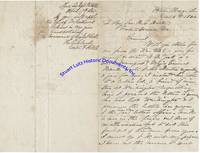
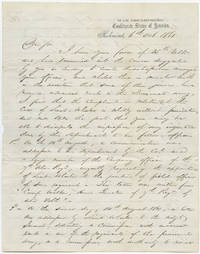
186123285<p>Writing as acting Confederate Secretary of War Judah P. Benjamin denies Major General Braxton Bragg the possibility of a transfer to a more active post. Instead Benjamin gives Bragg additional responsibilities including defending Alabama. Bragg must have become tired of inaction as three days after Benjamin wrote this letter Bragg ordered the Confederate assault on Fort Pickens at the Battle of Santa Rosa Island.</p> <b>JUDAH P. BENJAMIN. CIVIL WAR.</b>Autograph Letter Signed as acting Secretary of War to Braxton Bragg. Richmond Va. October 6 1861. 4 pp. 7¾ x 10 in. On War Department letterhead.<p><b>Transcript</b></p><p><i>"I have your favor of 25th Ulto and have examined into the causes suggested by you as tending to create dissatisfaction amongst your officers and whilst there is much truth in the assertion that some of your juniors have received advanced rank in the Provincial army I find that this complaint in relation to the case of Lieut. Wheeler is wholly without foundation and will state the facts that you may be able to dissipate the impression of any injustice done by the department to his fellow-officers.</i></p><p><i>1st on the 14th August a communication was addressed to this department by the Col. and a large number of the Company officers of the 7th Ala. Regt. urgently requesting the appointment of Lieut. Wheeler to the position of filed officer of the same regiment. This letter was written from "Camp Walker Head Quarters of the 7th Regt. of Ala. Vols."</i></p><p><i>2d on the same day 14th August 1861 a letter was addressed by Lieut. Wheeler to the Adjt. General soliciting a commission with increased rank as are of the regiments of the provisional army or a commission with authority to raise a battalion or regiment for the War. This letter was endorsed with a very earnest recommendation that the appointment should be made signed by Col Wood of the 7th Ala Regt. commanding 2d Brigade and was forwarded by <u>yourself</u> with a <u>'full and cordial endorsement of Lt Wheeler's application'</u>and it was in consequence of these endorsements and recommendations that my predecessor yielded to the solicitation of the officers of the 19th Ala Regt. and appointed Lieut. Wheeler their Colonel. I enclose you copies of the papers as a duty to my predecessor whose action on the subject is somewhat impugned by your letter of 25 Ulto.</i></p><p><i>And now my dear sir having disposed of this matter let me say that the noble and self-sacrificing spirit displayed by yourself and the gallant spirits that are now chafing in the hateful inaction on the sands of Pensacola harbor are fully appreciated and elicit the most heart-felt approval and admiration not only of the President Jefferson Davis but of every member of the administration. We are as anxious as you can possibly be to relieve you from a position to which the fortune of war has condemned you and we look forward as impatiently as you can to some opportunity of testifying our sense of what is due to you all. But all our deliberation results in this that to remove you as we know is your earnest desire to some field of more active operation would have the most disastrous effect on the morale of the army under your command whilst for your officers we can do nothing for the moment under the legislation as it now exists; but we shall none the less hold them in remembrance for the marks of approval as soon as it shall be possible to transfer them to other fields of duty; and I will further say that whenever you feel you can spare any of your officers and desire him rewards I will find the means to place him in some desirable post and with increased rank in the provisional army.</i></p><p><i>In the mean time the President in conversing with me on the subject of own position has suggested that it might be a partial relief to the tedium of your constant vigil to extend your command and make it embrace the coast of Alabama thus giving you an additional chance for an actual fight in the event of a descent by the enemy and you will accordingly find that a general order has been issued making of your command a department and placing the coast defences of Alabama under your control. I think you will thus have an increased chance for actual combat."</i></p><p><b>Historical Background</b></p><p>Santa Rosa Island blocked the mouth of Pensacola harbor and the Union Fort Pickens effectively eliminated any strategic value of the Confederate capture of Pensacola's naval shipyard and nearby railroad. Three weeks prior to this letter Union forces raided the captured shipyard and burned the schooner <i>Judah</i> to prevent its putting to sea as a privateer. As evidenced in this letter Confederate Major General Braxton Bragg was <i>"chafing in the hateful inaction on the sands of Pensacola harbor"</i>cut off from using his newfound assets to their fullest benefit. As Benjamin was writing this letter denying Bragg's transfer request Bragg himself must have been planning the retaliatory raid against Fort Pickens. The battle which took place on October 9 1861 was inconclusive with both sides claiming victory in the Florida's first land action of the war.</p><p>Known as "the brains of the Confederacy" <b>Judah Benjamin</b>1811-1834 served in the Louisiana state legislature and U.S. Senate before joining Jefferson Davis's cabinet first as Attorney General then Secretary of War and finally as Secretary of State. A New Orleans lawyer Davis had given Benjamin the post of attorney general until deciding he needed him in a more important role. In September 1861 he was moved to the War Department. His closeness to Davis—and his Jewish faith—attracted resentment from jealous rivals. With the loss of Roanoke Island in 1862 along with Grant's capture of Forts Henry and Donelson critics demanded Benjamin's blood. Davis responded by promoting him to Secretary of State a post he held until the collapse of the Confederacy. Initially part of Davis's contingent when the Confederate president fled Richmond in women's clothing Benjamin escaped to England where he thrived as a lawyer and was named to the Queen's council. He retired in 1883.</p><p><b>Braxton Bragg</b> 1817-1876 was a career military officer first in the U.S. Army and later in the Confederate Army. He attained the rank of full General in the Confederate Army one of only seven in the Confederacy. He fought at the Battles of Shiloh Chickamauga and Chattanooga among others and in 1864 became Jefferson Davis's military adviser.</p><p><b>Condition</b></p><p>Very good. Some separation at folds. One and one-quarter inch tear at the upper edge of page three. Minor paper loss along the main vertical fold. Areas light toning.</p> books
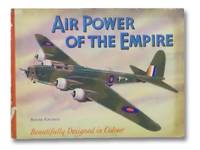
2190030Juvenile Productions Ltd. Stapled Binding. Good. Edge wear. 31 pp. A book on WWII-era British aircraft written for the young reader. Juvenile Productions, Ltd unknown books
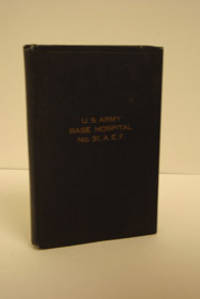
19191717108The Craftsman Press of Syracuse 1919. First Edition. Hard Cover. Very Good/No Jacket. First edition. Light stain on cover corner does not affect pages page ridge lightly foxed. 1919 Hard Cover. 258 pp. 8vo. Original navy blue cloth gilt titles. Fold-out statistical summary black & white photographs. An account of medical procedures and statistics at these facilities during World War I including surgical dental laboratory x-ray and nursing information as well as mention of the American Red Cross. The Craftsman Press of Syracuse hardcover books
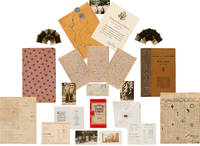
1919WRCAM55901Various locations including Ohio Georgia France Luxembourg Germany and Belgium 1919. Folio manuscript diary 153pp. one printed book and various family papers certificates dog tags photographs and more. In very good condition overall. An important and informative World War I archive belonging to Wilson Kappel of Bolivar Ohio including a phenomenal starkly-written and uncensored diary kept by him throughout his service detailing war deaths mustard gas attacks and the notable Meuse-Argonne offensive near the end of the war. Kappel 1893-1979 served as a mechanic with Company C of the 6th Infantry of the United States Army. He registered for the service on June 5 1917 was drafted in July shipped out to training in October and served until his return from Europe on July 31 1919. Kappel spent significant time in France Luxembourg Belgium and Germany during his service all of which he details here. <br> <br> By far the most significant item in the present archive is Kappel's manuscript diary which covers in amazing detail every aspect of his service from home to Europe and back again. The diary which Kappel titles in manuscript on the first page DIARY OF THE WORLD WAR is large format and closely written for over 150 pages in an eminently readable and uncensored style. It is likely that he either wrote out this diary from notes made during the war or wrote it out from memory shortly after the war. The text conveys a sharpness that immediacy that would likely have been slightly dulled by the passage of time. The diary begins with the line "I registered June 5th 1917" and takes Kappel first to the mobilization camp at Camp Sherman in Chillicothe Ohio and thenceforth to basic training at Camp Forrest in Georgia. Kappel writes in unhurried detail about training on the rifle range in Georgia traveling to Hoboken New Jersey to board a troop ship to Europe and writes extensively about his experiences overseas. <br> <br> Kappel's European diary entries begin with his arrival at the "sorting yards" at Brest France. He continues to various locations in France namely Barsubaube Soulaine Pagny- Sur-Meuse Remiremont and Le Tholy before arriving at the front and the front line trenches near Gerardmer in mid-June of 1918. At the front Kappel and his unit experience their first encounter with enemy shellings and the types of activity faced by soldiers near the front lines: <br> <br> "We all got scared as none of us ever heard a shell before and we thought they were going to hit us but they went way above our heads and went crashing against the hill side we could hear it echo many times. We got orders to lay in the ditch along the road till they stopped shelling. I and Corporal Fox of Massillon was together in the ditch he said to me 'I wish we would be back in Massillon Ohio instead of being in this ditch.' As soon as they stopped shelling we went on again. When we got within about two miles of the front line trenches the Germans must have heard us walk as they had a powerful search light on top of a high hill and they shined that down direct on us for about ten minutes and then it went out again." <br> <br> Kappel spent almost a month at the front where he writes about getting shot at by German snipers cooking clandestinely in the basement of a French church encountering a private who shot off his own finger while on guard duty firing on German patrols encroaching into the American side a strange incident in which a corporal intentionally blew his own hand off with a grenade presumably in order to avoid further service and much more in often astonishing detail. <br> <br> On July 16 Kappel and his unit left the front lines near Gerardmer continuing to St. Die and then arriving again at the front lines this time at St. Claire. On August 15 Kappel and his unit were caught in a mustard gas attack which he recounts in excruciating detail. The Germans in the area "shot over a large number of mustard gas shells all along the front.I and about fifty more soldiers all ran down in a dugout that was gas proof but the gas came in through the cracks of the door and we all had to wear our gas masks for about an hour.The gas was so strong that it got in between our shoes and leggings and many of us got blisters on our ankles." <br> <br> Two days later Kappel participated in the attack on the German border town of Frappell. Kappel writes that "The American barrage started Aug 17th 1918 at three-fifty a.m." and was met with a German response that "killed many Americans." As usual Kappel's recounting of the battle is unusually detailed and affecting ranging over several pages and including meticulous accounts of the horrors of battle. He writes in part: "At one place four American soldiers carried a wounded soldier on a stretcher in a trench. The trench was not wide enough around a corner so they had to lift him up out of the trench. Just as they were doing this a German shell came and killed all five of them." Later he writes: <br> <br> "The first shell that the Germans fired on his headquarters made a direct hit on the closet and was all blown to pieces with several soldiers in it and a few standing out around the building. I was half asleep in my dugout at the time. I had my pack rolled in the morning but I jumped up when the first shell hit. Mechanic White was with me he told me 'It is time to go' we both ran out of our dugout because it was not shell proof and just as we got outside of the door Private Raymond Barmos was rolling his pack. We both jumped over him and that was the last that was ever seen of him. He was blown to pieces a few seconds after we had jumped over him." <br> <br> Kappel's diary continues in much the same manner and with the high level of detail throughout the remainder of the text. He and his unit continue to Pouxeux St. Nicolas St. Christophe Martin Court Saint Mihiel Avirinville Rigny and Verdun. Just north of Verdun Kappel participates in the historic Meuse-Argonne offensive from September to November 1918. Kappel's account of the Meuse-Argonne offensive occupies ten pages of his diary and is typically thorough in relating the specific brutalities heaped upon the young soldiers during the Great War. A few excerpts will relay the flavor of Kappel's narrative of the offensive: <br> <br> "When we started over the top we had to cross a valley this was full of gas. The Captain told us to put on our gas masks. I put my gas mask on quick and started to walk away a German shell came and exploded to the right side of me and a piece of shrapnel went through my gas mask. I pulled my gas mask off quick and walked back a little ways and took a gas mask off a dead American soldier and put that over my face. The Germans were only a few rods away from us. We started to shoot at them they did the same. We killed some and captured a few the rest ran over the hill. We kept going after them the whole day. One German shell came and made a direct hit on Lieutenant Roche of our company. He was blown to little shreds." <br> <br> "The Germans had many barbwire entanglements here. It was a common sight to see from six to ten American soldiers lay on a pile dead. They shot a German spy at this front. He was in the American Artillery and was always shooting short. The Artillery Sergeant killed him with his revolver." <br> <br> "We stayed here for one day and night. We dug our shelter trenches two soldiers for each shelter trench.The bullets were flying thick. We had to stop digging several times and crawl behind the fresh dug grounds for safety. When Private Pike of our company was done digging his little shelter trench he reached up with his hand to tear some weeds off so he could see out better a bullet came and went right through the middle of his hand.From this place when we looked back we could see the canal river railroad and the city of Brieulles. It was nice to watch the German big shells explode. Some would hit right in the river. It would throw the water up about forty feet in the air. Some shells would hit the buildings at Brieulles and tear them all to pieces." <br> <br> "We went past a cabbage patch. We made out that in coming back that we were going to take some cabbage along with us. When we got down into Brandyville the Germans started to bombard the town. I gave the message to an officer. It took him about one hour to write out another message for me to take back. I was looking every minute for the house to get hit by a shell.I finally got my message and we all ran out of town till we got to the cabbage patch. There we stopped. Just as each one of us was going in the patch a big German shell hit right in the center and surely did make the cabbage heads fly. I got one big head and some of the others got two heads a piece. This we took back to our company and at midnight we all had raw cabbage to eat." <br> <br> After the Meuse-Argonne offensive Kappel moved on to Liny Brandeville Louppy Marville and Rehon in France then spent a short time in Luxembourg Belgium and Germany before shipping back to the States. <br> <br> In the final eighteen pages of his diary Kappel records a short history of the USS America; a couple of poems; a detailed list of Army pay with title and monthly pay; a list of Army divisions with enlistments casualties captures wounded and more; a complete roster of Company C from March 1918 "just a few days before we started for France" which includes a list of all the men who were in the unit from March 1918 to March 1919 and what happened to them during the course of the war; a list of divisions to which each unit belonged; and ending with four small color drawings and descriptions of the principal airplane markings belonging to England France the United States and Germany during the war. <br> <br> In addition to his diary the present archive is rounded out with a batch of personal papers and other material kept by Kappel and his family. These additional items include a war-dated letter from Wilson Kappel to his brother Owen sent home from France in September 1918; five early Kappel family photographs showing Wilson and Owen; a printed certificate from President Jimmy Carter honoring Kappel's service sent to Owen after Wilson's death; Kappel's dog tags; twenty-two later small photographic negatives; a Civil War bullet passed down through the family and with a note by William Kappel; a portion of the January 17 1919 issue of STARS AND STRIPES; Kappel's 8th and 9th grade report cards; his address book; Kappel's funeral notice indicating he died on Oct. 22 1979; and a hardcover book entitled THE OFFICIAL HISTORY OF THE FIFTH DIVISION U.S.A. Washington D.C.: The Society of the Fifth Division 1919 with original shipping box addressed to Wilson Kappel. <br> <br> An historically important and uncensored firsthand account of the First World War that reads like an undiscovered classic from the Lost Generation rounded out with a small selection of the soldier's personal war- related material. hardcover books
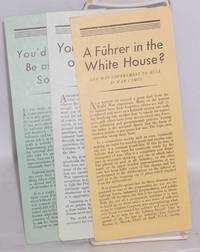
1940157682New York: Keep America Out of War Congress et al. 1940. Complete set of three pamphlets issued together identifiable as such by blurb on the back each a single sheet folded to make a 4-panel brochure. Titles are "A Fuhrer in the White House" "You can't live on aspirin: armament spending is no cure" and "You'd have to be as wise as Solomon." All very good. Keep America Out of War Congress, et al. unknown books
40474This Union officer served on the staff of Brigadier General James Shields whose troops faced Stonewall Jackson's Confederate troops in the Shenandoah Valley in June 1862 and later commanded the Second Louisiana Regiment Cavalry; he was a good friend of famed Irish soldier Miles W. Keogh 1840-76 killed in the Battle of the Little Bighorn who served under him in the Papal Army during the Italian rebellion in 1860 and who fought with him in the Battle of Port Republic; he's reported to have become enamored with famed Southern spy "Belle" Boyd" at one point and to have unwittingly revealed military secrets to her. Outstanding pencilled ANS 2pp recto and verso heavy stock 4" X 2½" card "Conrad's Bridge" Virginia n.d. ca. early June 1862. Addressed to "General" probably James Shields. Very good. Lightly age toned. In this remarkable small report Keily reports in a small tight but fairly legible hand to his commander that "Col. Carroll moves his comm'd. at p.m. and will push on as rapidly as possible some cannonading heard this morning in the direction of Harrisonburg I would respectfully submit that if the Infantry did not move rapidly enough to carry out your views at Wainesborough before Jacksons arrival there a reconnaisance composed of cavalry conducted cautiously might attain the object with a good Guide which we have procured I would be glad to undertake it -- respectfully" and signs off adding his rank "Capt. A.D.C" beneath. A rather light challenging to transcribe postscript reads "P.S. Just received information from a reliable source that Jackson has --- --- --- Train on the --- Pt. Republic Road." It's difficult to precisely date Keily's note but General Shields did write General McDowell on June 4 1862 that "Colonel Carroll. after a forced night's march reached Conrad's Bridge this morning at 5 o'clock which bridge he found burned" -- which likely dates Keily's letter from this date or shortly after. Whether Shields took Keily up on his offer to lead a cavalry reconnaissance is unclear. Shields 1810-79 is perhaps best remembered as the Illinois politician who almost fought a duel with Abraham Lincoln in 1842; he's also the only person in American history to serve as U.S. senator from three different states Illinois Minnesota and Missouri; as a brigadier general of volunteers in the Civil War his lackluster performance as commander of the 2nd Division of the V Corps in the Army of the Potomac during the crucial Valley Campaign caused him to resign his commission. On June 9th the Battle of Port Republic took place a costly Confederate victory in which Jackson's 6000 troops faced off 3500 Union troops losing just over 800 men to the Union's loss of just over 1000 men -- a battle at which Keily himself was severely wounded in the face while leading a charge of Ohio cavalry up a hill into a barrage of Confederate artillery fire. The following year after painful recuperation Keily ended up on the staff of General Charles P. Stone in New Orleans recruiting cavalry troops in that occupied state. Late in the war he was court-martialed for "conduct unbecoming an officer" but the charges were shown false and by the end of the war he was brevetted a brigadier general. Keily died from yellow fever in Louisiana at age 38 shortly after the war's end making his autograph material quite scarce -- and a choice war-date item such as this most desirable. This remarkable war-date communication sheds interesting light on Shields as commander during the disastrous Valley Campaign. unknown books
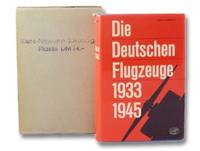
19642118807J.F. Lehmanns Verlag Munchen 1964. Hard Cover. Very Good/Very Good. Includes slipcase. 1/4 inch closed tear to jacket spine head. J.F. Lehmanns Verlag, Munchen hardcover books
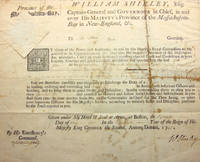
1745313114Boston 1745. 1p partially printed and accomplished woodcut dropped capital printed in four typefaces paper seal at top left with an 1802 hand drawn pen and ink map of Amos Keith's Farm in Bridgewater Massachusetts on the verso. Folio 15-3/4 x 12-1/2 inches. Wear and toning with with tape repairs on back and subsequent glue staining at repaired folds affecting several letters some bleed through from ink drawing on verso else good. 1p partially printed and accomplished woodcut dropped capital printed in four typefaces paper seal at top left with an 1802 hand drawn pen and ink map of Amos Keith's Farm in Bridgewater Massachusetts on the verso. Folio 15-3/4 x 12-1/2 inches. Appointed Cornet in the Regiment of Horse. A commission appointing Seth Alden gentleman "Cornet of the Troop in the Regiment of Horse within the said Province Commanded by Colonel Estes Hatch of which Troop Jonathan Bass Gent. is Captain."<br/><br/>William Shirley 1694-1771 was the longest serving governor of the Massachusetts Bay colony and is best known for his role in organizing the seige and capture of Louisburg during King George's War in 1745 and as commander-in-chief of British forces in the opening years of the French and Indian War.<br/><br/>Seth Alden 1710-1784 was born and died in Bridgewater Plymouth County Massachusetts. He was the 2nd great grandson of John Alden and Priscilla Mullins noted passengers on the Mayflower and original members of the Plymouth Colony.<br/><br/>A hand-drawn boundary map of "Amos Keith's farm 1802" in Bridgewater Massachusetts is done in pen and ink on the verso with deed histories and names of neighboring property owners. A notation reads: "plan among Avery Fobes papers." Fobes purchased the property from Keith on June 28 1802. unknown books
1850253372Boston: Samuel G. Drake 1850. hardcover. good. Infidels Natives and the English Christians and Converted Indians of New-England declaring the many Dreadful Battles fought betwixt them: As also the many Towns and Villages burnt by the merciless Heathens. 20pp. 4pp. of publisher's ads. Wide 12mo original brown cloth spine worn. Boston: Samuel G. Drake 1850.<br/><br/> Inscribed by the publisher Samuel G. Drake to Solomon Lincoln. Drake was a historian and bookseller who reprinted many scarce works. This work is a reprint of the London 1676 edition which was authored anonymously.<br/><br/> Samuel G. Drake unknown books
1876100886Pamphlet 8vo stitched disbound 56 pp. Some wear and chips to extremities of cover and second leaf Harvard Library stamp on back of front cover modest toning and aging; otherwise very good. This pamphlet commemorates the bi-centennial of the Indian attack on Medfield in February 1675. It was believed that a group of Nipmucks and Wampanoags who were allied with King Philip terrorized the residents and burned a good portion of the town. The pamphlet records the activities of the celebration including some historical information prayers and poems. Also included is a list of names of those people that were killed by the Indians on the day the town was burned. OCLC. George H. Ellis, books
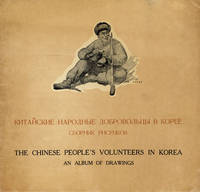
195427153Peking: Foreign Languages Press 1954. First Edition. Square quarto 25.5cm; illustrated wrappers stapled; 36pp; chiefly illus; parallel text in Russian and English. Wrappers dusty and lightly edgeworn with a few small creases and two splits to wrappers along spine fold; contents clean complete - Very Good. Collection of 14 sketches featuring members of the Chinese People's Volunteers and the Korean People's Army who fought side-by-side while at war with the United States. "A number of Chinese artists went to Korea at different stages of the war.From their observations they drew sketches of the people's heroes striking blows for the defence of their Motherland and world peace. Though these sketches in no way give a full picture of life at the front they vividly show the heroes' spirit of patriotism and internationalism." Each illustration occupies a full page captioned in Russian and English. Contributors include Ku Yuan Shao Yu Hsi Yeh Lo Kung-liu and Kao Hung. OCLC finds 8 copies in U.S. institutions. Foreign Languages Press unknown books
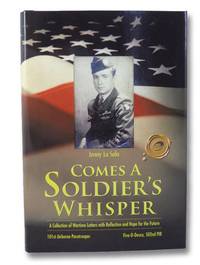
20132026300Trafford Publishing 2013. First Edition. Hard Cover. Fine/Fine. First edition. Brand new from author. 2013 Hard Cover. xviii 237 pp. Endorsement by Tom Brokaw printed on rear jacket panel. 'My silk is my silent weapon'. said this 101st Airborne paratrooper of the 5-0-Deuce as he later reflected on his jumps into Normandy in June 1944 and in the liberation of Holland in September 1944. Readers will embark on a heartwarming poignant and inspirational journey in this collection of literary works written by the author Trafford Publishing hardcover books
199831683Westport: Greenwood Press. As New. 1998. Hardcover. 0313293260 . First printing. As new in burgundy cloth. No dust jacket as issued. . Greenwood Press hardcover books
2011175066Surrey England: Ashgate 2011. Hardcover. VG--corners bumped & creased. creasing at spine top & bottoms. dj has shelf wear along its edges. black boards w/ silver spine printing. 257 pages 8 pages of color plates : illustrations. Ashgate hardcover books
41587Oblong double-folio 13 x 17 inches seal affixed; docketed on verso. Several small breaks at corner folds corner torn away just touching the docketing. A very good copy. In this document Jonathan Tucker was appointed second lieutenant of a company in the 5th Regiment of Militia in Worcester County. In the following month Lincoln was named Major General of all the Massachusetts state militia; he was given command of the southern department in 1778 and after his capture and exchange was with Washington at Yorktown where he was chosen to receive Cornwallis's sword. Other members of the council who signed this document include Perez Morton James Otis Benjamin Greenleaf Caleb Cushing John Winthrop Joseph Gerrish John Whetcomb Elias Taylor Michael Farley Joseph Palmer Moses Gill Samuel Holton B. White Charles Chauncey and John Taylor. <br/><br/> unknown books
19952161231W.W. Norton & Company 1995. First Edition. Hard Cover. Near Fine/Near Fine. First American edition. W.W. Norton & Company hardcover books
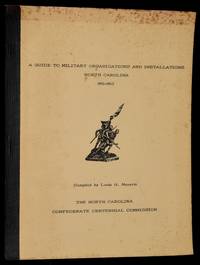
1961247122Raleigh: North Carolina Confederate Centennial Commission 1961. Soft Cover. near Very Good binding. No pencil or ink markings in text; paper binding stapled at spine; front cover is spotted on upper half; light spotting to text block edges. near Very Good binding. North Carolina Confederate Centennial Commission unknown books
5104CIVIL WAR IN LOUISIANA. ALS. 2pgs. April 5 1864. Baton Rouge Louisiana. An autograph letter signed “Matilda Victorâ€. Victor wrote to Major General Benjamin F. Butler 1818-1893 in Fort Monroe Virginia asking his help is securing her a pass to travel to New York for free. She also mentions Secretary of War Edwin Stanton 1814-1869. Victor was the Headmistress of St. Mary’s Academy a Catholic girls’ school in Baton Rouge. “General: Will you obtain for me from the War dept a pass for myself & maid to N. York on a Govnt Transport Major General Banks wrote to Mr. Stanton requesting a pass for me. I enclose his letter to a certain Col. a friend of mine then at Washington requesting him to present the letter in person. He had left Washington & I presume the letter has gone to the dead letter office. Gen. B. is now in the field & I know of no alternative but to ask this fresh act of kindness from you. I must go to W. with my papers. I have not the means to meet the expenses of a private steamer. Gen. B. asked for me a free pass stating his reasons for so doing. It is unfortunate that his letter has been lost of course Sec. Stanton would not notice any application which I should personally make. I am ashamed General to ask so much from you. For this & the kindness which you have already shown me I can but pray that God may repay for me; if not to yourself then to your own child if ever she is so unfortunate as to need kindness as much as I have in the past two years. Yours with respect & gratitude Matilda Victorâ€. A docket on the back in another hand directs Victor to a Chief Doctor in New Orleans who could give her transportation. The letter is in very good condition with a large but light stain through all pages. unknown books
199735057Mechanicsburg: Stackpole Books. Fine in Fine dust jacket. 1997. Hardcover. 0811715973 . First printing. Fine in a fine dust jacket. . Stackpole Books hardcover books
1925536421925. Folio. Eight pages approximately 2750 words; accompanied by another autograph letter from Russell to Trowbridge 14 March 1925; 4to four pages approximately 750 words with more information on the political situation in Missouri on the eve of war and an autograph transcription by Russell of the long poem "The Battle of Wilson's Creek August 10 1861" folio two pages with his own commentary on the poem. Folded. Insect damage to the poem and first leaf of the longer letter resulting in the loss of a number of letters but quite legible throughout. 813. Russell a native of St. Louis enlisted under Lincoln's first call for troops and served in a Missouri regiment through the summer of 1864. Following an outline of sectional struggle from 1820 and early events of the war given in the first half of the longer letter Russell describes the events of the Wilson's Creek Campaign and then his own eyewitness to history: "The Kansas boys like ourselves were resting when all at once the rebels crept up the hill to the top of the crest opened a tremendous fire right into the Iowa boys and our regiment but we went at them anyway and a hand to hand struggle began . My Captain Cary Gratz was killed . I was wounded four times and the Kansas boys were holding their own. Capt. Lyon had been hit twice once a scratch along the forehead and a light superficial wound in the knee. I was carried down the hill and placed on the hill side opposite the line of battle the valley being merely a hollow. I had a good view of the fight as it went on. My first attention was attracted to my right as I lay there and watched Capt. Lyon trying to rally the Iowa boys who were in a panic their Colonel had been killed and although the Kansas boys had saved them Capt. Lyon was rallying them into formation to use as they were then near the front. All at once I saw him rear off that dople sic gray horse and fall to the ground. Maj. Schofield also ran to his side a messenger sent for our surgeon Dr. Comyns . Capt. Lyon was carried down the hill he was shot nearly half way up from the hollow to the battle lines. The bullet had struck him squarely in the breast and had gone through his hear and he had lost the pleasure of seeing the victory his indomitable courage had won."_The Confederates commanded by Gen. Sterling Price made another assault following the death of Lyon but Samuel Sturgis rallied the Union troops and the Federal lines held. Sturgis then left the field toward Springfield and the Confederates did not pursue him. "The campaign marked the beginning of the war in Missouri and the trans-Mississippi. Afterward the Federal army withdrew to rolla Missouri leaving the Southerners in possession of most of the southwestern region of the state" "Encyclopedia of the Confederacy"._Lyon 1818-1861 a Connecticut native graduated from West Point in 1841 served in the Mexican War and on the western frontier most of the time to the eve of Civil War in "Bleeding Kansas" becoming involved in the political issue of slavery in the territories. Appointed brigadier general in May 1861 to command the Union forces in St. Louis he also led discussions with Confederate sympathizers on Missouri's position in the union; when compromise failed he launched his first military campaign which culminated in his death at Wilson's Creek. "The entire north mourned his death and he immediately became a national hero and martyr . his brilliant work had done much to hold Missouri for the Union" DAB. <br/><br/> unknown books
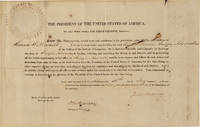
1813WRCAM54812Washington D.C. 1813. 1p. partially-printed document completed in manuscript. Paper seal of the United States affixed to upper left corner. Old folds. Light tanning mild surface wear a few ink blotches one small area of ink burn not affecting text. Overall very good. Matted framed and glazed. A War of 1812-era presidential appointment signed in ink by President James Madison and by Secretary of War John Armstrong. Here Madison appoints Maryland attorney James Sewall Morsell to the position of Judge Advocate of the Militia of the District of Columbia. In addition Morsell has fully endorsed and docketed the document on the verso pledging to "carefully & diligently perform the duties of a Judge Advocate.to the best of my Skill & Judgement and that I will support the Constitution of the United States." Morsell would serve as a Judge Advocate for almost two years. From January 15 1815 until March 3 1863 he would serve as a circuit court judge in the District of Columbia. Earlier in his career and during his years in private practice Morsell represented numerous African-American families who petitioned for freedom in the nation's capital. Judge Morsell passed away in Maryland in 1870. unknown books
1900RMAGREP00ECGovernment Printing Office 1900. Very Good. Magoon Charles E. Law Officer. Report on the Legal Status of the Territory and Inhabitants of the Islands Acquired by the United States during the War with Spain Considered with Reference to the Territorial Boundaries The Constitution and Laws of the United States. Root Elihu Secretary of War. Washington: Government Printing Office 1900. 72pp. 8vo. Stapled pamphlet. Book condition: Very good with slight soiling to first and last pages and short closed tear in top edge of first page. Senate 56th Congress 1st Session. Document Number 234. Government Printing Office unknown books
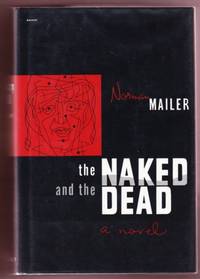
11156NY: Rinehart & Co. Fascimile edition printed from Rinehart's first printing sheets Originally published by Rinehart in 1948. This is not the First Edition Library edition: no FEL identification printed on the copyright page or rear panel of the dustjacket. Faithful reproduction of the original edition but for lack of the printed price on the front dustjacket flap. Probably issued in the 1990's. This copy signed by Mailer on a tipped-in page between the front free endpage and the half-title page as issued. Spine ends pushed; otherwise in Fine condition in a Fine dustjacket with an archival cover. Mailer's first novel. Signed by Author. Hardcovers. Fine/Fine. 8vo - over 7¾" - 9¾" tall. Rinehart & Co. Hardcover books
71022NY: Rinehart & Co. Fascimile edition printed from Rinehart's first printing sheets Originally published by Rinehart in 1948. Not the First Edition Library edition: no FEL identification printed on the copyright page or rear panel of the dustjacket. Faithful reproduction of the original edition but for lack of the printed price on the front dustjacket flap. Probably issued in the 1990's. Signed by Mailer on the half-title page. Few text pages with foreedge wrinkles; an unread copy in Near Fine condition in a Fine dustjacket with an archival cover. Mailer first novel. Signed by Author. Hardcovers. Near Fine/Fine. 8vo - over 7¾" - 9¾" tall. Rinehart & Co. Hardcover books
197950815Franklin Center: Franklin Library 1979. 30th Anniversary Edition. Signed by Mailer as issued. Illustrated by Alan E. Cober. "Special Message" by Mailer for this edition. Gilt-stamped leather-covered boards all edges gilt satin pagemarker and tissue insert for signed page. Issued without dustjacket. With stiff card case with gold foil label as issued in original mailing carton which has been opened. Unread copy in Fine condition. The full monty so to speak. Uncommon as such. Signed by Author. Hardcovers. Fine/Not Issued. 8vo - over 7¾" - 9¾" tall. Anniversary Edition. Franklin Library Hardcover books