[Civil War] Davis, J C BancroftBiblio.com
11 490 résultats
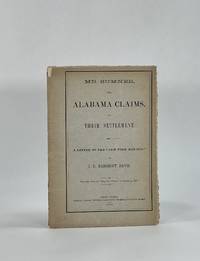
18788828New York: Douglas Taylor Printer 1878. Original Wrappers. Very Good binding. Octavo. 20 pp. Reprinted from the New York Herald January 4 1878. As issued stitched in printed wrappers untrimmed. Minor toning to the wrappers and one small chip to the top of the front cover otherwise clean; some wear to the spine. <br /> <br /> An interesting statement relating to the Mr. Sumner's role and opinions related to the resolution of the Alabama claims the settlement between the United States and Great Britain over the English involvement on behalf of the Confederacy and the extent to which it prolonged the Civil War. Bancroft served on the joint high commission negotiating with Great Britain. Admitting that at the time of his writing this issue was "no longer connected with the politics of the day but has passed into history" p. 3 he nevertheless lays out some careful argument against some of Sumner's positions and claims related. And interesting and careful argument by the jurist diplomat and politician. Uncommon in commerce. Douglas Taylor, Printer unknown
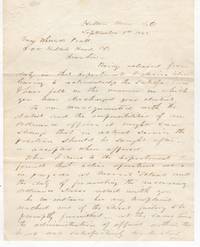
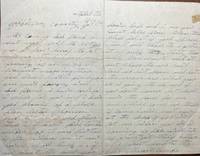
186544826<p>Hilton Head SC 1865. Very good folded staples removed from top corners lightly creased minor soiling and fading contents clean. 2 pp rectos only. 8 x 10 inches. September 3rd 1865 from Isaac Arnold Jr. Chief of Ordnance Department of the South at Hilton Head S. C. This letter acknowledges the service of Major Wheelock Pratt before Arnold departs to serve as Asst. Ordinance Officer in for Allegheny PA. Arnold praises the competencies of Pratt claiming that "In no instance has any complaint reached me. At the same time the achievements of affairs within the Depot was satisfactorily constructed upon the arrival of Genl Sherman's Army. with you again rested the responsibility of. a large part of it. And the dispatch with which you completed this duty is deserving of the greater credit.Upon hearing your being mustered out of service I made an effort to have you retained in position but am sorry to say it failed as the request made was contrary to the rules of the War Dept."<br /><br />In his closing Arnold warmly wishes Pratt happiness should he choose civilian life but would "extend the right hand of fellowship" if he chose to remain in service. But Pratt would die a year later due to injuries<br /><br />Isaac Arnold Jr. 1839-1901 graduated from the Military Academy in 1862 and over the years had earned the ranks of Brevet Captain Captain Major and Lieutenant Colonel. He died Oct. 15 1901 at Allegheny Arsenal PA.<br /><br />Major Wheelock Pratt 1829-1866 enlisted in In Sept. 1861 in "C" Company United-States Engineer Battalionwhere he served through the peninsular campaign at Antietam South Mountain and Fredericksburg. But due to his serving as leader of a "Black" company a written protest by by Engineers kept him from being placed in charge of the reconstruction of Battery Wagner; he was " placed in charge of Battery Chatfield in rear of Cummings Point. While superintending the construction of that work a shell from Fort Moultrie exploded near him inflicting a slight wound on his face and causing a permanent injury to the brain which three years later Dec. 30 1866 resulted in coma paralysis and death." <br /><br />References: 1. edu/Thayer/E/Gazetteer/Places/America/United_States/Army<br />USMA/ Cullums_Register/1979.html. 2. Charles Barnard Fox: Record of the Service of the Fifty-fifth Regiment of Massachusetts Volunteer Cambridge 1868 pp. 90-1.</p>
1864107001<p>8vo rebound library copy cloth title on spine illustrated 283 pp. This is a discarded library copy with stamp on title page and front endpaper blacked out bookplate on front pastedown normal aging and browning; otherwise about very good. This volume includes four illustrations of Union soldiers after being held in captivity by the Confederate Army.</p> U.S. Sanatary Commission,
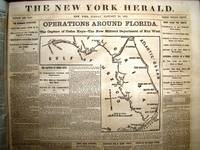
18620078071862. Hardcover. Spine rubbed. Overall a Very Good and fascinating compilation. Large folio 16" x 21-1/2" bound in half sheep and marbled boards. Includes a number of triple sheets. Extensive reportage of the war with numerous maps throughout. In addition to the war news the papers have ads and other news. Bound in at the front is a rather scarce broadside: "The New Year's Address of the Newsmen of the New York Herald" illustrated around the border with portraits of Lincoln and various cabinet members and generals. The broadside has a few small library stamps; otherwise it and the newspapers are generally clean with only occasional browning and a handful of long horizontal tears with no loss. While one occasionally sees individual Civil War issues of this paper offered for sale rarely does a run even this short though more than 2" thick appear on the market. <br/><br/> hardcover
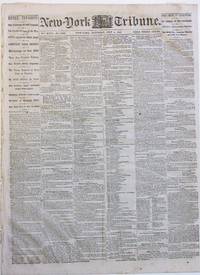
186336673New York 1863. Elephant folio 8pp. Disbound and lightly worn. Each page printed in six columns. Upper blank corners of last page with remnants of old matting. Very Good. <br /> <br /> Exciting material on the "Rebel Invasion" and "The Fighting at Gettysburg" is printed with "The Rebels still Desperately Contesting" the Siege at Vicksburg. General Order No. 5 prohibiting Copperhead "Secret Societies" is also printed; as is material on "Colored Enlistments. unknown
186427011Washington 1864. Folded map 24 x 33 inches in thirty-two segments mounted on linen. Original card covers with printed paper label. Contemporary ownership inscription on label. Some light wear and minor soiling. Detailed field map for the Union Army in Northern Mississippi and Alabama.<br/> <br/> A highly detailed map of the northern half of Mississippi and Alabama showing the border with Tennessee and all points south to Vicksburg and Montgomery produced to support the operations of the Union Army there in 1864. This is one of several maps compiled by the U.S. Coast Survey in an attempt to adequately map the South during the Civil War for military purposes. A note on the map indicates that the present map was compiled from various sources including "campaign maps and information furnished by Capt. O.M. Poe Chief Engineer Military Division of the Mississippi and by Capt. W.E. Merrill Chief Engineer Department of the Cumberland." Merrill was Sherman's chief topographical engineer and he contributed to several important maps of the area including one of Northern Georgia produced in Chattanooga following the vital capture of that city. With the beginning of the Civil War the United States Army found itself scrambling to obtain adequate field maps for military operations in the South. The most established cartographic branch of the Government the Coast Survey was pressed into service to provide these maps some with a coastal component but mainly for landlocked locations. The cartographers of the Coast Survey reviewed all of the existing cartography available but also drew on military and scouting reports and covert agents to assemble the most detailed possible maps of places roads railroads natural features. The topography is illustrated with hachured and shaded relief and railroads shown in red. The circulation of these maps was controlled and only officers ranking major or higher were supposed to control copies. As a result they are rare today. Two key figures in the Coast Survey effort during the War were Henry Lindenkohl and his brother Adolph who were responsible for actually drawing many of the field maps. The Lindenkohls were born in Germany but emigrated to the United States as teenagers and became American citizens. Adolph had already worked at the Coast Survey before the War began and Henry joined in 1861. Together they made a huge contribution to the war effort through their superb cartographic work producing and revising maps of different theatres of operations through 1865. Both continued with the survey for the rest of their lives; Adolph died in 1904 after fifty years on the job and Henry in 1920 after fifty-nine. This map has the ownership inscription of Col. Joseph Corson Read 1831-1889. Read was one of the first wave of men to take up Abraham Lincoln's call for volunteers to put down the rebellion in April 1861. He remained continuously in the army serving first on General Jesse Reno's staff and rising to the rank of Chief Commissary for the Army of the Cumberland commanded by Gen. George H. Thomas. Thomas was impressed with Read and on May 1 1864 with the spring campaign against Atlanta imminent Thomas named Read Chief Commissary of the Army of the Cumberland in the Field. This meant that although Col. A.P. Porter was the Army's overall chief Read would serve alongside Thomas in the field and had the responsibility to supply the entire army as it moved South. During the long and arduous Atlanta campaign he was the man on the ground making the supply side work. Read developed a close relationship with Thomas one with both personal and professional aspects. An important map of Northern Mississippi and Alabama particularly interesting as part of the greater project undertaken by the Coast Survey to map out the South during the Civil War and with excellent provenance and associations. unknown
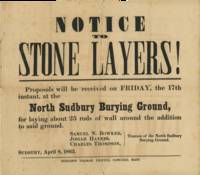
1863Cat320Concord Massachusetts: Benjamin Tolman 1863. Printed broadside 11 ¼ x 10 inches. Some tearing at folds very good. A straightforward but telling piece documenting the expansion of a Massachusetts burying ground during the American Civil War signed in type by three trustees of the North Sudbury Burying Ground. As casualties mounted and remains were returned to hometowns existing cemeteries were frequently enlarged with new land enclosed and improved by contract. The specification of “25 rods†over 400 feet of wall indicates a substantial addition typical of mid-war efforts to increase capacity in established town burial grounds rather than create entirely new sites. Sudbury contributed roughly 150–170 men to Union service of whom approximately eleven died a scale of loss consistent with small Massachusetts towns and sufficient to register locally in burial and memorial practices. We find no other records of ephemera or broadsides relating to Civil War-era cemetery expansion. This notice is not at AAS. Benjamin Tolman unknown
186436375Jefferson County Georgia: n.p. 1864. Letter. Good. Letter. Single sheet folded to make 4 pages. Approximately 9" x 7.5". Multiple folds. Light toning to the paper. <br /> <br /> Contents very difficult to read but the writer is discussing a potential land purchase and purposes meeting the letter recipient at Thomson. The writer instructs the recipient to "send your letter to Reedy Creek Post Office." The writer states "it is good fresh land and close to Augusta it is only thirty three miles from Augusta and it close to no rail road so rit soon and let the man no what you are a going to do." Letter contains no direct Civil War content. n.p. unknown
1862100128<p>16mo original cloth with gilt title on top cover illustrated with 30 lithographic portraits 148 4 pp. Some wear at extremities top hinge somewhat weak but still holding one plate is loose normal aging some notes on endpapers; otherwise very good. Despite the fact that the title indicates volume one this was the only edition published. While most of the text relates to biographies of illustrated officers including a young Major General George B. McCellan there are two pages dedicated to presenting Union and Rebel victories in the early part of the war.</p> L. Prang & Co. hardcover
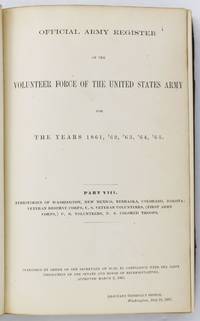
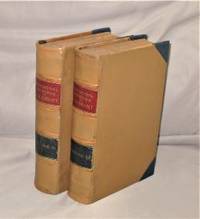
18675259Washington DC 1867. Good. 841111pp. Contemporary three-quarter calf and brown pebbled cloth leather label on front cover stamped in gilt. Spine mostly perished with three portions of original spine which include the gilt-stamped spine titles re-attached with cello tape. Corners worn mild rubbing. Both boards also holding by cello tape. Internally clean. The highly-desirable eighth volume of the records of volunteers in the United States Army during the years of the Civil War. Volume eight of the Official Army Register contains individual regimental histories lists of officers and casualty records for the officers of volunteer regiments emanating from the territories of Washington New Mexico Nebraska Colorado and Dakota plus the Veteran Reserve Corps the U.S. Veteran Volunteers the First Army Corps and the United States Colored Troops. About half of the overall work is devoted to the latter totaling almost 180 pages detailing the regimental histories officer lists casualty lists and more for the officers of the U.S. Colored Cavalry U.S. Colored Heavy Artillery U.S. Colored Light Artillery and U.S. Colored Infantry.<br /> <br /> In addition to the regimental listings the work contains an Appendix printing a "Supplemental list of casualties occurring subsequent to the printing of the text of this Register" a regimental Index an "Index of Battles" an Index of troop names an Errata leaf and a publication breakdown of the complete eight-volume work. The only illustration in the entire work is a "Fac Simile of the Medal of Honor" following the title page. The Official Army Register was printed in eight volumes between 1865 and 1867. The first seven volumes printed details on the regiments and officer rosters of the U.S. volunteer troops organized by the states where they served including Union regiments who served throughout the Confederate states. This last volume was devoted to the various territorial regiments and volunteers veteran units and officers of Black regiments. Commensurate with the way African Americans were treated generally the officers of the Black troops were published last.<br /> Sabin 56761. unknown
171862504Fort Marion Feb. 17 1865. one page. Fine. 12mo. A ms. account of about 70 words unsigned relating an attack on the garrison as they were engaged in improving the ditch; their retreat; and their rally. unknown
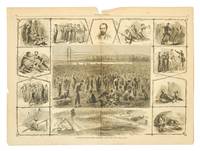
18651081571865. Harper's Weekly. September 16 1865. <br /> <br /> Folio 11 1/4 x 16" p. 583-586 two pages of text and one two-page engraving printed in black. Folded as issued foxing and chipping to edges; good.<br /> <br /> § A leaf from the original printing of this issue of Harper's Weekly. The two page illustration depicts grisly scenes from Andersonville Prison a confederate prison camp from the Civil War era. The plate is crowned by a portrait of Captain Hartmann Heinrich "Henry" Wirz who took charge in late March 1864 his failures in command made him the target of resentment and hostility among prisoners. Wirz was sentenced to death for war crimes shortly after this edition of Harper's Weekly was published. unknown
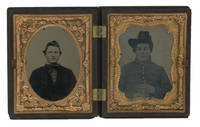
1860List1420American 1860. Images measuring 1 ¾ x 1 ½ inches in union case. A fine example. Fine. A particularly striking portrait of a young Union soldier in a union case with another young man possibly a relative. unknown
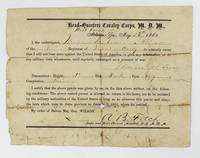
18655990West Point Ga: May 13 1865. About very good. Partially-printed document completed in manuscript docketed on verso. Old folds minor loss at one crossfold some archival reinforcements along fold lines minor creasing and edge wear. A late Oath of Allegiance sworn by Private William M. Lewis Company F of the 8th Confederate Texas Cavalry. William M. Lewis enlisted with the 8th Texas Cavalry better known as Terry's Texas Rangers after its organizer Benjamin Franklin Terry. Although originally intended to serve in Virginia the Rangers were assigned under General Albert Sydney Johnston for service in the West. Colonel Terry was killed early in a skirmish on December 17 1861. Terry's Texas Rangers were reassigned to the Army of Tennessee led by General Braxton Bragg where they were used as shock troops given their high skill level at mounted shooting. The regiment would ultimately fight in nearly 275 engagements distinguishing themselves at the battles of Shiloh Murfreesboro Chattanooga and Chickamauga. During the Atlanta Campaign the regiment continually harassed Sherman's army on its March to the Sea. Although 248 survivors of the 8th Texas Cavalry declined to surrender with the rest of the Army of Tennessee at the end of the war it appears that Lewis was captured. The rest of his regiment fled south to reunite with Confederates who had yet to bend the knee. In the present document Lewis does "solemnly swear that I will not bear arms against the United States of America or give any information or do any military duty whatsoever until regularly exchanged as a prisoner of war." The oath is followed by information on Lewis's physical description describing him as a five-feet-tall with "dark" hair "grey" eyes and a "fair" complexion. The document is signed by Lewis after the oath and at the bottom by Captain and Assistant Provost Marshall Asa B. Fitch of Company H of the 4th Iowa Cavalry which also fought at the Battle of Bentonville. The printed text above Fitch's signature states that he is allowing Lewis "to return to his home not to be molested by the military authorities of the United States as long as he observes this parole and obeys the laws which were in force previous to January 1 1861 where he resided." Loyalty oaths for Confederate Texas soldiers are rare but rarer still from prisoners of war held by Union forces at the end of the conflict and especially rare from members of Terry's Texas Rangers. This document is all three rolled into one. May 13 unknown
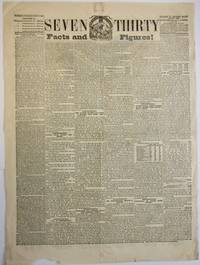
186537449Philadelphia 1865. Elephant folio broadsheet printed in six columns on recto and on verso. 15-3/4" x 21-1/4." Engraving of Screaming Eagle with shield bearing scroll inscribed "Your Sons and your Money on your Country's Altar!" Blank lower margin chip. Very Good.<br /> <br /> The words to twenty-one patriotic songs are printed on the recto beginning with "Hail Columbia" followed by "Yankee Doodle" "The Star Spangled Banner" "John Brown's Soul" "Johnny is Gone for a Soldier" and ending with "The Volunteer's Wife to her Husband." The Library Company's entry calls this item "Rare" although OCLC records other institutional holdings.<br /> The verso is titled "SEVEN THIRTY Facts and Figures!" It discusses the Nation's ability to pay the war debt. "The United States Can Carry a Bigger War Debt Than England." It accuses "a formidable body of men hostile to the Government and favorable to the Rebellion" of predicting "the ruin of the country by the weight of the debt." Patriots will purchase the Seven Thirty bonds but "Buying Gold Makes One a Rebel."<br /> Library Company of Philadelphia Record Number 000116607. unknown
186135992New York: D. Appleton and Company 1861. First Edition. Wraps. Good. Wraps. 34 pages. Original printed stitched wraps with title on the outer cover. Light edge chips and to the covers. Front cover lightly soiled. Interior contents are clean. Inscribed at the top of the front cover but it does not resemble the author's signature. Speech given during an Alumni Association meeting Dartmouth. <br /> <br /> From wikipedia:<br /> <br /> Caleb Sprague Henry was born in Rutland Massachusetts on August 2 1804.2 He graduated from Dartmouth College in 1825 and studied theology at Andover Theological Seminary and New Haven.3. In 1828 he became a Congregational minister at Greenfield Massachusetts and in 1833 removed to Hartford Connecticut. In 1834 he started the American Advocate of Peace the organ of the American Peace Society. In 1835 he entered the ministry of the Protestant Episcopal church.1 He also became professor of moral and intellectual philosophy in Bristol College Pennsylvania 1835–1838. In 1837 with the aid of Rev. Francis L. Hawks he established the New York Review. He was professor of history and philosophy in New York University from 1839 to 1852. Later he was rector of various churches but was chiefly engaged in literary work. He translated Guizot's History of Civilization and other works from the French and was the author of several works including Compendium of Christian Antiquities 1837 Social Welfare and Human Progress 1860 and Satan as a Moral Philosopher 1877.4 He died in Newburgh New York on March 9 1884.25<br /> <br /> <br /> Sabin 31387. D. Appleton and Company unknown
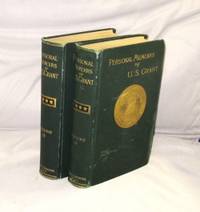
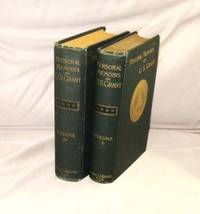
188528594New York:: Charles L. Webster & Company 1885 1886. First Printing of the First US Edition. Two Volumes Complete. A Very Good plus tight set in green cloth bindings stamped in gold on the spine and front covers with light wear to the spine edges and slight discoloration to the front board of Volume 1. This set is complete with the facsimile letter of Grant's original terms for Lee's surrender that is often missing. Mark Twain was the publisher of this monumental memoir as well as its editor and proof reader. Twain was extremely fond of and a close friend of Grant and encouraged the President and war hero to write his memoirs. Grant was dying of throat cancer but completed his two volume opus dictating the second volume to a secretary. Twain noted in a letter to his daughter that the manuscript was not even set yet and 20000 sets had been ordered from only two states. "Wait till you hear from the other 37." Grant finished his memoirs on July 18 1885 and died five days later on July 23rd. Following his death advance orders of the memoirs reached 300000 sets realizing close to $450000 for his family which was otherwise penniless. In a 1992 New York Times book review General Schwarzkopf is quoted as using Grant's two-volume work as his model calling it the finest military history of the Civil War. Charles L. Webster & Company, hardcover
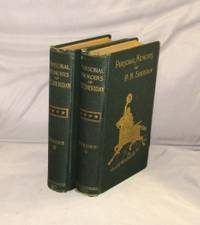
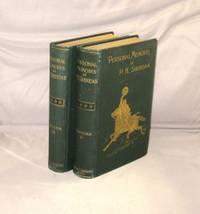
188828598<p>New York:: Charles L. Webster & Company 1888. First Printing of the First US Edition. A Near Fine bright and tight set with modest wear to the corners. The gilt lettering and cover decorations are bright. Philip Sheridan was a Union general in the Civil War and his career was noted for his rapid rise to major general and his close association with Lt. Gen. Ulysses S. Grant. Grant transferred Sheridan from command of an infantry division in the Western Theater to lead the Cavalry Corps of the Army of the Potomac in the East. In 1864 he defeated Confederate forces in the Shenandoah Valley and his destruction of the economic infrastructure of the Valley called "The Burning" by residents was one of the first uses of scorched earth tactics in the war. In 1865 his cavalry pursued Gen. Robert E. Lee and was instrumental in forcing his surrender at Appomattox. Sheridan prosecuted the later years of the Indian Wars of the Great Plains. Both as a soldier and private citizen he was instrumental in the development and protection of Yellowstone National Park. The general suffered a series of massive heart attacks two months after sending these memoirs to the publisher.</p> Charles L. Webster & Company, hardcover
188528635New York:: Charles L. Webster & Company 1885 1886. First Printing of the First US Edition. Two Volumes Complete. A Very Good plus tight set in green cloth bindings stamped in gold on the spine and front covers with light wear to the spine edges and slight discoloration to the front board of Volume 1. This set is complete with the facsimile letter of Grant's original terms for Lee's surrender that is often missing. Mark Twain was the publisher of this monumental memoir as well as its editor and proof reader. Twain was extremely fond of and a close friend of Grant and encouraged the President and war hero to write his memoirs. Grant was dying of throat cancer but completed his two volume opus dictating the second volume to a secretary. Twain noted in a letter to his daughter that the manuscript was not even set yet and 20000 sets had been ordered from only two states. "Wait till you hear from the other 37." Grant finished his memoirs on July 18 1885 and died five days later on July 23rd. Following his death advance orders of the memoirs reached 300000 sets realizing close to $450000 for his family which was otherwise penniless. In a 1992 New York Times book review General Schwarzkopf is quoted as using Grant's two-volume work as his model calling it the finest military history of the Civil War. Charles L. Webster & Company, hardcover
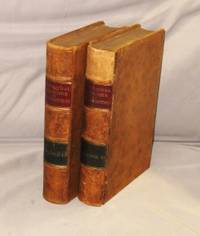
188828636New York::: Charles L. Webster & Company 1888. First Printing of the First US Edition. A Very Good set with marbled endpapers in full sheep leather bindings with green and red spine labels. The front hinge of volume one has be strengthened. Very uncommon in the leather binding. The gilt lettering is bright. Philip Sheridan was a Union general in the Civil War and his career was noted for his rapid rise to major general and his close association with Lt. Gen. Ulysses S. Grant. Grant transferred Sheridan from command of an infantry division in the Western Theater to lead the Cavalry Corps of the Army of the Potomac in the East. In 1864 he defeated Confederate forces in the Shenandoah Valley and his destruction of the economic infrastructure of the Valley called "The Burning" by residents was one of the first uses of scorched earth tactics in the war. In 1865 his cavalry pursued Gen. Robert E. Lee and was instrumental in forcing his surrender at Appomattox. Sheridan prosecuted the later years of the Indian Wars of the Great Plains. Both as a soldier and private citizen he was instrumental in the development and protection of Yellowstone National Park. The general suffered a series of massive heart attacks two months after sending these memoirs to the publisher. Charles L. Webster & Company,, hardcover
188561040New York: Charles L. Webster & Co. 1885-1886. Two vols. 8vo. 583 1; 647 1 pp. Both volumes w/ steel-engraved frontisp. numerous maps and facsimile documents. Original green embossed cloth gilt medallion on front covers of both volumes gilt lettering very slight rubbing slight bumping to couple corners very light darkening to spines still a VG bright and sound set w/ former ownership markings on 2nd title. First edition of perhaps one of the best memoirs of the experiences during and after the Civil War. Charles L. Webster & Co., hardcover
188828874<p>New York:: Charles L. Webster & Company 1888. First Printing of the First US Edition. A Fine bright and tight set in green cloth binding. The gilt lettering and cover decorations are bright. Philip Sheridan was a Union general in the Civil War and his career was noted for his rapid rise to major general and his close association with Lt. Gen. Ulysses S. Grant. Grant transferred Sheridan from command of an infantry division in the Western Theater to lead the Cavalry Corps of the Army of the Potomac in the East. In 1864 he defeated Confederate forces in the Shenandoah Valley and his destruction of the economic infrastructure of the Valley called "The Burning" by residents was one of the first uses of scorched earth tactics in the war. In 1865 his cavalry pursued Gen. Robert E. Lee and was instrumental in forcing his surrender at Appomattox. Sheridan prosecuted the later years of the Indian Wars of the Great Plains. Both as a soldier and private citizen he was instrumental in the development and protection of Yellowstone National Park. The general suffered a series of massive heart attacks two months after sending these memoirs to the publisher.</p> Charles L. Webster & Company, hardcover
191763357New York: The Century Co. 1917. Two vols. 8vo. xix 1 525 1; xiv 2 517 1 pp. Both volumes w/ frontisp. numerous maps and illustrations plates facsimile documents. Blue-ribbed publisher’s cloth gilt lettering & lozenges on spines t.e.g. very slight rubbing slight bumping to couple corners faint ex-lib markings on spine still a VG- bright set w/ former ownership markings on endpapers from the libraries of Dr. John C. Brougher 1901-1983 founder of Vancouver Clinic and famed obstetrician & gynecologist believed to have delivered over 10000 children in SW Washington during his years of practice and Clark County Historical Society Collections recently deaccessioned bookplates on front pastedowns. Second edition later printing issued during World War I of perhaps one of the best memoirs of the experiences during and after the Civil War. The second edition had been originally issued in 1895 with the additions in the margins as references by Frederick Dent Grant 1850-1912 the Grant’s oldest son and additions to some sections including the Mexican-American War. The Century Co., hardcover
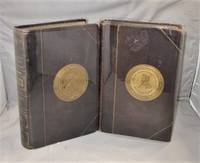
188527459New York:: Charles L. Webster & Company 1885. First Printing of the First US Edition. This is a Near Fine tight set with light wear to the extremities in the publisher's deluxe brown morocco leather over brown cloth boards with gilt circular emblems on the front and rear covers. This set is complete with the facsimile letter of Grant's original terms for Lee's surrender that is often missing. Mark Twain was the publisher of this monumental memoir as well as its editor and proof reader. Twain was extremely fond of and a close friend of Grant and encouraged the President and war hero to write his memoirs. Grant was dying of throat cancer but completed his two volume opus dictating the second volume to a secretary. Twain noted in a letter to his daughter that the manuscript was not even set yet and 20000 sets had been ordered from only two states. "Wait till you hear from the other 37." Grant finished his memoirs on July 18 1885 and died five days later on July 23rd. Following his death advance orders of the memoirs reached 300000 sets realizing close to $450000 for his family which was otherwise penniless. In a 1992 New York Times book review General Schwarzkopf is quoted as using Grant's two-volume work as his model calling it the finest military history of the Civil War. Charles L. Webster & Company, hardcover
188528077New York:: Charles L. Webster & Company 1885. First Printing of the First US Edition. This is a Near Fine tight set with light wear to the extremities in the publisher's full brown calf leather binding with black leather tips. There is slight moisture bleed in Volume 1. The spine title is red leather and the volume label is black. The rear hinges of each volume have been reinforced. This set includes the facsimile letter of Grant's original terms for Lee's surrender laid in. Mark Twain was the publisher of this monumental memoir as well as its editor and proof reader. Twain was extremely fond of and a close friend of Grant and encouraged the President and war hero to write his memoirs. Grant was dying of throat cancer but completed his two volume opus dictating the second volume to a secretary. Twain noted in a letter to his daughter that the manuscript was not even set yet and 20000 sets had been ordered from only two states. "Wait till you hear from the other 37." Grant finished his memoirs on July 18 1885 and died five days later on July 23rd. Following his death advance orders of the memoirs reached 300000 sets realizing close to $450000 for his family which was otherwise penniless. In a 1992 New York Times book review General Schwarzkopf is quoted as using Grant's two-volume work as his model calling it the finest military history of the Civil War. Charles L. Webster & Company, hardcover