11 490 résultats
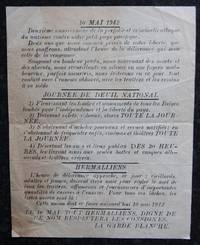
1942690French language. Single sheet. Size 5 3/8" x 4 1/4" approx 13.75cm x 10.75cm. Dated 10 Mai 1942 and encouraging Belgian actions against the Nazi occupiers on the second anniversary of the German invasion of Belgium a "Journée de Deuil National" National Day of Mourning. Printed attribution "La Garde Blanche". Good condition. Creased / browned. <br /><br /><i>La Garde Blanche were a Second World War Belgian active resistance para-military unit active in sabotage and primarily operating in the Flemish regions.</i> La Garde Blanche
1917WORLDWAR013305Edouard Privat Toulouse. 1917. First edition. Octavo. 7 pages. Wrappers. A poem ridiculing the Kaiser. The first page is given over to an etching showing him in bed about to discover his boots full of blood according to the poem.Presentation copy from the author inscribed on the front cover: ''A Mademoiselle Mathilde Pom�s respectueux hommage de son coll�gue de Toulouse l'auteur L Dubois''. Also in the author's hand is the acknowledgment ''Eau-forte d'Albert Guiraud''.Covers faintly tanned at the edges. Very near fine. Very scarce. Edouard Privat, Toulouse. unknown
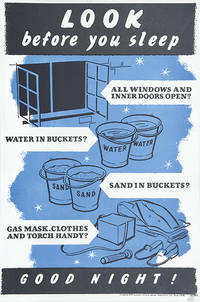
1941173613London: Printed for H.M. Stationery Office by Johnson Riddle & Co. Ltd 1941. A poster produced during the Blitz to remind civilians to be ready each night for their home being hit by bombs - to leave windows open to escape have water and sand in buckets ready to fight fire and to have gas masks clothes and a torch ready. Offset lithograph 379 x 253 mm. Inky finger-print at bottom right. In very good condition. hardcover
1940WORLDWAR015857His Majesty's Stationery Office London. 1940. New edition of the 1929 issue with the 1939 amendments Nos. 1 to 4. Octavo. 166 pages. Numerous plates and maps many folding. Cloth-backed boards.Some rubbing and discoloration to covers. Very good. His Majesty's Stationery Office, London. hardcover
1417131561At sea: 1914-17. Including an eyewitness account of the war's first British-Ottoman military engagement A detailed firsthand account of naval operations in the Middle Eastern theatre during the war's formative first year. HMS Minerva saw action at the 1 November Battle of Akaba the first British attack on Turkish forces after Mehmed V joined the Central Powers and later at Gallipoli. The log substantially enriches the publicly available captain's record. Its author John Robert Butland 1869-1932 joined the Royal Navy at 18 served until 1912 and was recalled in August 1914 when reserves and pensioners were mobilised by royal proclamation. As Minerva's master-at-arms he served aboard the Eclipse-class cruiser from 1914 to 1917 before two further years on HMS Victory and final discharge in February 1919. Minerva joined Admiral de Robeck's 9th Cruiser Squadron in August 1914. A meticulous diarist Butland devotes extended entries to 1914-15. The diary opens on 2 August 1914 the day of his recall and follows Minerva to Port Said where passage through the Suez Canal was delayed by mine-sweeping amid fast-moving diplomacy. "30 October. About noon we got the news that England and Turkey would be at war in a few hours. That means plenty of fighting out this way". On 1 November the ship was ordered to Akaba: "On arrival at Akaba we at once commenced bombarding. 4 pm exactly as forts would not surrender. Turks made escape to the mountains our small guns firing Lyddite shell at them. A lot did not get far". Subsequent entries describe landing parties skirmishes ashore and include a translation of a British proclamation of friendship posted in the town. Akaba remained central to operations. The ship patrolled the gulf landed troops and countered renewed Turkish activity: "29 Nov. Arrived 'Akaba' 12 noon. Visited the town and found that the Turks had been back and had started rebuilding some of the places up again. No doubt their scouts on the high hills each side of the gulf saw us coming and gave the alarm." A French hydroplane was landed for reconnaissance and on 16 December the ship was attacked at night by Turkish forces who had secretly emplaced guns on the beach. A later landing turned into a desperate rescue vividly recorded: "The order was given to land a large party to rescue the few Marines that had been landed Some severe rifle fire took place. The Turks finally left their position and left for the hills being shelled from the ship they lost heavily." In 1915 Minerva operated at El Tor and Abu Zenima and took part in the raid on the Suez Canal. On 16 April she intercepted and destroyed a Turkish torpedo boat threatening a troop transport: "Seeing that she was cornered she turned to port and ran up on the shore We sent a party over with explosives and blew her up glad to know we had done a little more for King and Country." The ship then supported the Gallipoli landings with sustained bombardments later joining the action at Suvla Bay "This is the hottest engagement the Minerva has been in so far" - 7 August. In 1916 Minerva patrolled from Suez refitted at Singapore and later returned to Aden to survey landing points near Rabigh. As the focus of operations shifted to Mesopotamia she was redeployed to Africa and paid off at Simonstown. Quarto 235 x 190 mm. Mimeographed slips naval signal forms sketch map and other ephemera tipped in. Original black boards recently rebacked with purple cloth with 121 leaves completely filled in neat manuscript a few blank leaves at end. Binding sturdy usual rubbing and evidence of use: very good. hardcover
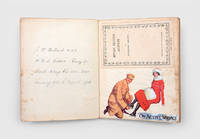
1918183572Reading: 1918. A brightly illustrated set of lecture notes taken by Lieutenant James Smith Richardson in 1918 with his name inscribed in pencil on the title page. Richardson served as an engineering officer with the 2/8th Battalion Royal Scots then transferred to the 2/5th Battalion King's Own Scottish Borderers. His notes cover topics ranging from trench digging to rail line construction and laying barbed wire. By the end of 1914 the rapid construction of trenches camps and railways was straining the capacity of the Royal Engineers. To solve this problem the War Office ordered the creation of a "pioneer battalion" for each division of the New Armies who were given training in entrenching road construction demolition and railway maintenance. Alongside meticulously detailed notes this notebook includes mathematical equations and skilled drawings including a double-page spread of a trench network. At the end of each module Richardson's notes were marked in pencil or stamped in red by an instructing officer at the Pioneer School in Reading. One of these stamps is dated 30 January 1918. The 8th Battalion Royal Scots joined the 51st Highland Division as its pioneer battalion in 1915 and fought with them from the Somme through to Cambrai. Small quarto manuscript mostly on recto of 84 leaves remainder blank. Hand-coloured drawings diagrams and tables throughout; four tipped-in handouts. Original blue diapered cloth refillable wrappers metal binder. Title page inscribed in red pencil "To be Completed". Spine toned extremities rubbed black ink stain to front wrapper binder a little rusted small closed tear to title page at head contents bright: a very good example. hardcover
1936WORLDWAR010756Ivor Nicholson and Watson London. 1936. First edition. Octavo. 295 pages. Colour frontispiece from a caricature of the author. Memoirs largely from the First World War and frequently humorous. The author was an Irishman who served as an officer in the British army.Edges faintly spotted. Very good indeed in very good very slightly nicked and faintly marked dustwrapper. Ivor Nicholson and Watson, London. unknown
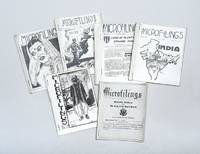
1945125530Calcutta: 5th and 21st V-Mail Detachments 1945. A gathering of issues from Microfilings a morale-boosting and light-hearted periodical edited by US soldiers in India and published monthly for approximately one year towards the end of the Second World War. We have traced no copies institutionally. Copies were circulated using the V-mail process in which images were sent on film and developed for printing at the destination. The condition of the paper suggests these copies were printed in the US. The final instalment dated October 1945 celebrates the Allied victory with a spoof honourable discharge notice for the magazine reproduced on the first page. 6 issues duodecimo each pp. 6-12. Booklets wire-stitched as issued. Light staining only; excellent condition. unknown
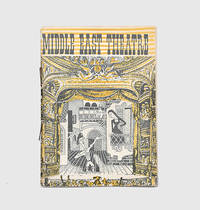
1945178389Perhaps London: printed by The Printing and Stationery Services MEF 1945. First edition first impression of this scarce pamphlet distributed to soldiers posted to the Middle East. It is a quick introduction to the practicalities of living in the region humorously illustrated throughout. We have traced no other copies. This pamphlet was produced to aid in the smooth integration of soldiers stationed in Egypt Palestine Syria and elsewhere in the Middle East and North Africa. It covers the histories cultures and lifestyles of people living across the region while also containing practical information on road infrastructure postage entertainment illness and general safety. As General Sir Bernard Paget wrote in his introduction: "The Middle East is one of the most interesting and important places in the world today. Its interest you will find increases as your knowledge of it increases. Its importance is the reason for your being here" p. i. Small quarto. Maps and illustrations in text. Original pictorial wrappers wire-stitched as issued. Wrappers a little nicked and creased with one chip losses to foot of rear wrapper and a few pages text unaffected some old tape repairs rust marks contents bright: a very good copy of a delicate work. unknown
19451175421945. WORLD WAR II. Mimeographed typescript of the USS Salamaua News. No place September 3 1945. Two sheets of beige paper staple-bound as issued each measuring 8 by 13 inches; pp. 2. $9500.Original mimeographed USS Salamaua News newsletter containing detailed news of Japanese surrender preliminary reports on POWs in Japan and their treatment by the Japanese Japanese reactions to the surrender brief news from around the world and baseball standings accompanied by a black-and-white photograph of the newsletter's owner Lt. Commander Fred R. Salisbury II of the Salamaua.This newsletter was issued for crewmen on the USS Salamaua best known for being attacked on January 13 1945. This ship newsletter from nine months after the attack kept the crew of approximately 570 officers and enlisted men informed of world eventsparticularly those relevant to their service. This issue of the newsletter provides details of the Japanese surrender; initial reports on prisoners in Japanese prison camps; and other world news including standings for the National League and American League baseball teams.Notable quotations from the newsletter include: ""TOKYO BAY Japan surrendered formally and unconditionally to the United States and its allied partners today MacArthur told the Japs that 'As supreme commander for the allied powers I announce it is my firm purpose in the tradition of the countries I represent to proceed in the discharge of my responsibilities with justice and tolerance while making all necessary dispositions to insure that terms of surrender are fully promptly and faithfully complied with President Truman speaking over a radio hookup proclaimed Sunday September 2nd as 'V-J Day' The day of formal surrender by Japan Liberated allied prisoners of war Sunday recited more instances of beating hunger and humiliation There was no indication of deliberate German scale mass extermination Approximately 4200 Americans British and Dutch remain in camps in the Tokyo-Yokohama area TOKYO The Japanese said Saturday that for two days after Emperor Hirohito told his people the war was over several planes evidently flown by fanatical suicide pilots dropped pamphlets on major Japanese cities asking the people to disregard the Emperor's word and fight on ""The USS Salamaua had participated in the invasion of Lingayen Gulf in the Philippines. A kamikaze attack carried out by a Ki-84 airplane left a 16-foot by 32-foot hole in the Salamaua's flight deck. It also sparked a number of fires. The plane had carried two 551-pound bombs allowing it to penetrate deeply into the lower decks. One bomb detonated near the tank tops just above the bilge and narrowly missing the bomb stowage compartment. The blast sent debris and fuselage across the flight deck collapsing a number of bulkheads. The second bomb failed to explode and was ejected through the starboard side of the ship at the waterline. The 20-inch hole it left allowed seawater to rush into the ship. As a result the ship lost power communications and steering becoming a sitting duck.While the Salamaua sat immobile two more planes tried to strike it. One crashed into the sea while another detonated in mid-air as it approached. The failure of those pilots meant that the attack killed only 15 of the Salamaua's crew. Another 88 crewmen were injured some seriously.When Rear Admiral Calvin T. Durgin in command of a task force asked for the origin of the smoke he saw coming from the Salamaua he received the reply ""Something just went through our flight deck."" The starboard engine was submerged and the ship listed 8 degrees to starboard. Yet the crew managed to get the ship functional using only the portside engine. Ten long hours after the attack the Salamaua was able to break away to Leyte for repairs. An entire day of pumping failed to alleviate the flooding so the ship merely underwent stabilization repairs before being sent to San Francisco for two rounds of repair. The Salamaua returned to the Philippines in May and eventually was retired from service in 1946 earning the dubious distinction of being the last ship to be successfully attacked by a kamikaze. From the collection of Lt. Commander Fred R. Salisbury II of Minnesota. Salisbury worked in his father's business a furniture manufacturer until the outbreak of World War II Salisbury enlisted in the U.S. Navy in February of 1942 and was assigned to be lieutenant commander of the USS Salamaua a Casablanca-class escort aircraft carrier. Salisbury was released on inactive duty in March 1946 and became vice president of the family business. Laid-in photograph of Salisbury in Guam in 1945.A fascinating World War II artifact. unknown
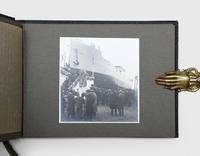
1918183271No stated place or publisher: c.1918. A commemorative album showing the naming ceremony and launch of the steamer Torild on 21 September 1918 the first to leave the Öresundsvarvet shipyard. Its construction was spurred on by the outbreak of the First World War which increased demand for both warfighting and merchant ships. We have traced no institutional copies. The Öresundsvarvet shipyard was established in 1915 to boost the industry of the city of Landskrona. Construction began in 1916 and the shipyard was officially opened with the launching of the first steamer Torild. As shown in this album the launch was attended by a party of Dutch guests who were greeted by Mayor August Munck af Rosenschöld. Together they broke a bottle of champagne on her bow at 2:21 p.m. The shipyard continued to operate until 1982 when a reduced demand for oil tankers world-wide forced the owners to sell the land. Landscape octavo. With 12 original gelatin silver photographs approximately 106 x 115 mm landscape mounted on recto of thick card leaves captioned glassine guards; title page and guards printed in red text in Swedish. Original black pebbled cloth tied through holes with green cord as issued. A little rubbed and soiled photographs with some silvering and small scratches some guards chipped at lower right corner with loss to caption: a very good copy. hardcover
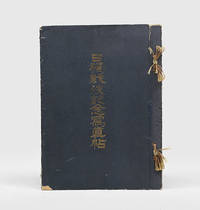
1915176119Qingdao: Mifune Shashinkan 1915. Second edition first printing of this album of photographs of Qingdao in the First World War. It contains many shots from the only major land battle of the war to take place in China including of heavy weaponry soldiers on the march encampments and local infrastructure. As part of the succession of unequal treaties imposed upon the Qing Dynasty in the late 19th century the German Empire leased Jiaozhou Bay in 1898 and used it to build the city of Qingdao. This became its primary naval base in the region and therefore a major target in the First World War. Under the terms of the Anglo-Japanese Alliance of 1902 Britain requested help from the Japanese Empire to dislodge the German forces. The Imperial Japanese Navy proceeded to blockade the port and land their troops putting it under siege in September 1914. The garrison held out for two months but was overwhelmed. This was the only major land battle in the Asian theatre of the First World War the second air-sea battle in world history and the second time that the Japanese had defeated a major Western power. This volume is a collection of photographs taken during the preparation fighting and aftermath of this battle. The photographer was Mifune Shuko who "accompanied the soldiers through thick and thin running through a rain of bullets facing rain and wind hunger and frost putting his body on the line to photograph the war" p. ii. The volume opens with a colour photograph of Lingyan Temple near the city of Tai'an followed by hundreds of black and white photographs showing not just the battle itself but also the city of Qingdao and its people. This second edition was released 10 days after the first edition on 25 April 1915. Octavo. With 121 pages of half-tone photographs one colour photograph of Lingyan Temple; text in Japanese and English. Single page of publisher's advertisements to rear. Original black ribbed cloth boards light green thread binding spine ends capped in purple cloth blind vertical rule to both boards front board lettered in gilt. Signature to title of "Hermann Walter 1. Nov. 1914". Boards worn a few tidemarks gilt tarnished title page with one chip to top left corner and one closed tear repaired with tape light offsetting plates bright: a very good copy. hardcover
1929213275Amsterdam: Internationaler Gewerkschaftsbund 1929. paperback. poor. Numerous black & white horrendous photographic illustrations of frightful mutilations left by the war. 63 pages slim 8vo black & white wrappers with an illustration by Kathe Kollwitz stained front wrapper detached light water staining throughout on the margins. Amsterdam: Internationaler Gewerkschaftsbund 1929. Overall a poor copy of this rather scarce catalog.<br/> <br/> Text and captions in six languages. The photographs were collected by Ernst Friedrich director of the Anti-War Museum of Berlin.<br/> <br/> Internationaler Gewerkschaftsbund unknown
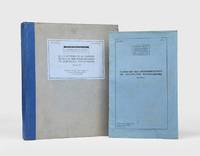
1918166765France: General Staff Intelligence General Headquarters. February 1918. Towards "total knowledge of the battlefield and total control" An impressive exposition of the rarified level reached by fixed-wing aerial reconnaissance and photo interpretation by the last year of the war. Third edition considerably expanded of the slight and fragile text pamphlet first published 1916 paired unusually with the impressive plate volume - both are decidedly uncommon. These were produced in France by Army Printing & Stationery Services and classified "For Official Use Only"; despite a stated print run of 4000 few copies of the pamphlet have survived. The first item contains concise but detailed notes on how to identify various battlefield structures and features - trenches and wire dugouts and mine shafts listening and observation posts batteries concrete structures and so forth - followed by a section on rear organizations - railways dumps billets and aerodromes - noting that from the "enemy's means of supply" and the study of aerial photographs more generally "often his intentions may be deduced". The pamphlet concludes with a brief section of technical notes on the uses of different types of photographs oblique stereoscopic stereoscopic oblique and how these may variously offer enhanced potential for interpreting detail. The substantial atlas contains an exceptionally fine range of high quality photos illustrative of the points made in the accompanying notes. Many of the views are accompanied by maps or sketches to clarify interpretation with locations often identified. Just ten years after the Wright Brothers' epoch-making 12-second flight at Kitty Hawk the aeroplane had become a gun platform duelling in the air and the instrument of accurate distant bombardment; and perhaps most influentially the ultimate mode of reconnaissance profoundly altering the nature of engagement. "At the outbreak of the First World War commanders like British Field-Marshal John French believed that no mechanical platform would ever replace cavalry as a means to conduct reconnaissance. Within months however the horse succumbed to industrial warfare as did traditional methods of cavalry generalship. In the place of cavalry arose the modern military intelligence bureaucracy that employed a Fordist system of photo interpretation in an attempt to achieve total knowledge of the battlefield and total control. The power of photo interpreters in the words of Paul Saint-Amour was 'not in the mere ability to command but in the more rarefied capacity of producing the knowledge that would inform the commanders'" Gettinger. Text foolscap folio. First named with double-folding plate of "Shadow Diagrams" at rear; plate vol. containing around 100 illustrations on 60 silver print photographic plates linen stub-bound on heavy card plate of mark-up symbols and a repeat of the folding plate from the text pamphlet. 11 pp Wire-stitched in light greenish blue printed wrappers: plate vol. folio 360 x 310 mm strong blue cloth-backed greyish-yellow paper-covered boards printed paper label to front board. Touch of foxing to wrappers of text pamphlet and just a little rust to staples top corners of plate volume lightly bumped. Both in very good condition. Dan Gettinger "The Ultimate Way of Seeing: Aerial Photography in WWI" 2014 Center for the Study of the Drone at Bard College online. hardcover
1944187614Breda: Louis Vermijs N.V. 1944. First edition celebrating the Polish contribution to the allied liberation of Europe while the war was still ongoing. At this time the 1st Armoured Division were stationed in the Netherlands having freed cities including Breda where this work was published. The illustrations show battles throughout the campaign German tanks and the division's commander Major General Stanis aw Maczek. The 1st Polish Armoured Division was formed in 1942 from the remains of the 10th Motorized Cavalry Brigade after they were defeated during the German invasion of Poland. After training in Scotland they were transferred to Normandy in August 1944 proceeding to fight across France Belgium and the Netherlands. The latter half of the work celebrates the liberation of Breda during Operation Pheasant where the Germans were forced out without any civilian casualties. It shows Polish Liberation Day festivities held in the city local shops welcoming the allied forces and the plaque recording the freedom of the city given to the division on 30 October 1944. We have traced only eight institutional copies. Oblong octavo 159 x 321 mm. Half-tone photographic illustrations throughout route map in text. Original buff paper wrappers orange cord binding front wrapper decorated with blue and black border and crest of the 1st Armoured Division in colour rear wrapper lettered in black. Title page inscribed "To my best friends - Mr. & Mrs. A. M. Burchart Limberg 17 Holland 9th Dec 1944". Wrappers a little creased small patch of soiling on front wrapper minor offsetting internally: a very good copy. unknown
1943WORLDWAR011323Salamander Productions Cairo. 1943. First edition. Octavo. pp xx 64. Wrappers. Foreword by H.M. Wilson. Three page introduction by the editors ''In the Beginning''. Preface by Worth Howard. Six page article ''Poetry Today'' by John Cromer. G.S. Fraser G.O. Physick John Cromer Hamish Henderson Erik de Mauny Theodore Stephanides Al Mendro etc contribute. Cover design by T. Rhind.Near fine. Scarce especially in such bright condition. Salamander Productions, Cairo. unknown
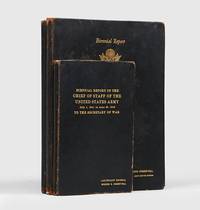
1943190146Washington: United States Government Printing Office 1943-45-46. Presentation copies from General George Marshall to his "miracle worker" General Brehon B. Somervell A complete set of the original official US Army wartime reports handsomely produced the personal copies of General Brehon Burke Somervell 1892-1955 George Marshall's commander of Services of Supply the first two being presentation copies from Marshall the cover of each volume gilt lettered with Somervell's name and rank. Services of Supply was one of the three "superagencies" organized by the US Army after the United States's entry into the war in December 1941 - the other two being Army Ground Forces and Army Air Forces - and gathered under its overarching aegis Quartermaster Corps Chemical Warfare Service Signal Corps Corps of Engineers Ordnance Department Medical Corps and Transportation Corps. "General George C. Marshall the army's chief of staff during World War II held Somervell in high regard for his ability to perform monumental tasks and was willing to overlook his penchant for antagonizing others. "What he did was a miracle" said Marshall in a postwar interview. The U.S. Army in World War II was probably the best-supplied army that had ever gone to war. Much of the credit for that accomplishment goes to Somervell who provided the "sinews of war" for a military effort that literally spanned the globe" American National Biography. Somervell is mentioned directly by Marshall in his concluding remarks to the first volume where he notes "The requirements of logistics are seldom understood. The burdens they impose on the responsible military authorities are rarely appreciated. The conflicting demands of our theater commanders of Allied sovereign powers and of the home front pose difficulties never before approximated in war. The necessity for a high degree of efficiency in management is evident and it has been found in the coordination of all the various supplies and administrative departments of the Army under the command and leadership of Lt. Gen. Brehon B. Somervell. "Published at two-year intervals these reports provide a comprehensive picture of global war as seen from the perspective of the Chief of Staff. The first report describes the race to mobilize an unprepared country and Marshall's appeal on the eve of war for the renewal of Selective Service a reminder of how far the U.S. Army had to come to meet the Axis challenge. The second recounts the initial defeats after Pearl Harbor and the ultimately successful efforts of the United States and its Allies to turn the tide. The final report describes the drive to victory and outlines Marshall's analysis of the reasons for the Allied triumph. Summaries give an overall view of the progress of the war but the scholar and military professional will find most interesting Marshall's comments on such topics as technology the "90-division gamble" the replacement system troop morale and the citizen-soldier and demobilization. These comments and the other material presented in the reports provide not only a fresh perspective on the myriad problems of conducting a global war at the highest levels but also renewed appreciation for the man whom Churchill appropriately called 'the organiser of victory'" Brigadier-General John W. Mountcastle foreword to the 1996 Center of Military History edition. This is a set of the scarce original edition produced by the United States Government Printing Office in Washington; trade editions were also produced by the Infantry Journal Press in the US and HMSO in Britain. The set comprises: Biennial Report of the Chief of Staff of the United States Army July 1 1941 to June 30 1943 to the Secretary of War. Octavo pp. v 56. 6 folding maps and 19 folding charts. Presentation copy from General George Marshall inscribed on a preliminary blank: 'To General Somervell with appreciation and warm regard G. Marshall". Biennial Report of the Chief of Staff of the United States Army to the Secretary of War July 1 1943 to June 30 1945 to the Secretary of War' Quarto pp. iii 123. bound with the supplementary Atlas of World Battle Fronts in Semimonthly Phases to August 15 1945 pp. 101. Presentation copy from General George Marshall inscribed on a preliminary blank: "Dear Somervell - Please accept this copy of my final report as Chief of Staff with appreciation of your tremendous service to the army and support of me with my affectionate regards - G. Marshall October 5 1945". Report by the Supreme Commander to the Combined Chiefs of Staff on the Operations in Europe of the Allied Expeditionary Force 6 June 1944 to 8 May 1945. Quarto pp. x 123. Several colour maps. 3 vols one octavo 232 x 135 mm 2 quarto 305 x 210 mm. Contemporary black pebble-grained skiver gilt lettered on front covers first 2 vols with dark blue vertical-rib cloth endpapers third with white moiré silk-effect endpapers. Bindings a little worn at extremities some mottling to covers scattered foxing otherwise very good. hardcover
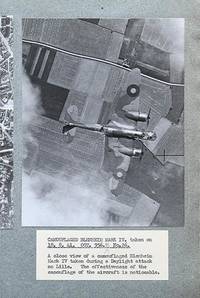
1942173506London: Royal Air Force 1942. A turning point in the air war from the air A high-quality comprehensively captioned album likely prepared in early 1942 for high-level review documenting RAF bombing and reconnaissance operations from May to December 1941 - the pivotal months in which the Luftwaffe lost the initiative and the RAF began to strike deep into Axis territory. The photographs cover Western and Central Europe North Africa and the Middle East recording attacks on major cities and strategic targets - including Berlin Cologne Hamburg naval and military bases factories and infrastructure - together with a stark reconnaissance view of Dachau and two large photo-mosaics of Persian oil facilities. The album demonstrates the breadth of the RAF's offensive and intelligence-gathering capability at the moment when its position in the air was rapidly strengthening. The accompanying commentary situates these operations in the critical pre-American phase of the air war when Britain and its Commonwealth allies faced the Luftwaffe alone. Despite Germany's early technical and tactical superiority - honed through clandestine rearmament the Spanish Civil War and a substantial training programme - its advantages eroded through strategic miscalculations: the failure to win the Battle of Britain the ineffectual Blitz and the diversion of resources to the Russian front. By late 1941 the RAF with improved materiel and better-trained crews was able to conduct long-range raids and detailed reconnaissance deep into increasingly thinly defended airspace. The album's index singles out 13 photographs as exemplary though the technical precision throughout renders such distinctions narrow. Particularly striking sequences include low-level obliques around Flushing analysing camouflage on local defences; large-scale "dicing" images at Étaples revealing dummy gun positions and trench systems; night photographs of Berlin and Kassel illuminated by flak searchlights and incendiaries; daylight images of Blenheim attacks on Cologne power stations some framed by the photographing aircraft; and a sequence tracking the movements of the Admiral Scheer from Denmark to Swinemünde. Two photographs of the December 1941 Halifax bomber raid on Gneisenau Scharnhorst and Prinz Eugen at Brest taken seconds apart show the attack unfolding with exceptional immediacy. The album concludes with the first photographic coverage of Iceland nine images illustrating its striking terrain. A full list of images is available on request. Landscape folio 300 x 380 mm 4 pp. indexes by place and subject full-page mounted photo-reproduced "Sketch-map shewing Locations of Places" 159 silver gelatin original photographs mounted either side of 51 leaves of pale green light card stock formats ranging between 260 x 325 mm and 90 x 135 mm the majority between these at around 200 x 170 mm all with meticulous typescript captions logging date location and the nature of the operation with detailed interpretation of the image Original black pebble-grain morocco-finish roan lettered "VOL I" in gilt on the spine with gilt ruled compartments concentric panels in blind to covers strong blue on very light greenish blue hammer finish endpapers dark olive green linen hinges. Binding a little rubbed some light abrasions and scratches to covers some inevitable scuffing at the extremities; text pages lightly toned as also the mounting leaves but just marginally so and with occasional light soiling binding a little open between a few leaves but sound the photographs themselves remain pin-sharp and dark retaining excellent definition and tone; very good. unknown
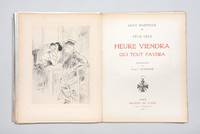
1516140915Paris: Maison du Livre 1915-16. Rare complete and in such good condition First edition first printing one of 100 on Japon paper this copy unnumbered. This illustrated collection of poems from the First World War was sold for the benefit of artists and craftsmen of the book industry who were wounded in that war. The contributing authors include Émile Verhaeren for Crime allemand Léon Bloy for Nous ne sommes pas en état de guerre Robert de Montesquiou for Nouvelles offrandes blessées and Marcel Boulenger for La belle santé. Folio in 12 parts. 12 engraved frontispieces after various artists including Théophile-Alexandre Steinlen Louis Legrand and Henri Gervex and a loosely inserted engraving after Carlos Schwabe titled "In Memoriam" and left blank to "receive the name of a beloved departed" title pages printed in red and black. Each part in its original colour card wrappers titles in black on colour backgrounds within decorative frames of claws and German spiked helmet untrimmed; with gilt-printed pictorial bifolio collective title page. Housed in custom cloth-backed blue card chemise. Ink stamp from a Rheims printer to front of chemise. light toning to collective title the wrappers otherwise remarkably bright unfaded and fresh internally clean; a near-fine set. hardcover
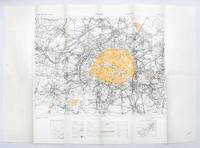
1944156766London: War Office 1944. The liberation of France First of this edition revised from a French map dated 1937 photolithographed in 1942 and corrected to August 1944. Maps such as these were used in the planning and execution of the liberation of Paris from 19 to 25 August 1944. This map intended for use in the field focuses on areas of particular importance for the army. These include good viewing points dangerous areas forest paths practicable in dry weather isolated hotels and buildings hospitals forts radio stations and factories. The heart of the city is highlighted in orange and distances are centred on Notre Dame Cathedral whose Emmanuel bell rang out to welcome the arrival of General Leclerc's division. It was first produced by the War Office in 1941 after a Michelin map of 1937. Photolithographed map 713 x 981 mm printed on one side only highlights in orange and green text lettered in red and black key on recto. Later pen inscription "Paris" outside printed area. Map bright two closed tears to edges sometime repaired with tape light nicks and finger-soiling at edges small stain to verso: a very good copy. unknown
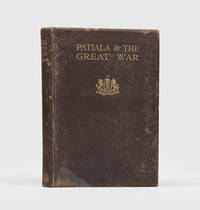
1923170533London: Printed by the Medici Society Ltd for private circulation 1923. A record of war service surpassed by no other State in India First and only edition rare in commerce. This illustrated history details the contributions of Patiala's Rajindar Sikhs and lancers to the defence of Suez and the Mesopotamian Campaign as well as the many tributes paid to them after the end of hostilities. The several dozen photographs chronicle the maharaja's wartime visits to the Middle East theatre and the Western Front. During the First World War the Maharaja of Patiala 1891-1938 recruited over 10000 subjects into the Indian Army and raised an additional 4300 men for infantry squadrons and his 72nd Hired Camel Corps. In 1921 he visited Brighton to unveil a new southern gateway for the Royal Pavilion constructed in thanks for the welcome afforded Indian soldiers convalescing in the city during the war. Octavo. Photogravure frontispiece after portrait of Bhupinder Singh Maharaja of Patiala with captioned tissue guard; 49 tipped-in platinum prints. Title page partly printed in blue. Original brown cloth over bevelled boards spine and front cover lettered in gilt and with gilt coat of arms of Patiala edges gilt black silk bookmarker. Cloth rather worn especially at foot of boards leaves brittle and a few beginning to split at gutter pp. 1-2 repaired and lined with tissue on verso couple of other repairs bookmarker split: a very good copy. hardcover
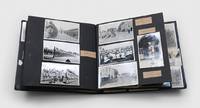
1941174371Palestine Egypt and Sudan: 1941-43. With camels and camera in the desert theatre A visual record of the Second World War in the Middle East with superb snapshots of Indian Army personnel members of the camel corps in Egypt and Sudan and the Sudanese household cavalry. Also included is a range of scenic views and images of everyday life. Warner's squadron served in the Middle East 1941-2 and was posted to North Africa in 1943. His most important photographs concern his service and those with whom he served. Alongside photographing military personnel he records their training and excursions and in one image a group of RAF men Warner perhaps among them pose on top of a car belonging to the Palestine Police Force. Eight photographs show the funeral of a British sergeant while one commercial image pictures Winston Churchill visiting soldiers at Tel El Kebir on 9 August 1942. Scenic and tourist views of Palestine show Warner's seaside billet in Haifa a coffee house and street in Acre and Mt Carmel as well as the Sea of Galilee Lake Tiberias and the atmospheric River Nile. The squadron's transfer to Africa is made via troop train. Aerial photographs of Khartoum are positioned alongside snaps of a sandstorm and by the White Nile Bridge he snaps an RAF hydroplane. In North Africa he mingles with soldiers of the Sudan Defence Force and members of the Khartoum police band. The album closes with a trip along the road to the Congo and time spent on duty at Juba. Landscape quarto commercial album. Original blue roan boards black cloth backstrip 17 black card leaves fixed with metal posts 160 mounted gelatin silver photographs snapshot- to postcard-sized and nearly all amateur manuscript captions on laid-down slips; 4 gelatin silver photographs loosely inserted including 3 snapshots and 163 x 215 mm formal portrait of compiler's class at RAF NCO Training School Hereford. Light toning and silver mirroring some images still with strong tones: very good. hardcover
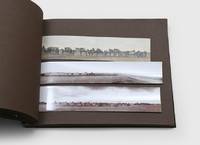
1619161520Aden: 1916-19. The First World War in south Arabia A fine personal album of unique images of the AFF in the field taken and compiled by Captain A. G. Dyce 1886-1959 deputy assistant director Supply and Transport Corps. It includes photographs of infantry cavalry and artillery units the use of balloons and the signal contribution of ship-launched aircraft under the command of Charles Rumney Samson. On the outbreak of war Ottoman forces advanced into the Western Aden Protectorate from Yemen forcing the British to withdraw from Lahej and part of the Aden settlement. While Turkish encouragement of jihad fell on deaf ears in central Arabia "it found resonance in Yemen. Ali Said Pasha the skilful Turkish commander was so successful in radicalising the tribes for the Ottoman cause that he was able to push British forces into the enclave of Aden. The tactic that defeated Ali Said Pasha was the use of Imam Yahya who argued that Yemen was not for the British or Ottomans but the Arabs. Arab nationalism eroded Said Pasha's influence and saw England supporting a treaty with Imam Yahya as monarch of Yemen which concluded in 1920" Infantry p. 43. Born in India and educated at Wellington College Alan George Dyce 1886-1959 son of Brigadier-General G.H.C. Dyce Indian Staff Corps joined the Indian Army in 1906 serving initially with 22nd Sam Browne's Cavalry. He was a keen photographer appearing in an issue of Amateur Photographer for 1917 and mountaineer being on the committee of the Himalayan Club. Despite being taken in the field while on active service Dyce exhibits a good eye and composes his pictures with care. There are many shots of the combined arms operating with the AFF: No. 13 Kite Balloon Section of the Royal Navy Air Service five images the Mountain Battery of the Malay States Guides lancers of what are presumed to be the 26th King George's Own Light Cavalry and medical facilities including a cavalry field ambulance at Sheikh Othman an advance dressing station a camel ambulance tonga a two-wheel vehicle common in India and camels with cacolets cradle-like structures mounted either side of the camel's hump. One image signed by Dyce in pencil on the verso is captioned: "The GOC Aden F.F. leaving the dais with the Sultan after the installation ceremony" and shows 'Abd al-Karim II ibn al-Fadl al-'Abdali Sultan of Lahej reigned 1915-1947 being handed down from the dais by Brigadier-General William Crawford Walton. There is a sequence of six images covering the "Fight at Jabir" 7 December 1916 described in General Sir Charles Monro's despatch as having had "a demoralising effect on the Turkish Arab auxiliaries and to have produced the intended result viz. preventing the withdrawal towards the Yemen of Turkish troops from Lahej". One panoramic shot shows British officers observing the shelling of Turkish positions and three others the sighting positioning and firing of what appears to be a six-inch naval gun. Three wide-angle shots show the mountain battery and its camel team hauling 15-pounder mountain guns. A trio of crisp sepia-toned prints depict Indian Army troops of the "water column" perhaps the 66th Punjabis who are named elsewhere: "filling water carts with condensed water sent from Aden" "filling canvas tanks" and "water column moving out". Commander Samson 1883-1931 features in one image "Seaplane: Cmdr. Sampson sic" which shows a huddle of figures around the cockpit of what appears to be a Short 184 its wings detached and apparently undergoing repairs. This accompanies "Signalling to plane with lamp and canvas strips" another excellent wide-angle shot taken from a high position that encompasses a rail track steamroller and men laying out a triangular canvas-strip indicator. Most intriguing is a small snapshot of a manned seaplane suspended from a derrick over the side of a ship probably HMS Ben-my-Chree. The pilot may be Samson and the plane a Short 184 that he modified by adjustments to the wings and tail fin and christened the "Short Cut". Captured Turkish prisoners feature in eight images including their commander Said Pasha; two are captioned "Turks marching in to surrender" and "Turks going in by train" while a series of five is titled "Turkish prisoners and guns" including a touching image of two Turkish soldiers under escort their eyes bandaged one holding the other's coat tails. Landscape folio album 240 x 280 mm. 49 ff. some blank. With 92 photographs from 40 x 65 to 170 x 270 mm portrait and landscape format mounted on rectos only on brown leaves including a panorama in two parts joined with tape some images loose one hand-coloured many captioned in pencil on verso or in white on mounts. Commercial Kodak album of black morocco-grain faux leather. Spine ends a little worn many images loose but clean and unfaded: very good. Infantry Volume 97 Number 1 2008. hardcover
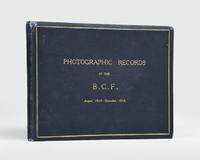
1916162509No stated place or publisher: after 1916. Gallantly led by Vice Admiral Sir David Beatty First edition profusely illustrated with shots taken at sea. It shows the battles of Dogger Bank and Jutland the damage done to ships such as HMS Lion and "the final moments of HMS Invincible" McCartney p. 116 before her destruction. We have traced only four institutional copies: the National Library of Scotland the universities of Leeds and Cambridge and the National Maritime Museum. The Battle Cruiser Fleet was formed in February 1915 after the Battle of Dogger Bank proved the effectiveness of this type of ship. It was commanded by Vice Admiral Beatty here photographed with his commodores and captains on page 16 and saw service most famously at the Battle of Jutland. Some of the illustrations in this volume show battles fought before the BCF was inaugurated such as Dogger Bank the Falklands and Heligoland Blight. The main focus is HMS Lion but HMS Southampton Invincible Indefatigable and Princess Royal also make regular appearances. Oblong folio. Half-tone photographic illustrations throughout. Original blue cloth over bevelled boards front board lettered and bordered in gilt yellow patterned endpapers. Binding rubbed especially at spine ends a couple of superficial scratches and scattered marks small split at spine head a few closed tears at edges sometime repaired with tape occasional minor foxing or finger-soiling: a very good copy. Innes McCartney Jutland 1916: The Archaeology of a Naval Battlefield 2018. hardcover
19461159631946. Signed. TIBBETS Paul W. Photograph Signed. No place image circa February 1946 signed at a later date. Black-and-white photographic print measuring 10 by 8 inches. $1100.Photographic print of ""Enola Gay"" Pilot Paul Tibbets Bombardier Tom Ferebee and Navigator Theodore Van Kirk signed by each on his image.Paul W. Tibbets was the pilot Thomas W. Ferebee the bombardier and Theodore J. ""Dutch"" Van Kirk the navigator on Enola Gay the B-29 Superfortress that dropped the first atomic bomb over Hiroshima Japan on August 6 1945 hastening the end of World War II. This photograph shows them alongside other unidentified air crew. Fine condition. unknown