1 575 résultats
1863215284Washington 1863. First. unbound. very good-. 2pp. 8vo disbound two small file holes in left margin. Washington 1863. First Edition<br/><br/> A record of the charges presented against Private Reuben Stout Company "K" 60th Indiana Volunteers who is accused of killing in violation of the laws of war and desertion. On March 14 1863 Stout shot and murdered Solomon Huffman in Madison Indiana. Huffman was trying to arrest Stout who was a deserter at the time. ".The Court does therefore sentence him Stout.to forfeit all pay that may be due him and that he be shot to death with musketry." Abraham Lincoln upheld Stout's execution.<br/><br/> unknown books
1864WRCAM54372Washington 1864. Three sheets each 7 1/4 x 5 inches. Loose sheets. Two slits at gutter margins for intended binding. A couple of small creases at corners. Very good. Three interesting General Orders from the War Department at the end of 1864 relating to freedman and the organization of black troops in the Union Army. Two of the orders authorize transportation of supplies and books by the United States Army on behalf of the United States Commission for the Relief of the National Freedmen as well as for the American Freedmen's Friends Society and the Executive Committee for the Relief of Freedmen of Iowa. The third order reorganizes black troops in the Union Army from Virginia and North Carolina into the 25th Corps. unknown books
1862102059Pamphlets small 8vo disbound 2 1 1 2 4 5 pp. Completely disbound series of orders removed some chipping where removed normal aging and browning. A series of six General Orders from the Adjutant General's Office L. Thomas concerning the treatment of prisoners. The first orders relates to the process of handling and treatment of prisoners of war including appropriate documentation on transfers to prison depots. The final order 191 includes a list of prisoners of war Union soldiers exchanged with Southern soldiers on November 11 1862 at Aiken's Landing. books
1862536Washington 1862. 12mo. 5 1 blank pp. <br><br>Issued without wrappers. Minor spine splitting from bottom edge. Very light soiling to outer two pages. Creased from lengthwise folding. unknown books
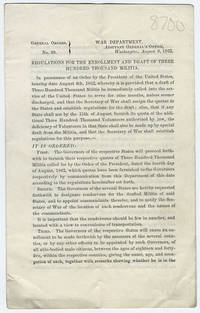
1871106663<p>Pamphlet small 8vo removed stitched 22 XIII pp. Some normal aging and browning; middle crease otherwise very good. This pamphlet provides a list of offices in the U.S. military on January 1 1871. It is organized to reflect the acts of Congress dated March 3 1869 and July 15 1870. The pamphlet includes the date of commission for each officer. George Armstong Custer is listed on page six</p> books
187421448Washington 1874. 4pp folded. Caption title as issued. Two smalls slits as inside margin appear to be from previous binding. Clean. Very Good. Three acts of Congress are published: to establish a pontoon railway-bridge across the Mississippi River at Prairie due Chien and a similar bridge at or near Clinton Iowa; to reduce the area of the military reservation of Fort Sanders; and to grant a condemned cannon to Prescott Post No. One for erection of a monument at Providence. unknown books
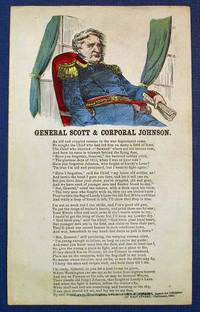
33148Cincinnati Ohio: Geo. P. Jenkins Agent for the Publisher n. d. Ca early 1860s. Cf. Wolf AMERICAN SONG SHEETS 728e. A VG copy. Single sheet printed recto only. 5 verses. Hand-colored lithographic image 3-3/8" x 4-1-2" depicting a seated aged General Scott holding a rolled paper entitled "To the People of the US". 8" x 5" 20.3 cm x 12.6 cm. <br/><br/>Jenkins imprint stamped vice printed at bottom slightly over the right half of the last line of text. Geo. P. Jenkins, Agent for the Publisher unknown books
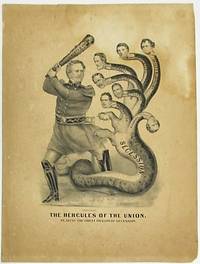
186134445New York: Currier & Ives 1861. Lithograph 13-1/2" x 18". Paper browned but images clear. Short closed tear at top blank margin minor chipping to two corners. Very Good.<br/><br/> "A tribute to commander of the Union forces Gen. Winfield Scott shown as the mythical Hercules slaying the many-headed dragon or hydra here symbolizing the secession of the Confederate states. At left stands Scott wielding a great club 'Liberty and Union' about to strike the beast. The hydra has seven heads each representing a prominent Southern leader. The neck of each Southerner depicted is labeled with a vice or crime associated with him" Reilly. The Southerners are Toombs Stephens Davis Beauregard Twiggs Pickens and Floyd labeled variously as Hatred and Blasphemy Lying Piracy Perjury Treason Extortion Robbery. According to Weitenkampf a variant omits the name of Scott in the title.<br/>Reilly 1861-35. Weitenkampf 131 7 locations. OCLC 191119921 3- AAS Peabody Essex Boston Athenaeum as of December 2017. Currier & Ives? unknown books
19061342159Washington: Government Printing Office 1906-1908. Hardcover. Octavo; G-; Ex-library; Hardcover; Spine black with gold print call number label at bottom; Library bound with boards in black cloth with gold print wear to spine caps edges and corners rubbing/shelfwear; Text block has library stamp to edges and front endpapers library bookplate on front pastedown library pocket on rear pastedown name in ink on front flyleaf original paper cover of first title is brittle and separated from binding light age-toning to paper; CONTENTS: Contains three separately published titles: Selected Translations Pertaining to the Tactical Use and Value of Machine Guns No. 7 1906 206 pages - Actual Experiences in War : Battle Action of the Infantry Impressions of a Company Commander / by Capt. L.A. Soloviev Thirty-fourth East Siberian Rifle Regiment No. 9 1906 51 pages - Influence of the Experience of the Siege of Port Arthur upon the Construction of Modern Fortresses / by A. von Shwartz No. 12 1908 188 pages 10 folded maps and plans tipped in at end some color. 1342159. FP New Rockville Stock. Government Printing Office hardcover books
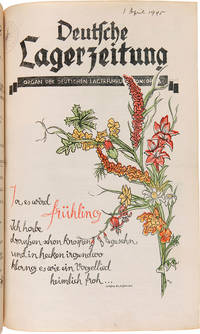
1945WRCAM55330Concordia Ks.: Camp Concordia 1945. Two volumes. Vol. 1: Nos. 34-35 1944 2. Jhrg. Nos. 1-3 6 8-13 1945; Vol. 2: Nos. 1-12 1945. Two-sided sheet laid into Vol. 1 with an essay on peace from Karl Teufel on one side and an anonymous reflection on the German occupation of Holland on the other. Folio. Original three-quarter green cloth and paper-covered boards manuscript title in green on cover of Vol. 1. Minor wear and spotting to covers tidelines to front cover of Vol. 1 stain to upper corner of Vol. 2 reaching corners of about half the pages no text affected. Trimming to lower margins with slight loss of text to a few pages. Tight binding partially obscures inner margin in a few issues. Many issues have purple ink stamp and initials of the camp censor; occasional manuscript annotations including translations. Front free endpaper of Vol. 2 is a dedication page: "To Captain Karl C. Teufel as Souvenir for the Time from June to September 1945 signed Dr. Georg Graf Kesselstatt Editor DER AUSBLICK." Occasional tanning. Very good overall. Collected issues of a German prisoner-of-war camp weekly newspaper which began as NEUE STACHELDRAHT NACHRICHTEN LAGER CONCORDIA NEW BARBED WIRE NEWS CAMP CONCORDIA. With issue number eight in the second year March 11 1945 the title changed to DEUTSCHE LAGERZEITUNG: ORGAN DER DEUTSCHEN LAGERFÜHRUNG CONCORDIA "GERMAN CAMP NEWSPAPER: ORGAN OF THE GERMAN CAMP COMMAND CONCORDIA" likely to align with titles of newspapers at other prisoner-of-war camps. After the war ended the title changed again to DER AUSBLICK: ZEITUNG DER DEUTSCHEN KRIEGSGEFANGENEN LAGER CONCORDIA THE OUTLOOK: NEWSPAPER OF GERMAN PRISONERS OF WAR. This collection contains some two dozen issues from the final years of World War II. <br> <br> The layout and printing of all versions of the newspaper is sophisticated. The title piece of NEUE STACHELDRAHT is hand-designed possibly a linocut featuring an image of a watch tower. The article text was initially produced on a typewriter but the rest of the paper's contents - illustrations maps titles and captions - are all hand-drawn and then reproduced along with the typed content via offset printing. The issues are inconsistently paginated and most articles are unsigned unless reproduced from external sources; translators are sometimes noted. The editorial staff is not mentioned in earlier issues although some articles are signed "Hrg." "Ed.". The issue for April 1 1945 is the first to name an editor "Schriftleitung: Oblt. Walberg". <br> <br> The U.S. agreed to construct P.O.W. camps initially to support the British who were running out of room for prisoners. The U.S. camps grew quickly; by the end of the war there were some 400000 German prisoners held in the U.S. Camp Concordia operated from 1943-1945 and primarily housed German Army prisoners captured in North Africa including Rommel's notorious "Afrika Korps." Concordia was the largest P.O.W. camp in Kansas averaging 4000 prisoners during its operation. The camp's aptly-named assistant executive officer and head of indoctrination Capt. Karl C. Teufel Teufel can mean "devil" in German described the prison population as follows: "For the most part they were members of the crack German Afrika Korps which had fought under Rommel and had nearly won the North African Campaign.No better German soldiers existed anywhere and these men came to this country still proud of their accomplishments still assured of the coming victory of National Socialism over the rest of the World still confident and arrogant in their own strength and fully prepared to make things as difficult for their custodians as safely possible. There were a thousand Officers among them ranging from second lieutenants to Colonels two of whom were later promoted to General rank and hence some of Hitler's best military brains were here also." Healthy enlisted prisoners were required to work mostly on neighboring farms. Non-commissioned officers could only work in supervisory positions and while officers could not be forced to work they could volunteer. All prisoners were paid for their work in scrip which could be spent in the camp canteen or used to buy newspapers like these books and magazines. <br> <br> The first issue in these volumes is the "Christmas Issue" No. 34 December 24 1944 which calls on the prisoners to rebuild their physical strength and mental toughness in order to continue the struggle against the Allies. It also reproduces an article from the Associated Press exaggerating the impact of the V-2 rocket attacks on England. Later articles criticize the Allied bombing of German cities for the loss of German civilian lives and historic buildings. Also included are updates about battles and German military advances. But then there are schedules for Christmas services for both Catholics and Lutherans Christmas hymns and stories announcements of concerts including Rossini and Tchaikovsky updates on camp sports mainly soccer and handball upcoming film screenings and a list of birthdays for the week. Nevertheless keeping the peace in the camps was challenging. One of Capt. Teufel's main jobs at Concordia was weeding out the hardcore Nazis from the merely patriotic soldiers and then relocating them to Camp Alva in Oklahoma a maximum security facility specifically for uncompromising Nazis. This not only served to maintain peace in the camps for the American guards but also kept average German soldiers safe from more extreme soldiers. <br> <br> The newspaper content was inspected and censored before publication. Blatantly pro- Nazi messages were prohibited though oblique references slip in but patriotic sentiment is allowed. Subsequent issues have similar recurring content as in the Christmas issue especially pro-German material such as uplifting passages to stay strong in the "Kampf" and slanted articles highlighting German successes in contrast to Allied laziness and incompetence. For instance in a recurring section "Kultur und Leben" Culture and Life in the issue from January 14 1945 there are several articles on Heinrich von Kleist 1777-1811 a Romantic poet who had been appropriated by the Nazis for his nationalistic leanings. Included is a passage from Kleist: "Was gilt es in diesem Kriege.Eine Gemeinschaft gilt es deren Wurzeln tausendästig einer Eiche gleich in den Boden der Zeit eingreifen; eine Gemeinschaft.in deren Schoss die Götter das Urbild der Menschheit reiner als in irgendeiner aufbewahrt hatten." What is important in this war.It is a community whose roots branch into the soil of time like an oak; a community.in whose lap the gods had kept the archetype of humanity more pure than in any other. The article concludes: "Uns hat dieser Krieg reif und hart gemacht auch für ein letztes Begreifen jener Kleistschen Welt." This war has made us ripe and ready for a final realization of that Kleistian world. <br> <br> There are regular updates from the Pacific front but also a wide variety of general interest articles and stories including: oilfields in the Middle East and the evolving "concession areas" in Saudi Arabia Iran Iraq et al.; German history; the Chinese Civil War; Japanese culture; astronomy historical and contemporary; U.S. politics and history along with feature articles on various states; economics and biographies of important industrialists; health concerns; and reviews of local beers. There are also lists of new books purchased or donated to the camp library on topics from German history to agricultural engineering to quite surprisingly Aaron Copland's WHAT TO LISTEN FOR IN MUSIC in English; and crossword puzzles and other games. <br> <br> The April 15 1945 issue is the first to acknowledge that the Nazis may not in fact be winning the war after all. The cover features the first stanza "Daimon" of Goethe's ominous poem "Urworte Orphisch" Orphic Primal Words: "Wie an dem Tag der Dich der Welt verliehen/Die Sonne stand zum Grusse der Planeten/Bist alsobald und fort und fort gediehen/Nach dem Gesetz wonach Du angetreten./So musst Du sein Dir kannst Du nicht entfliehen/So sagten schon Sibyllen so Propheten;/Und keine Zeit und keine Macht zerstückelt/Geprägte Form die lebend sich entwickelt." As on the day you were granted to the world/The sun stood to greet the planets/You likewise began to thrive forth and forth/Following the law that governed your accession./You must be so you cannot flee yourself/Thus sibyls long ago pronounced thus prophets/And neither time nor any power can dismember/Characteristic form living self-developing. There is no editorial acknowledgement of Germany's occupation but there are several translated excerpts from TIME magazine noting Gen. Lucius Clay's appointment as "der Spitze der Zivilverwaltung" "Head of Civil Administration" for occupied Germany. <br> <br> The final iteration of the camp newspaper DER AUSBLICK: ZEITUNG DER DEUTSCHEN KRIEGSGEFANGENEN LAGER CONCORDIA inlcudes a monthly insert on current affairs entitled QUERSCHNITT CROSS-SECTION along with a less regular insert on arts and culture entitled SYMPOSION SYMPOSIUM. A brief editorial introduction to the new newspaper sets forth a stark assessment of the prisoners' situation: "Wir beurteilen unsere Lage nüchtern und haben nur ein Ziel: alle Kraft so rasch wie möglich unserem deutschen Vaterland zur Verfügung stellen zu können. Wenige in der Heimat werden den kommenden Aufgaben körperlich und geistig so gut gewachsen sein wie wir. Est ist unsere Pflicht unsere Leistungsfähigkeit immer weiter zu steigern.Möge sie dazu beitragen unsere Lagergemeinschaft sachlich und klar zu unterrichten und zum Nachdenken anzuregen." We assess our situation soberly and have only one goal: to be able to provide all our strength as quickly as possible to our German Fatherland. Few at home will be as physically and mentally up to the tasks ahead as we are. Thus it is our duty to keep enhancing our abilities.This paper will help keep our camp community objectively informed and will stimulate thought. The introduction goes on to note that they really do intend to provide objective information without aligning to any particular party. After all: "Denn jeder von uns ganz gleich wie er zur Vergangenheit eingestellt sein mag muss in voller Klarheit erkennen dass das System des Nationalsozialismus mit seiner Staatsform nicht mehr besteht." Because each of us no matter how he feels about the past must recognize with complete clarity that the system of National Socialism no longer exists as a form of government. Not much has changed with the paper otherwise all features about camp life etc. are still included. The QUERSCHNITT features reprinted and translated articles from major publications NEW YORK TIMES MAGAZINE BUSINESS WEEK TIME FOREIGN AFFAIRS et al. but there is very little editorial comment. <br> <br> Interestingly in the June 17 1945 issue of DER AUSBLICK there is a full page letter from the Senior German Spokesman Col. Eduard Waltenberger: "Ich bin überzeugt im Sinne des Lagers zu sprechen wenn ich folgendes festelle: Die durch den vorgeführten Film und die uns vorgelegte amtliche Broschüre belegten Grausamkeiten und Massenmorde in den Konzentrationslagern erfüllen uns mit tiefstem Abscheu gegen jeden der in irgend einer Form schuldhaft an ihnen beteiligt war. Wir sind der Auffassung dass die Täter und ihre Auftraggeber den deutschen Namen auf das schändlichste befleckt und sich für immer aus der Gemeinschaft aller ehrenhaften Deutschen ausgeschlossen haben. Wir deutschen Soldaten des Kriegsgefangenenlagers Concordia haben offen und anständig unter Einsatz des eigenen Lebens für unsere Heimat gekämpft. Weder wir an der Front noch unsere Angehörigen haben gewusst dass gleichzeitig in den deutschen Konzentrationslagern ein Verbrechertum der niedrigsten Art am Werk war. Wir halten es für ein Gebot unserer Soldatenehre zu erklären dass wir mit ihm nichts gemein haben." I am convinced that I speak for the whole camp when I set forth the following: The atrocities and mass murders in the concentration camps documented by the film shown and the official brochure presented to us fill us with the deepest disgust towards anyone who was guilty of them in any form. We are of the opinion that the perpetrators and their associates have stained the German name in the most shameful way and have forever excluded themselves from the community of all honorable Germans. We German soldiers from the Concordia Prisoner of War Camp risked our own lives fighting honorably for our homeland. Neither we on the front line nor our relatives knew that at the same time there was a crime of the lowest kind going on in the German concentration camps. We think it is imperative to our soldier's honor to declare that we have nothing in common with them." There is no mention of Jews however there is an article on mass movements and mass psychosis later in the issue. <br> <br> One month later in the July 15 1945 issue there is a brief article in German and English from Capt. Teufel. Attempting to calm prisoners' anxiety about repatriation timelines Teufel explains that he simply does not know what the repatriation procedure will be: ".it is my opinion that repatriation may not come for many months. This is only a personal opinion and not to be construed as an official statement. The fact that some men are being transferred out of this camp is not proof that they are being repatriated immediately. The fact that you have not been transferred out is equally not an indication that you will be repatriated later than those who have been transferred nor that there is necessarily a prejudice against you." Of course while the war was over in Europe at this point the war in the Pacific continued. The August 5 1945 issue included extended treatment of the Potsdam Conference and Declaration and then the August 12 1945 issue begins with the article "Am Ende des 2. Weltkrieges." At the End of the Second World War. A few pages later there is a brief article inset titled "Heimkehr der PoW" Homecoming of the P.O.W. which begins: "Am letzten Donnerstag gab Unterstaatssekretär im Kriegsministerium Patterson in Washington bekannt die Amerikaner beabsichtigen 400000 deutsche und italienische Kriegsgefangene so bald als praktisch möglich - aus den Vereinigten Staaten nach Europa zurückzuführen." Under- Secretary of State Patterson at the Department of War announced in Washington last Thursday that the Americans intend to return 400000 German and Italian prisoners of war from the United States to Europe as soon as it is practical. <br> <br> The postwar articles tend to focus on rebuilding in Germany and speculation on when the prisoners will finally return but most continue the regular content of reproduced news articles and so forth. However some policy developments have immediate repercussions in the camp. As is usually the case in POW camps the Nazi soldiers continued to wear their uniforms during their detention with American uniform manufacturers providing replacements as time went on. In the August 30 1945 issue there is a brief inset article announcing updates to the uniform regulations: "Durch Verordnung der letzten noch zu Recht bestehenden Deutschen Regierung unter Gross- admiral Dönitz wurde die Einheit von Partei und Staat sowie von Partei und Wehrmacht aufgelöst. Da das mit dem Hakenkreuz versehene Hoheitsabzeichen auf den Uniformstücken kein militärisches Abzeichen sondern das Symbol der Einheit Partei- Wehrmacht darstellt entspricht das Tragen dieses Abzeichens zumindest aber des daran befindlichen Hakenkreuzes weder der entsprechenden Verordnung der letzten Deutchsen Regierung noch den inzwischen eingetretenen Verhältnissen." By decree of the final legitimate German government under Grand Admiral Dönitz the unity of party and state as well as the unity of the party and the armed forces has been dissolved. Since the sovereign swastika is not a military symbol but the symbol of the Wehrmacht Nazi armed forces party unit wearing uniform devices with the swastika on it does not correspond to the decree of the last German government or the current conditions. In the same issue is the announcement that the U.S. government will start returning German P.O.W.s to assist with reconstruction as soon and as quickly as is feasible. However no timeliness are provided. <br> <br> The final issue in this collection as possibly the last one produced is that of September 9 1945. On the first page is an announcement from the editor: "Mit dem Grossteil unserer Kameraden haben von vierzehn ständigen Mitarbeitern des "Ausblick" elf in dieser Woche Concordia verlassen. Die heutige Ausgabe kann daher nur in gekürzter Form gebracht werden." Along with the majority of our comrades eleven out of the fourteen permanent employees of AUSBLICK left Concordia this week. Today's edition can therefore only be published in abbreviated form. Indeed the issue is less than half the size of previous issues. The sole article on the first page is titled "Courage" which means the same in German and English and includes encouraging words about rebuilding a broken Germany. The rest of the issue includes similar articles and updates but with much less flourish as one would expect with a diminished staff. Nevertheless there's one more soccer game announced before all the prisoners departed in October and the camp finally closed in November. <br> <br> This newspaper is rare with most institutional holdings being incomplete and then often only in microfilm. The Deutsche Nationalbibliothek holds almost the same physical copies as found here starting with No. 34 suggesting there may have been additional similar collections assembled. We were unable to identify any complete physical collections with the possible exception of the Kansas Digital Newspapers program at the Kansas Historical Society. OCLC 15160000 84823569 Deutsche Nationalbibliothek 15155315 15155342. Karl C. Teufel "The History of Camp Concordia from Site Survey to Deactivation." Record Group 389 Box 1612 Washington D.C.: National Archives 1945. Mark P. Schock "Bloodied Kansas: Nazi Retribution in a Kansas POW Camp" in FAIRMOUNT FOLIO JOURNAL OF HISTORY Vol. 7 2005: pp.45-56. Kirk Wetters DEMONIC HISTORY: FROM GOETHE TO THE PRESENT Evanston Il.: Northwestern University Press 2014. [Camp Concordia] hardcover books
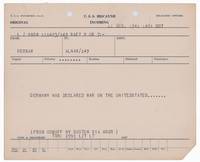
16563World War II U.S. Navy. Navy Original Cable Dispatch declaring "GERMANY HAS DECLARED WAR ON THE UNITED STATES." U.S.S. Biscayne heading The cable was sent from the Secretary of Navy "SECNAV". 8" x 6.5" inches. Dated "11 Dec 1941". Two punch holes along top edge. In near-fine condition. On December 11th 1941 four days after the Japanese attack on Pearl Harbor and the United States' declaration of war against the Japan Nazi Germany declared war against the United States bringing America which had been neutral into WW II. With a single page the fates of hundreds of thousands of Americans currently serving in the US Navy was decided: World War II had officially begun for America. <br/><br/>At the time of this telegram The U.S. Navy was officially neutral but was already attacking German U-boats in the Atlantic. On Thursday 11 December 1941 American Chargé d'Affaires Leland B. Morris the highest ranking American diplomat in Germany was summoned to Foreign Minister Joachim von Ribbentrop's office where Ribbentrop read Morris the formal declaration of war the meeting lasted 3 minutes from 2:18 to 2:21 pm Berlin time. At 3:30 p.m. on December 11 1941 the German charge d'affaires in Washington handed American Secretary of State Cordell Hull a copy of the declaration of war. Roosevelt wrote to Congress on that same day asking them to declare war on Germany and Italy the motion passed through both houses without dissent the declaration was signed by Roosevelt at 3:00 pm EST. This original US NAVY cable dispatch is from the day of the declaration itself and has a Time stamp of 1451 GCT 2:51 PM- Greenwich Civil Time <br/><br/>Hitler's declaration of war against the United Sates is generally seen as an enormous strategic blunder on his part as it allowed the United States to enter the European war in support of the United Kingdom and the Allies without much public opposition while still facing the Japanese threat in the Pacific. Hitler had in fact committed Germany to fight the US while in the midst of a war against Russia and without having first defeated the UK instead of taking the option of putting off a conflict with the US for as long as possible. Hitler's lack of knowledge about the US and its industrial capacity for mounting a war on two fronts probably led him to this fatal decision. unknown books
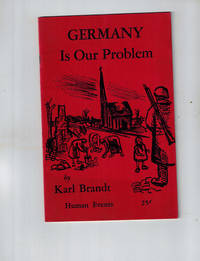
1946001571Washington D.C.: Human Events Inc. 1946. The Human Events Pamphlets Newstand Edition No.2. Edited by Henry Regnery and Felix Morley. 18 pages with 1 page of subscription ads in stapled red wrappers. . First Edition. Pictorial Printed Wrappers. Fine/No Jacket As Issued. 8vo - over 7¾" - 9¾" tall. Human Events Inc. Paperback books
1817WRCAM13751Reading Pa.: Johann Ritter 1817. vii1273pp. plus six plates. Frontispiece. Contemporary calf gilt maroon morocco label. Rubbed joints and hinges cracked head of spine chipped. Bookplate remnants on front pastedown. Good. A German language history of the War of 1812. Although no authorship is attributed this is in fact a translation of William McCarthy's history of the war published in English in Philadelphia in 1816. Like the original McCarthy narrative this edition has a frontispiece of Zebulon Pike copied from that which is included in Pike's EXPEDITIONS. Also present are six plates of military and naval incidents of the war including the folding plate of the Battle of New Orleans not found in all copies. HOWES G148 M38. SHAW & SHOEMAKER 40910. Johann Ritter unknown books
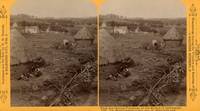
11300Civil War related Stereoview photograph of an oil painting. Stereoview card bearing a double 7" x 4" sepia toned photograph of wounded soldiers in trenches "From the Chicago Panorama of the Battle of Gettysburg. 1st headquarters of Gen. Geo. G Mead July 2nd". Part of a series of stereoviews representing different sections of an oil painting of the Cyclorama of Gettysburg by French artist Paul Dominique Phillipoteaux. From Bennett's series "Wanderings Among the Wonders and Beauties of Western Scenery." In excellent condition. unknown books
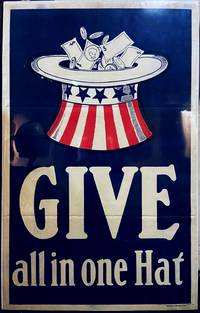
295876New York: Sweeney Litho Co. Lithographed canvas banner. 46" x 29"<br/><br/> This large World War I-era poster was sponsored by the United War Work Campaign. Established in 1918 by Woodrow Wilson the campaign brought together seven organizations--the YMCA the YWCA the American Library Association the War Camp Community Service the Knights of Columbus the Jewish Welfare Board and the Salvation Army--to form a group fundraising effort with the hope of raising over $170 million for the war. The canvas banner depicts a red and white striped top hat on a blue background. The hat is full of dollar bills and coins symbolizing the collective fund that had been created and encouraging citizens to donate. The poster is in very good condition. Folds as issued. The vintage colors are rich and emblematic of the era.<br/><br/> Sweeney Litho Co unknown books
1972149818N.p.: N.p. 1972. Vintage borderless reference photograph of Monica Vitti from the 1972 Italian film. <br/><br/>Based on an unpublished short story by Alberto Moravia. The title translates to "Orders are Orders."<br/><br/>Italian housewife Girogia Vitti after accidentally participating in a women's rights meeting begins hearing a voice commanding her to do things against her will firstly going to the seaside and making love with a lifeguard. <br/><br/>Shot on location in Rome and Veneto Italy. <br/><br/>5 x 7 inches. Near Fine. N.p. unknown books
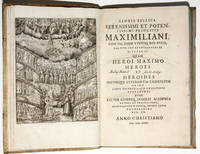
16235340Ingolstadii: Ex officina typographica G. Haenlini 1623. Hardcover. Near Fine. 4to 27 x 17.5 cm. 17 ff. 388 pp. recte 386 7 ff. with misnumbered pages at pp. 203-06 243-46 and 260-71 1 full-page engraving 20 x 15.5 the platemark. Bound in contemporary blind-stamped pigskin raised bands boards beveled somewhat scuffed clasps missing. Blue edges small hole repaired on half title and engraving ownership inscription of Andechs Abbey on title page minor browning in some quires. An excellent and unsophisticated copy. First edition of a rare volume of prose and verse glorifying the military exploits of the Prince-Elector Kurfürst of Bavaria Maximilian I 1572-1651 by members of the University of Ingolstadt as compiled by the Jesuit philosopher-theologian Georg Stengel 1584-1651. The Gloria Bellica is an important witness to the intertwining of princely power university politics and religious sectarianism at the onset of the Thirty Years War 1618-48. Published in the year of Maximilian's elevation to Prince-Elector 1623 the book seems to have been an attempt by faculty at Ingolstadt to secure his favor. The increasingly Jesuitical university would be frequently imperiled during the flux of the war and quickly identified Maximilian himself educated by Jesuits as an important military protector. Maximilian's central role in the German Catholic League had been essential in checking the power of the Protestant Union. The volume is especially notable for its full-page prefatory engraving executed by the Augsburg artist Daniel Manasser a highly detailed and elaborate allegory charting Maximilian's martial rise and the praise conferred on him from various secular and sacred sources. Merchants clerics Liberal Arts herself and a throng of lesser citizens crowd together to salute Maximilian as he rides upward on the back of Pegasus toward the Olympian gods reclining in the empyrean; the demigod Hercules mediates between heaven and earth while battling Nessus and the Lernaean Hydra. Flanking Maximilian's ascent are 8 groups from whom he receives "Gloria": his enemies his commanders and soldiers muses and scientists hometown Bavaria the Catholic League the Holy Roman Emperor Ferdinand I the pope and church and indeed Mary Christ and the saints. The text of the Gloria Bellica is arranged as a fuller version of this scheme with 20 chapters each detailing a source Maximilian's glory. OCLC identifies U.S. copies at Harvard Trinity CT Georgetown and Chicago. VD 17 23:231047E; De Backer/S. and VII 1550 32; Lentner 3774; Pfister I 4297; Mario Praz Studies in Seventeenth-Century Imagery Rome: Edizioni di Storia e Letteratura 1975 pp. 503-04. <br/> <br/> Ex officina typographica G. Haenlini hardcover books
18652285Petersburg VA: Eden & McCreery 1865. First edition. framed. EXTREMELY RARE FIRST ISSUE OF "GRANT'S PETERSBURG PROGRESS" PRINTED BY UNION SOLDIERS ON A CONFEDERATE PRESS THE DAY PETERSBURG AND RICHMOND WERE SEIZED SIX DAYS BEFORE LEE'S SURRENDER. "When on that famous Monday the third of April 1865 the advance line of attack on Petersburg found the city evacuated by the Confederate troops almost the first Federal soldiers to enter her doors took possession of the office of the Express and before the day was over from its presses there issued number one volume one of Grant's Petersburg Progress. It was a single sheet twelve by twenty inches in size printed on one side of the paper. Its cry was 'We are here!' Major Eden 37th Wisconsin Volunteers was editor assisted by Captain Charles H. McCreery 8th Michigan Veteran Volunteers and Chaplain D. Heagle. They proposed 'to publish a live paper as ling as circumstances will permit; that is as long as we can steal the paper and get men detailed to set the type.' Ten cents was the price. 'We are not particular as to the medium of exchange; and will take Hardtack Greenbacks Cigars postage stamps and in fact most any available currency Confederate Bonds and Contrabands always excepted.'" Nellie P. Dunn "General Lee in Grant's Petersburg Progress" South Atlantic Quarterly vol. 12. This first issue from the day of the fall of Petersburg was followed by only four other issues April 5 7 10. <br /> <br /> The paper is full of joy and wit providing a wonderful window into the mood of the soldiers now that the end of the war was near. <br /> <br /> Some highlights from the text:<br /> <br /> "For nearly six months the army of the United States has kept watch and ward over the City of Petersburg. Since last June the roar of shells and the whistle of bullets have disturbed the silence of the woods in the vicinity and today the old flag waves from the Court House. The United States armies and U.S. Grant have foreclosed and entered in possession and Petersburg is ours. And throughout the length and breadth of the land the joyful tidings will spread that another deadly blow has been struck at the fast dying Southern Confederacy. Slowly and miserably it yet drags on a lingering existence but its days are numbered and the end is at hand. The bright rays of the sun and the pleasant fresh breeze of this fair spring morning kiss the folds of the stars and stripes as it waves from the tower and hill the streets wear a lovely and animated appearance thronged with soldiers and citizens the cause of Liberty and truth is triumphant."<br /> <br /> Under the heading "LATEST NEWS":<br /> <br /> "RICHMOND TAKEN. -Just as we are about going to press we are reliably informed that the city of Richmond came into the possession of the Union forces at a quarter past eight o'clock this morning."<br /> <br /> Under "WE US AND CO":<br /> <br /> "We believe in the UNITED STATES one and indivisible; in Abraham Lincoln our adopted Father; in U.S. GRANT Captain of the Host; and ourselves as the principle sojourners in the Army of the Potomac and the Freedom of the Contraband the speedy extinction of the Rebellion and the perdition of Jeff. Davis here and here after."<br /> <br /> Under "FASHIONABLE ARRIVALS":<br /> <br /> "April 3d Gen. Grant and Staff and the Army of the Potomac generally."<br /> <br /> Under "AUCTION SALES":<br /> <br /> "To be sold very cheap if not badly sold already all the singularly ineligible and worthless property known as THE SOUTHERN CONFEDERACY. For particulars apply to Jefferson Davis Richmond Va. N.B. Liberal terms to agents of Maximillian Louis Napoleon or Victoria."<br /> <br /> Petersburg VA: Eden & McCreery April 3 1865. Broadside printed on recto only approx. 12x19.5 inches. Framed to an overall size of 17x24 inches. Some small holes at folds and edges; a few words of bleed-through from hand-written ink on verso. A wonderfully evocative piece of Civil War history. SCARCE. Eden & McCreery unknown books
179464027Columbia SC 1794. Partly printed document completed in manuscript 11 1/8 x 15 1/2 inches describing the parcel of land; attached to that document with a cloth tie is another partly printed document completed in manuscript and signed by the Surveyor General of South Carolina Francis Bremar September 10 1794 and countersigned by the Deputy Surveyor William Sims and with a manuscript map of the parcel of land on the top half of the document. Accompanying the two documents each of which has docketing on the verso is the original clay state seal though worn cracked and in three pieces. The verso of the land survey document bears the signature "Col. Wade Hampton Jr." Offset from the seal but complete with the manuscript map and clay seal. Both documents folded some breaks along a central fold taking a bit of several letters but not affecting the sense. 10515. Moultrie began his military career in the Anglo-Cherokee War of 1761; as colonel and commander of the 2nd S.C. Regiment in 1776 he successfully defended the fort named for him which was located at the entrance of Charleston Harbor from attack by a British fleet delaying British occupation of that city by four years. Bremar served as Deputy Surveyor General of S.C. in the 1760s and was named Surveyor General in 1788. <br/><br/> hardcover books
1285New York. Abbeville Press. 1985. Oblong 4to. Hardcover with dustjacket in fine condition. unknown books
186538207Washington D.C. 1865. Letterpress broadside. 24 x 8 1/2 inches. Expert restoration on verso. An unusual broadside Civil War peace proposal.<br/> <br/>A little-known but highly eccentric character Evans first made a name for himself in 1818 when he walked from New Hampshire to Detroit in the middle of winter no less backtracked to Pittsburgh and continued his walk all the way to New Orleans publishing a narrative of his pedestrian journey the following year. After a failed Congressional run in New Hampshire and a failed attempt to become secretary of the Senate he ended up practicing law in Washington. In the midst of the Civil War Evans published a series of broadside letters all known in but few examples and likely printed in small quantities. In one in which excoriated the south for their role in the war he explained that he issued his missives as broadsides since his letters had no chance of publication in the already crowded pages of the newspaper press. The present broadside by Evans suggests a 20-point proposal for peace between the North and South including the abolition of slavery the federal assumption of Confederate debt universal amnesty restoration of all confiscated property the annexation of Mexico the expulsion of the Russians from the Pacific Northwest the seizing of the Hudson's Bay and Arctic fur trade from the British inviting Canada to become part of the United States the unification of Central America and the building of a trans-Darien canal the nationalization of the mining industry universal temperance fair pay charity from the rich and more. The broadside letter concludes: "Unhappy -- deeply unhappy am I in what I am now going to say -- tears of pity grief and shame for the whole country coursing down my cheeks: -- I solemnly declare that I have no doubt and never had that the longer the South holds out the nearer she will be so absolute annihilation ." We locate only four examples extant Boston Aethenaeum American Antiquarian Society Harvard and Minnesota Historical Society. unknown books
1862100852Pamphlet 8vo original green printed wrappers 17 pp. Wrappers chipped and torn with a few small pieces missing from the margins back wrapper almost detached vertical tear on cover repaired on verso a few pages with tears at extremities light toning; else very good.This is a scarce and unusual item that gives a different political message from the Civil War period. The author who calls himself Green-Back seems to object to the failures of politicians of his day and in fact this is an open letter to the 37th Congress. Sounds like he has Copperhead leanings but his key message is that it was time for the Representatives and represented come to an understanding. He seems to think that Congress is too busy or distracted with the needs of slaves and related issues to take care of other business. According to Green-Back Congress doesn't seem to have much time for other affairs because of their plans "for the full development of their much admired and more beloved Congo men". He also seems dissatisfied with the press who he suggests instigated or helped cause the war and whom only present a one sided view of the war. books
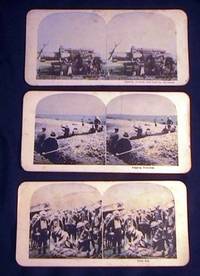
17397Printed type Stereoviews of these WW I scenes; no photographic studio or date; appears to be of American troops; some edge tips wear soiling; good condition. Good. unknown books
77634hardcover. very good. 12mo and 8vo printed wrappers enclosed in two red cloth folders; slightly dampstained folders light staining on a few covers of the pamphlets. London &c. Various dates. Very good .<br/><br/> Many published by Hodder & Stoughton London.<br/><br/> unknown books
12715Group of 5 Congressional documents all war-date octavo some multi-paged most with good content in small part: regiments that have not been paid and the expenses of the military establishment. A nice grouping of U.S. government documents pertaining to the War. unknown books