[U S Civil War - Discharge Papers]Biblio.com
11 490 résultats
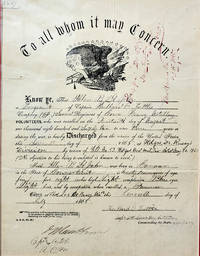
1865350791865. Ephemera. One sheet of paper with another sheet with the oath of identity attached to the back the photocopy of the oath is part of the papers that will come with the document. Allen St. John enlisted as a Private on August 18 1862 was promoted to Corporal on November 4 1862 and to Sergeant on March 23 1864. When he joined his unit in 1862 it was known as the 19th Regiment Connecticut Volunteer Infantry. In November of the same year the name was changed to 2nd Connecticut Heavy Artillery. The regiment served in the defenses of Washington D. C. until May 17 1864 when it was ordered to join the Army of the Potomac. It participated in the battles of Spottsylvania Tolopotomy Hanover Court House Cold Harbor Petersburg Winchester Fisher's Hill Cedar Creek Hatcher's Run Petersburg all in Virginia. The papers come framed in a nice vintage double matted bevelled wood frame decorated in black and gold. Condition is near fine. unknown
1865222651865. Hardcover. Very Good. Book. Bound collection of separately printed General Orders from the Adjutant General's office for 1865. Containing 168 of 175 consecutive orders and a 94-page index at front. Bound for Major General William Scott Ketchum with his name in gilt on the spine and his markings or wartime notes on numerous pages. 4 3/4 x 7 in. Early resolutions concern the rates of pay for officers' servants equal clothing allowances for commissioned and non-commissioned officers and widow's rights to prize money and equal pay for both black and white volunteers Order No. 31/Public No. 57 and freedom for the wives and children of any army or navy volunteer Order No. 33/Public Resolution No. 25. Also includes several orders relating to the assassination of President Lincoln: Order No. 66 announcing the assassination; Order No. 67 announcing Andrew Johnson's ascent to President; and Order No. 69 announcing the closing of military bases in observance of the funeral of Abraham Lincoln with the official Order of the Procession for the ceremony on April 19th; also includes a Special Order regarding the transportation of President Lincoln's remains to Springfield Illinois and Order No. 72 assigning the Honor Guard to accompany the casket.Orders signed in type by Andrew Johnson concern ending the blockade and restrictions on internal commerce with the exceptions of weapons and gray cloth.Lacking order numbers 15 97 128 133 140 148 & 168 apparently never bound in.Condition Very good. Minor rubbing some staining to top of index pages. Later ink stamps of the Office of the Chief of Finance on front endpapers.William Scott Ketchum 1813-1873 graduated from West Point in 1834. He served in the Seminole Wars and on the Western frontier. As a captain he fought in the 1857 Expedition against the Cheyenne and the Battle of Solomon's Fork where he commanded the 6th Infantry Regiment. During the Civil War in February 1862 he was appointed brigadier General of Volunteers serving in Washington DC. hardcover
0259216747.Gpaperback. Good. Access codes and supplements are not guaranteed with used items. May be an ex-library book. paperback
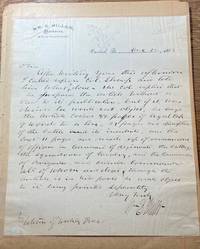
188736643Philadelphia: n/p 1887. Letters. Good. Letters. Lot of 10 letters possibly disbound from a larger collection. These letters were written in response to requested articles by the Editor of the Philadelphia Weekly Press. Letters written on good paper are pasted down on brown paper that is fragile with small edge tears and chips. Later short abbreviated notes written in pencil on the letters. Content of the replies are varied and provide additional primary source information and insights for the Editor of the Weekly Press. Contents are mostly legible. A summary of the letters follows:<br /> <br /> First letter is dated December 12 1885 and signed by William E. Miller. The letter is one page and written on his hardware store letterhead in Carlisle Pennsylvania. Letter reads: . "After writing you this afternoon I called upon Col. Sharp and told him What I done - the Col. replied that he the article without a view to its publication but of it was desired he would not object he says the article covers 32 pages of legal of words to a line - 21 pages are descriptive of the battle and its incidents and the last 11 pages are made of reminiscences of officers in Command of Regiments the battery the squadron of Calvary and the Commanders of Brigade and Division Commanders all of whom are dead though the article is in two parts he would object to it being printed separately. Very truly signed Wm. E. Bell To Editor of Weekly Press."<br /> <br /> Second letter is one page and dated Dec. 28th 1885. The correspondence is written on "Humboldt Safe Deposit & Trust Co" letterhead and signed by John C. Hilton at the bottom. Hilton writes the editor "In the matter of writing a history of the 145th P.V. during the battle of Gettysburg I must inform you I hardly feel competent to undertake it. The Gen would be the proper person had he been in the action and as for myself I was severely wounded at the time and cannot give as good a discription as one who passed through the engagement unscathed."<br /> <br /> Third letter is one page and a back and correspondence written on the Philadelphia Weekly Press letterhead dated December 31 1885. The editor of the paper requests of W. Hayes Grier "Can you prepare for publication in the weekly press the war article as indicated in a invitation sent to you some months ago If so please indicate when we may expect the manuscript Yours Truly Editor "Weekly Press". W. Hayes Grier response ."I will prepare the article and forward it in February."<br /> <br /> Fourth letter is one page and dated Jan 2d 1886. Correspondence is signed by "Wm. H. Grovinger." Written neatly from "Port Royal Juanita Co. Penna Grovinger writes "Mr. Editor Dear Sir I have in my possession a very interesting manuscript relating to the life of one of the brave defenders of the Union his trials and hardships while in Southern Prisons his several escapes from the same with his reasons for Sustaining the actions of the Government in its exchange policy it is written in good style but I think as it was intended for the use of his family some parts would not be suited for the general reader I will carefully compile it for publication Please give me your plan of publication and whether I will I would be compensated for my trouble I can vouch for the entire truthfulness of the manuscript."<br /> <br /> Fifth letter is 2 pages and written on United States Treasury Department letterhead and dated January 7 1886. The letter is signed at the bottom of page 2 by "A M Judson late Capt Co. E. 83 PV". Judson writes I answered the first letter Dec 10 85 stating in substance that in 1865 I wrote & published the "History of the 83d Regt P.V." when all the events therein detailed were fresh in my memory & when I was much more in the humor for description then than & that if the description of the Gettysburg fight there given would suit your purpose you are at liberty to use it." Judson points the editor to getting a copy of his book for the purpose of placing an article in the paper. <br /> <br /> Sixth letter is one page and dated February 11 1886. Letter has a blue ink stamp upper left corner from "J. Merrill Linn Attorney-At-Law Lewisburg Penna" and signed by Linn at the bottom. Linn writes of another regimental officer "Gobins Regiment saved Bancks Army on the Red River - is Pa Reg't took Stone Bridge at Roanoke - A Pa. Reg't captured by assault the first at New Berne.". He also writes "If it won't interfere with Gen Hartranft I would like to write the Battle of New Berne. We planted the old Fourth Pa. Flag first in the earth works."<br /> <br /> Seventh letter is two separate pages written on "D. R. P. Hibbs. Attorney At Law." letterhead in Albert Lea Minn. and dated February 20 1886. Hibbs writes "to the prep of an article for "The Press of the 104" P Vols. in the war I would say that Gen. Davis as an a war hero published a history of the 104" Hibbs is asking to the editor to give some advice on how Hibbs can add more to the unit history. <br /> <br /> Eighth letter is 2 pages long and dated May 17 1886. Written on "J. H. Longnecker Attorney at Law" letterhead and signed by Longnecker at the end. He writes "I rec'd yours of April 29 in regard to writing a sketch of the 101 Pa. Regt. I delayed writing in reply hoping to see you personally in Phila. last week while attending the Supreme Court." Longnecker states that he has other commitments including a Congressional nomination that keeps him from "gathering up facts and writing such a paper."<br /> <br /> Ninth letter is a second letter signed by W. Hayes Grier on "Office of Superintendent of Public Printing. Harrisburg Pa." letterhead and dated January 10 1887. Hayes updates the editor on his delayed article is a result "that I had lost the most important one issued by Gen. Cameron on Dranesville. I wrote to the Sec. of War and asked him to send me a copy giving him the date. Today I received it and I will at once prepare the orders and send them to you with remarks explanatory of each."<br /> <br /> The tenth and final letter in this group is dated May 23 1887. Letter written from Brookline Mass and signed by Theodore Lyman at bottom. The correspondence is very short and written in a shaky hand - "Dear Sir As I joined Gen Meade's staff after Gettysburg it would not be possible for me to write the paper you ask for." Officers that replied the editor's request include Captain William E. Miller. <br /> <br /> From wikipedia: Miller received his country's highest award for bravery during combat the Medal of Honor for actions taken on July 3 1863 during the Battle of Gettysburg. While ordered to keep his company stationed on a hill he disobeyed these orders to lead a surprise attack against a Confederate charge. On July 3 Miller was given orders to hold his company "at all hazards"9 in the woods north of the Lott house and assist the 1st New Jersey Cavalry Regiment in repelling Brigadier General Wade Hampton's advance.5 When the enemy brigade advanced Miller noticed a large contingent led by Confederate Brigadier General Fitzhugh Lee threatening to break through a main section of the Union line.8 From his flank position he decided to disobey his orders and attack the Confederate from the side and stated to his adjutants "I have been ordered to hold this position but if you will back me up in case I am court-martialed for disobedience I will order a charge."810 With full company agreement Miller led his men into the flank of the Confederate advance causing confusion among the rebels who believed their retreat path was about to be cut off.9 Because of Miller's surprise attack the Confederate rear line was dispersed511 and the Union line saved.310<br /> <br /> John C. Hilton writes in his letter that he was severely injured in his correspondence. From find a grave dot com - "Case 454. — Captain John C. Hilton Co. K 145th Pennsylvania aged 22 years was wounded at Gettysburg July 2 1863 by a conoidal ball which fractured the right femur in its upper third. He was carried to the field hospital of the 1st division of the Second Corps where Surgeon C. S. Wood 66th New York reports: "The bone was extensively comminuted. I amputated the thigh about one inch below the trochanter major. The operation was not performed until eleven days after the receipt of the injury yet the patient at this date August 2d is rapidly improving." The patient entered Camp Letterman hospital August 5th where Acting Assistant Surgeon B. F. Butcher notes: "He is doing very well; the treatment consists of stimulants and nourishing diet with water dressings to the stump. August 20th still improving all ligatures were removed the stump healing rapidly. On the 25th the stump had entirely healed and on September 1st he left the hospital on leave of absence." This officer was discharged December 19 1863 entered the Veteran Reserve Corps February 5 1804 was mustered out of service June 30 1866 and pensioned. His pension was paid June 4 1879." -- The Medical and Surgical History of the War of the Rebellion. Part III Volume II. 3rd Surgical volume by U.S. Army Surgeon General's Office."<br /> <br /> W. Hayes Grier was a printer soldier and politician. He served in Co. A. 5th Pennsylvania Reserves. Summarized from Pennsylvania Reserve Volunteer Corps Historical Society William Hayes Grier apprenticed as a compositor in the office of the Jersey Shore “Vidette†from 1856 to 1858. Grier later removed to Akron Ohio and entered the office of the “Democrat†remaining there until 1861 when owing to the impending war he returned to Jersey Shore and resumed work in the office of the “Vidette†where he had learned his trade. There he remained until Fort Sumter was fired upon when he enlisted April 18 1861 becoming a private in the Jersey Shore Rifles known as Company A 5th Pennsylvania Reserve Regiment. They were assigned to the Army of the Potomac and passed through all the battles of that division from Dranesville to Cold Harbor with the exception of Chancellorsville. On June 27 1862 our subject was wounded in the leg at the battle of Gaines Mills and was laid up for six weeks in a hospital at Washington. He rejoined his regiment in time to participate in the second battle of Bull Run. In March 1863 he was promoted to first sergeant and on June 4 1864 was commissioned second lieutenant." On the expiration of his term of enlistment in 1864 Lieut. Grier returned home and became foreman of the printing department and associate editor of the “Columbia Spy†remaining with that paper until October 1866 when he was nominated by his party Democratic for the State Senate against his old Colonel Joseph W. Fisher but was defeated because his party was in the minority."<br /> <br /> A. M. Judson writer of the the fifth letter wrote a history of the Eighty Third Pennsylvania Regiment.<br /> <br /> Theodore Lyman writer of the last letter Theodore Lyman III August 23 1833 – September 9 1897 was a natural scientist military staff officer during the American Civil War and United States Representative from Massachusetts. n/p unknown
WB15947Oblong leatherette album. Beautiful multi-colored caligraphic title page followed by pages of signatures; blank leaves toward the end of an album printed for the twenty-second regiment. <br/><br/> hardcover
1896000536National Encampment G.A.R. Springfield MA Massachu 1896. handwritten diary titled Reminiscences of the National Encampment G.A.R at Saint Paul Minnesota Sept. 1896. It was written by one of twenty members of the Springfield Massachusetts contingent who traveled to the 30th annual encampment. The beginning of the diary details the trip and the men in blue on the trains and the rest tells of events at the encampment but most importantly the talks were recorded of battles that many of theses men engaged in. Here some snippets: The Mass. Dept Headquarters were assigned at the Hotel Windsor and the Wilcox Post of Springfield Mass including the few veterans of other immediate posts membering about 20 occupied 2 rooms at the Commanders High School Building situated at the corner of East 10th and Minnesota streets with convientely located the latter within a stones throw of the great auditorium and but a sling shot from the city Capitol Building. Here we found our meals provided for us and fairly ample accommodations . To give the greater emphasis to the final story he related let me premise by saying that it was General Longstreet whom commanded the 18000 men to whom Pickett and Pettigrew looked for his assenting nod in the final awful charge was made up the fields of Gettysburg and Longstreets men were those who shot off the leg of General Sickles on the eventful July day in the year of our Lord 1863. Well it was not very long since upon the occasion of a convention of the GAR in the south that Sickles was cordially invited to pay him a visit to be the guest of Longstreet at his Georgia home. The commanders learning of his whereabouts sent a messenger inviting him to come to the convention to make them a speech. Sickles declined .It is estimated that fully 200000 visitors witnessed the great procession. The sidewalks were densely packed the steps doors and stairways and windows were over crowded and numerous temporary platforms were filled to overflowing .Another beautiful sight on the route was the so called living Flag consisting of lasses dressed in red white and blue and so arranged in position as to present the Star Spangled Banner .Another Camp Fire was arranged to be held at the Auditorium at 8 oclock and it was in honor of the ex-prisoners of war . There are thirteen handwritten pages each measuring about 5.5 x 8.5. The writing is small as if to get as much onto a page as possible but it is mostly legible. An interesting diary written by a Union veteran of the Civil War. For the most part in good shape One oversize page has a chipped/rough edge but no loss. The original envelope that accompanies the diary sheets is present but in rough shape. Good. 8vo - over 7¾" - 9¾" tall. Manuscript. unknown
033141483X.Ghardcover. Good. Access codes and supplements are not guaranteed with used items. May be an ex-library book. hardcover
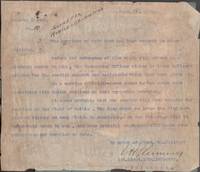
189835195Fort Sill: U.S. Army 1898. Document. Fair. Document. Original manuscript. Approx. 6.75" x 7.75". Document is very fragile with toning. The green paper backing is separated from the thin paper. <br /> <br /> This order was given by Lieut. Col. Kellogg and signed by Lieut. Col. Plummer. General Order No. 10 reads The garrison of this post has been ordered to other stations. Before the severance of ties which will always be a pleasing memory to him. The commanding Officer wishes to thank officers and men for the cordial support and assistance which they have given him. In thirty-seven years he has never been associated with better soldiers or more agreeable comrades. It seems probable that our country will soon require our services on the field of battle. The flag which we love - the flag carried to victory on many fields by Americans - by our fathers - will be as bravely borne by you and your grateful countrymen will honor your patriotism and devotion to duty. By order of Lieut. Col. Kellogg Signed E. H. Plummer 1st. Lieut. 10th. Infantry Adjutant." <br /> <br /> On a historical note the Commanding Officer General Nelson Miles sent a telegram to Lt. Col. Kellogg now at Rush Springs. Kellogg sent Capt. W. CF. Brown & his troop of the first Cavalry back to Fort Sill to quell a suspected uprising by Geronimo & the Apaches. Geronimo is recorded saying "I am a U.S. soldier. I wear the uniform and it makes my heart sore to be thus suspected." All was calm in a week. Testimony of Capt. Edward Hinkley Plummer. Investigation of Conduct of War with Spain New York November 19 1898 Plummer retired a Brigadier General in 1918 after 40 years service. U.S. Army unknown
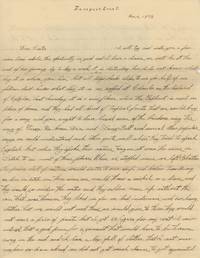
1899List2985Malacca Strait 1899. Eight-page single letter of two double-sided pages measuring 7 ¾ x 10 inches and two double sided pages measuring 4 ½ x 7 inches. Folded with small tears at folds; near fine. A letter from James McIntyre 1874–deceased to his sister Kit sent from aboard the transport ship Grant on the way to the Philippines in March of 1899. McIntyre who enlisted in Pittsburgh in July 1898 had just passed Sri Lanka and was traveling through the Malacca Strait on his way to Singapore their last stop before Manila. McIntyre describes his impressions of the region and the locals and the attitudes of his fellow soldiers.<br /> <br /> The previous week the Grant had stopped at Colombo in Sri Lanka then British Ceylon:<br /> <br /> “it is a nice place where the Elephant is used in place of horses and they had all kinds of tropical fruits that we could buy for a song and you ought to have heard some of the Hindoes sing the song of Tarra Ra boom Dea and Daisy Bell and several other popular songs we could understand each other quite well when they tried to speak English but when they spoke their native tongue it was the same as Dutch to usâ€.<br /> <br /> Note that by “Hindoes†McIntyre probably just means Sri Lankans generally not Tamils in particular. In Sri Lanka as in other places along their route the locals would impress the American soldiers by diving for coins:<br /> <br /> “since we left Gibraltar the poorer of natives would swim to our ship and holler trow shiney me dive in ketch im then some one would throw a nickel or a dime and they would go under the water and they seldom came up without the coin that was thrownâ€.<br /> <br /> McIntyre seemingly in a bid to reassure his sister explains to her that the soldiers see the war as a game or joke:<br /> <br /> “we are doing our best to get to the Philipines so we can take hand in the game they are playing over there what do you think of the war in the Philipines we take it as a joke and I dont think that there is a soldier on this boat who is sorry he came although every body is not looking for a chance to go home again some one will be sure to get back and my chance is as good as any we laugh and joke with each other about getting shot so dont think I am not taking the best of it and I will continue to enjoy my self till a Philipine stops me if one should be so fortunateâ€.<br /> <br /> He also jokes about the food on board:<br /> <br /> “there are a great many other dishes that are new to me that I never heard of before I came in the Army here is another dish we only got on Geo. Washingtons Birthday it is called ‘Cosomme’ which is a french word for Slum you take one doz. of broken skylights and four bbls. of Whitewash one Tea spoonfull of baking powder and stir one half doz. assorted railroad tunnels in serve this on crutches if I dont stop here you will be leaving home to join the Armyâ€.<br /> <br /> Meanwhile the ship had missed a lighthouse and “been lost all day in the straits of Malacco†Malacca which was “taken as a joke by us till we near run agroundâ€. In the strait are “a great many Chinese boats†and the men are entertained by “the capers the Chinese cutâ€. When they finally reach Singapore McIntyre is impressed by how advanced it is:<br /> <br /> “I have been writing since before dark and during that time we have run into Singapore one of the boys just asked me to come up on deck and see the town when he told me of the Electric lights and Trowley trolley Cars I told him he was trying to guy me but he said it was true and I was surprised to find it true but this is the nearest like a U.S. City at night I saw yetâ€.<br /> <br /> Of interest to historians of the Philippine-American war especially American soldiers’ attitudes towards the conflict. unknown
18990012049Donsol Pilar Manila Philippines New York Malta. Poor with no dust jacket. 1899-1901. Other. On offer is an unbelievable handwritten account of 19 months of action on the frontlines of the Philippine Insurrection the Philippine-American War between November 1899 and June 1901. An unknown American soldier writes of his experiences in a level of detail that cannot be overstated. This diary places the reader in the Philippines with shocking realism making this diary exceedingly rare. The 139 pages of this journalled account of events have been removed from a larger document and someone has pinned these loose pages together. This writing begins at the end of a sentence penned on presumably November 17 1899 and concludes half way through a sentence written on June 23 1901. There seem to be very few missing pages from within the journal and it reads very smoothly. The content is outstanding. The diary opens with our soldier diarist sailing from New York to the Philippines via the British Naval base at Gibraltar and the Suez Canal. He describes his experiences sailing sharing about a stop ashore in Malta a Thanksgiving spent at sea a concert enjoyed aboard the gunboat Nashville on the way to Manila and more. He arrives with his regiment in Manila on Dec 22 1899. The troops explore Manila and meet Filipino locals. In early January of 1900 they receive orders to head to southern Luzuon on the Kobbe Expedition which refers to General William Kobbes Expedition to Bicolandia. This expedition was in response to an urgent order from Washington to open up hemp ports of Southern Luzon due to an American hemp shortage. The problem was the port towns were largely controlled by Filipino Insurgents. Our diarist provides absolutely remarkable detail about Americas role in defeating the Insurgents and the tragedy of the Filipino peoples experience. Context indicates that our diarist was possibly a member of the 43rd Volunteer Infantry Regiments USV Company A. An excerpt that provides a sense of how our soldier explains the circumstances in the Philippines follows: Jan 16th we got the order to pack up and get ready to leave Mikata and to proceed to the Southern part of Luzon we were put aboard the transport Hancock which was at anchor in the Bay of Manila All combined we were named the Kobbe Expedition to the Southern Luzon to open up the Hemp ports and protect the natives from the Insurgents down there On the 21st of Jan 1900 our boats dropped anchor in a bay named the bay of Sorsogon in the Province of Albay All over this province there are large gangs of Insurgents holding the towns so at many towns our boys had a hard fight with the Insurgents before they could take the towns and the gun boat had to shell many of the towns. Our Regt. Occupied nine towns. Our detachment of A and D. Co. Were taken to a town named Donsol the gunboat Helena took us ashore from the Hancock On their arrival ashore they were met by a crowd of Philippinos. They had an order from the officers of the Insurgents it read saying that they would not haul down their colors nor surrender for three days. So our Major returned to the gunboat and a short conversation was held with the officers of the gun-boat and it was decided to prepare the gun boat for action and land all of us. If the Insurgents fired one shot at us the gun-boat would shell the town The hills were full of fleeing people. A detail of men were sent out on the hills at once then the Insurgents fired their first shot at us. Our boys had a warm fight for 15 minutes. They found the hills well entrenched and also found one big cannon. Lots of spears Bolas and wooden guns. They returned to town bringing in a few prisoners. A scouting party was seent and they saw a lot of Philippinos fleeing to the mountains. This town had a population of 10000 and three hundred were Insurrectors. The next thing we done was to find ourselves some good houses to live in. Outposts were put out all around the town. A few natives came across our post for a few nights and on the 22th Jan the Insurgents paid our town a visit setting fire to one of the big houses where our men were sleeping. Our men got out of the house without anyone being hurt. We surrounded the town fired a few volleys . Later in January our soldiers regiment goes on the first of many missions all of which he describes in glaring detail. On this mission the troops attempt to leave Donsol for Pilar when they run into trouble as the connecting bridge was destroyed by Insurgents. They make it to Pilar and find the town has been deserted. As they march back to Donsol they find someone has lit the bridge ablaze: Jan 28th We had a very hard time crossing the bridge burning our shoes and legs but we got safely on the Donsol side before the bridge fell with a crash into the river. We marched on we heard several shots from the Mauser and Remington rifles. Next we discovered a big fire and a call to arms and fire call was sounded The fire of the Insurgents got heavier. Our Major gave an order not to fire. He was going out in the front of our lines. He went out with a detail of men and discovered that our town was surrounded and the hills were full of Insurgents. He fired a few volleys then he came into town. The Insurgents answered him by firing a cannon. Then the Insurgents gave a yell and started to advance and we kept quiet and let them get close to our lines. Then we got the order to commence firing and the boys opened up all around the town and we soon put the Insurgents to flight firing a few shots as they ran. Next morning we discovered a few dead Insurgents close to our lines. The Insurgents almost always carry their dead and wounded along with them in their flight Our soldier does an absolutely phenomenal job of describing not only the day-to-day in Donsol where he spends majority of his time but also the various missions in which he participates. His words paint a fulsome picture of the war: 21st Feb at noon our Major asked for a detachment of men to volunteer to go up the river on a scouting expedition. I along with 12 more men went out of our company and 12 out of D. Co. Along with Capt. Hart of D. Co. And our Major left Donsol in a hard paddle boat and one white boat in tow On our way up the river we could see high hills on each side and the river was very narrow. There were many Insurgents outposts in the high trees all the way up and we fired at every one we saw. We went up a distance of 8 miles before we thought of coming home as it was getting late We had traveled one mile on our homeward way when the Insurgents fired on us from the left hand ashore. Our men in the rear boat fired a volley into the two Insurgents and were taking good aim for a second volley when the hills fairly echoed with the yells from the Insurgents. They then opened up on the right hand side which was aimed at the white boat hitting one of our men our company in the head and he was killed instantly. Then we answered their shots from each of our boats and from that time until we got back to Donsol we were under the hot fire of the Insurgents we could see the hills full of Insurgents and we had plenty to shoot at. We made every shot count. The insurgents even fired rocks at us from the high hills . More texture is added when our soldier discusses aspects of the war that dont involve active fire. Some examples follow: March 5th Gen Kobbe of the 8th Army Cor was here on a visit and he said these two companies were a very industrious lot of men and that the building of the stocade and trenches was a very sensible work he also brought us 17 of the Battery G 3rd Artillery men and one Hotch Kiss gun for reinforcements. April 10th the mail boat was here bringing the report of Gen. Pawa likely Jose Ignacio Paua an Insurgent Gen in Command of the Insurgent troops through this province. He surrender to our Colonel in Legaspi Legazpi and was sent to the Military Prison in Manila. April 21st We took a long march across the hills in a round about manner to a town named Sevilla merely an Insurgent camp. The town was deserted on our arrival. Fires were still burning in the houses. Everything was just as they had dropped it in their flight. We passed through the town and discovered many traps laid in the roads for us. One trap was an arrow trap on each side of the path in the bushes and by pulling a strong the arrows would stick into anyone going down the path. None of their traps caught us. Our soldier writes frequently about expeditions for which he volunteers. He describes a mission to Banningaran sic. En route the men captured Captain Hernandiz sic; possibly Adriano Hernández y Dayot and his family before being caught unprepared by the Insurgents who severely injured one of the American sargeants. On their hike back to Donsol they are again attacked by the Insurgents this time caught off guard as they attacked from the rear. And so it goes for many more months. Our author describes the movements of the men with whom he is stationed his commanding officers and the various wins and setbacks of both the Americans and the Insurgents. In May of 1901 our soldier and his regiment begin the process of boarding a ship to return to America. There is of course never a straightforward path and there are many bumps in the road. However our soldier does eventually board a ship and begins again to describe his journey in detail. The diary cuts off abruptly mid-sentence on June 23 1901 as our soldier is describing being at sea with nothing but a sailboat in sight for miles. While we do not know our soldiers identity we do know he was safely heading home at the conclusion of his diary. We know he was a highly motivated volunteer soldier who displayed total buy-in to the mission of the Americans in the Philippines and we know he was a gifted writer penning his experiences with such texture and realism that the reader feels as though they too have been on the front lines of a bloody wet miserable war in the Philippines - fighting for America and for the displaced Philippino people forced to flee from the Insurgents to the mountains. This journal measures 8x5 inches and contains 139 single-sided sheets. The pages were all loose so the author has pinned them together with a single round-headed fastener post. There are no covers to this journal. As a result the first and last few pages show obvious and significant wear and tear including a large corner of the first page being completely ripped off obstructing the text. The handwriting is quite legible. Overall Fair to Poor. ; Manuscripts; 8vo 8" - 9" tall; 139 pages . unknown
2014033380Belgium: Government of Flanders 2014. First Edition. Hardcover. Very Good/No Jacket. 4to - over 9¾" - 12" tall. Government of Flanders hardcover
191435285n.p.: n.p. 1914. Photograph. Good. Photograph. Approx. 10" x 8". Photograph is in good condition with light amount of spotting to the image. No other information known about the image other than what is written at the bottom of the picture "Mexican Border 1914 Raymond Thompson." View shows three men up front on horses. One soldier on a white horse is carrying the American Flag. The view also shows other soldiers and tents in the background. From wikipedia: <br /> <br /> The Mexican Border War13 or the Border Campaign14 refers to the military engagements which took place in the Mexico–United States border region of North America during the Mexican Revolution. The war's time period encompassed World War I during which Germany attempted to have Mexico attack the United States and engaged in hostilities against American forces there itself. The Border War was the fifth and latest major conflict fought on American soil where its predecessors were the American Revolutionary War War of 1812 Mexican–American War 1846–1848 and the American Civil War. The end of the Mexican Revolution on 1 December 1920 marked the close of the American Frontier. The Bandit War15 in Texas was part of the Border War. From the beginning of the Mexican Revolution in 1910 the United States Army was stationed in force along the border and on several occasions fought with Mexican rebels or federals. The height of the conflict came in 1916 when revolutionary Pancho Villa attacked the American border town of Columbus New Mexico. In response the United States Army under the direction of General John J. Pershing launched an expedition into northern Mexico to find and capture Villa. Although Villa was not captured the US Army found and engaged the Villista rebels killing Villa's two top lieutenants. The revolutionary himself escaped and the American army returned to the United States in January 1917. Conflict at the border continued however and the United States launched several additional though smaller operations into Mexican territory until after the American victory in the Battle of Ambos Nogales in August 1918 leading to the establishment of a permanent border wall.16 Conflict was not only subject to Villistas and Americans; Maderistas Carrancistas Constitutionalistas and Germans also engaged in battle with American forces during this period. n.p. unknown
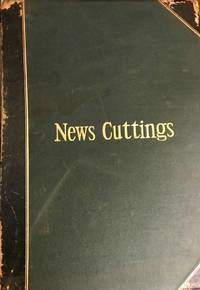
191433747London 1914. Scrapbook. Fair. Folio. Scrapbook. Approx. 15" x 10.5". 22 alphabetized thumb index pages with written contents 119 pages with 63 pages used for pasted down news clippings. Pages 64-119 are blank. Green cloth covered boards with leather corners and edges. No spine. Gilt stamp title "News Cuttings" stamped on the front cover. Outer hinges are cracked. Boards are edge worn. Brittle newspaper clippings have toning edge wear tears splits and are flaking. Scattered glue stains to several pages. <br /> <br /> The news articles are chronologically pasted down or tipped in. All appear to be from the London Times newspaper. The first articles are dated August 1 1914 and the last article is dated October 1 1914. Some pencil dates and page numbers written in the upper corners. Provenance unknown. A partial cut piece of cardboard with an inscription written on one side not legible and the name of "A Martin-Leake" written on the other side was found inside the Scrapbook. Many of the articles are folded over and several have map illustrations. World War I officially started July 28 1914. These articles provide a first hand daily report of the early stages of World War I in Europe. A potential association with the scrapbook to "A Martin-Leake" whose name was found inside. From wikipedia: Lieutenant-Colonel Arthur Martin-Leake VC & Bar VD 4 April 1874 – 22 June 1953 was a British physician officer in the Royal Army Medical Corps and a double recipient of the Victoria Cross VC the highest award for gallantry in the face of the enemy that can be awarded to British and Commonwealth forces. Martin-Leake was the first of only three men to be awarded the VC twice the others being Noel Godfrey Chavasse and Charles Upham. unknown
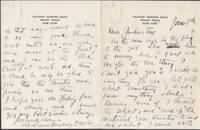
191535587Mount Kisco New York: n.p. 1915. n/a. Letter. Very good. Letter. Two pages. Paper measures approx. 7" x 5". Written on the writers letterhead. Removed staple upper left corner. Included with the two page letter is a silver gelatin photograph portrait approx. 5" x 3.5" of a well groomed Davis. Paper and photograph in very good condition. <br /> <br /> Richard Harding Davis was a writer journalist and World War I correspondent. He was friends with Theodore Roosevelt. This letter was written less than 1 year before his death from heart attack at his home in Mount Kisco New York at the age of 51. Transcribed letter reads:<br /> <br /> Dear Johnstone<br /> <br /> As the man says in the play to the girl who wants to marry her "Don't ask me for one thing I can't give you." I would do anything for you but write about something I don't know anything about. Besides even if I studied the subject and "read up" the material you threaten to send me what I would write in that way would do none of us any good. Please wait until we are all once more at "the front" and I can see the Red Cross people at work and then I shall only be too glad to give them the thanks and praise we owe them.<br /> <br /> I hope you are feeling fine and daisy and I send you my best wishes always.<br /> <br /> Sincerely yours <br /> <br /> Richard Harding Davis. From wikipedia:<br /> <br /> Richard Harding Davis April 18 1864 – April 11 1916 was an American journalist and writer of fiction and drama known foremost as the first American war correspondent to cover the Spanish–American War the Second Boer War and the First World War.1 His writing greatly assisted the political career of Theodore Roosevelt. He also played a major role in the evolution of the American magazine. His influence extended to the world of fashion and he is credited with making the clean-shaven look popular among men at the turn of the 20th century.2. n.p. unknown
1919Alibris.0001555SECRETARY OF WAR 1919. First edition. NOT XLIB. Hard cover. Good. 2055 p. SECRETARY OF WAR hardcover
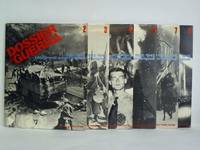
2i6768Fratelli Fabbri Editori Milano 1971. Je Heft 16 S. und je 1 Schallplatte im Anhang kartonierte Einbände quart Einbände teils mit Kleberesten. - Enthalten die Nummern: 2 3 4 5 7 und 8 / Text italienisch - unknown
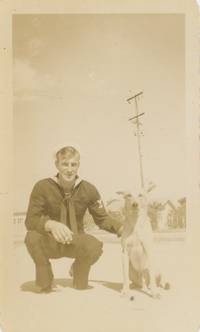
1940List3520United States and Japan 1940. Photo album measuring 10 ½ x 13 inches containing approximately 350 photos. With four copies of Jane Whitaker’s discharge and immunization papers and the Navy’s Marching to Victory songbook 13th printing Naval Reserve Midshipmen’s School 1943. Album with covers detached and wear to pages; fair. Contents excellent. Overall very good. A photo album belonging to siblings Jane 1924–d. and James 1921–1997 Whitaker of Florida. Both siblings were in the US Navy; the copy of Jane’s discharge paper indicates that she enlisted in 1943 and was honorably discharged in 1946. The siblings are descendants of founding Florida figures William Wyatt and Mary Wyatt Whitaker.<br /> <br /> The album mainly covers their time in Hawai’i and Japan. Alongside eighteen photographs of a large military parade one labeled “V-J Day Honolulu†with floats including the Filipino Federation of America’s celebration of General MacArthur and a bilingual float reading “AGGRESSORS GONE FOREVER†and fifteen likely souvenir photos of the Pearl Harbor attack there are approximately 120 candid photographs of the sailors’ lives. These include spending time with family and children sitting on a tank on the beach barbecuing at a park fishing and doing laundry outside. Some of these were taken in Hawai’i and others in Japan; a number show a sign for Nimitz Recreation Field which is likely at the US Fleet Activities in Sasebo Nagasaki. Thirty show men not in uniform but also likely sailors mainly during similar recreational activities. Others include photos of military installations and from inside barracks—bunk beds the kitchenette and dining area. Individuals in the photos are occasionally identified verso by first name.<br /> <br /> The album is uncommon for the candid nature of the personnel photos. Of interest to historians of life in the US Navy in Hawai’i and Japan during WWII. unknown
194533388America Europe 1945. Archive. Very good. Manuscript Archive. 2 three ring black binders with 41 letters and misc. ephemera. Letters were addressed to family and in Chester Vermont mainly to his brother Ray and his Aunt Florence. The letters are sorted into three phases: prewar U.S. training camps and from places in Europe. 2 letters were written by Private Lawrence before he enlisted in the Army circa 1942. <br /> <br /> 20 letters were written from training camps in the United States 1943-44. 12 letters were written by Lawrence somewhere in France Belgium and Germany from June 1944 to January 1945. The remaining 7 letters were written by family members before and after Private Lawrence was killed in action December 1944 - February 1945. These letters were returned to his family with the word "deceased" written or stamped on the envelopes. The archive also consists of 8 envelopes not matching the dated letters two change of address postcards 5 pieces of foreign money and misc. news clippings relating to the Allied Forces actions late in the War. One non-letter item included in the archive is a hand drawn December 25th 1944 Christmas greeting presumably drawn by Lawrence. In these letters Charles Lawrence is often homesick inquires about things in Vermont and how he is getting along in the Army. Many of his letters begin with a variation of "I am still in the land of the living." The handwriting is legible for the most part and the condition of the archive is very good. The first ring binder of letters encompasses Private Charles Lawrence's pre War draft and his training in various U.S. camps. Training camp letters were written on nice Army letterhead paper from places such as Fort Devin Massachusetts; Fort McClellan Alabama and the U.S. Naval Construction Training Center Camp Peary Williamsburg Virginia. While training in the States Private Lawrence yearned to return home before he was shipped off to Europe. "If I get back to the States after I leave you can bet I wont stay in this army if I can help it." <br /> <br /> The second ring binder of letters begins with a letter dated June 1 1944 from some unknown location. The letters from Europe are censored and some letters were sent by V-Mail. While in Europe Charles asks about events back home and provides some general not to specific training and battle information. In the second letter in this binder dated June 9th Private Lawrence writes "Dear Aunt Florence and All: How are you folks feeling today hope you are feeling fine and dandy. Well here I am in a new camp and I am sorry to say that I cannot tell you where I am or the name of the camp. The camp is very good good climate food and it has lot of mountains around it." He adds "We do not get any training at this camp because they don't want anyone to know how many troops we have here at this camp but we have to go on two 11 miles hike every week." <br /> <br /> The letter dated June 11th one week after D-Day June 4 1944 has Lawrence awaiting transport to occupied France. He writes "This is my 40th letter since I came back from my furlough.The P.X. here is open all day and every time there isn't anything to do we all head for it most of us are broke including me."<br /> <br /> As the War heats up after June one comment in Lawrence's letters stands out:<br /> <br /> "I have been lying in a fox hole for two weeks now the only time when we can get up and walk around is at night it gets kinda tired laying in the fox holes eating H rations you can't stick your head out of the hole in the day time because you will get your head blowed off if you do so we just lay there.Boy when I get home I wont fuss about anything so long as I live I have been through everything now and it isn't any fun either." <br /> <br /> As the battles in Europe intensified in the fall of 1944 it appears Private Lawrence had been in very dangerous situations. In his November 23 1944 letter he writes ".a lot has happened to me since I last wrote to you last I have been in a lot of tough spots tough enough to lose all of my personal belongings such as mail letters that I hadn't answered toilet articles my pack overcoat raincoat etc. I am going to write to Barb and see if she will buy me toilet articles. My stationary is all gone.Today is Thanksgiving and I hope you folks had a good meal I haven't seen any turkey for us yet."<br /> <br /> On December 21st 1944 Charles writes his brother Ray from "Somewhere in Germany". He tells his brother "I have been busy as ever for the last few days and it looks like I will be for quite some time." The last full letter in this archive written by Private Lawrence is dated January 4th 1945. He writes to Aunt Florence & all the gang. He tells Aunt Florence "Well here I am again I thought I would write you a letter as long as I have some extra time this isn't much for news this time because I wrote Glady's a little this morning and told her all the news that there was at hand but when this letter is finished you will at least know that I am still alive & kicking." He signs off this letter with this - "Got to go now but I will be back before to long hope everyone is okay.".<br /> <br /> Private Charles Lawrence died 16 days later in Europe on January 20 1945 at the age of nineteen. He was buried in the American Cemetery in Luxembourg.<br /> <br /> From wikipedia:<br /> <br /> The 5th Infantry Division Mechanized—nicknamed the "Red Diamond"1 the "Red Devils" or "die Roten Teufel"—was an infantry division of the United States Army that served in World War I World War II and the Vietnam War and with NATO and the U.S. Army III Corps. It was disbanded and deactivated on 24 November 1992.2<br /> <br /> During World War II after D-Day the 5th Infantry Division after two years of training landed in Normandy on Utah Beach 9 July 1944 over a month after the initial D-Day landings and four days later took up defensive positions in the vicinity of Caumont. Launching a successful attack at Vidouville 26 July the division drove on southeast of Saint-Lô attacked and captured Angers 9–10 August captured Chartres assisted by the 7th Armored Division 18 August9 pushed to Fontainebleau crossed the Seine at Montereau 24 August crossed the Marne and seized Reims 30 August and positions east of Verdun. The division then prepared for the assault on Metz 7 September.10 In mid-September a bridgehead was secured across the Moselle south of Metz at Dornot and Arnaville after two attempts. The first attempt at Dornot by the 11th Infantry Regiment failed. German-held Fort Driant played a role in repulsing this crossing. A second crossing by the 10th Infantry Regiment at Arnaville was successful.11 The division continued operations against Metz 16 September to 16 October 1944 withdrew then returned to the assault on 9 November. Metz finally fell 22 November. The division crossed the German border 4 December captured Lauterbach a suburb of Völklingen on the 5th and elements reached the west bank of the river Saar 6 December before the division moved to assembly areas.<br /> <br /> On 16 December the Germans launched their winter offensive in the Ardennes forest the Battle of the Bulge and on the 18th the 5th ID was thrown in against the southern flank of the Bulge helping to reduce it by the end of January 1945. In February and March the division drove across and northeast of the Sauer where it smashed through the Siegfried Line and later took part in the Allied invasion of Germany.<br /> <br /> The 2nd Infantry Regiment is an infantry regiment in the United States Army that has served for more than two hundred years. It was constituted on 12 April 1808 as the 6th Infantry and consolidated with 4 other regiments in 1815 to form the present unit.1. When the Battle of the Bulge began the 2nd Infantry Regiment moved to the battle zone in the area of Nideranven Luxembourg. In January 1945 the 2nd Infantry Regiment forced a crossing of the Sauer River and attacked into the Siegfried Line. The regiment then crossed the Rhine River near Oppenheim and secured the crossing for other Third Army units. The unit then spearheaded the attack into Czechoslovakia and was located near the town of Volary when the word came to cease all forward movement at 08:31 on 7 May 1945. unknown
1943000062North Africa. Good. 1943. Softcover. SUPER WORLD WAR II NORTH AFRICA ROYAL AIR FORCE HANDWRITTEN MEMOIR: "This is an exercise book" which it is stated in the first line of the first entry: 22/2/43 9 pages; "I bought this book yesterday and am just taking a few spare moments to jot down some of the happenings and events of the last few months. This book is not intended to be a diary as such as I have found that a day to day record of events becomes monotonous; but rather a medium that permits me to express myself on paper at thise inevitable times in the service when due to ones surroundings and situation there is nothing else to do. I shall also include such events as seem worthy of record and which I may like to preserve for the future in a clear cut form than memory alone provides. So I am now on the threshold of Operational Flying there should be much of interest and amusement which will be of interest and amusement." He then summarizes his Air Force Career and details what I assume is the "happenings of the last few months" as detailed at the beginning of this entry. This includes Scotland and Durban South Africa and Egypt. The rest of the journal is concerned with life and training in Africa and finishes abruptly on 21st July 1943. One week after he makes his first Operational flight over the Mediterranean. Dated 5/2/43 - 6.5 pages Dated 19/3/43 - 4.5 pages Dated 29/3/43 - 8.5 pages Dated 4/4/43 - 4 pages Dated 10/4/43 - 3 pages Dated 19/4/43 - 4 pages Dated 03/5/43 - 7 pages Dated 25/5/43 - 10 pages Dated 08/6/43 - 5 pages Dated 13/6/43 - 5 pages Dated 20/6/43 - 6 pages Dated 22/6/43 - 2 pages Dated 09/7/43 - 9 pages Dated 14/7/43 - 3 pages Dated 16/7/43 - 5 pages - This entry starts " I have now done my first operational flight 4.5 hours in duration and this involved patroling the Med." Dated 21/7/43 - 3.5 pages.; Manuscript; 5.5.x 8.5 Inch; RAF ROYAL AIR FORCE NORTH AFRICA HANDWRITTEN MANUSCRIPT DOCUMENT LETTER AUTOGRAPH WRITER HAND WRITTEN DOCUMENTS SIGNED LETTERS MANUSCRIPTS HISTORICAL HOLOGRAPH WRITERS AUTOGRAPHS PERSONAL PERSONAL HISTORY MEMOIR MEMORIAL DIARY JOURNAL DIARIES JOURNALS LOG LOGS KEEPSAKE WORLD WAR II WWII . paperback
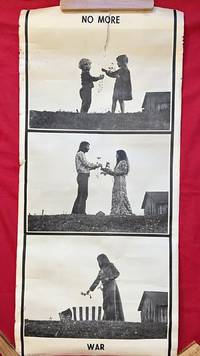
1970190631970. Anti-WarVietnam War "NO MORE WAR". Designed and photographed by Terry and Dennis Newell 1970. Measures 35" × 16" on offset tan lithographic paper. This monochromatic anti-war poster illustrates three scenes of a man and woman in three stages of their lives. In the first photo a young girl innocently gifts a young boy flowers on a grassy field. The following image conveys the young girl and boy in their adulthood---dressed in typical 1970's attire---as the woman hands flowers to the man in great despair. As her partner leaves to fight in the war she is left on the field longing for his return. Yet in the last image she is left lying flowers atop his coffin wrapped in the American flag. The Vietnam anti-war movement from 1960-1970 was one of the most pervasive displays of opposition to the government policy in modern times as protests raged all over the country. As a result posters like these were just one of the mediums used to highlight anti-war narratives. Five inch tear on the top margin minorly affecting the title text. Signs of foxing and discoloration to due to age otherwise in very good condition. unknown
1972D1S2401240031972-01-01. Hardcover. New. 0x0x0. New never used. Cover has minor shelf rubbings. Your Satisfaction Guaranteed. We ship daily. hardcover
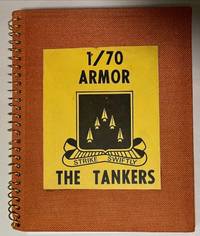
197335207Unknown: N/A 1973. Photograph Album. Very good. Photograph Album. Approx. 11.75" x 9.5". Metal ring binder with orange burlap cloth covered boards. Pasted down yellow and black insignia of the 1st Battalion 70th Armor on the front cover and also located on the first page in the album. <br /> <br /> Album consists of 41 black and white photographs and one color picture of the "Headquarters" sign. Photographs range in size with the majority of them measuring approximately 7" x 5". Pictures have typed and written cut and pasted down short descriptions. Photographs include pictures of Army personnel training exercises marching and casual soldier interactions. Inscription written inside the front cover reads "To the best Battalion Commander that we have served under. Signed C & M Griegs S P 4 Rogers and P F C Weber." On the rear paste down are two pictures showing a tank formation and the other titled "Striker Six Gives Up Command." <br /> <br /> The 70th Armor Regiment was first formed in 1940 and participated in several European and North Africa battles during World War II. According to the wikipedia entry the 70th Armor Battalion the most decorated armor unit in the United States Army was inactivated at Fort Riley Kansas in 1970 and not reactivated until 1975 at Fort Carson Colorado. The album compiled in 1973 shows that the unit was still active between 1970 and 1975. N/A unknown
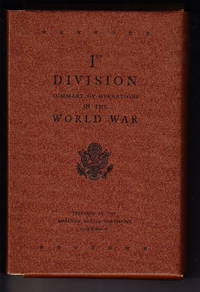
1944900146Washington DC: American Battle Monuments Commission 1944. First printing. Stiff Wraps/Folder. Very Good. 119 pages including an Index. Complete with all six large folding maps present and in excellent condition. All housed in folder with spine title. <br/><br/>Touch of wear at the corner tips of folder; Sundarkening on edges of first and last pages of text. American Battle Monuments Commission paperback
1984W2781Lynchburg Virginia: H. E. Howard Inc. 1984. 8 127 pages. Limited edition: number 733 of 1000 copies SIGNED without inscription by the author on the colophon page. This is a history of the 13th Virginia Cavalry a Tidewater Virginia regiment which saw action in all of Robert E. Lee's major campaigns from August 1862 until the surrender at Appomattox. The book is in very good condition: clean and tight with some foxing on endpapers and light toning of pages. The dust jacket is about very good: generally clean and crisp with some minor foxing and several tiny closed tears no chipping at the top of the spine. SIGNED. First Edition. Hardcover. Very Good/About Very Good. 8vo - over 7¾" - 9¾" tall. Book. H. E. Howard, Inc. Hardcover
184731761Brazos Island Texas 1847. Document. Very good. 2 8" x 10" sheets of paper. The first document signed at the bottom by Capt. A B Eaton from Brazos Island is dated December 15th 1847 and is addressed to Major Thos. B Eastland q.m. The document reads "Major - I respectfully require of the Quartermaster's Department the necessary transportation receipts in bulk for the Subs Stores herewith invoiced as required by Par 1088 Army Regulations. - Respectfully Your Obt Servt A B Eaton Capt .sp" The second document signed by Eaton on December 17th 1847 is also addressed to Eastland and has the same exact content as the first letter not a copy as the date is different and the writing has variation. A collection of Thomas B. Eastland's papers is held by the California Historical Society. <br /> <br /> From the Confederate Veteran February 1911 "Eastland Family" "Thomas B. Eastland came to Nashville where he was engaged in business until about 1840 when he went to New Orleans to engage in the cotton brokerage business and where he continued until the breaking out of the Mexican War during which he served under General Zachary Taylor as major." Thomas B. Eastland's diary titled To California Through Texas and Mexico: The Diary of Thomas B. Eastland and Joseph G. Eastland His Son was published by the California Historical Society in 1939 and is 59 pages long.<br /> <br /> From wikipedia: in 1846 ".it Brazos Island was the first military objective of the US Navy in support of General Zachary Taylor's invasion of Mexico. Control over this important seaport was said by Harvard historian Leroy Graf to be the primary reason for the US invasion of Mexico. From Padre Island NS Historic Research Study Chapter 3 "After the outbreak of hostilities Brazos Island became the primary staging area for the continuing campaign. Volunteers from throughout Texas and the Mississippi Valley converged on the Island and headed inland for camps at Point Isabel and along the Rio Grande."<br /> <br /> Amos Beebe Eaton the signer of these documents 1806-1877 was a career officer in the United States Army. He was General Zachary Taylor's Chief Commissary of Subsidence during the Mexican War. He was a graduate of West Point in 1826 and was made Brevet Major General of the Union Army in 1865 appointed by Andrew Johnson. unknown